Visitors entering the European and American wing of the Speed Art Museum in Louisville, Kentucky, are first greeted by a poem from Layli Long Soldier (Ogalala Lakota).
“I wanted the first thing that confronts you in this gallery to be the words of Native people themselves, especially because the prior installation didn’t have a lot of interpretive text—I love having it on the door because it kind of levels at you,” fari nzinga, curator of African and Native American Collections at the Speed Art Museum, says of the choice placement. “[The prior Native galleries] had some extended labels, but lent itself to this idea that Native people don’t have written languages, don’t have written culture, don’t participate in literature or literary pursuits, let alone modern and contemporary modes of art making, and we wanted to reverse all of those erroneous assumptions.”
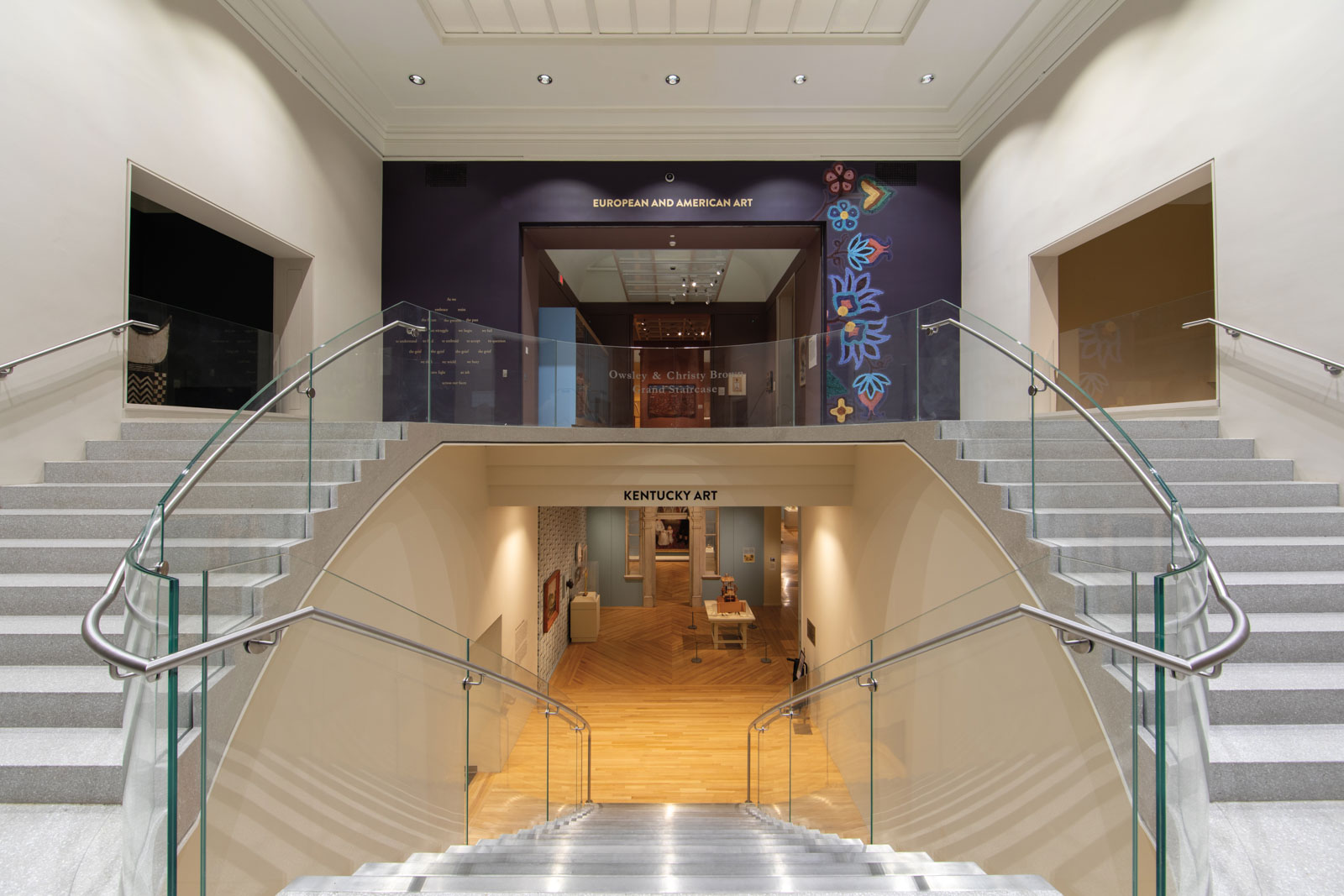 The entrance to the European and American wing at the Speed Art Museum. Photo courtesy Mindy Best.
Opposite the poem, a floor-to-ceiling painting recreating a beadwork pattern from one of the museum’s Great Lakes region bandolier bags. Just beyond, the Speed’s presentation of Native American art resides at the center of a suite of galleries fully surrounded by the museum’s collection of European and European American art.
“When we put the Native American art in the center, questions came up. Should we change the name? I said, ‘Why would we? Native American is American art by definition,’” nzinga continues. “Having to go through that collection before you can get to the American art, before you can get to the European art, to me it feels very symbolic and super-representative of the history of this place.”
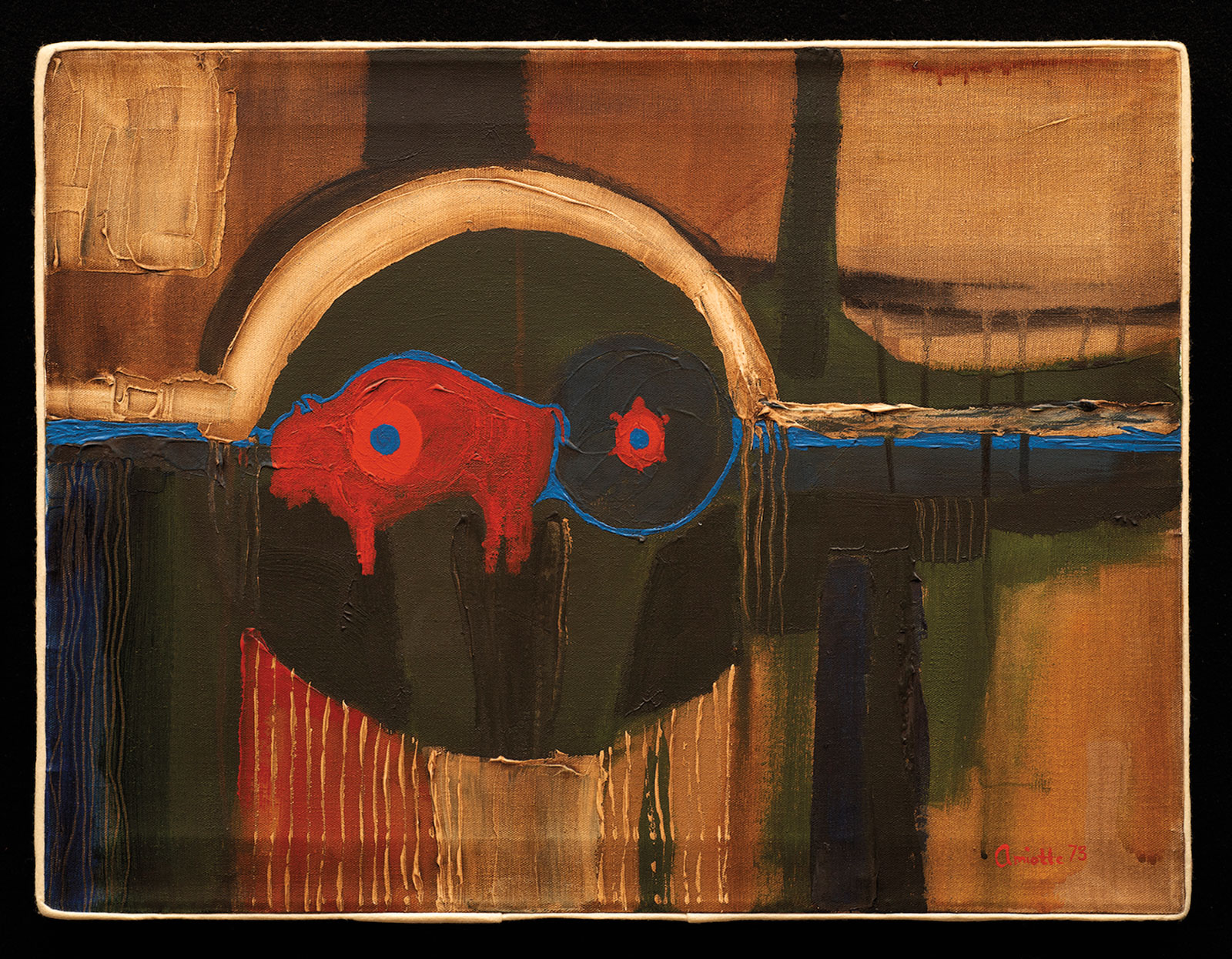 Arthur Amiotte (Oglála Lakhóta Oyáte (Oglala Lakota Nation)), Buffalo Image, 1973, oil on canvas, 18 x 24". Courtesy of Tia Collection, Santa Fe, NM. Photography Credit: Arthur Amiotte, Buffalo Image, 1973. Courtesy of Tia Collection, Santa Fe, NM. James Hart Photography.
Prior to completing a total reinstall and expansion of its Native American art galleries in spring of 2024, the Speed, like many institutions, relegated the collection to a dimly lit, out-of-the-way space. Visitors could find it only if they knew where they were going or got lost and stumbled upon it randomly.
Mirroring a nationwide trend dating back the last handful of years, when the Speed took time to reassess its display of Native American art, it found the presentation lacking. Correcting a historic disregard for the material began with nzinga’s hiring in 2022. Prior to her arrival, the museum had never had a dedicated curator for the collection.
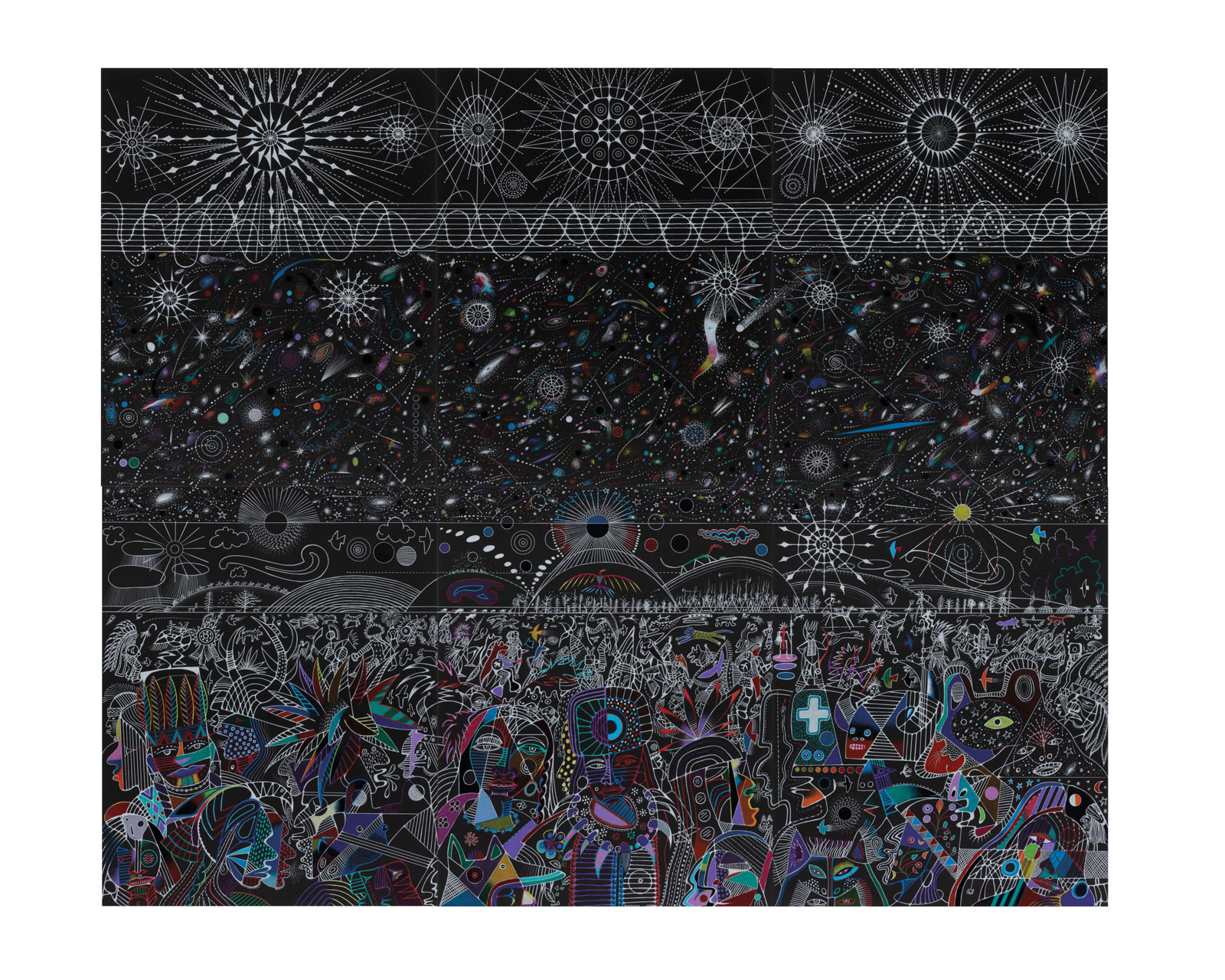 Frank Big Bear (Gaa-waabaabiganikaag Anishinaabeg (The White Earth Band of the Minnesota Chippewa-Ojibwe Tribe)), Ghost Dance of the Great Mystery, 2022, colored pencil on black illustration board, 80 x 96". Courtesy of Tia Collection, Santa Fe, NM. Photography Credit: Frank Big Bear, Ghost Dance of the Great Mystery, 2022, colored pencil on black illustration board, Tia Collection, Santa Fe, NM. Image courtesy the artist and Bockley Gallery.
Her first step, another trend being repeated across the country, was forming an advisory council of Native art curators and scholars. Their role would be answering questions, providing insight and best practices, guiding nzinga, who is not Native, toward additional resources. While never officially joining the advisory council, nzinga highlights heather ahtone (Choctaw/Chickasaw Nation), director of curatorial affairs at First Americans Museum in Oklahoma City, as particularly instrumental in helping get her arms around the Speed’s collection of Native American art.
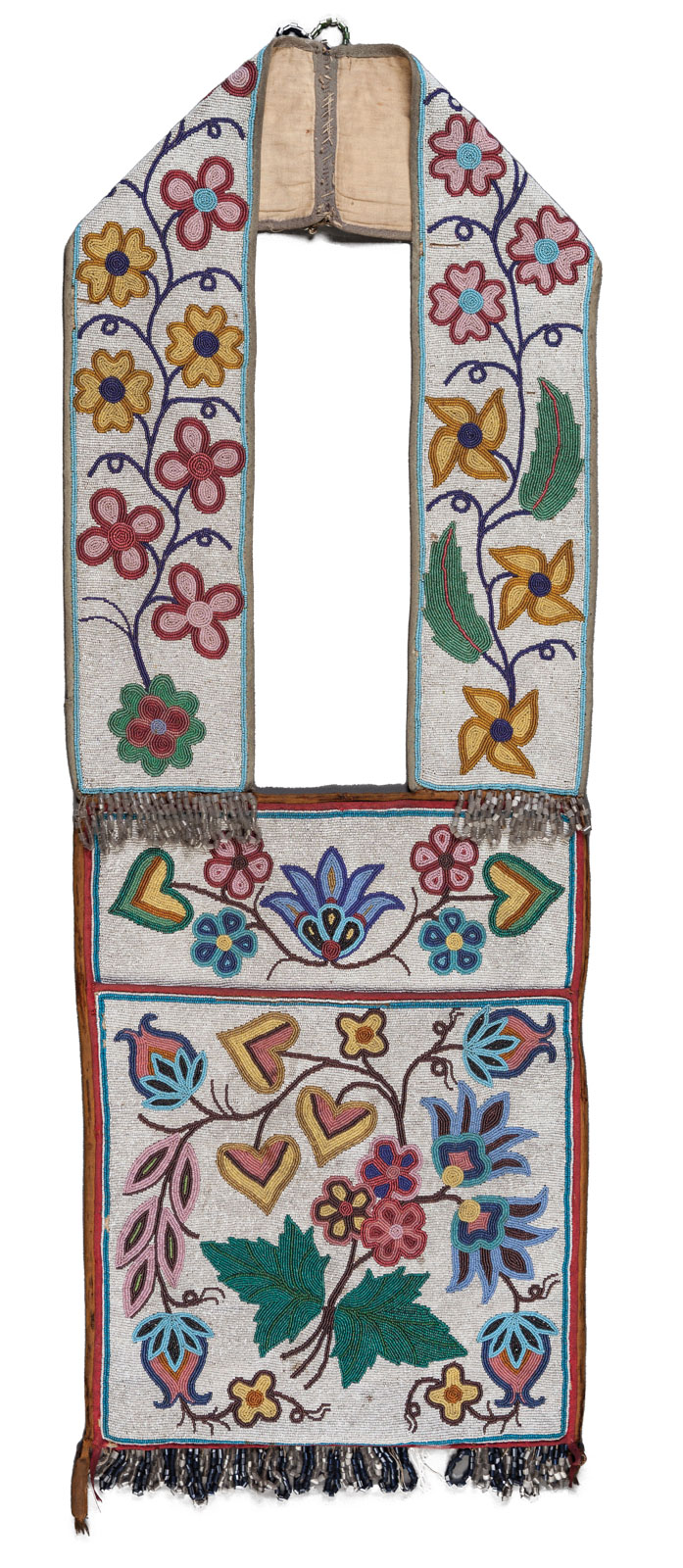 Ojibwa artist, Western Great Lakes region, Bandolier Bag, ca. 1880, trade cloth, glass beads, velvet, wool, 44½ x 145⁄8". Gift of Mrs. A. W. Graham 1937.68.151. Image courtesy of the Speed Museum.
The pair went through the museum’s modest holdings of some 800 items from across the continent piece by piece. Doing so took months. Nzinga inventoried everything and sent what she cataloged to ahtone, who provided more information about the works themselves when she was able, occasionally correcting errors of attribution, pointing nzinga in the direction of colleagues who would know more in the instances she didn’t, and taking into account each belonging’s compliance with the Native American Graves Protection and Repatriation Act.
Work on NAGPRA compliance accelerated with nzinga’s hiring of Sirene Martin, an Association of Art Museum Directors Curatorial Fellow, in June of 2023. Martin took ahtone’s notes on each individual piece in the collection and began outreach to tribes and Tribal Historic Representation Officers from which they originated.
“I can do all the research in the world, but nothing is more valuable than consultation and having conversations with your cultural stakeholders and people that these belongings were birthed from,” Martin says.
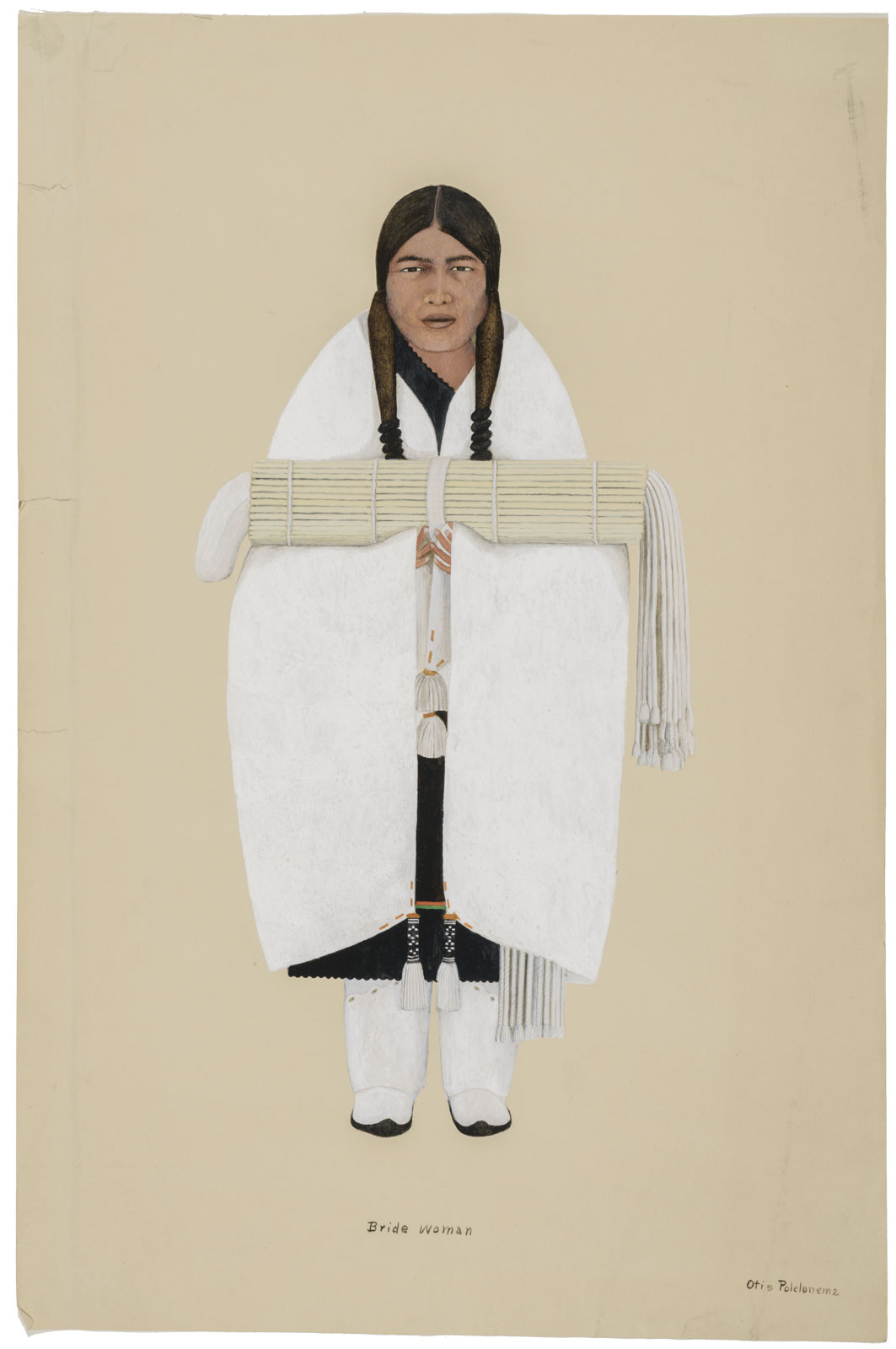 Otis Polelonema (Hopi), Bride Woman, 20th century, watercolor on paper, 19 x 12”. Gift of Justice and Mrs. Louis D. Brandeis, 1934.22.2. Image courtesy of the Speed Museum.
She expects the work to continue for as long as she’s at the Speed and beyond.
“I’d rather be slow and methodical than hurry and cause additional harm,” Martin adds. “Some of the things in our collections, and in collections across the country, have been accessioned under conflicted circumstances to say the least. [I want to] make sure that I’m making relationships with people, that I’m not just a representative of an institution, but I’m a person that cares deeply for the work and cares about being a small part of healing the kind of trauma that comes with belongings and even ancestors that have been displaced and taken from their rightful homes and people.”
A Contemporary Reset Foregrounded, centered, reinterpreted with the addition of wall labels written by Native people and displayed under better lighting, items long in the Speed’s collection are being seen like never before.
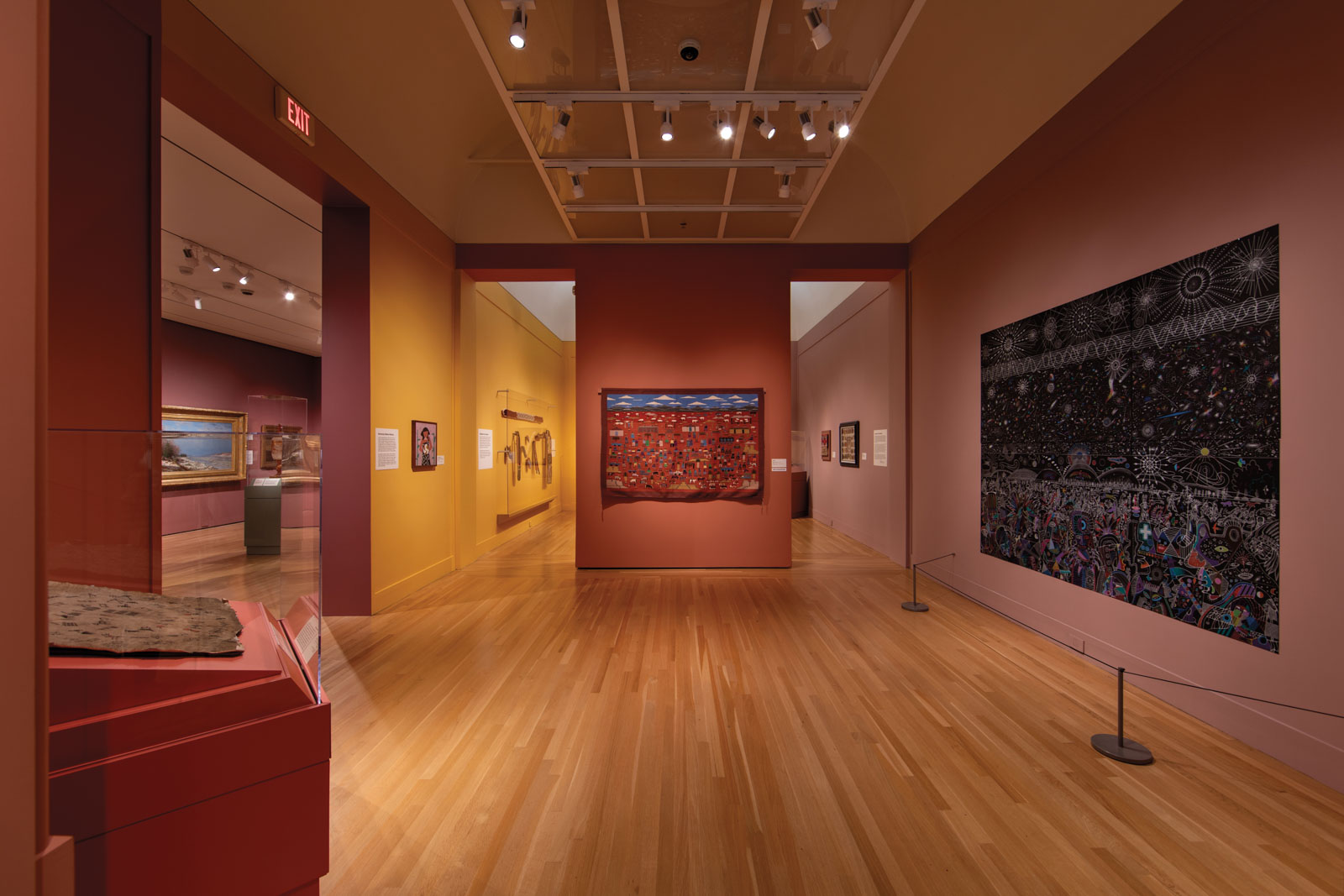 One of the Native American galleries at the Speed Art Museum. Photo courtesy Mindy Best.
“We’ve refreshed the colors in the gallery, it feels less staid; having [Native art] on beiges and reds feels almost too on the nose,” nzinga says. “I’ve heard from other curators of Native American art who happen to be Native American say they’re tired of seeing the color red always be used as a shorthand in association with Native American artwork or with the topic of Native Americans period. Our works become more vivid when they’re on top of a color that’s taken from their palette. It gives a new framing and a new context for how you’re seeing something visually.”
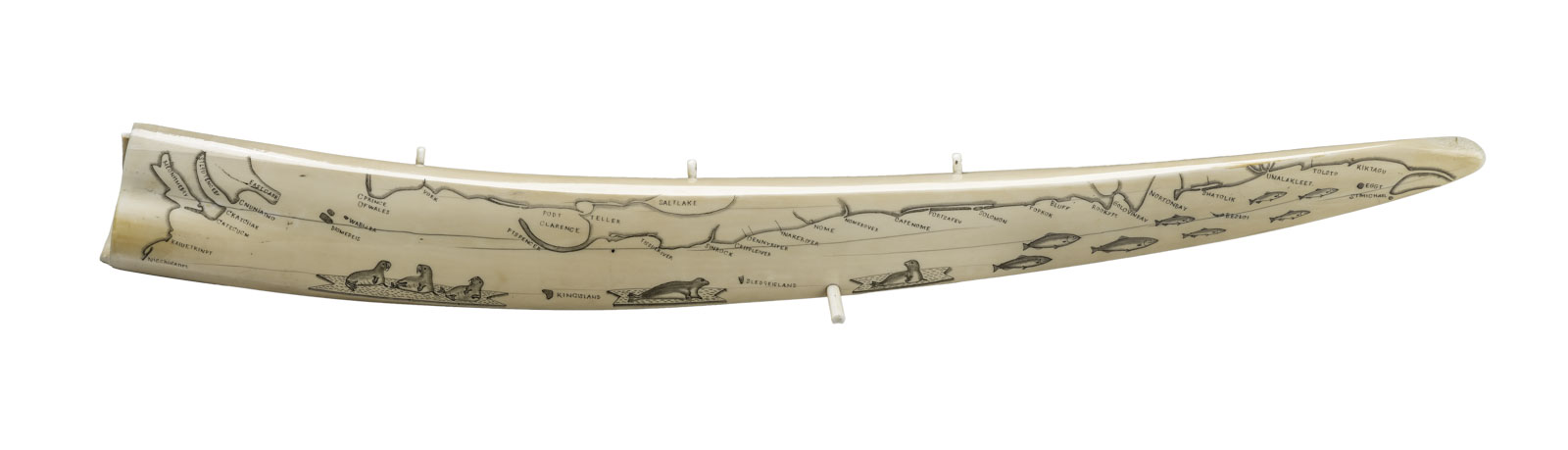 Ainachewak, Alaska Native Cribbage Board, 1916, walrus tusk, 263⁄8”. Gift of Anna and Allan Weiss, 2023.43.23. Image courtesy of the Speed Museum.
Prior to reinstallation, most objects were displayed in old, wooden, floor-to-ceiling glass cases.
“It made [the artwork] feel not dynamic, not contemporary at all. You walked in there and you felt like these are all specimens, like butterflies on pins,” nzinga says. “We wanted to have one case where we can rotate out objects or materials that need that kind of protection for their presentation, [but] put the rest of the work directly on the wall which allows for a closer, more intimate sense of engagement. It allows [the artwork] to shine because you’re not trying to duck around the glare or funky lighting. The artwork feels fresher.”
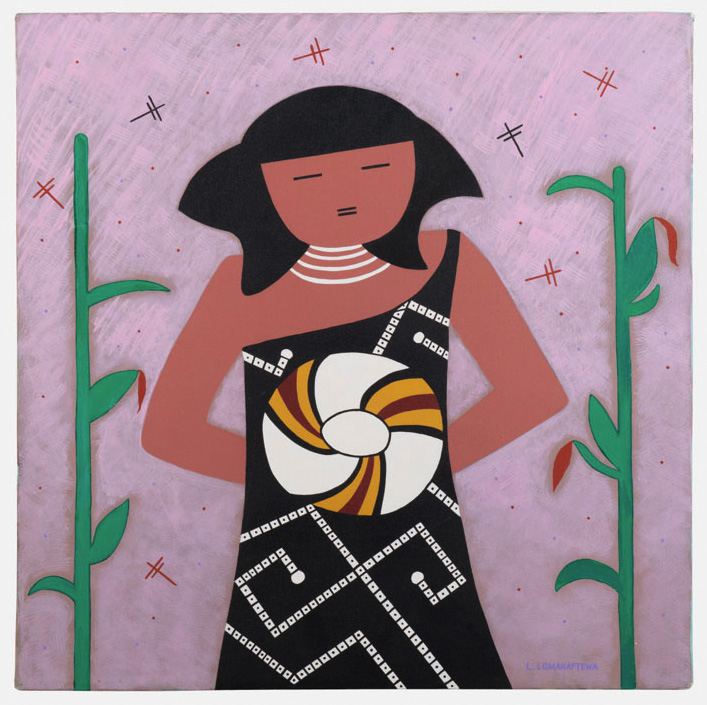 Linda Lomahaftewa (Chahta Okla (Choctaw Nation of Oklahoma)/Hopituh Shi-nu-mu (Hopi), Maiden with Basket, From Pottery Mound, 1983, acrylic on canvas, 18 x 18”. Tia Collection, Santa Fe, NM. Photography Credit: Linda Lomahaftewa, Maiden with Basket, From Pottery Mound, 1983. Courtesy of Tia Collection, Santa Fe, NM. James Hart Photography.
Furthering the freshness are five new acquisitions including a notable work on paper by Chris Pappan (Osage/Kaw/Cheyenne River Sioux), and four major loans from the Santa Fe-based Tia Collection: a painting by Linda Lomahaftewa (Hopi/Choctaw), a Diné dye chart by Vera Myers (Diné), a work on paper by Frank Big Bear (Ojibwe), and a painting by artist, educator and art historian Arthur Amiotte (Oglala Lakota).
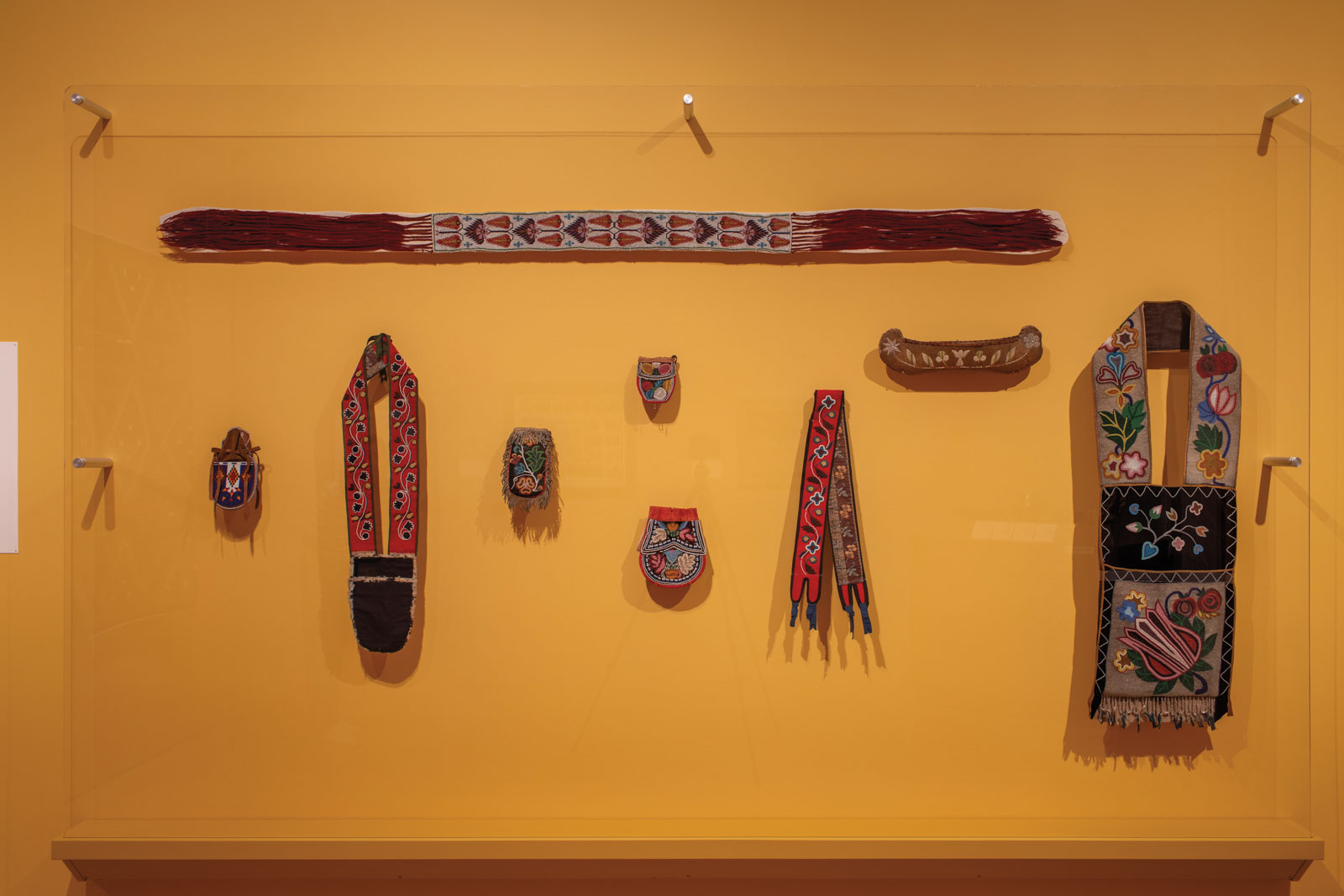 Beadwork, including pieces by Ojibwe artists, at the Speed Art Museum. Photo courtesy Mindy Best.
“We wanted to move away from the previous anthropological view of the collection because those viewpoints cage people in a time in history and those stereotypes that Native people aren’t creating more art, or the myth of the vanishing Native,” Martin says. “We wanted to be very intentional about incorporating modern and contemporary works in the gallery to show the legacies of Native artistic practices throughout the years and that these people that are still creating beautiful works today.”
Nothing new for any other genre of art, still groundbreaking for the display of Native American art in America.
“We wanted to present this collection the same way that any other collection of contemporary or modern and contemporary work would be presented,” nzinga explains.
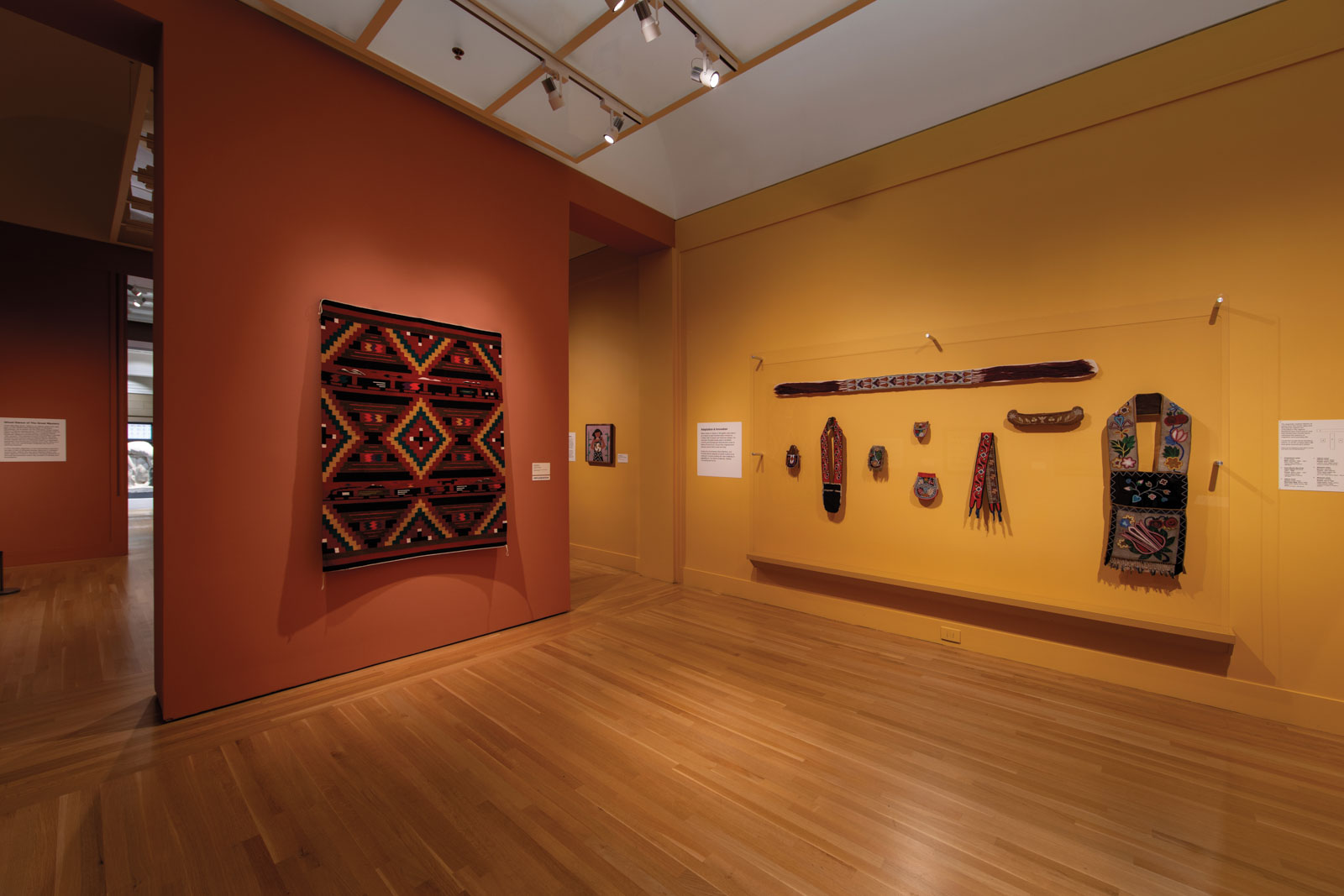 Weavings and beadworks hang inside one of the Native American galleries at the Speed Art Museum. Photo courtesy Mindy Best.
Moving forward, the Speed intends to continue deepening its engagement with Native American art by offering more regular public programs on the subject, inviting contemporary Native artists for talks and workshops. Long Soldier is scheduled for a visit in November to kick off Indigenous Heritage Month. More contemporary Native artwork will be acquired and integrated into the museum’s collection across disciplines. The Speed’s merchandiser has been contacting Native-owned businesses and artists for representation in the museum store.
“We’re engaging our entire institution in uplifting this collection and uplifting the people and the cultures that are birthing these masterful works,” Martin says.
For information about the museum and collection, visit the website, www.speedmuseum.org.
Powered by Froala Editor


