
Artist DY Begay is a fourth-generation Navajo weaver known for tapestry art that is both highly contemporary and deeply rooted in her traditional Diné upbringing in Tsélaní on the Navajo Nation reservation. More than three decades of the artist’s innovative work is represented in the exhibition Sublime Light: Tapestry Art of DY Begay, on view at the National Museum of the American Indian (NMAI) September 20 through July 13, 2025.
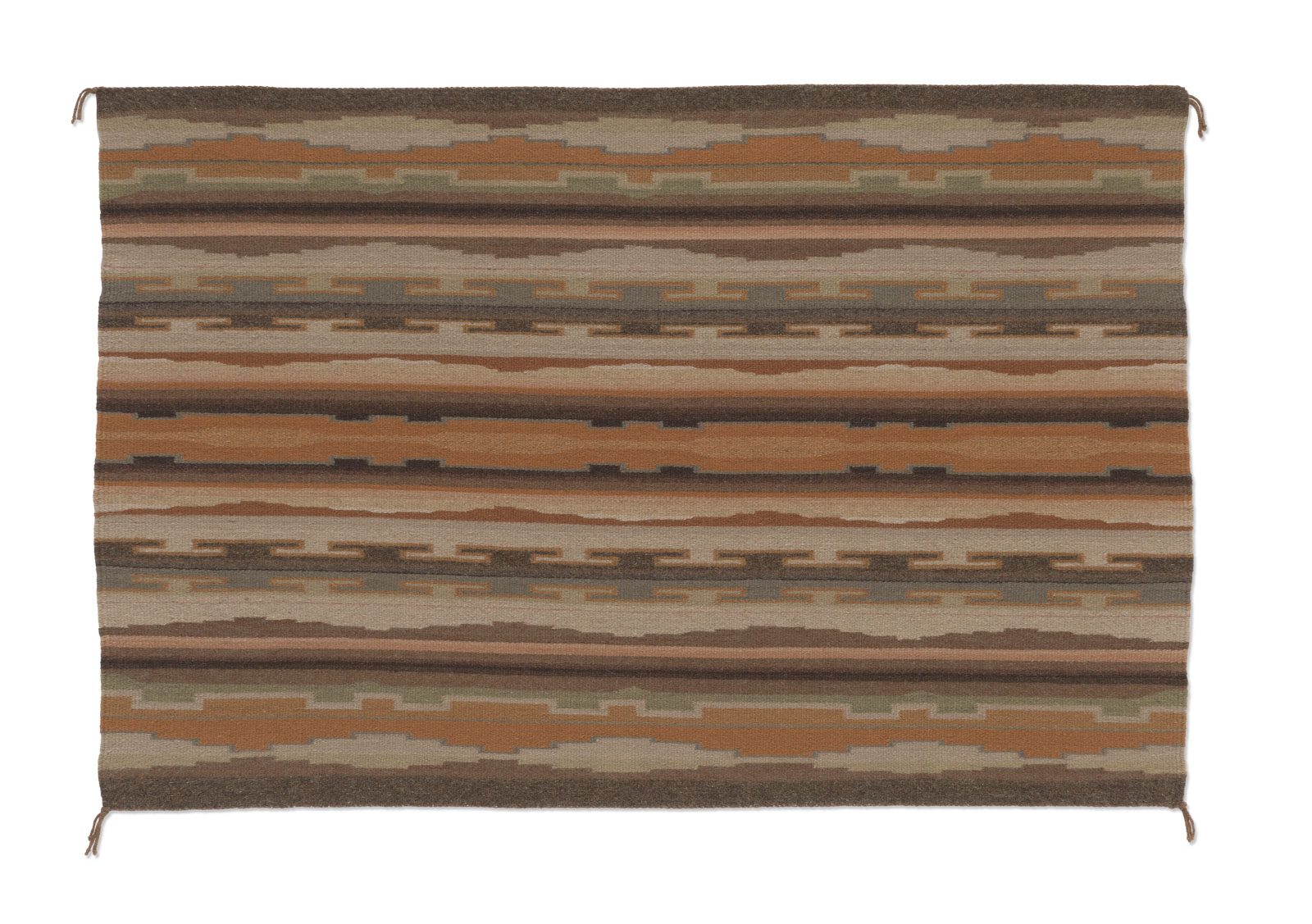 Mountains Behind the Hogan, 1999, wool, plant and lichen dyes, 463/8 x 3013/16”. Private collection, Washington, D.C. Photo by Walter Larrimore for NMAI.“DY Begay has rethought the possibilities of Diné weaving,” says NMAI curator Cécile R. Ganteaume. “She creates on a traditional Diné upright loom, works with Diné traditional materials, notably churro wool, which she hand spins and hand dyes herself using mostly natural dyes, and in the widely practiced Diné weaving technique known as plain weave. However, her weavings (i.e., her compositions and use of color) are highly distinctive, both stylistically and conceptually. Begay’s tapestries are evocative of her experiences of, and identity with, Tsélání in color and fiber.”
Begay’s distinctive style is characterized by undulating horizontal bands and the painterly effects achieved through color blending and gradation techniques.
“At the turn of the 21st century, when Begay was beginning to distinguish herself creatively, Diné weavers were working mainly within one or more of the approximately 15 weaving styles referred to collectively as Diné (or Navajo) regional rug styles,” Ganteaume explains. “…In the 1990s, however, Begay was feeling that she was not going to be satisfied working within established Diné weaving genres and began to develop a unique visual vocabulary and approach to weaving, which would result in a new kind of pictoriality and manner of representing space. Begay eventually developed an aesthetic that was a radical departure from that of her contemporaries.”
Mountains Behind the Hogan, a richly colored, banded tapestry from 1999, exemplifies a significant turning point in Begay’s conceptual and stylistic approach, breaking away from the geometrical design elements employed in many regional weaving styles to create a work inspired by the geology of Tsélaní terrain.
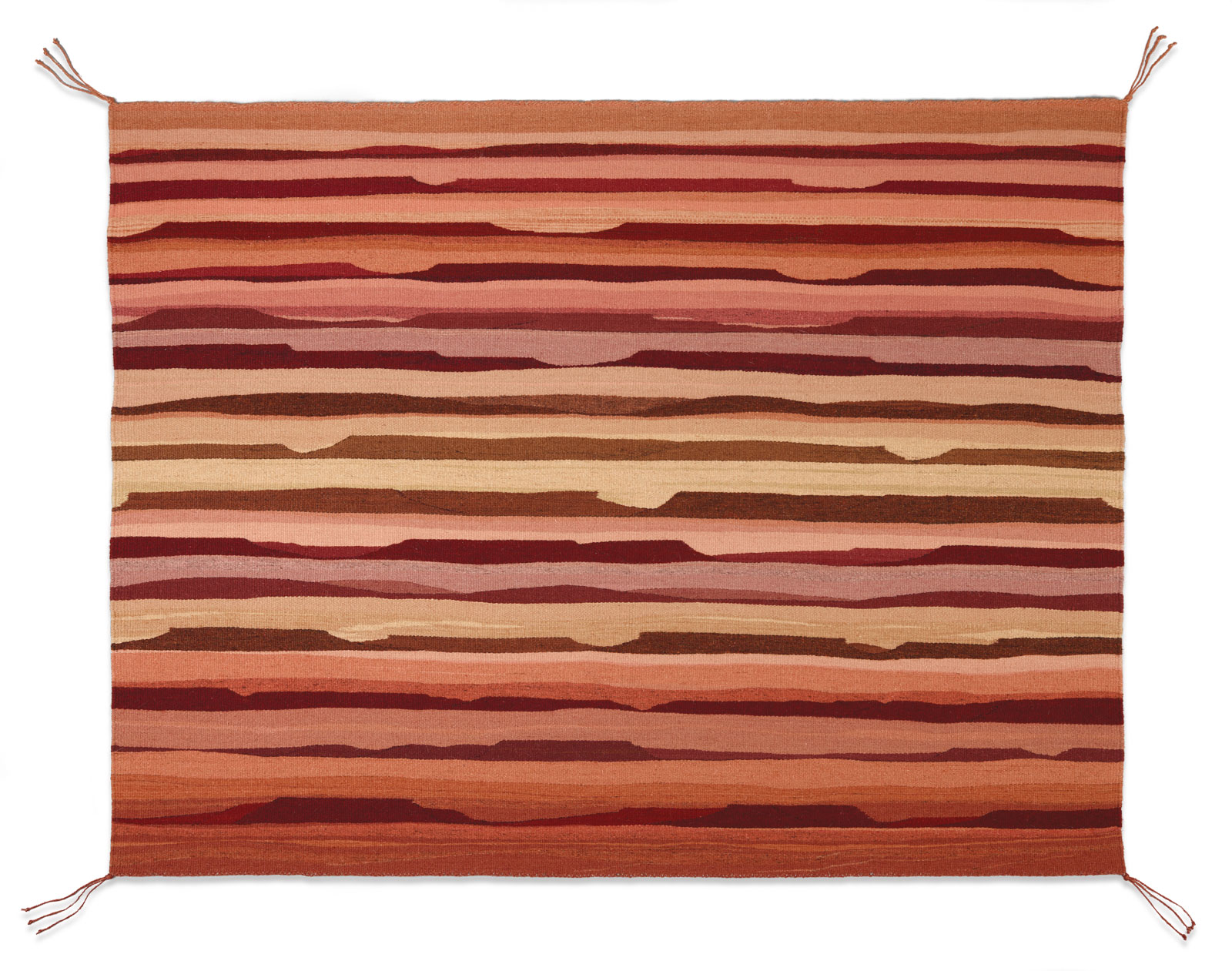 Intended Vermillion, 2015, wool with plant, insect and synthetic dyes, 49 x 37½”. Denver Art Museum: Commissioned and funded by Kent and Elaine Olson for the Denver Art Museum, 2015.266.
Another landscape-inspired tapestry from 2015 highlights Begay’s virtuosic handling of color and evokes the vastness of her homeland. “In tapestries such as Intended Vermillion, Begay was in the process of working out a personal design vocabulary and aesthetic,” says Ganteaume. “…Begay’s personal aesthetic was and is based on her manner of working with color combinations, whether those combinations entail weaving with different colors, different intensities of values of the same color, or both.”
Begay created Monumental Edge 2 in 2020. The weaving, a bold red, shot through with uneven dark bands of color, is an example of the artist’s daring abstract compositions and her persistence in creating a sense of equilibrium through asymmetry.
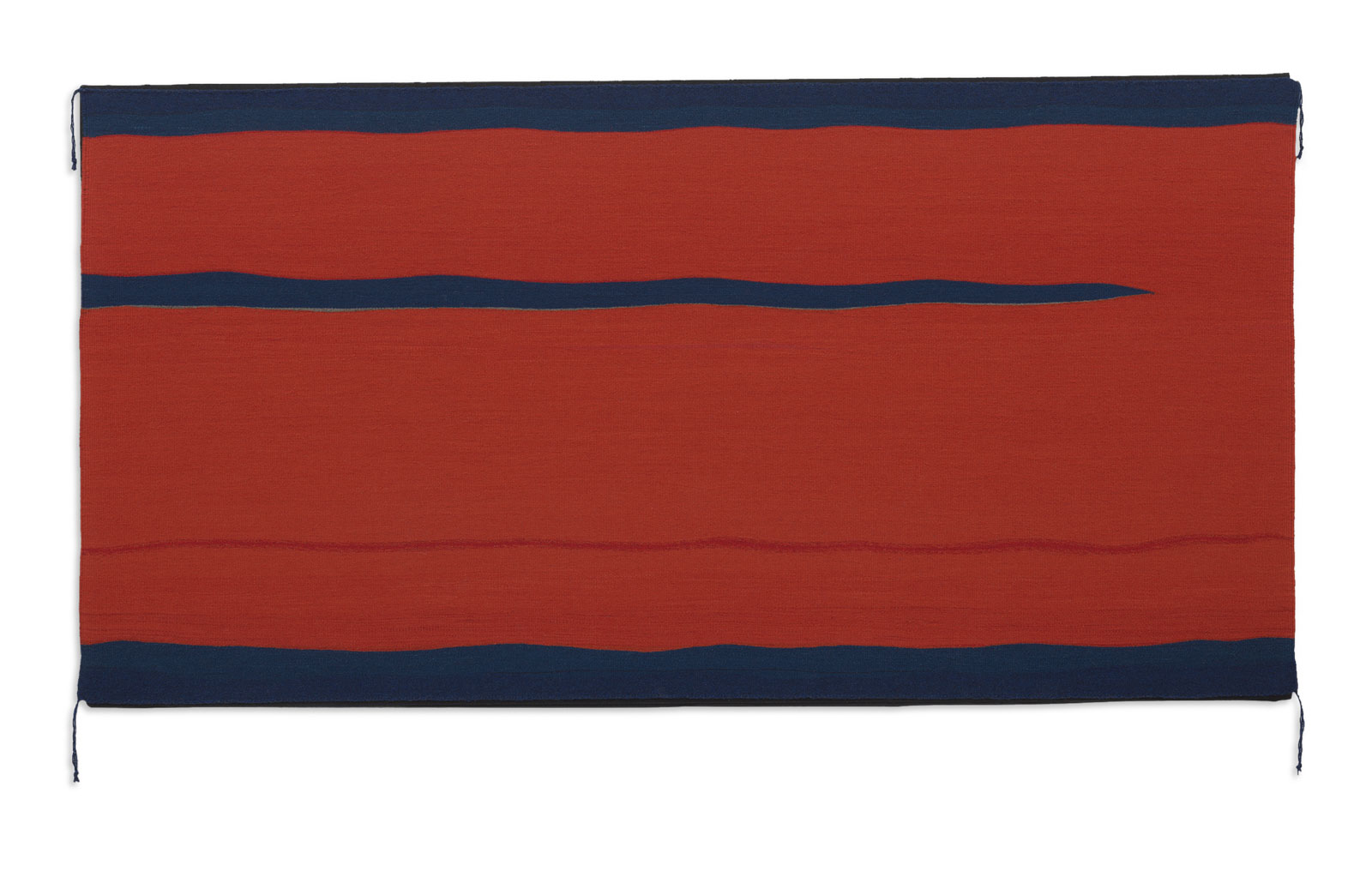 Monumental Edge 2, 2020, wool, plant dye, insect dye and synthetic dye, 77½ x 39”. Collection of Merrilee Caldwell and Marcus Randolph. Photo by Walter Larrimore for NMAI.“Begay was born into a family of weavers and sees her art practice as continuing the legacy of her great-great-great grandmother and maternal clan matriarch,” says Ganteaume. “Taught by watching her mother and grandmothers at their looms, Begay was raised to regard weaving as a gift from Spider Woman, and the Diné traditions in which she was raised and her contemporary artistic passions are deeply intertwined. In other words, Begay’s weaving practices…are imbued with her identity as a Diné woman.
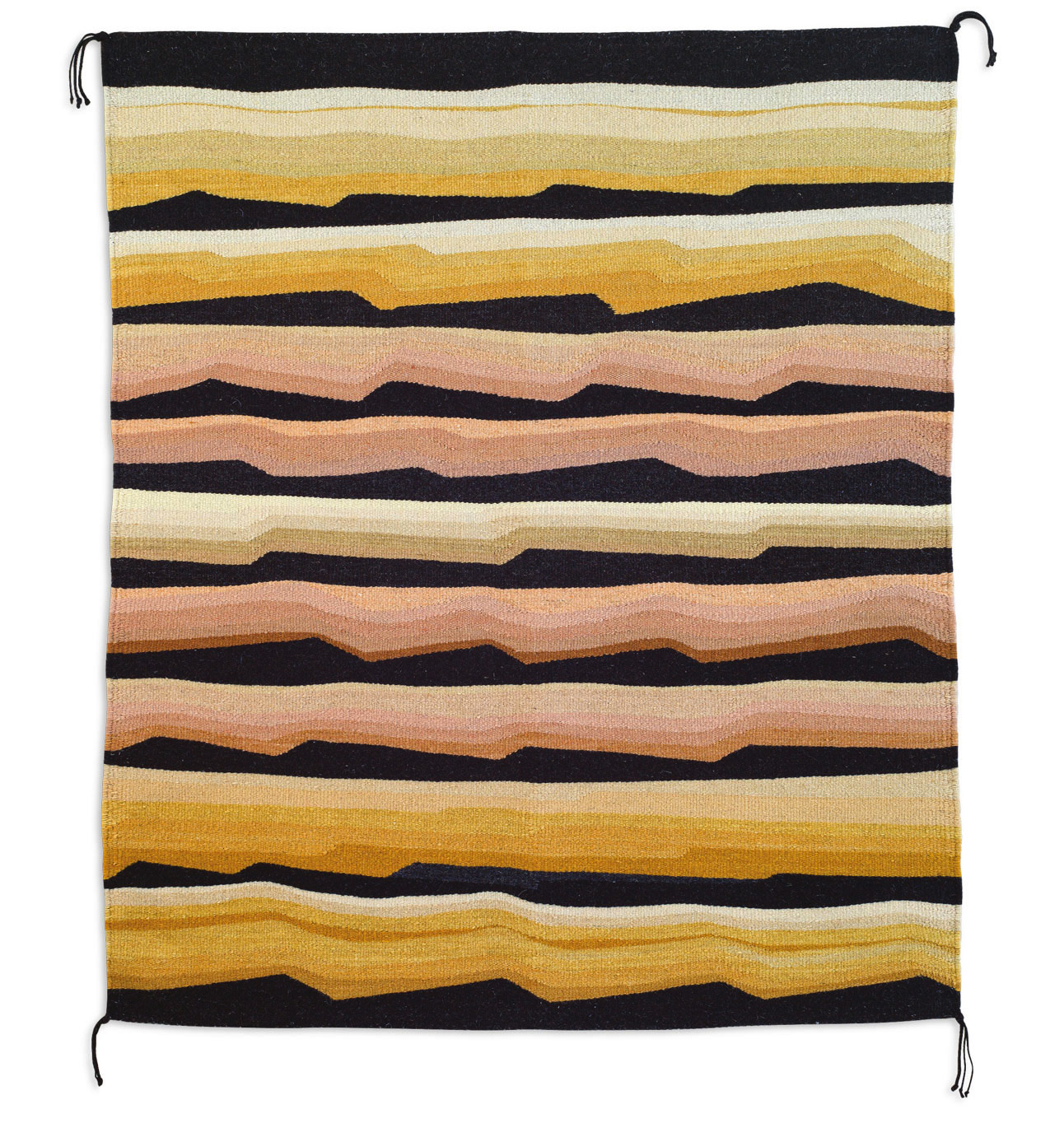 The Edge, 2013, wool and plant dyes, 343/4 x 401/4”. Saint Louis Art Museum, funds given by Elissa and Paul Cahn.
“Begay’s Tsélání-inspired tapestries are deeply personal,” continues Ganteaume. “Her moments of inspiration for her compositions and color choices are sparked by Tsélání’s land and skyscapes. When she reinterprets Tsélání in her tapestries, she is infusing them with her memories of being with different family members, and with what they valued, practiced, and taught her. They are powerful acts of remembering and re-imagining. She herself refers to her tapestries as intimate responses to the land.”
Sept. 20, 2024-July 13, 2025
Sublime Light: Tapestry Art of DY Begay
National Museum of the American Indian, Fourth Street SW, Washington, D.C. 20560
(202) 633-1000, www.americanindian.si.edu
Powered by Froala Editor


