An exhibition now on view at the Wheelwright Museum of the American Indian takes a unique approach to celebrating the artistry of Pablita Velarde, daughter Helen Hardin and granddaughter of Margarete Bagshaw. Each artist carved a path for themselves as some of the most important painters of their respective generations, cementing their statuses as juggernauts of the Indigenous art world.
However, this new exhibition at the Wheelwright focuses not on the paintings and pottery of this prolific family of artists, but instead, on the art they wore.
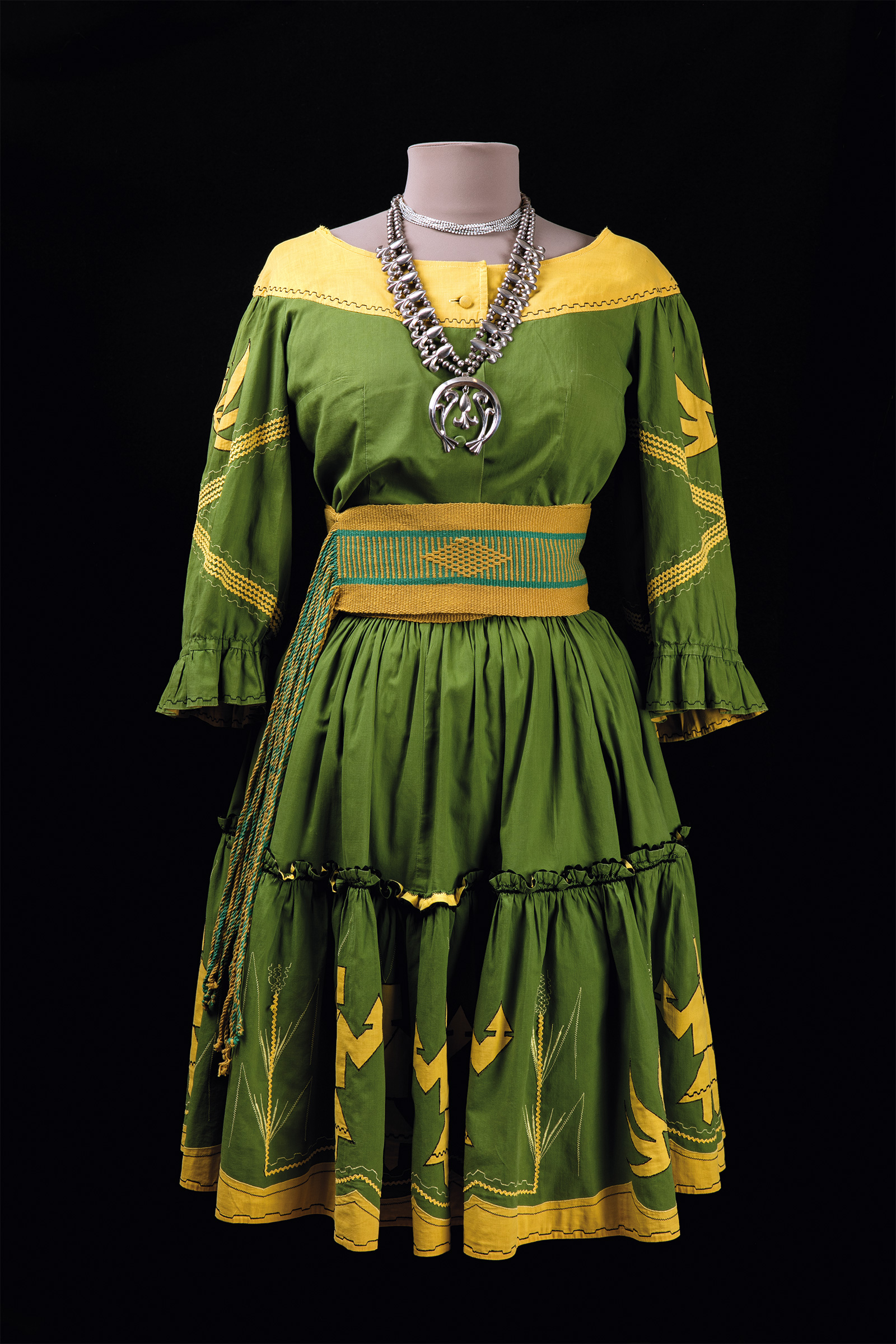 Green and yellow with matching sash. Velarde owned several coordinated outfits custom-made by Haskell graduate Theda D. Rushing (1915-2016) whose appliqué work incorporated Native American designs and motifs. Valerde wore this outfit to the reception held for her completed mural at the Western Skies Hotel in Albuquerque in 1958.
“Pablita’s Wardrobe: Family + Fashion was born through conversation with Helen Tindel, Velarde’s great-granddaughter who has inherited whole outfits worn by Pablita Velarde, Helen Hardin and Margarete Bagshaw, as well as a number of their drawings and personal effects,” explains Henrietta Lidchi, Wheelwright Museum executive director. “Thinking about the beauty of these outfits and the way that they embodied both traditional Pueblo clothing styles and contemporary reinterpretations from the 1950s to the 1980s, we were struck by the connection between the clothing that we could see, and the portraiture, formal and otherwise.”
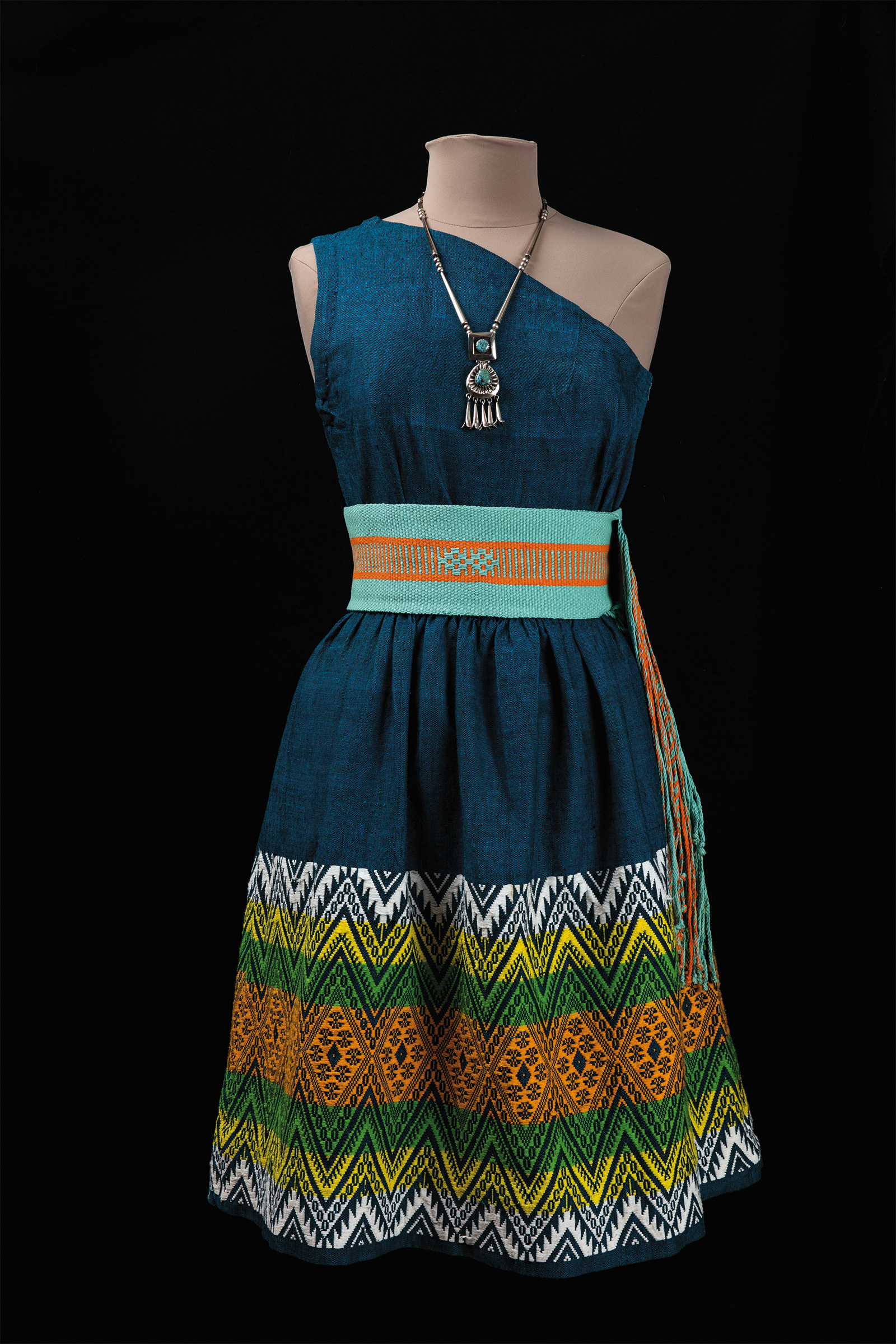 Off-the-shoulder green dress with embroidered trim with matching sash, likely worn by Velarde. Hardin wore a very similar dress to Instituto Guatemalteco Americano, Guatemala City in 1971. Hardin lived for several months in Bogota, Colombia, in 1968 and Guatemala City, Guatemala, in 1971 where she had her first-international solo exhibitions. No attributed makers.More than 50 items from the family collection of Helen Tindel are on display, including six complete outfits featuring vintage clothing, wool and cotton sashes, as well as family jewelry that reflect Pueblo traditions. Accompanying these garments and jewelry pieces are sketches, paintings and other belongings that were owned and shared by the family.
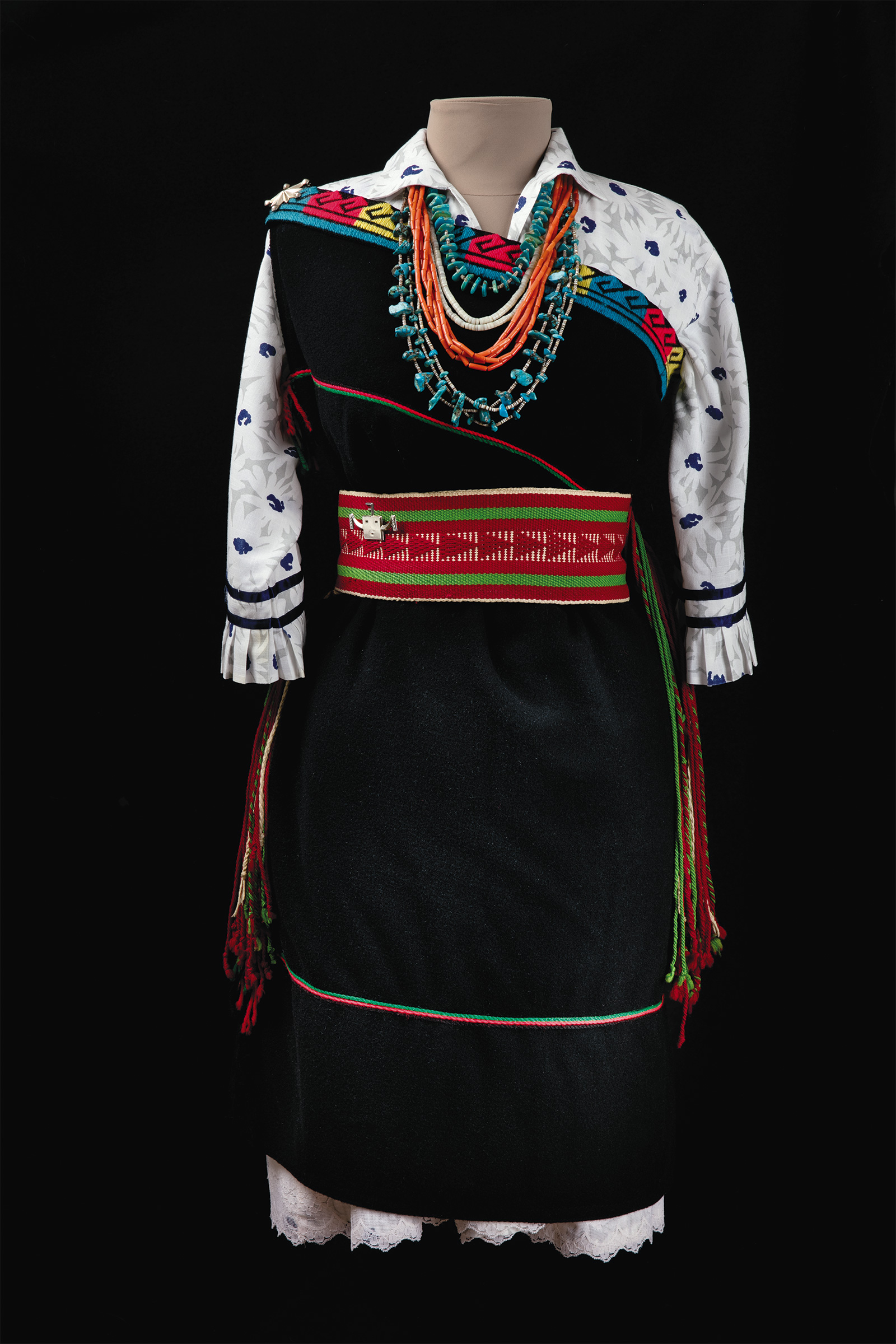 Velarde’s favored blue and white cotton dress, worn with Kuwa poh nuu ah (black manta), the distinctive embroidered trim and her favorite sash, worn throughout Velarde’s life. All were worn at the opening of her retrospective at the Wheelwright Museum, A Woman’s Work, in 1993 and recognizable in a later portrait by John Nieto (1936-2018). No attributed makers.“Clothing has an intimacy, and when well displayed, a human warmth that enables you to see the person,” says Lidchi. “We felt that presenting the outfits with the drawings, photographs, jewelry and other personal effects lends a particular quality of insight to artists so important to the canon of Native American art.”
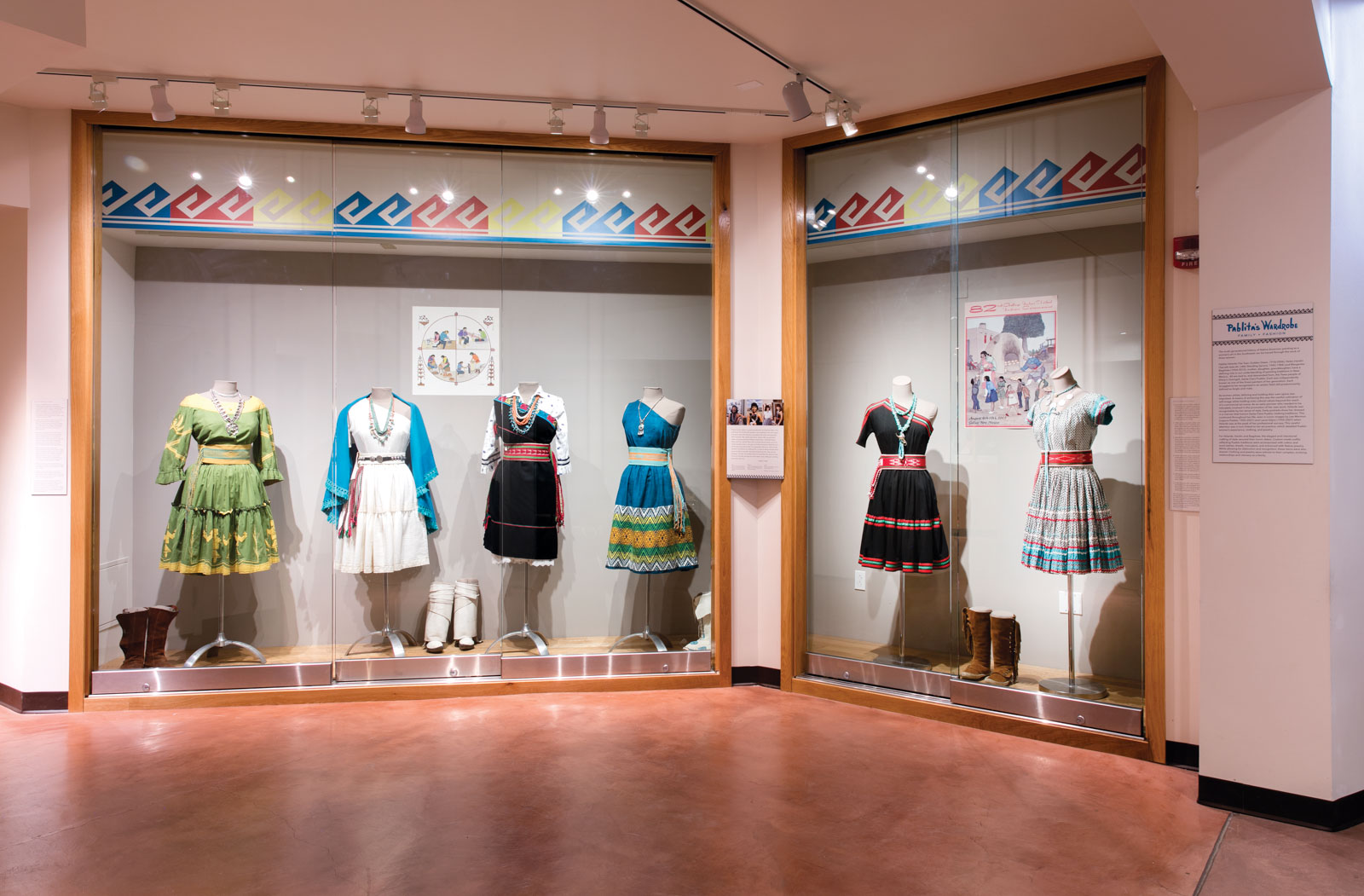 An installation view of the outfits on display in Pablita’s Wardrobe: Family + Fashion. Lidchi explains that part of the thought process in organizing this exhibition was the idea of “self-fashioning,” a concept born out of the public’s interest in Frida Kahlo and her iconic sense of style. “For Velarde, Hardin and Bagshaw, the elegant and intentional crafting of style secured their [own] iconic status. Custom-made outfits reflecting pueblo traditions were accessorized with cotton and wool sashes, shawls, moccasins and enhanced with Native jewelry. And some favorite pieces are shown in the exhibition, worn over many decades,” says Lidchi. “The show is compact, but we hope that visitors will experience the embodied beauty of the clothing and ponder on the lives of the women, each of whom has a distinctive and brilliant contribution to the American art canon.”
Through April 12, 2025
Pablita’s Wardrobe: Family + Fashion
Wheelwright Museum of the American Indian 704 Camino Lejo, Sante Fe, NM 87505
(505) 982-4636 • www.wheelwright.org
Powered by Froala Editor


