While Native Plains artists once used items like rocks and animal hide for recording and painting, the modern era ushered in the practice of using paper. By 1860, “…painting or drawing on paper was more common,” says Dr. Eric D. Singleton, curator of Native American art and ethnology at the National Cowboy & Western Heritage Museum. “The first known example from the Great Plains of painting on paper [is thought to have] occurred in 1834, when Mandan warrior Mató-Tópe (Four Bears) was given paper by Karl Bodmer to depict his own war narrative.”
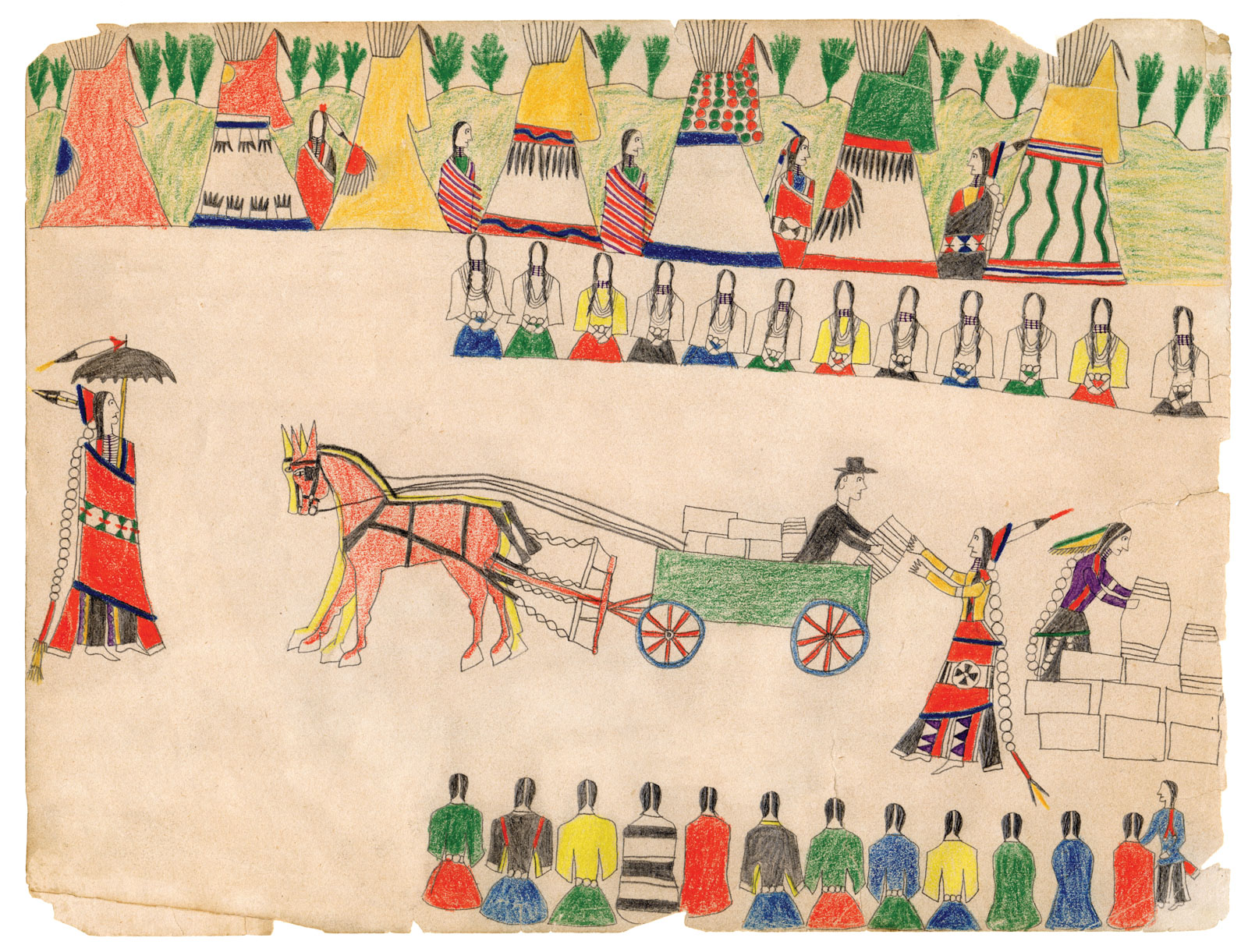 Bear’s Heart (Cheyenne), Distributing Annuities, 1875-1878, pencil on paper. The Arthur and Shifra Silberman Collection. National Cowboy & Western Heritage Museum. 1997.07.010.
Eventually, Native American artists took to repurposing ledger or accounting books from U.S. soldiers and traders for drawing and painting. This resulted in what we know today as “ledger” art—a subgenre that has reached popularity and great significance largely due to historical implications.
Singleton continues to explain that what was once a “practical” transition to paper, eventually became a necessity. “While incarcerated at Fort Marion (where 72 Native American warriors were taken after the tensions of the Red River War in 1874), Cheyenne warriors used books and sheets of paper to illustrate their life on the Great Plains and inside the prison,” says Singleton. “Crayons, inks, graphite and colored pencils were the primary media used by the artists. Today, this tradition continues with artists incorporating watercolor, acrylic and other media to communicate their feelings and stories on paper.”
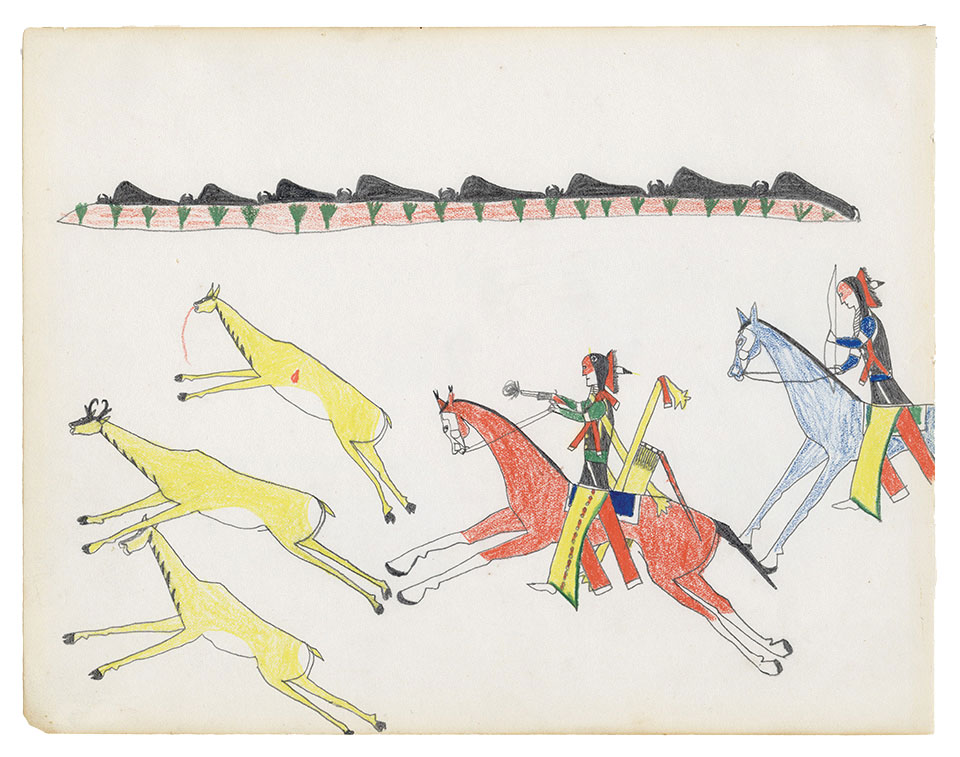 Squint Eyes (Cheyenne), Hunting Antelope, 1875-1878, pencil on paper. The Arthur and Shifra Silberman Collection. National Cowboy & Western Heritage Museum. 1996.17.0144.
Currently on view at the National Cowboy & Western Heritage Museum, is the exhibition featuring 52 ledger drawings and six objects titled Cheyenne Ledger Art from Fort Marion.
The exhibition is organized in two parts, and is divided by a wall that mimics the stone fortifications of Fort Marion. “The first part discusses who the Cheyenne people are and focuses on ledger drawings that depict hunting, courting and daily life scenes,” says Singleton. “We are including a war shirt, Little Rock shield, a Sharps carbine and society leggings into this section.”
Singleton continues, “After exploring this area, guests will then pass through the reproduced walls of Fort Marion and enter the fort. This area will include drawings that show life in the fort…It shows the captive Cheyenne in military uniforms repairing the roof of the fort and completing morning exercises. In this section, we will include contemporary artwork by Gordon Yellowman and a video of him escorting a horse into the fort two years ago. It will also include a vase painted by Bear’s Heart, and a shield used at the fort.”
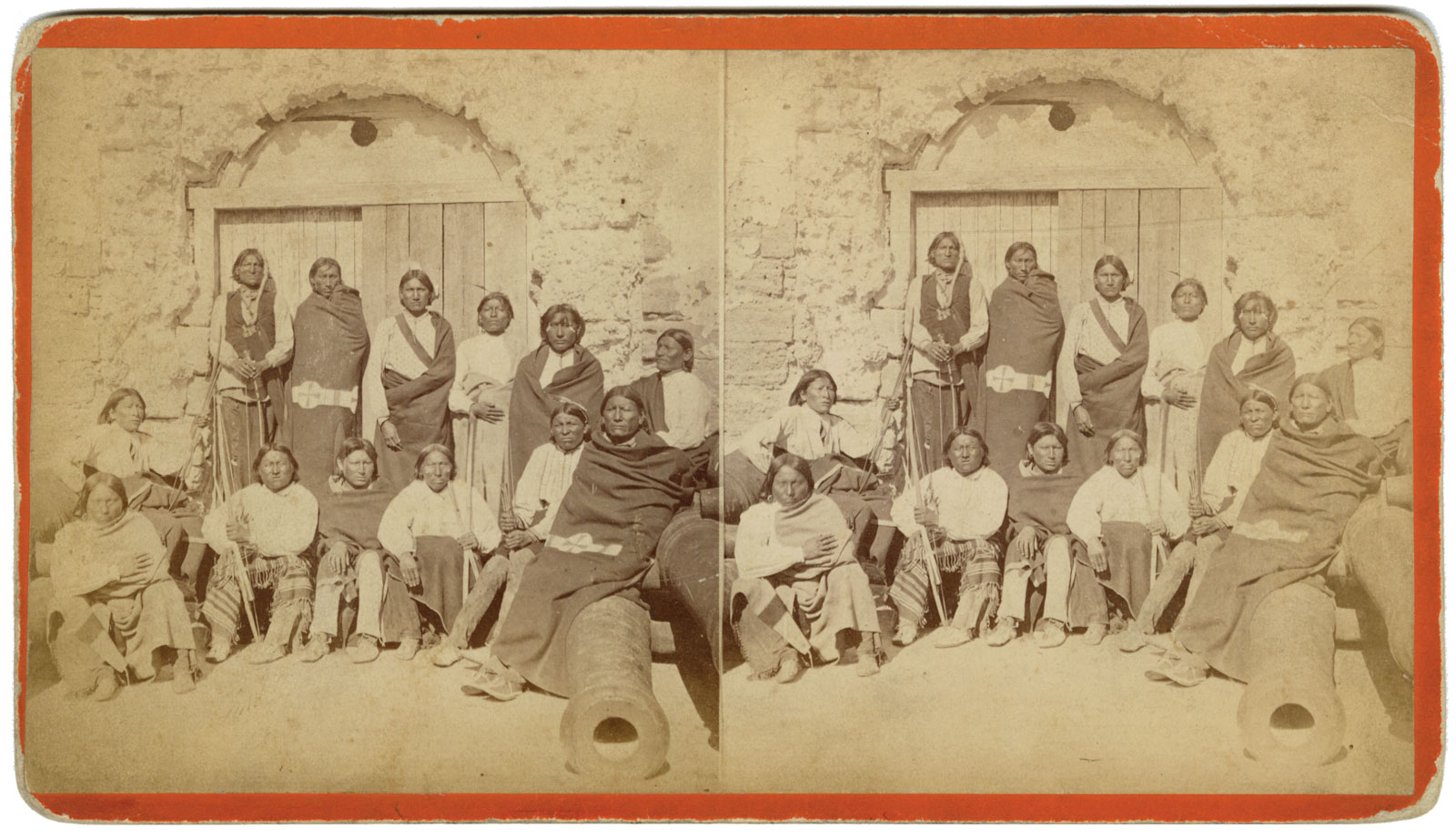 Group of Cheyenne and Arapahoe Indians confined in Fort Marion, St. Augustine, Florida. Wilson & Havens, ca. 1875, stereograph. Photographic Study Collection, Dickinson Research Center, National Cowboy & Western Heritage Museum. 2005.108.1.
Viewers will find several ledger art pieces by Bear’s Heart, with highlights like Distributing Annuities. Singleton explains the scenery involved with the piece created in pencil: “The U.S. Government issued annuities to the Cheyenne in exchange for land cessions. The person taking the barrel is a Cheyenne Chief and wearing a blanket made of trade cloth. The blanket has a beaded strip showing a chief design. The person holding the umbrella is also a Cheyenne Chief. The individuals sitting are family members who are waiting for their turn to receive annuities…”
Additional highlights include Hunting Antelope by Squint Eyes, “focusing on a time before the warriors were imprisoned, and shows the freedom they held before the migration of Euro-Americans into the region,” says Singleton.
To experience more historical objects, ledger art works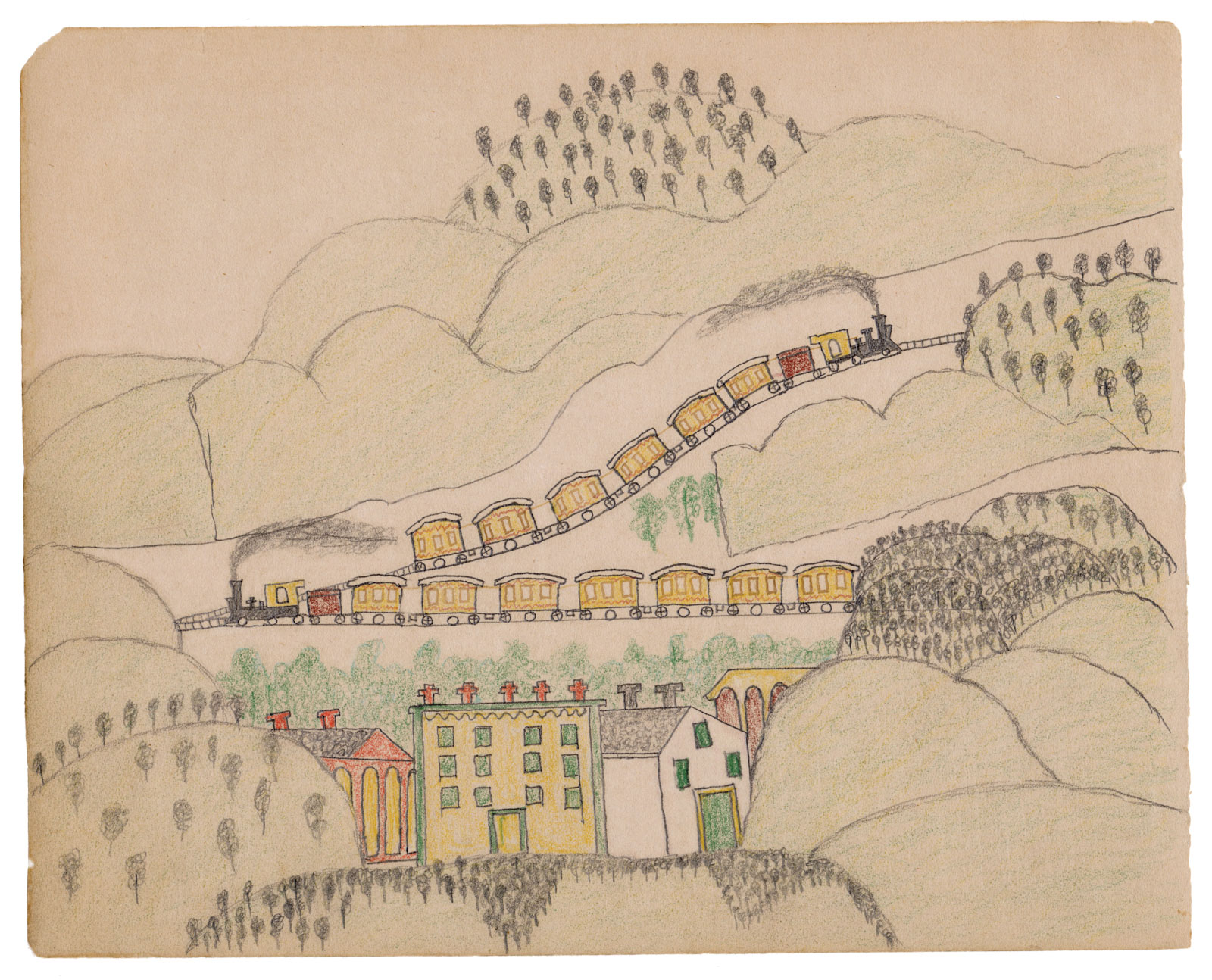 Making Medicine (Cheyenne), Two Trains Passing Through a Town, 1875-1878, pencil on paper. The Arthur and Shifra Silberman Collection. National Cowboy & Western Heritage Museum. 1996.27.0538.
and to educate yourself on the impact of the Fort Marion incarceration, visit the National Cowboy & Western Heritage Museum in Oklahoma City, Oklahoma, through January 5, 2025.
Through January 5, 2025
Cheyenne Ledger Art from Fort Marion National Cowboy & Western Heritage Museum
1700 Northeast 63rd Street, Oklahoma City, OK 73111
(405) 478-2250, nationalcowboymuseum.org
Powered by Froala Editor


