In addition to exhibitions showcasing contemporary Indigenous arts in the coming year, museums across the country will delve into Native history in America.
The Pueblo Revolt of 1680, led by Po’pay, a Tewa religious leader from Ohkay Owingeh, features in several exhibitions. The successful revolt against Spanish colonizers allowed the pueblos of New Mexico to live free until the Spanish returned with a vengeance in 1692.
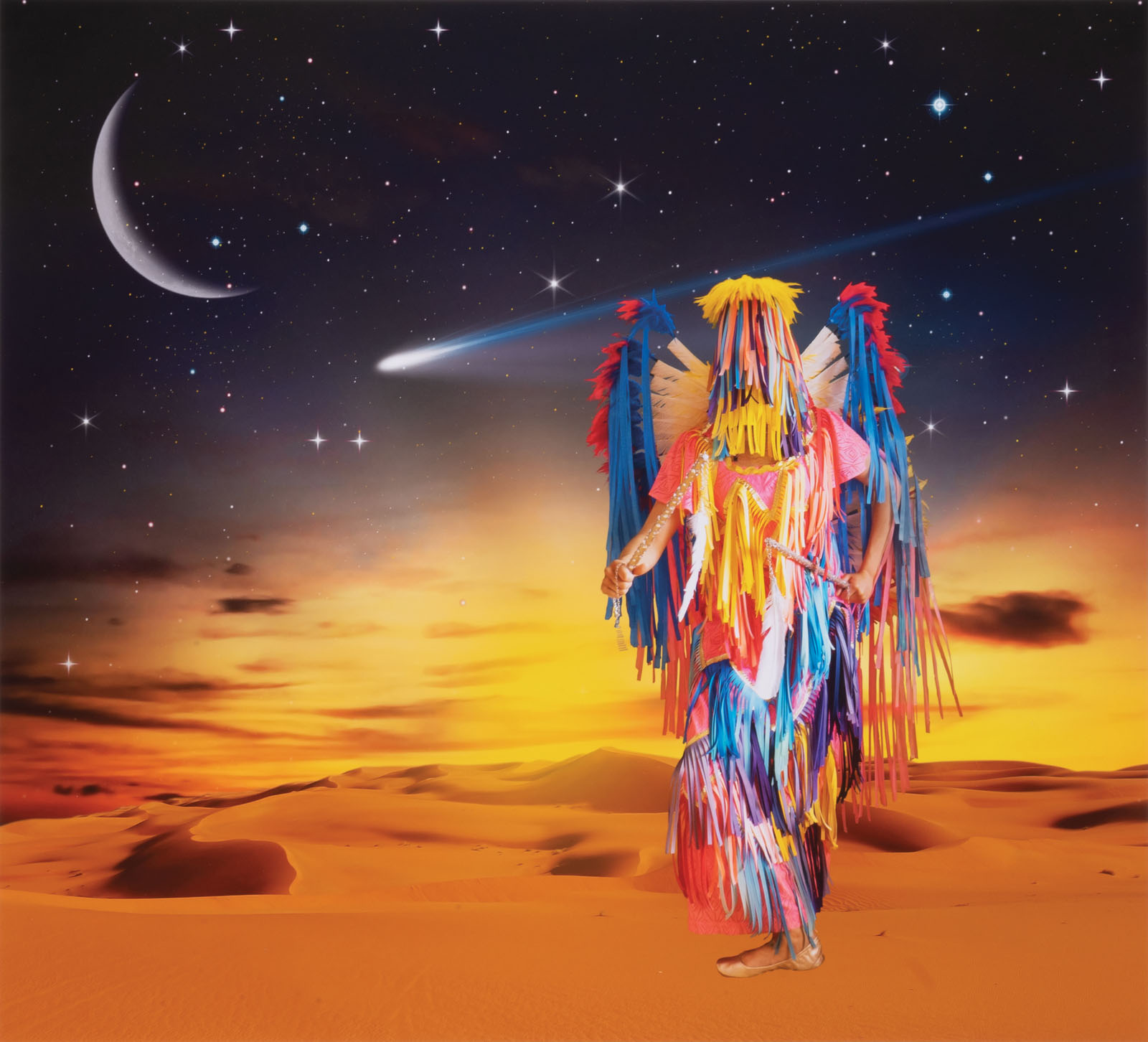 Wendy Red Star (Apsáalooke (Crow)), Stirs Up the Dust, 2011. Gift of Loren G. Lipson, M.D., Autry Museum, Los Angeles. Courtesy of Wendy Red Star. Autry Museum of the American West, 2018.16.1. From Stirs Up the Dust at Autry Museum of the American West, Los Angeles, CA.
Lithographs of the revolt by Cochiti Pueblo artist Diego Romero will be included in the exhibition Storytellers: Narrative Art of the West at the Briscoe Western Art Museum in San Antonio, Texas, October 4 through January 19, 2025. A colorful new mural by Leah Povi Marie Lewis (Laguna/Taos/Zuni/Hopi/Diné) and Votan Henriquez (Maya/Nahua), Poeh Ah Ka Wohatsey: The Emergence Teachings of Resilience, celebrating Po’pay and pueblo empowerment, is on display at the Indian Pueblo Cultural Center in Albuquerque, New Mexico, through June 1, 2025. As part of its exhibition Future Imaginaries: Indigenous Art, Fashion, Technology, the Autry Center of the American West in Los Angeles is presenting ReVOlt 1680/2180: Sirens & Sikas by Virgil Ortiz (Cochiti Pueblo), through October 18, 2026. The mixed media presentation is a retelling of the history of the event.
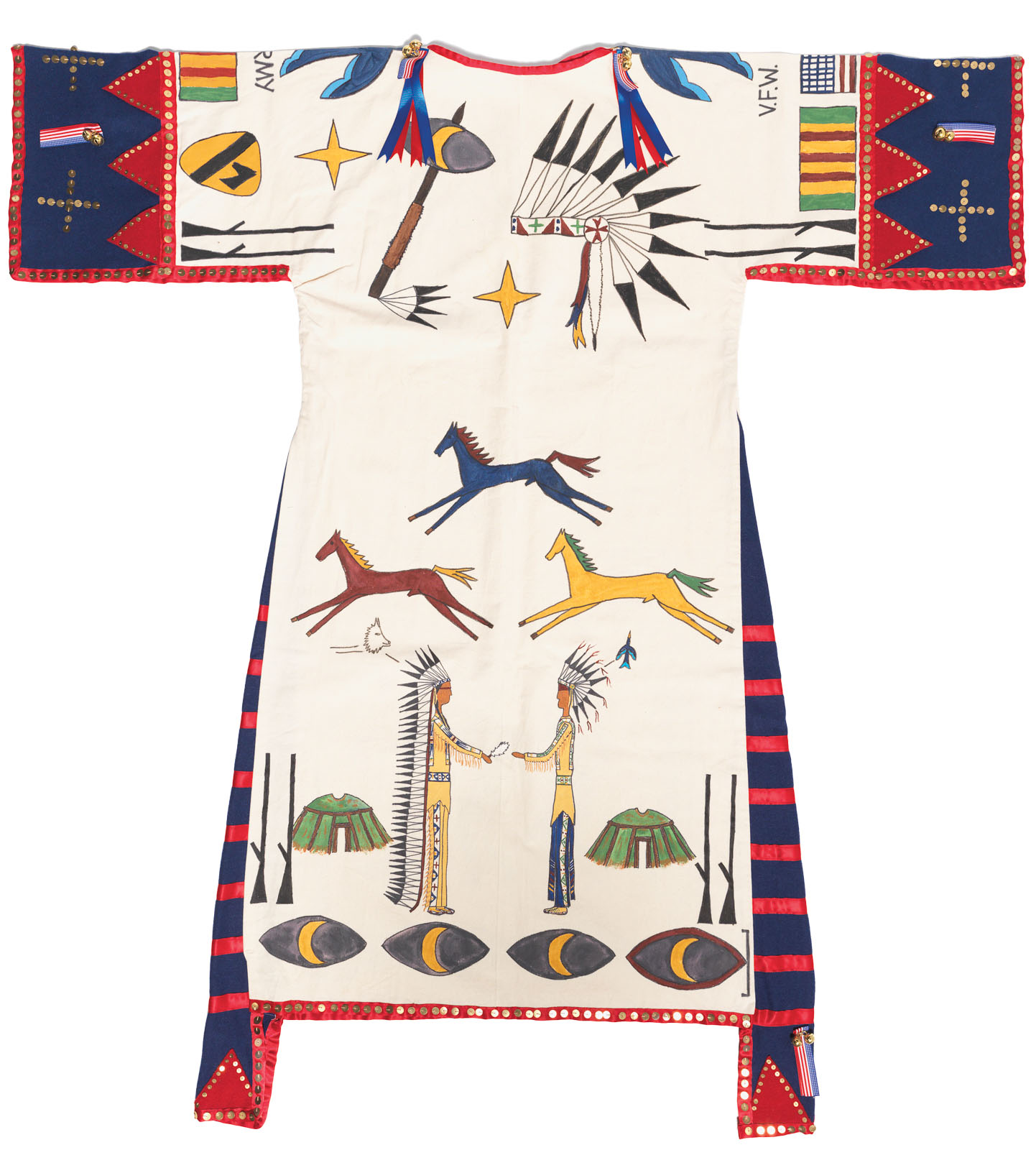 Lauren Good Day (Arikara/Hidatsa/Blackfeet/Plains Cree), A Warrior’s Story, Honoring Grandpa Blue Bird, 2012, muslin, dyed wool fabric, pigments, brass sequins, brass bells, satin ribbon, cotton thread, acrylic sinew, 59½ x 55¾ x 1”. Purchase supported by the R. Devon Hutchins Memorial Contemporary Art Fund, 26/8817. From Unbound: Narrative Art of the Plains at the National Museum of the American Indian, Washington, D.C.
The Philbrook Museum’s exhibition War Club: Native Art & Activism continues the theme of resistance and the “fight for cultural sovereignty” with contemporary examples that show “how intergenerational Native artists use their paintings, photography, sculpture, and more as powerful tools to investigate, inform, and empower all in the fight for human rights.” The exhibition continues through June 29, 2025, at the museum in Tulsa, Oklahoma.
The Autry Museum of the American West continues the exhibition Reclaiming El Camino: Native Resistance in the Missions and Beyond through June 15, 2025. The museum explains, “This exhibition repositions (and reclaims) the El Camino Real as the ancient and well-worn trade route for Native people long before the establishment of the Franciscan Missions in Baja and Alta California.”
The Autry is also re-presenting objects in its collection, as well as in the promised collection of Lora and Robert U. Sandroni, in the exhibition Creative Continuities: Family, Pride, and Community in Native Art, through June 2027. Three Native culture bearers consider objects from their own communities, exploring “the cultural meanings, histories and concepts embedded into three aspects of Native cultural items: ‘Knowing,’ ‘Create’ and ‘Transference.’”
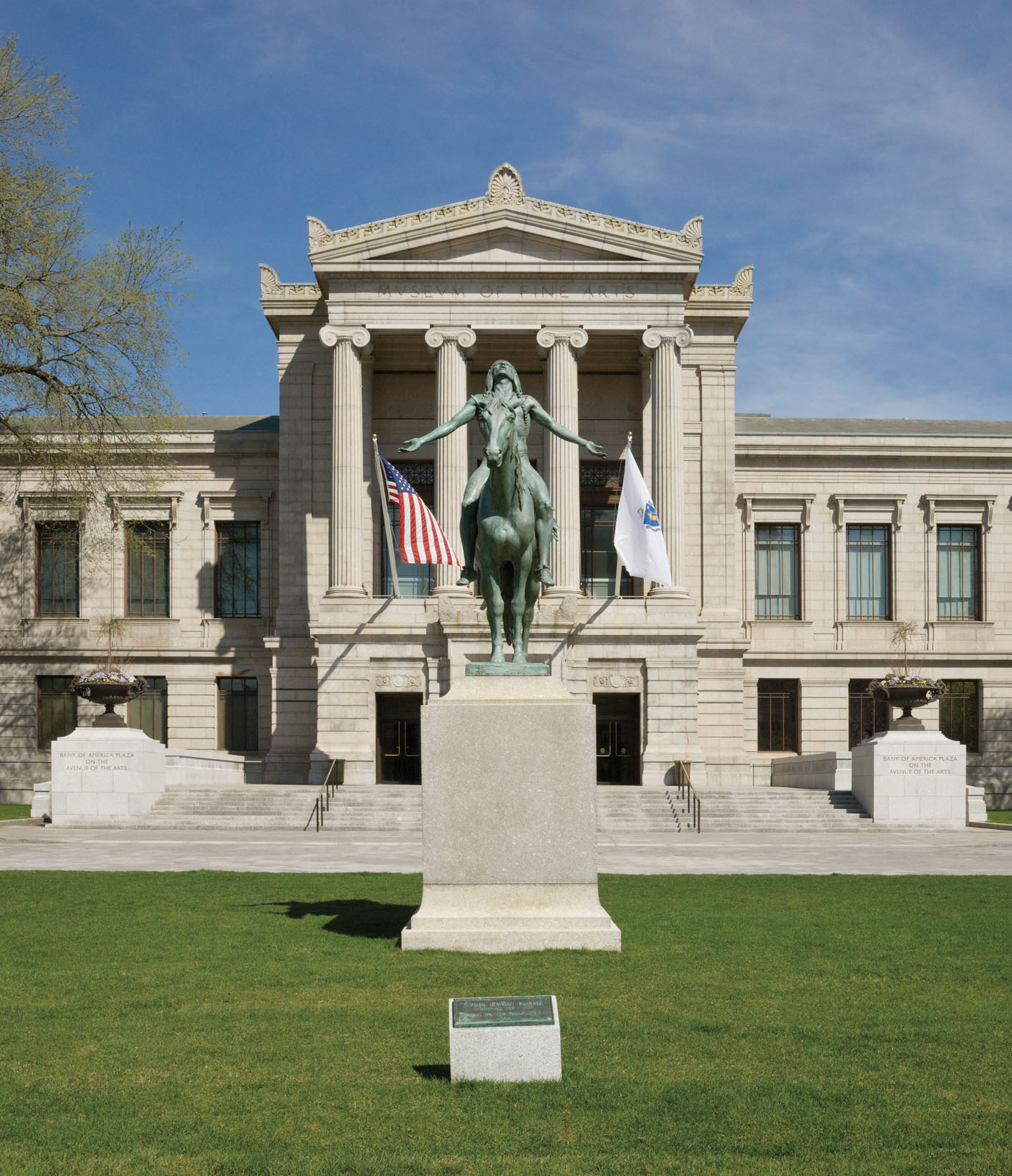 Appeal to the Great Spirit by Cyrus Dallin (1861-1944) in front of the Museum of Fine Arts, Boston. The plinths on the sides of the museum’s steps will hold Alan Michelson’s sculptures The Knowledge Keepers at the Museum of Fine Arts, Boston.
The Museum of Fine Arts, Boston reexamines the responses to the sculpture Appeal to the Great Spirit by Cyrus Dallin (1861-1944) that has stood at the center of the museum’s entrance plaza since 1912. Alan Michelson, a Mohawk member of Six Nations of the Grand River who attended the School of the Museum of Fine Arts at Tufts University, has been commissioned to create sculptures on two plinths at the base of the museum’s entrance steps behind the Dallin sculpture. The plinths are currently topped with bronze urns. This is the first of a series of annual commissions for art on the plinths and opens November 14.
Michelson writes, “What is a statue of an anonymous plains rider doing in front of the Museum of Fine Arts, Boston? Why is he wearing a war bonnet yet unarmed, and also a Navajo necklace? Why is he supplicating? I often asked myself these questions when passing the statue on the trolley…In 1909, when Cyrus Dallin cast Appeal to the Great Spirit in Paris, the image of the noble but defeated Plains warrior as an exemplar of the ‘vanishing race’ was popular worldwide. In 2024, I hope my site-specific installation will challenge ingrained stereotypes and racial myths by presenting a story of survivance and agency, not defeat or appeal, and I thank the museum for supporting this work.”
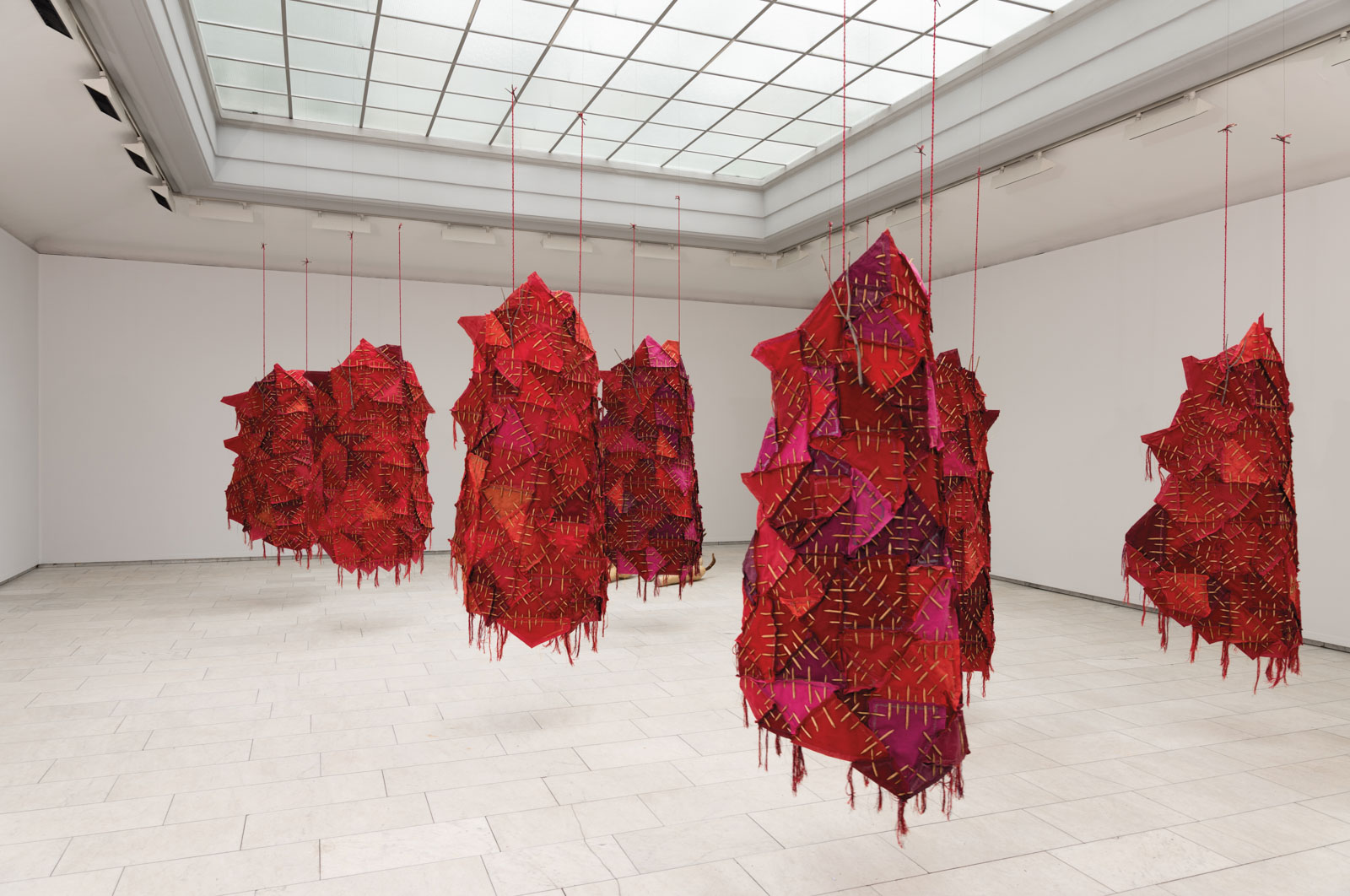 Aslaug Magdalena Juliussen (Sámi), Várddus – Vy – View, 2017-2023, textiles, fibers and animal skins, 71 x 51 x 2”. Courtesy of Kunstnerforbundet. From Common Thread: Indigenous Perspectives from the Arctic at the Museum of Contemporary Native Art, Santa Fe, NM.
The Northwest Museum of Arts and Culture in Spokane, Washington, continues its exhibition 1924: Sovereignty, Leadership, and the Indian Citizenship Act, through February 2, 2025. The act granted U.S. citizenship to Native Americans born in the United States. The museum explains, “This exhibition commemorates this 100-year anniversary, centering on early local tribal leadership as they and their people navigated the sometimes-conflicting nature of being both U.S. citizens and citizens of their own sovereign nations.”
Wendy Red Star (Crow) examines the historical and current role of photography in the depiction of Native peoples in the exhibition Native America: In Translation at the Blanton Museum in Austin, Texas. An exhibition of her own work, Stirs Up the Dust, continues at the Autry into 2025. The exhibition continues the theme of fashion in current exhibitions at the Autry. “Red Star reimagines the regalia associated with powwow, a circular dance celebration found throughout Indigenous Plains cultures including Red Star’s Crow Nation, in futuristic terms,” the museum notes. “A powerful form of self-expression, powwow regalia has itself been morphing over time, from buckskin, beadwork and feathers to embrace satin, lamé and sequins. In Stirs Up the Dust, Red Star brings a feminist lens (women have only been allowed to dance in powwow circles since 1953) to this iconic look, using candy-colored streamers, an elaborate bustle, and a conceptual headpiece reminiscent of the outlandish headgear seen on high fashion runways.”
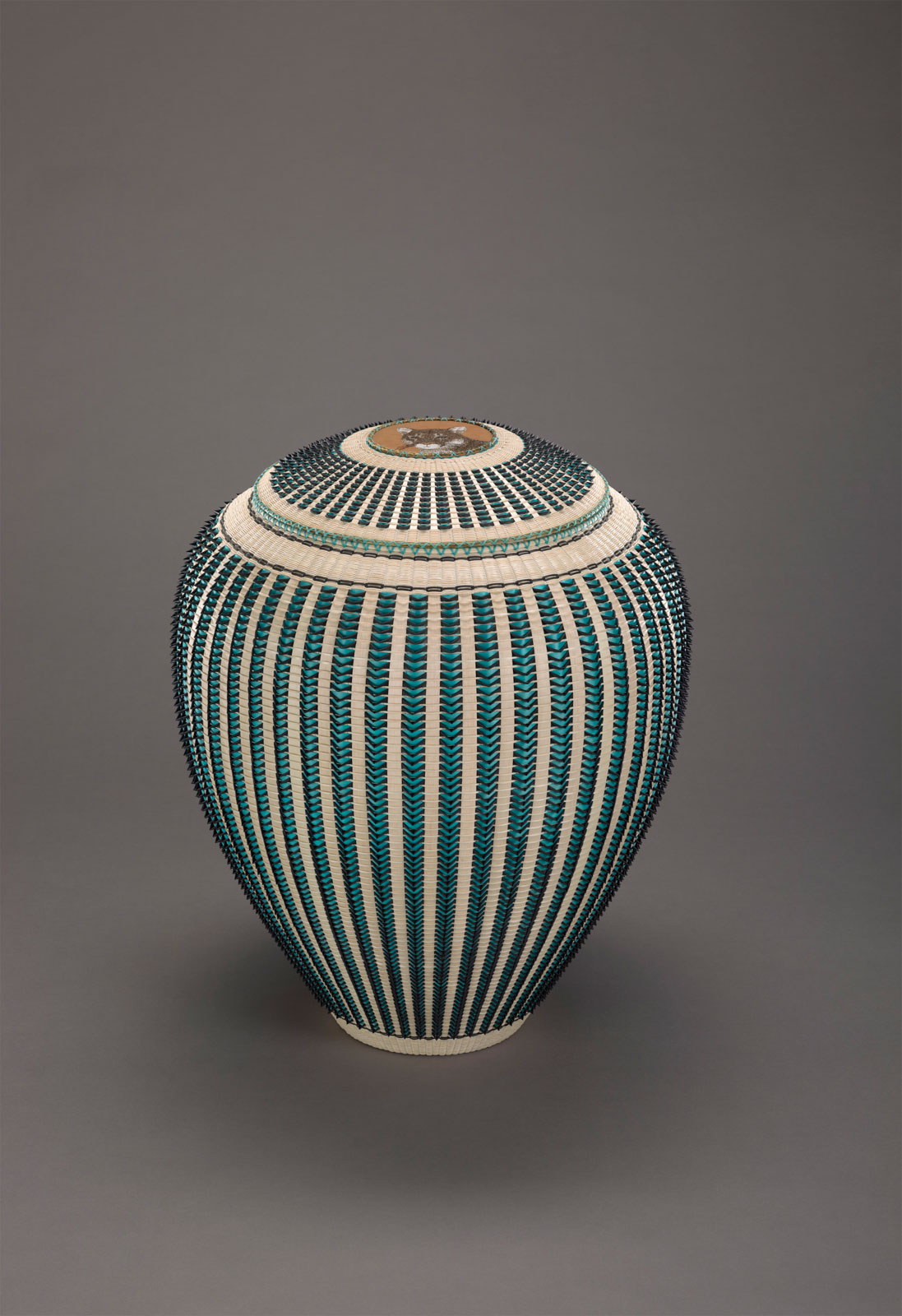 Jeremy Frey (Passamaquoddy), ash basket. The Art Institute of Chicago. Mrs. Leonard S. Florsheim Jr. Fund; purchased with funds provided by the bequest of Fred E. Spreitzer. From Jeremy Frey: Woven at the Arts Institute of Chicago.
Unbound: Narrative Art of the Plains continues through January 20, 2026, at the National Museum of the American Indian in Washington, D.C. Warrior/artists painted their exploits on buffalo hide robes and shirts. Later, in the 19th century, artists painted and drew on ledger books, a tradition that was revived in the 1970s with artists depicting contemporary issues. The exhibition includes historical pieces from the museum’s collections as well as more than 50 works commissioned especially for the exhibition. Emphasizing the vareity of the works, the museum explains, “Illustrating everything from war deeds and ceremonial events to family life, Native identity, and pop culture, the artworks are as diverse as the individuals who created them.”
The National Cowboy & Western Heritage Museum in Oklahoma City also explores Plains narrative art in its exhibition Cheyenne Ledger Art from Fort Marion, which continues through January 5, 2025. The specific narrative of the art is of the 72 warriors imprisoned at Fort Marion, Florida, for three years.
The contemporary relevance of Indigenous knowledge is the theme of a reinstallation of the Montclair Art Museum’s collection of Native art. The New Jersey Museum’s installation Interwoven Power: Native Knowledge / Native Art, which opened in September, is ongoing. The museum explains, “Through this important reimagining and restorative work, we also examine the Museum’s history, collection, and other legacies of European colonization in the Americas to help forge new ways of thinking and relating in a changing world.”
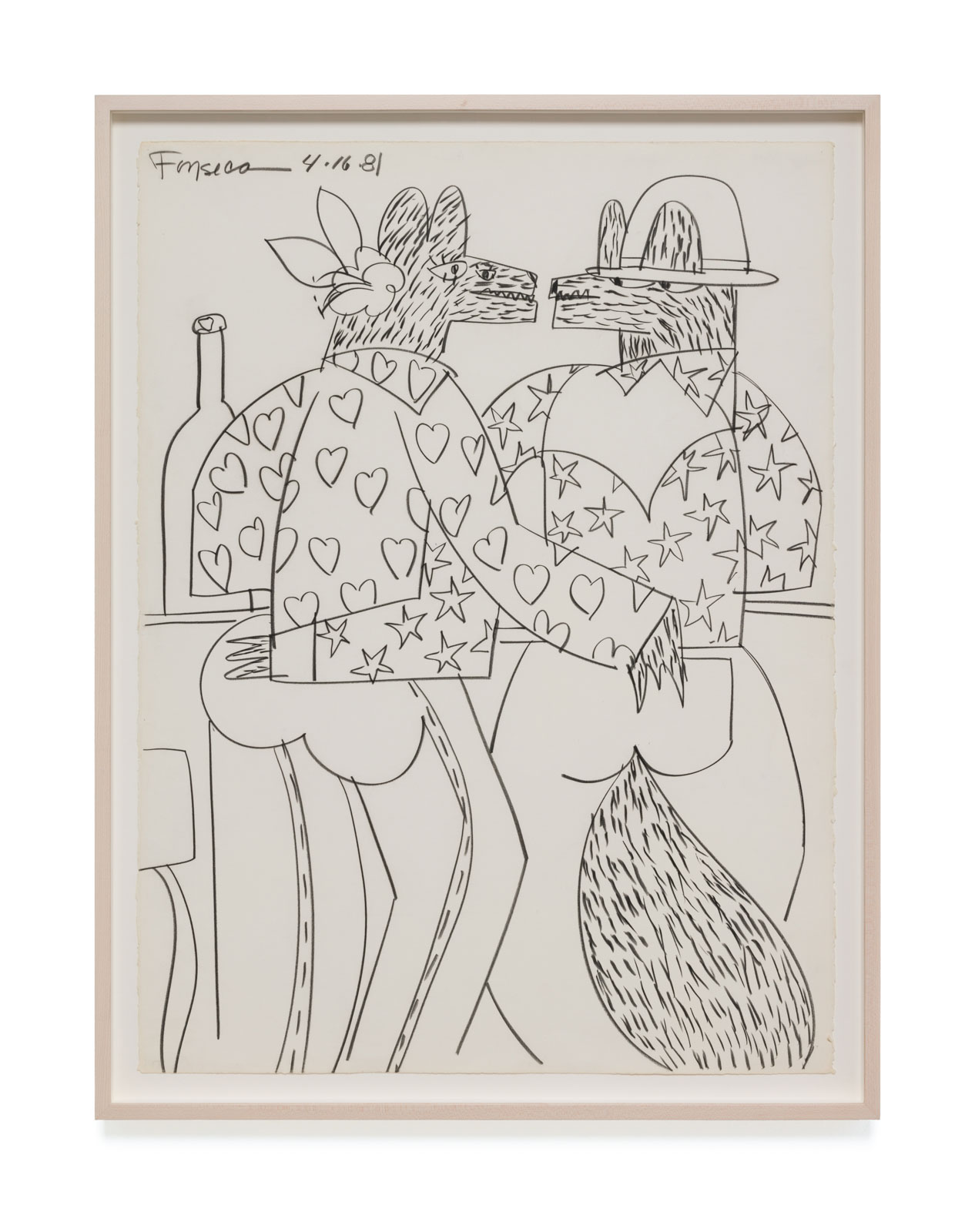 Harry Fonseca (Nisenan Maidu/Portuguese/Native Hawaiian, 1946-2006), Pow Wow Club, 1981, acrylic on paper, 33 x 25¼ in. From Harry Fonseca: Transformations at the Heard Museum, Phoenix, AZ.
The Museum of Contemporary Indian Art in Santa Fe, New Mexico, presents work of Native peoples of the north in two exhibitions: Arctic Highways: Unbounded Indigenous People continuing through March 2, 2025, and Common Thread: Indigenous Perspectives from the Arctic continuing through January 5, 2025.
The museum writes, “The traveling exhibition Arctic Highways features 12 Indigenous artists from Sápmi (cultural region traditionally inhabited by the Sámi people) and North America, sharing stories of Indigenous people who live on different continents yet regard themselves as kindred spirits. Artworks explore what it means to be unbounded, pointing to the restrictions of political borders, often arbitrarily drawn without regard to landscapes that have been used by Sápmi and North American Indigenous cultures for thousands of years.”
Common Thread depicts the peoples’ living in harmony with the land and the sea. “The 12 artists and activists in the exhibition Common Thread: Indigenous Perspectives from the Arctic continue this relationship. Their artworks examine important issues, including land rights, borders, environmental concerns, language and cultural preservation, identity, self-representation, and violence against Indigenous peoples. These works also highlight artists’s connection to place, the natural world, and their communities.”
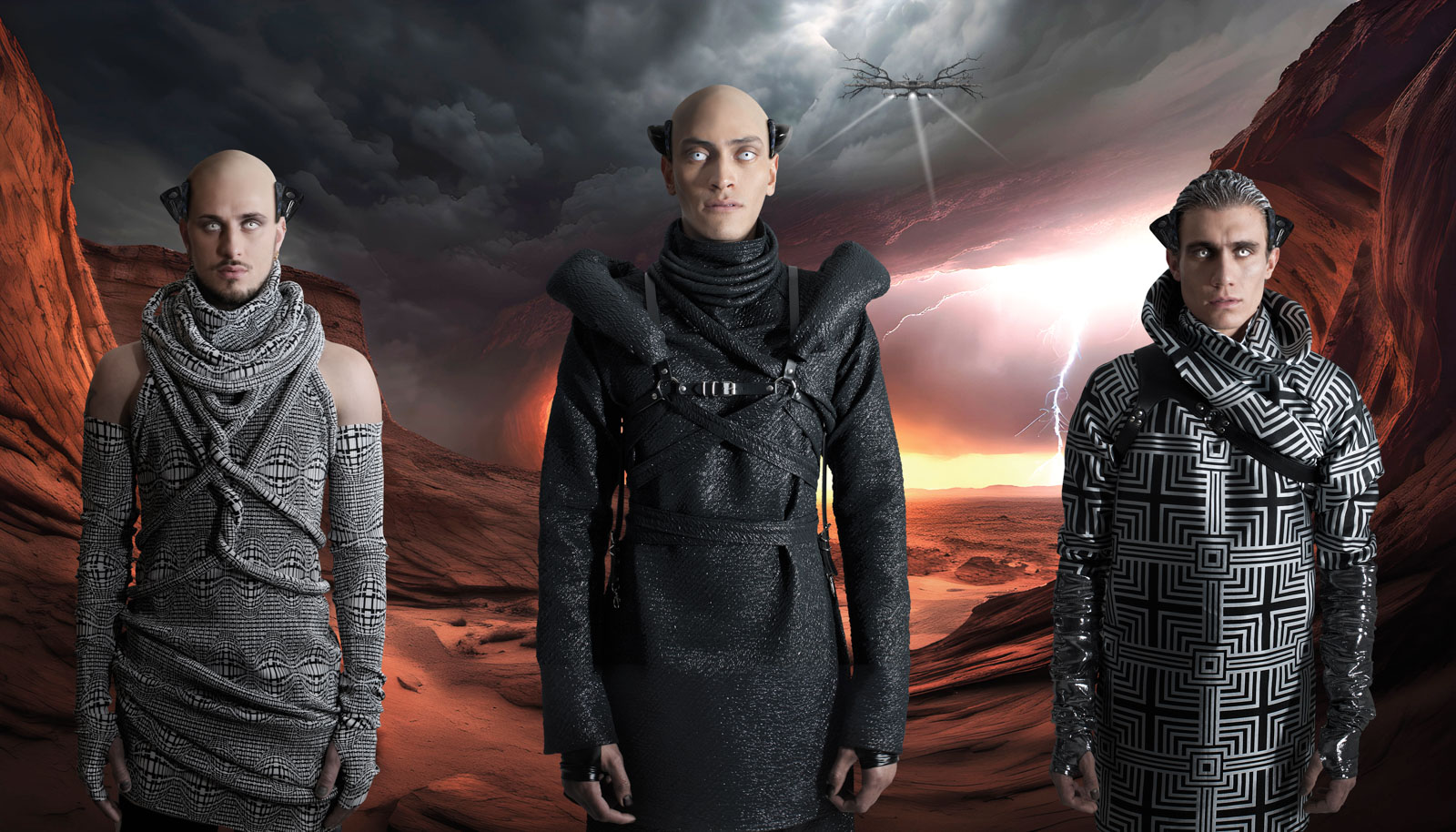 Virgil Ortiz (Cochiti Pueblo), Inside Sire Laboratory Headquarters, artificers Raydi and Ico await commands from Po’pay and Tahu. Photo courtesy Virgil Ortiz. From ReVOlt 1680/2180: Sirens & Sikas at the Autry Museum of the American West, Los Angeles.
Always a staple of a year’s exhibition schedule are individual and group shows of contemporary artists.The Heard Museum in Phoenix draws on loans from the collection of Charles and Valerie Diker for the exhibition Space Makers: Indigenous Expression and a New American Art. The exhibition “explores the intersection between mid-century American art and Indigenous visual culture. It shines a light on the Indian Space Painters and their profound influence on the American art scene, as well as the contributions of the modern Native art movement.” It opens November 8.
Also at the Heard is Harry Fonseca: Transformations. Fonseca (Nisenan Maidu/Portuguese/Native Hawaiian) is known for his exploration of “queerness” using the traditional figure of the trickster, Coyote. The museum notes, “Fonseca’s paintings explore Coyote as a metaphor for the transformations of self that defy Western conceptions of Indigeneity coded with a visual language that explores queer subcultures.” The exhibition continues through April 20, 2025.
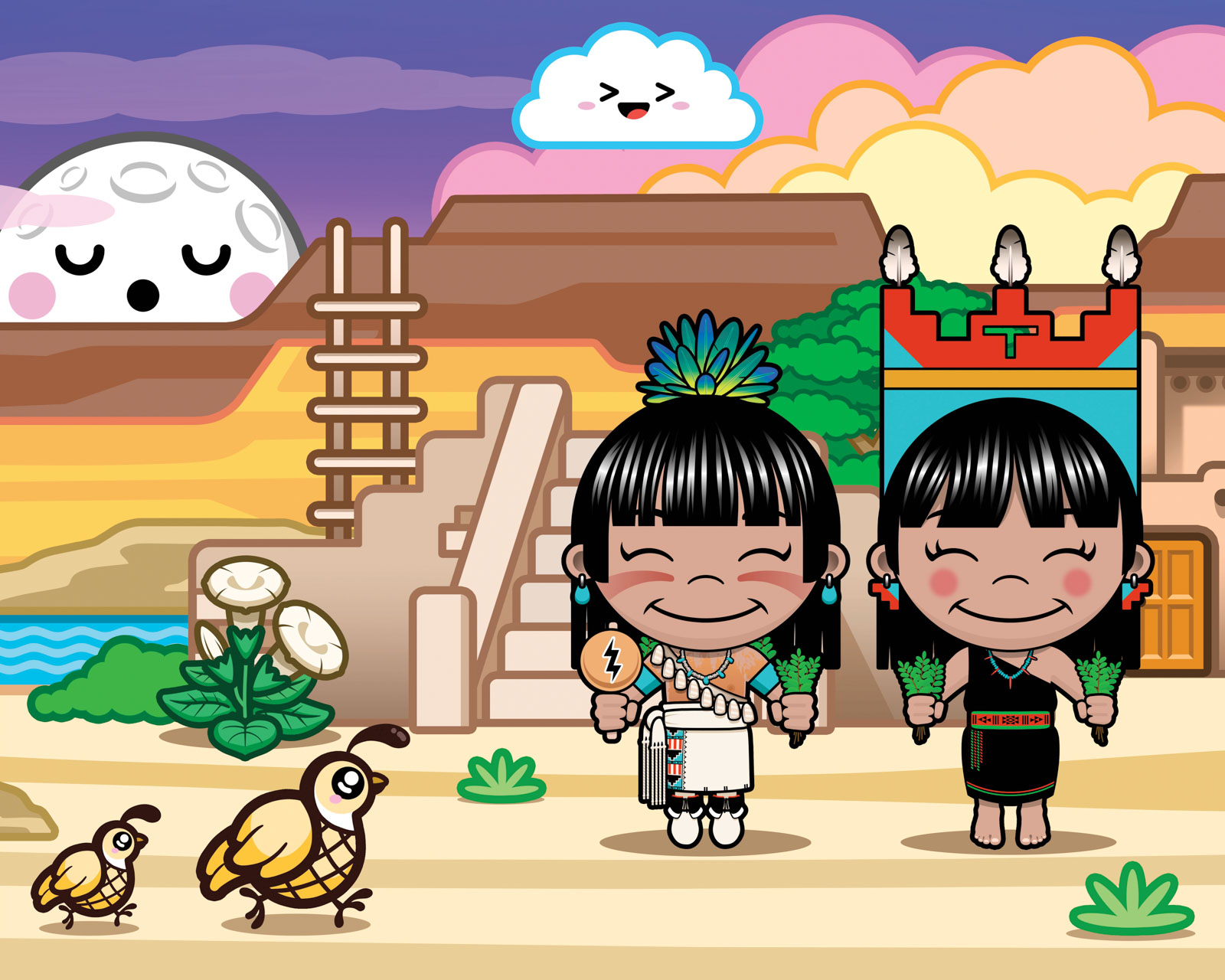 Collaboration between Leah Povi Marie Lewis (Laguna, Taos, Zuni Pueblos/Hopi/Diné) and Votan Henriquez (Maya/Nahua). From Poeh Ah Ka Wohatsey: The Emergence Teachings of Resilience at the Briscoe Western Art Museum, San Antonio, TX.
A mid-career retrospective of the basket weaving of Passamaquoddy artist Jeremy Frey will be shown at the Art Institute of Chicago from October 26 through February 10, 2025. Jeremy Frey: Woven “includes more than 50 baskets Frey has crafted over the last two decades. These pieces chart his development as an artist dedicated to expanding and elaborating the possibilities of traditional Passamaquoddy basket weaving. An artist’s artist, Frey continually, meticulously, and systematically redefines his practice to imaginative and unexpected ends.”
Powered by Froala Editor


