Caribou hair-tufted earrings. Sealskin mittens. Stained-glass orcas.
These are not the usual wares offered at Santa Fe Indian Market, but this year will see a blizzard of artists from far north regions fill the adobe-lined streets of Santa Fe, New Mexico. Some of this enhanced and expanded representation is the result of a new partnership aimed at expanding the market’s Indigenous vision, particularly with Yukon and Northwest Territories (NWT) artists.
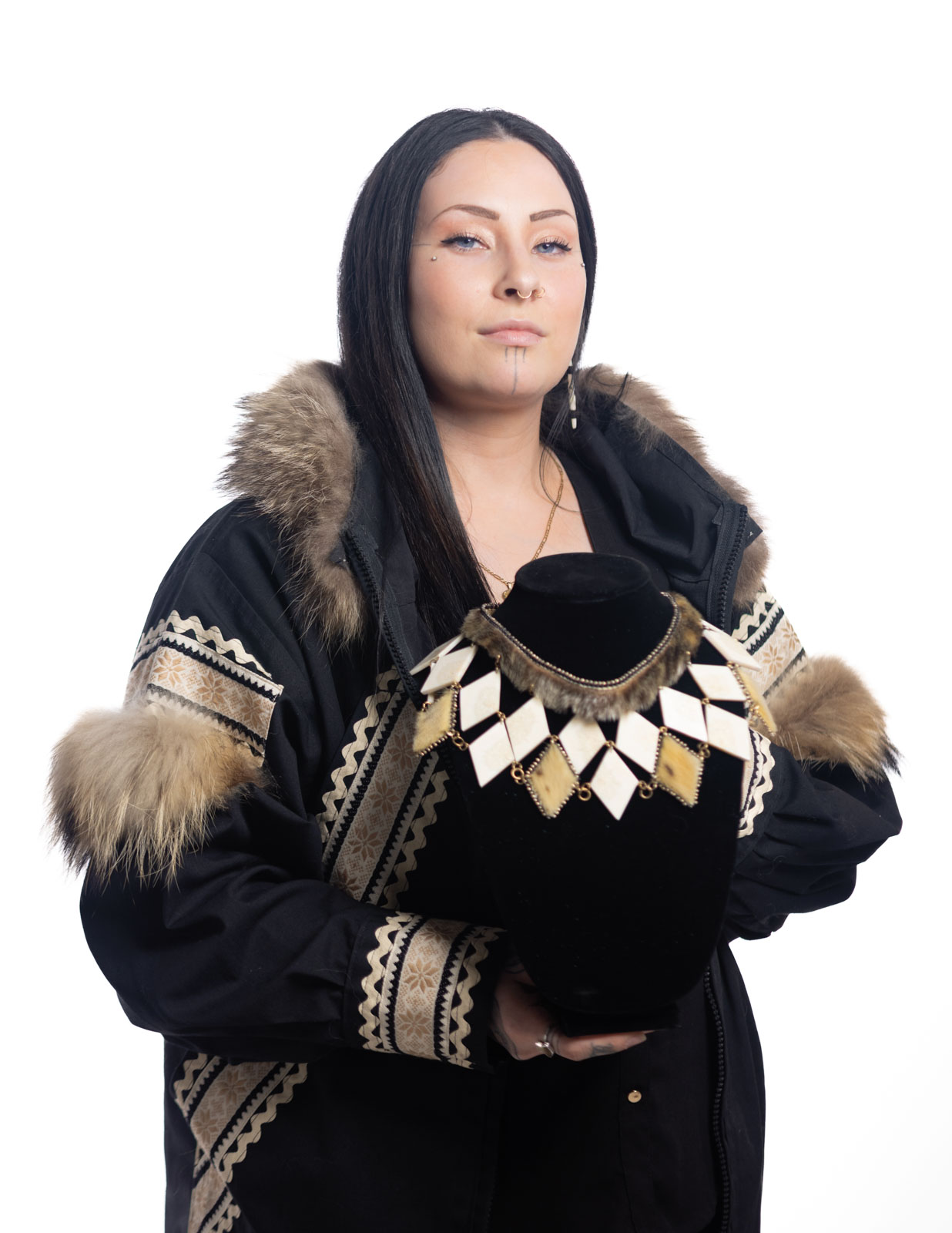 Caleigha Gotthardt (Native Village of Tyonek) holding Contemporary Traditions necklace made with walrus ivory, harbor seal skin and beaded with 24k gold plated beads.
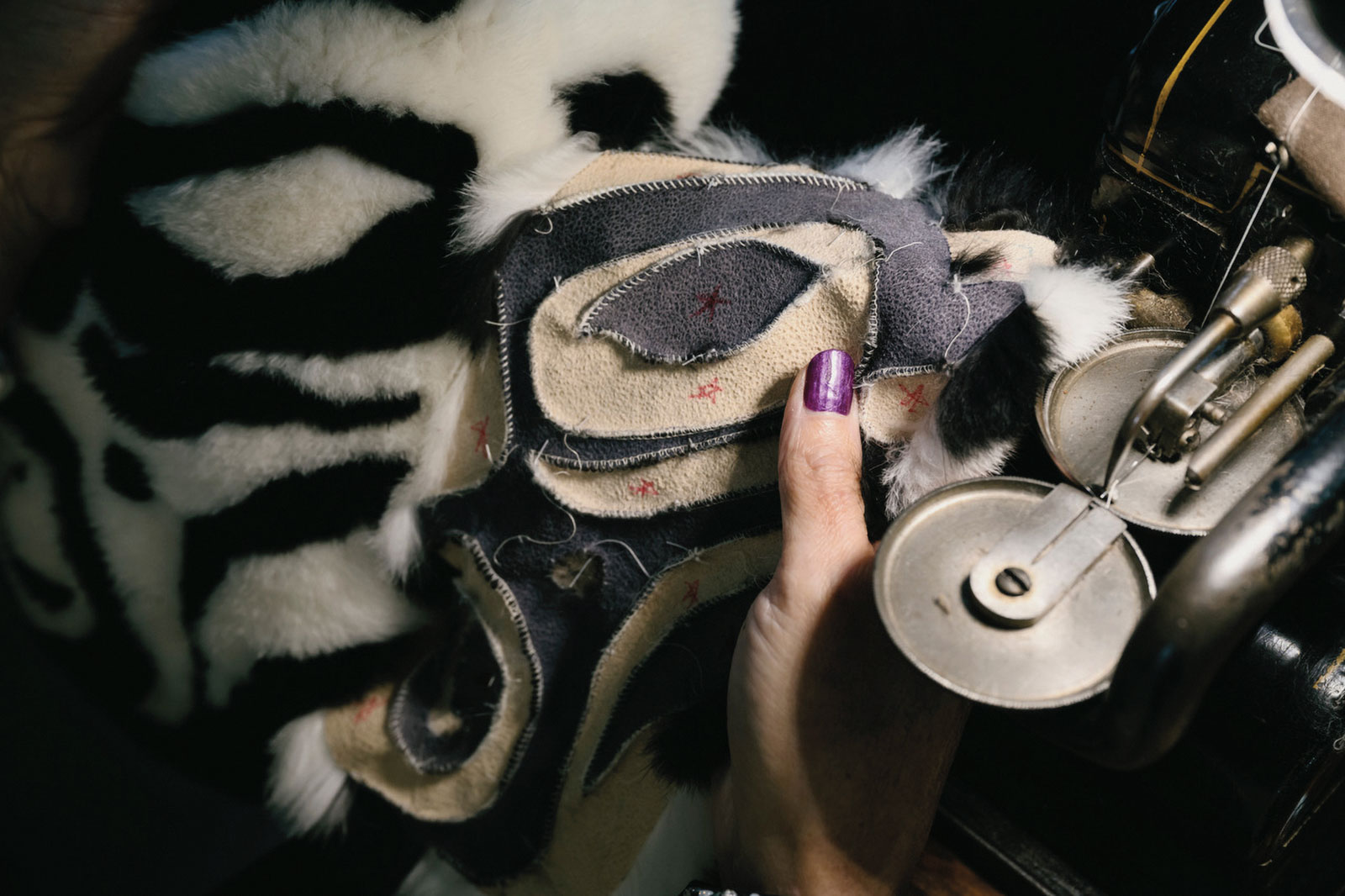 Christy Ruby (Tlingit/Haida) stitches furs together as part of her artwork. Image courtesy National Geographic / Kiliii Yuyan.
“Santa Fe Indian Market is about bringing the best of the best Native artists to one prestigious forum,” says Jamie Schulze, SWAIA executive director. “We are excited to partner with the Yukon First Nations Culture & Tourism Association and the NWT Arts Program to bring the fine artistry of our most Northern relatives to our 102nd market.”
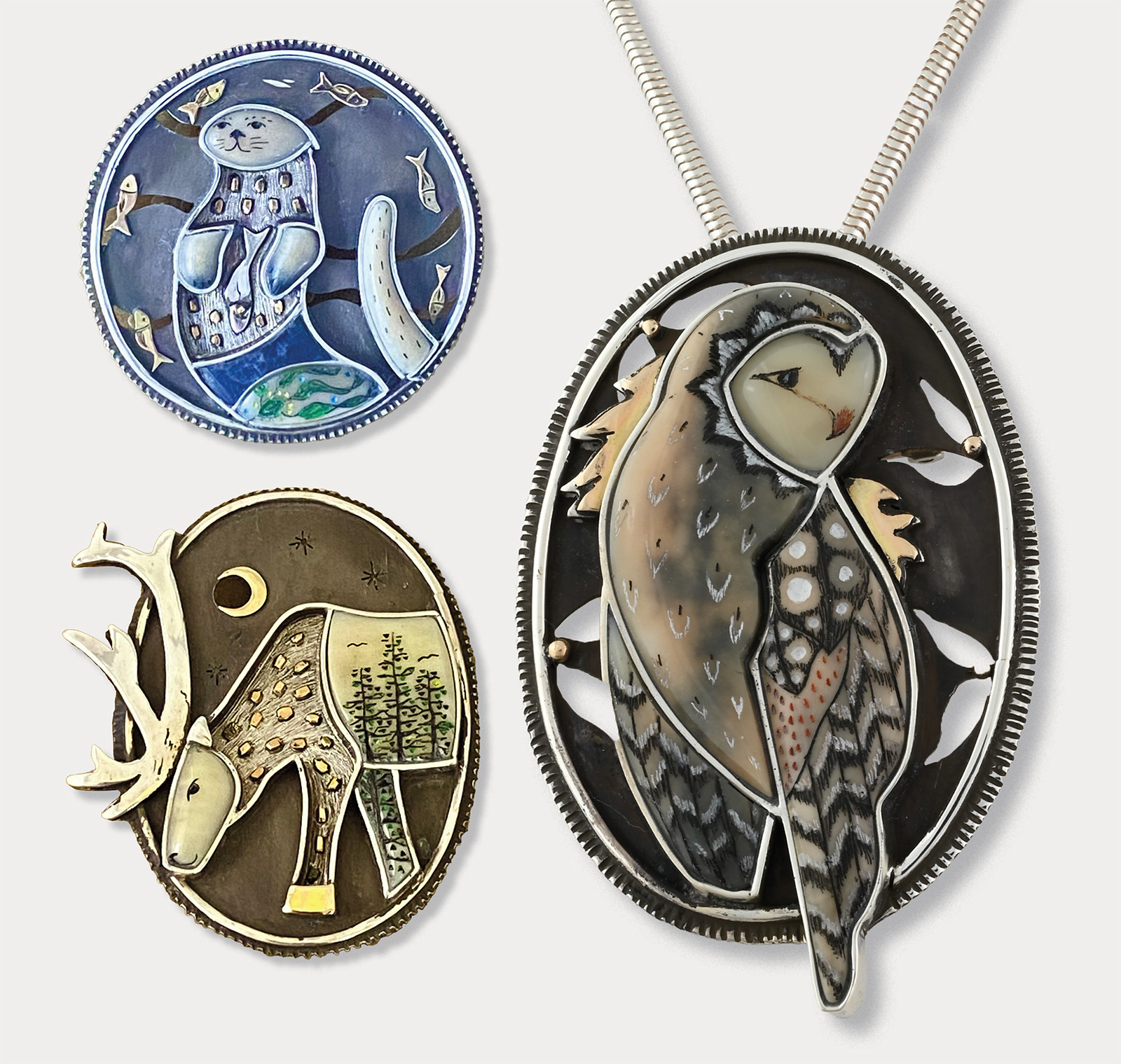 Dawn Wallace-Kulberg (Aleut Alaskan) and David Wallace (Chugach Sugpiaq), Three wildlife portraits: Sea Otter Portrait, Caribou Portrait and Portrait of an Owl, sterling silver, 14k gold, fossil walrus tusk and spectrolite
This partnership opens a whole new pipeline for the thousands of people who attend the market in August, to see work that is logistically, stylistically and even materially challenging. To help the artists, and in recognizing the minimal participation from the Yukon and NWT artists at Santa Fe Indian Market over the years, representatives from YFNCT and the NWT Arts Program initiated the partnership with SWAIA. This created a long-distance opportunity to support Indigenous artists from the two territories to show, sell and experience the 2024 market with its direct-to-consumer sales. This also allows the artists opportunities to meet with retail gallery representatives, participate in artist-focused activities, attend networking events, vie for media coverage and also attend the fashion show, awards ceremony and other SWAIA-hosted events.
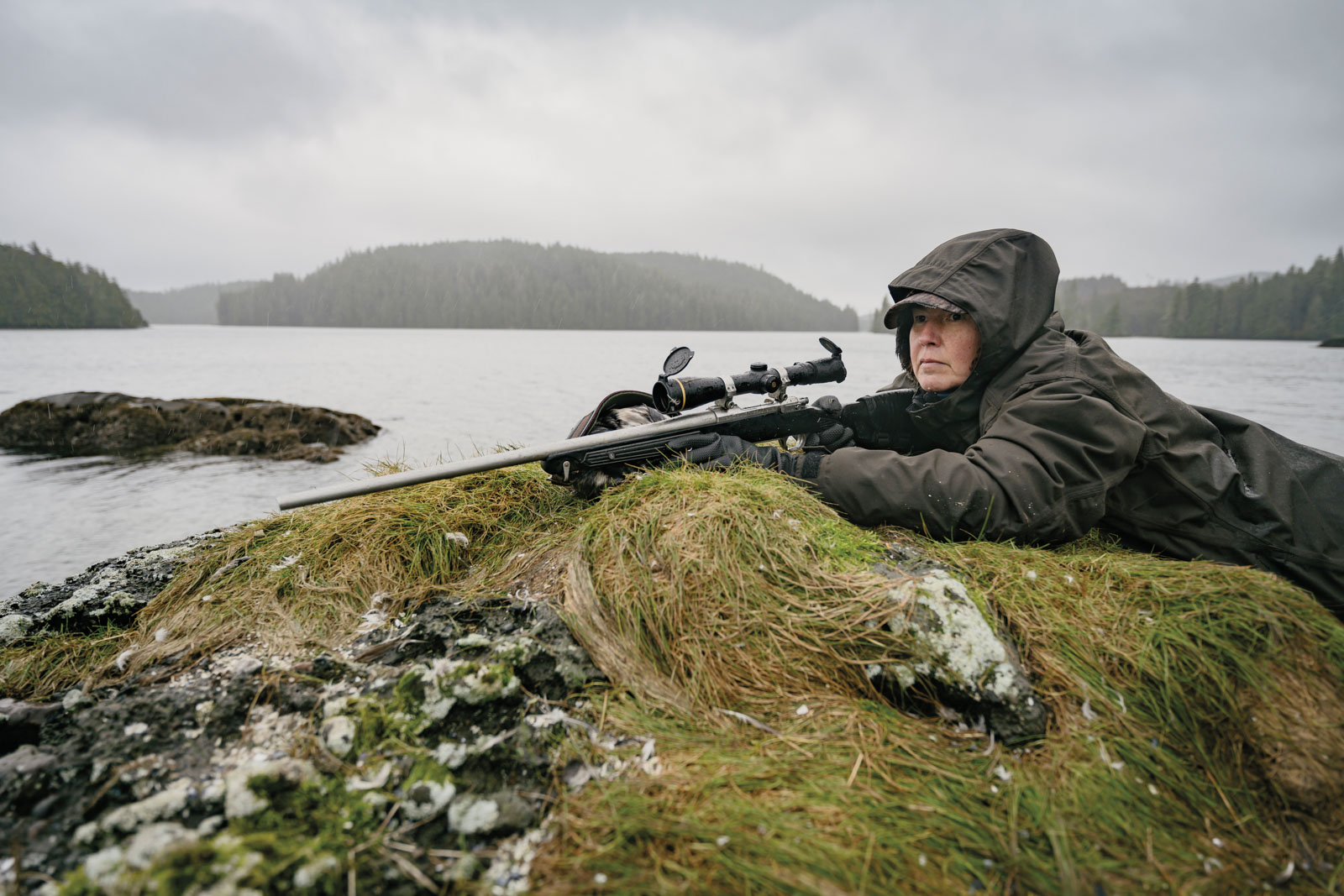 Christy Ruby (Tlingit/Haida) hunts for seal and otter in Alaska. Image courtesy National Geographic / Kiliii Yuyan.
“We’re thrilled to see this initiative moving ahead in partnership with the NWT Arts Program,” says Robin Chambers, executive director of YFNCT. “Creating space for Indigenous artists from the North to participate in an established international event further aids in creating opportunity for growth and awareness of the individual artists, and the arts and culture industries in the North as a whole.”
Randi Nelson, of Randi Nelson Designs, says, “I am a Secwépemc artist and fashion designer from the St’uxwtéws First Nation, now living in Whitehorse, Yukon. I am honored to be chosen to be part of the Yukon/NWT Cohort for 2024 Santa Fe Indian Market. This prestigious event gives us a chance to showcase our unique Northern art forms, like two-needle beadwork, caribou hair tufting and traditional hide tanning on an international stage.”
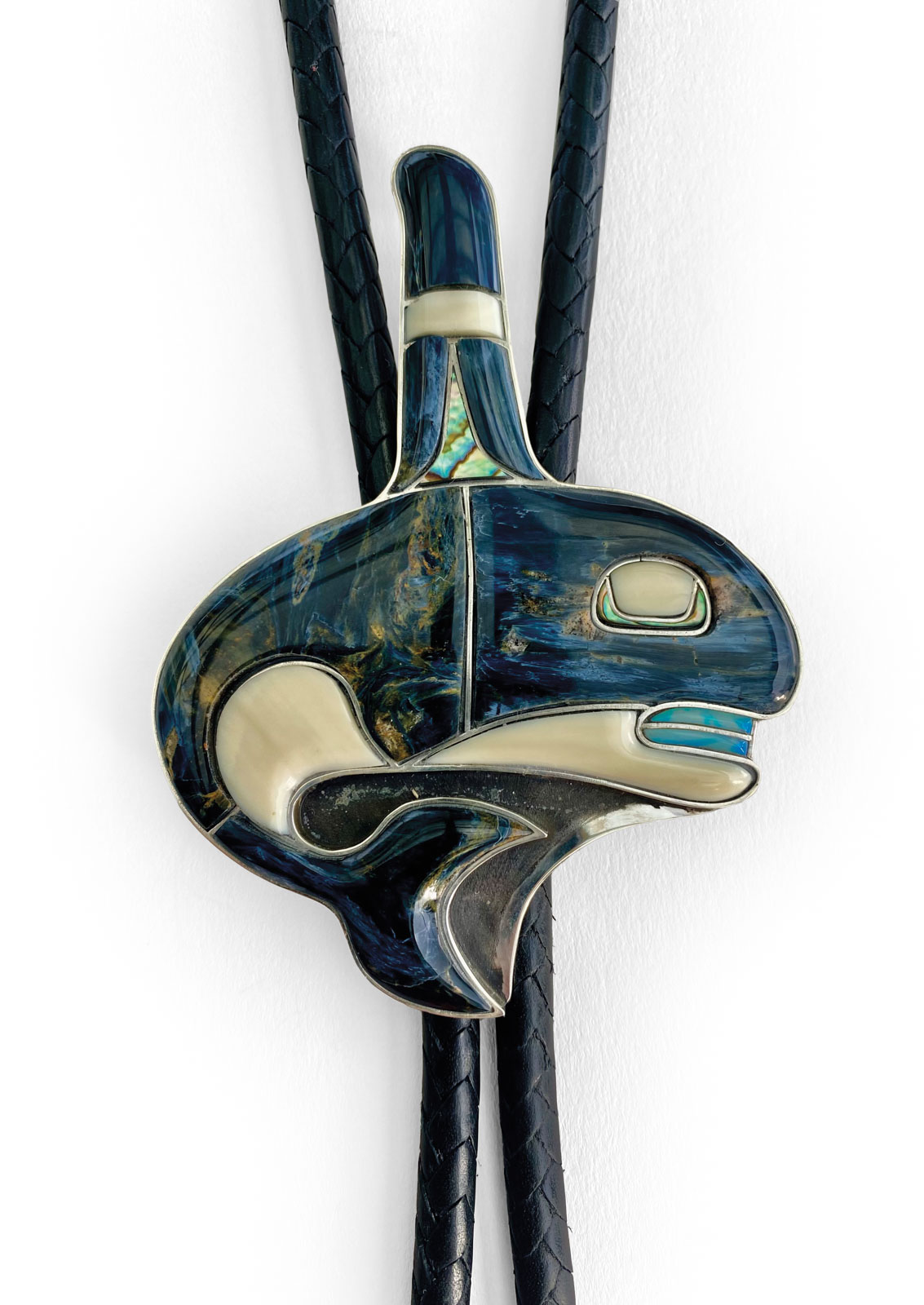 Dawn Wallace-Kulberg (Aleut Alaskan) and David Wallace (Chugach Sugpiaq), Killer Whale Bolo, sterling silver, spectrolite, fossil walrus tusk, 4 x 3¾”
The artist continues: “Traveling to SWAIA with other artists from the North will provide support and connection throughout this experience. This cohort helps us navigate what can be an overwhelming event and offers access to other professionals in the market. It is important to include artists from across Turtle Island, sharing traditional practices and unique materials from our communities and land. The North is full of talented artists whose art deserves to be seen.”
Nelson says she will be showing works made with materials that might be new to many collectors, including smoked hides, quills, shells and caribou hair to create contemporary fashion pieces. The jewelry and other wearable art designs she creates are inspired by her love of nature and its beauty. “I draw inspiration from the changing seasons, handpicking flowers, berries and leaves to create unique floral patterns for each piece,” she says. “The colors of the plants and their shades inform the selection of beads, gemstones and hand-dyed caribou hair for my jewelry and other wearable art pieces, ensuring a perfect match…My work is often in sync with the changing seasons, requiring swift observation to capture and create pieces while each flora is in bloom. This process connects me to the land and allows me to appreciate the transient beauty of nature.”
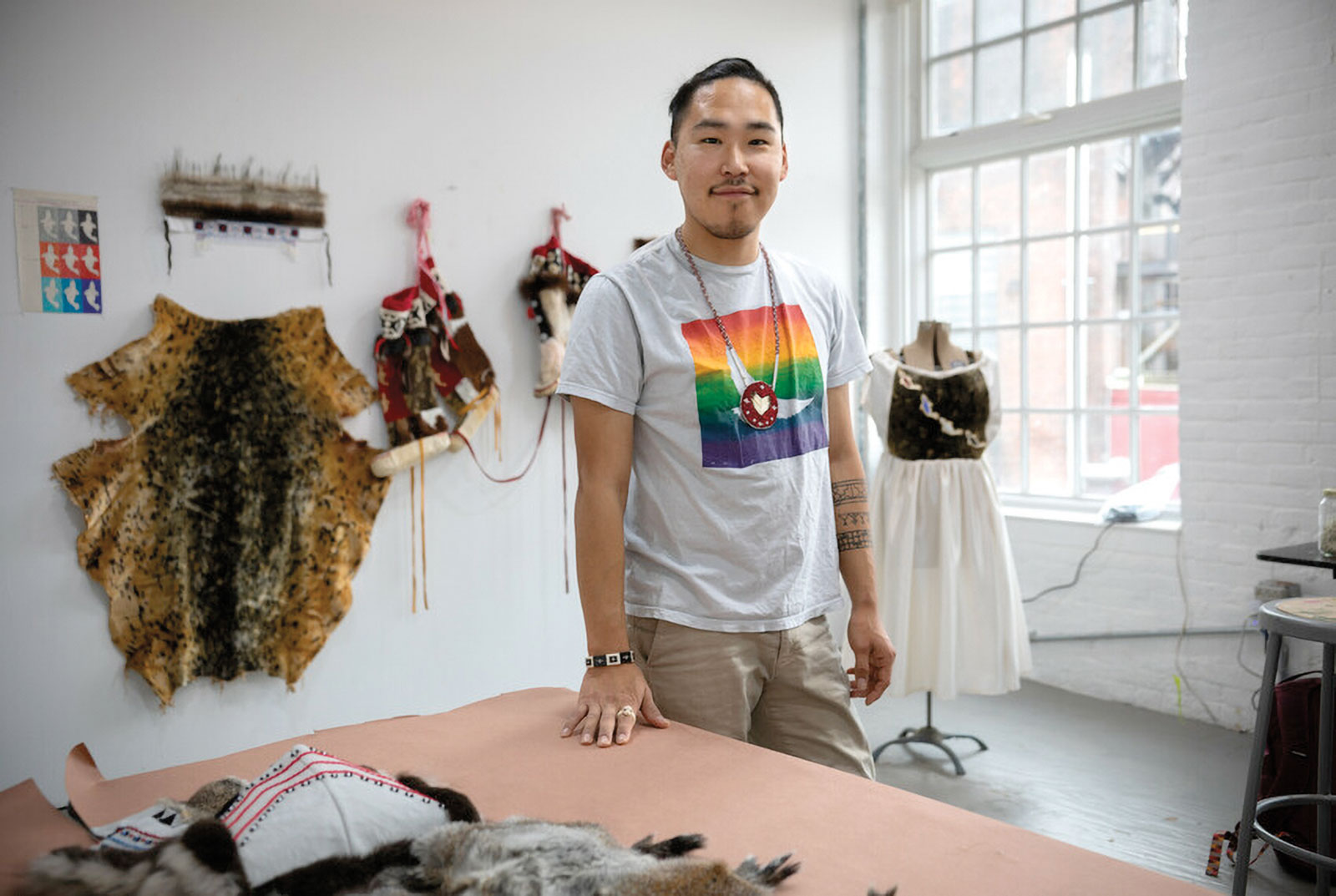 Golga Oscar (Kasigluk/Yup’ik Tribe) in the studio. Photo courtesy Luiza Folegatti.
John Sabourin from Fort Simpson, in the Northwest Territories, makes exquisite carvings of wildlife from the region. “My art is heavily influenced by Dene legends, stories and animals,” he says. “I am looking forward to the Santa Fe Indian Market to meet other artists, to show my carvings and to meet new galleries.”
From carvings to glass, Amy Tessaro (Carcross/Tagish First Nation) of Tessaro Stained Glass, uses the orcas, wolves and raven tales of the frozen North in creations that are unusual for the region. “The windows represent a vision that I’ve had for over 20 years,” she says. “Some are a collaboration with Tlingit/Tahltan artist Ben Gribbon. I worked on the designs with him and then was able to translate them into stained glass. When I first started to learn how to work with stained glass, it was patterns like this that I always wanted to make, but I’d never seen it done before. I always envisioned myself as a stained-glass artist, joining First Nation form line and stretching the rules of this medium.”
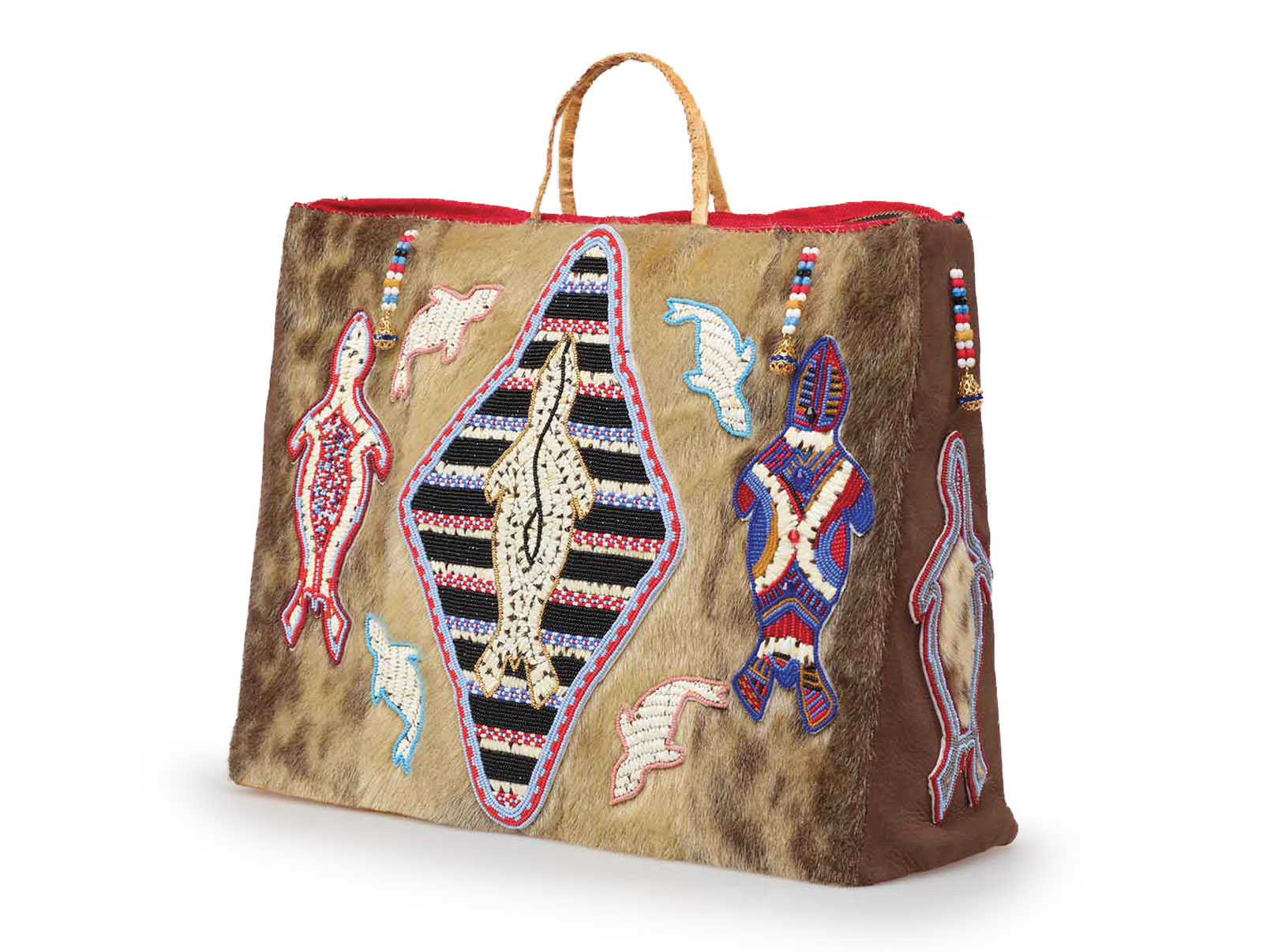 Golga Oscar (Kasigluk/Yup’ik Tribe), Honoring Different Generations, size 11 Charlotte cut beads, ringed seal, calfskin and leather, 15 x 14”
Other artists from the North who have been at Indian Market before, know how valuable the experience is and cherish the experience. Making her own plant-based paints has meaning for Vancouver-based Haida artist Tamara Bell, as her work begins with tobacco and sacred medicines. Harvesting plants, marinating them in water, mixing them with acrylic paint and sometimes small amounts of sage and peyote, initiates her creative process. Bell’s artistic preoccupation is with addressing historical moments in Indigenous history. Further, exploring new materials and bringing to the forefront subject matter reflective of the historical and contemporary experiences of Indigenous peoples drive Bell’s creative endeavours.
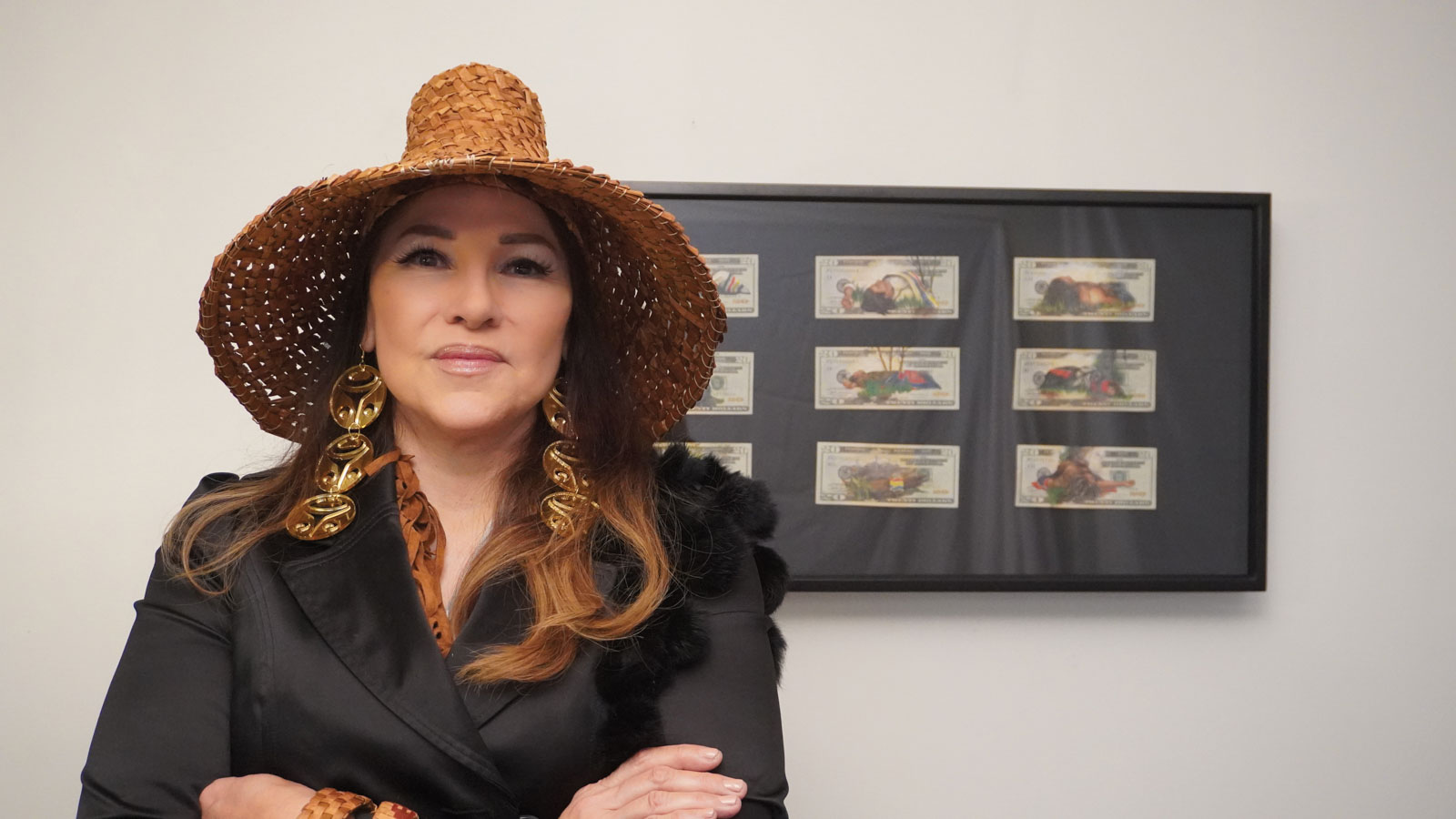 Tamara Bell (Ha’aawa (Haida)/Hy’chka (Coast Salish)/Gela Kesla (Kwakwaka’wakw)/ Meegwetch (Anishnawbe)) with some of her painted money pieces.
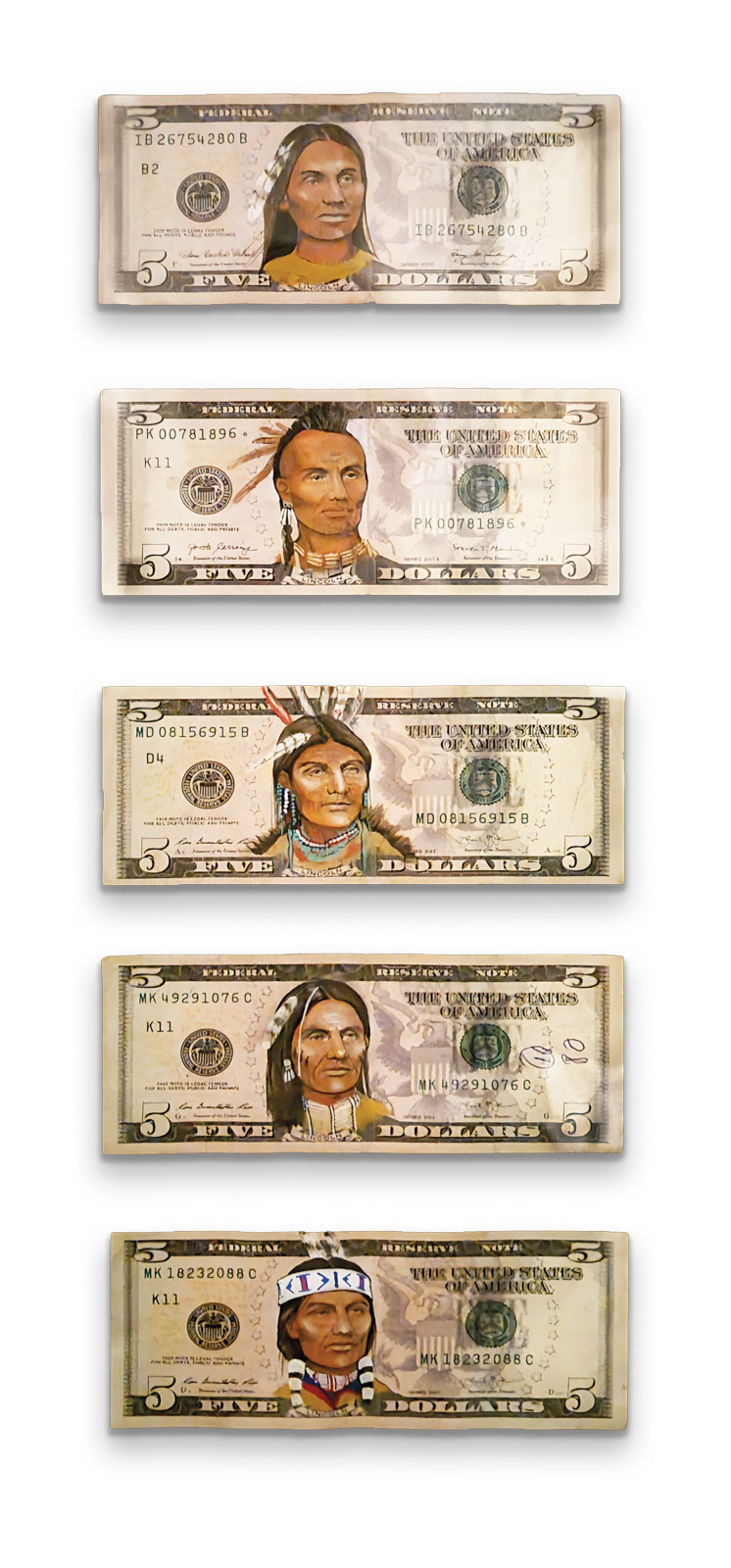 Tamara Bell (Ha’aawa (Haida)/Hy’chka (Coast Salish)/Gela Kesla (Kwakwaka’wakw)/ Meegwetch (Anishnawbe)), works from her painted money series
“One of my creations, I Dare You To Call It Genocide, dares viewers to use the word genocide while witnessing the purposeful infection of Haida [people] with smallpox-infected blankets,” Bell says. “My latest passion is painting on Andrew Jackson or Abraham Lincoln U.S. currency to document my creative reaction to Indigenous justice. I am fueled by the power of creating and its benevolent ability to transform powerful political ideas into a piece of art.”
Bell continues: “In most cases, I feel an obsession to create images such as this without restraint. What Americans and Canadians hide about Indigenous history is something I gravitate to. I feel an obsession or duty to allow the creative flow to guide me to paint images that flash in my imagination,” she says. “I am one Indigenous artist who feels honored to participate in the wide array of brilliant Indigenous artists attending this monumental art event. At SWAIA, I am truly inspired by the remarkable works, which linger in my imagination for years. The epic, artistic Indigenous brilliance showcased at this show is unlike anything I’ve ever seen.”
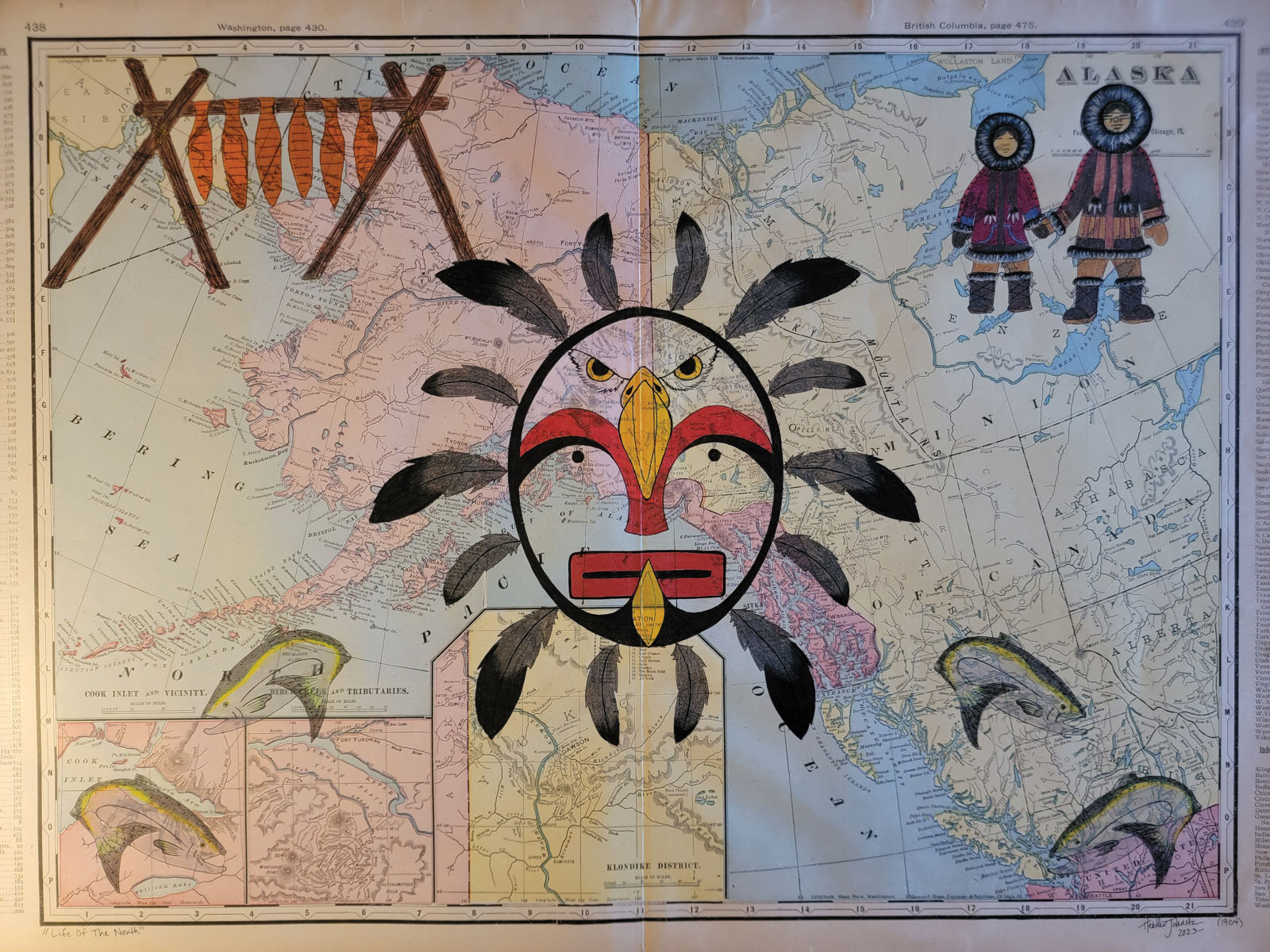 Heather Johnston (Qagan Tayagungin), untitled painting on Alaskan map
For Christy Ruby (Tlingit/Haida), from the Keet Gooshi Hit House (Killer Whale Dorsal Fin), the challenge in her seal and sea otter fur apparel—the densest fur in the world for the coldest climate—is both cultural and legal. Her patterned vests, silky seal mittens and blankets trimmed with lynx are legal to sell in the United States through the Marine Mammal Protection Act by Alaskan Natives, but cannot be shipped out of the United States, limiting her market.
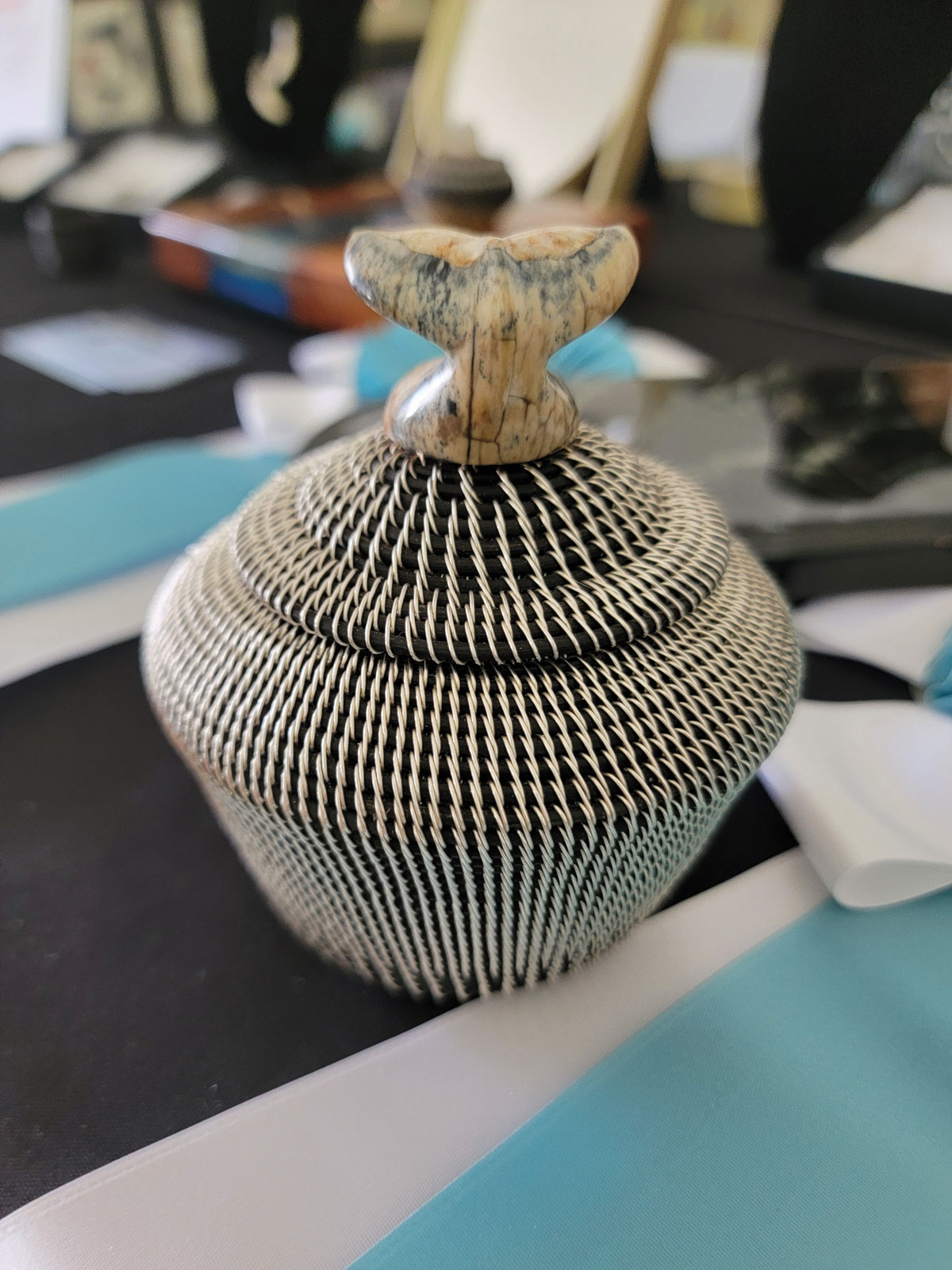 Don Johnston (Qagan Tayagungin), baleen whale basket with carved lid handle
Ruby says her unique designs of fur scarves and trapper hats are “created for when you’re attending the utmost luxurious banquet or chipping ice in chilly temperatures. My work takes me back to my ancestral roots. The sea otter fur has a familiar sensation that meant life or death to my people and its value has not changed for thousands of years,” she says. “Using skills taught to us from the past will ensure we will never go hungry and we can always clothe ourselves. But we didn’t just hunt, we strove for individual expression in the creation of beautiful clan art. It’s with this sentimental palette that I create modern looks with glimpses from the past. My creations are inspired from skills passed down to me by my grandfather, a very talented man from Klukwan, [Alaska], who carved totem poles and toured the world as a Chilkat dancer…Such simple teachings should never be overlooked in a fast-paced world that knows nothing about where their food comes from. I wish to share what a lot of people never see, the complete story from bullet to food and fur fashion.”
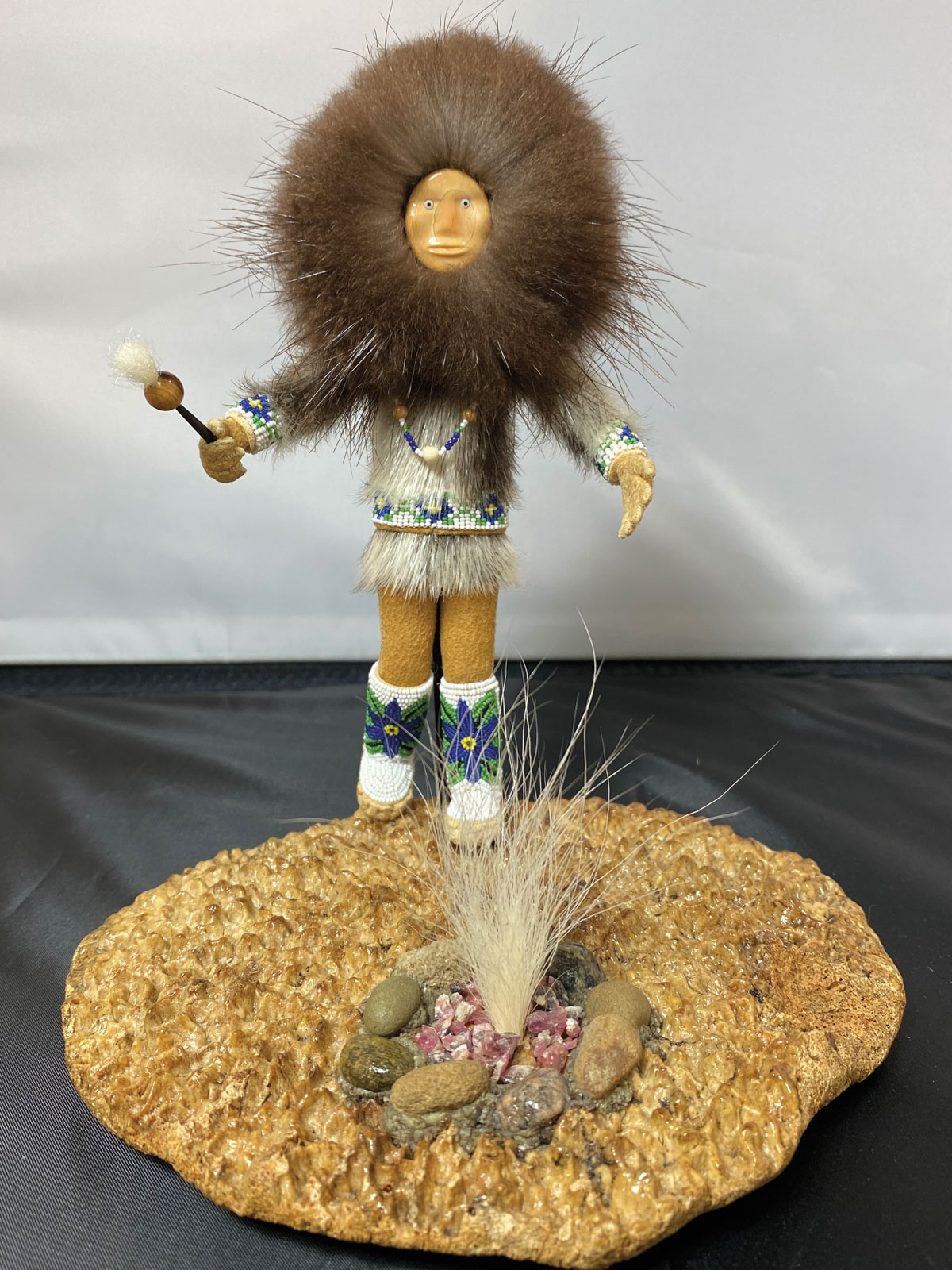 Glenda McKay (Cook Inlet Region), Let Me Tell You a Story, hand-carved fossilized walrus ivory face, parka is seal skin with six pieces of beaver fur ruff, brain-tanned and smoked deer skin on hands and pants, beadwork on parka, boots are size 24 glass beads, talking stick in hand is whale baleen with mammoth ivory bead and polar bear hair, stand is fossilized whale vertebrae, river rocks for fire ring, Alaska garnets are fire embers, polar bear hair for smoke.
Ruby says that Indian Market is a great place to help educate new people about her culture and its traditions. “Our ancestral fur is commonly misunderstood and not accepted by everyone. The Indian Market consumer fans are very accepting of my fur apparel, which in turn relieves the turmoil I usually face attending other shows,” she says. “I am free to educate, share amazing stories and feel proud of my work.”
The other Northern artists participating include Ed Mighell (Inupiaq (Eskimo)/Arctic Slope), Randi Nelson (Bonaparte/St’uxwtéws First Nation),Linda Wright (Inuvik), Tanya Lujan (Kainai), Golga Oscar (Kasigluk/Yup’ik Tribe), Montana & Delaney Prysnuk (Vuntut Gwitchin First Nation), Sho Sho Esquiro (Kaska Dena Ross), Bobby Brower (Native Village of Barrow), Caleigha Gotthardt (Native Village of Tyonek), Heather Johnston and Don Johnson (Qagan Tayagungin), Terrence Campbell (Talhtan), Karen Beaver (Three Affiliated Tribes/Yup’ik), Alma Johnston (Aleut), John Sabourin (Liidlii Kue First Nation/Fort Simpson), Dawn Wallace-Kulberg (Aleut), Denise Wallace (Chugach Sugpiaq), Glenda McKay (Cook Inlet Region), Shawna McLeod (Deh Gah Gotie Dene First Nation) and many others.
Powered by Froala Editor


