Heritage is cultivated by the ones who value tradition and never take for granted the stories and sentiments of loved ones long gone. These cultivators are the blood that pumps through a community and keeps a culture’s heart beating. Carol Emarthle-Douglas (Northern Arapaho/Seminole) is an award-winning basket weaver and a true cultivator of tradition. Through her baskets, she weaves the story of her journey of self-discovery, paying homage to her Arapaho and Seminole culture and other cultures that have inspired her work.
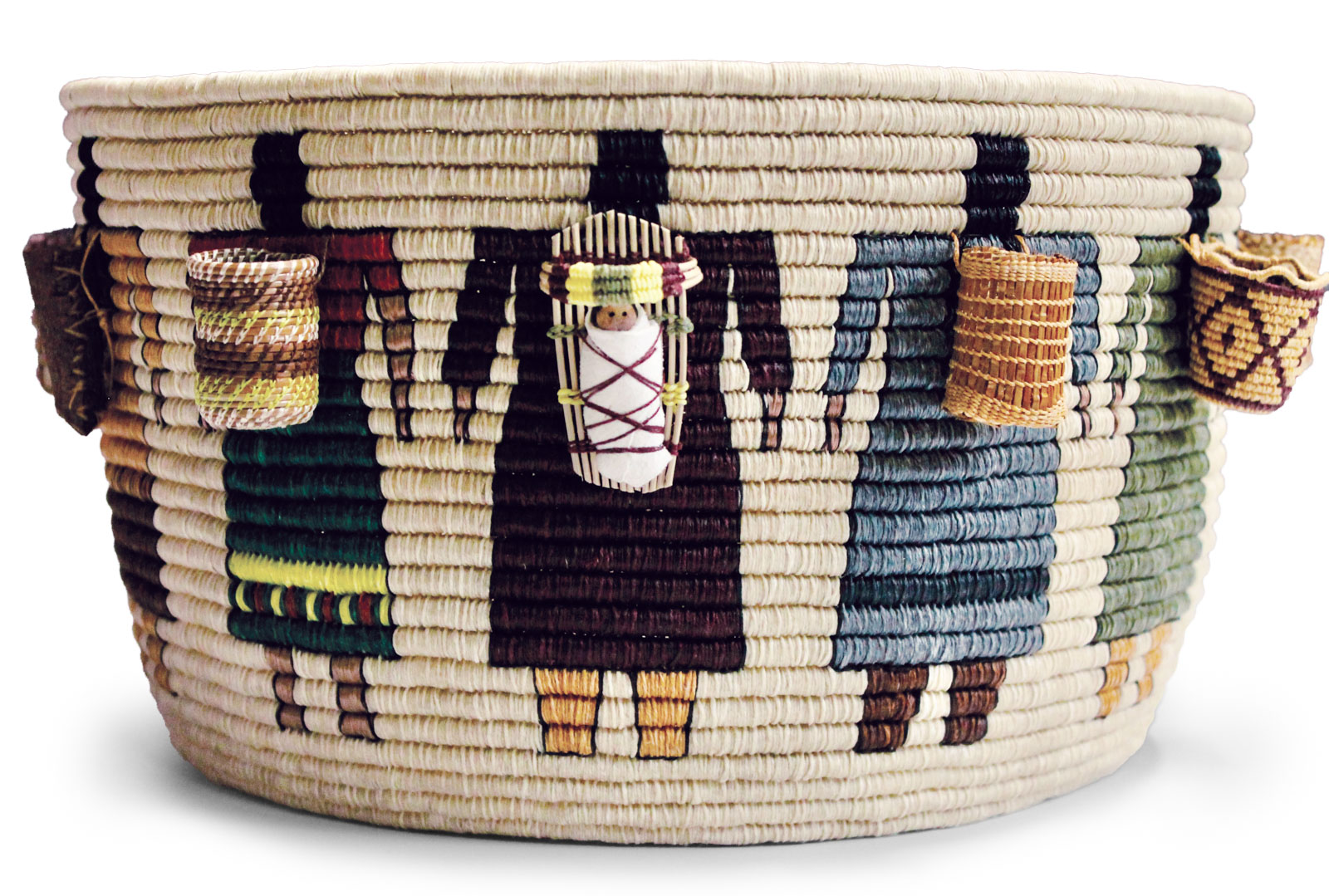 Cultural Burdens, 2015, coiled basket, waxed linen, thread and hemp
It all started in the 1990s when Douglas’ children were very small. The Oklahoman had just moved to the suburbs of Seattle. She was intrigued by what the artwork of the Pacific Northwest had to offer and was struck by a basketweaving demo she came across at a community gathering. “I tried other things before. I took a drawing class, but I really stressed out about drawing and putting something on paper,” Douglas explains. “My thing was working with my hands. You’re building something. So, that’s kind of what worked best for me.”
She started taking classes at the Basketry School of Seattle, learning local techniques like twining with local materials such as red cedar. She would then learn different coiling styles with contemporary materials like waxed linen thread. These new techniques and materials were the building blocks of her traditional, yet still very contemporary approach.
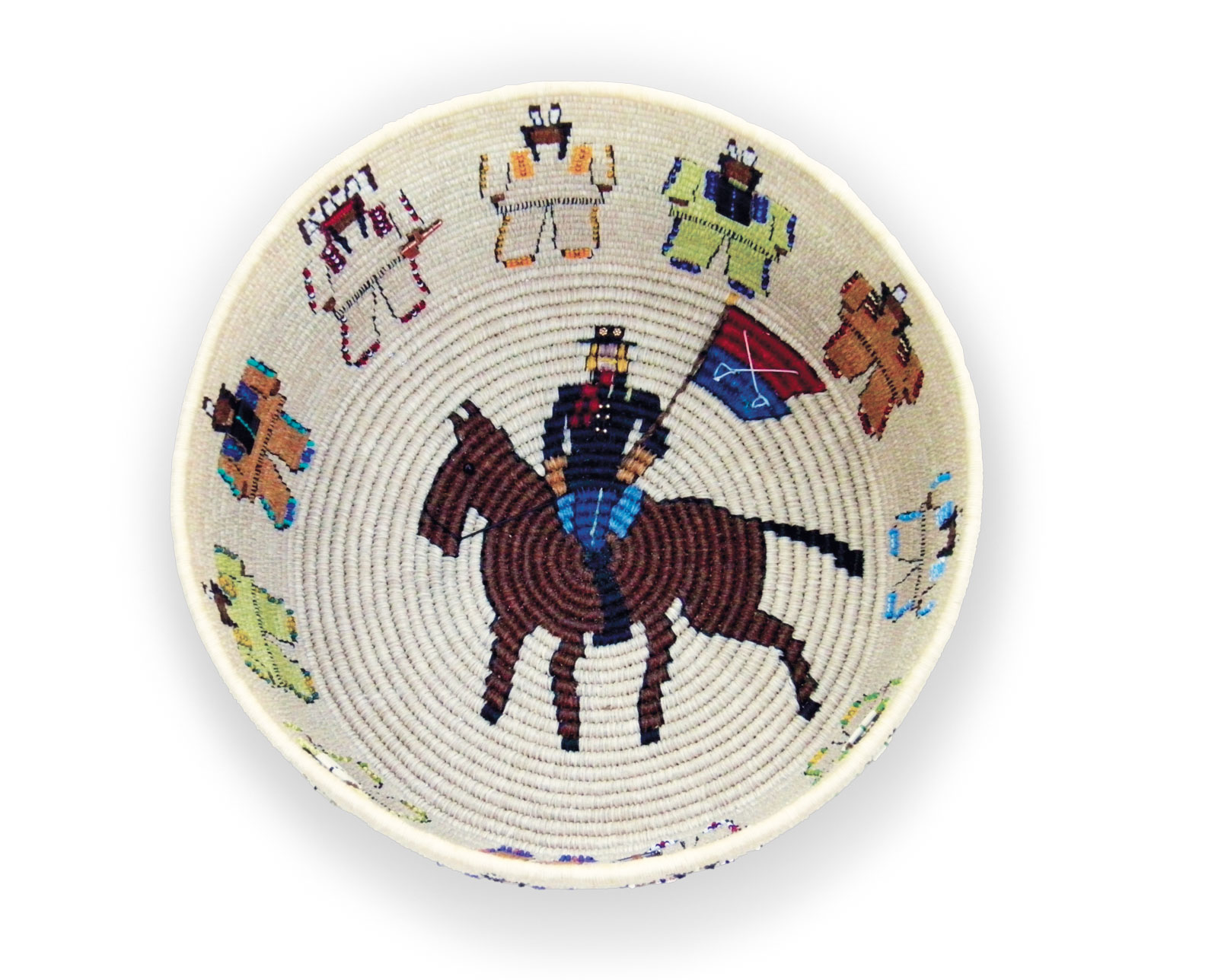 Custer’s Last View, 2011, coiled basket
She believes it was these classes and the lessons she learned that marked the start of her basketry career, primarily because she was more drawn to coiling than other types of methods. In 2007, while she was a fellow at the National Museum of American Indian, she was thrilled to find a coiled Arapaho basket within the collection. She had been told that Arapaho people did not make baskets, so the discovery was a huge validation for her personally. Not only did they have an Arapaho basket, but it was in the traditional coiling style she preferred.
As Douglas kept weaving, her work began to evolve from geometric shapes to more humanlike designs with vibrant colors and intricate pattern work. In 2011, she created a basket called Gathering Nations, depicting female figures from all over the United States. Each of the 11 women hold out a thimble-sized woven basket in front of them, showing off their tribe’s style and regalia. To be as authentic and respectful as possible, Douglas did extensive research online and even received bits of material from weavers she ran into at shows.
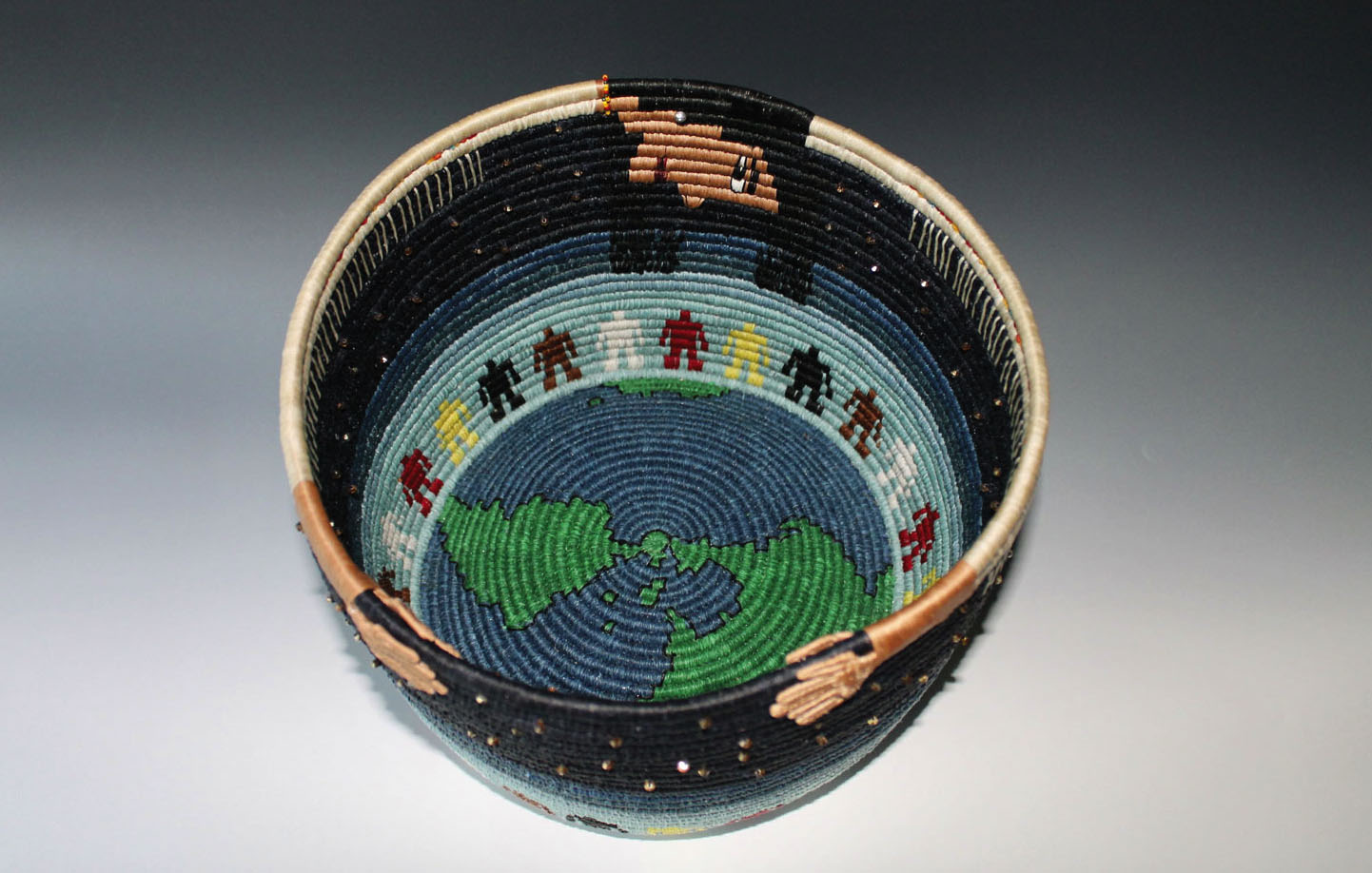 Sky Woman Watches, 2023, coiled basket, waxed linen, thread, hemp and beads, 7 x 9½ x 9½”
In 2015 she won Best of Show at the Santa Fe Indian Market with a piece titled Cultural Burdens, which was similar to Gathering Nations, but with a twist. Though the two baskets are similar in design and form, Cultural Burdens honors the hard work women have done for their tribes. Instead of showing off the baskets in front, as with Gathering Nations, the women carry the baskets on their back, symbolizing carrying the weight of their culture. Douglas notes that the piece was almost titled Carriers of Culture, “but I wanted Cultural Burdens because it shows women not in their best clothes and they are working,” she says. “They had the baskets on their back showing the women with whatever basket that they used for work.”
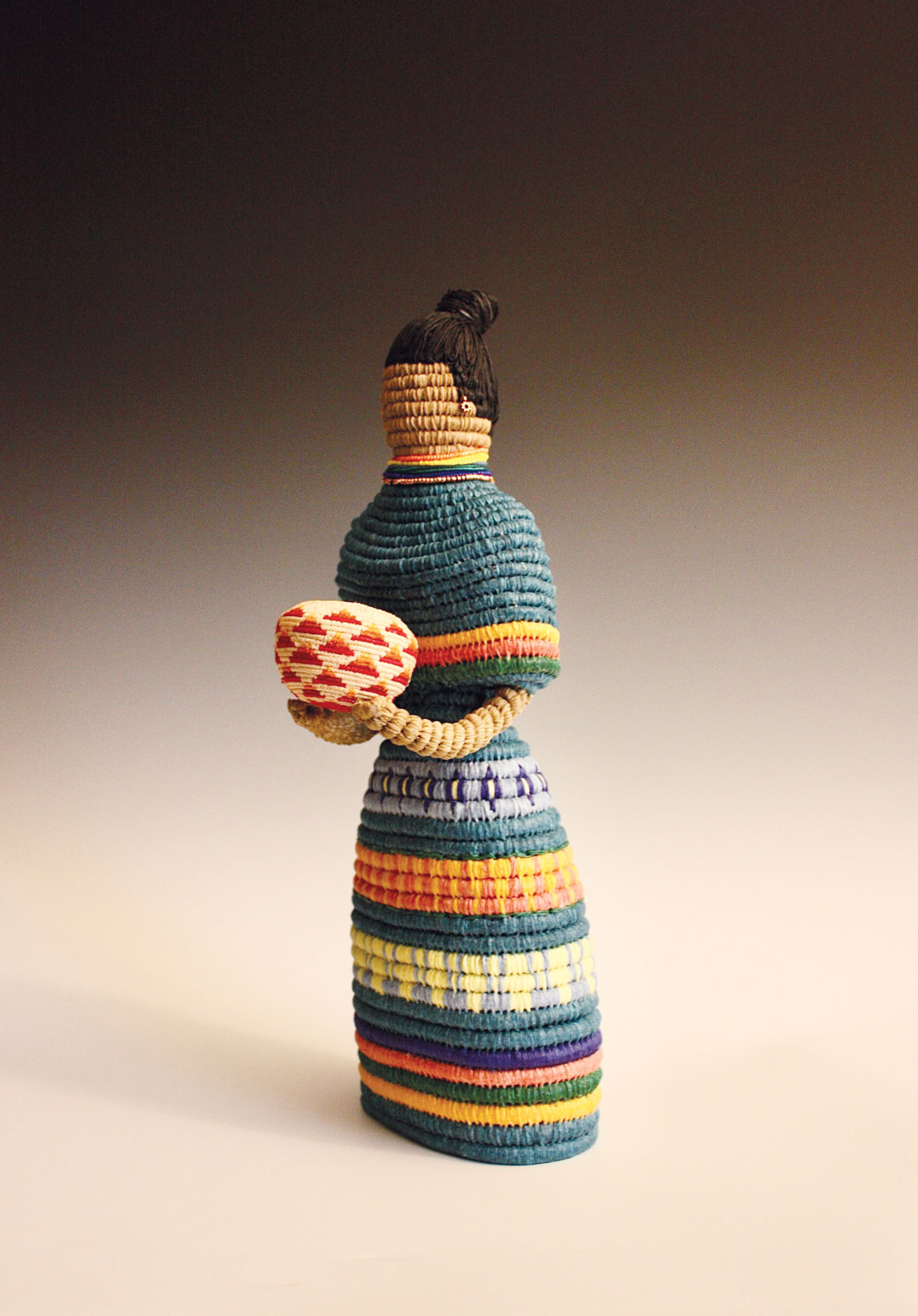 Seminole Sky Woman Carries the Sacred Fire, 2023, mixed media doll
Cultural Burdens winning Best of Show at the Heard event was a huge honor for Douglas. She still remembers the surrealness of it all, and being thankful for the opportunities that helped her grow within the weaving community, including the chance to participate at the School for Advanced Research in Santa Fe. Ten years later, she still loves the rush of competition, which allows her to get excited to show off the new things she’s completed. “Even if you don’t win a ribbon, at least you get your work out there so people can see,” Douglas adds.
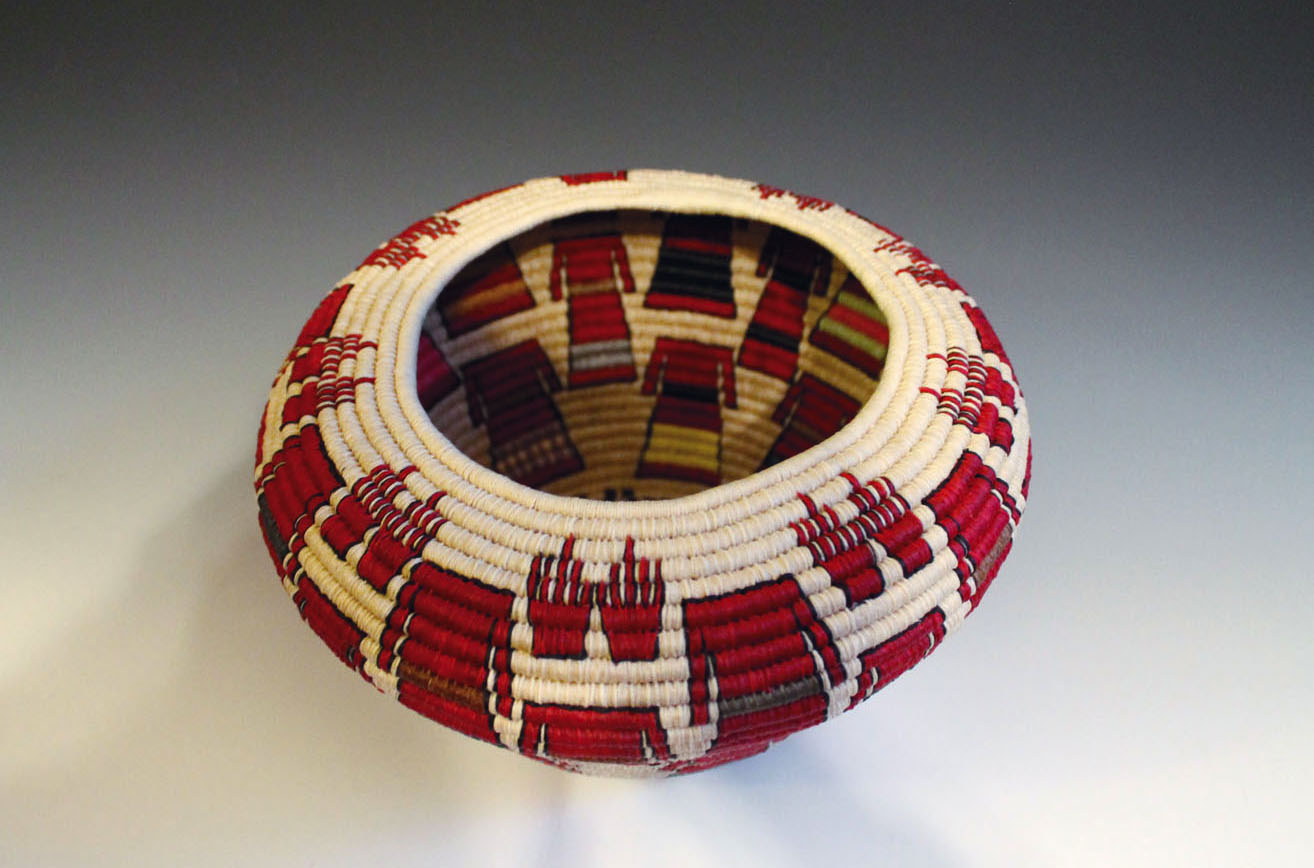 Twenty-Nine, 2019, coiled basket
Last year, she won best in classification with a basket called Sky Woman Watches, depicting the different continents and little figures from each. Above each figure, day turns into night and watching over them at the very top is the Sky Woman hugging the basket as she looks down on Earth.
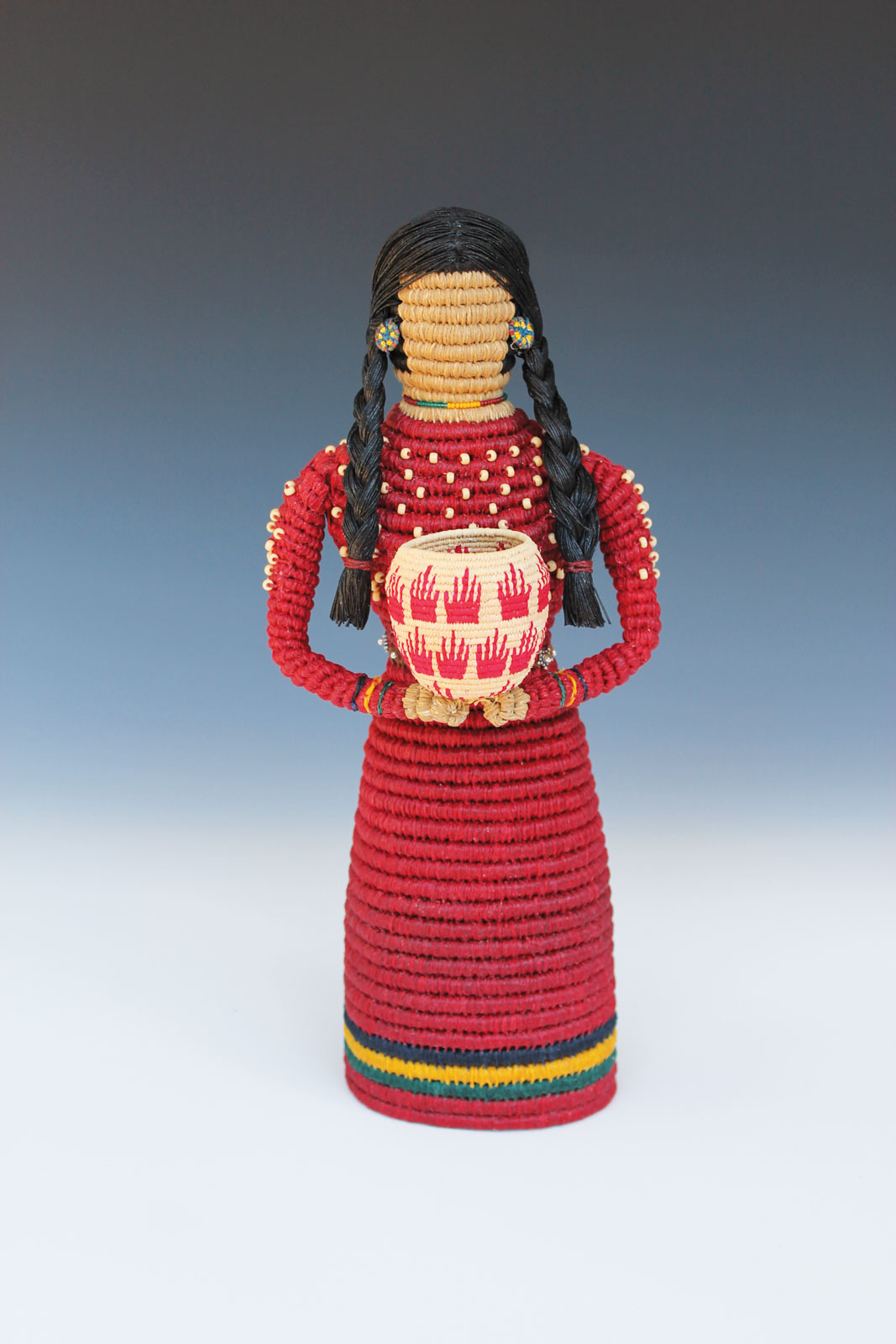 Star Woman Weaves for Her Sisters, 2023, mixed media doll
Like with most artists, Douglas’ ideas come from her surroundings, gaining perspective from architecture and paintings. She keeps a list of ideas she would like to try. A lot of her ideas represent the value of keeping tradition alive, while also touching on ceremonial themes and cultural impact. Though she derives most of her inspiration from her roots, she grew up knowing very little about her heritage. Her mother was Northern Arapaho and had lived on the Wind River Reservation in Wyoming. She was taken from her home and sent to a Catholic Jesuit mission where she was raised and worked since the age of 6. Her father, who came from a Seminole background, grew up on his family’s 160-acre farm in Oklahoma and had gone to a boarding school until he graduated high school.
“Neither one of them really taught us anything about our Native heritage. They didn’t want to because my dad’s first language was Seminole, and he couldn’t speak it and he didn’t want us to go through what he did.”
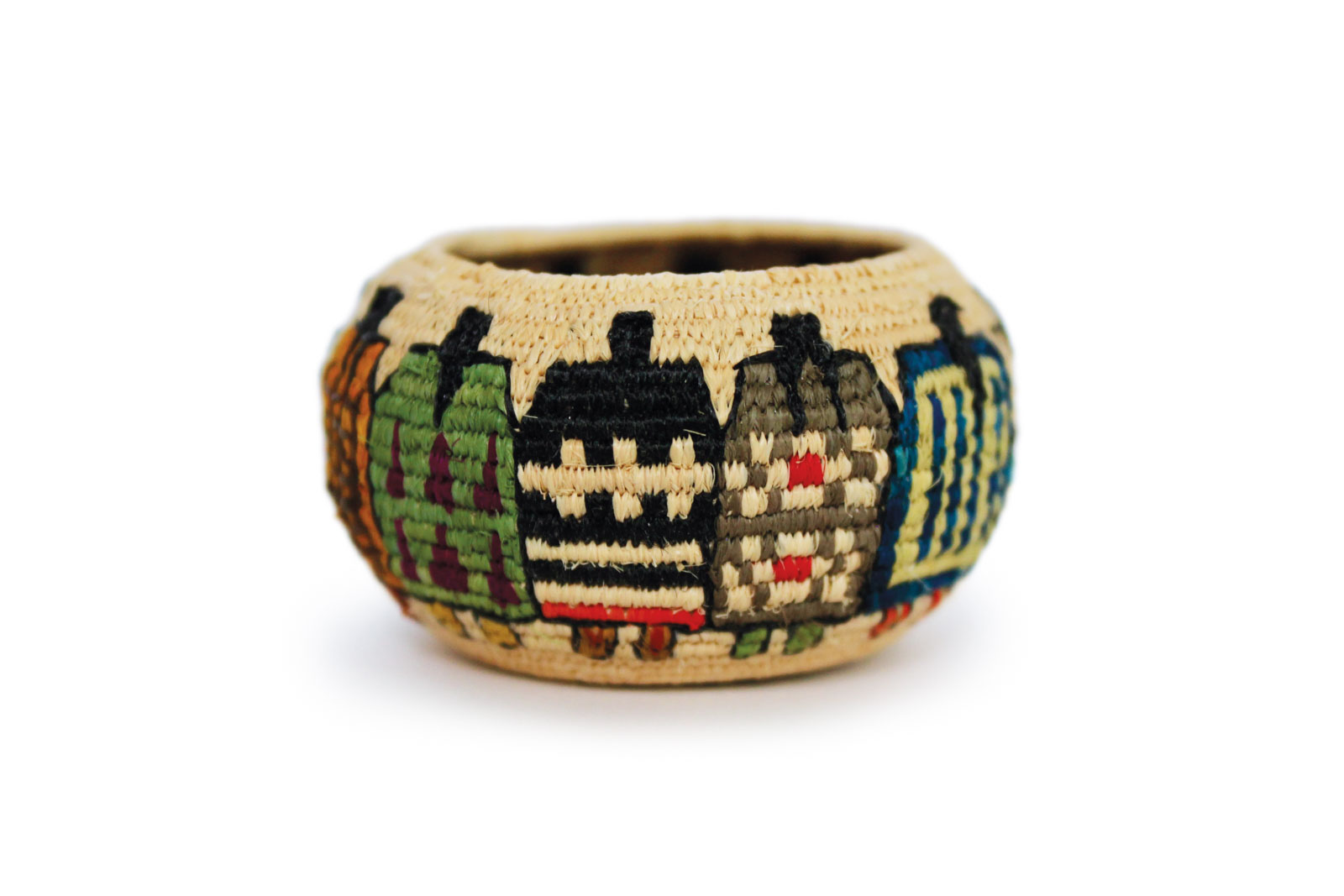
Blanket Statements, 2020, coiled basket
Now Douglas is surrounded by her heritage and learns so much through meticulous research and attending events like the Santa Fe Indian Market. She recalls sharing the experience of market with her mother, and how special it was to be at the epicenter of Native American culture. “I took her to Santa Fe with me to market a couple of times and she just loved it,” Douglas says. “She couldn’t believe there was all this artwork from all these Native people from everywhere—and all these different tribes together.”
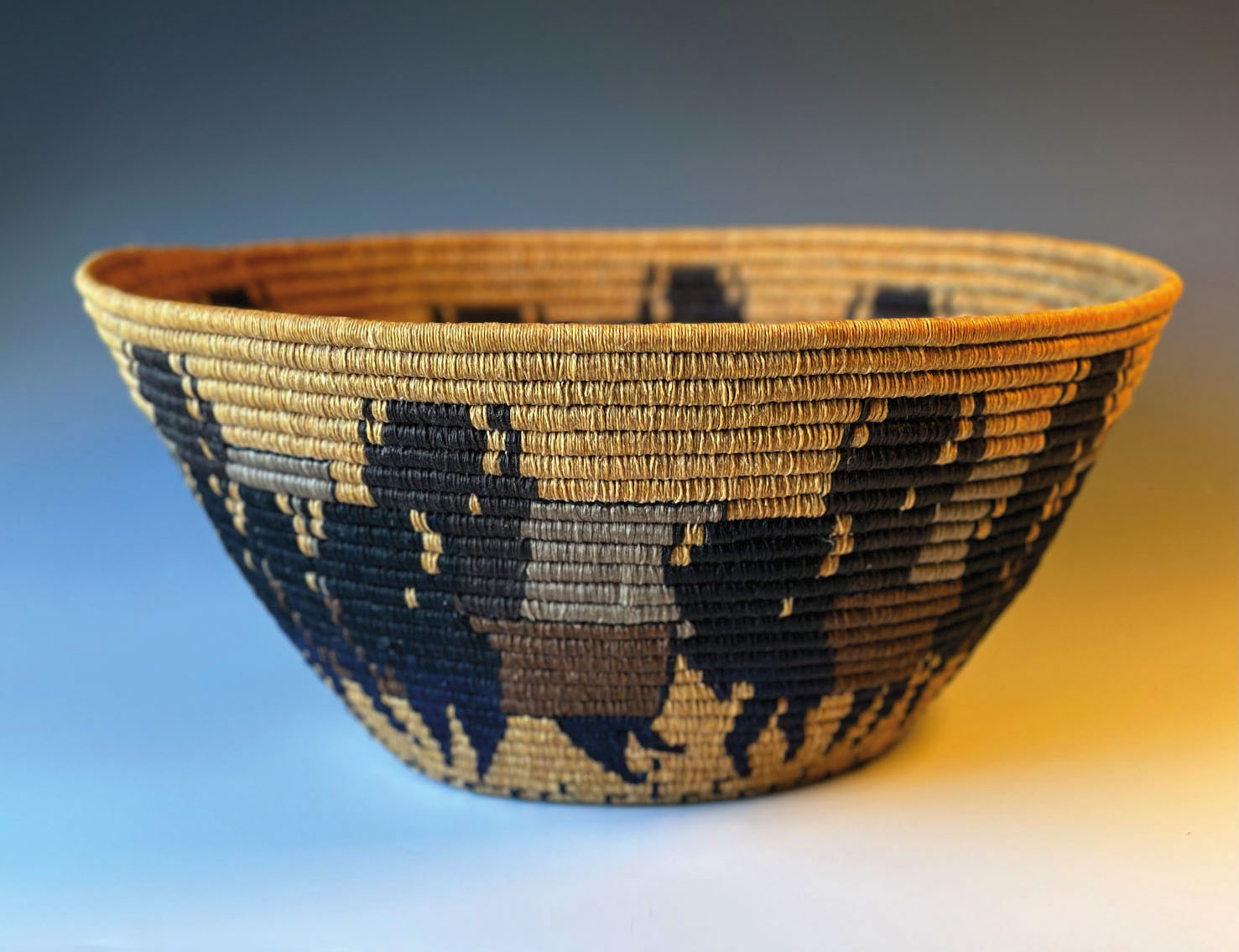
Buffalo Thunder, 2023, coiled basket
What makes Douglas’s baskets stand out is the way in which she incorporates contemporary elements within her traditional framework. Using modern materials such as waxed kubeb thread, hemp and beads allows her the freedom to explore more complex designs such as baskets portraying ledger art or Custer on a horse. Modernity is important, she says, because even though she’s paying tribute to the past she knows it is what she is doing in the present that keeps these traditions going toward the future. She materializes this concept with her basket Stomp Dance, a tribute to her Seminole background. The piece goes on a multi-generational journey of the dance and how the regalia has changed from the 1930 all the way up to the present day.
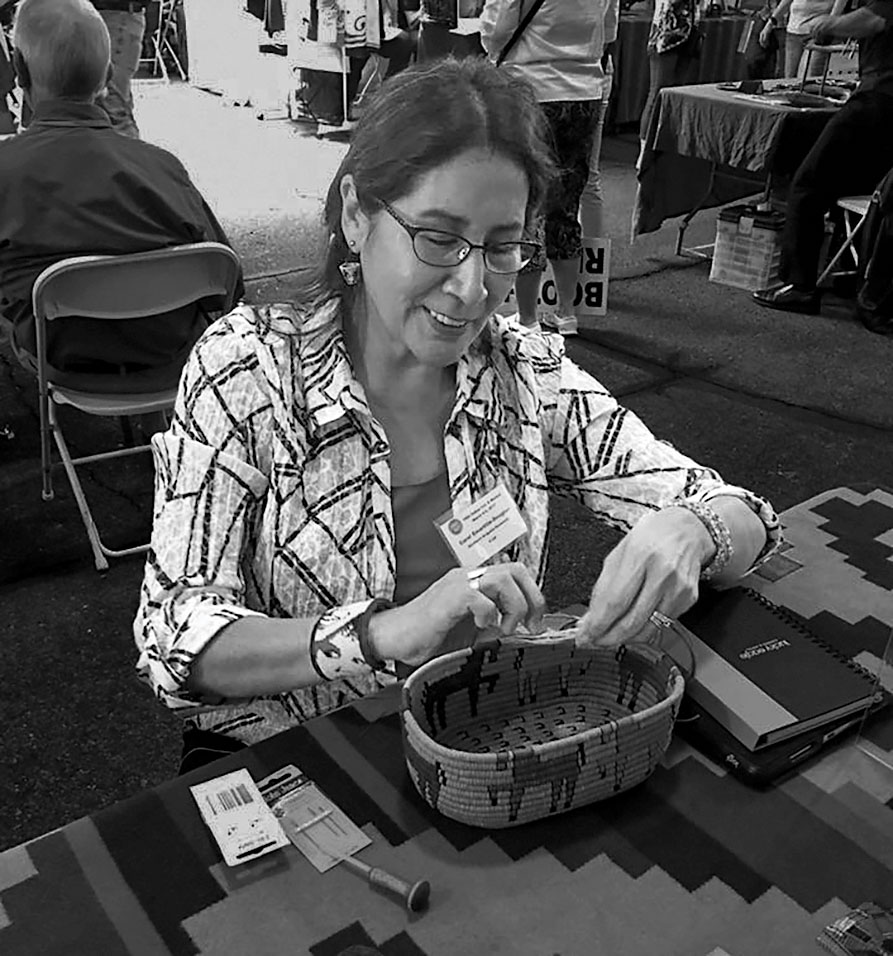
Carol Emarthle-Douglas works on one of her baskets at a market.
Douglas also thrives on a good challenge and is always up for trying something new. Last year she started making basket dolls. One recent piece is an Arapaho-style girl wearing a plain dress with miniature details adorning the doll, including a belt and jewelry. Another new doll is made of a colorful patchwork and she holds a small basket. About three years ago, she started using her baskets as inspiration for paintings. Though baskets will always be her top priority, she enjoys getting the opportunity to play with her designs in differen mediums. “With weaving, there’s only so much detail you can put into it,” she says. “When you’re painting, you can do circles and different shapes. With basket weaving you’re working in pixels.”
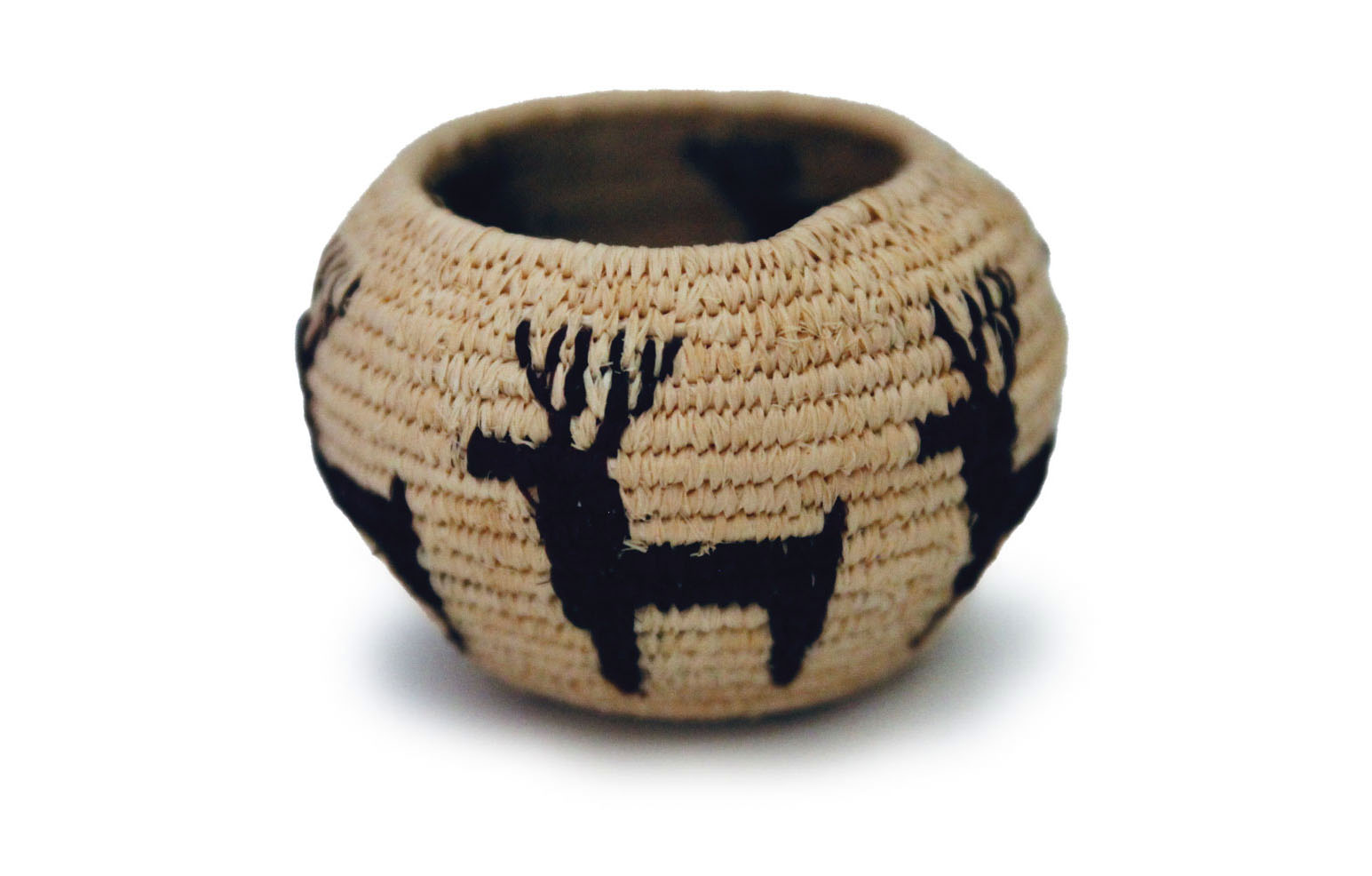 Deer Herd, 2021, coiled basket
Whether it be basketry or painting, Douglas artistically articulates the importance of knowing one’s heritage, and paying it forward through teaching and advocating for her medium. She pays tribute to those that have come before her and weaves their stories within her own.
Powered by Froala Editor


