When guests arrive at Marshall and Lee Ann Hunt’s home for a barbeque after the close of Santa Fe Indian Market, they are greeted by Kevin Box’s stainless steel White Bison. The white bison is spiritually significant to a number of tribes, a sign that prayers are being heard and that change is coming. It is also a symbol of peace.
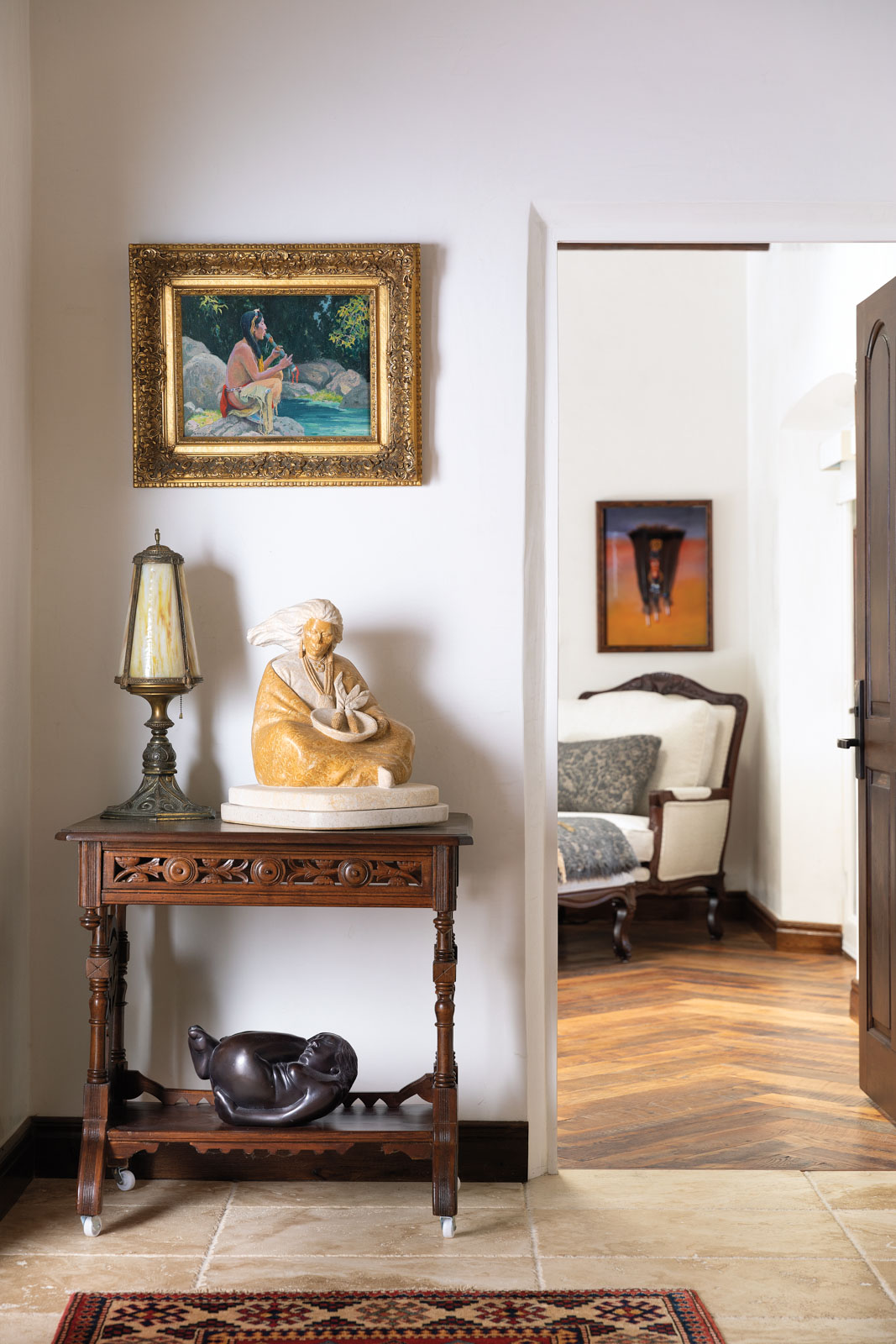 An oil, Brookside Melody, by Eanger Irving Couse (1866-1936) hangs in the hall. Beneath it is a stone carving, Offering to Abelone Shell Mountain, by Oreland Joe (Navajo (Diné)/Southern Ute). Woman in Stone, bronze, by Roxanne Swentzell (Santa Clara Pueblo) is on the bottom shelf of the table. A painting, Lightning Boy, by Patricia Marin Tribute hangs in the adjoining room.
The spiritual energy of the Hunt’s property goes back to historic times when it was a camping site for local tribes. Many pottery shards were found when the ground was being excavated for Marshall’s kiva-like writing studio. The spirit of the many artists whose works are displayed throughout the grounds, and in the Hunt’s home, animates the space as does the ebullient energy of the collectors.
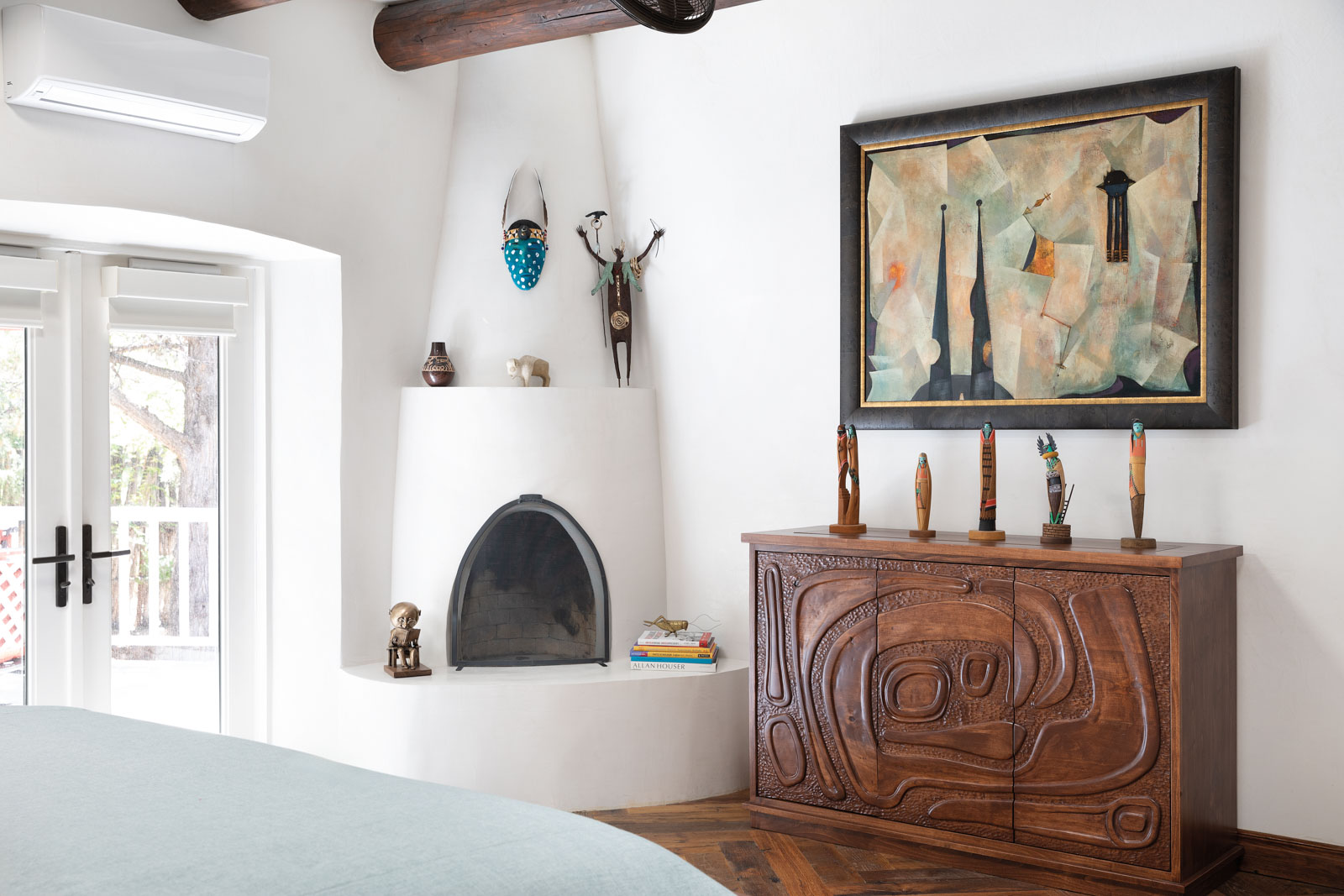 Above the kiva fireplace is a carved ceremonial mask of wood with feathers by Larry Ahvakana (Inupiat). Beneath it are, left to right, Crazy Horse, clay, by Jody Naranjo (Santa Clara Pueblo); Buffalo, carved stone, by Ryan Panana (Jemez Pueblo); and Shaman, bronze, by Bill Worrell (1935-2021). The painting above the cabinet is Twin Warriors, oil on canvas, by Sheldon Harvey (Navajo (Diné)). Beneath it are katsinam by Wilmer Kaye (Hopi).
In 2009, when they decided to purchase a home in the Santa Fe area, they happened upon this property in Tesuque. “It was perfect,” Marshall recalls. “The people that owned it before had done some remodeling and we literally didn’t have to patch a nail hole. So we moved. We packed up a semi from our home in Las Vegas and brought it out here. Everything just melted onto the walls and into the house.”
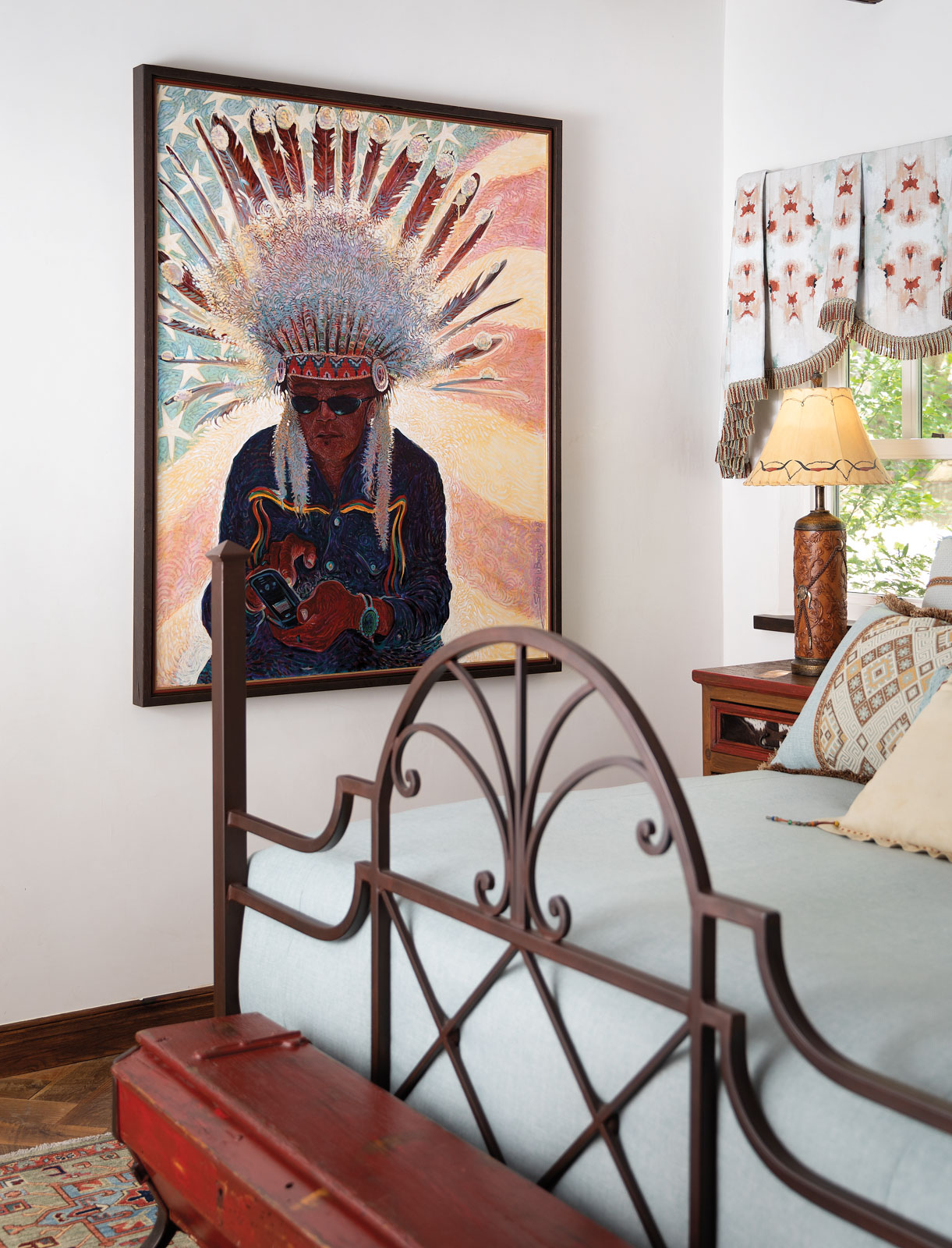 Chief with Cellphone, oil on canvas, by Shonto Begay (Navajo (Diné)) hangs in a bedroom.
They have recently completed a major “re-do” of their home. Upgrades to the grounds are ongoing—refining what was an overgrown landscape when they moved in. One major change to the interior is the addition of white Venetian plaster which Lee Ann feels gives the house a more open feel and makes the art stand out.
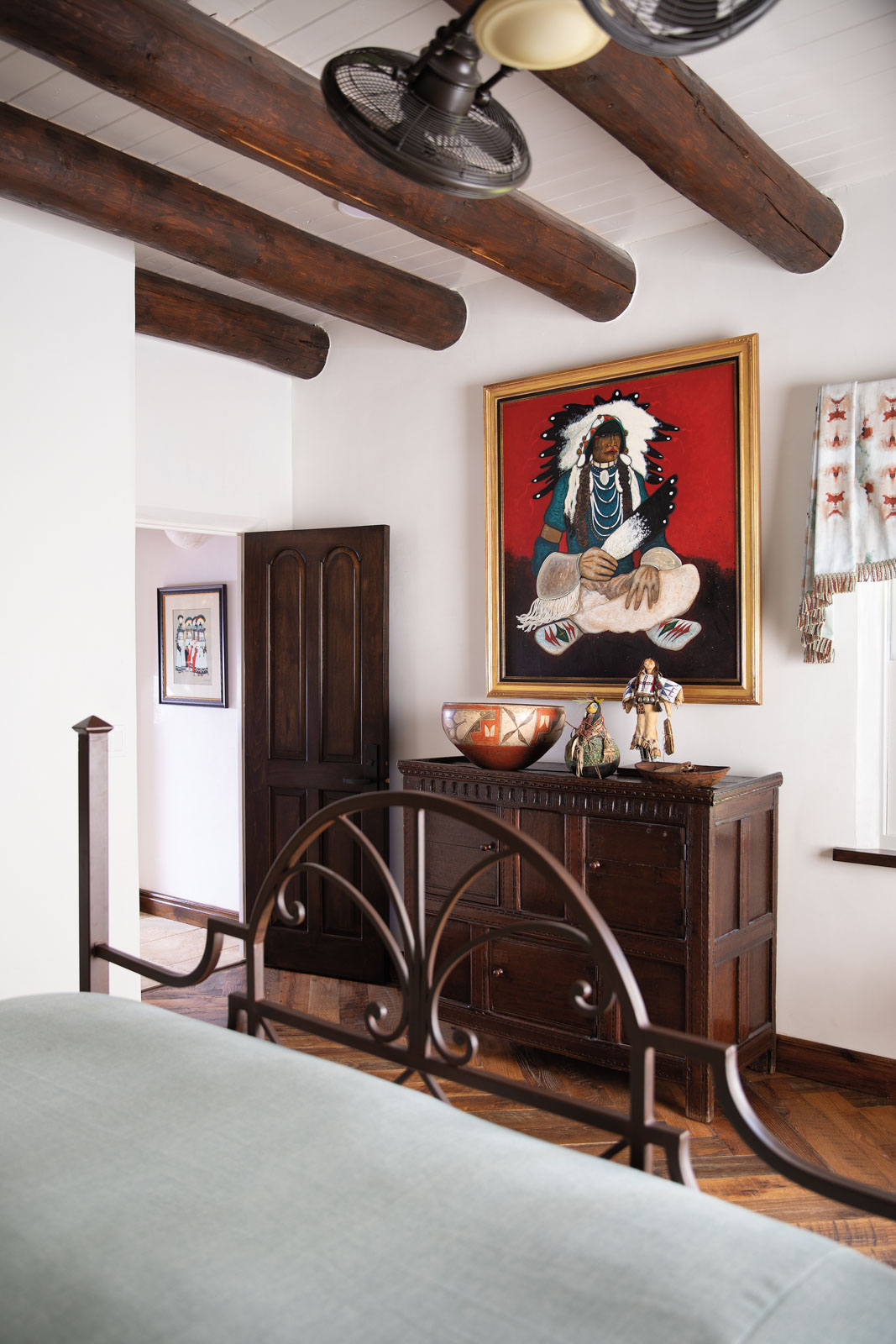 Outside the bedroom door is Yei Bi Cheis, gouache on paper, by Al Momaday (Kiowa, 1913-1981). Above the chest is Indian Sitting on Buffalo Robe, oil on canvas, by Kevin Red Star (Crow). A large Zia dough bowl, circa early 1900s, is on the chest. Next to it is a painted gourd by Robert Rivera, on the left, and an antique Plains beaded doll.
An acequia and other water features, including a waterfall, provide not only a place for lush plantings but for the installation of sculpture. When they had initially installed Glenna Goodacre’s trio of bronzes titled Water Bearers, they had placed them among newly planted trees. After 15 years, the trees began to overpower the sculptures. They have been trimmed back and the sculptures have been repositioned to blend into the landscaping along the waterfall.
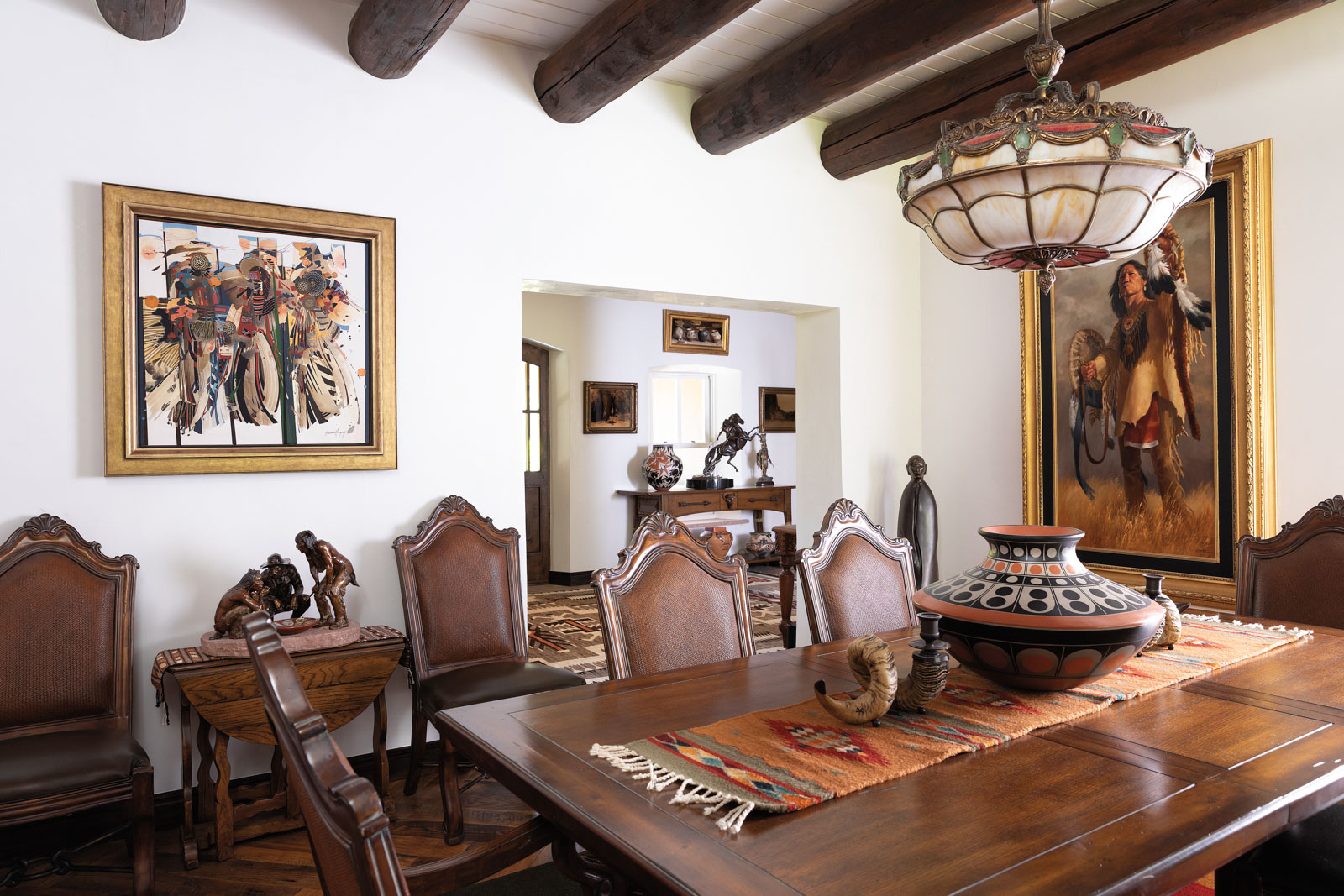 Pow Wow, oil on canvas, by Brenda Kingery (Chickasaw) hangs in the dining room. Beneath it is White Man’s Cigarette, bronze, by Glenna Goodacre (1939-2020). A large painted pot by Thomas Tenorio (Santo Domingo Pueblo) is on the dining room table. In the corner is Morning Walk, bronze, by Allan Houser (Apache, 1914-1994). The large painting on the right is Mystic Powers, oil on canvas, by Jay Hester. Flanking the window in the hall are two goldtone photographs by Edward S. Curtis (1868-1952), Out of the Darkness and Canyon de Chelly. On the table are, left to right, a large painted pot by Harlan Reano (Santo Domingo Pueblo/Kewa Pueblo) and Lisa Holt (Cochiti Pueblo); Great Horse Dispersement, bronze, by George Rivera (Pojoaque); and John Coleman’s Mini Poka, Favorite Son, bronze.
“You see them differently now,” Marshall explains. “They’re just wonderful. We’re honored to own them because there are only 12 sets and they’re scattered. We were on a waiting list for them. I was sitting at my computer in Las Vegas about 17 years ago and just Googled ‘water bearers’ and a photo of them came up at the Broadmoor Gallery in Colorado Springs. The gallery owner was on vacation, but I tracked him down in Hawaii and we agreed to meet when he got back. He agreed to only talk to me and we negotiated the deal.”
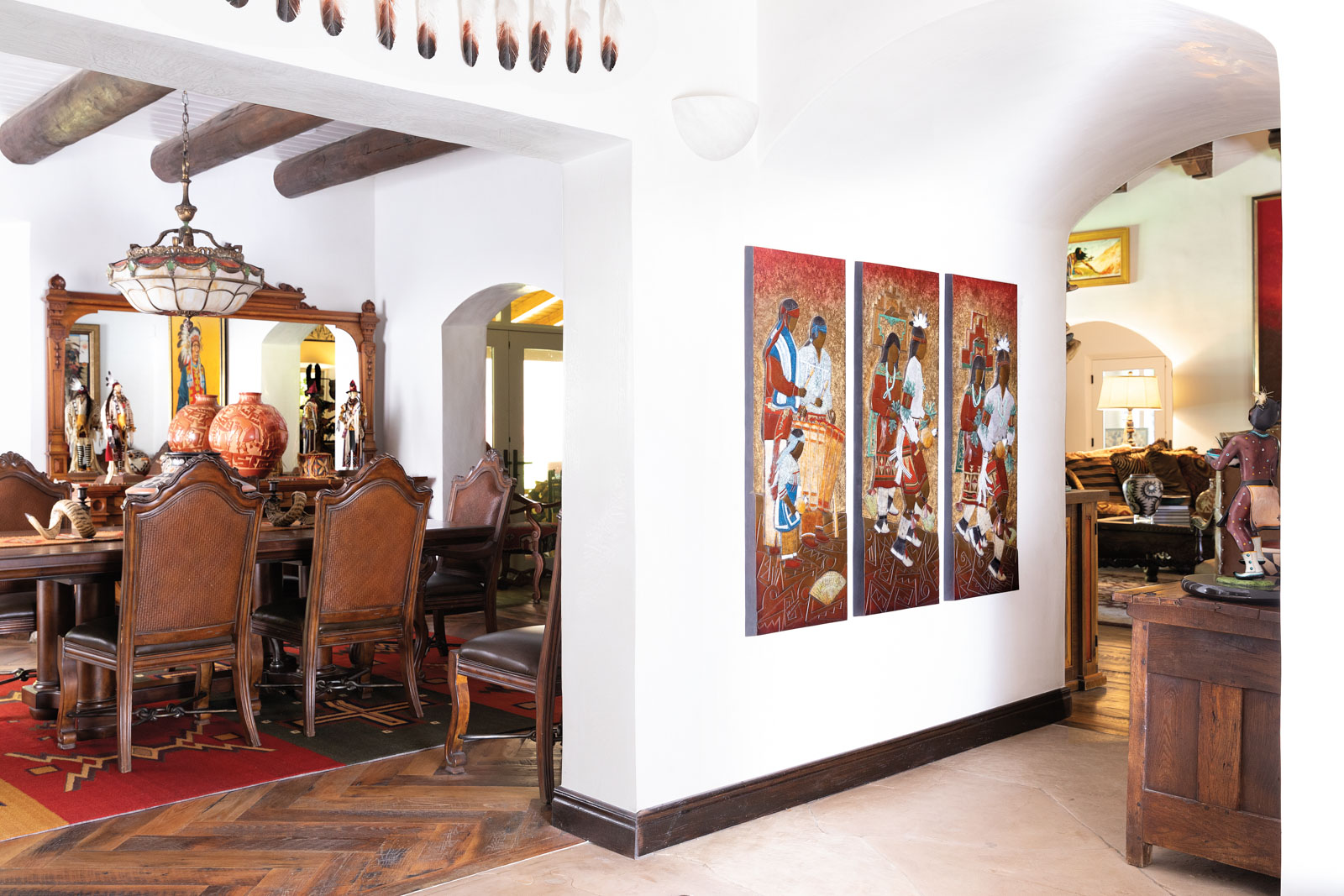 In front of the dining room mirror is a large carved pot by Tammy Garcia (Santa Clara Pueblo) flanked by two beaded dolls, Rainin and Fabrizio by Jamie Okuma (Luiseño/Shoshone-Bannock/Wailaki). On the right is a bronze relief triptych, Crescendo, by Tammy Garcia.
Among the many stories about how pieces came into the collection, my favorite is about Marshall and Kevin Box. Kevin had once worked in glass and Marshall purchased a piece for their Dallas home. It broke. After Kevin repaired it and returned it, it broke again and he repaired it again.
Fast forward to Marshall riding his Harley up Canyon Road in Santa Fe, and seeing White Bison out of the corner of his eye. When it registered what he had seen, he rode around the block and stopped at the gallery. When the gallery owner told him the sculpture was by Kevin Box, Marshall asked if was the same Kevin Box who was a glassmaker. The gallery called Kevin, who told them that he had, indeed, once worked in glass. The sculpture is now sited just inside the gates to the Hunt’s home and is accompanied by a plaque containing one of Marshall’s prose poems, The Sacred One.
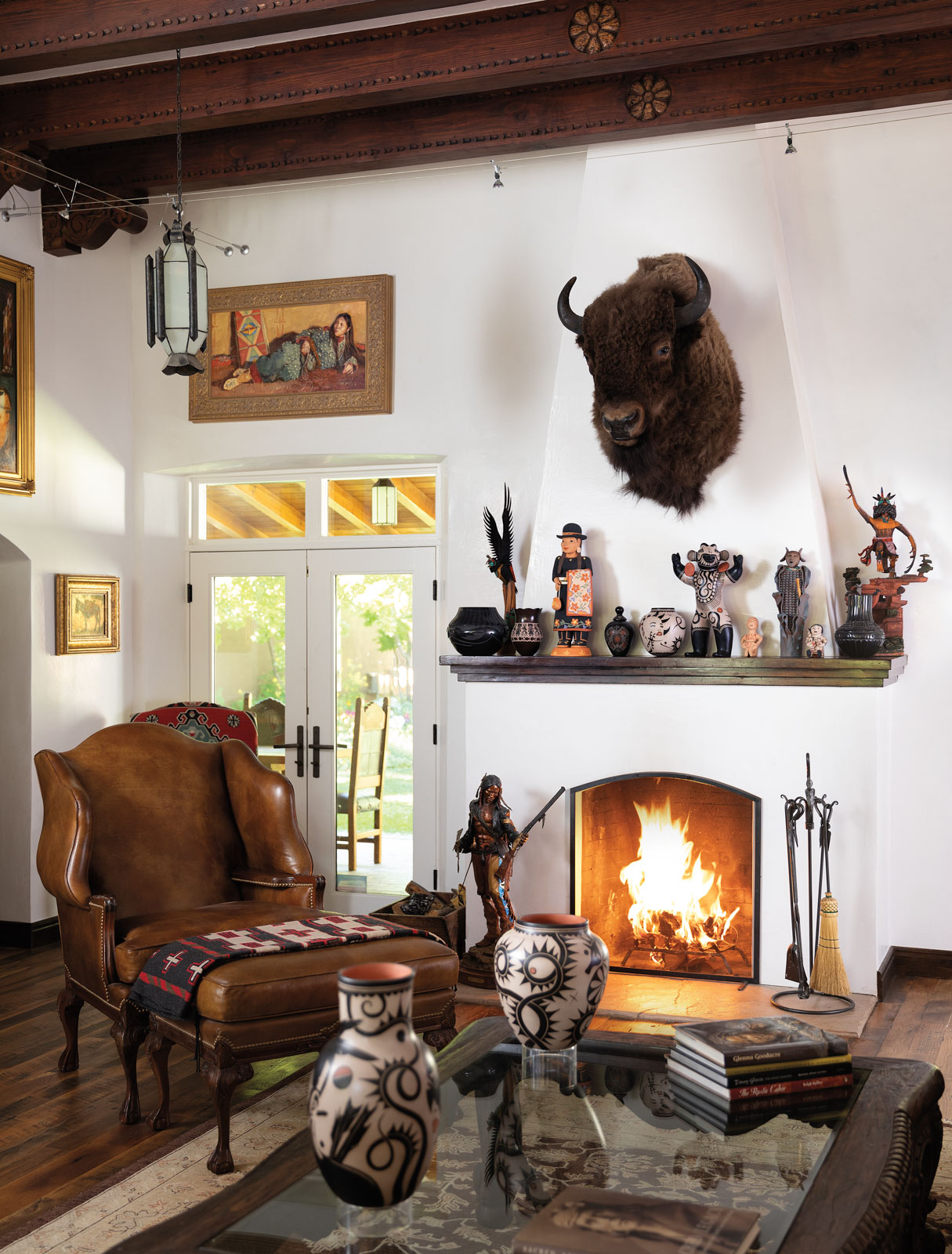 Indian Woman in Tipi, oil on canvas, hangs above the doors. On the mantel are, selected left to right, a black carved vase by Vicki Martinez (Santa Clara Pueblo); Summer Rain, clay, by Jody Naranjo (Santa Clara Pueblo); Painted Pot and Opera Singer by Virgil Ortiz (Jemez Pueblo); a carved pot by Linda Tafoya-Sanchez (Santa Clara Pueblo); and Eagle Dancer on Pueblo, a carved wood katsina by Alfred Lonahquahu (Hopi). On the hearth is Spoils of War, bronze, by Ed Natiya (Navajo (Diné)). Two pots by Virgil Ortiz, Blind Archer and Seahorse, are on the table in the foreground.
In his retirement, Marshall is devoting more time to writing—prose, poetry and song lyrics. He has his escape on a hill behind their home. When it was being built, the Santa Clara Pueblo artist Roxanne Swentzell said she wanted to plaster the interior walls. The curved walls of mud and straw have nichos displaying Native American artifacts. Roxanne created a special piece for one of them, titled with her characteristic humor, Pueblo Centerfold—the artist in her dance dress.
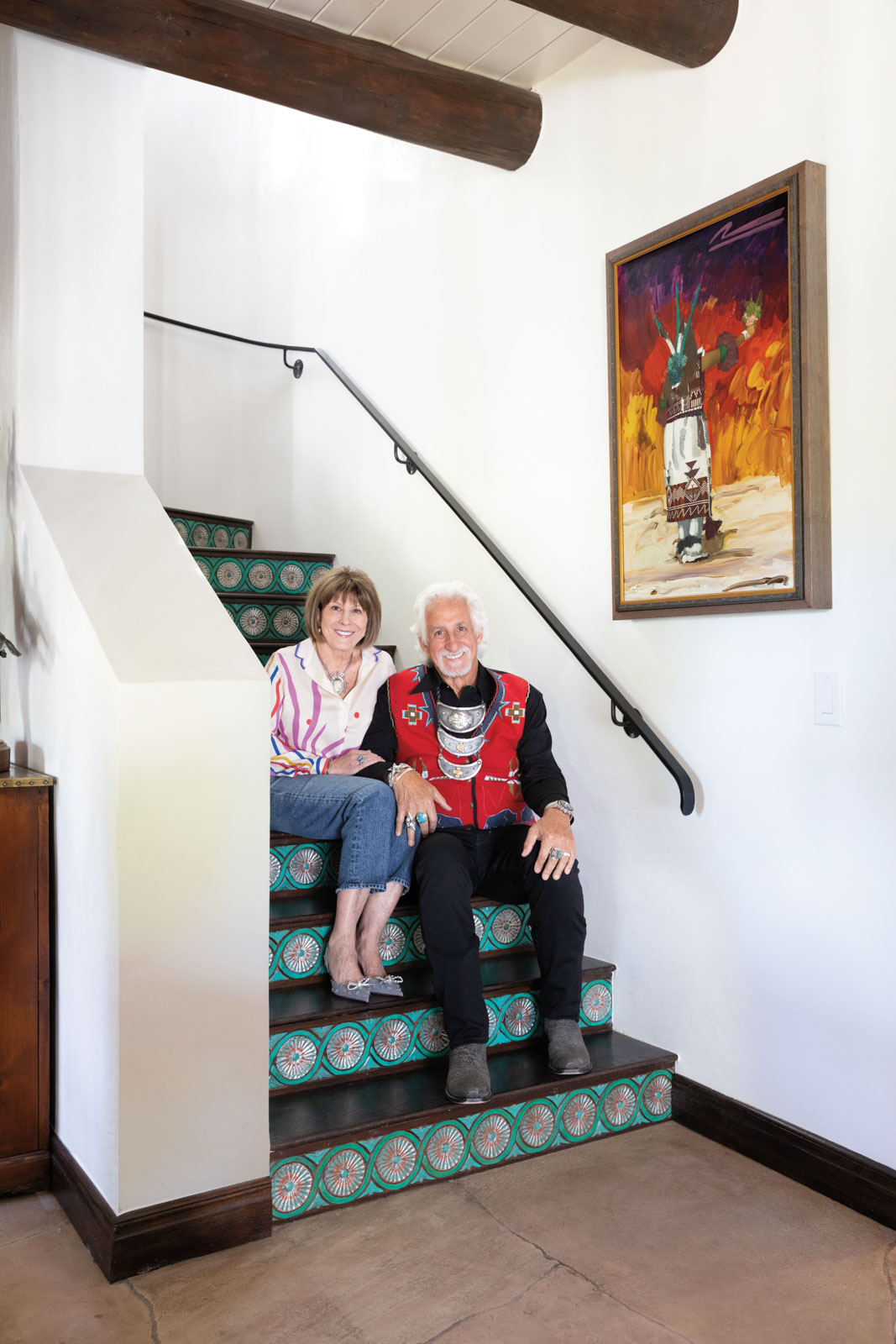 Lee Ann and Marshall Hunt sit on the stairs beneath Harvest Dance, oil on board, by Mateo Romero (Cochiti Pueblo). The carved and painted stair risers are part of recent renovations to their Tesuque, New Mexico, home.
This is the first year the couple will be spending the entire summer in Tesuque—with a brief side trip to Santa Monica, California, to greet a new grandchild.
“I was looking for a project in my retirement,” he relates, “I tried to talk Lee Ann into building another home on property we owned. She said, ‘I don’t want to leave here. It’s too special.’ She was right and I agreed at the end. So we did the remodeling.”
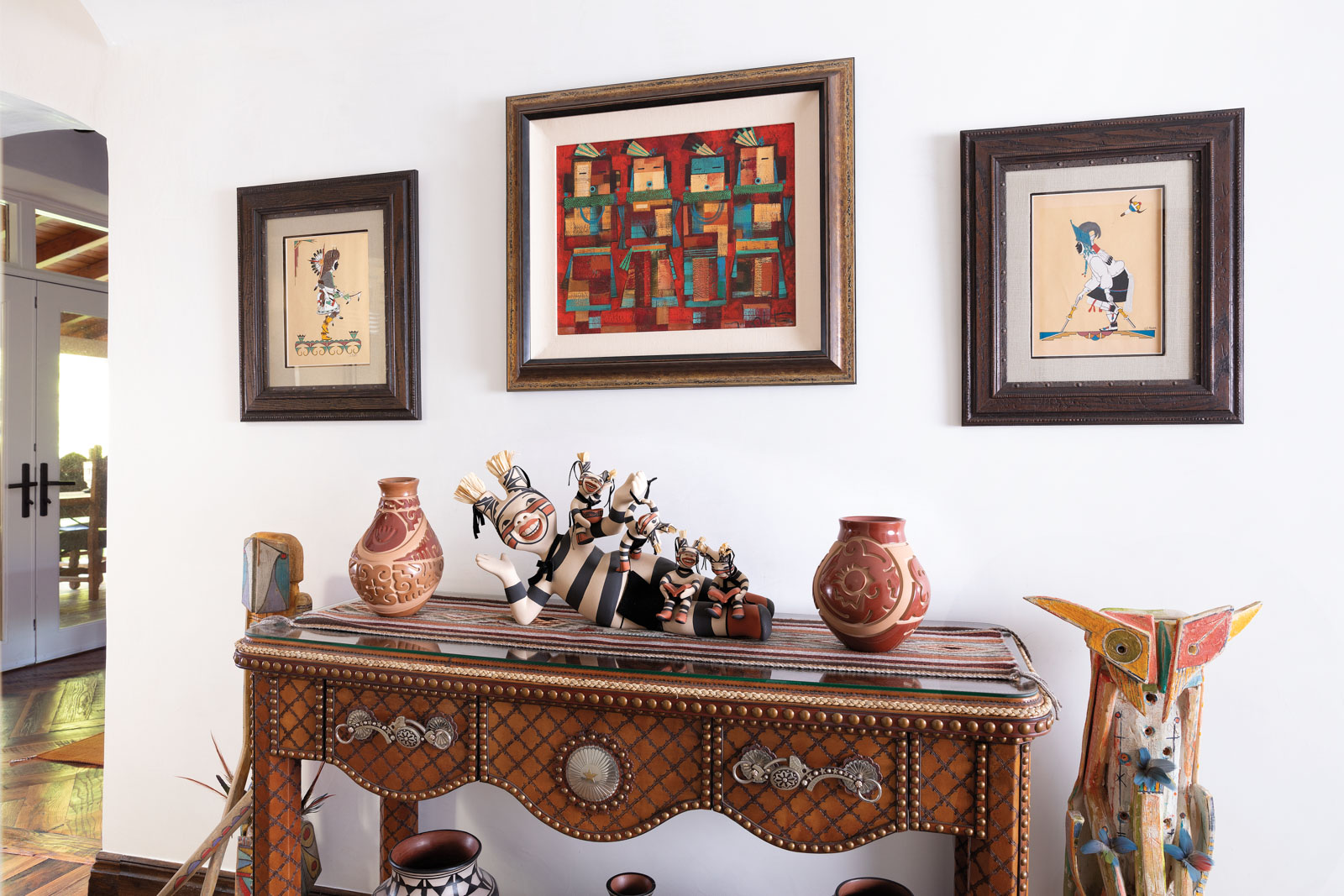 Two gouaches on paper by J.D. Roybal (San Ildefonso Pueblo,1922-1978) hangs above the decorated sideboard, flanking Yei Bi Cheis, oil on canvas, by Tony Abeyta (Navajo (Diné)). On the sideboard are two carved pots by Nathan Youngblood (Santa Clara Pueblo). The sculpture is Kashare Family, painted clay, by Kathleen Wall (Jemez Pueblo). On the floor to the right is a carved wood sculpture, Trickster, by Sheldon Harvey (Navajo (Diné)).
Lee Ann adds, “You know, you can’t get the feeling, the spiritual feeling that we get here, anywhere else. It’s a feeling that everybody loves when they come here. On the property where Marshall wanted to build, you can see the mountains, but you also see the tops of other people’s houses. They all look the same and all you have is cactus and scrub pines. You don’t have these beautiful trees, gardens and running water.”
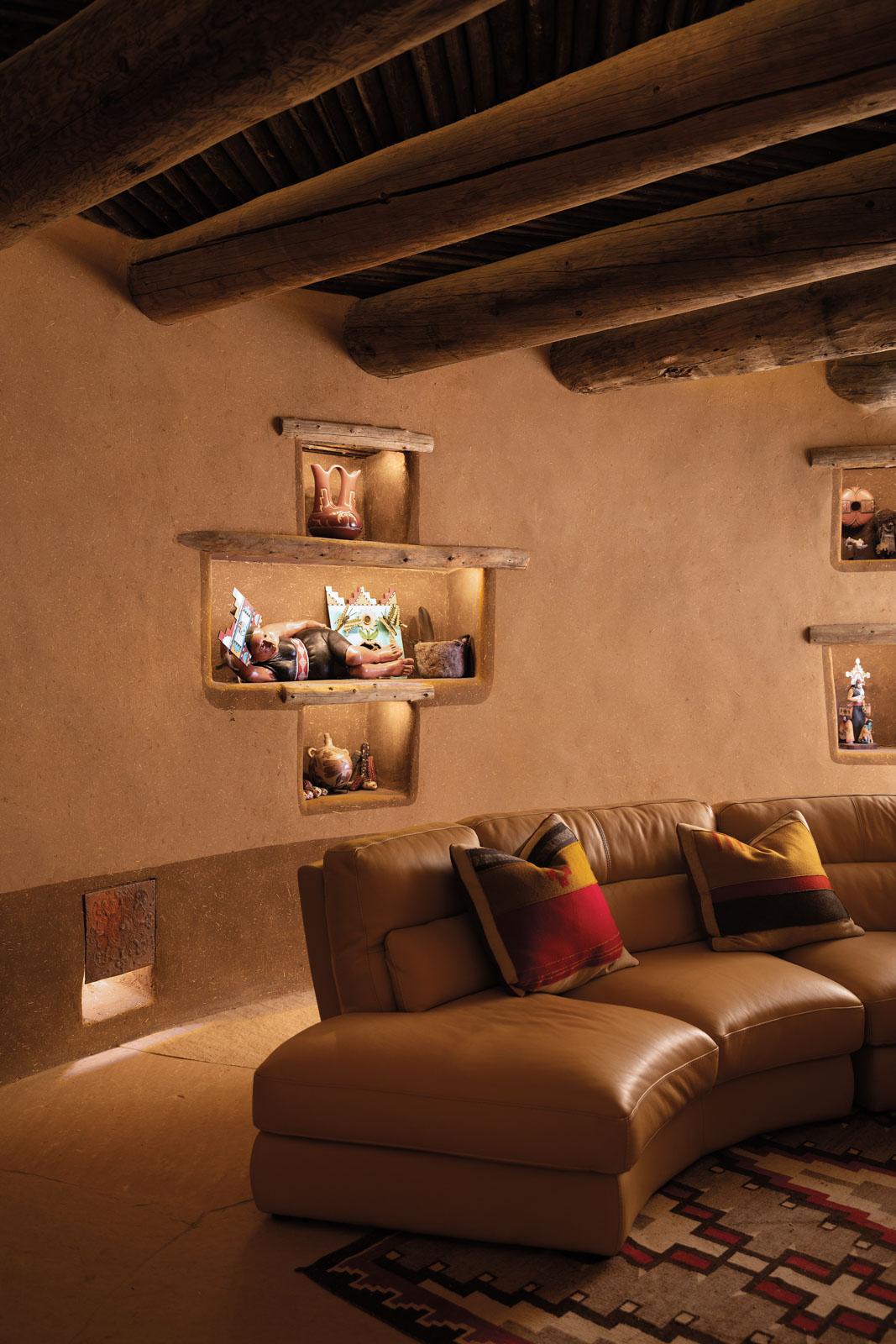 At the top in the nicho is a red wedding vase by Richard Ebelacker (Santa Clara Pueblo, 1946-2010). Below it is Pueblo Centerfold, painted clay, by Roxanne Swentzell (Santa Clara Pueblo), and below it is an antique Acoma parrot canteen.
One part of the remodel was a back kitchen which comes in handy when they host 130 people at their post-Indian Market barbecue to honor the artists. At one barbecue, Mateo Romero, a member of Cochiti Pueblo, walked through the house looking at the collection and remarked to Lee Ann, “I noticed that you guys don’t have one of my paintings in there. I want you to come up to my studio because you need to buy one.” Lee Ann went to his studio where Romero told her about the spirit of the artists remaining in the work they make. She bought one of his pueblo dancer paintings for the collection.
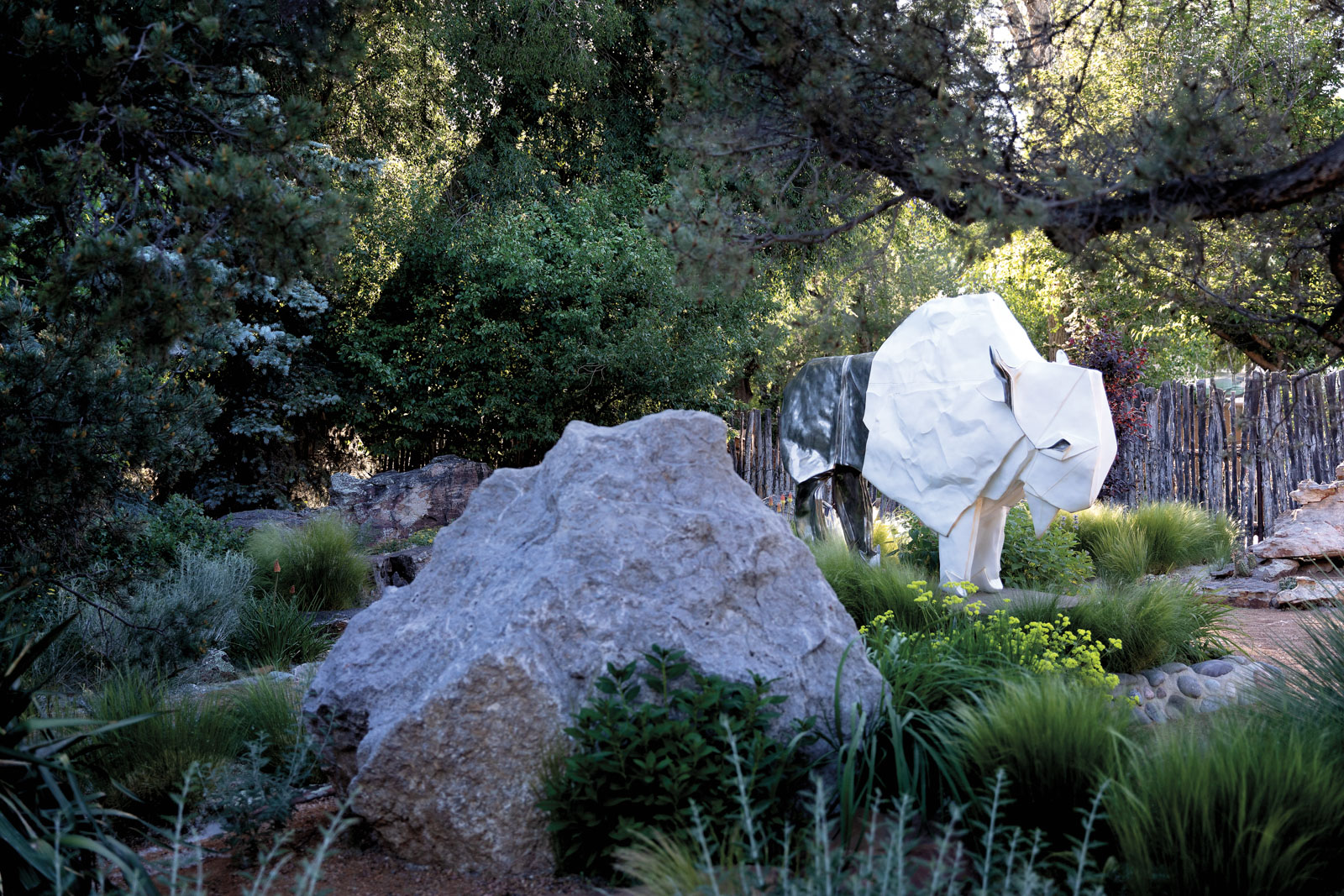 White Bison, powder-coated stainless steel, by Kevin Box, is in the front garden.
Marshall is an enrolled member of the Seminole Nation of Oklahoma and has collected Native American art all his life. He and Lee Ann met in Oklahoma in 1973 and remained friends through the years and their separate marriages. In 2004, they reconnected. Native American art hadn’t been part of Lee Ann’s life until she moved into Marshall’s home in Las Vegas. Since then, she has grown to love it and to enjoy their many friendships with the artists whose work they collect.
Powered by Froala Editor


