In a special showcase now open to the public at Adobe Gallery in Santa Fe, New Mexico, four San Ildefonso polychrome pottery pieces are on view to educate and illuminate. Gallery owner, Alexander Anthony, explains that these four examples illustrate the progression of the tribe’s style and traditional use of their native slip in cream—requiring artists to stone polish before painting.
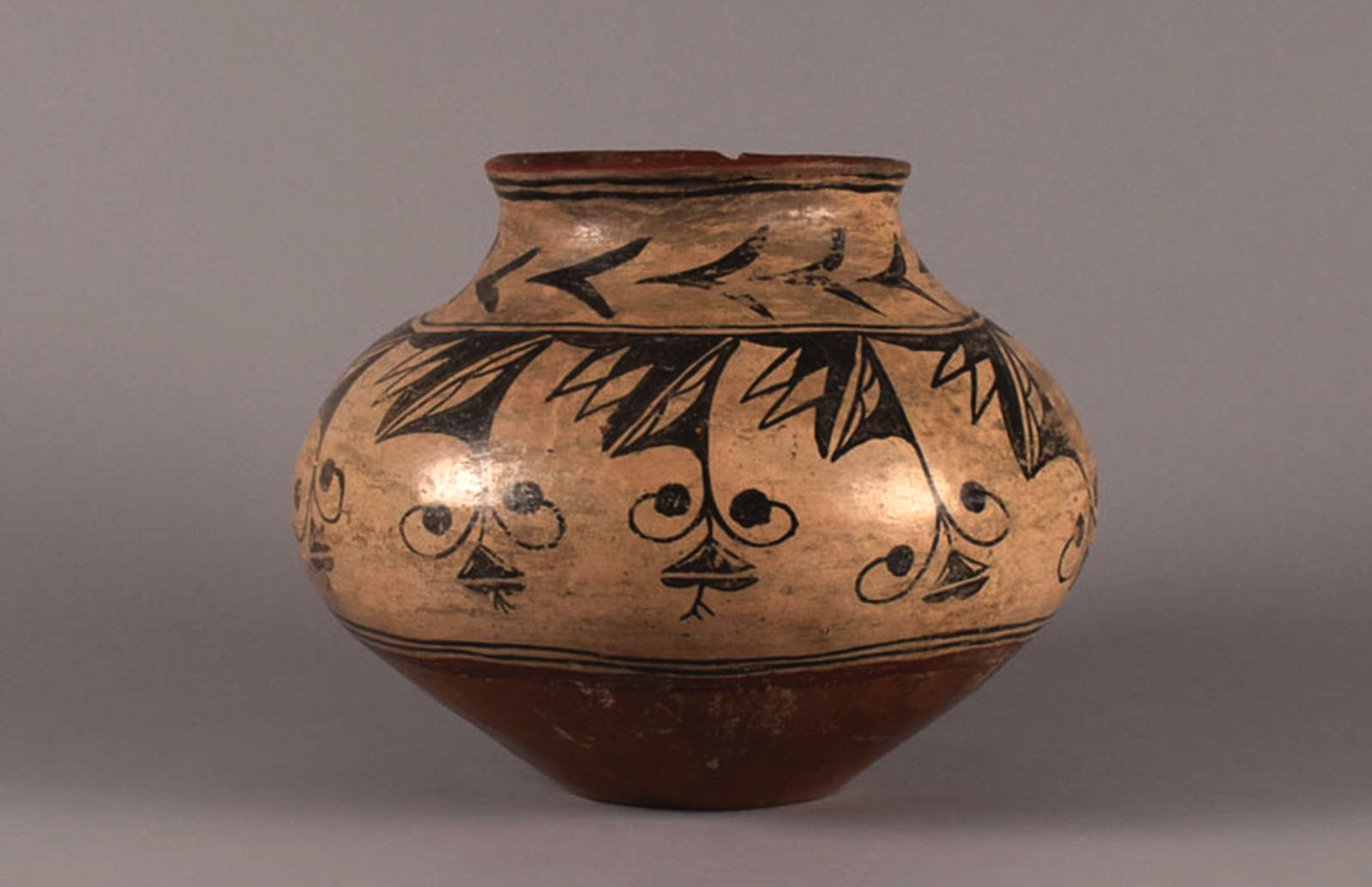 Attributed to Marianita Roybal (1843-ca. 1910, San Ildefonso Pueblo), Historic Powhoge Polychrome Jar, ca. 1880, clay and pigments, 9 x 11¾”
Beginning with the oldest of the four pieces, is the Historic Powhoge Polychrome Jar, circa 1880, attributed to Marianita Roybal. “Although many types or styles of pottery were being made in the [San Ildefonso Pueblo] in the late 1800s, the most predominant style was Powhoge polychrome typology,” Anthony notes. “Powhoge polychrome pottery—[named after the Tewa term for the pueblo]—was black-on-cream with red, limited to use on the rim top and for the red band wiped on below the design panel.”
By 1890, Anthony shares that Powhoge polychrome began to be replaced with a new style known today as San Ildefonso polychrome, which came to be the predominant style by 1900. “San Ildefonso polychrome ushered in the use of red pigment in the design,” says Anthony. “Additional changes that occurred were vessel shapes and painted designs. Potters revived the 18th-century olla shape and switched from red to black for rim paint.”
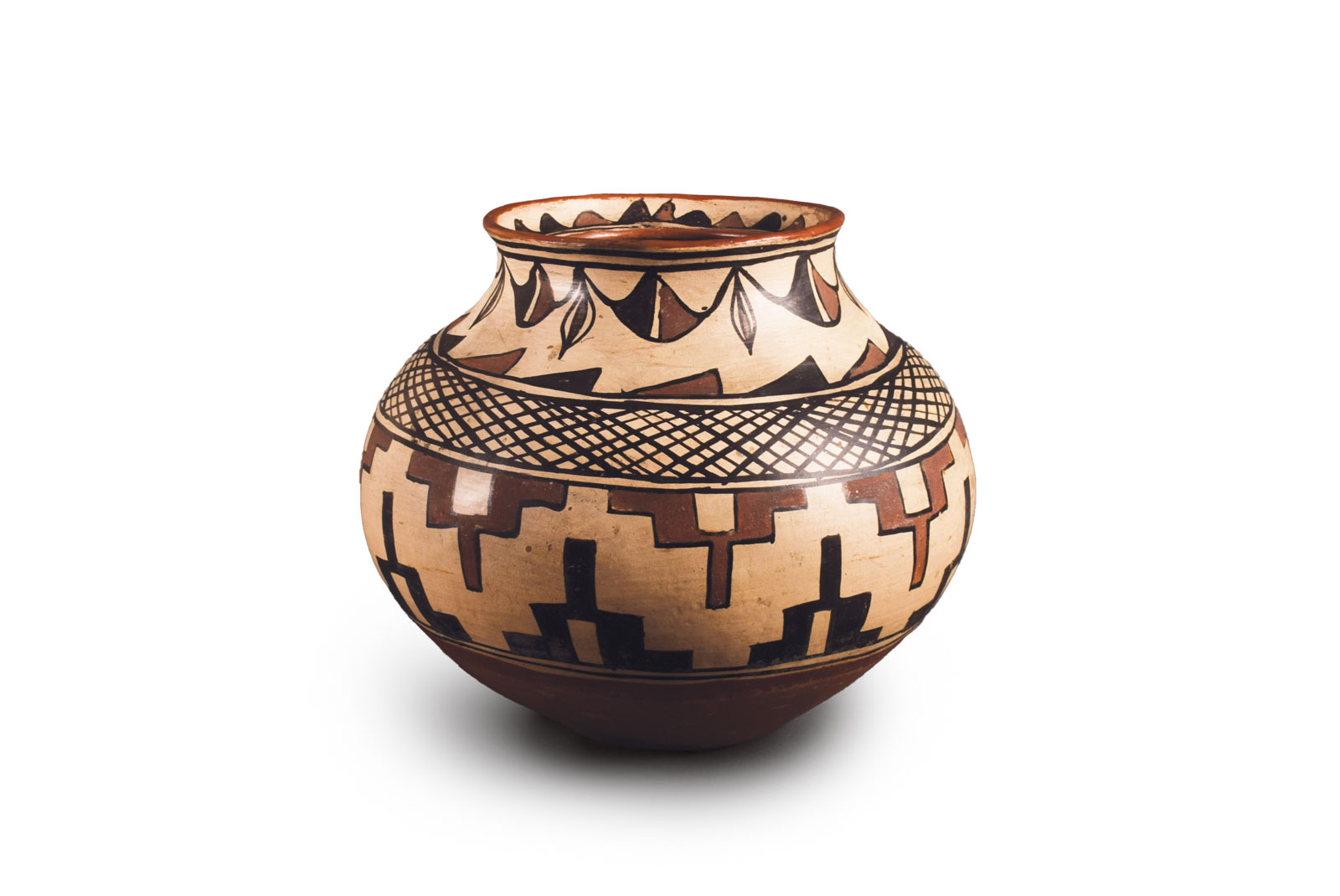 Historic Polychrome San Ildefonso Pueblo OLLA, ca. early 1900, clay and pigments, 9 3/8 x 105/8"
The next significant change occurred around 1900 and is credited to Martina Vigil and Florentino Montoya, and is illustrated in the show piece Historic Polychrome San Ildefonso Pueblo OLLA, by an unknown potter. “The couple from San Ildefonso were frequent visitors to Cochiti Pueblo,” says Anthony. “It was there that they noticed that potters did not stone polish the cream slip but only rag wiped it. They took this knowledge back to San Ildefonso and introduced it to potters there.” This phase ended the use of the traditional cream slip the tribe was known for, as artists embraced the Cochiti way—and their native slip.
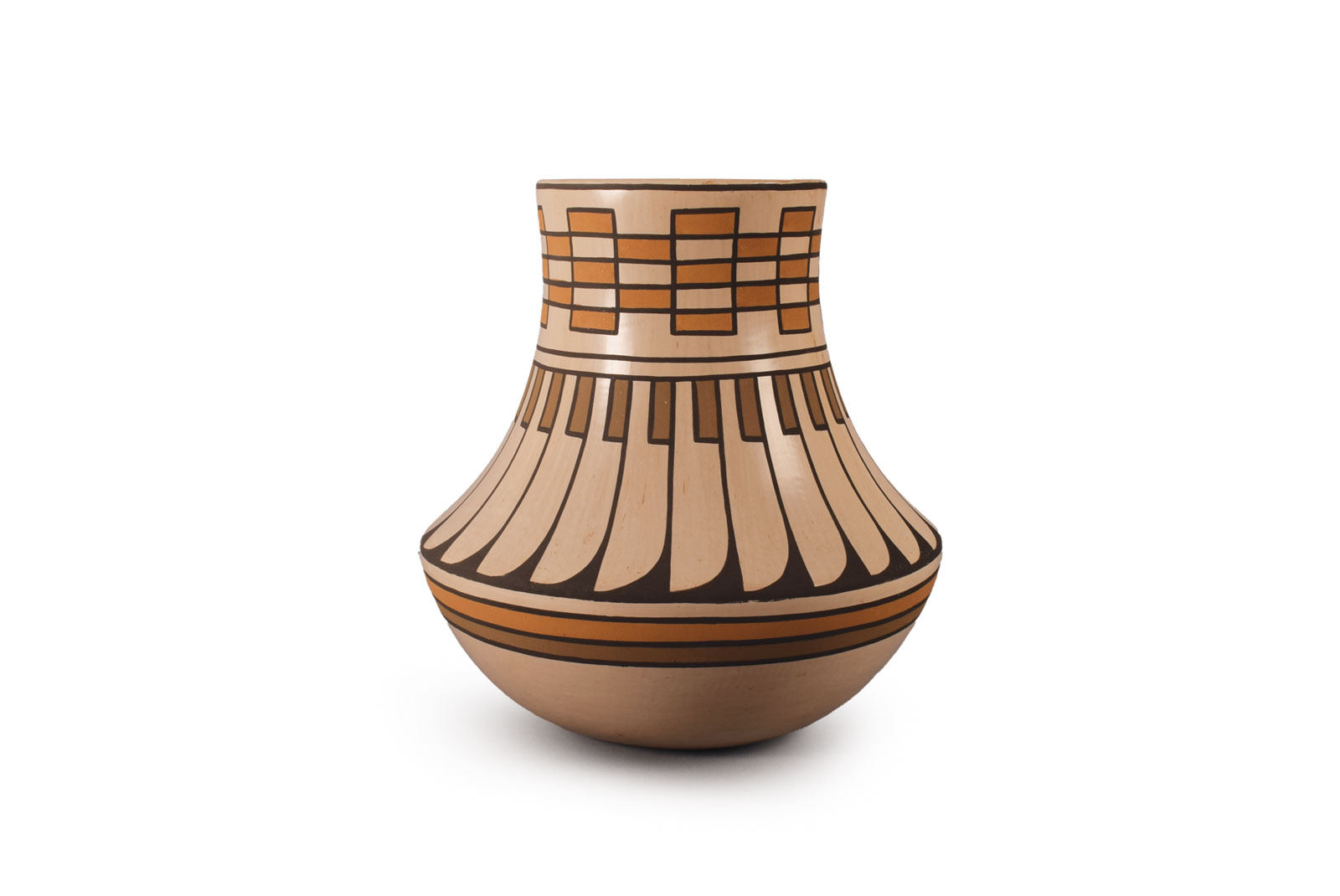 Crucita Gonzales Calabaza “Blue Corn” (1921-1999, San Ildefonso Pueblo), San Ildefonso Large Polychrome Jar, early to mid-1900, clay and pigments, 9¾ x 8¾”
“The next development in San Ildefonso polychrome was spurred by the determination of Blue Corn, potter of San Ildefonso, and her husband Sandy, who spent two years in the 1960s experimenting with slips to revive the 19th-century polychrome wares of San Ildefonso Pueblo,” Anthony explains. “[For the piece San Ildefonso Large Polychrome Jar], she stone polished the base slip in the way it was done before the introduction of the Cochiti slip in 1905, which required only rag polishing. In doing this, she achieved a highly burnished finish. To this she applied the matte paint design, at which she had become so adept.”
In the final example for the show, the San Ildefonso Pueblo Polychrome Jar, 1978, by Carlos Dunlap (1958-1981), we see a more modern look. While Dunlap used the Cochiti rag method, the artist adhered to a polychrome painted design in black and red. “I don’t know many potters today that are using the traditional slip,” says Anthony. Some of them are using the cream slip in other pottery but San Ildefonso has gone so much into the polished black and red, I doubt there’s any potters making the old polychrome.” The traditional, original cream slip that was re-introduced by Blue Corn may be lost again.
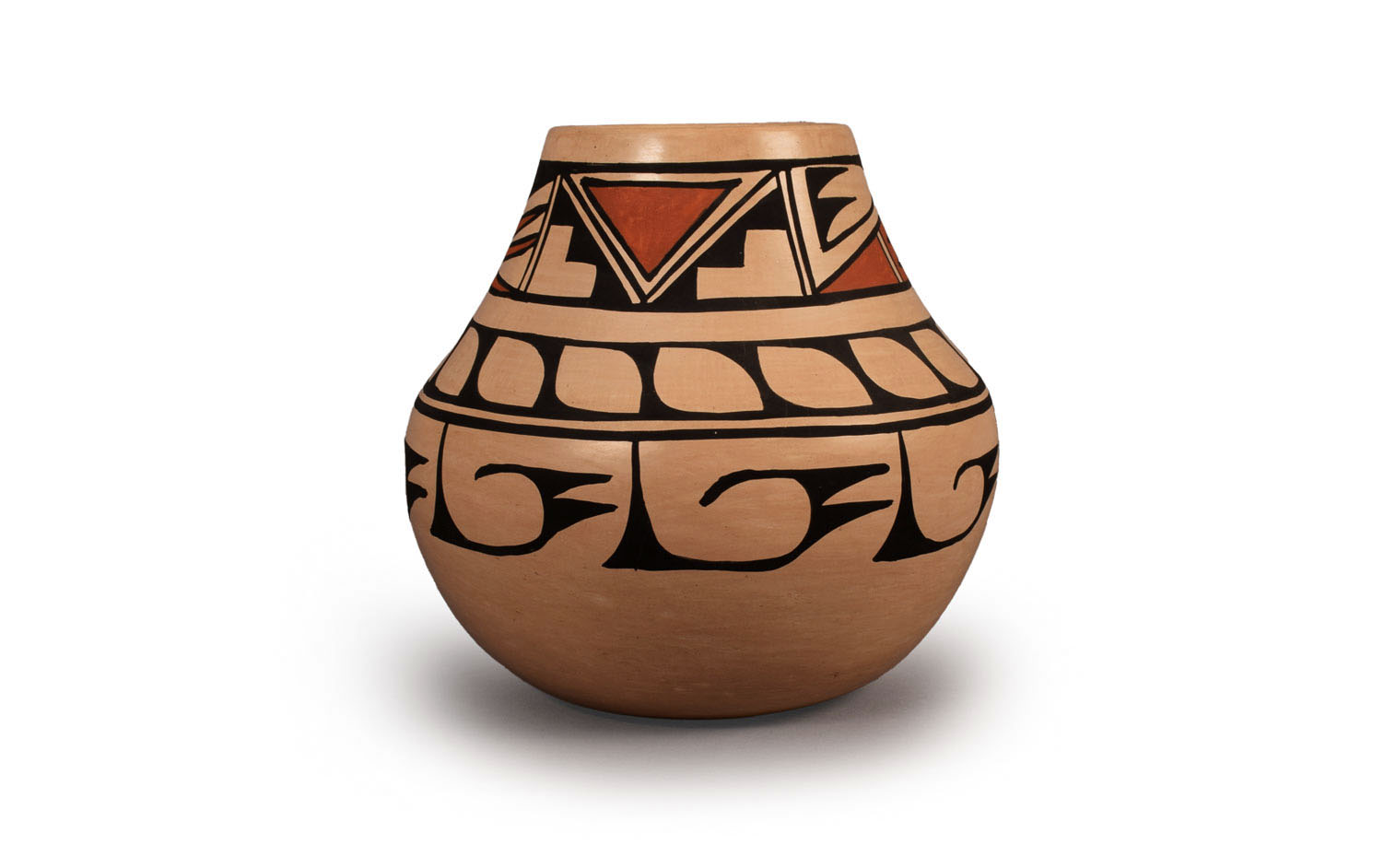 Carlos Sunrise Dunlap (1958-1981, San Ildefonso Pueblo), San Ildefonso Pueblo Polychrome Jar, 1978, clay and pigment, 8½ x 9”
Through this showcase, on view through July 31, Anthony hopes that collectors and enthusiasts alike will come to understand the importance of the materials used in pottery. “You can’t just get any clay and wipe it on a pot and paint over it,” he says. “It’s much more complicated.”
Adobe Gallery
Through July 31, 2024
221 Canyon Road, Santa Fe, NM 87501
(505) 955-0550, www.adobegallery.com
Powered by Froala Editor


