Santa Clara artist Joseph Lugo started selling his pottery at 10 years old. By the time he was 18 years old, he had been to Santa Fe Indian Market eight times. But then the rest of his life started calling to him.
“I went to college. Four years there, then three years at law school. I basically didn’t touch any clay for all of that time,” Lugo says, admitting that he wanted to see what else life had in store for him. Pottery, he adds, was part of his family and it loomed so large over him it could blot out the sun. His mother, after all, is Nancy Youngblood, one of the best potters in the country, and his great-grandmother is Margaret Tafoya, the famous matriarch of Santa Clara pottery. “I never intended on doing pottery forever,” he continues. “The goal was to become a certified attorney, and it still is.”
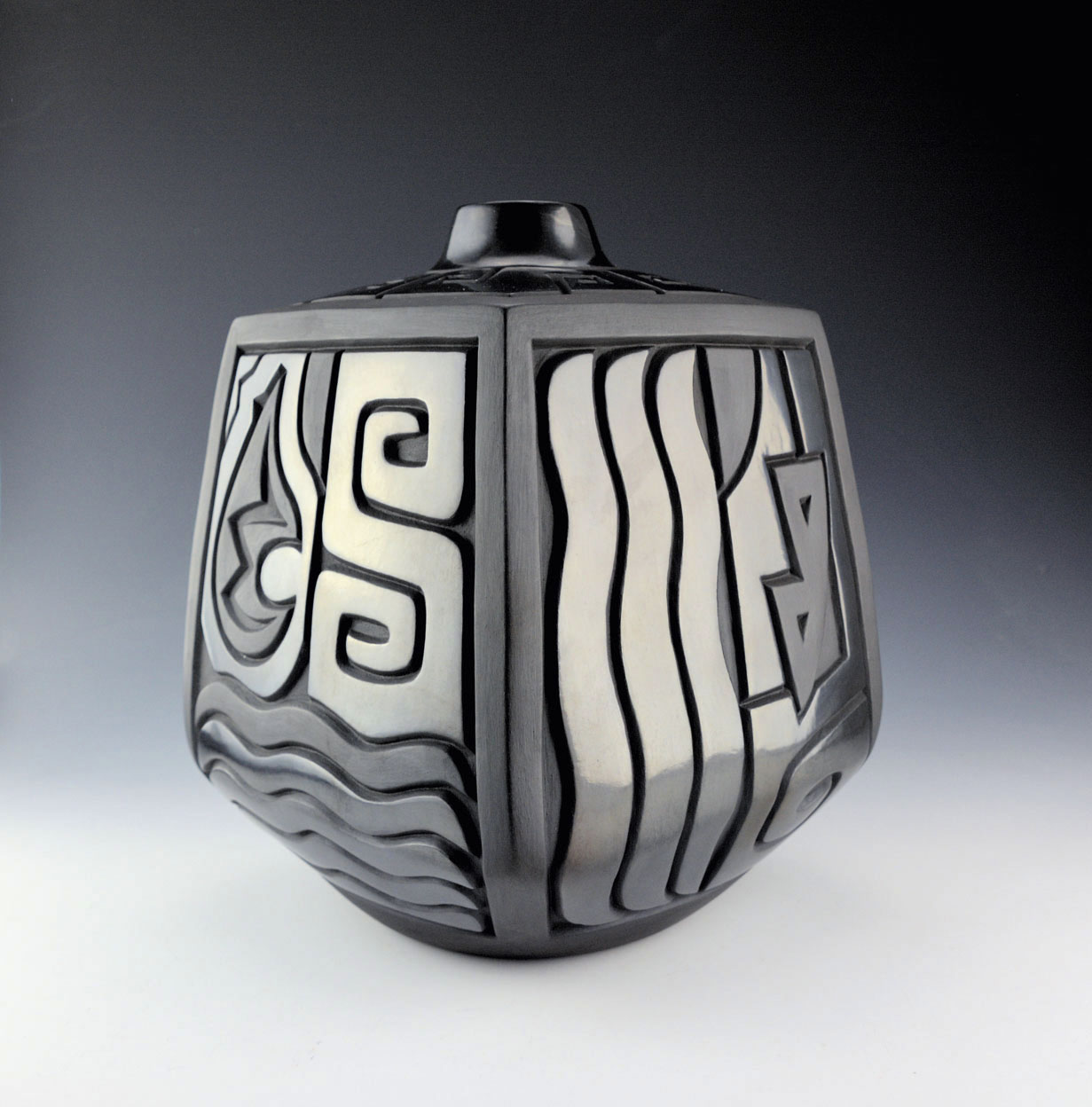 Daniel Begay (Santa Clara Pueblo/Diné), Bears and Waterfalls, square jar, native clay, native clay slips
Then the pandemic happened. Lugo returned home to live with his mom during that period of unease around the world. When he arrived, he saw a familiar sight. “Everyone was making pottery,” he says. “It was hard not to pick it up again.”
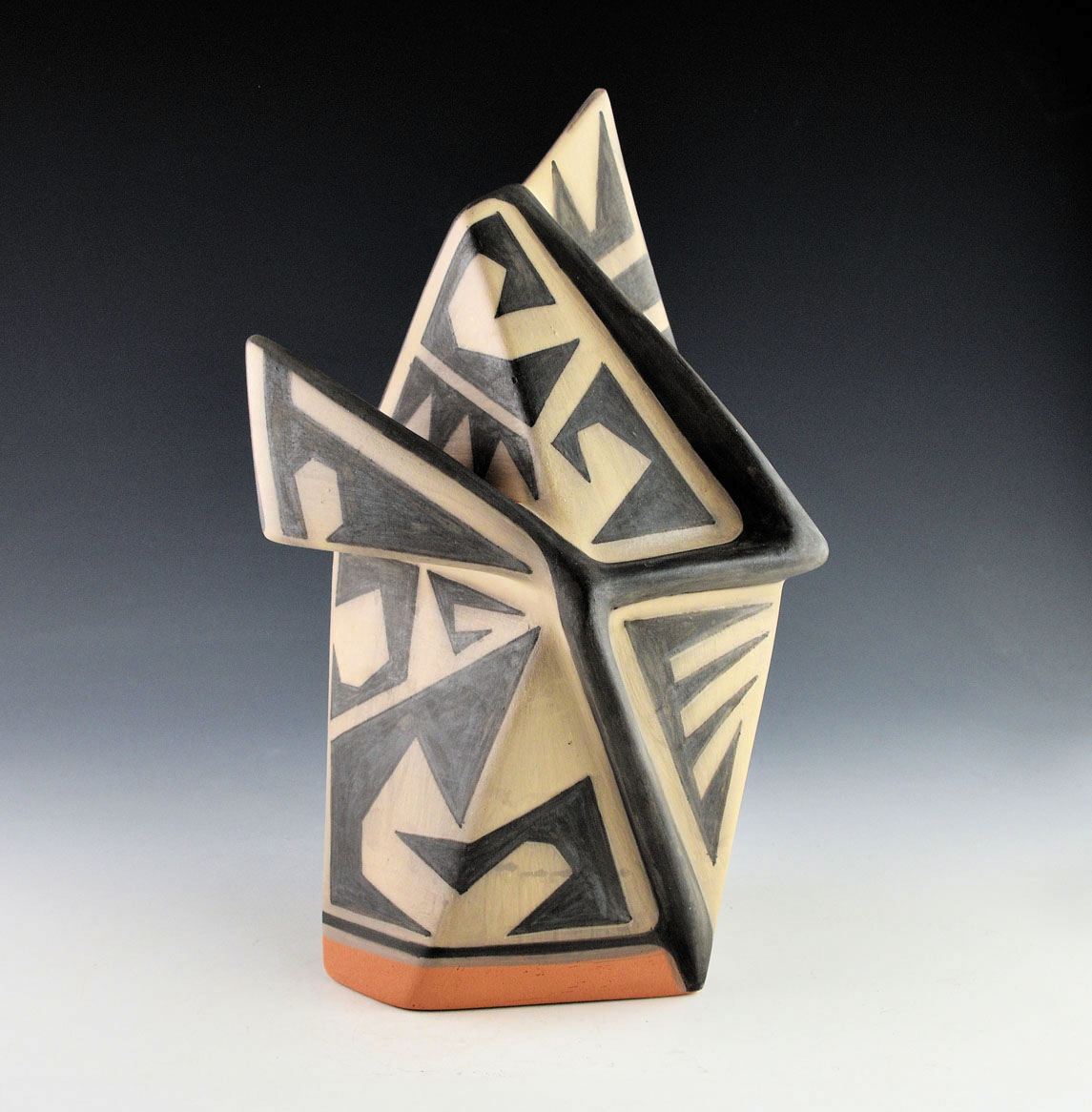 Jeff Suina (Cochiti Pueblo), Aurora, native clay
Now, nearly three years into his second professional fine art career, Lugo is considered one of the great rising stars of Native American pottery. His story offers some clues as to where the art market will find its next superstars: young artists who have been guided by the older generations but who are also determined to do pottery in their own ways. This doesn’t mean throwing pottery on wheels and kiln-firing—no, many younger artists are determined to use traditional methods—but it does mean bringing their own voices into the work through contemporary new forms and designs.
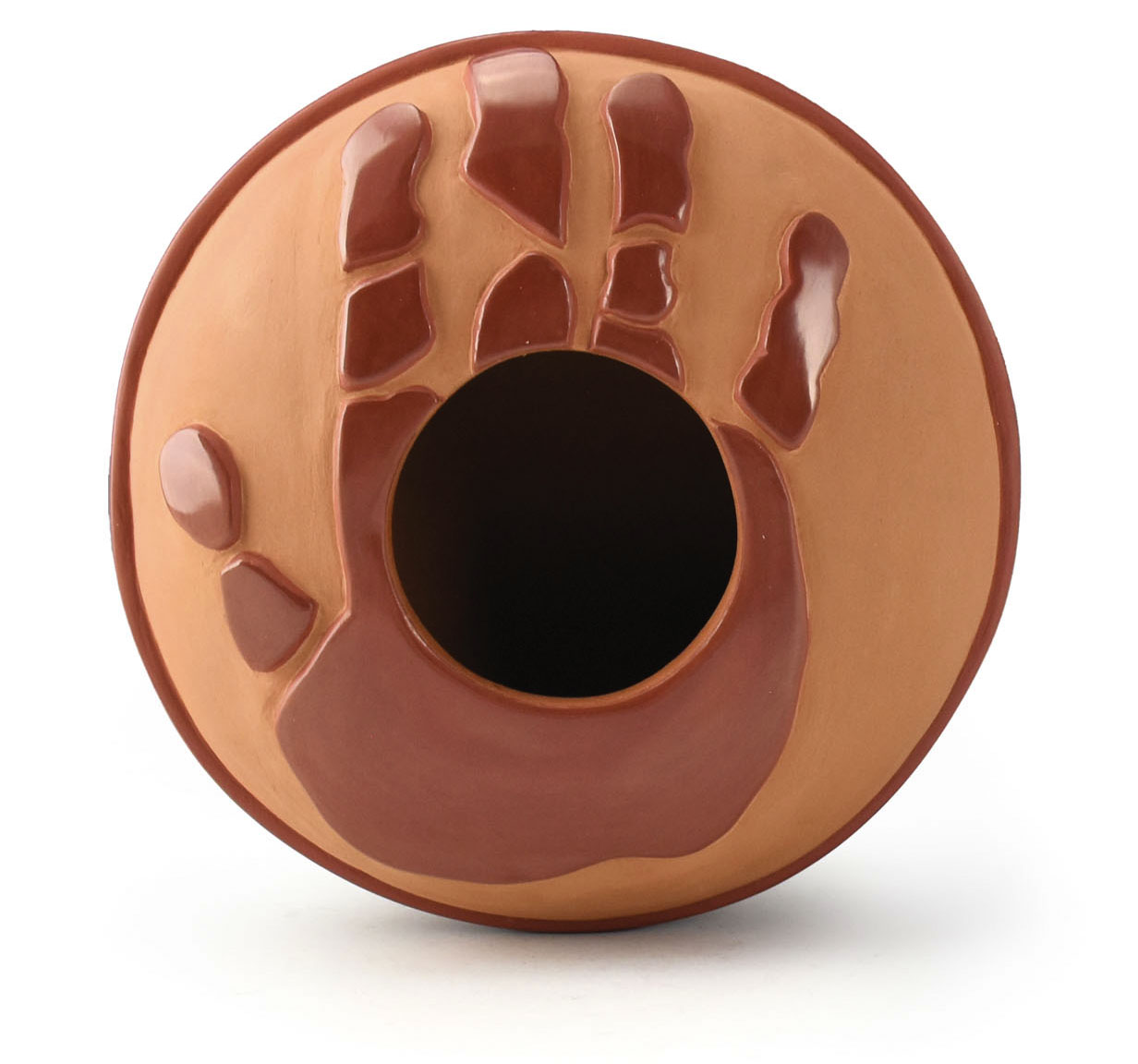 Joseph Lugo (Santa Clara Pueblo), MMIW Handprint, native clay, native clay slipsS. Peck Purchase Fund. 2013.8
“There’s a fine line when it comes to pueblo pottery. It’s important we stay within our traditions and honor what our family has taught us, but there is room for our framework to expand. The most important thing is that the old ways stay, but designs and motifs, those can change over time,” Lugo says, adding that he’s continuously inspired by those who came before him as he explores contemporary pottery. “Where I really feel the older generation playing a role is how they continuously pushed themselves. Margaret Tafoya, Maria Martinez, Lucy Lewis, Nampeyo…my generation is trying to reach those high standards that they attained. And I do think my generation is achieving that. Pottery is really exciting right now. The future is exciting.”
 Kaa Folwell (Santa Clara Pueblo), Avanyu, native clay
Some of that excitement is finding its way to Daniel Begay (Santa Clara Pueblo/Diné), who was like Lugo and many other children raised by potters: “I had my hands in clay since I was 3 years old,” says the artist, who lives and works in Albuquerque, New Mexico. Begay learned to carve and build his pottery forms in the early 2000s. After high school he went to college to get his bachelor’s degree, then his master’s. He eventually worked at the University of New Mexico in a student support center where he worked specifically with Native American students. But pottery was always calling to him. He credits his family, especially his Santa Clara mother and Navajo father. “When they were together, she taught him Santa Clara pottery. So when he did pottery he broke some boundaries. That instilled in me a baseline. Even today, there are times where I pay homage to really traditional pottery, which also allows me to go more contemporary—because my dad taught me the power of creativity,” Begay says, adding that he’s seeing a lot of that transfer from one generation to another within his peers. “I can’t remember ever seeing this many young potters working, but then I started showing at King Galleries with Charles King and now I’m seeing younger artists everywhere.”
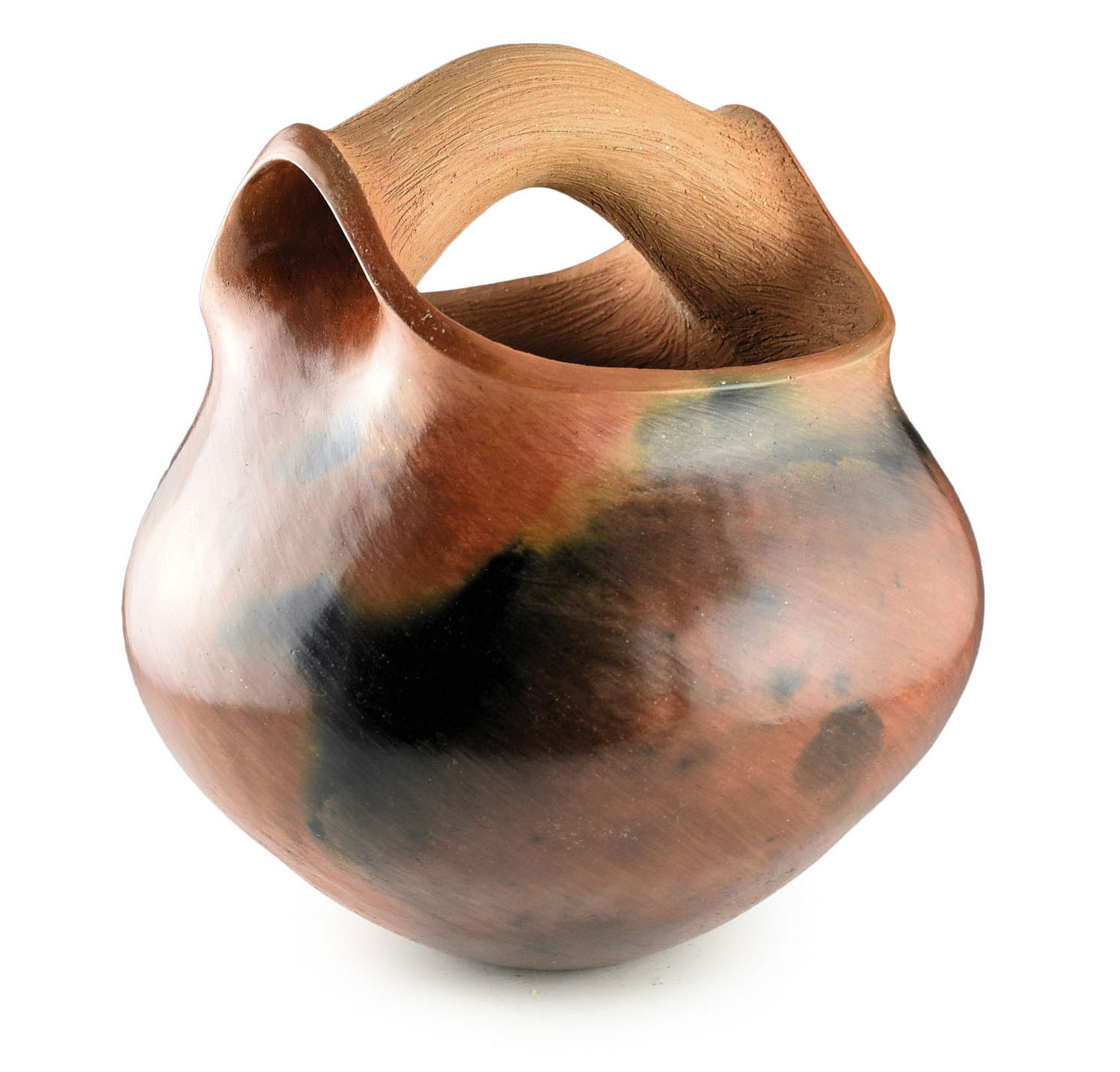 Jared Tso (Navajo (Diné)), Handle Jar, native clay, pinon pitch
All of the artists featured here—as well as Stephanie Tafoya, Sergio Lugo, Chase Kawinhut Earles and others—show at King Galleries, which is owned by Charles King, whose galleries in Scottsdale, Arizona, and Santa Fe, New Mexico, are havens for new talent. He frequently finds new artists at markets and also by talking with existing artists, who often recommend friends and relatives who are getting into pottery. “I don’t think of myself as discovering these artists. I just give them a forum where they can show their work and express who they are,” King says. He notes that this next generation of artists is also more attuned to the fast-paced world they are living in. “They are savvier online and they have more social media acumen than their parents. They are also deeply passionate about their work. They really care about what they are doing and how they are contributing.”
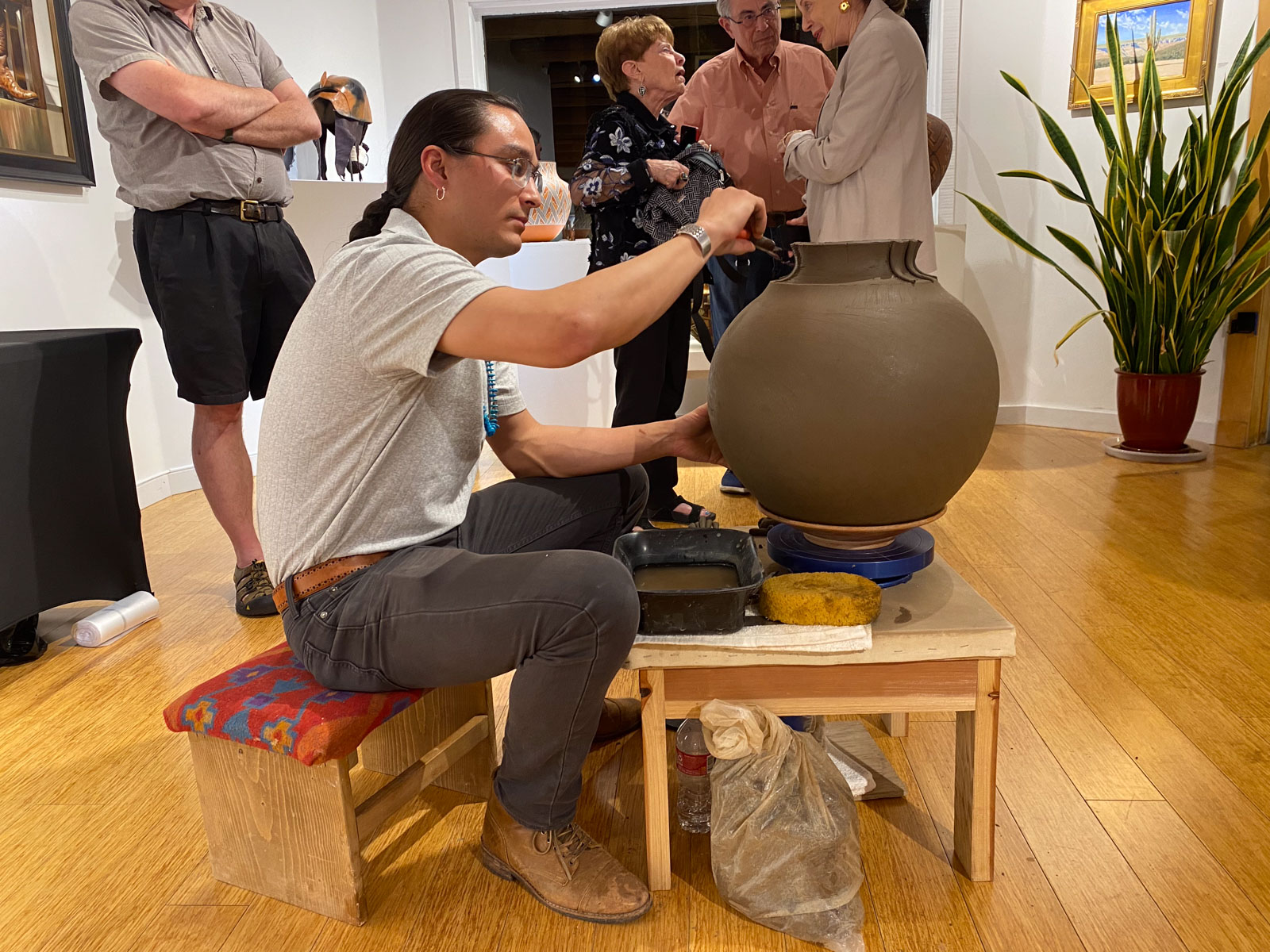 Jared Tso at King Galleries in April 2024.
King points to Virgil Ortiz, whose works are now iconic in the world of pottery. But back when he started, he was just another artist trying to find his way within the art world. “It takes time. Virgil was always very talented, but he had to keep at it. He had to have perseverance,” King says. “I think those are lessons that will continue to apply to artists who come after him.”
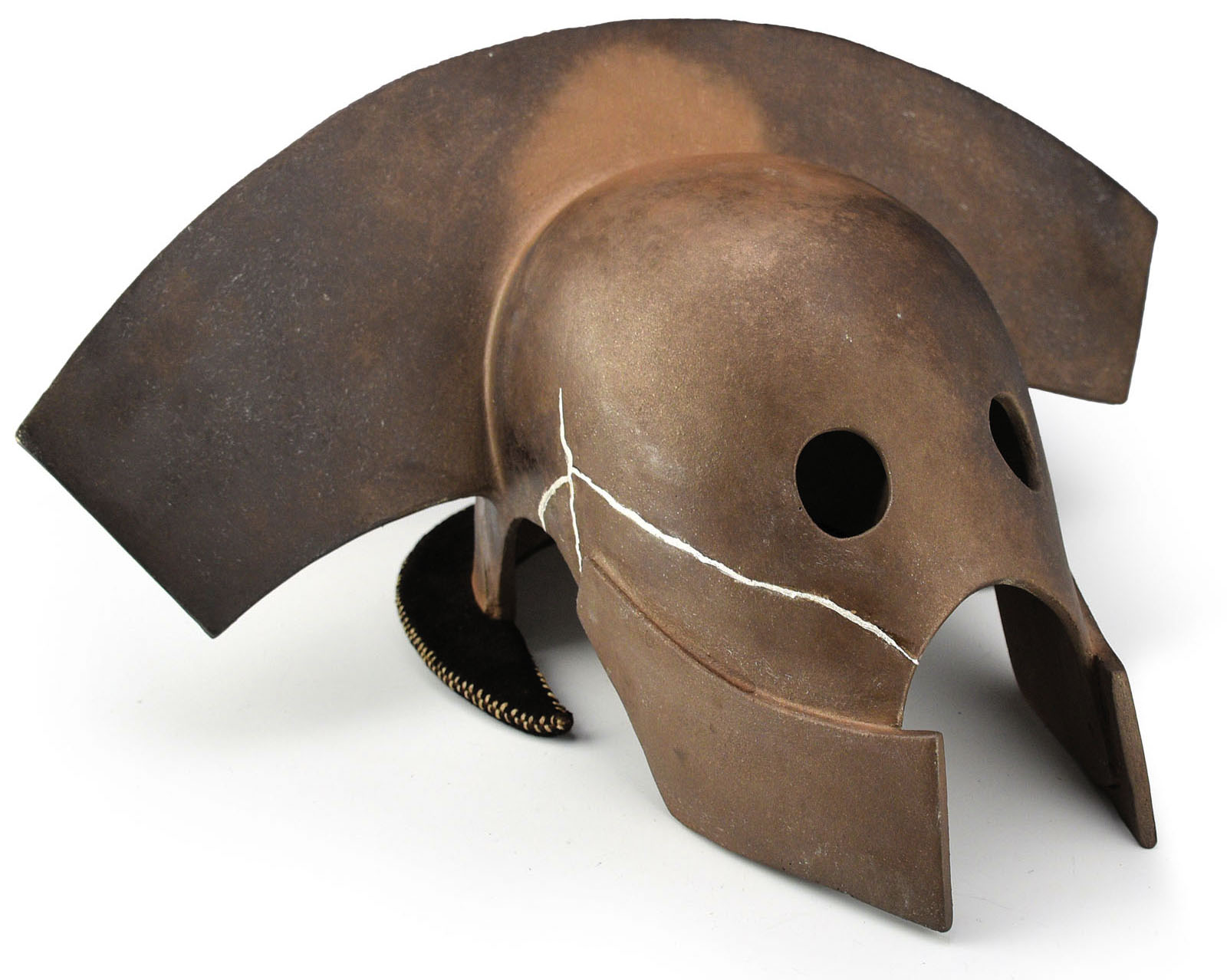 Jared Tso (Navajo (Diné)), World Shatterer, micaceous clay
For Cochiti potter Jeff Suina, perseverance is a quality that has already brought him far, and now it’s launching him into a second career. At 51 years old, Suina is older than some of the other up-and-coming potters working today, but he shares in their career struggles since his own pottery career is still less than five years old. Pottery was part of Suina’s upbringing, but then science—specifically, astronomy, astrophysics, string theory and quantum mechanics—took him in different directions than fine art. He was involved with animation and visualization, and then as a creative director for a civil engineering company, where he worked with geometric, polygon-based rendering and design. Then, at nearly 50 years old, he left to become a potter. Today he uses those same polygons, as well as his interest in space and science fiction, to conceive his geometric clay vessels.
“This career shift didn’t happen overnight, but I felt in my heart it was the right thing to do. My heart was the guiding force for me. It was intimidating and scary, especially coming from the structured world of engineering and because I didn’t know the art world,” Suina says. “This was something I had to do for my creative expression. It was also something I had to do because there weren’t many Cochiti potters left. Many from the previous generation have retired or are not able to create work anymore. I still do some of their traditional designs but also some of my more modern abstract pieces. Star Wars captured my imagination way back when, so I turn to the stars for inspiration. It helps that where I live there is no light pollution, so I can see the stars. They are my guiding forces.”
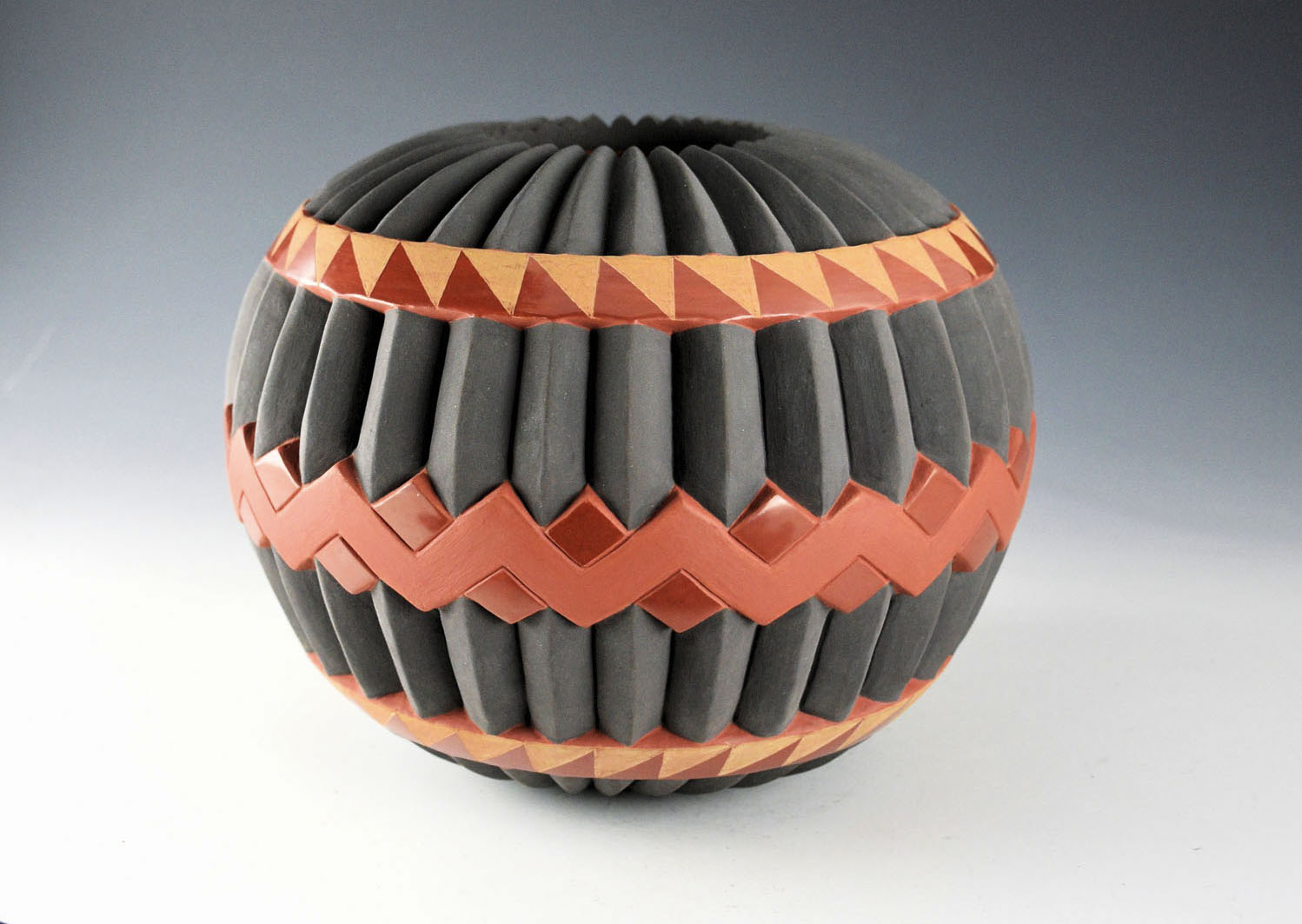 Sergio Lugo (Santa Clara Pueblo), 32, 64, or 128, native clay, native clay slips
Diné potter Jared Tso is another artist at the beginning stages of his career who is contributing to the art form of pottery in meaningful ways. Tso, who is 29 years old, says that it is up to each new generation to continue the work of the previous generation. “It’s such a relief seeing so many younger people and new artists making pottery their own way right now,” he says. “I love seeing pots with so much personality and the artists’ identity in the clay. The pottery is distinctive.”
Tso is a big believer in keeping the traditional methods of pottery making intact, but is very open to exploring new kinds of designs, fresh forms and works that speak to who he is as a Diné person, a son, a husband and a father. “Pottery can always be more. I think of Virgil Ortiz, who is into social critiquing and making responses to things in the world. He makes unique work, but I think if you go back 50 years you could see those qualities in the older generations. It isn’t only unique to my generation or Virgil’s,” he says. Tso, like Suina, worked in engineering before taking on pottery professionally in 2021. He notes that younger artists are very much living in the world. He points to social media. “It’s huge. It exposes us to more artists, including artists around the world. I get so inspired looking at other artists and what they are doing, and also how they document their work and present their stories online. The internet has accelerated everything and has allowed me to have great conversations online.”
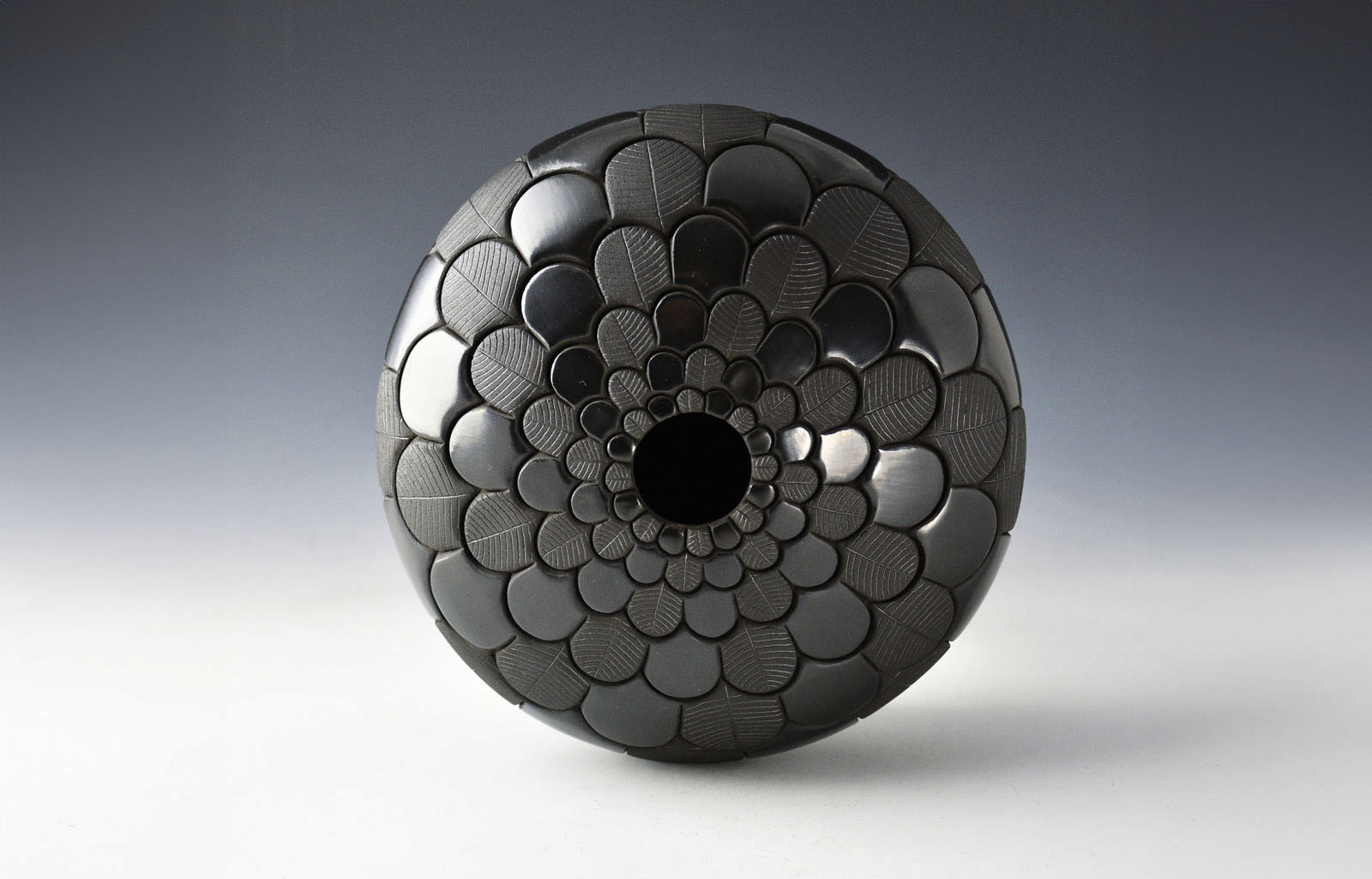 Stephanie Tafoya (Santa Clara Pueblo), Spiraling Feathers, native clay
Tso also adds that because of older generations and the trails they blazed, he has more opportunities to think outside of the normal pottery boxes, whether it’s creating large conceptual pieces, including a recent hanging pot that drips into a basin beneath it, or making clay helmets inspired by the Uruk-hai in Peter Jackson’s Lord of the Rings movies. “They paved the way for us to do whatever we want today,” he says.
Kaa Folwell, granddaughter of Jody Folwell and niece of Susan Folwell, says that her generation seemed to be in decline until it shot forward. “It seemed like no one was making art. And not just pottery, but anything—jewelry, printmaking, painting,” she says, adding that her own interest in pottery started when she was in diapers. But then, like many rebellious teens, she wanted to choose her own path. “Seeing pottery around all the time made it easy to take for granted. I remember thinking, ‘I want to do something cooler with my life.’ But my family and people like Charles King always left the door open for me.”
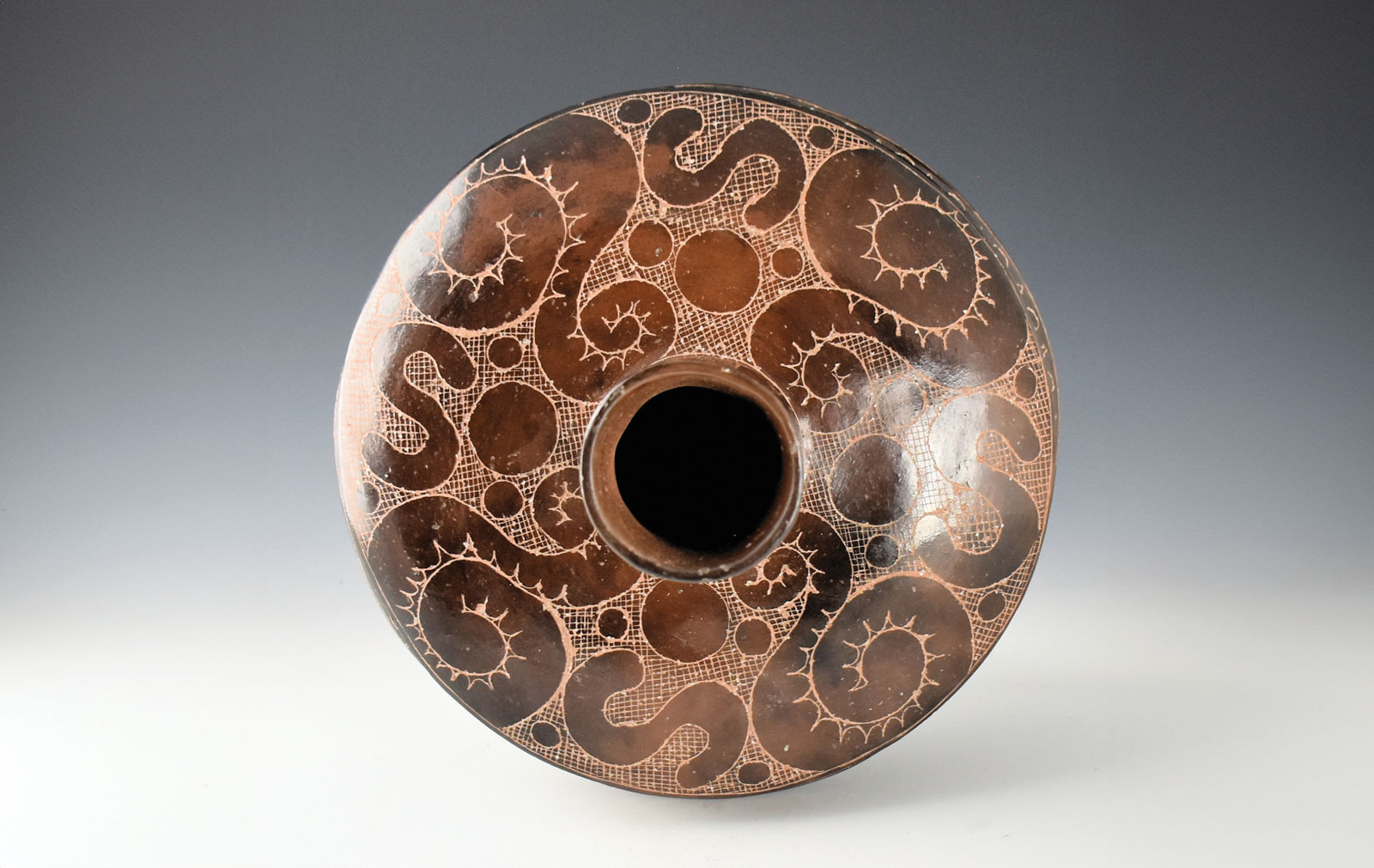 Chase Kawinhut Earles (Caddo), Traditional Caddo Disc Jar, native clay, incised
The Santa Clara potter also notes that younger artists are incredibly open minded and sensitive to the world around them. She points to the LGBTQ+ movement, and how young people have embraced ideas of acceptance, fairness and equality. “They are conditioned for acceptance, so when something different comes around in the form of art or pottery, they aren’t clutching their pearls. No, instead they are ready for it. Which is why we’re seeing so many great artists, including new artists, creating really exciting work. They are craving it, and they know that doing something a little different isn’t a bad thing,” Folwell says. “There is still that need to do certain things traditionally”—like hand-coiling forms, firing outdoors and harvesting natural clay—“but all the other constraints have been lifted. Artists are free to express themselves however they choose. And that’s why pottery is in great place right now.”
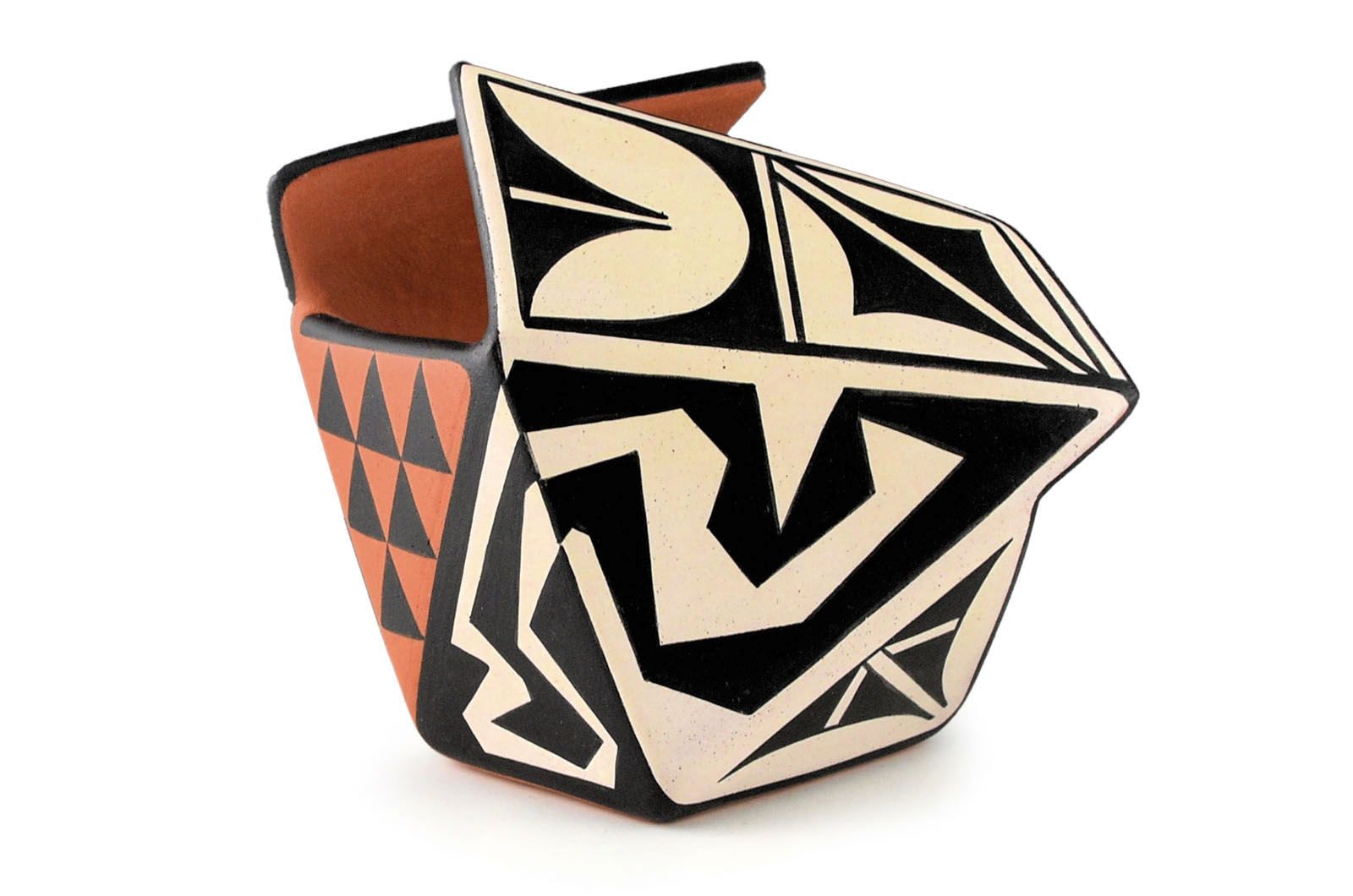 Jeff Suina (Cochiti Pueblo), Aule, native clay, multi-angle geometric jar Images courtesy King Galleries.
Folwell, who is 33 years old, certainly feels no constraints, and her modern work proves it. And yet, she is also concerned about the next generation but not for the reasons you might think. While talking with her on the phone, her youngest child can be heard playing on her lap. “As much as I want to say the next generation is in good hands, I can’t. I would love for them to pick up pottery, but I also don’t want to push it. I knew how I was, and I know they need to find it on their own,” she says. “Pottery will be a focal point in our home, but they have to choose to do it. When they do, it will be almost second nature, but it has to be their choice.”
She adds, “Pottery will always continue, but always in different ways than we imagine.”
Powered by Froala Editor


