In the fall of 2022, I was standing in the living room of William Healey’s Arizona home as he excitedly pointed out artwork on his walls. The collection was stunning to behold, and it went on room after room. The pieces, almost all of them paintings, had signatures with names like Allan Houser, Fritz Scholder, Tony Abeyta and Awa Tsireh. And more were still coming through the doors as he found them at auctions and with art dealers. He was a man on a mission.
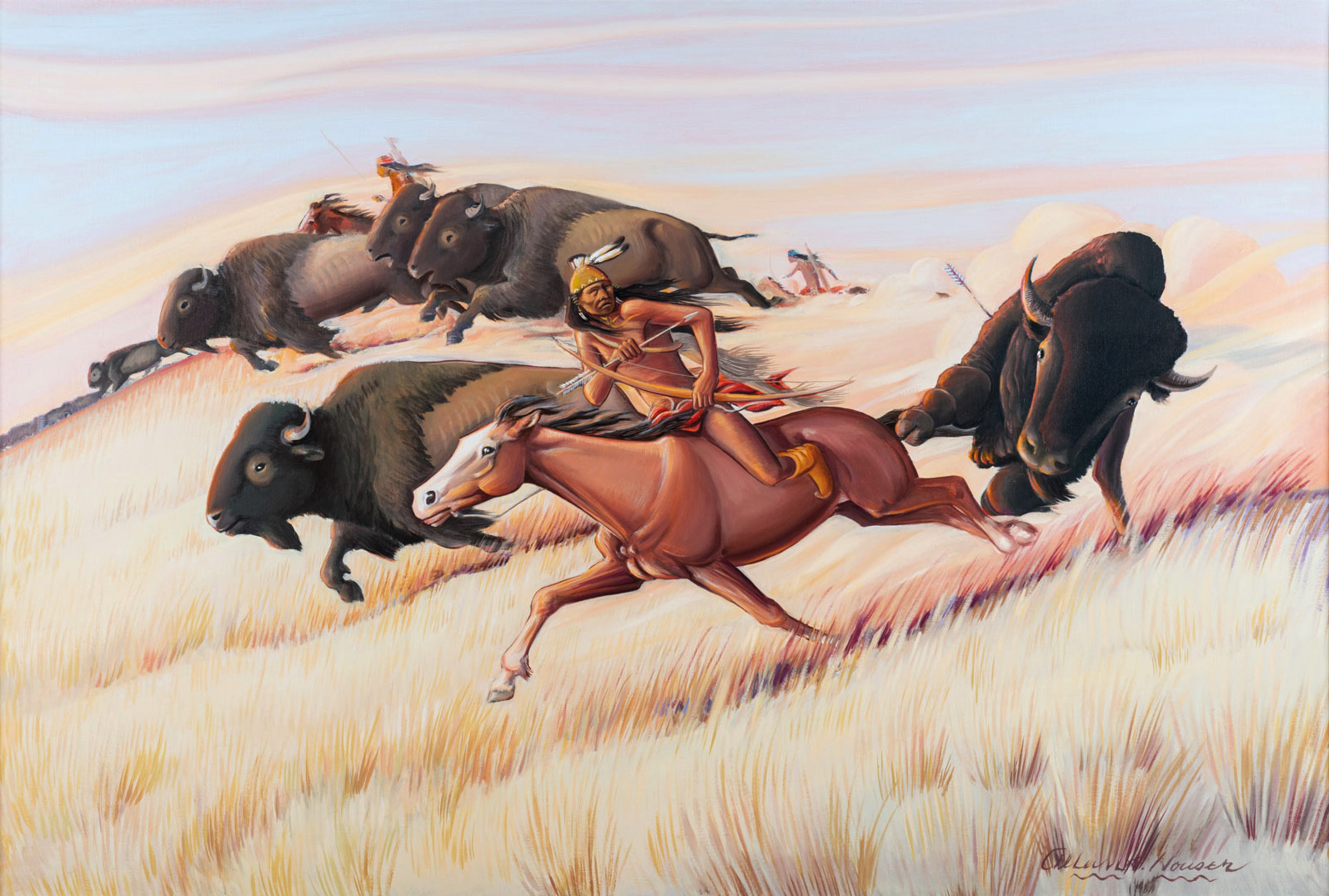 Allan Houser (Chiracahua Apache, 1914-1994), Buffalo Hunt, 1970s, acrylic on canvas, 42 x 62”. The William P. Healey Collection of Native American Art. © Chiinde LLC (a Houser/ Haozous Family company).
Healey, who is known around art circles in Scottsdale and in Jackson Hole, Wyoming, where he has another home, had discovered 20th-century Native American painting only 10 years earlier, and then furiously began building a collection of it on top of the existing Western collection he already had. At one point, even amid his buying frenzy, he sensed his own mortality and began to think about where he could gift the collection. He did have some prerequisites for the collection’s future home: “I want them to show the collection, not put it down in the basement. And I don’t want to give it to a museum that already has a collection like this,” he said back in 2022. “I want a museum to need this collection.”
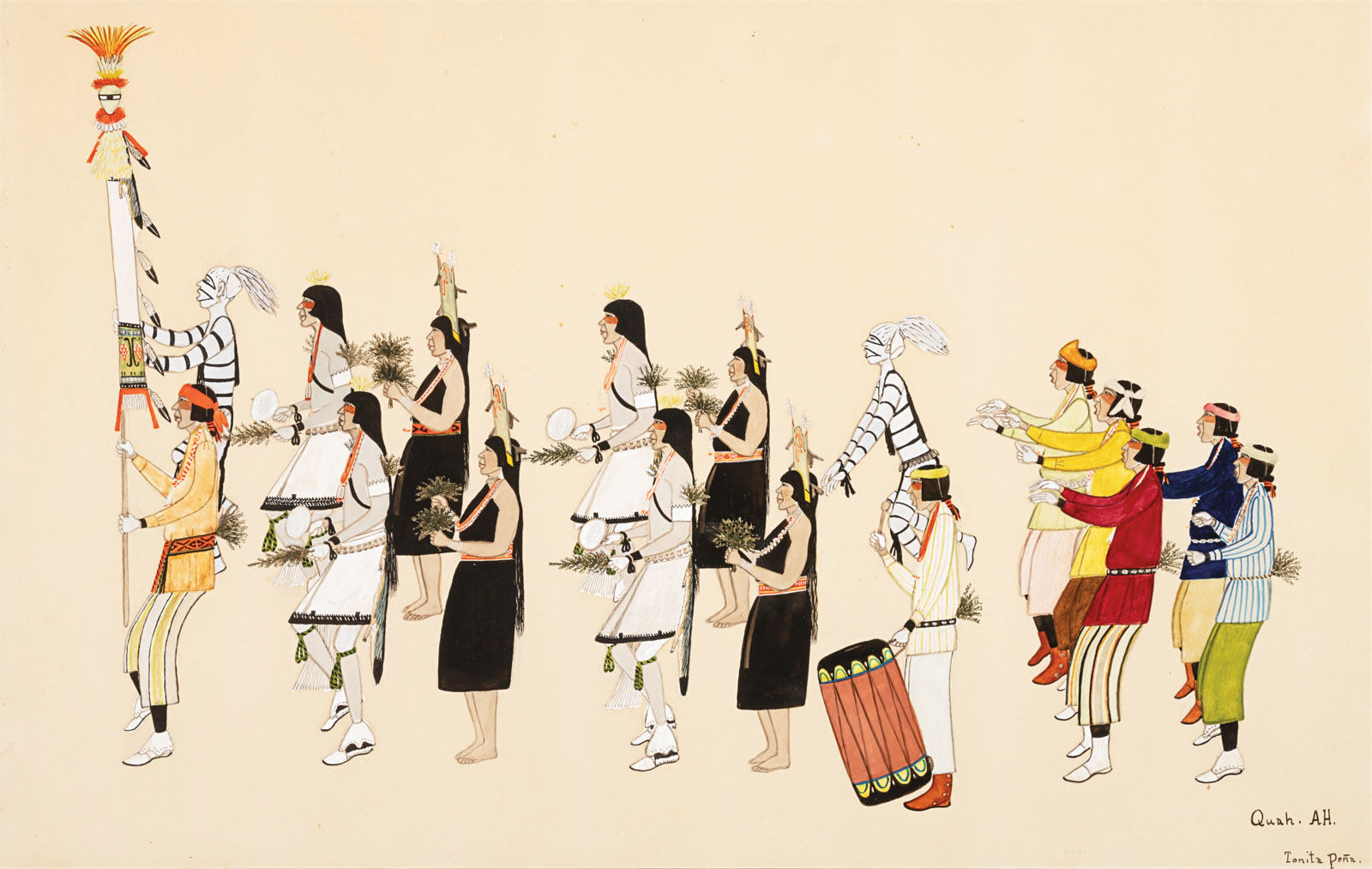 Tonita Peña (Quah Ah) (San Ildefonso Pueblo, 1893-1949), Untitled (Corn Dance), 1930s, tempera on paper, 13½ x 21½”. The William P. Healey Collection of Native American Art. © Estate of Tonita Peña.
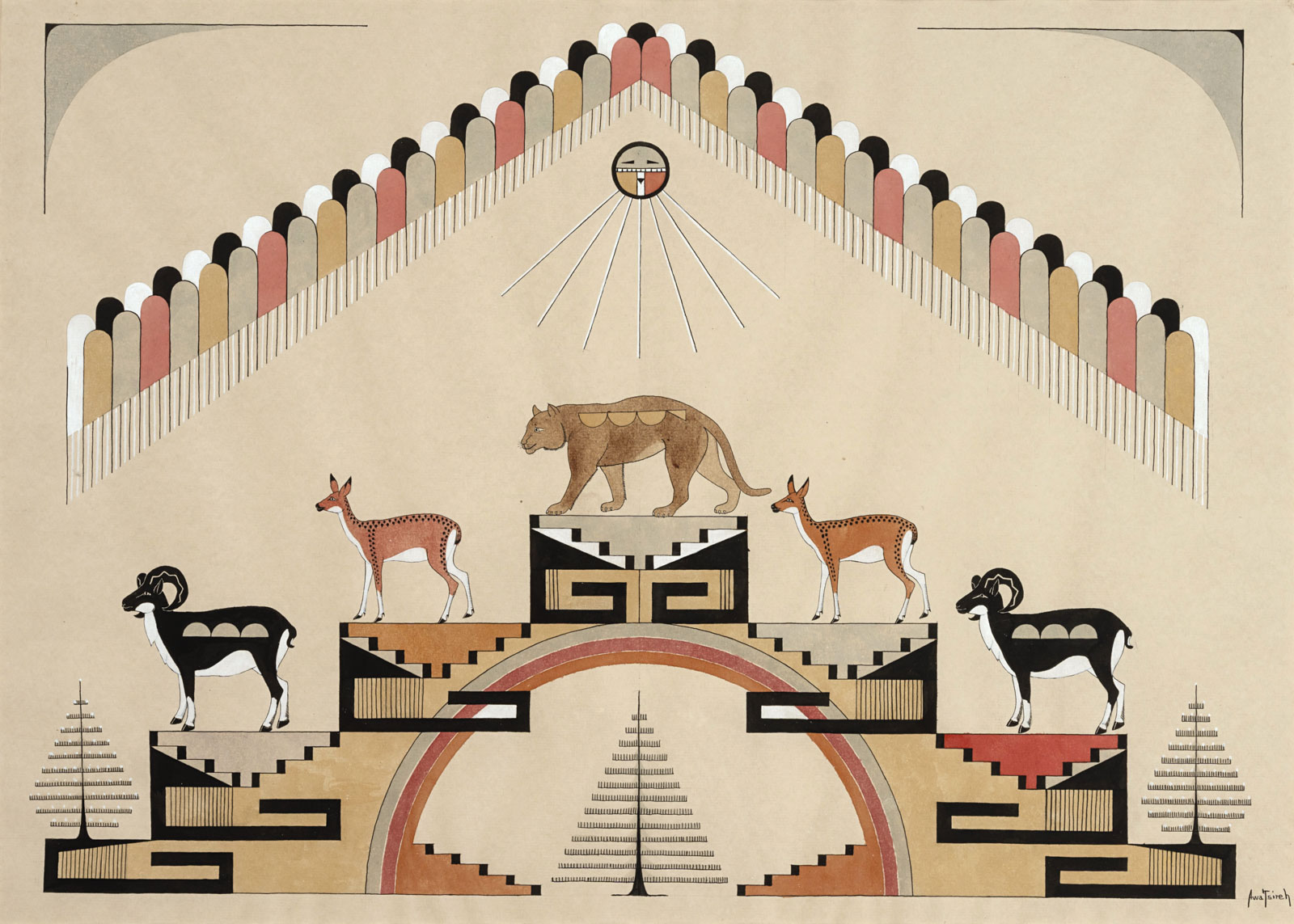 Awa Tsireh (San Ildefonso Pueblo, 1898-1955), Untitled, 1930s, watercolor, 17 x 23½”. The William P. Healey Collection of Native American Art. © Estate of Awa Tsireh.
About a year later, which is like three weeks in museum time, Healey had his answer—the Saint Louis Art Museum in Missouri. In February, he visited the museum as it unveiled Native American Art of the 20th Century: The William P. Healey Collection, which is a celebration of Healey’s gift to the museum and of the Native American artists who so thoroughly captured the collector’s attention.
“I have to say, and it’s human nature to feel this way, but I’m incredibly anxious seeing it here in St. Louis. We went through some false starts with this collection, so I’m a tad paranoid. But here in the real world, it’s fabulous,” Healey says. “And it couldn’t have gone to a more beautiful museum.”
The gift to the Saint Louis Museum of Art is exactly 100 works of art, most of them paintings. The exhibition will have 75 of the donated works on view. The museum was also happy to meet Healey’s requests: it will actively exhibit the works now and in the future, it will produce a catalog of the collection and it will also help initiate five traveling shows, several of which are already in the works. The collection also represents much of what the museum has when it comes to Native American art, although it does have some historic Native American objects.
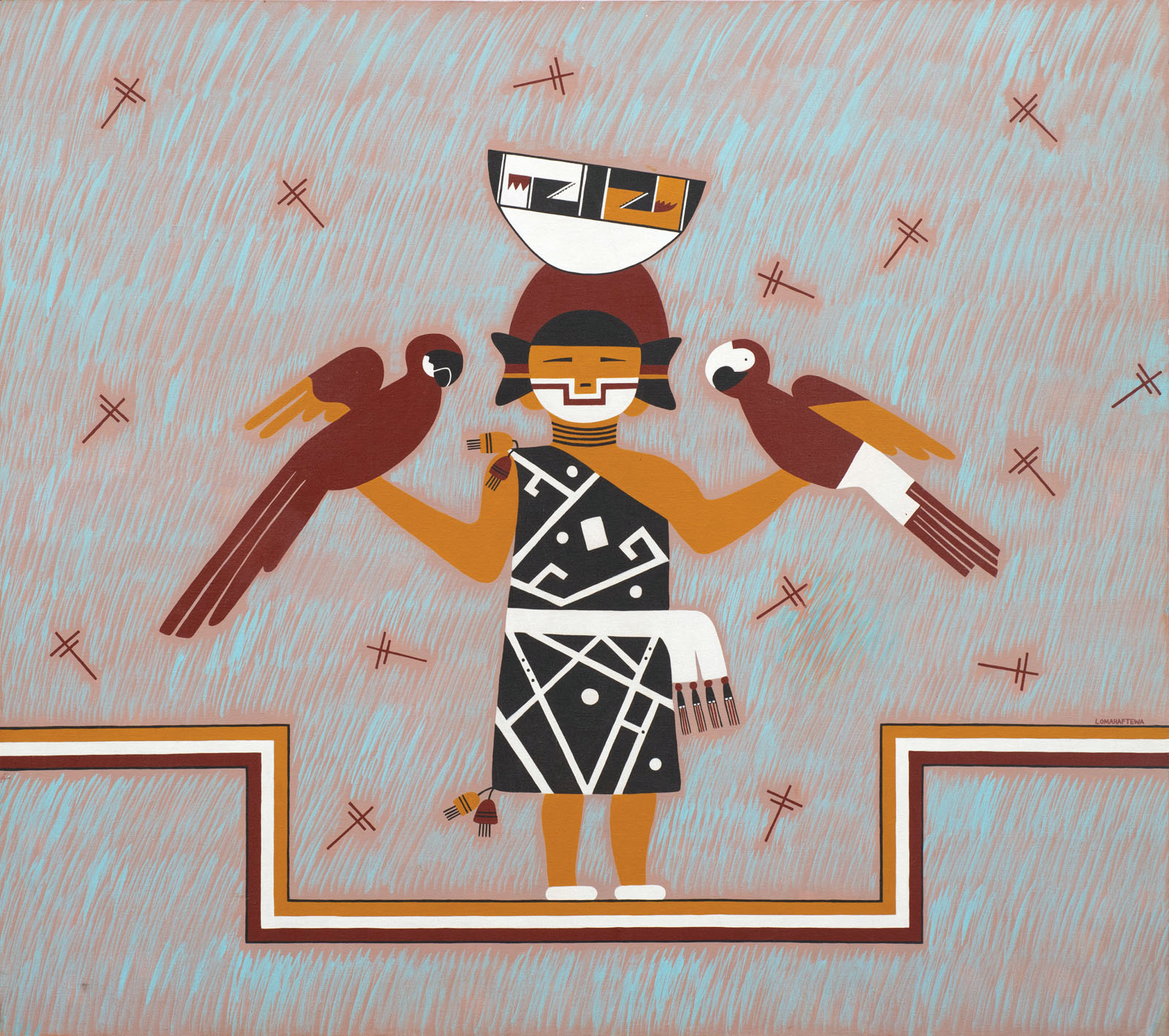 Linda Lomahaftewa (Hopi/Choctaw), Parrot Dance, ca. 1980, acrylic on canvas, 39½ x 45”. The William P. Healey Collection of Native American Art. © Linda Lomahaftewa.
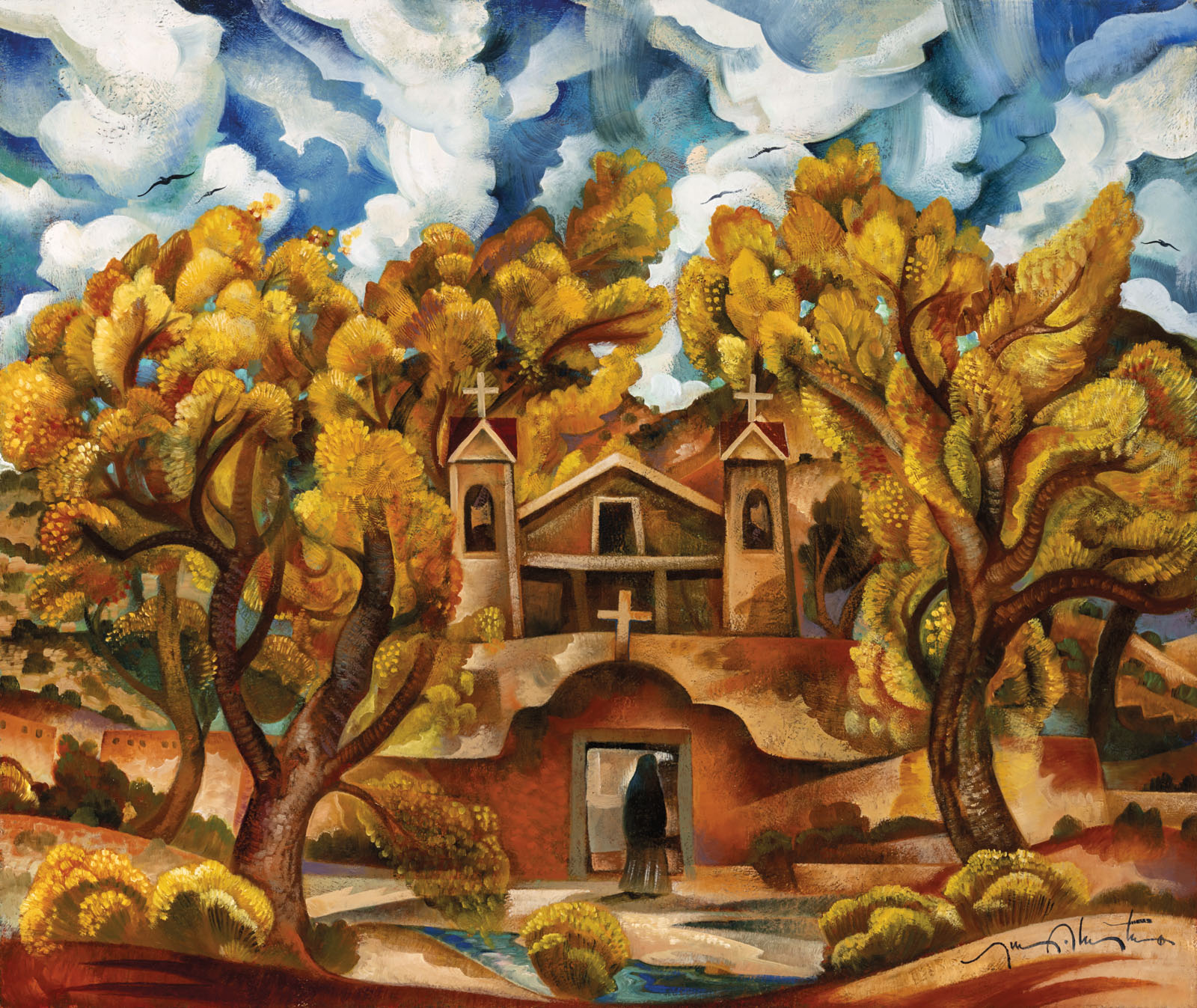 Tony Abeyta (Navajo (Diné)), Church of this Earth, 2013, oil on canvas, 32 x 38”. The William P. Healey Collection of Native American Art. © Tony Abeyta.
“I am incredibly grateful to William Healey for this spectacular gift of 20th-century works,” museum director Min Jung Kim said in November 2023. “Over the last 20 years, the museum has made a concerted effort to grow our collection and presentation of Native American art. Filling a critical gap between our holdings of historic works and recent acquisitions of contemporary Native American art, this generous gift will let our visitors experience a fuller picture of art history.”
The spark that ignited this passion within Healey took place in another museum 1,400 miles away, at Phoenix’s Heard Museum. A decade ago, the museum presented an exhibition on the Indian boarding school system that decimated Native American young people throughout the 20th century. Children were taken from their homes and put in schools where they could be “civilized” by an Anglo education and then assimilated into white society. The process stripped Native Americans of their culture—as one military officer said, “kill the Indian, save the man.” The exhibition devastated Healey, who, prior to that, was unaware of the treatment of Native American students in the boarding school system.
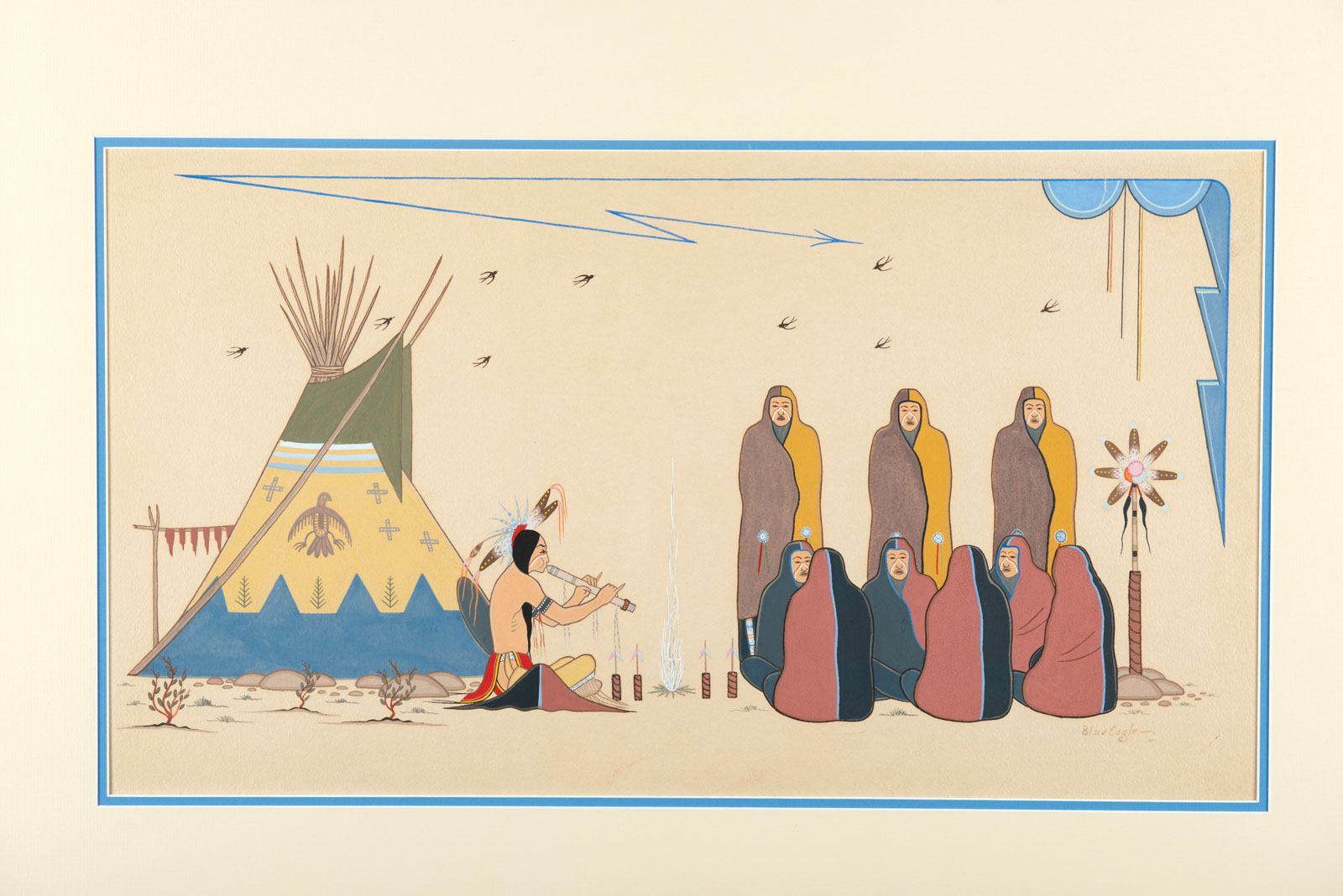 Acee Blue Eagle (Muscogee, 1907-1959), Untitled (Sun Ceremony), mid-20th century, tempera on paper, 14½ x 26”. The William P. Healey Collection of Native American Art. © Estate of Acee Blue Eagle.
Horrified by that history, he turned to some of the more promising stories that related to boarding schools, particularly stories about artists who managed to escape the system or purge its effects. This led Healey to study Dorothy Dunn’s Santa Fe Indian School and also Bacone College in Oklahoma, which was primarily run by Native Americans. He would pull on one thread and others would come undone, leading him off in even newer directions. One of the other threads was Lloyd Kiva New and the Institute of American Indian Arts (IAIA) in Santa Fe. Once he started collecting, he was essentially starting over on a rebooted collection, this one devoted to Native American artists.
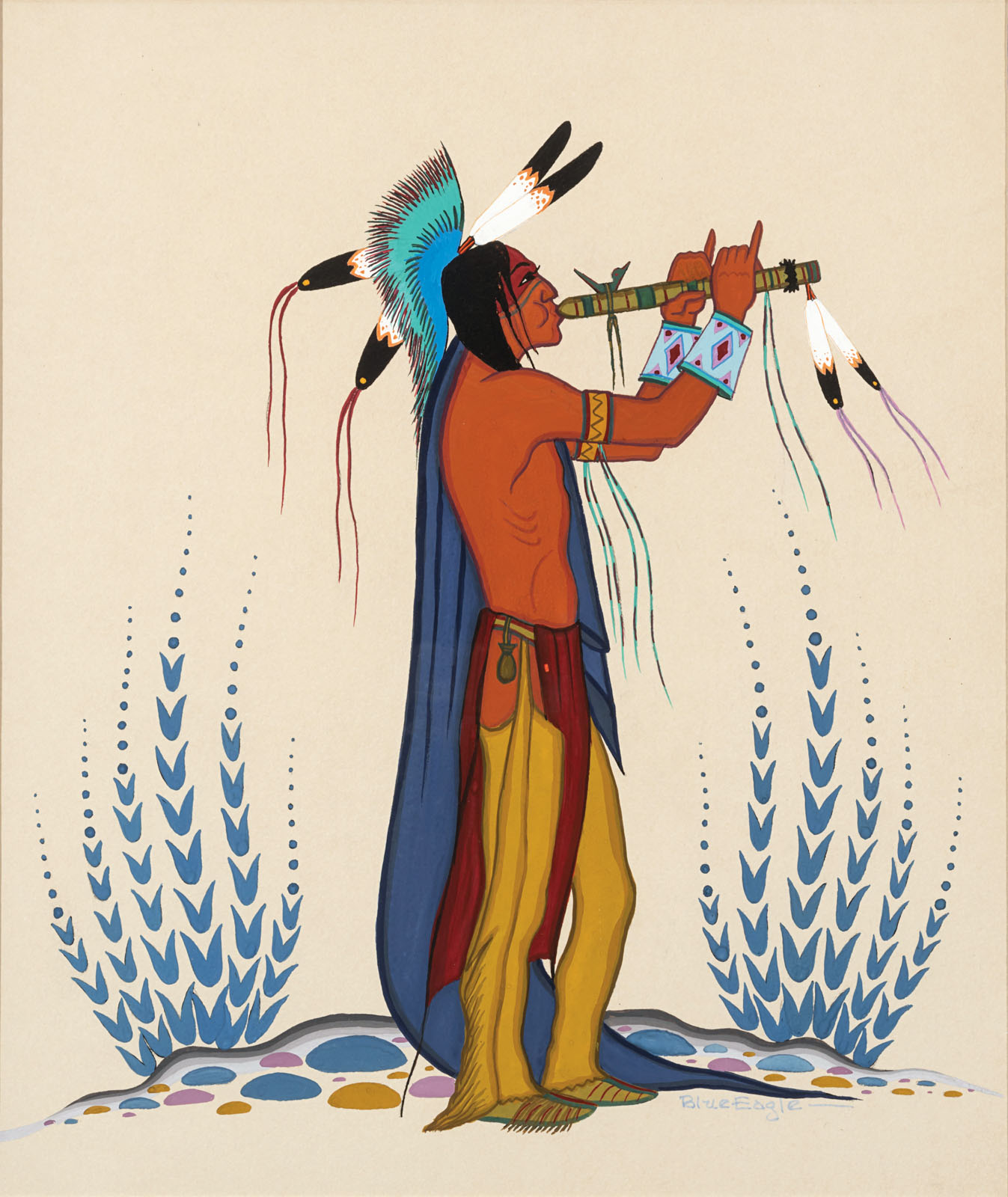 Acee Blue Eagle (Muscogee, 1907-1959), Untitled, mid-20th century, gouache on paper, 12½ x 10½”. The William P. Healey Collection of Native American Art. © Estate of Acee Blue Eagle.
“The collection happened directly because of what I learned about the assimilation of Native American people at boarding schools. In many ways, the art I was seeing was a direct response to what those artists went through in those schools. Harrison Begay led to Tonita Peña, both more traditional artists, and then they eventually led to Fritz Scholder, Kay WalkingStick and George Morrison, who were all recognized for their more modern painting styles,” Healey says. “I liked the work, but I also started collecting because I felt like the artists weren’t getting recognition and were grossly overlooked.”
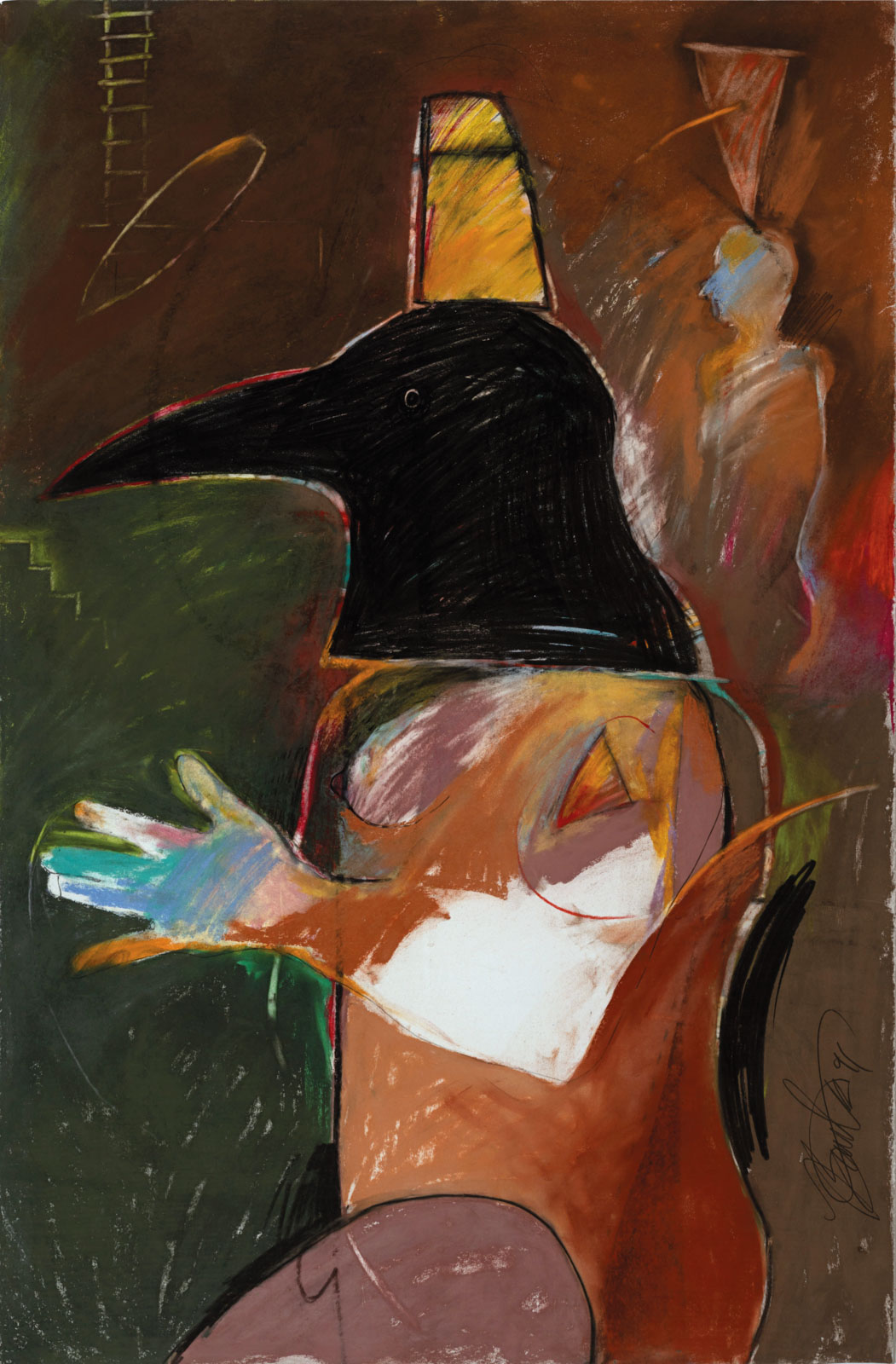 Rick Bartow (Mad River Band of the Wiyot Tribe, 1946-2016), Crow’s Side of the Tale, 1991, pastel and graphite, 40 x 26”. The William P. Healey Collection of Native American Art. © The Richard E. Bartow Trust.
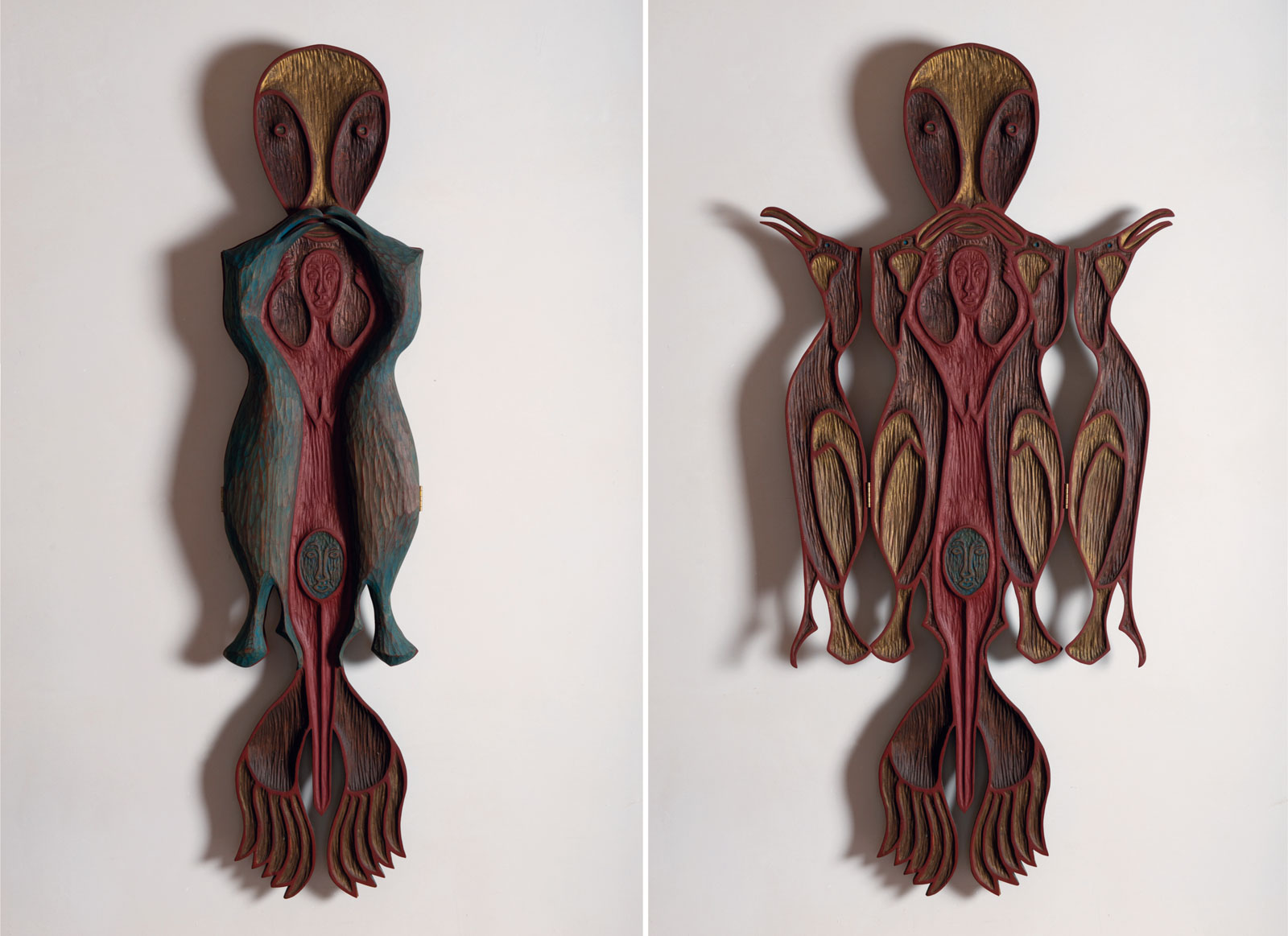 John Hoover (Unangan (Aleut), 1919-2011), Volcano Woman #1, 1990, wood, metal hinges and pigment, 51 x 24¼”. The William P. Healey Collection of Native American Art. © Estate of John Hoover.
One artist represented in the collection, and a friend of Healey’s, is Tony Abeyta, who co-curated the St. Louis exhibition. “Bill’s collection is important because it has a transitional focus on American Indian paintings that were telling the Native American story from the Indigenous perspective. Bill is a big Western collector, including works by the Taos Society of Artists, Charles M. Russell, Frederic Remington andother American artists working in the Western arena,” Abeyta says. “His change from collecting pictures of Native Americans by Anglos to pictures of Native Americans by Native Americans is important because he’s moving away from those colonial narratives and focusing on the Native perspective.”
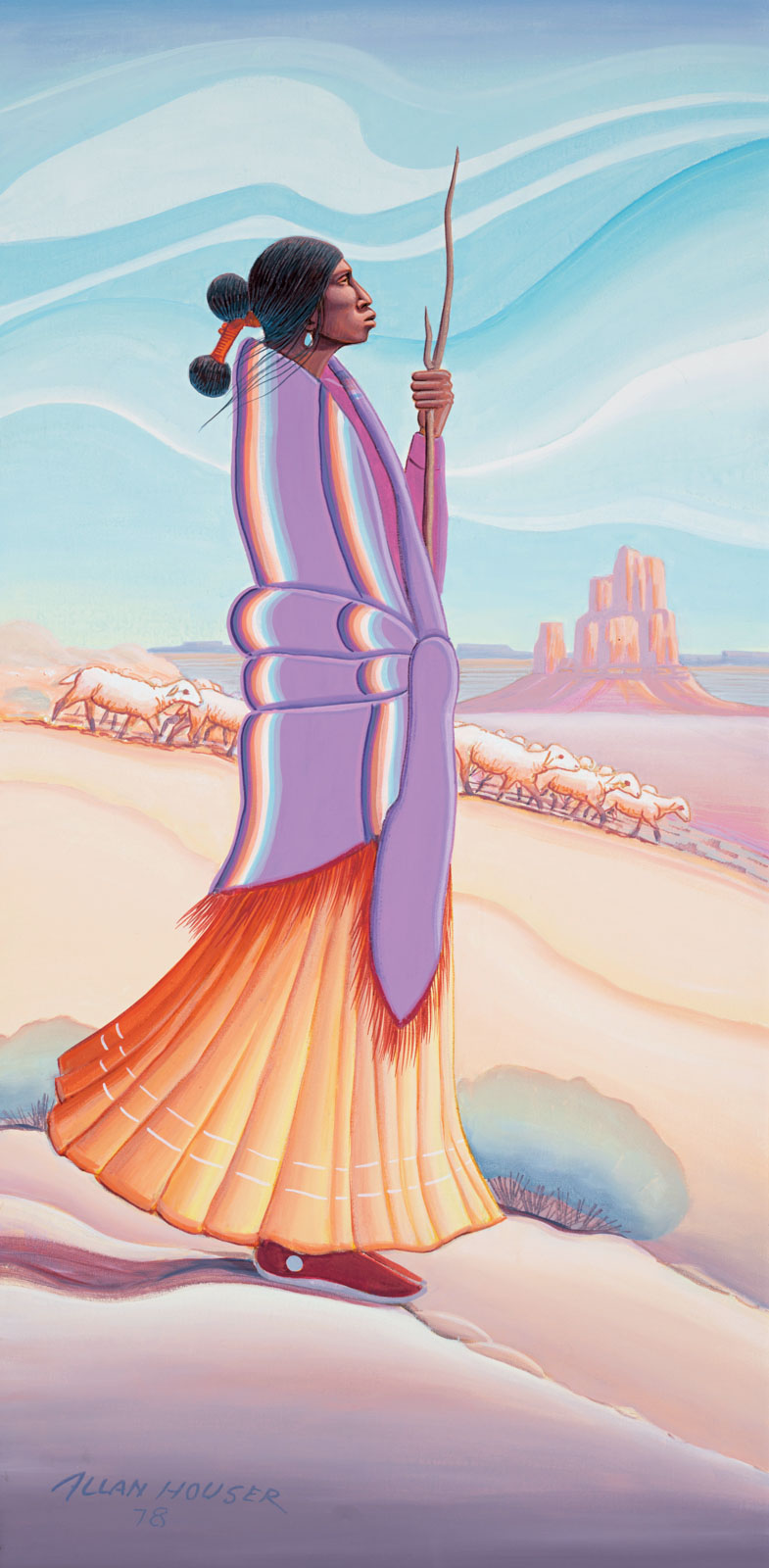 Allan Houser (Chiracahua Apache, 1914-1994), Navajo Sheepherder, 1978, acrylic on canvas, 481⁄3 x 24¼”. The William P. Healey Collection of Native American Art. © Chiinde LLC (a Houser/ Haozous Family company).
Abeyta continues: “What’s so great about Bill’s collection is that it is an important addition to this museum in the Midwest. These artists are covered in the Southwest and at those museums. But having this kind of work here is great because it allows for a more comprehensive story about an art that some people see as regional. To have these pieces come this far east, and extend to such an important museum, is exciting.”
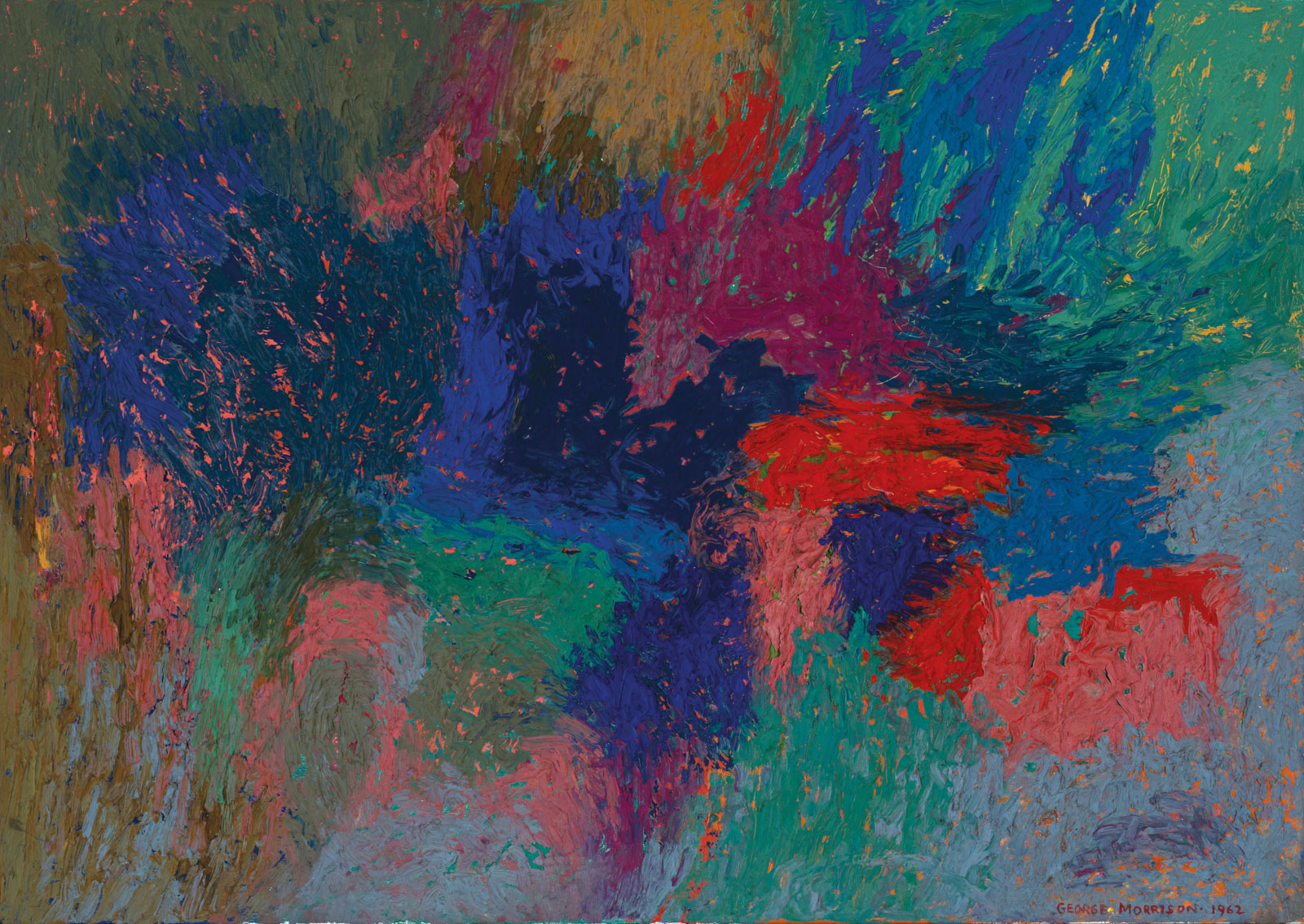 George Morrison (Anishinaabe (Ojibwe), 1919-2000), Ephemeration, 1962, oil on canvas, 17½ x 24½”. The William P. Healey Collection of Native American Art. © Estate of George Morrison. Courtesy of Briand Morrison,
Healey notes that this is a great place for a collection like this because St. Louis is where Charles M. Russell, an iconic figure in Western painting, was born and it’s also where the Lewis and Clark Expedition originated. He hopes the works challenge ideas about the West, “Manifest Destiny” and the boarding schools that caused so much turmoil to Native American culture.
“I hope these works resonate with people as much as they have resonated with me,” he says.
Native American Art of the 20th Century: The William P. Healey Collection remains on view through July 14. Follow the museum to learn more about what it does with the collection.
Through July 14, 2024
Native American Art of the 20th Century: The William P. Healey Collection
Saint Louis Art Museum, 1 Fine Arts Drive, St. Louis, MO 63110, (314) 721-0072, www.slam.org
Powered by Froala Editor