Marie Watt’s work is known for its storytelling, community engagement and use of soft materials. The artist (Seneca Nation of Indians), best known for her blanket stacks, sewing circles and embroidered and quilted installations, has two solo exhibitions on view currently: Storywork: The Prints of Marie Watt currently on view at Print Center New York through May 18, and Marie Watt: Land Stitches Water Sky at the Carnegie Museum of Art in Pittsburgh, Pennsylvania, through September 22. However, neither of these current shows primarily consist of her customary medium of textile, which is exciting, unexpected and embraces material history, industry and collaboration in new ways.
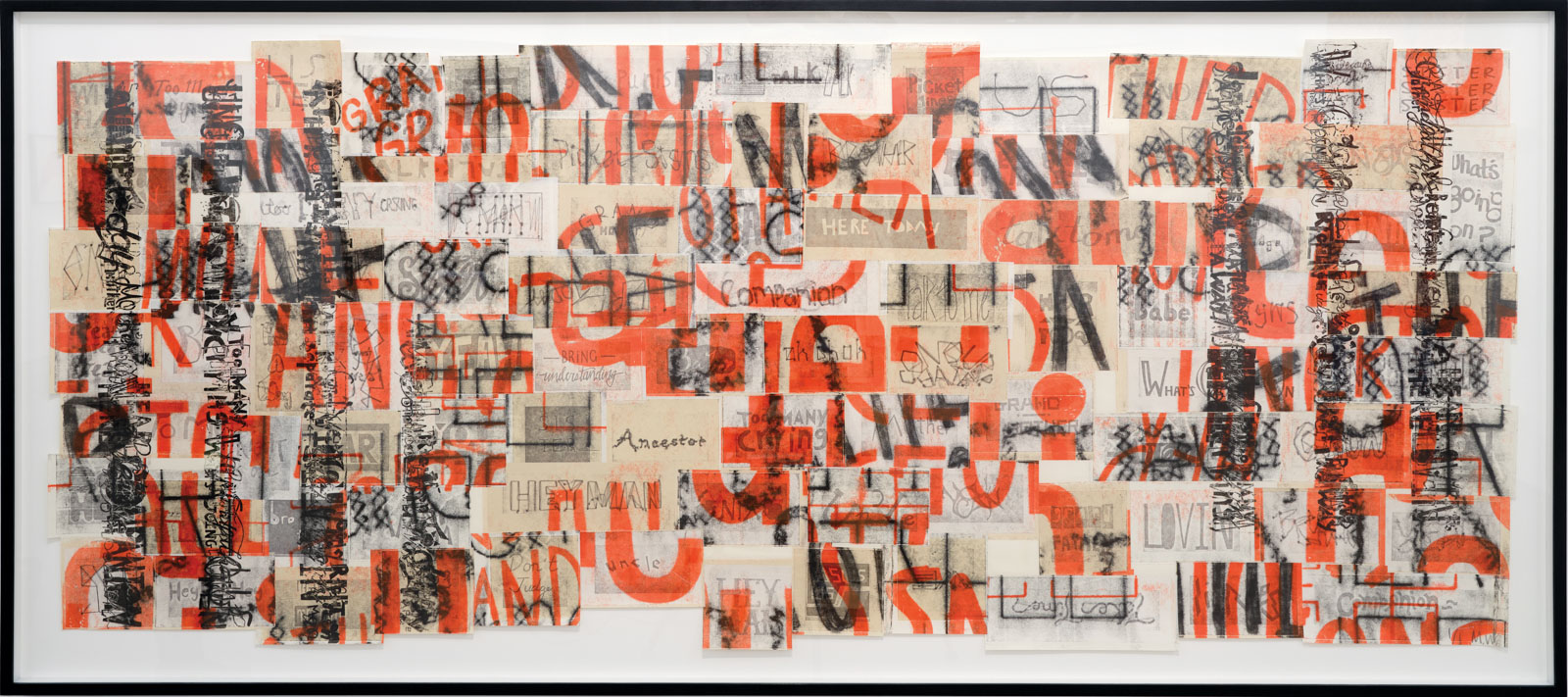 Companion Species (Rock Creek, Ancestor, What’s Going On?), 2021, lithography, pressure printing and collage on Japanese kozo backed with Sekishu, ed. 1 of 1, 38 x 91½”. Published by Mullowney Printing Company, Portland, OR. Collection of the Jordan Schnitzer Family Foundation. Photo by Aaron Wessling Photography. © Marie Watt. From Storywork: The Prints of Marie Watt, Print Center New York, NY.
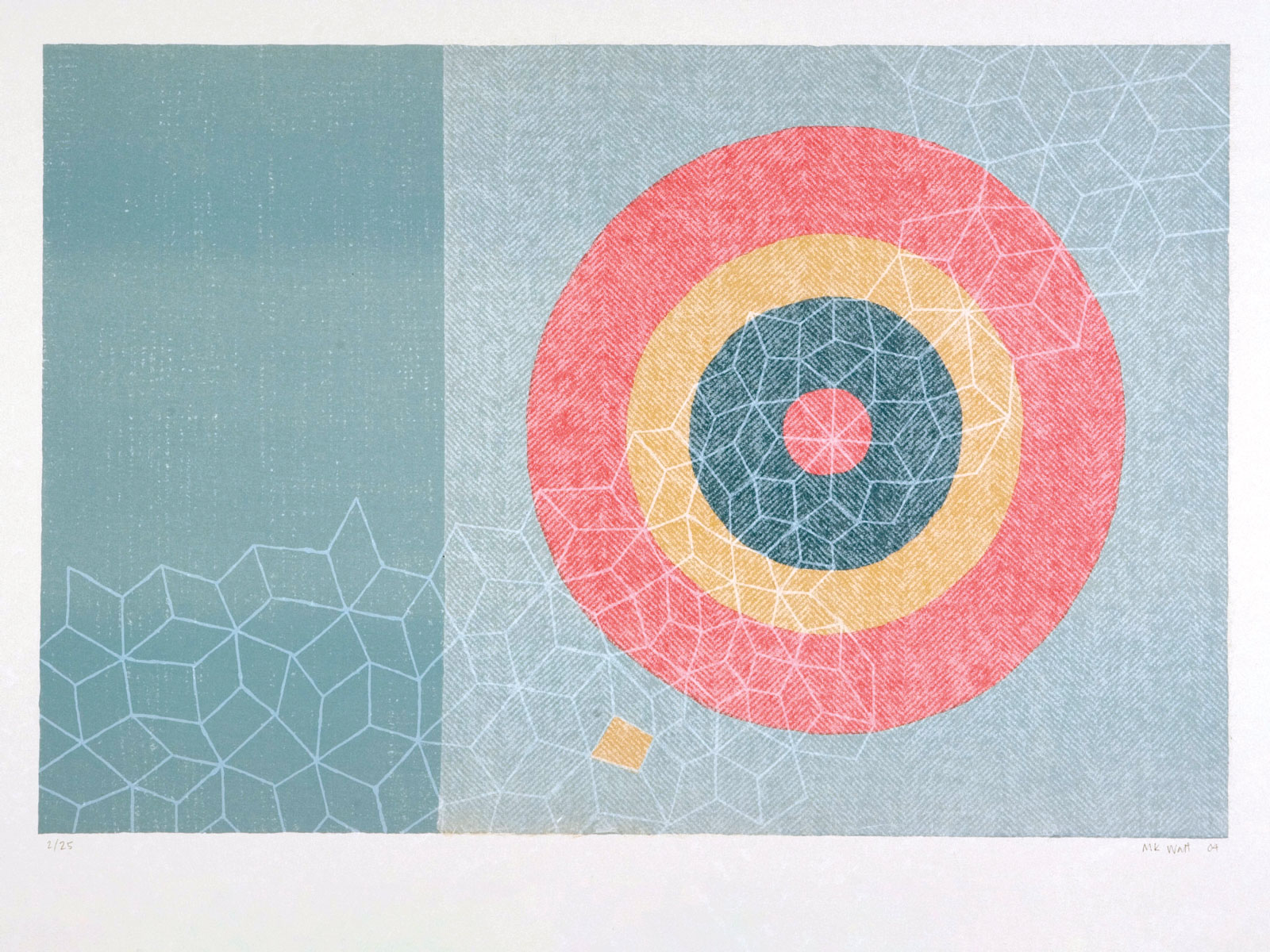 Transit, 2004, lithograph with chine collé, ed. 7 of 25, 22¼ x 301⁄8”. Published by Tamarind Institute, Albuquerque, NM. Collection of Jordan D. Schnitzer. Photograph by Aaron Johanson. © Marie Watt. From Storywork: The Prints of Marie Watt, Print Center New York, NY.
The presentation of Watt’s work at New York’s Print Center is the first traveling show of the Portland, Oregon-based artist’s practice, and the first to give substantive room and space for Watt’s printmaking alongside her better-known textile work and large-scale sculptures. Watt was first introduced to the medium of printmaking during her studies at Willamette University, which she then pursued further under the direction of the veteran artist and activist Jean LaMarr (Susanville Indian Rancheria) at the Institute of American Indian Arts in Santa Fe, New Mexico. Watt’s printmaking was lesser known and lesser shown than the textile work, yet she has habitually told stories through printmaking over her career. She even collaborated with master printers at Mullowney Printing Company in Portland; Sitka Center for Art and Ecology in Otis, Oregon; Tamarind Institute in Albuquerque, New Mexico; and Crow’s Shadow Institute of the Arts, founded by Walla Walla artist James Lavadour, on the Confederated Tribes of the Umatilla Indian Reservation in Pendleton, Oregon. Watt’s approach to printmaking often pulls from her fiber-based activities, often incorporating instruments and materials used in sewing into the two-dimensional plane of the print, creating a supple nimbleness to her practice that pushes against art market expectations of what an artist should do and instead replaces its agency to explore mediums freely and fluidly.
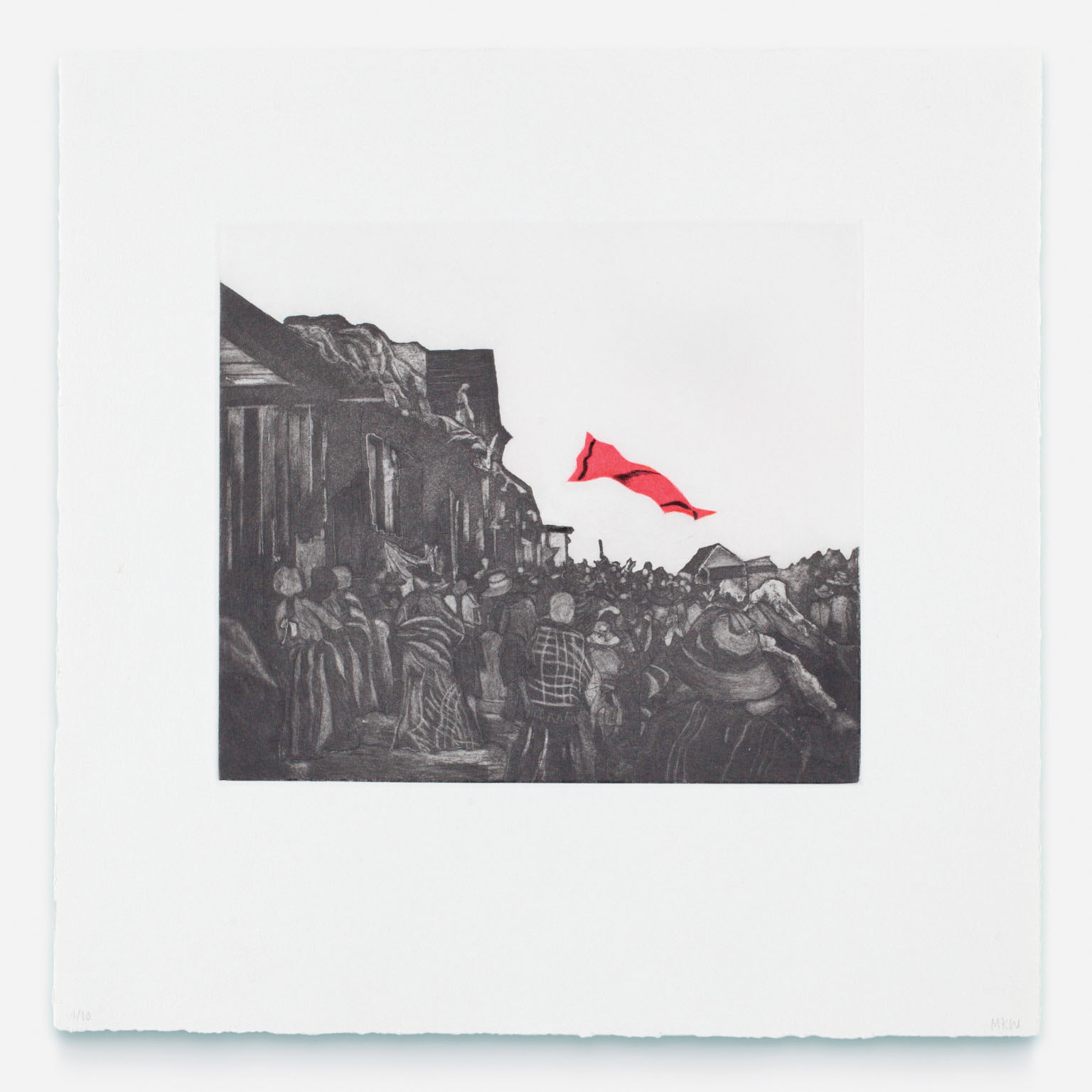 Witness (Quamichan Potlatch, 1913), 2014, softground etching, ed. 10 of 10, 12 x 12”. Published by Sitka Center for Art and Ecology, Otis, OR. Collection of the Jordan Schnitzer Family Foundation. Photograph by Aaron Johanson. © Marie Watt. From Storywork: The Prints of Marie Watt, Print Center New York, NY.
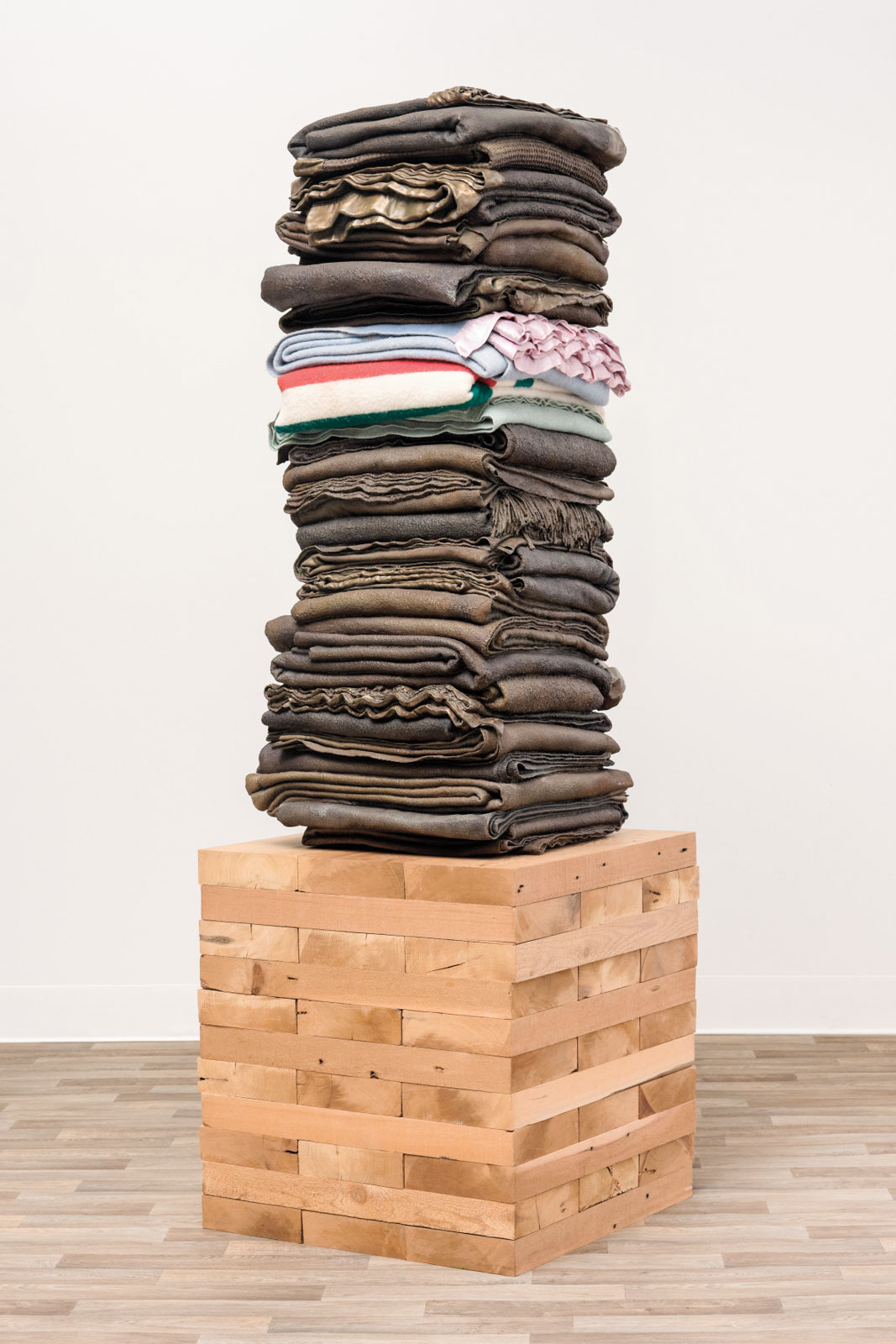 Almanac (Glacier Park, Granny Beebe, Satin Ledger), 2005, bronze, wool blankets, and reclaimed red cedar, 84¾ x 27 x 27”. Collection of the Jordan Schnitzer Family Foundation, from the Arlene and Harold Schnitzer Collection. Photo by Aaron Wessling Photography. © Marie Watt. From Storywork: The Prints of Marie Watt, Print Center New York, NY.
While the Print Center show focuses on a facet of the artist’s work that has been a throughline during her sustained career, Watt’s commission at the Carnegie Museum of Art illustrates the artist’s appetite to continue exploring new materials and modes of production and collaboration. Collaboration not only with other artists, makers or community members, but a collaboration with the location and legacy of Pittsburgh itself. Watt’s installation is part of the Carnegie’s Forum series, which was established in 1990 with the aim of giving living artists the opportunity to expand their practice through ambitious commissions and re-presentations of existing works. For the project, Watt decided to pull from the city’s history of a now mostly defunct industry (steel production), its geography and its Indigenous past. Utilizing steel I beams—a material she has been employing for over a decade, paired with glass—she created a pastiche between the history of the city, Haudenosaunee knowledge systems, histories of Haudenosaunee ironworkers known as “skywalkers” and contemporary Indigenous perspectives.
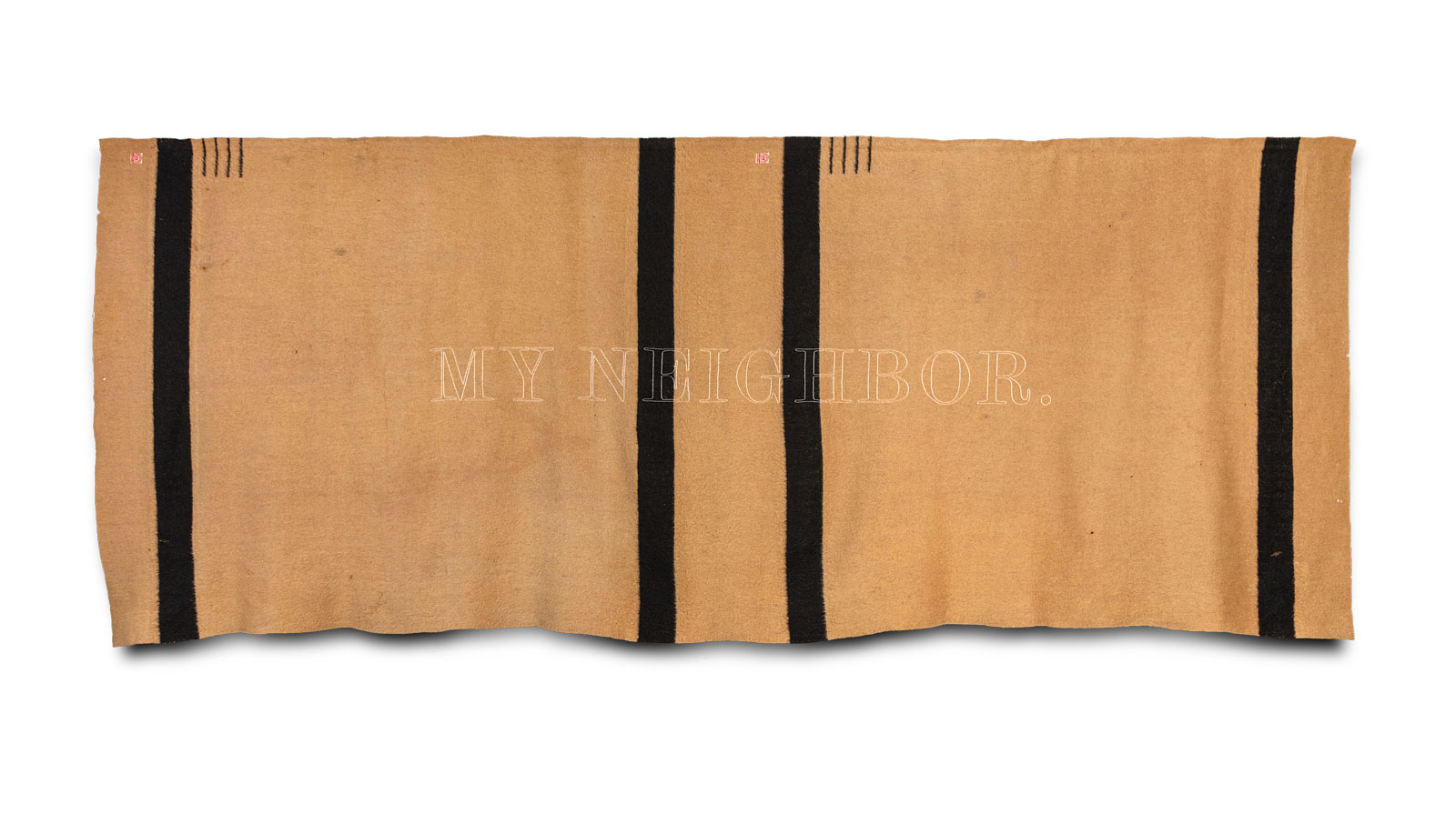 TBD MY NEIGHBOR, Carnegie Double Long Trade Blanket, reclaimed double long wool trade blanket, Czech sead beeds, 69 x 174½”. From Marie Watt: Land Stitches Water Sky, Carnegie Museum of Art, Pittsburgh, PA.
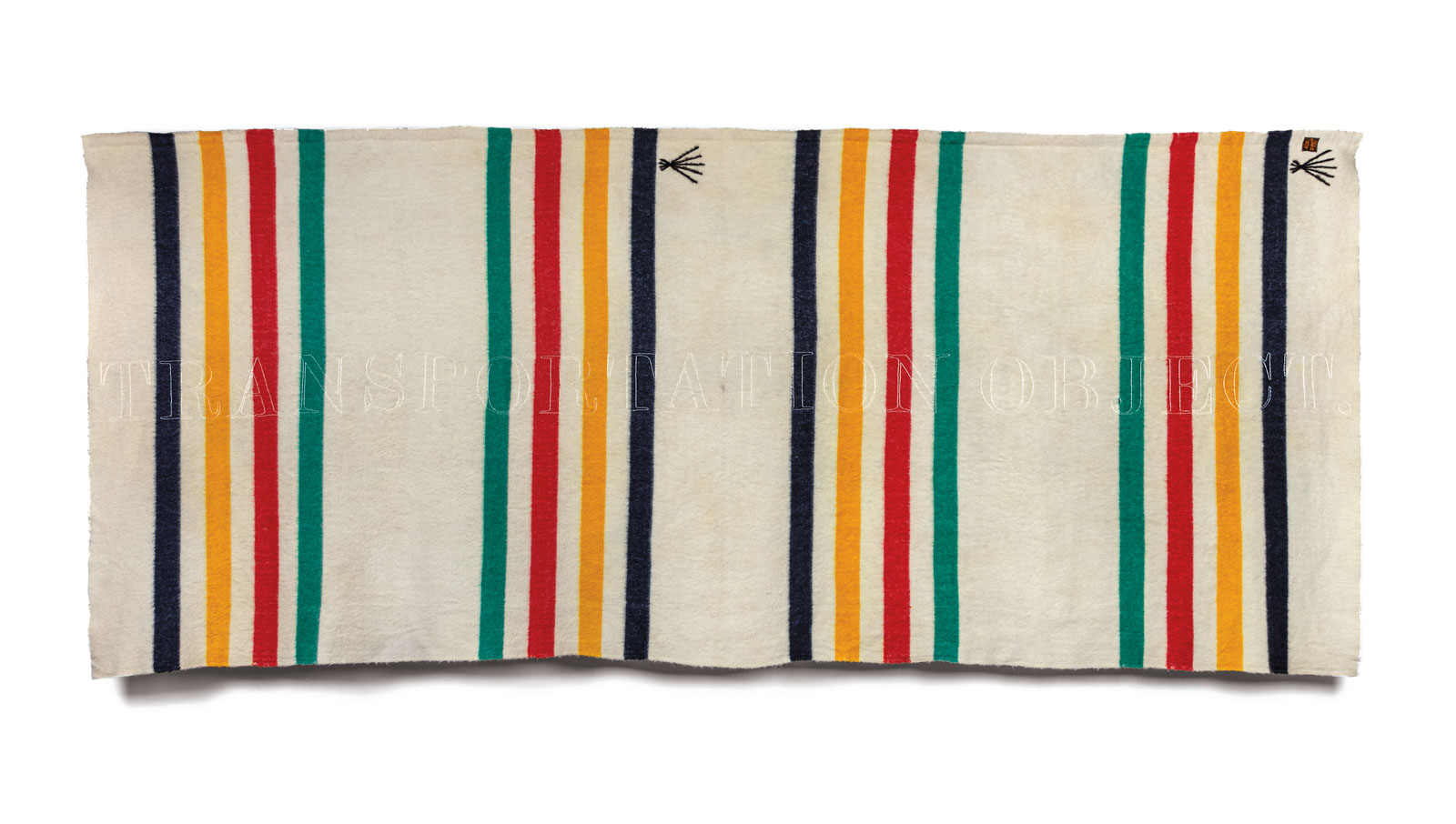 Placeholder (Horizon), reclaimed double long wool trade blanket, Czech sead beeds, 71 x 170”. From Marie Watt: Land Stitches Water Sky, Carnegie Museum of Art, Pittsburgh, PA.
The installation, which stretches 21 feet across the gallery, features the beams with words scrawled across them. One reason the steel was of particular interest to Watt as a material is the reality that it is the most recycled material in the world. It’s that reusing of one object to make into another larger object that has been seen throughout Watt’s practice, particularly in her quilting/sewing circles, her blanket stacks and assemblage tapestries. That repurposing is also linked to this new body of work.
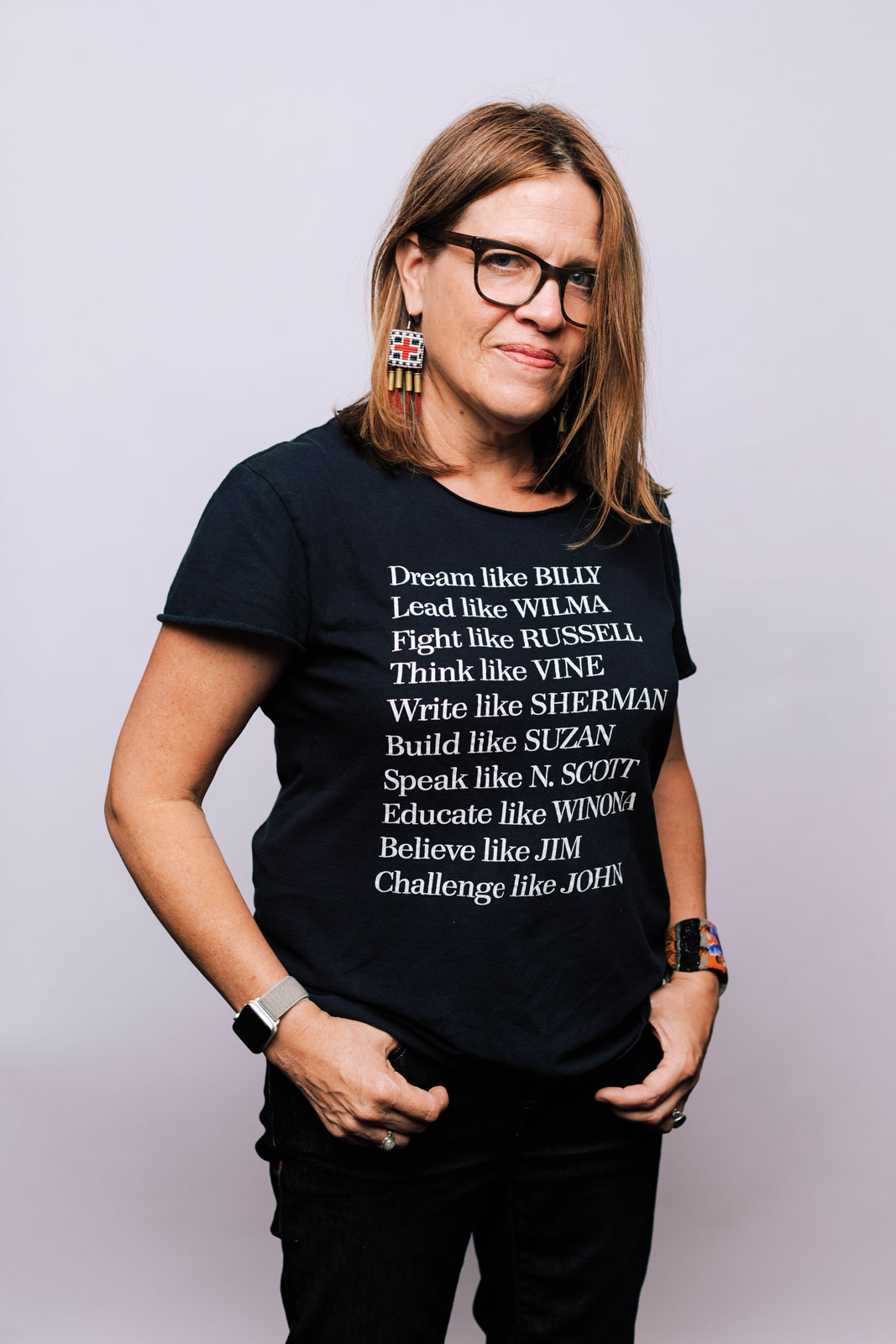 Marie Watt (Seneca Nation of Indians). Photo by Sam Gehrke.
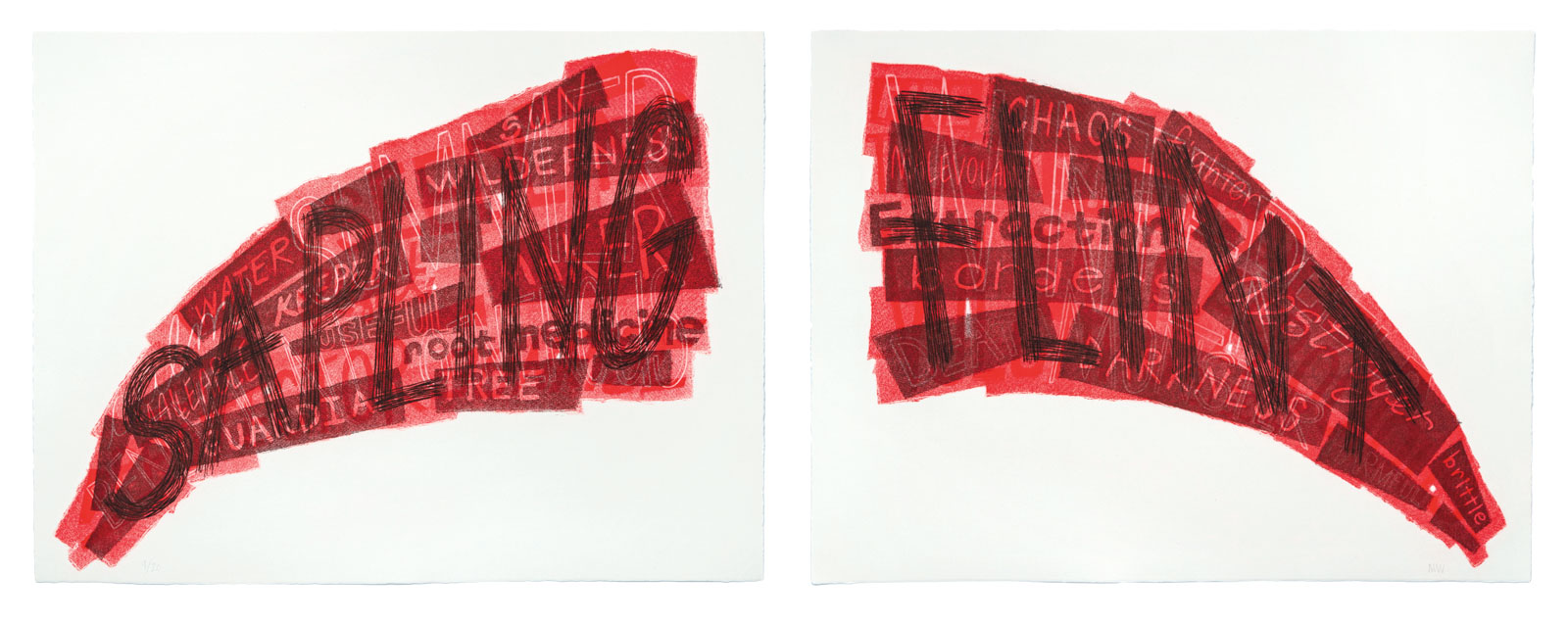 Companion Species (Malleable/Brittle), 2021, softground etching, ed. 20 of 20, 16½ x 21½”. Published by Sitka Center for Art and Ecology, Otis, OR, and the artist. Collection of the Jordan Schnitzer Family Foundation. Photograph by Aaron Johanson. © Marie Watt. From Storywork: The Prints of Marie Watt, Print Center New York, NY.
“One thing that’s really exciting to me is that these are old, previously used I beams that come from mills where you see their mill stamp, and these mills are defunct now,” Watt says. “It is interesting to see these stamps that are kind of this indicator of where this beam came from.” Watt links these sculptures to quilting. “I think of how we use fabric and how fabric [remnants], at least within quilting, come from people’s recycled and upcycled clothes—it’s kind of this traceable history and I think it’s really interesting that the mill stamp actually gives it a bit of traceable history too.”
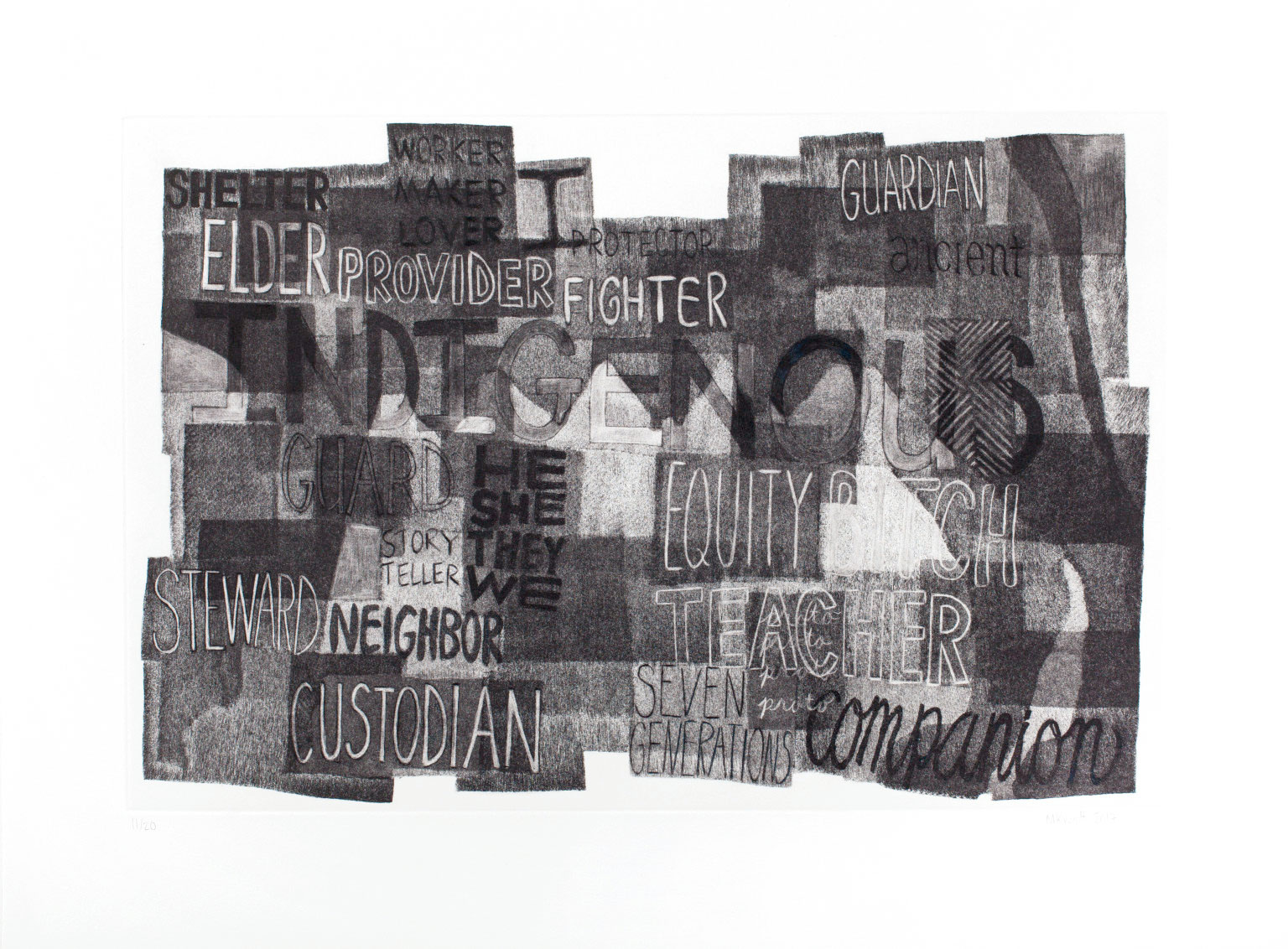 Companion Species (Words), 2017, softground etching, aquatint and drypoint, ed. 7 of 20, 16½ x 22¼”. Published by the artist. Collection of Jordan D. Schnitzer. Photo by Aaron Wessling Photography. © Marie Watt. From Storywork: The Prints of Marie Watt, Print Center New York, NY.
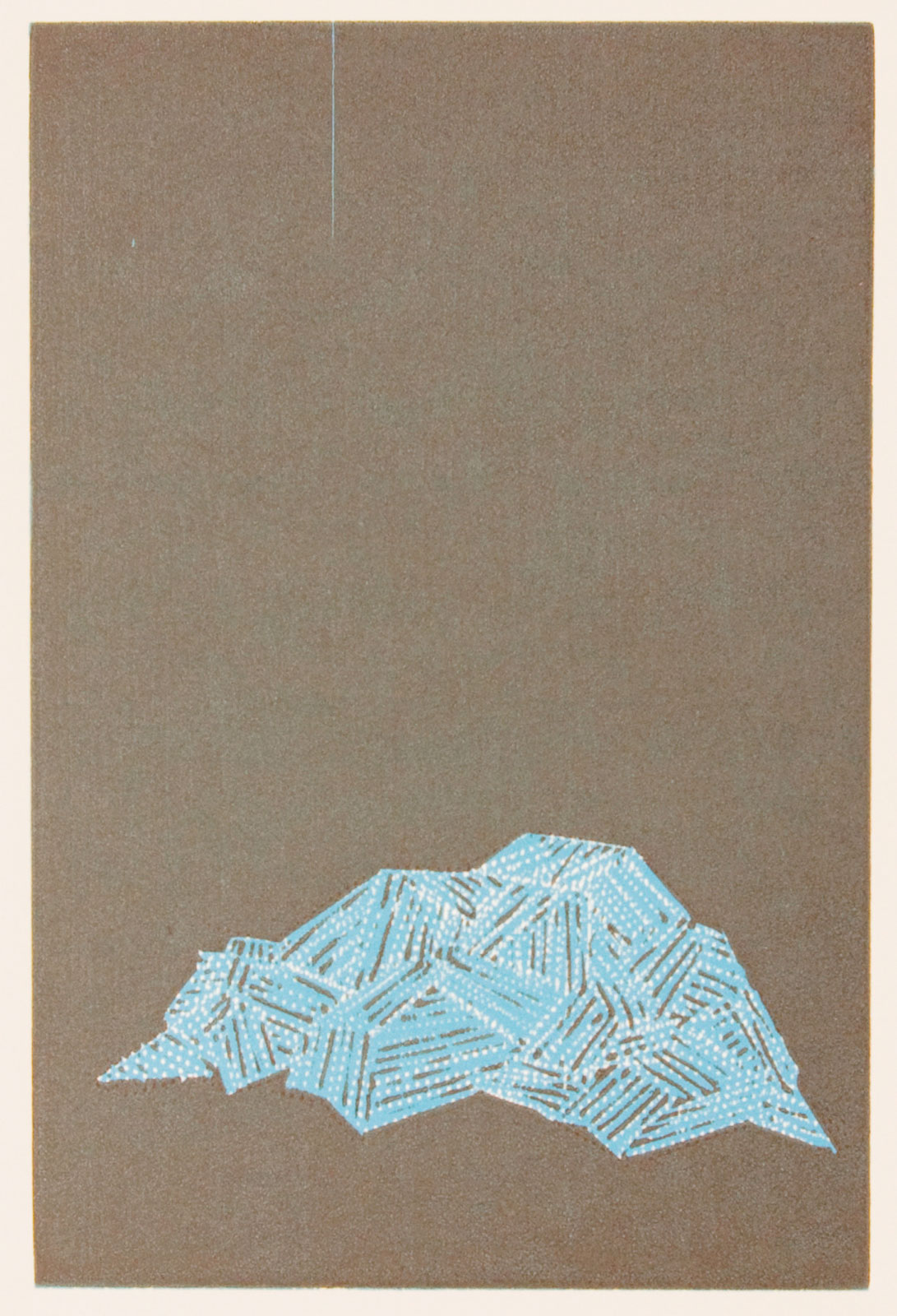 Camp, woodcut, ed. 20 of 20, 20¾ x 16”. Published by Crow’s Shadow Institute of the Arts, on the Confederated Tribes of the Umatilla Indian Reservation, Pendleton, OR. Photograph by Crow’s Shadow Institute of the Arts. Attribution: Collection of Jordan D. Schnitzer. From Storywork: The Prints of Marie Watt, Print Center New York, NY.
Watt’s work places importance on uncovering and reorienting histories, looking at binaries and liminalities between presence and absence, sacred and profane, softness and strength.
Through May 18, 2024
Storywork: The Prints of Marie Watt, From the Collections of Jordan D. Schnitzer and His Family Foundation
Print Center New York, 535 W. 24th Street, New York, NY 10011, (212) 989-5090, www.printcenternewyork.org
April 13-September 22, 2024
Marie Watt: Land Stitches Water Sky
Carnegie Museum of Art, 4400 Forbes Avenue Pittsburgh, PA 15213, (412) 622-3131 www.carnegieart.org
Powered by Froala Editor