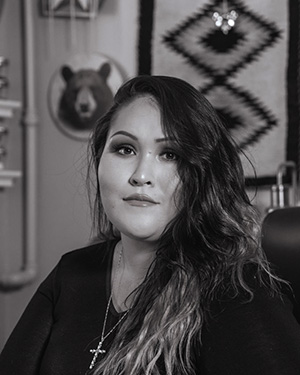
Jade Bread is an enrolled member of the Navajo Nation and has tribal affiliation with San Carlos Apache Nation in San Carlos, Arizona; and with the Blackfeet Nation in Browning, Montana.
Bread’s ledger art typically features figures in traditional dress. Although she takes creative license in her use of bright hues, she remains true to the designs of whichever tribal affiliation she is portraying. “I believe that is why it resonates with not only our past but our present,” says Bread. “I like and choose to keep things very recognizable as to which tribe it belongs to, while giving a personal and modern day flare.”
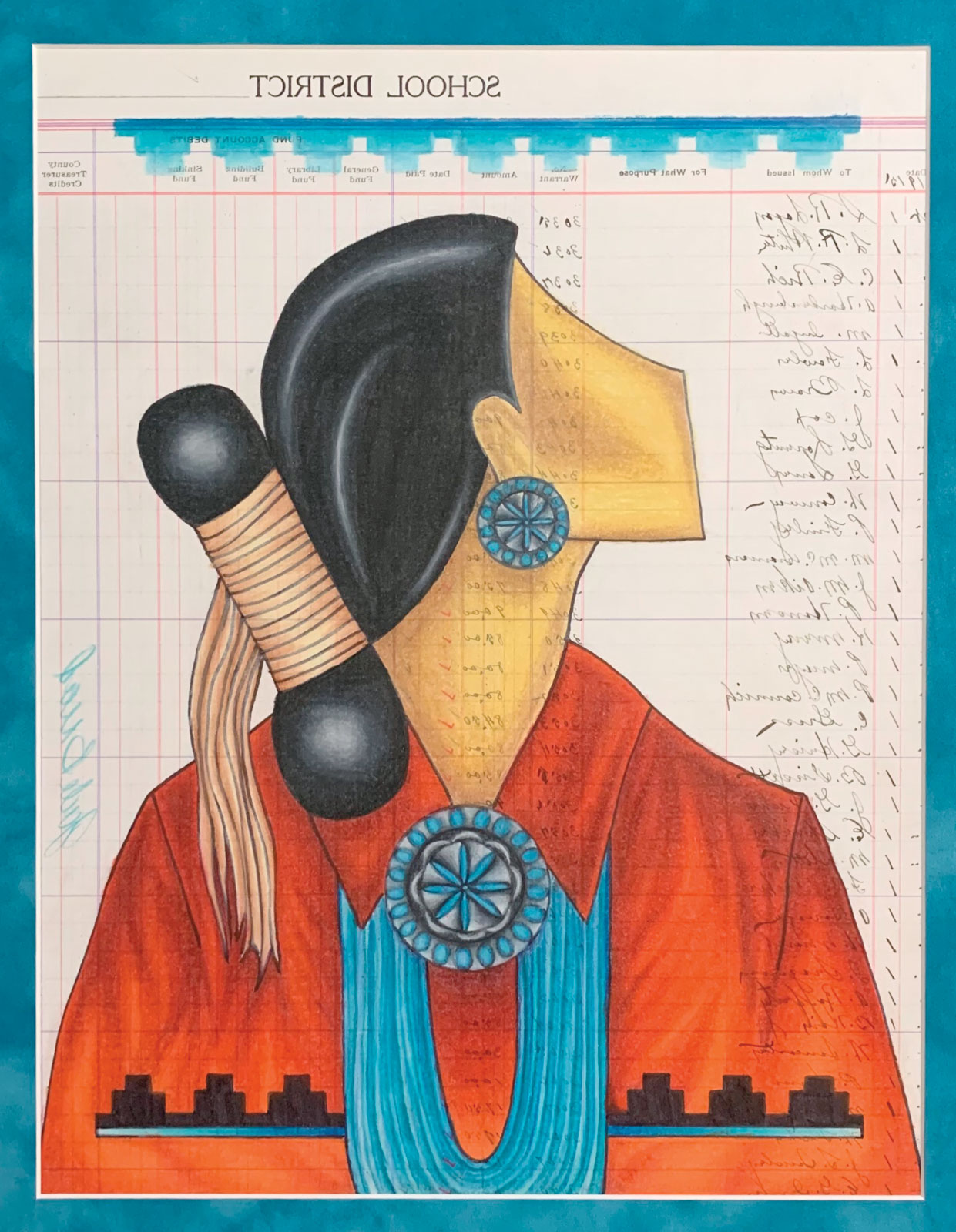 Fire and Ice, colored pencil, 20 x 16"Her work incorporates traditional motifs from all her tribal affiliations including floral, geometric, tipi and lodge designs of the Blackfeet people; the squash blossom and weaving patterns of her Diné heritage; or designs from the specific dress worn in the “sunrise dance,” a coming age ceremony for Apache women.
Her current work is mainly focused on women and children. “I have such a strong bond with my mother and grandmother (before her passing) and such admiration for them; and the women that raised them and the women before them. Among generations of my family it is a common theme that women are powerful, loving, nurturing beings that help our families run like well-oiled machines.”
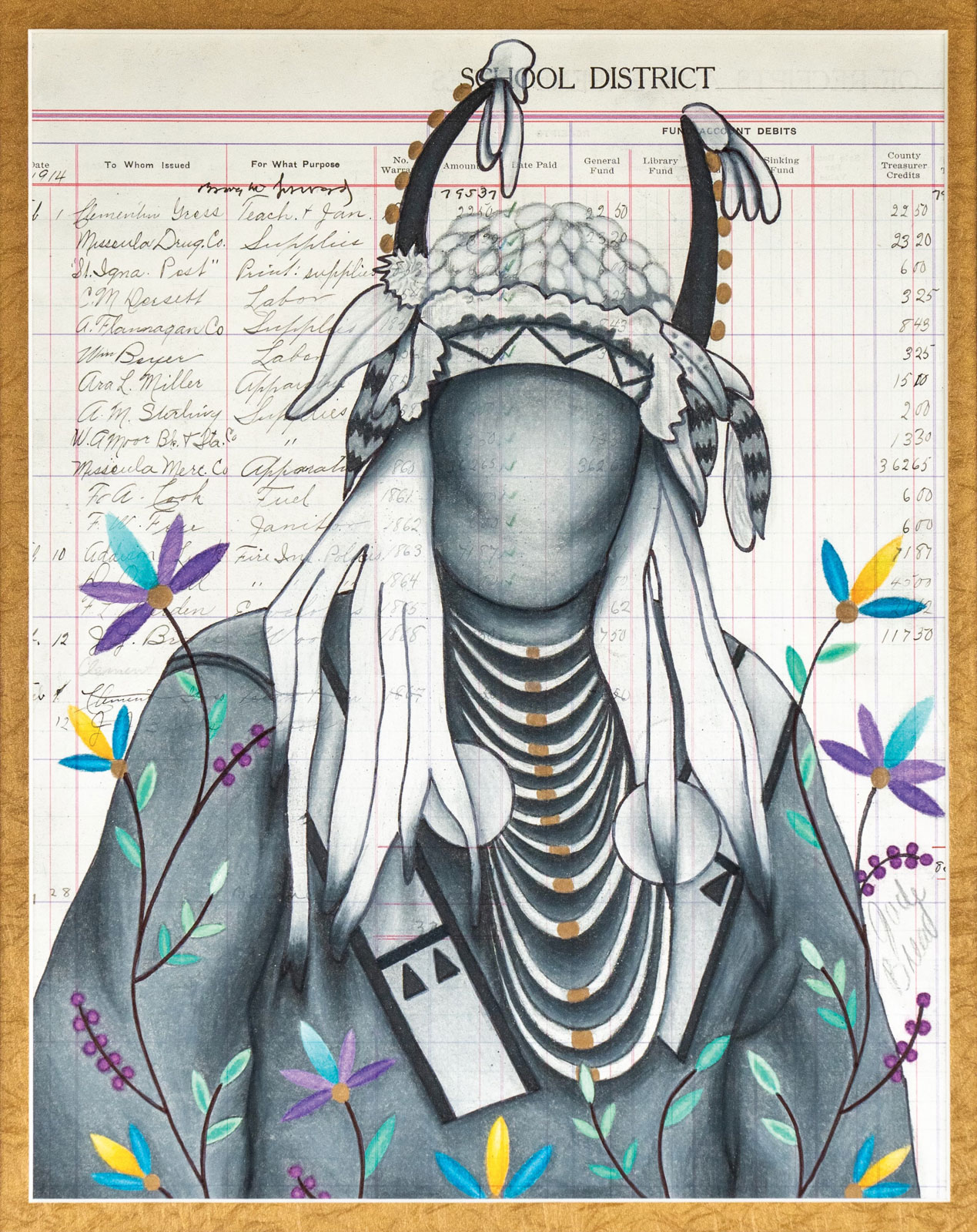 Little Dog, colored pencil, 20 x 16"She also has a series of works featuring historic tribal figures, oftentimes her own ancestors. “It allows me to feel a more significant connection with them,” says Bread. “When I work on these types of ledgers it help me understand them more as individuals and their contributions into making Native society and artwork as we see it today. The more I learn about who we were as a people, the more it allows me to grow as a person. I am in a continuous cycle of growing with my artwork and allowing it to grow me.”
See More jade.bread16@gmail.com
Artist Spotlights: Dive deeper into the genre with these established artists
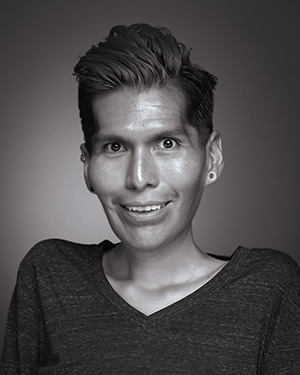
Adrian Pinnecoose (Navajo/Southern Ute)
www.asepdesigns.studio
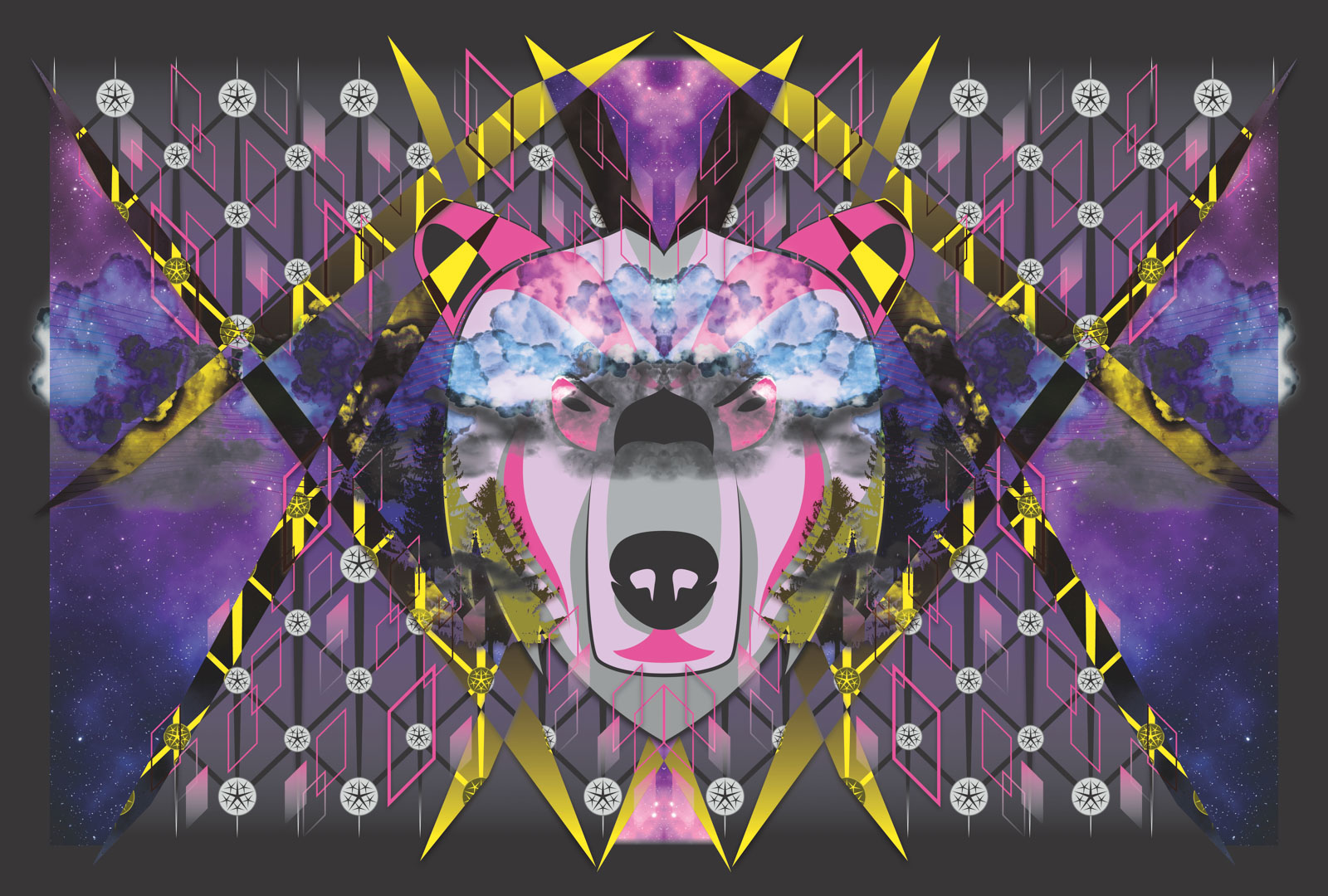
Adrian Standing Elk Pinnecoose graduated from the University of New Mexico’s School of Architecture and Planning. He has a Bachelor of Arts in architecture and a Master of Science in architecture with a focus in computational ecologies. Pinnecoose’s body of work has included two-dimensional graphics, fashion and jewelry throughout the years. “My work is in a constant flux of evolution from year to year when I started doing graphic design,” says the artist. “One of the main goals for me is to highlight engagement and to draw upon social connections. I want my designs to pull you in and the more you look, the more you discover within each piece. I like to quantify my life experiences and abstraction to connect with my audience. It is important to me that one may begin to tell their own stories and experiences through my body of work.”
Gilmore Scott (Navajo (Diné))
www.gscott-tru-arts.com
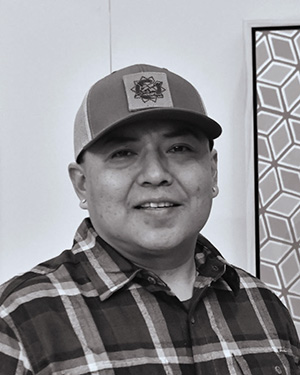
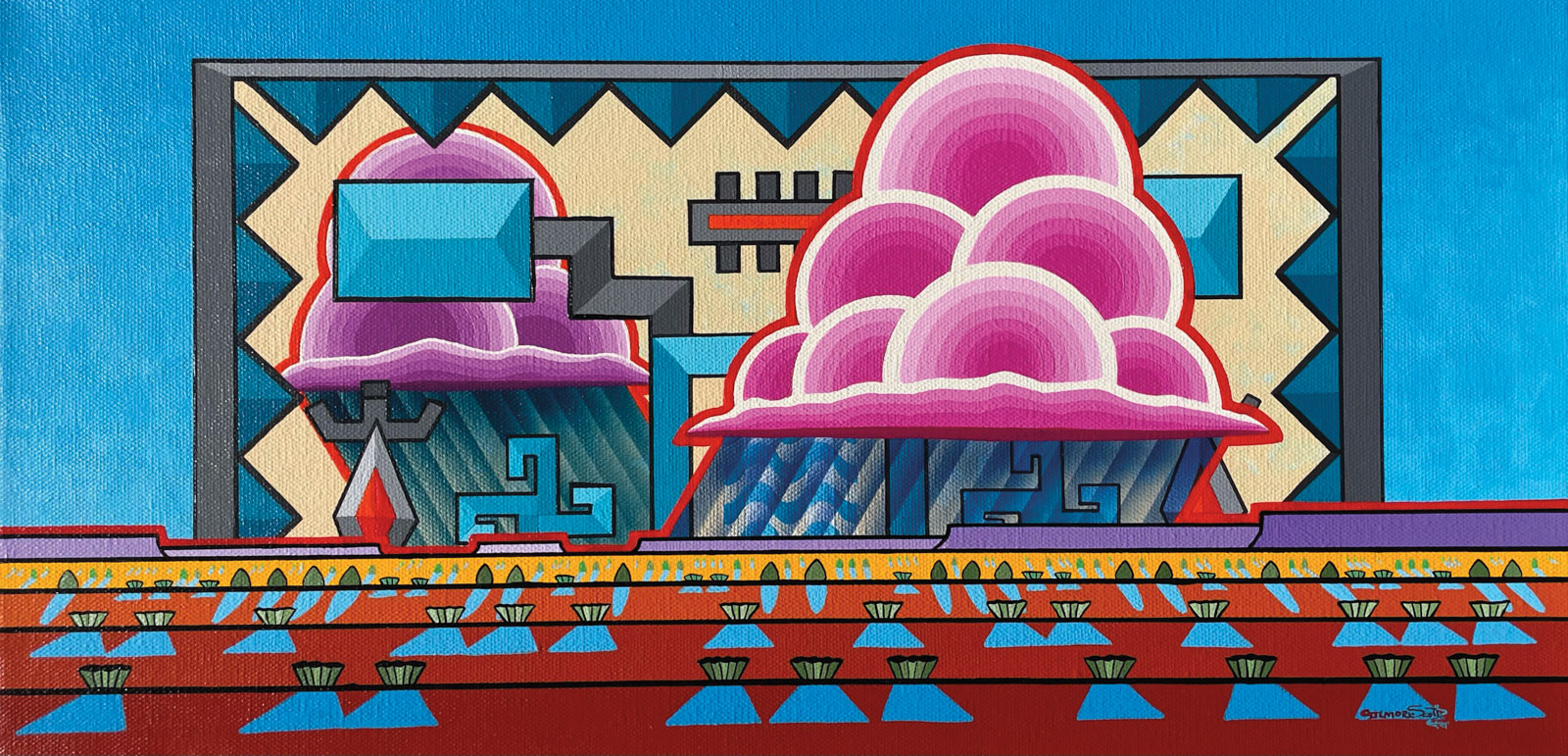
Gilmore Scott—who lives near Montezuma Creek, Utah, on the Navajo Nation, in the neighborhood of Bears Ears National Monument—works in watercolors, acrylics and color pencils. At times he mixes all three mediums in a single piece. “My use of colors are strong and bold,” he says. “My images and subjects are interpretations of how I view my culture, my Dine (Navajo) heritage. My subjects are of the high desert southwest landscapes and Navajo culture. I enjoy incorporating geometric designs that Navajo rug weavers are known for and also paint the open landscape vistas of my home area. These are just a few subjects which inspire my imagination.”
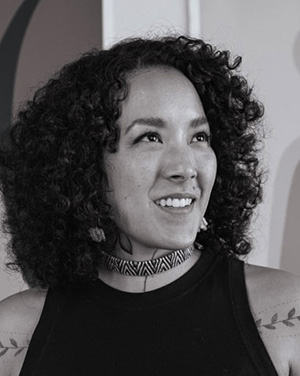
Crystal Worl (Tlingit/Athabascan/Filipino)
www.crystalworl.com
Blending classic formline designs with beadwork patterns and abstract Alaskan landscapes, Crystal Worl’s work explores themes like Indigenous identity, cultural heritage and resilience, and environmental stewardship. “Most of my imagery depicts my experiences and relationships I share with the land and animals I harvest with my family,” she says. “My work reflects a deep connection to the natural world and a commitment to environmental conservation. My artwork aims to bridge gaps between traditional Indigenous art forms and contemporary artistic practices. I like to combine traditional techniques with modern materials and approaches, creating pieces that are both rooted in tradition and relevant to contemporary audiences.”
Powered by Froala Editor