Around 1000 B.C., the Cherokee people occupied vast stretches of land among the Great Smokey Mountains and the southern Appalachians. The Indian Removal Act of 1830 forced eastern tribes to leave their land for the west on what became known as the Trail of Tears. Some Cherokee remained in North Carolina and rebuilt within the Qualla Boundary, an approximately 56,000-acre tract of land now held in trust by the United States government for the federally recognized, sovereign, Eastern Band of Cherokee Indians (EBCI).
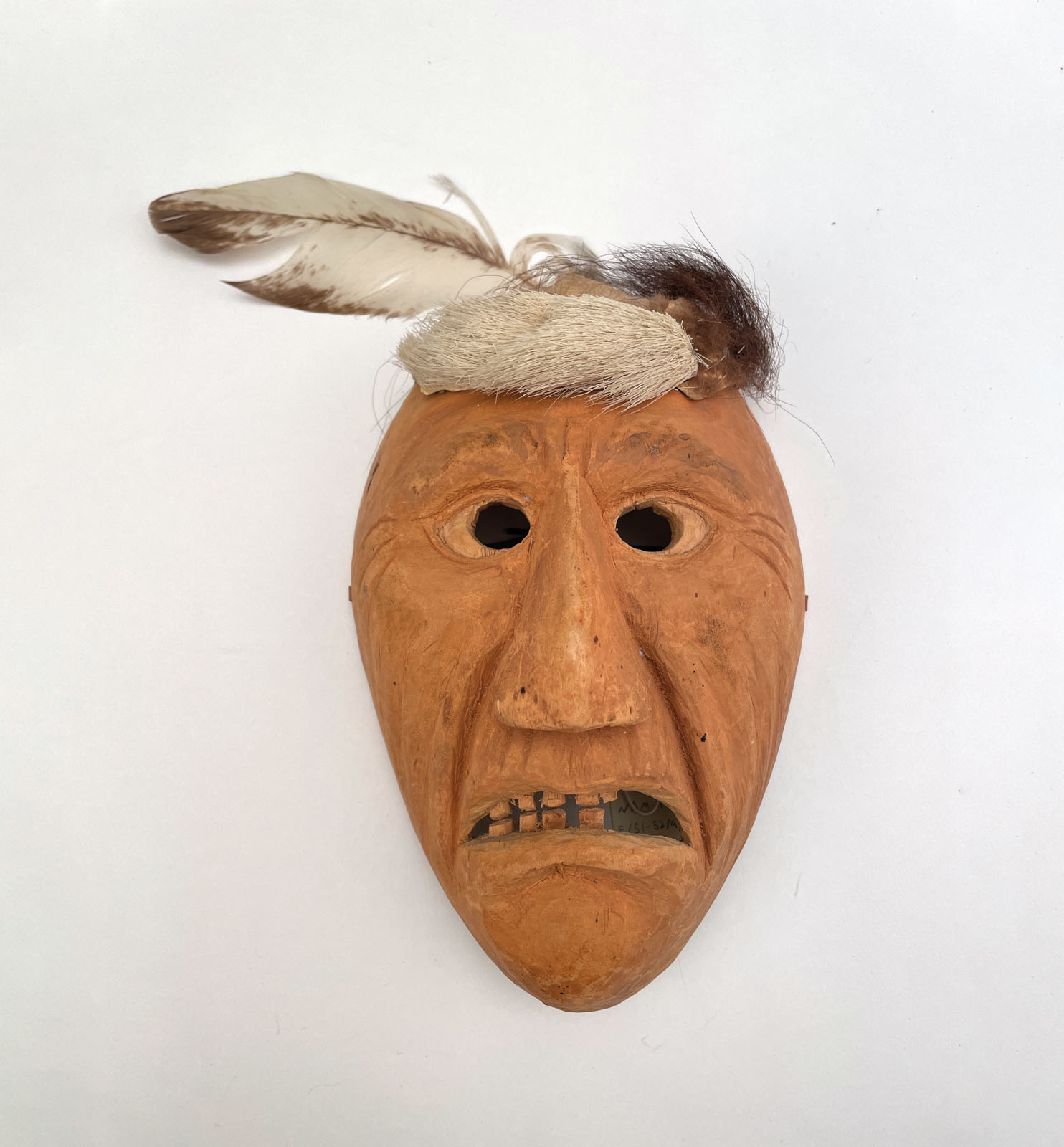 Will West Long (Eastern Band of Cherokee, ca. 1869-1947), Booger Mask, 1939. Courtesy Sam Nobel Museum, The University of Oklahoma, Norman, OK.
Will West Long (circa 1869-1947) grew up in Big Cove, a remote community in the Qualla Boundary at a time when the federal government was determined to assimilate Native children into white society. In her article “Dorothy Dunn and the Art Education of Native Americans: Continuing the Dialogue” in Studies in Art Education, Laurie Eldridge states baldly, “This cultural annihilation included preventing students from practicing their traditional religions and speaking their Native Languages. Creating images of their homes, rituals, or creating other aspects of their visual and material cultures also was discouraged. Consequently, art instruction was not usually a part of Indian education. However, some groups of people who were predominantly White Anglo-Saxons worked to change this government policy.”
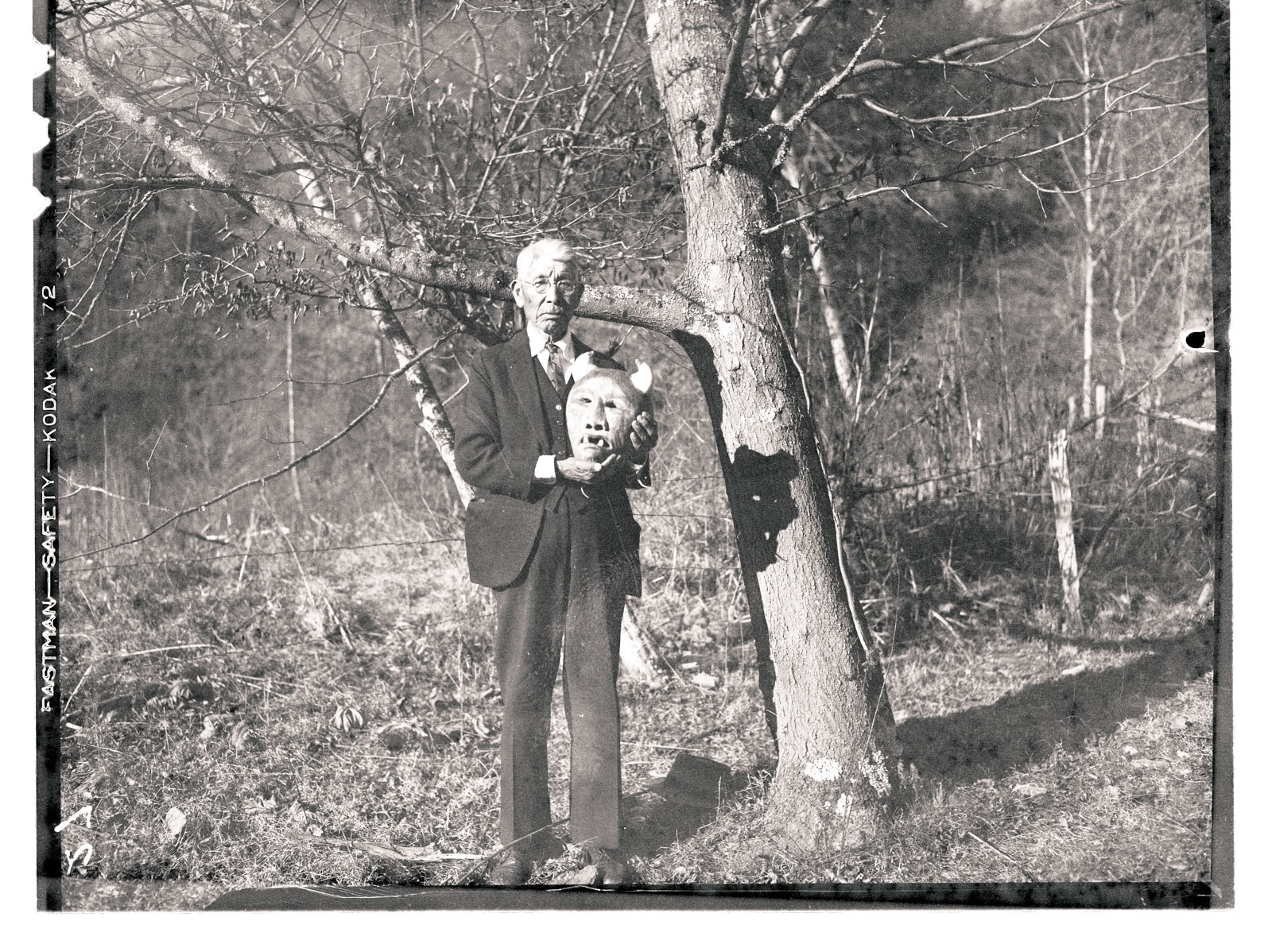 William Fenton (1908-2005), Will West Long holding a Horned Mask, 1946, Photograph. Courtesy the American Philosophical Society.
Long learned the Cherokee language and the ancient traditions of his people from his mother, Ayâsta, a medicine woman. At 16 he was sent to an Indian boarding school. Later with fluency in English as well as the Cherokee language, ceremony, and medicine, he dedicated his life to preserving and sharing his culture. In addition, he learned the art of mask-making. Ethnologist William Fenton, an ethnologist with the Smithsonian Institution, writing about his meeting with Long noted, “His name is associated with the work of every field ethnologist who ventured into Big Cove from 1887 until 1947, when he passed away.”
Independent curator Anna Fariello has been documenting Cherokee culture since 2007 when she was “drawn to periodic newspaper announcements on the passing of artisan elders. This led me to begin to document the lives of those who created traditional arts in the mid-20th century…After completing three books—with biographies of 32 artisan elders—I began to wonder about the previous generation of Elders, those born in the late 19th century. I was particularly drawn to Will West Long, who was often cited as both an inspiration and an authority on traditional culture. Little did I realize that there would be few written or photographic records describing Cherokee culture in the earliest decades of the 20th century. Finding those resources proved to be difficult.”
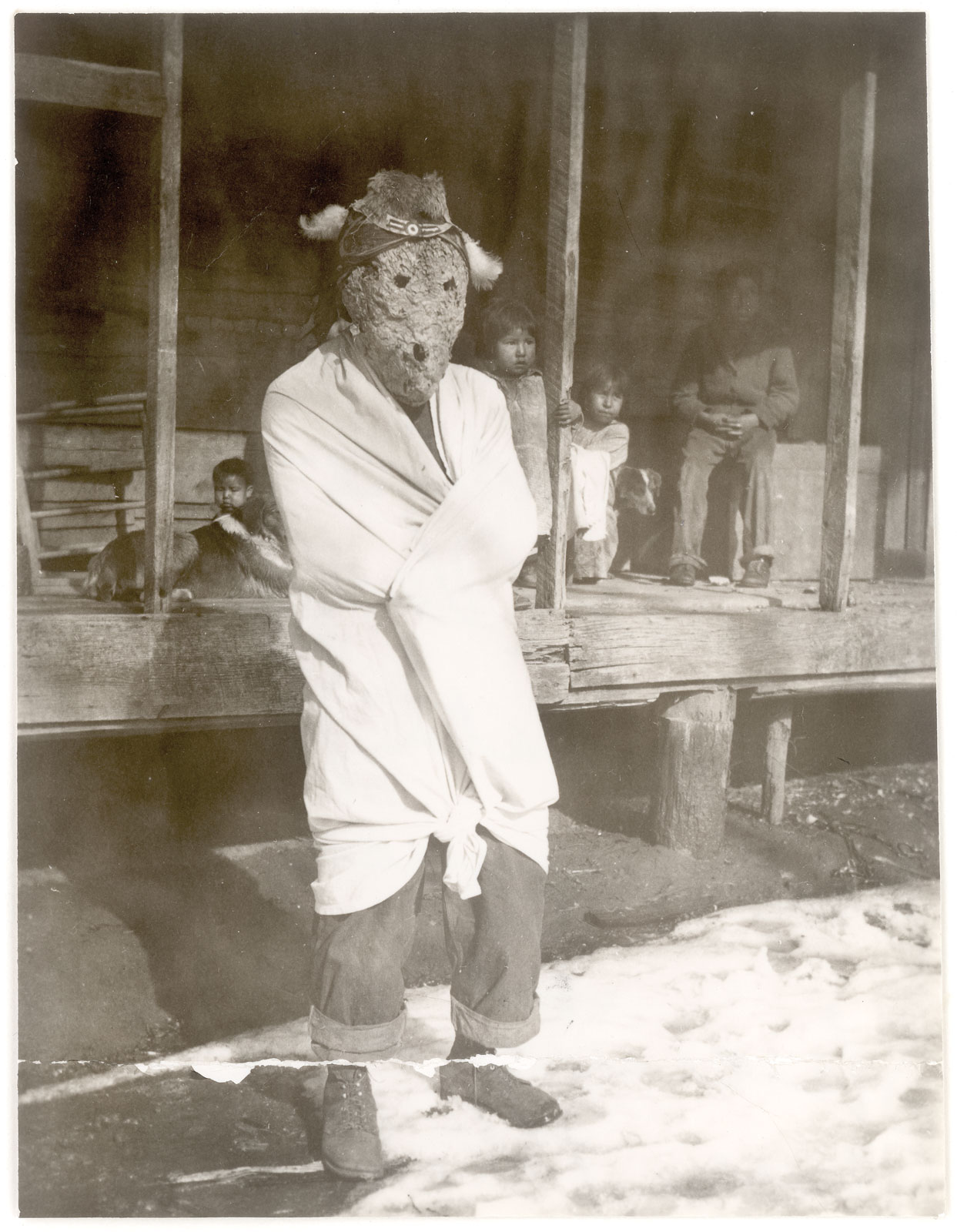 Frank Gouldsmith Speck photograph collection / Series 10: North Carolina and South Carolina: Catawba, Eastern Band of Cherokee Indians. Dancer with Hornet’s Nest Mask photograph.Courtesy National Museum of the American Indian, Washington, D.C.
Her research and collaborations and the support of the Institute of Museum and Library Services resulted in the exhibition, Behind the Mask: Cherokee Mask Makers and their Legacy. The exhibition’s aim was “to reinforce the significance of Cherokee masks, their history and use, as well as their meaning and significance. The exhibition takes a historical approach to focus on early 20th-century mask makers, with particular emphasis on Will West Long and three other Big Cove mask makers: Long’s friend and fellow student, Deliskie Climbingbear; Long’s older brother, Lawyer Calhoun; and Allen Long, Will West Long’s son…Much of what we know about traditional culture, including what we know about masks, we know from Long.”
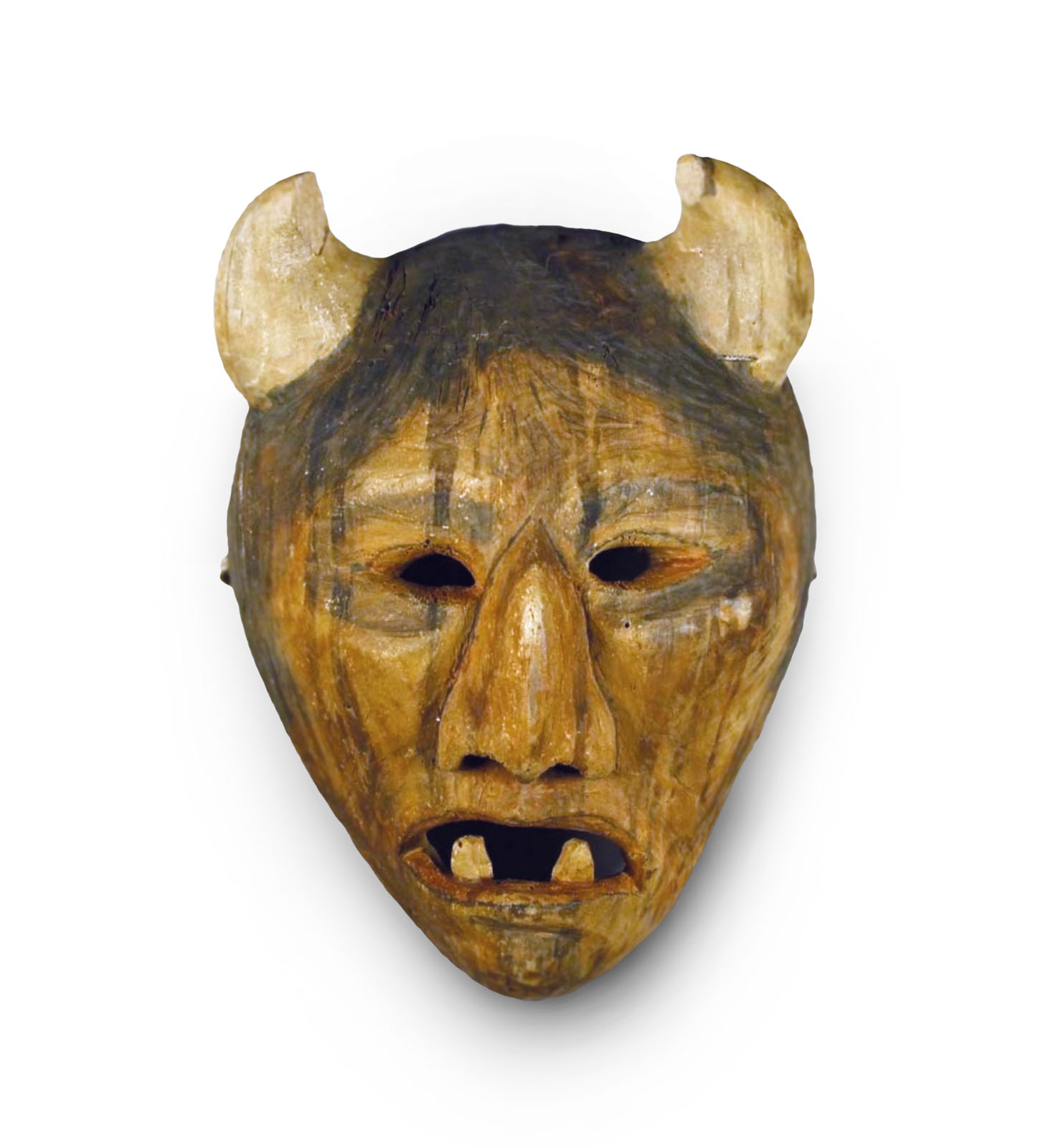 Will West Long (Eastern Band of Cherokee Indians, ca. 1869-1947), Horned Mask, carved wood. Courtesy National Museum of Natural History, Washington, D.C.
In a photograph taken in 1946 by William Fenton, Long is shown holding a horned medicine mask now in the collection of the National Museum of Natural History. Will West Long identified a dozen different masks used in Cherokee ceremonies and dances, including Warrior Mask, Wildcat or Wild Turkey Mask, Buffalo Mask, Bear Mask, Snake Mask and a variety of Booger Masks. The Medicine Mask “is more powerful than the Warrior Mask,” according to Fariello. “It is always ugly, usually with horns and teeth. The Medicine Mask is meant to frighten a patient to bring about a cure.”
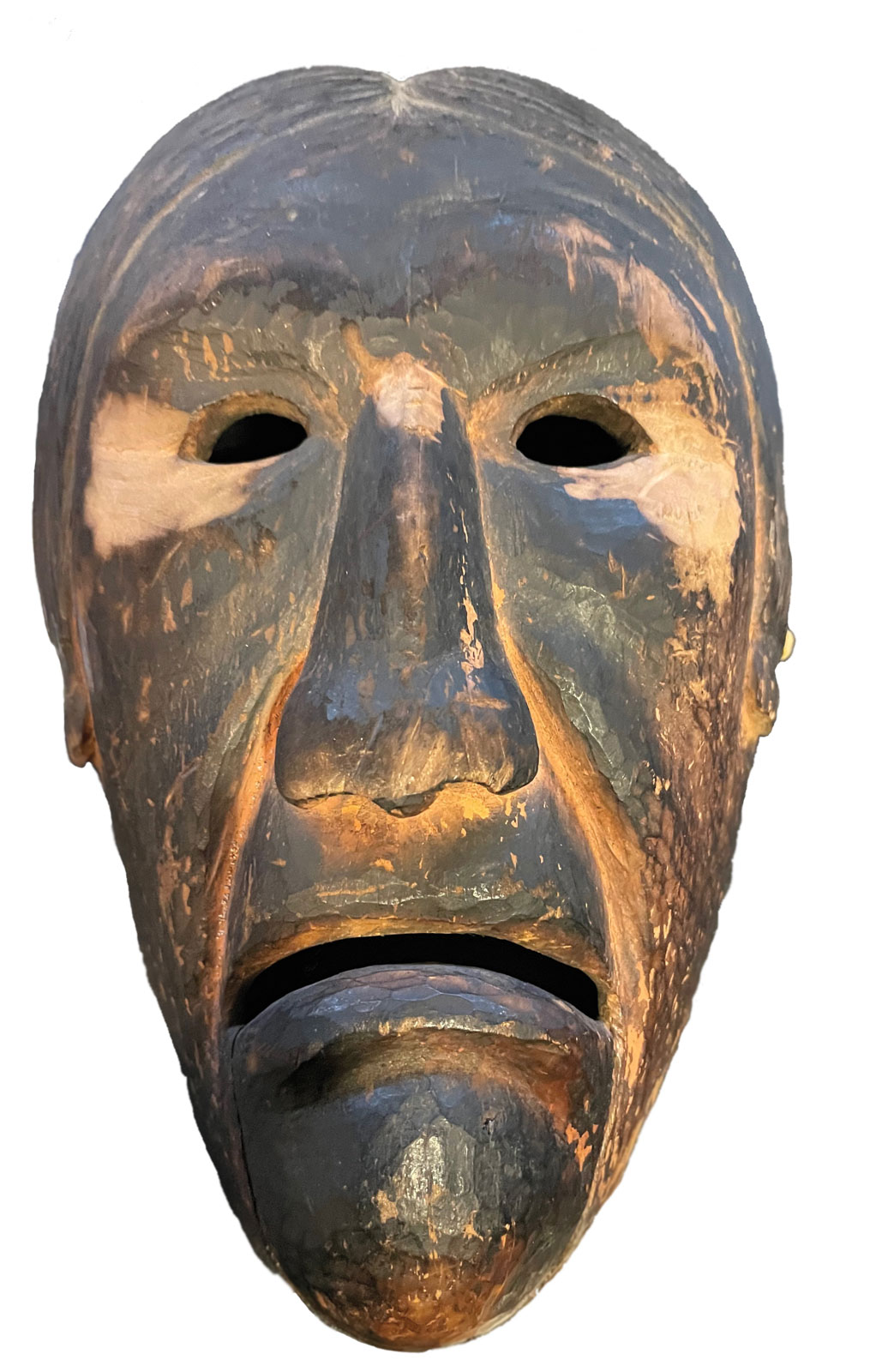 Will West Long (Eastern Band of Cherokee Indians, ca. 1869-1947), Booger Mask, carved wood. Courtesy Medicine Man Crafts, Cherokee, NC.
Long’s Booger Mask is in the collection of the Gilcrease Museum. Fariello explains, “Of all the dances performed by Cherokee people, the Booger Dance is the most dramatic. Historically, it was performed in winter and was often the highlight of a series of more social dances. The audience, upward of 50 people, await the entrance of the Boogers who don’t disappoint. Suddenly, six to 10 masked figures enter, wearing masks and draped in old sheets or bed quilts. They enter the house boisterously, stumbling and bumping into visitors. Some of them fall on the floor and hit at spectators. They walk stooped over with clumsy movements, hovering over a cane or walking stick. They talk in whispers and make lewd gestures. They cough, growl, clear their throats and emit rude noises.
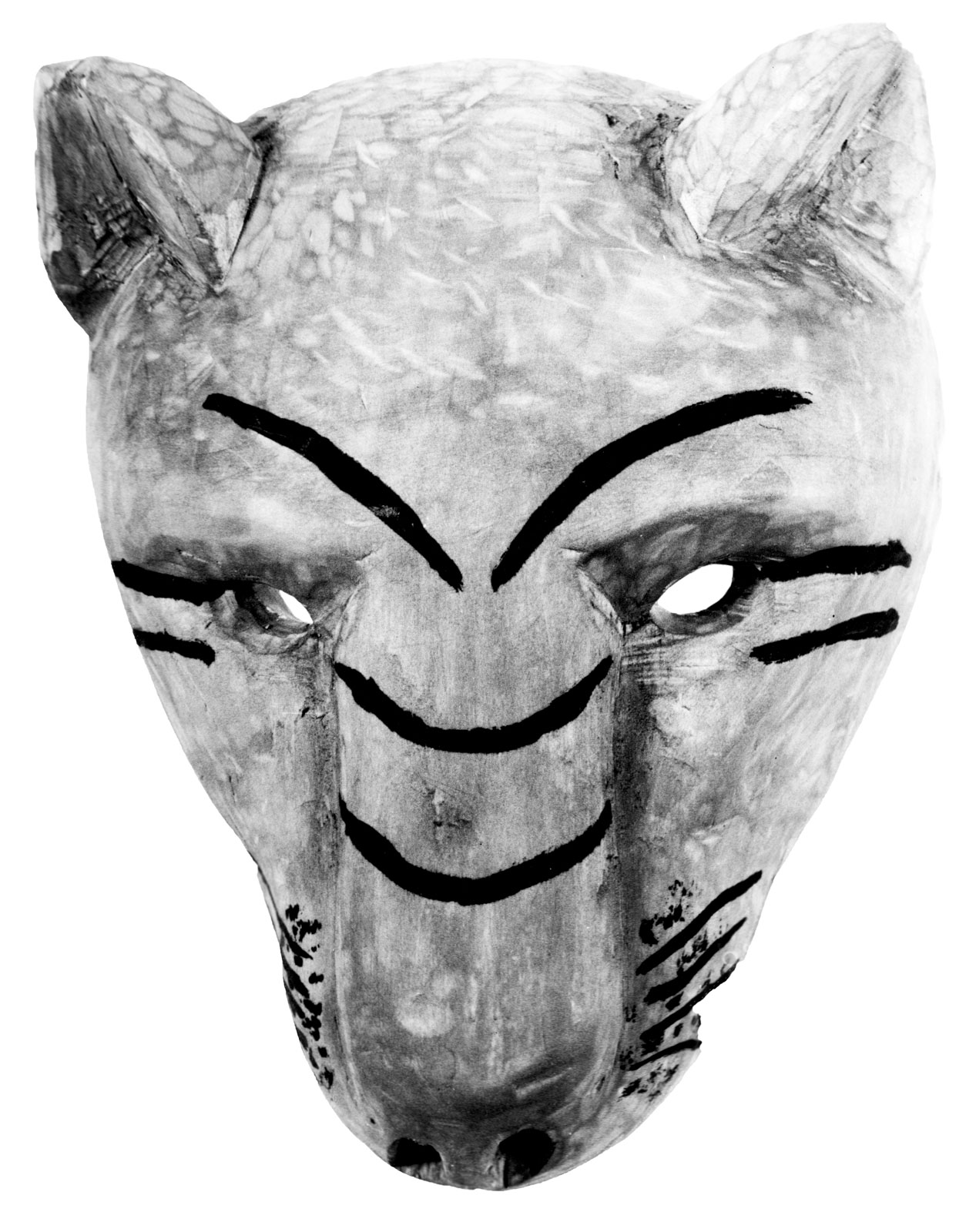 Allen Long (Eastern Band of Cherokee Indians, 1917-1983), Wildcat Mask, carved wood. Courtesy Qualla Arts and Crafts Mutual, Inc., Cherokee, NC.
"In the second part of the booger dance, the host of the house party asks the Boogers who they are and where are they from. Allen Long explained that the masks often represented different ethnicities, the different people who were coming to America, while the Indian masks were members of other tribes. Like ‘boogey men,’ the Boogers were a way to address uncertainty in a humorous way.”
Most Booger Masks were carved from wood but some were made from hollowed-out baldfaced hornet’s nests, according to Allen Long. His Hornet’s Nest Mask is in the collection of Qualla Arts and Crafts Mutual.
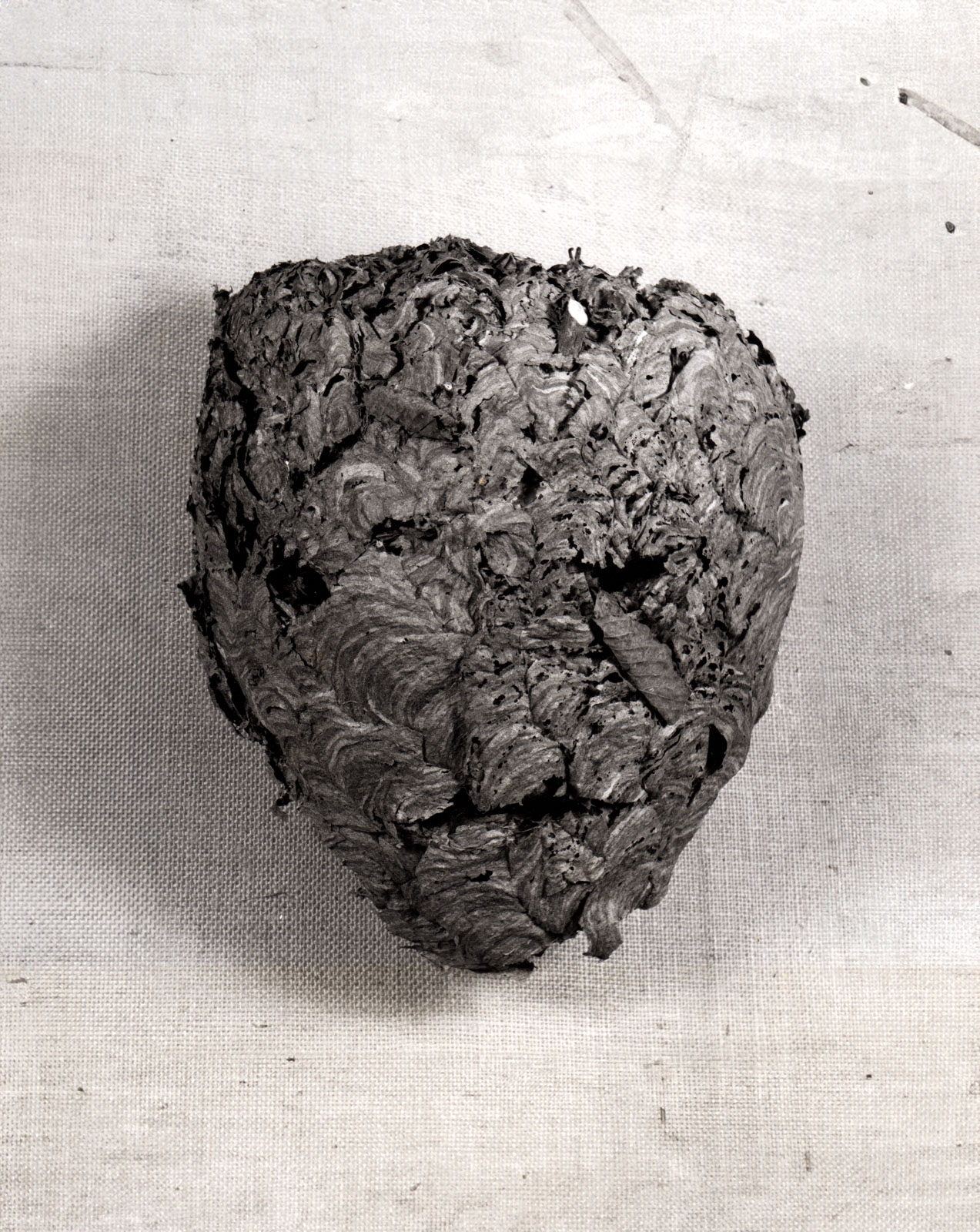 Allen Long (Eastern Band of Cherokee Indians, 1917-1983), Hornet’s Nest Mask. Courtesy Qualla Arts and Crafts Mutual, Inc., Cherokee, NC.
Gourd masks are thought to have preceded carved wood masks. In 1775 the English author of The History of the American Indians, James Adair, observed a dance that went on from morning to evening. The dancers masked “their faces with large pieces of gourds.”
The mask exhibition and accompanying events were held at the Chief Joyce Dugan Cultural Arts Center, located on the campus of the Cherokee Central Schools. In an evaluation of the project and its impact on the school children, Micah Swimmer, Cherokee Language and Cultural Specialist for the Eastern Band’s Human Resources Department, stated, “that events such as this have the potential to have a huge impact on our students and community. What they learn here can lead them into HS and ignite the urge to learn more. The students responded with taking pride in being Cherokee, wanting to learn more, wanting to learn how to make masks, etc. Parents were asking about the exhibit because their children were going home and describing to them, all they got to see. That is where it starts. Planting that seed and watching it grow."
Powered by Froala Editor