Silver and Stones: Collaborations in Southwest Jewelry, now on view at the New Mexico History Museum’s Palace of the Governors, showcases a unique collaboration between Jewish merchant William C. Ilfeld and Diné silversmith David Taliman.
Ilfeld had a long history in the Southwest. His grandfather opened up the Ilfeld Mercantile Shop in Las Vegas, New Mexico, in the 1860s and carried on the tradition by managing the shop’s jewelry department in the 1940s and 1950s. Taliman, who died in 1967, had his own history doing silverwork for trading posts like Maisel’s in Albuquerque and Julius Gan’s Southwest Arts and Crafts in Santa Fe. But when Ilfeld and Taliman came together, an interesting and unusual collection was formed.
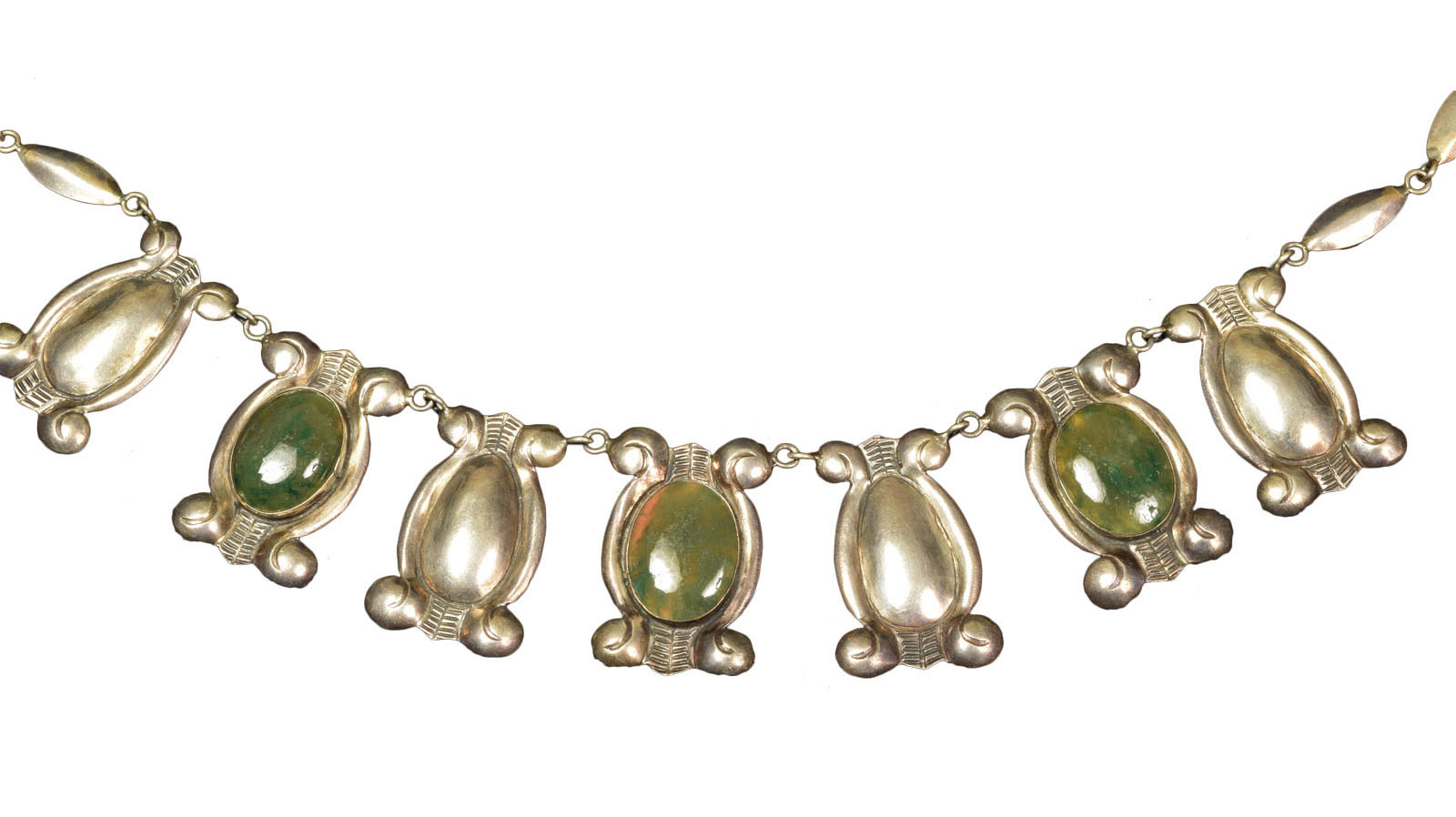 David Taliman (Navajo (Diné)), necklace, 1940s-1950s. Commissioned by William C. Ilfeld-New Mexico History Museum (NMHM/DCA), 05355.45.
“I thought it was really interesting to focus on that collaboration between a Native person and a non-Native person,” says Cathy Notarnicola, curator of Southwest history at the New Mexico History Museum. “It wasn’t necessarily uncommon for merchants to hire silversmiths and guide the design, but the types of pieces Ilfeld and Taliman created were sometimes out of the ordinary.”
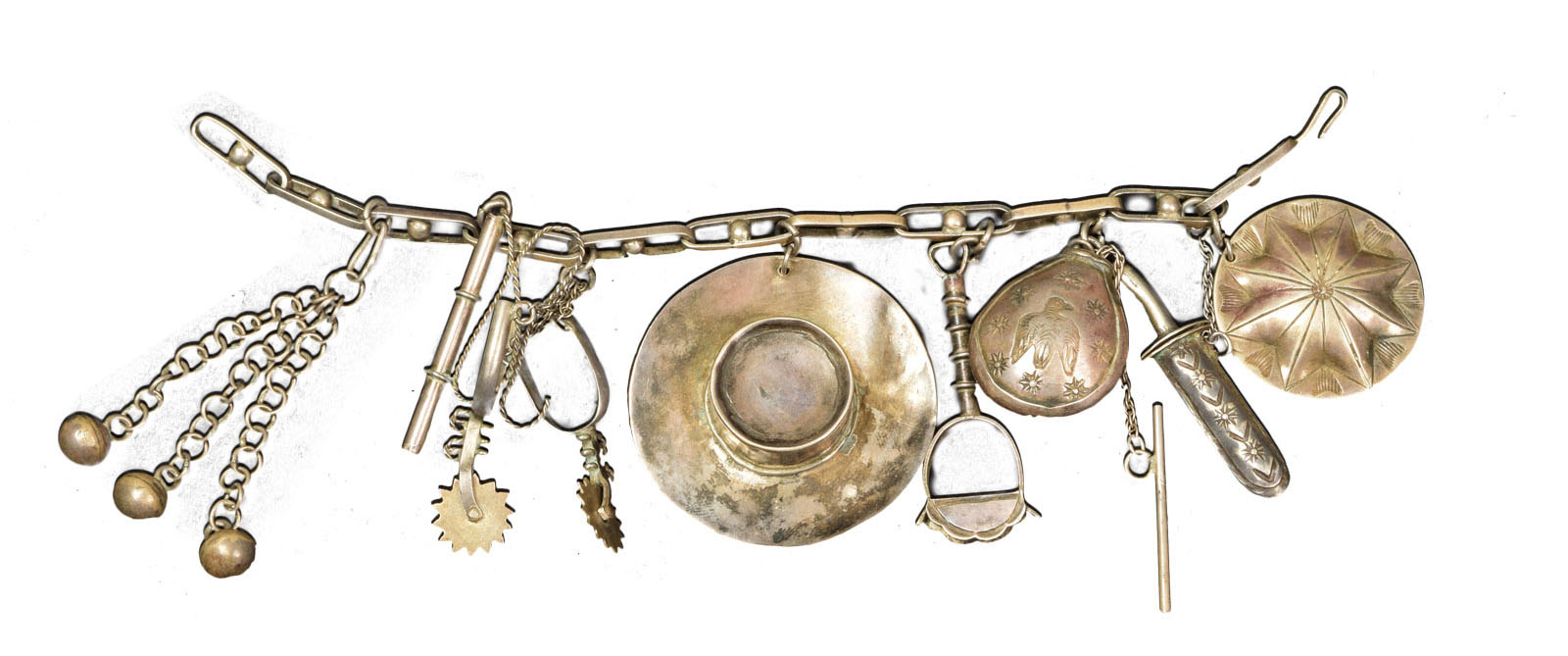 David Taliman (Navajo (Diné)), charm bracelet
Ilfeld had a large personal collection of stones and enjoyed finding rare pieces, which then showed up in the jewelry created by Taliman. “Because of that, the materials were often a little unusual compared to other jewelry from the time,” says Notarnicola. Turquoise is present in the collection, but less typical materials like carnelian, jasper, amethyst and petrified sea foam also make appearances. “Native jewelers today use all different kinds of materials, but this was back in the 1940s and 1950s, and so they were a lot more unusual back then.”
The subject matter, too, was not necessarily typical for the time. Much of the jewelry was created for sale in department stores, which weren’t always in the Southwest. “You can see some insects and birds, which were more common in Southwest art at the time, but there’s also quite a lot of sea creatures in the collection, which is something you didn’t see,” says Notarnicola. In the exhibition, viewers will be able to spot a crab, lobster, starfish and even a seahorse.
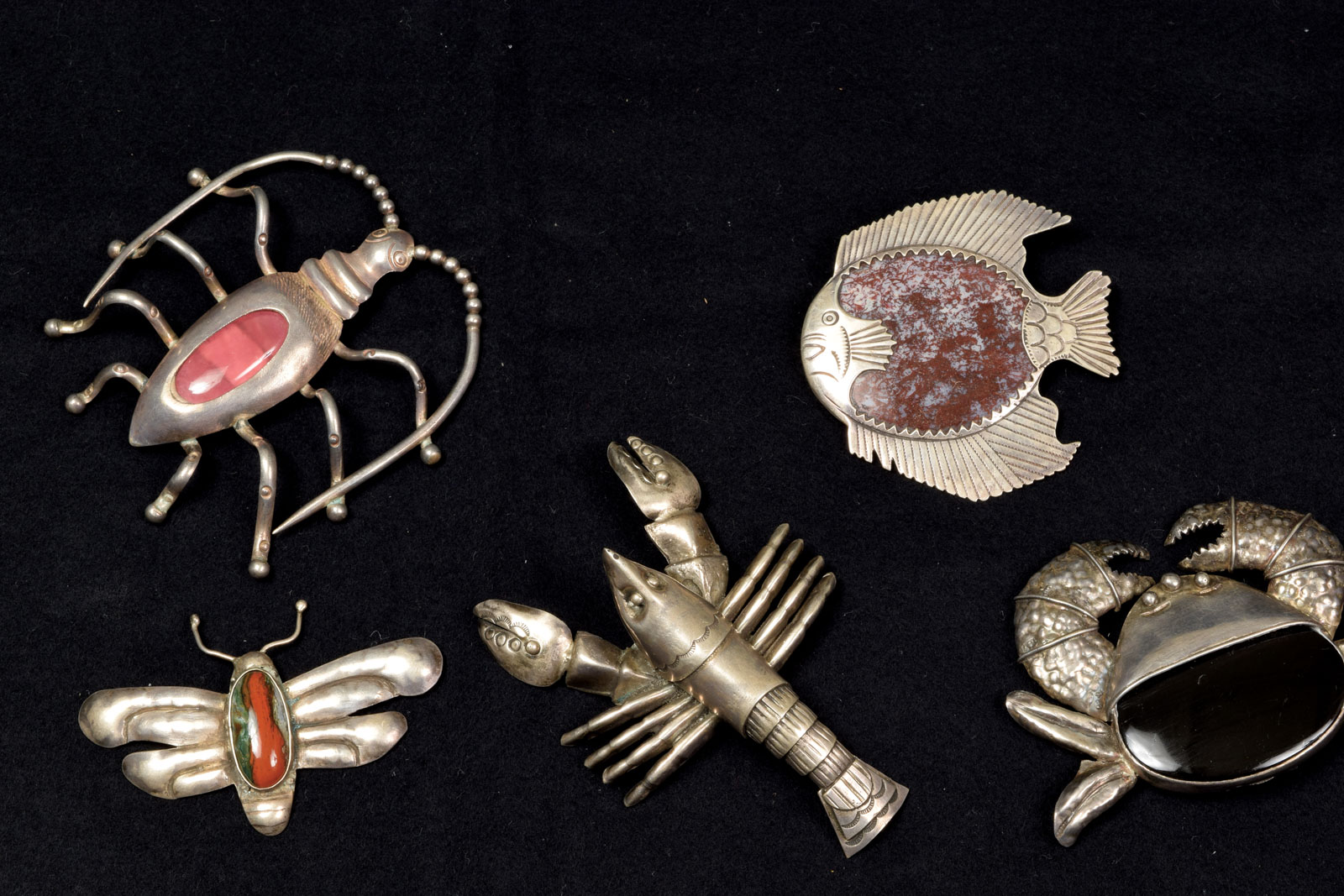 David Taliman (Navajo (Diné)), Insects and Sea Creatures
Ilfeld gifted these pieces to the New Mexico History Museum in 1971, shortly before his death, and Silver and Stones is the first time they are being brought out for display. “The public always wants to see objects in the Palace of the Governors, but it can be a really challenging exhibition space as an old building with a lot of humidity fluctuations and lots of windows bringing in sunlight,” Notarnicola says. Textiles and paintings often can’t be put on view because of preservation challenges, but metal and stones are less susceptible to environmental conditions. “By showing these pieces, we are able to balance our desire to tell the history of New Mexico while still preserving things for future generations.”
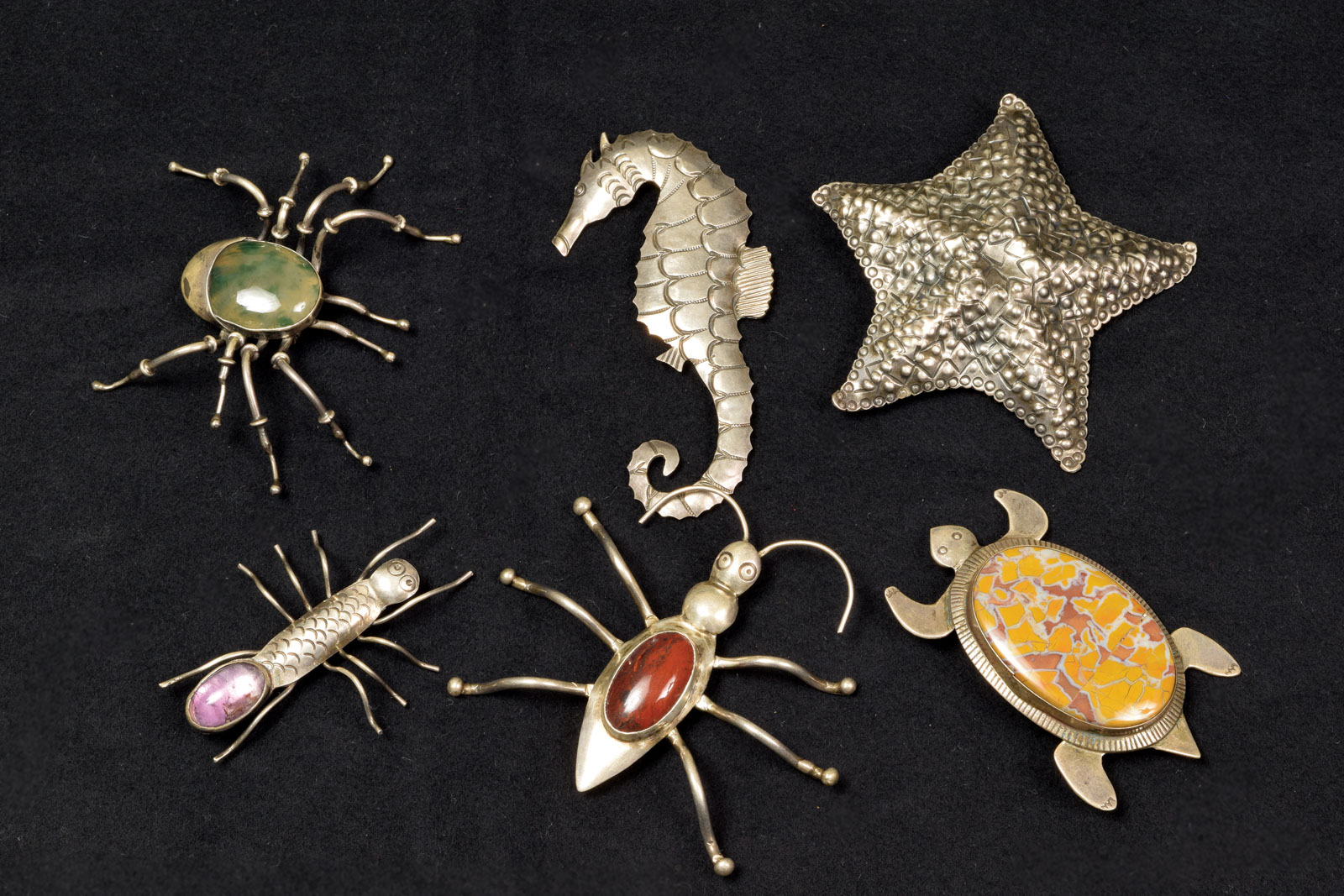 David Taliman (Navajo (Diné)), Insects and Sea Creatures
Silver and Stones: Collaborations in Southwest Jewelry will be on view at the New Mexico History Museum’s Palace of the Governors through April 1, 2025.
Through April 1, 2025
Silver and Stones: Collaborations in Southwest Jewelry
New Mexico History Museum 113 Lincoln Avenue, Santa Fe, NM 87501 (505) 476-5200, www.nmhistorymuseum.org
Powered by Froala Editor