An exhibition currently on view at the National Museum of Wildlife Art is the first show at the museum solely dedicated to Inuit art. On view through spring 2024, Transformations: Wildlife in Inuit Art and Culture seeks to explore Inuit history, values and beliefs through cultural stories and artwork, with works coming from the museum’s permanent collection as well as loans from private collections.
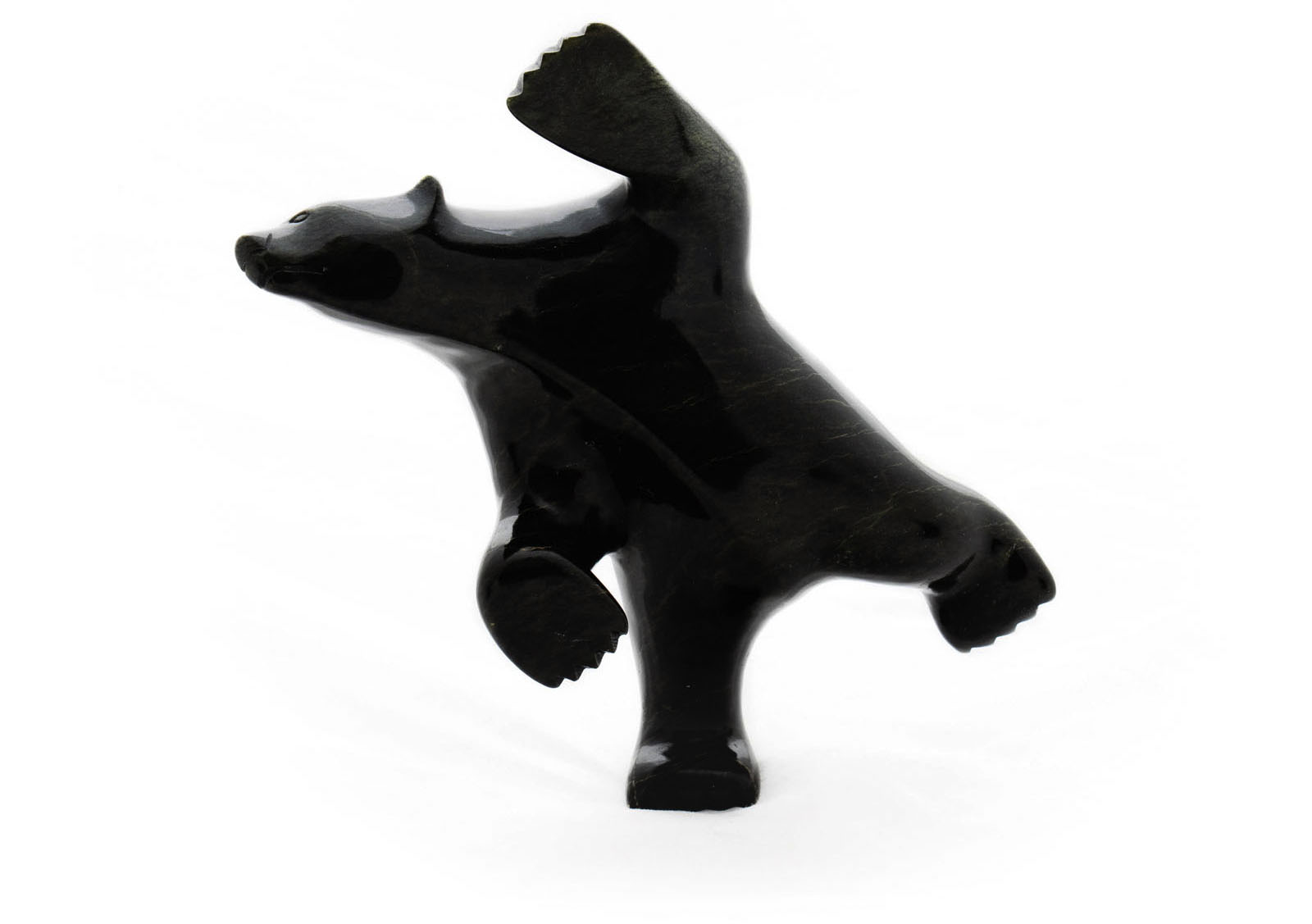 Ashevak Adla (Inuit), Dancing Bear, pre-2009, serpentine, 8 x 4½ x 2¾”. Gift of Dale and Jay Kaplan, National Museum of Wildlife Art.
Tammi Hanawalt, curator of art at the National Museum of Wildlife Art, explains that the exhibition’s theme of transformations began with a large collection of Inuit sculptures that had been gifted to the museum. “Many of the sculptures depict transformations, such as those executed by Inuit shamans in rituals, but there is more significance behind Inuit artwork, which was introduced as a product in the global art market beginning in the last half of the 20th century,” she says. While all of the artworks included in this show were initially created for sale to tourists and collectors outside of Inuit communities, many of these works directly represent Inuit histories, stories and beliefs. “These artworks refer to the development of Inuit art in the 20th century,” says Hanawalt, “and to the transformations experienced by the people themselves, due to environmental shifts, diminished trade and governmental intervention.”
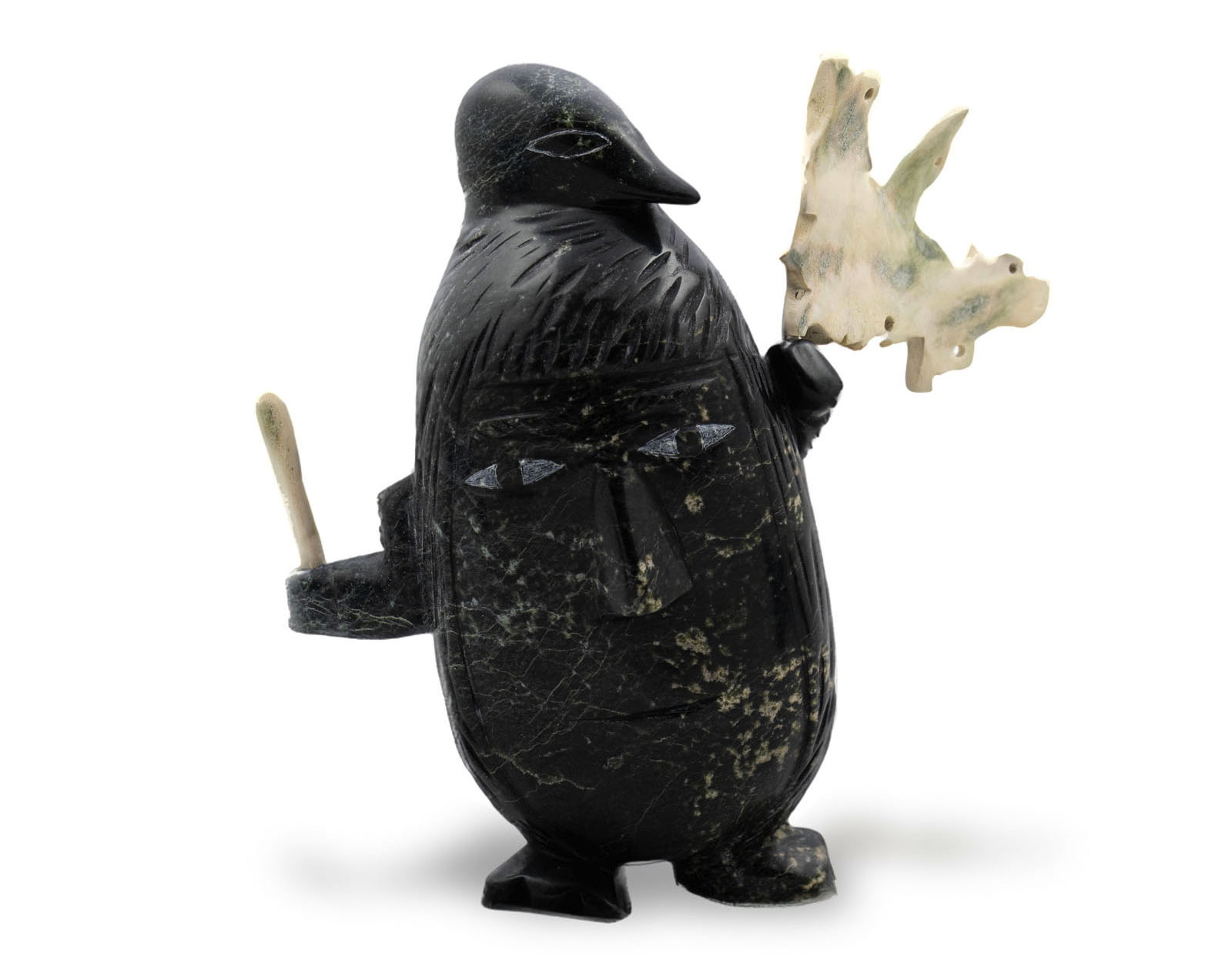 Pitsiulaq Qimirpik (Inuit), Shaman Drummer, 2019, serpentine with caribou antler, 10 x 11 x 4”. Gift of Dale and Jay Kaplan, National Museum of Wildlife Art.
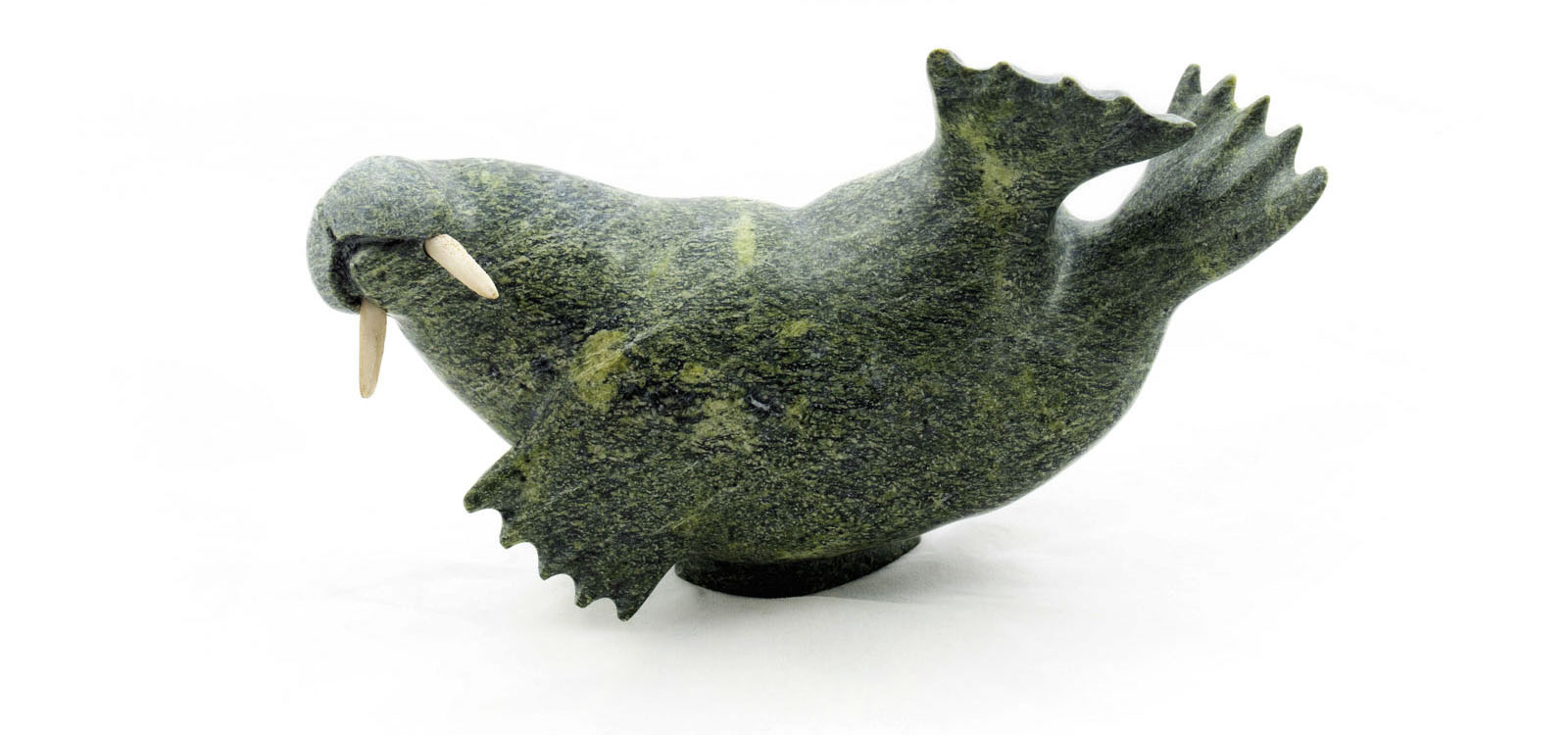 Pudlalik Shaa (Inuit), Swimming Walrus, 2016, serpentine with caribou antler, 9 x 3½ x 5½”. Gift of Dale and Jay Kaplan, National Museum of Wildlife Art.
Hanawalt continues by discussing several highlights in the exhibition that visitors should pay close attention to. “Arctic animals are present in many of the artworks in this exhibit, and the transformations show wonderful imaginative visions by the artists. Some perhaps are a little frightening, and others are quite funny,” she says. Among her favorites of the sculptures are Pitsiulaq Qimirpik’s Shaman Drummer of a bird/human (shaman) transformation, depicting a figure with a bird head and a larger smiling human face encompassing the body. “The drum, held by the morphing being, is made of bone and features the heads of different Arctic animals—seals, a bear and a narwhal. Playful dancing animals, such as Ashevak Adla’s Dancing Bear, really highlight artists’ carving skills. The dancing bear motif was developed by Pauta Saila (Kinngait/Cape Dorset, 1916-2009) in the 1960s and it continues to be explored by artists who apply various balancing poses with bears and other animals. Inuit artists continue to fearlessly experiment and embrace different forms of media and diverse approaches to storytelling,” says Hanawalt.
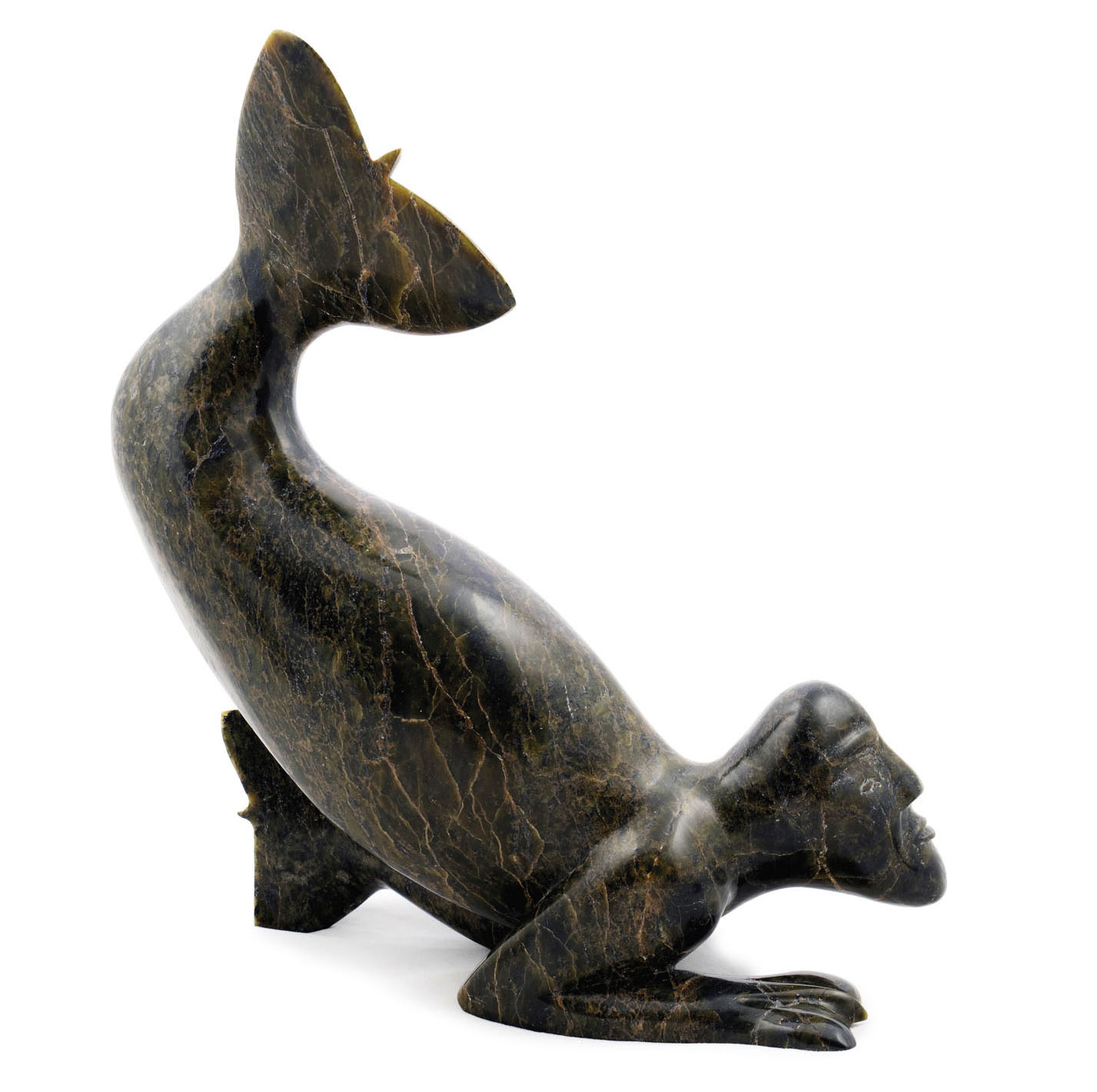 Ningosiak Ashoona (Inuit), Swimming Sedna, pre-2016, serpentine. 11 x 3½ x 12½”. Gift of Dale and Jay Kaplan, National Museum of Wildlife Art.
Transformations: Wildlife in Inuit Art and Culture will be on view through May 5, 2024.
“While the exhibit focuses on ideas involving transformation and wildlife,” Hanawalt adds, “it foremost celebrates the unique perspectives of contemporary Inuit artists, who, through their art, confront cultural upheaval and current issues, while still maintaining their Inuit identity.”
Through May 5, 2024
Transformations: Wildlife in Inuit Art and Culture
National Museum of Wildlife Art
2820 Rungius Road, Jackson, WY 83001
(307) 733-5771, www.wildlifeart.org
Powered by Froala Editor