If Shane Hendren (Diné) borrows your pickup, it will come back with a full tank. If he comes to your roping, he’ll pull horn wraps off steers when you’re done. “I come from a family where we’re taught that you should always leave things better than you found them,” Hendren explains. “It’s the old thing where if somebody gives you a pie, when it’s time to return that pie dish, it better have another pie in it.” The New Mexico-based jeweler carries that philosophy with him into the art business and is known as much for working on behalf of Indigenous artists as he is for his innovative use of metals and unique sense of design.
Hendren’s early work in Mokume-gane—a Japanese metalsmithing technique similar to Damascus steel—first put him on the map as an artist who worked out of the box. When similar jewelry started to be mass-produced, Hendren pivoted with a goal to create a style all his own.
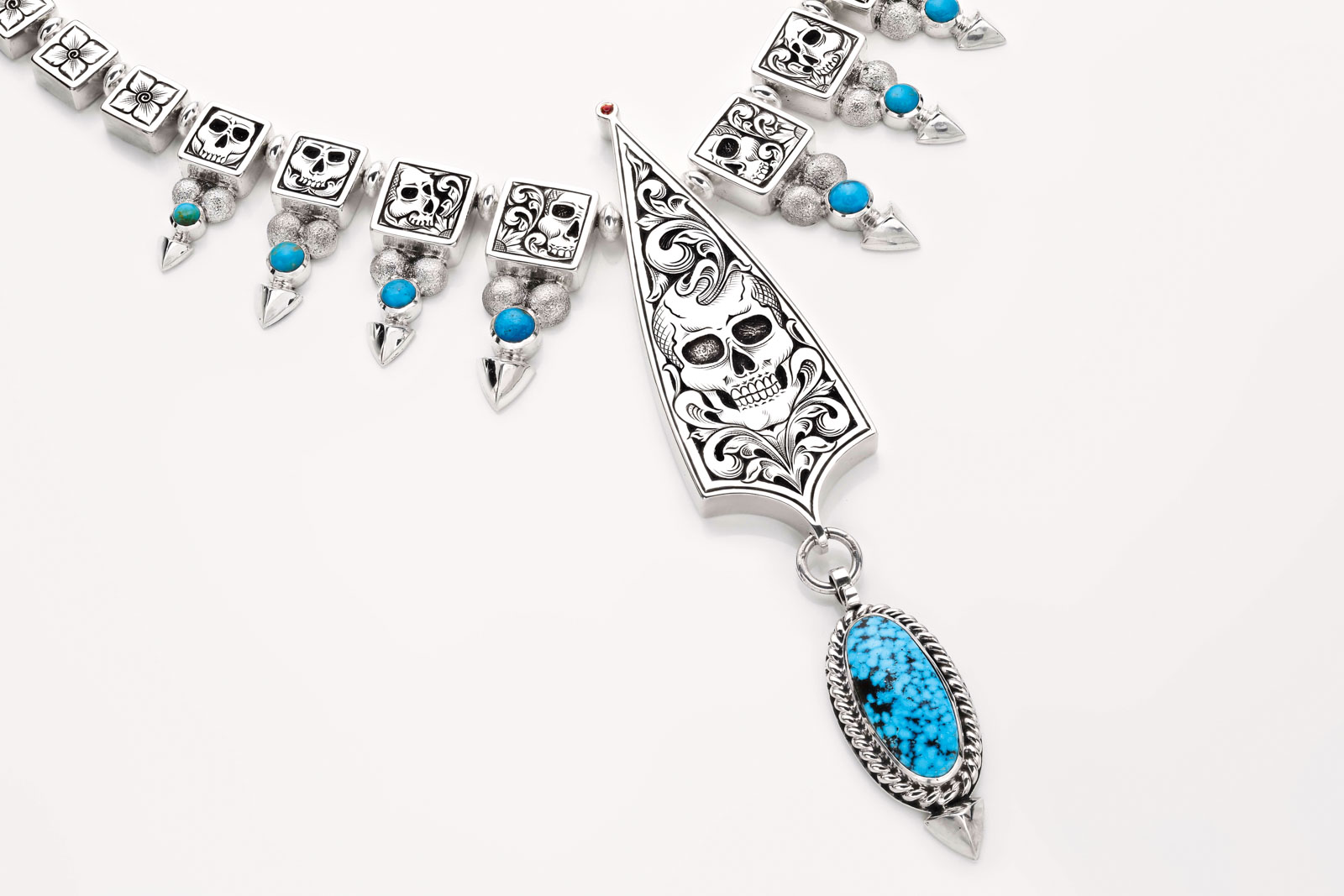 Resilience Manifest from the Water is Life series (front view), sterling silver and Kingman turquoise
From French curves and rosettes to skull designs with rock-n-roll flavor, Hendren’s mature work plays with history while pushing forward into new territory. He employs turquoise and silver with occasional punches of gold, jade, sapphire, topaz or whatever suits his vision.
If Ralph Lifshitz could become Ralph Lauren, Hendren could carve out a distinctive brand too, he thought. “We’re ranch people so we have brands. And I know the brand means something,” says Hendren, who often releases jewelry in themed collections. “I always paid attention to fashion. For one thing, I’m a firm believer that jewelry is sculpture with a context. It’s a sculptural thing and you can do a lot of things sculpturally, but if it’s not wearable, it doesn’t succeed and you can’t call it jewelry. I can put a cardboard box on somebody, but it doesn’t make it a hat,” he laughs.
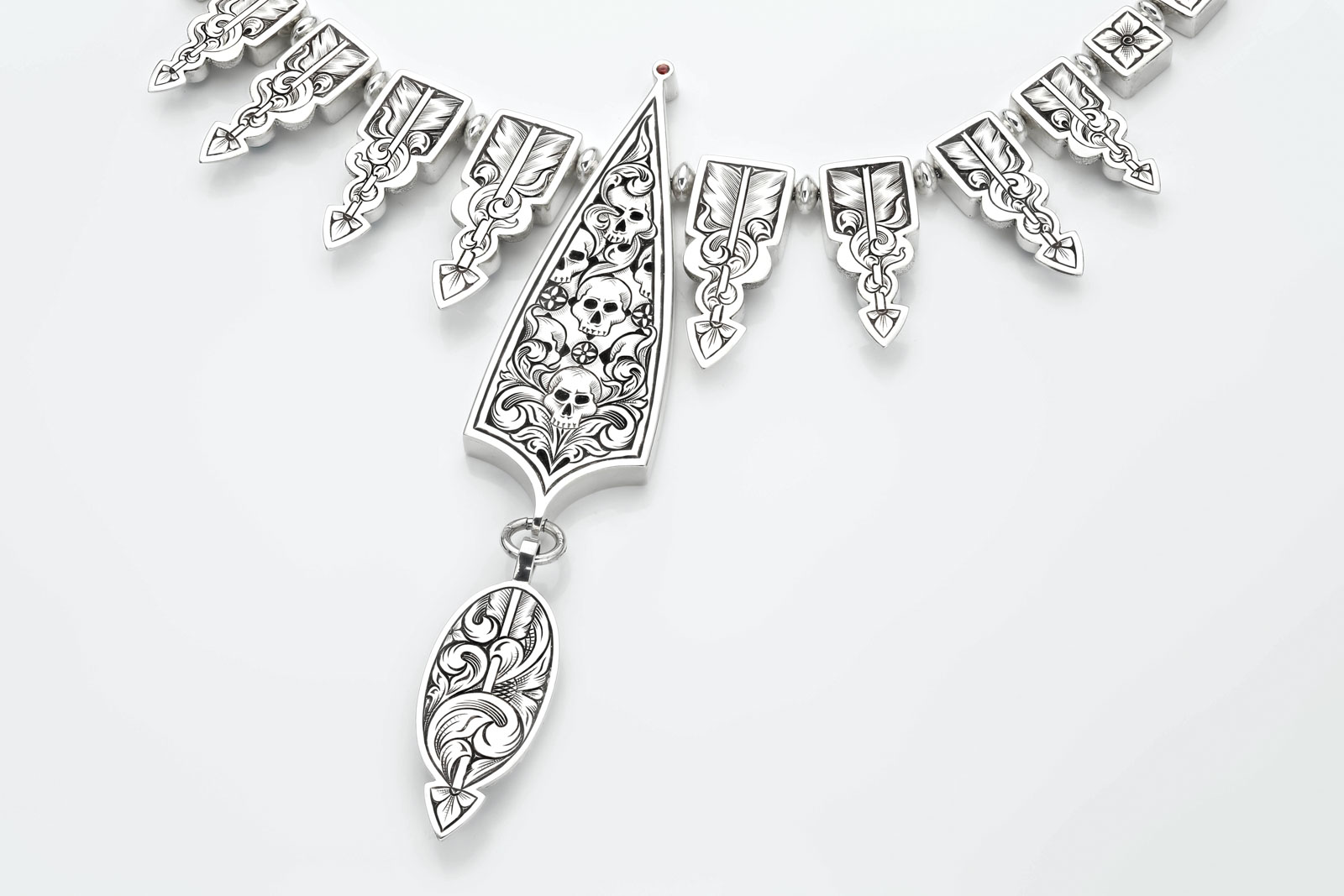 Resilience Manifest from the Water is Life series (back view), sterling silver and Kingman turquoise
“I really got a baptism by fire in the Indian art business and I was fortunate because Earl Biss was one of the guys who warned me early on,” says Hendren. A painter who ushered in a generation of contemporary Native art, Biss taught him about contracts and copyright and how to avoid pitfalls of the churn-and-burn art world.
Gibson Nez, a jeweler Hendren worked for early in his career, also played a role in the young artist’s education. “He taught me a lot of things. And a lot of them were what not to do because he was always quite a character himself,” Hendren laughs. “But what he did teach me, that I still give him credit for to this day, is he taught me Indian jewelry could be a viable vocation. When I worked for him, he always had orders.”
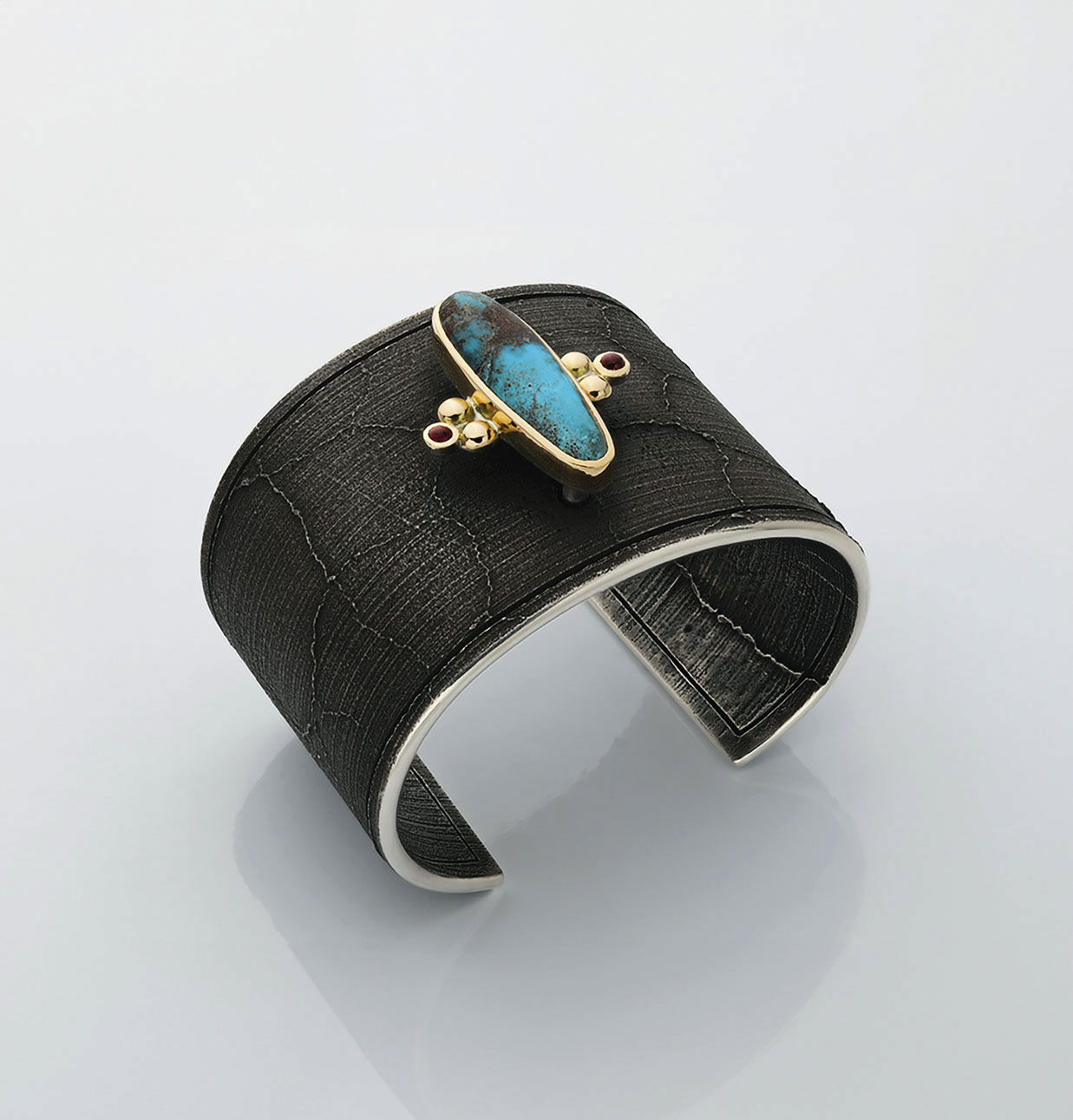 Bisbee Tufa Cuff from the Out of Darkness There is Beauty series, sterling silver, gold, turquoise and garnet.
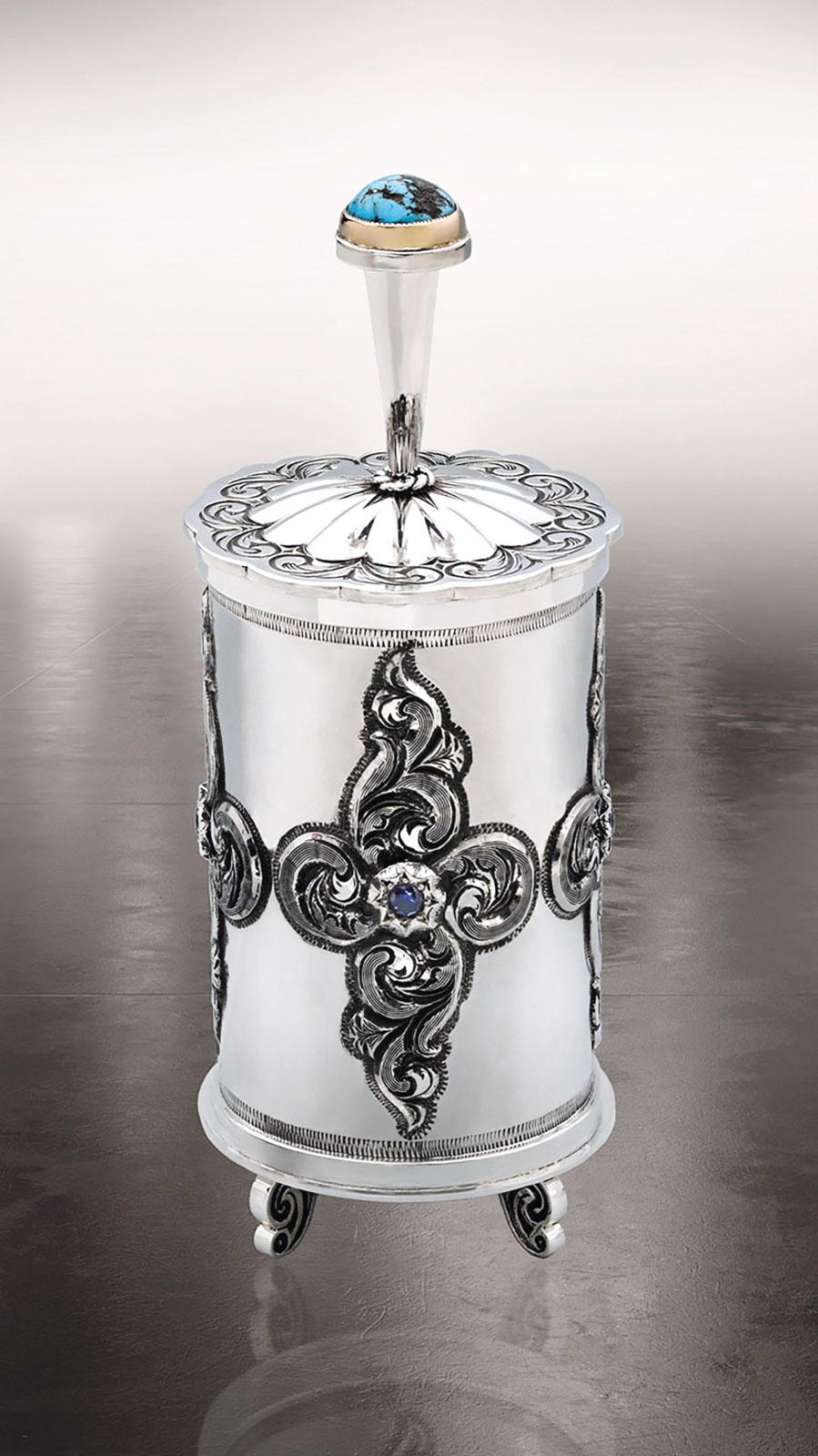 Toothpick Holder, sterling silver, gold, turquoise and sapphires.
Though Hendren’s mentors found reliable audiences for their work, it’s the exception, not the rule. He’s seen artists hawk their work at paltry prices because they needed the cash. And he’s seen unscrupulous dealers pass off foreign-made pieces as Native American. “Sadly, people still want their Indian art cheap,” says Hendren. “They still have this concept that it should be cheap.”
“The Indian art business is not a straightforward business,” Hendren continues, adding that he learned “expensive lessons” as a fledgling jeweler stepping out on his own. These cold realities of the business inspired him to get involved instead of “sitting around griping and complaining.”
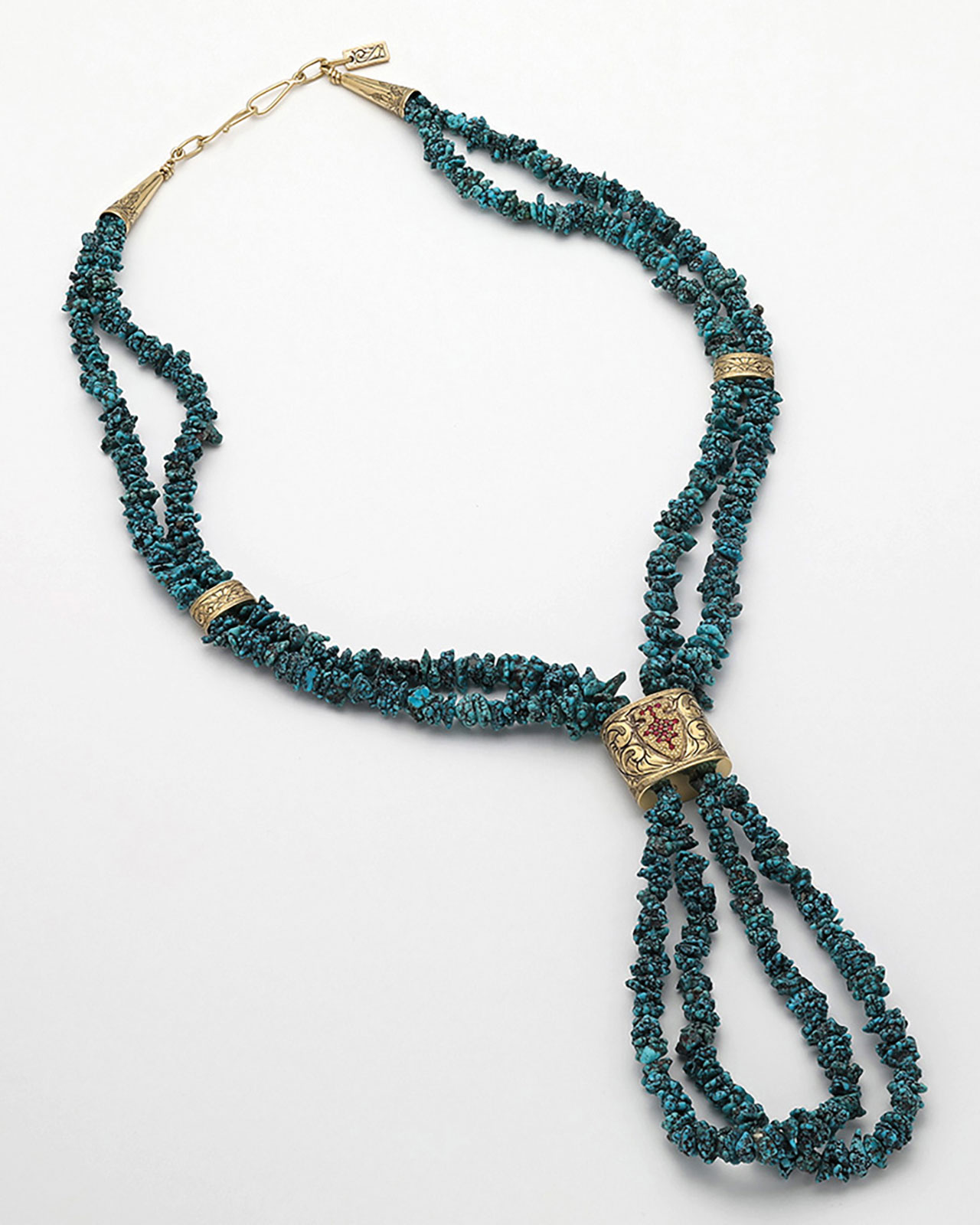 Loan Mountain Jacla, natural Lone Mountain turquoise nuggets, 18k gold and rubies.
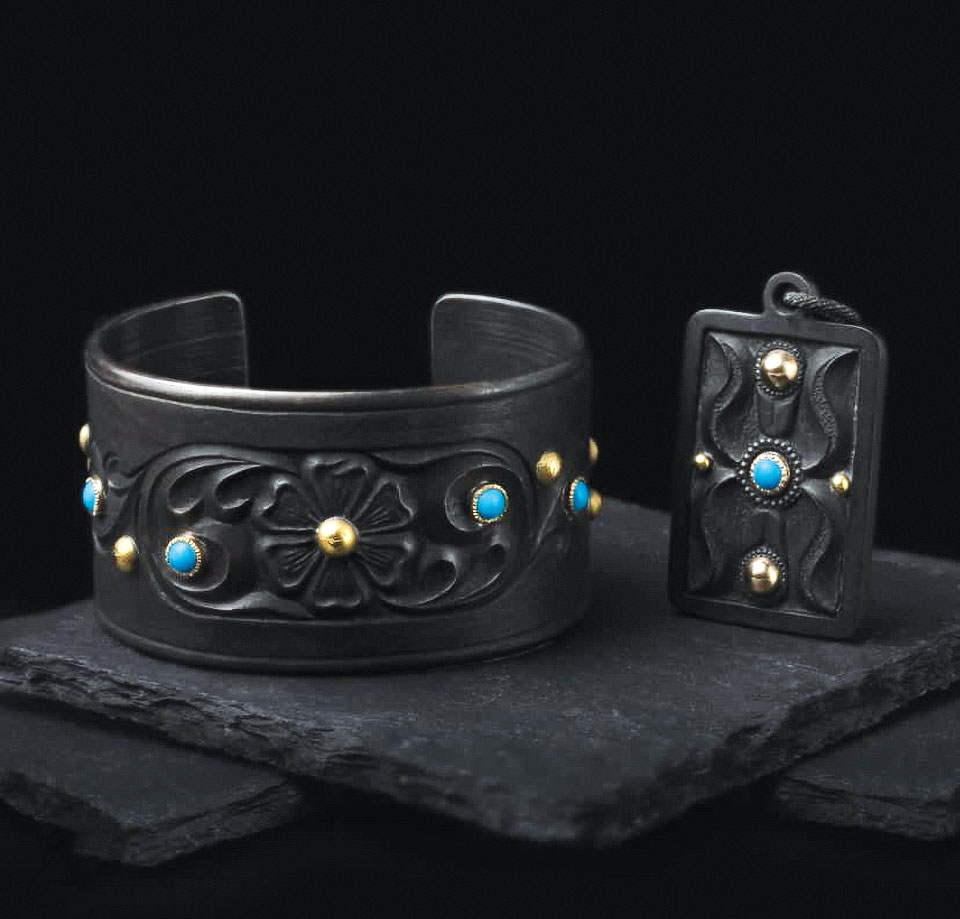
Cuff and pendant from Out of Darkness There is Beauty series, sterling silver and 14K gold
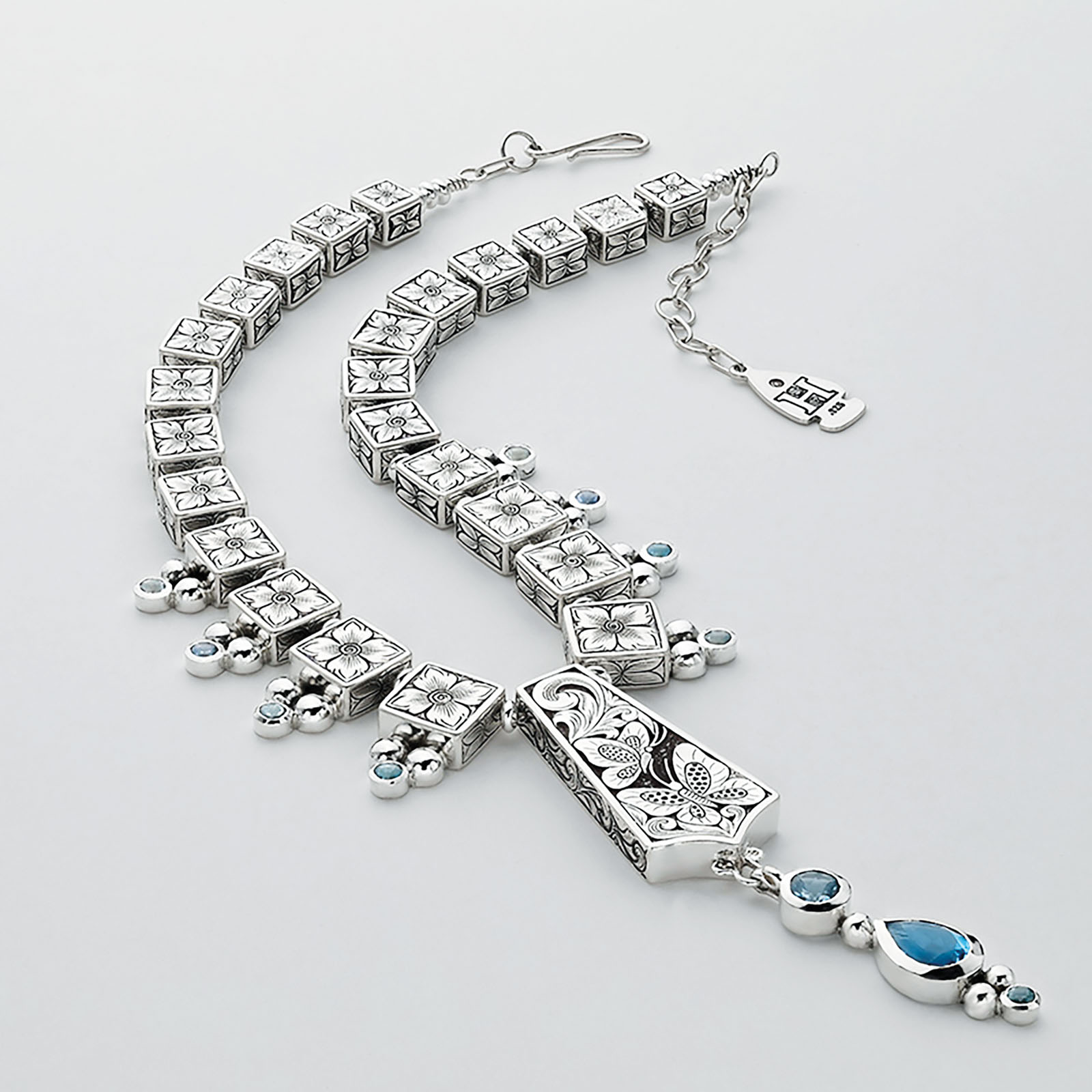 Butterfly Necklace from the Water is Life series, sterling silver and Kingman turquoise.
There’s still a long way to go, but the changes they made to the Indian Arts and Crafts Act have enabled authorities to thwart more counterfeiters selling under false tribal affiliation. As for championing legitimate Native American artists, Hendren does a lot of that, too. He judges jewelry and design competitions and increases visibility for the craft as he lectures and contributes his own work to institutions like London’s British Museum.
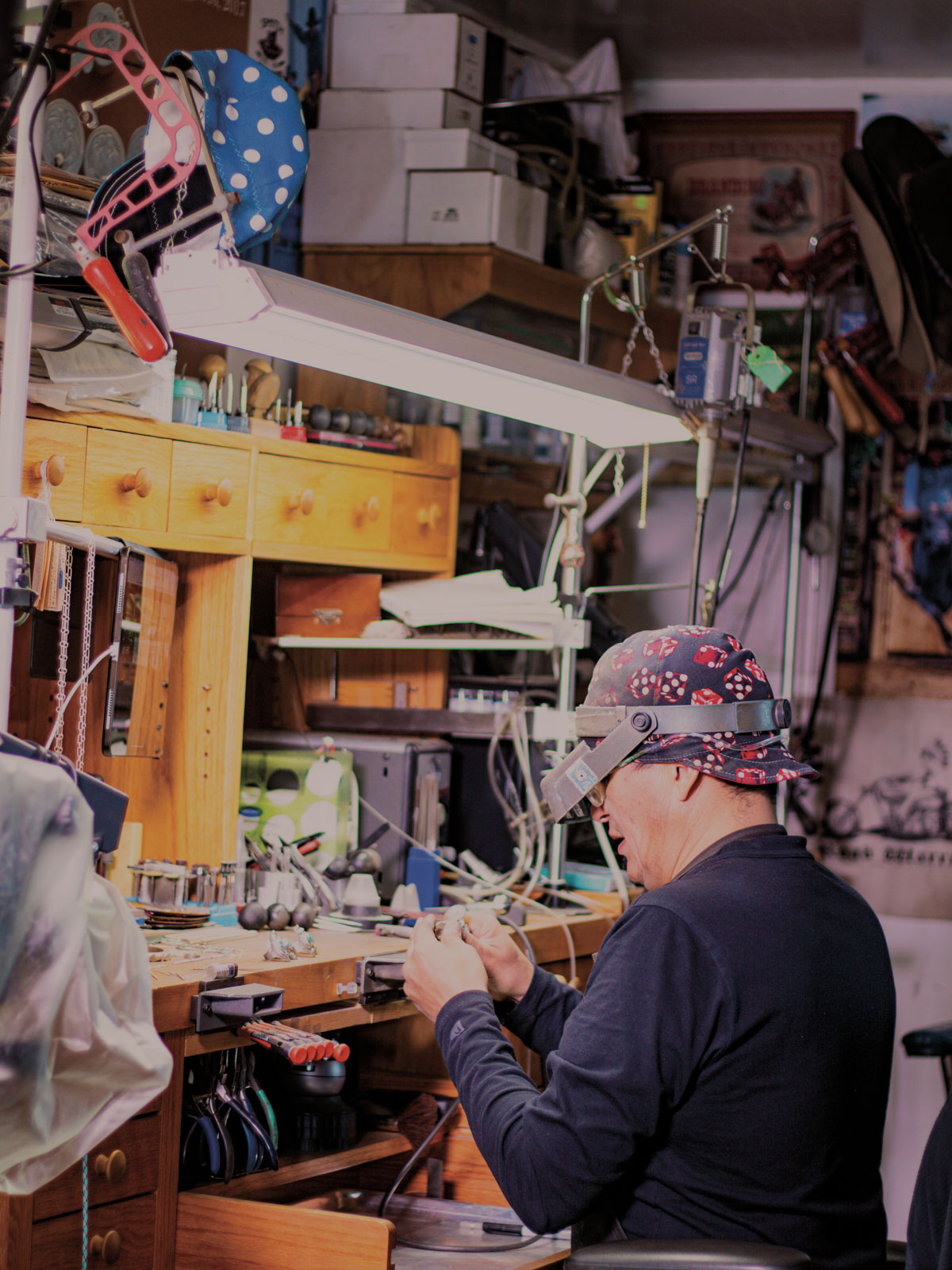
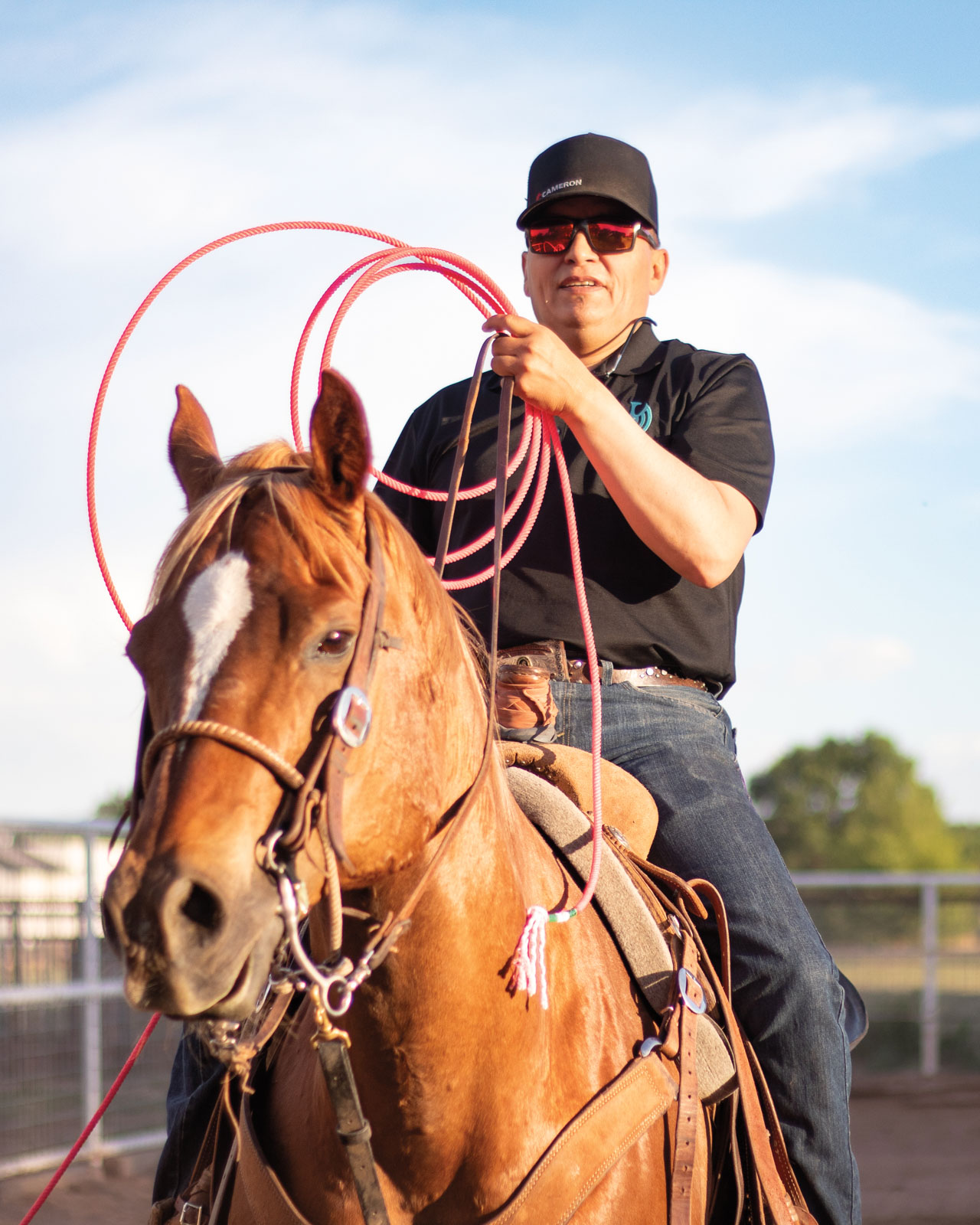 Shane Hendren on his horse, his other passion.
Still today, the life of an artist is full of ups and downs. “I can count on two hands—and not use all my fingers—the number of Native American jewelers that make 100 percent of their income from their jewelry,” says Hendren. Inspired by friend and rawhide braider Nate Wald (Apsáalooke), Hendren looks for opportunities in hardship and necessity. Catching a cow with something made from cowhide? Now that’s full circle. “The reason why we’re still thriving and surviving is because we’ve always adapted. We’ve always adjusted. We’ve always embraced new technology and whatever because despite everything, we all still like to eat,” says Hendren.
Hendren is a recipient of the 2023 Maxwell/Hanrahan Foundation Awards in Craft and a four-time winner of the Indian Arts and Crafts Association Artist of the Year.
Powered by Froala Editor