Last year, the Field Museum in Chicago replaced its Native North America Hall with a permanent exhibition four years in the making, Native Truths: Our Voices, Our Stories. Debra Yepa-Pappan (Jemez Pueblo/Korean), community engagement coordinator for the project, said at the time, “For Native visitors, I also hope there is an instant connection. I hope they see themselves, see their relatives, their grandparents, and aunties and uncles. For non-Native visitors, we’ve been working to make this an immersive experience that allows them to come into our home—learning from us, not just about us.”
The museum explains, “The exhibition was created with the guidance of an advisory council of 11 Native American scholars and museum professionals, and in partnership with 130 collaborators representing over 105 tribes. Visitors can experience stories told by Native people of self-determination, resilience, continuity, and the future that come to life through historic and contemporary beadworks, ceramics, murals, music, dance and more.”
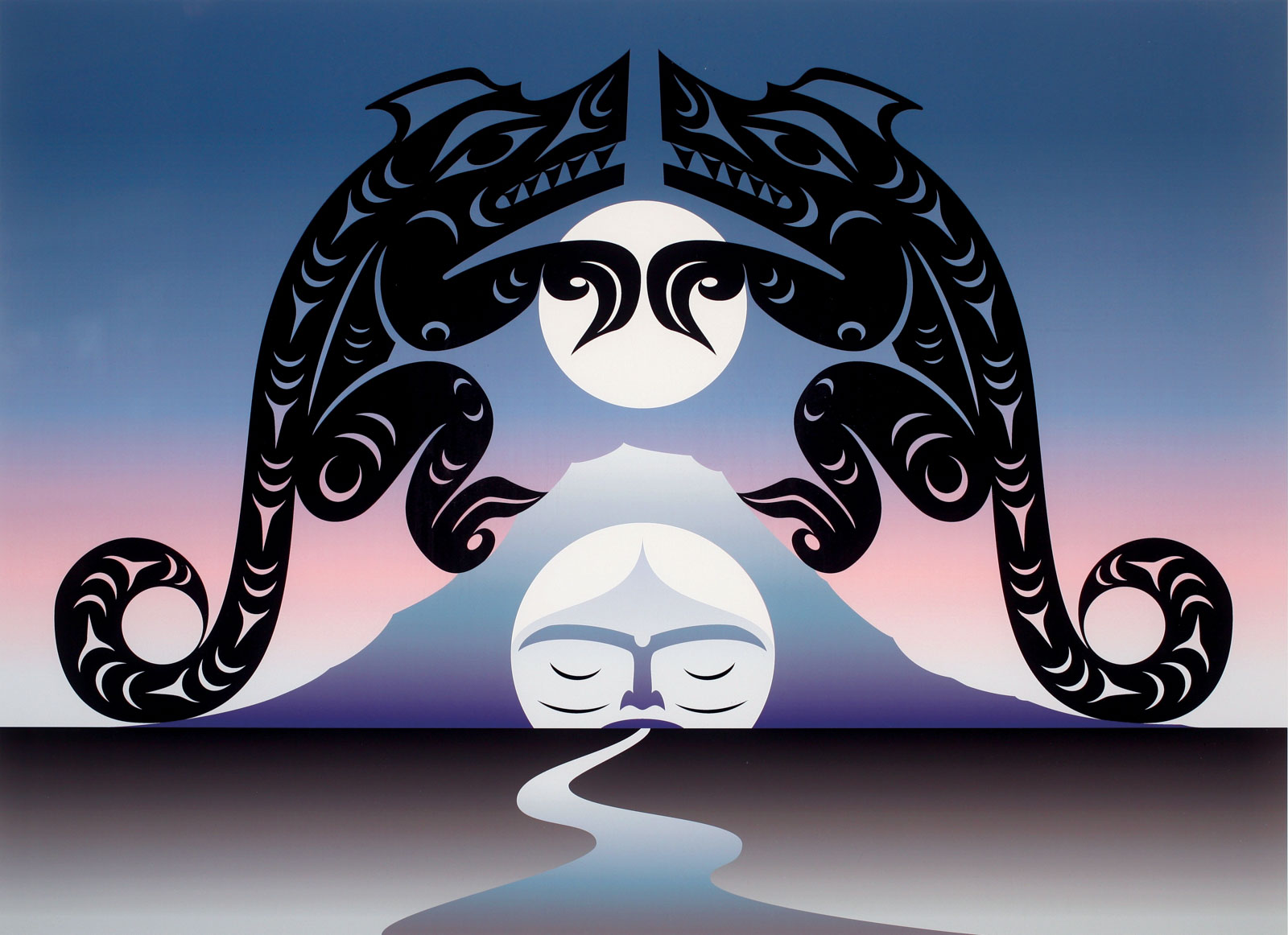 Shaun Peterson (Qwalsius), Grandmother, 2009, inkjet print, 24 x 30½”. Tacoma Art Museum. Gift of Sandy and Laura Desner in honor of Tacoma Art Museum’s 75th Anniversary, 2011.12. Photo credit: Richard Nicol. From On Native Land: Landscapes from the Haub Family Collection at the Tacoma Art Museum, Tacoma, Washington.
“I think visitors will be blown away by the way in which the items from our collection and the contemporary pieces we have borrowed, commissioned or purchased especially for this exhibition seamlessly work together to tell a vibrant story of resilience and innovation in the face of trauma and continuity of knowledge traditions across generations,” says Alaka Wali, curator emeritus of North American anthropology. “This is not a chronology of events, but rather a new and completely different perspective on Native American and First Nations experiences, world views and aspirations.”
Storytelling has been a sustaining tradition for Native Americans for generations. Through storytelling, they have passed on their cultural history, legends, language and rituals to subsequent generations. Their intimate connection with the earth and its other living creatures has been kept alive in the process. When they were dispossessed of their ancestral lands, the lands from which they had emerged, they kept their legacy alive through storytelling.
Native oral traditions are the subject of several museum exhibitions across the country in the coming months.
Stories Artists Tell: Art of the Americas, the 20th Century is an ongoing exhibition at the Museum of Fine Arts, Boston. One of the themed galleries is A Little Bit of the Southwest. The museum explains, “The American Southwest is vast and diverse. Artistic practices in intricate weaving, pottery and jewelry making stretch back to ancient times…This gallery showcases the work of a few Southwest Native artists from the 19th-century to today. Imaginative drawings, watercolors, and oil paintings point to the Southwest’s significance as a center of learning for Native artists since the early 20th-century.”
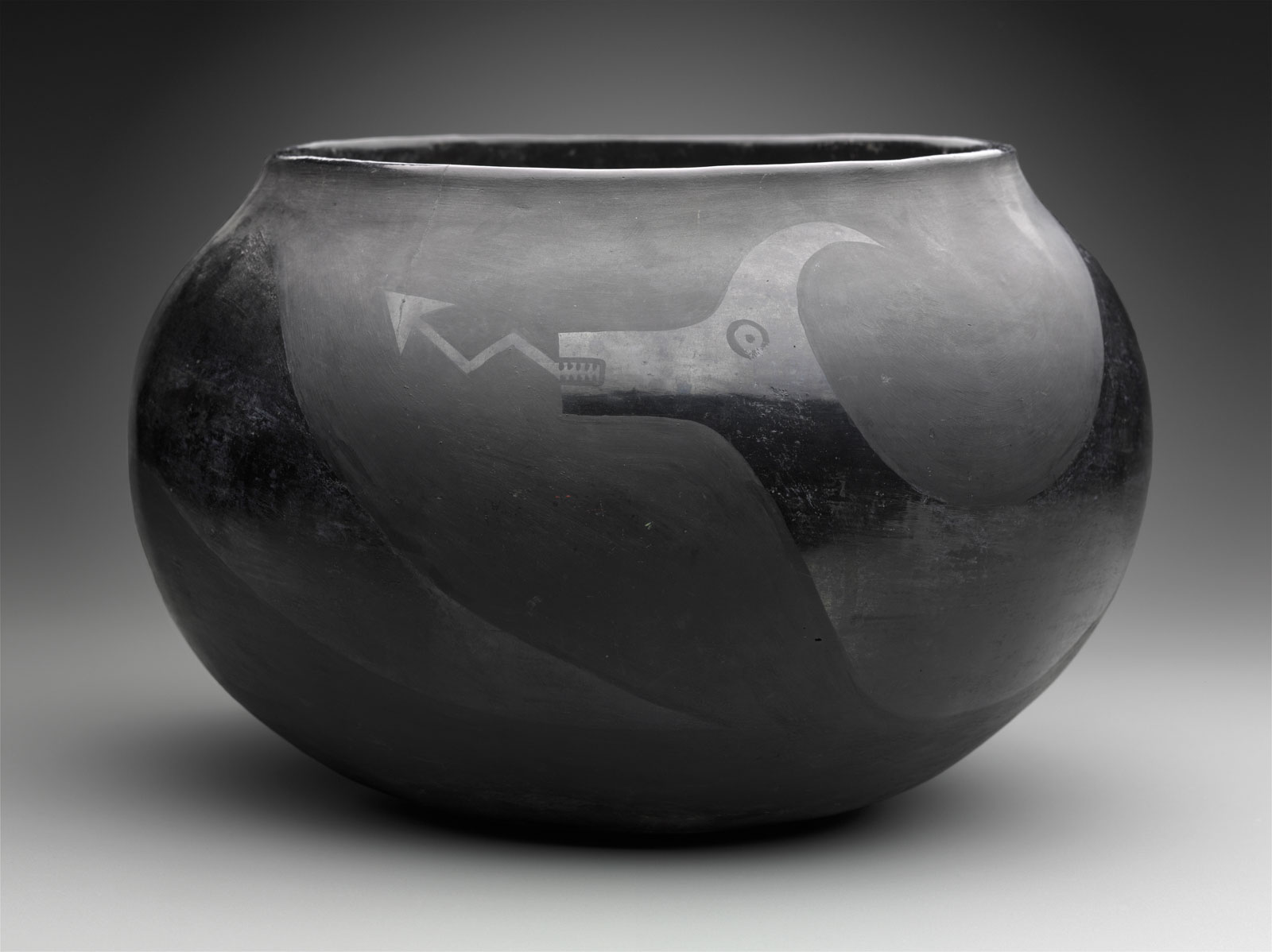 Maria Martinez (Powhogeh Owingeh (San Ildefonso Pueblo), 1887-1980), Blackware with polished matte decoration, ca. 1919-20. Museum of Fine Arts, Boston. Museum purchase with funds donated by Independence Investment Associates Inc. Reproduced with permission. Photograph © Museum of Fine Arts, Boston. From Stories Artists Tell: Art of the Americas, the 20th Century at the Museum of Fine Arts, Boston, Massachusetts.
Among the artists are Maria Martinez and her husband Julian from San Ildefonso Pueblo. An early, circa 1919-1920, polished black pot features the figure of Avanyu (the water serpent). Avanyu is a Tewa deity, the guardian of water, its curving body suggesting a flowing river. The earliest representations of Avanyu date from about the 11th century.
The full story of the place and displacement of Native peoples in North America is being told in many ways. The recent proclamation of the designation of the Baaj Nwaavjo I’tah Kukveni Grand Canyon National Monument in Arizona, states, “The history of the lands and resources in the Grand Canyon region also tells a painful story about the forced removal and dispossession of Tribal Nations and Indigenous peoples. The Federal Government used the establishment of Grand Canyon National Park to justify denying Indigenous peoples access to their homelands, preventing them from engaging in traditional cultural and religious practices within the boundaries of the park.”
Secretary of the Interior Deb Haaland (Laguna) said, “This land is sacred to the many tribal nations who have long advocated for its protection, and establishing a national monument demonstrates the importance of recognizing the original stewards of our public lands.”
On Native Land: Landscapes from the Haub Family Collection is on extended view at the Tacoma Art Museum in Washington. The museum explains, “This exhibition features 14 landscapes paired with land acknowledgments to recognize more than 75 Native American communities whose homelands are pictured in the paintings. View artworks from notable locations across the country and explore the cultural history of these special places.”
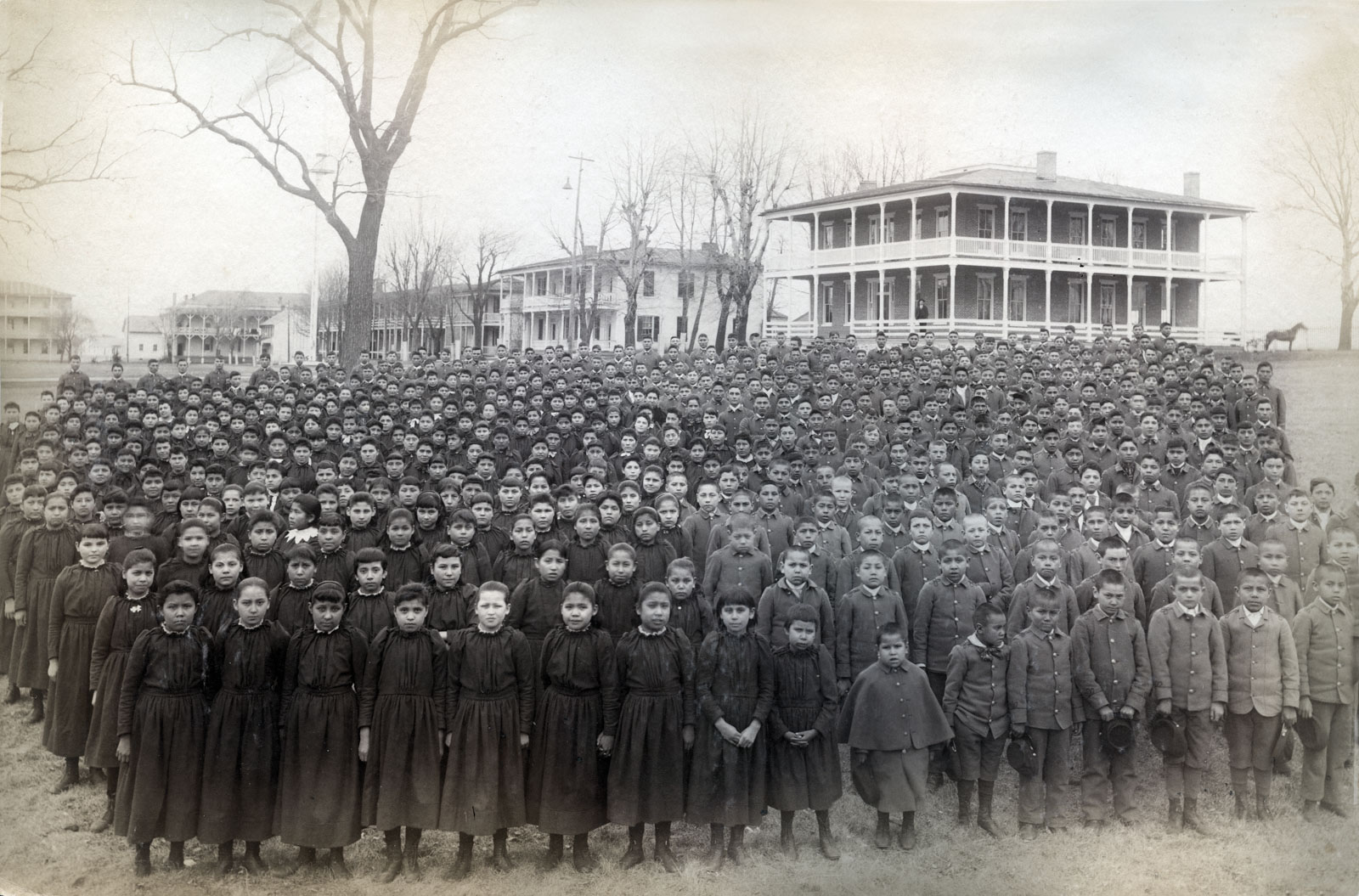 Student body of the Indian Industrial School at Carlisle, Pennsylvania, on the parade ground with school buildings in the background. Photo taken in March 1892, attributed to John Choate. Courtesy of the Cumberland County Historical Society, Carlisle, Pa. From Away From Home: American Indian Boarding School Stories at the Heard Museum, Phoenix, Arizona.
The powerful exhibition on the Indian boarding school experience at the Heard Museum in Phoenix has been updated with recent scholarship as Away From Home: American Indian Boarding School Stories. The museum notes, “Away From Home examines an important and often unknown period of American history. Beginning in the 1870s the U.S. government aimed to assimilate American Indians into ‘civilized’ society by placing them in government-operated boarding schools. Children were taken from families and transported to far-away schools where all signs of ‘Indian-ness’ were stripped away. Students were trained for servitude and many went for years without familial contact—events that still have an impact on Native communities today.
 Denise Wallace (Chugach Aleut), Craftsperson Belt, 1992, ivory, gemstones, silver. AT-58; IAIA Museum Purchase, 1993. Courtesy of the IAIA Museum of Contemporary Native Arts, Santa Fe, NM. © Denise Wallace. Photograph by Jason S. Ordaz. From The Stories We Carry at the IAIA’s Museum of Contemporary Indian Art, Santa Fe, New Mexico.“Much of the content in the current exhibition remains relevant and continues to offer a profound and powerful visitor experience. However, after two decades, the exhibition needed to be refreshed and augmented to tell this complex story. We will present new works of art, archival material, first-person interviews and interactive elements in an immersive setting to encourage visitors to have a personal and visceral connection to the topics explored.”
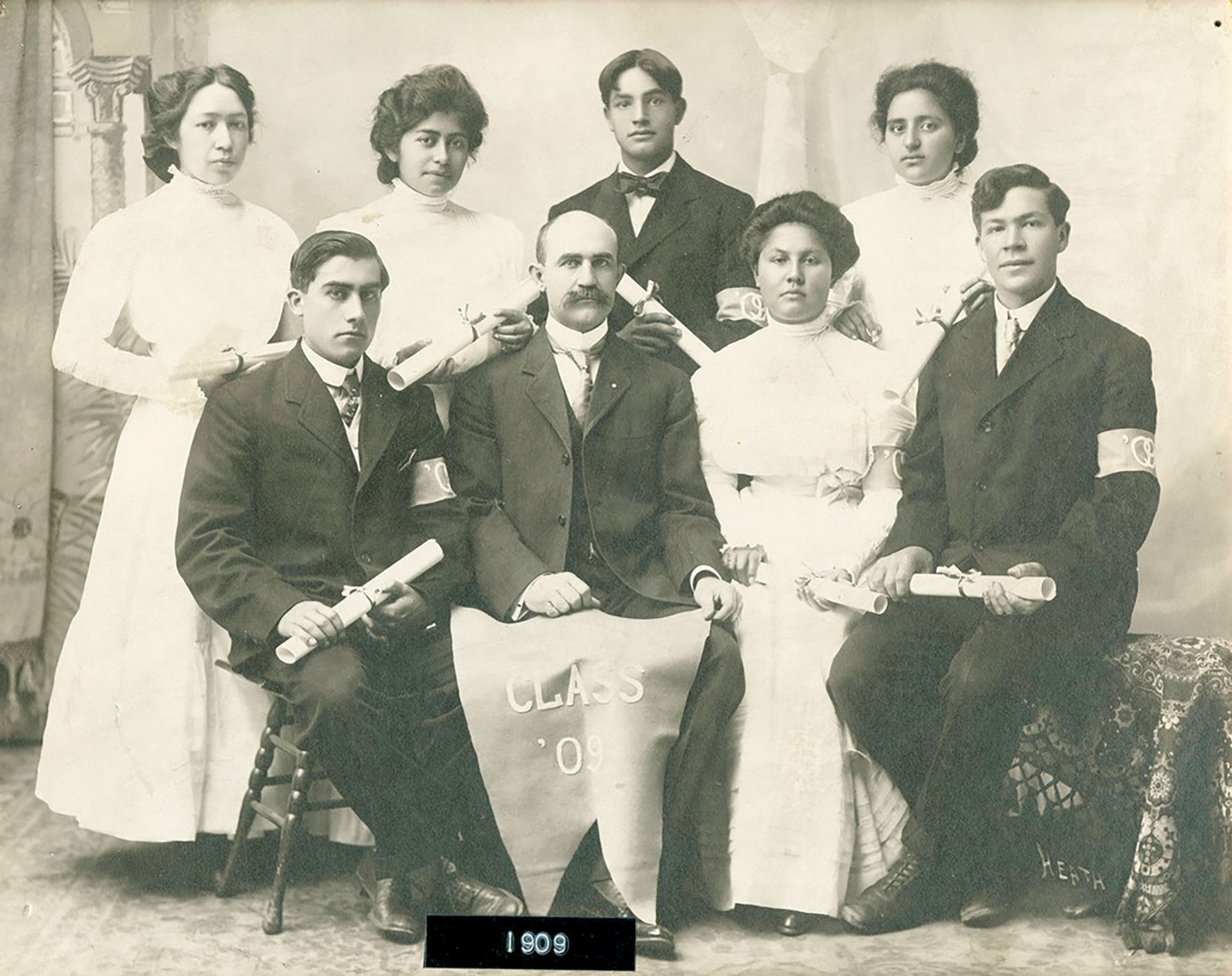 The class of 1909 at the Sherman Indian School. From Sherman Indian School: 100+ Years of Education and Resilience at the Autry Museum of the American West, Los Angeles, California.
The Indian school story is explored further at the Autry Museum of the American West in Los Angeles in its exhibition Sherman Indian School: 100+ Years of Education and Resilience continuing through May 2024. The museum comments, “Explore the complex legacy of Native American boarding schools, with a specific focus on Sherman Indian School. Discover the stories of resilience, strength and the pursuit of education that unfolded within these institutions. Join us as we honor the students’ journeys and reflect on a pivotal era in Native American history.”
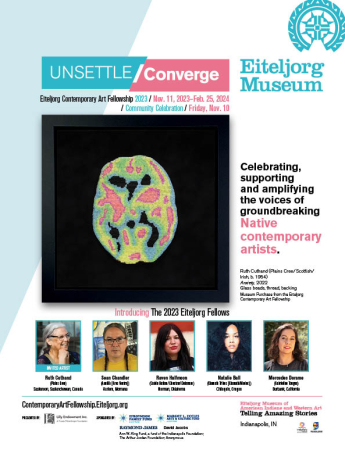
Storytelling in Native American Art continues in programs such as the Eiteljorg Museum’s Contemporary Native Art Fellowship which began in 1999. The exhibition, Native Art History is Made Here, continues at the Indianapolis museum through March 31, 2024. The exhibition presents the fellowship’s first two iterations in 1999 and 2001.
Rick Rivet (Sahtu-Métis) explores and reinterprets the historical iconography of many Indigenous peoples. His Beothuk Mound No. 11, refers to the genocide of the aboriginal Beothuk who once inhabited Newfoundland.
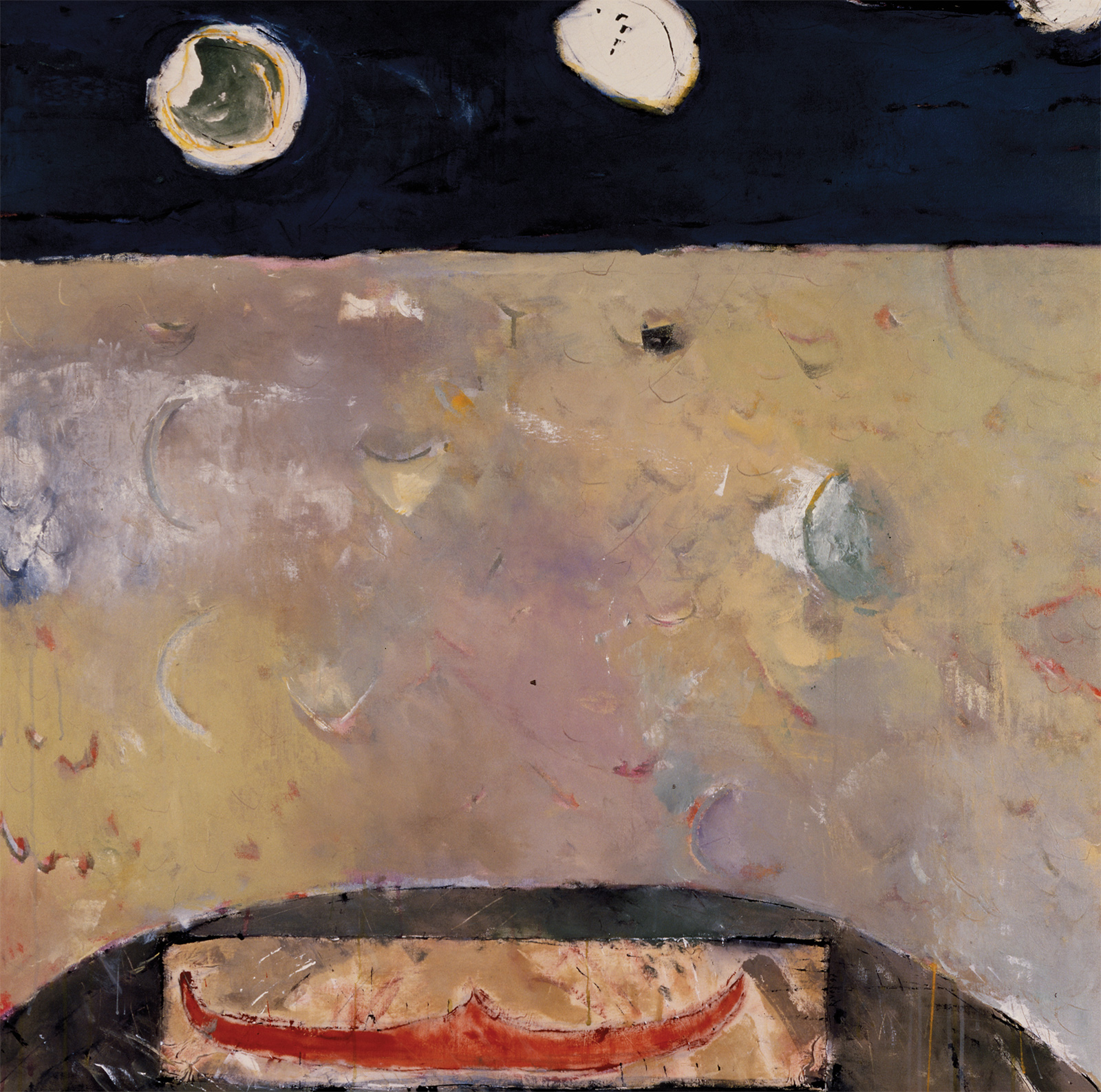 Rick Rivet (Sahtu/Métis), Beothuck Mound No. 11, 1997, acrylic with collaged pieces of canvas and string on canvas, 543/8 x 55”. Museum purchase from the Eiteljorg Fellowship for Native American Fine Art with funds provided by E. Andrew Steffen 1999.8.2. From Native Art History is Made Here at the Eiteljorg Museum, Indianapolis, Indiana.
Since its founding, the Institute of American Indian Arts (IAIA) has encouraged students to tell their stories in their own way. It’s Museum of Contemporary Indian Art in Santa Fe, New Mexico, is hosting the exhibition, The Stories We Carry, through September 29, 2025. The museum explains, “The unique format of jewelry has played a large role in storytelling as it is a deeply human practice that gives people the tools to carry their histories and identities—a powerful reminder to ourselves and to others who we are. The Stories We Carry features contemporary jewelry created by more than 100 Indigenous artists across decades stewarded by the IAIA Museum of Contemporary Native Arts (MoCNA) permanent collection.”
Denise Wallace (Chugach Aleut) is represented by an elaborate belt featuring representations of various Indigenous craftspeople. Her jewelry depicts the people, animals, symbols and folk tales of her native culture.
Powered by Froala Editor