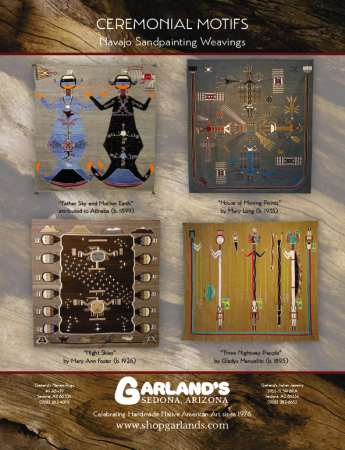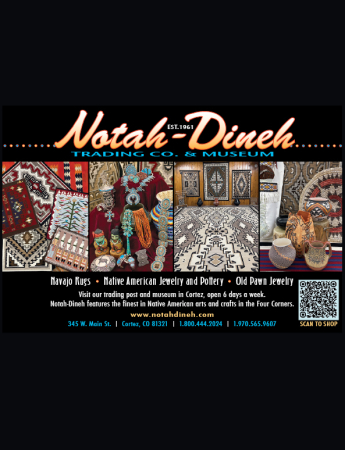
Like many Native American traditions and art forms, weaving and textile creations carry a great deal of history and significance. Often tied to place and tribal affiliation, these works that were once utilitarian became celebrations of heritage and another means of storytelling. For the Navajo, symbol and motif are used in reference to the teachings of Spider Woman—believed to have “weaved the web of the universe.” Throughout this section of weavings and textiles, all of them available for purchase, you’ll witness impressive blankets and rugs that are shining examples of elaborate skill and deep cultural connection. Also learn from galleries, museums and artists about an array of design, technique and narrative.
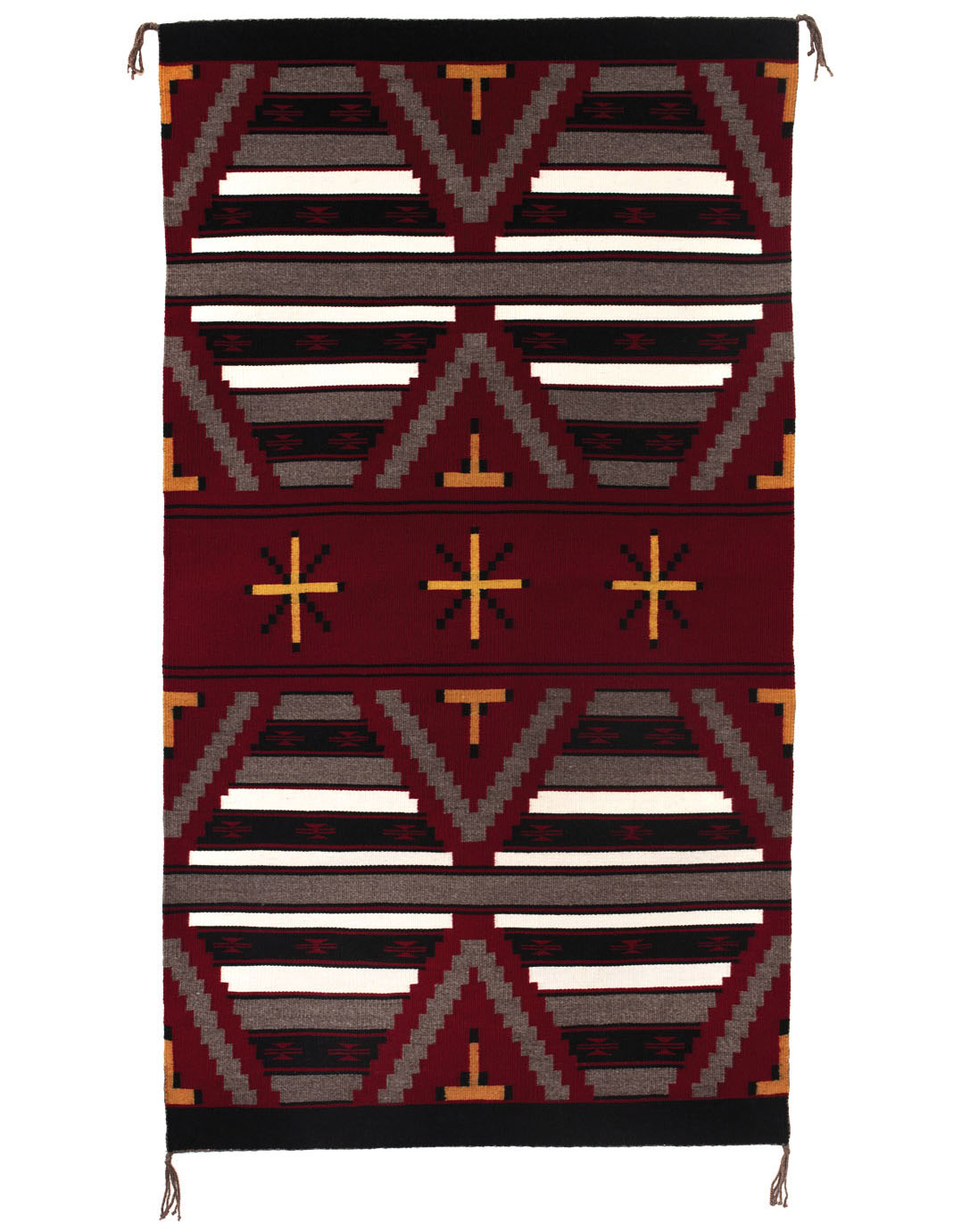
Heard Museum Shop
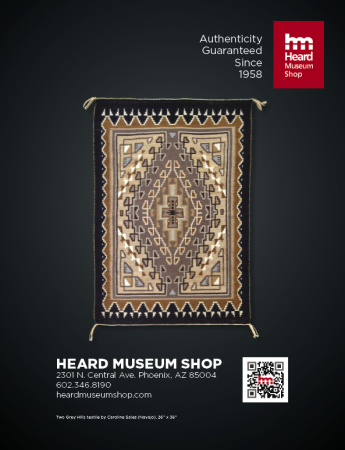
The Heard Museum Shop ensures the integrity and authenticity of its many offerings by dealing directly with Native American artists. As a major supplier of significant rugs and weavings, the shop features work like that of Navajo artist Janice Vanwinkle and her third phase chief’s blanket measuring 26 by 461/2 inches. Representatives at the Heard Museum Shop share that the “Chief’s blanket is the earliest-known pattern…Third phase blankets tend to be even more complex and traditionally were composed of stripes with diamond and half-diamond shapes. Weavers frequently added other elements such as zigzags, crosses, thin lines and triangles inside these diamond shapes…”
2301 N. Central Avenue » Phoenix, AZ 85004 (602) 252-8344 » www.heardmuseumshop.com
James Compton Gallery
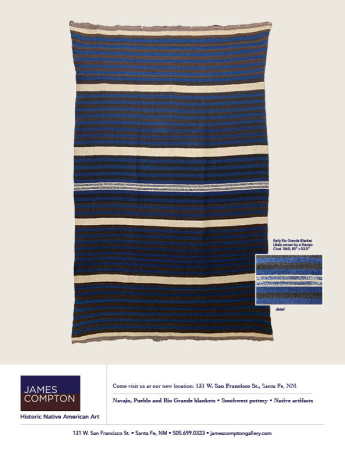
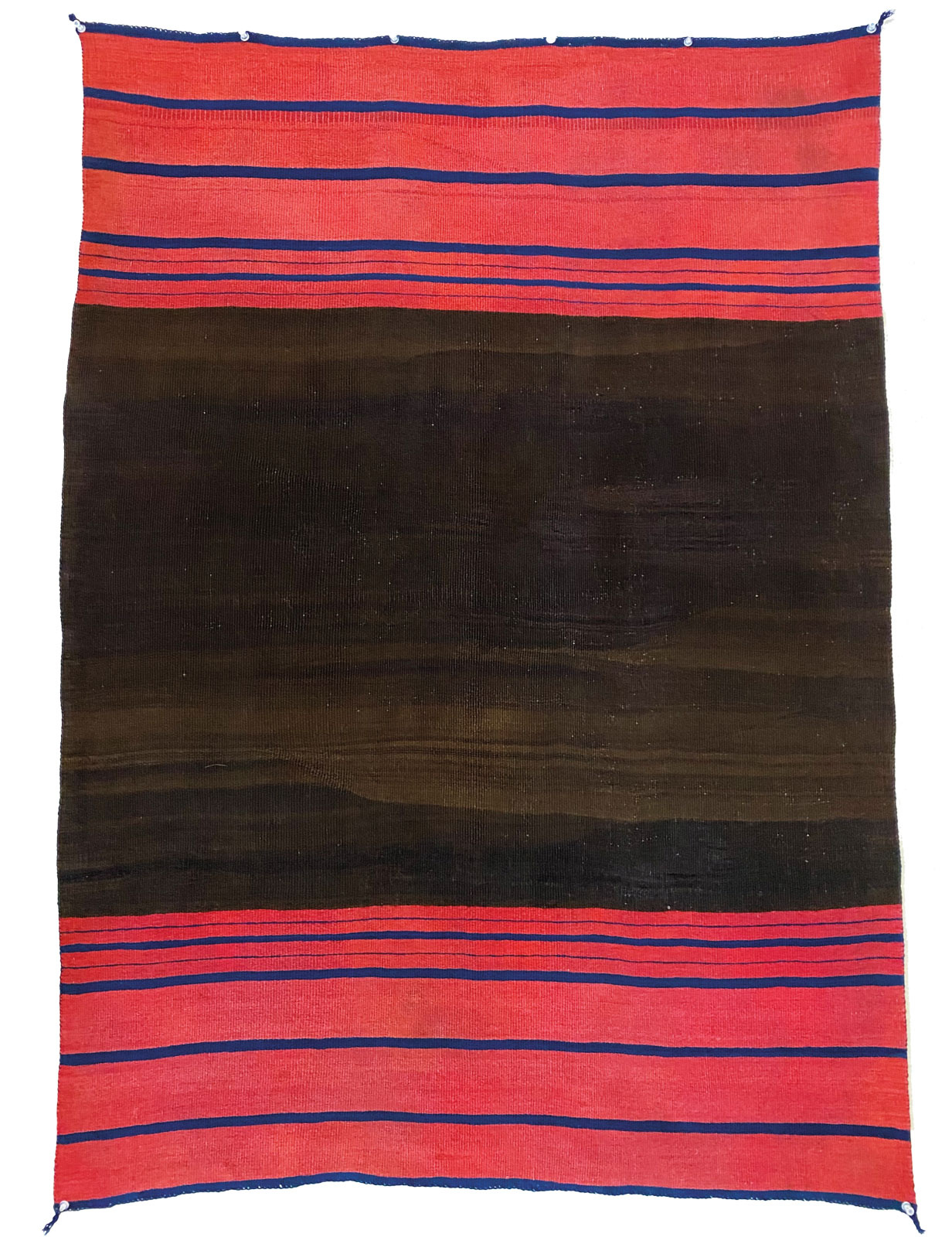
“I strive to represent the earliest material I can find,” says James Compton, owner of James Compton Gallery. “The early material is more related to the tribe’s original work, hopefully before too much influence from the Euro-American world.” With this 47-by-34-inch Navajo single dress panel, pictured here, we see the simplest of designs, of only banding, from circa 1850 or earlier. “The ravelled bayeta is a trade item that came available with the advent of outsiders coming into the Southwest,” Compton explains.
131 W. San Francisco Street » Santa Fe, NM 87501 (505) 699-0323 » www.jamescomptongallery.com
Antique Native American Baskets
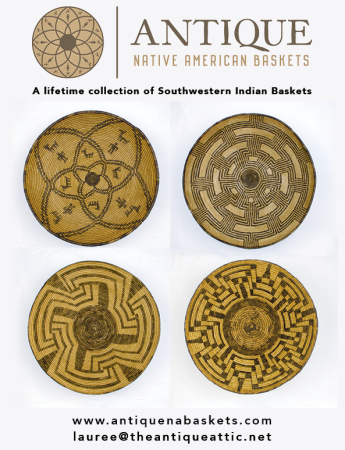
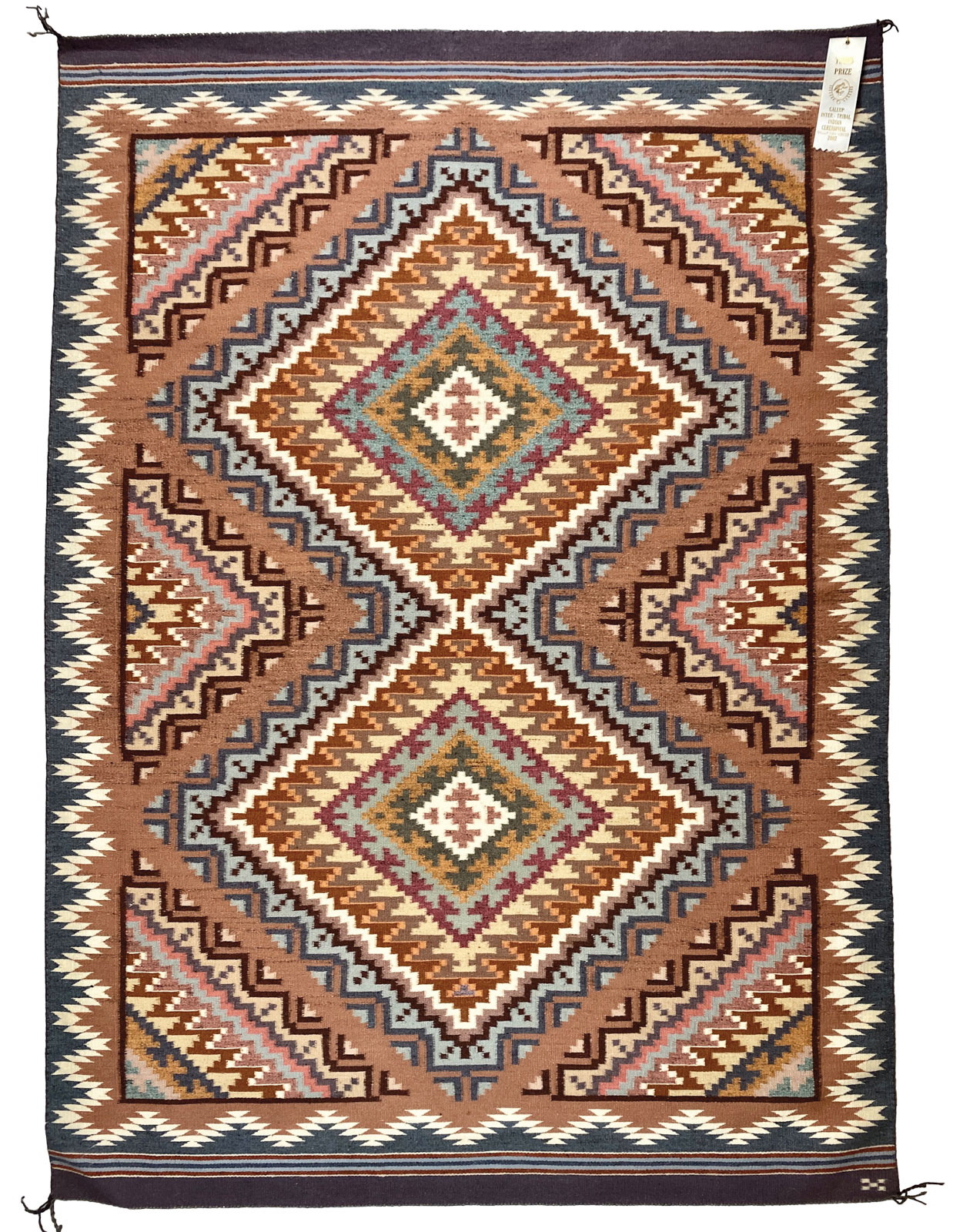
This prize-winning, vegetal-dyed Burntwater Navajo rug, offered by Antique Native American Baskets, was woven by master weaver Rose Yazzie. Note the fantastic vegetal dye colors and the artist’s use of a salt and pepper blended color. In addition, this 72-by-48-inch rug has a winning ribbon from the 2002 Gallup Inter-tribal Indian Ceremonial show.
Sonoita, AZ » www.antiquenabaskets.com
Garland’s
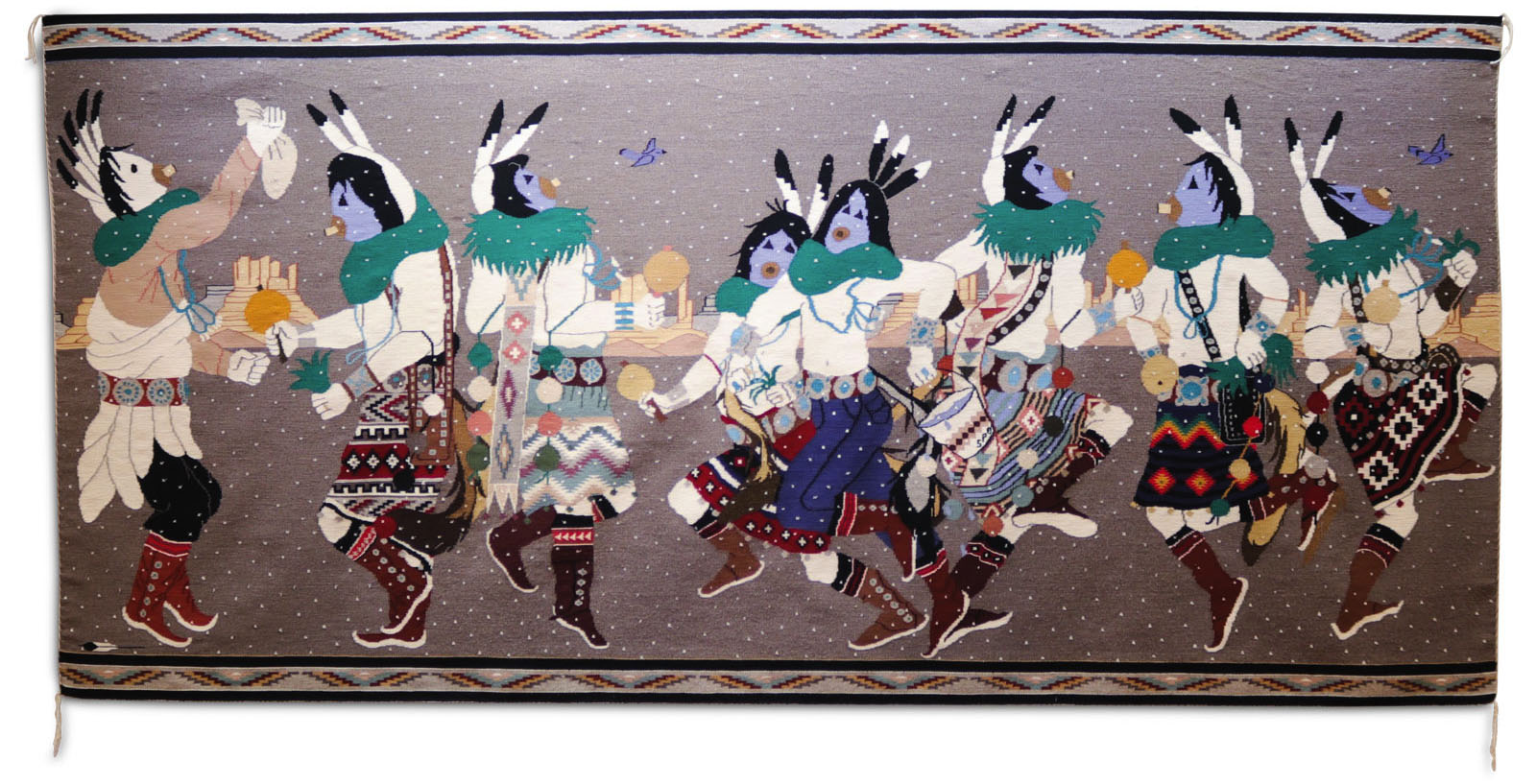
Sarah Paul Begay’s masterpiece, Millennium, pictured here, took more than two years to create, and measures at 123 by 59 inches. Named for its creation around the year 2000, the piece portrays a Navajo healing ceremony. Three-dimensional Yei figures with lifelike movement are created using more than 100 unique dyes. The artist’s design uses curves to create incredibly realistic images in wool. “Begay weaves like other artists can paint,” says representatives at Garland’s in Sedona, Arizona. Begay won the best of show award at the 85th annual Santa Fe Indian Market in 2006.
411 AZ-179, Sedona, AZ 86336 (928) 282-4070 » www.shopgarlands.com
Sorrel Sky Gallery
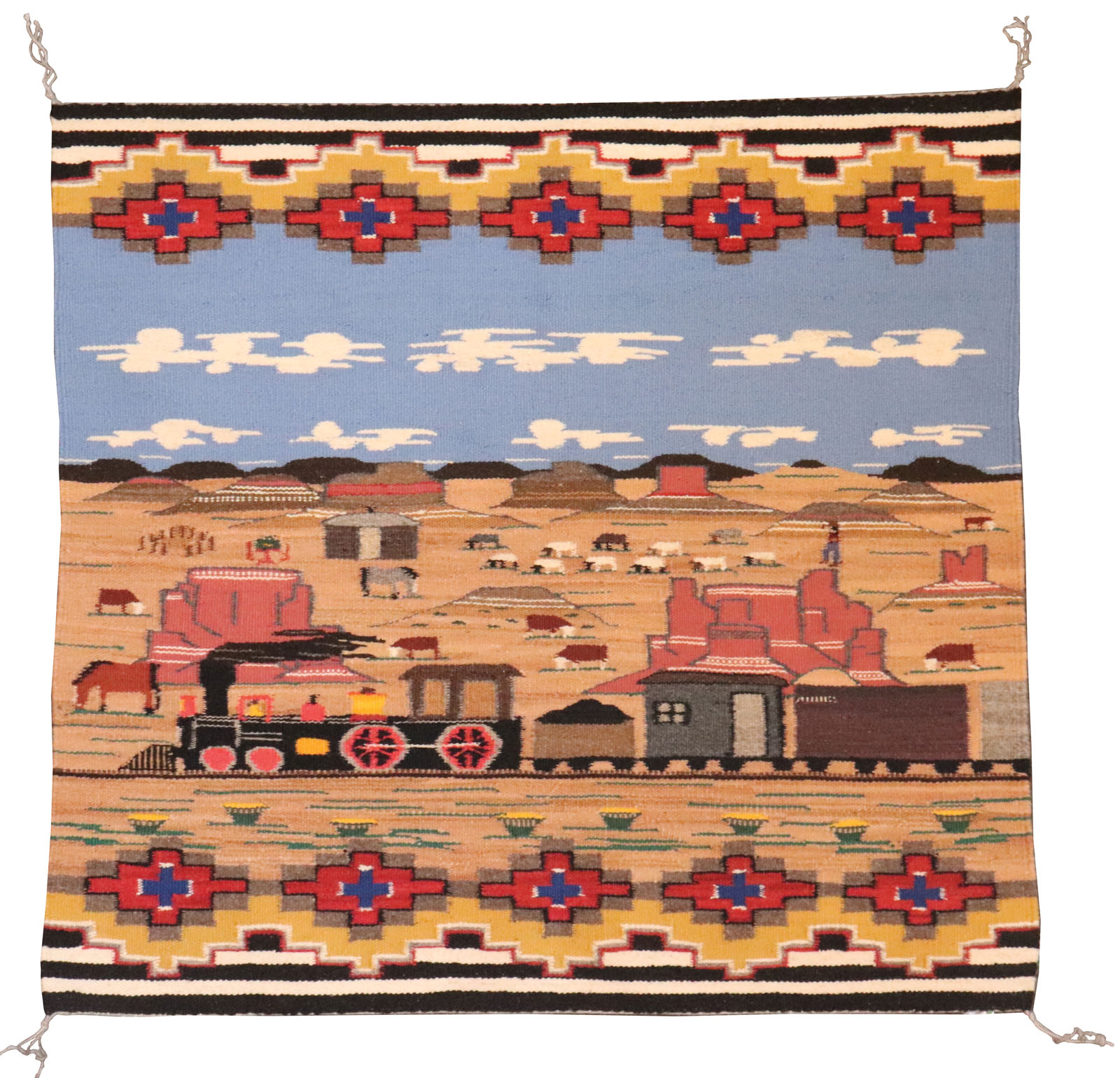
Navajo weaver Geanita John, from Many Farms, Arizona, has been creating pictorials for more than 40 years. Her weavings depict Navajo life as it was, prior to satellite dishes, trailers and pickups. The “Iron Horse,” or steam engine trains, were a popular theme in Navajo pictorials in the early 1900s. Her work was recently featured in a New York City exhibition of weavings from the American Museum of Natural History. Find more weavings at Sorrel Sky Gallery, online or in person.
Durango, CO » (970) 247-3555 » Santa Fe, NM » (505) 501-6555 info@sorrelsky.com » www.sorrelsky.com
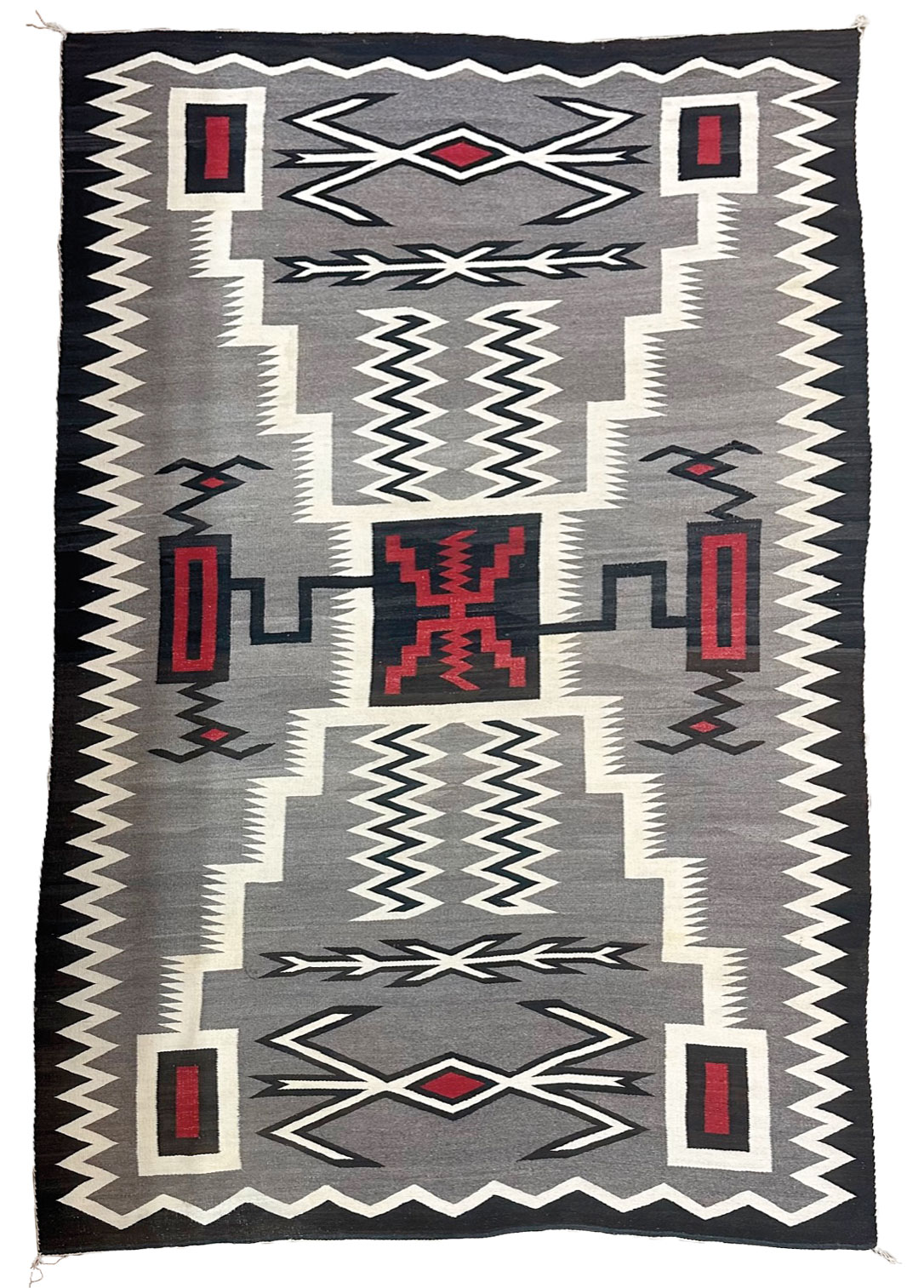
Tanner’s Indian Arts
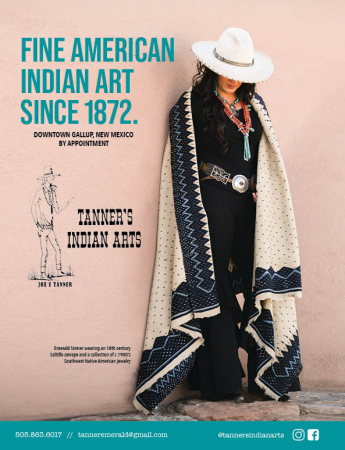
This J.B. Moore Storm Pattern blanket carries an incredibly bold and stylistic motif, created around 1900s in Crystal, New Mexico. The oversized Navajo weaving measuring at 69 by 126 inches is all homespun wool with natural greys, natural whites, overdyed black and aniline dye red, and is an adaptation of J.B. Moore Plate XXVIII. JB Moore was an important trader and marketed Navajo weavings around the turn of the 20th century, popularizing these brilliant designs and creating an industry for hundreds of weavers in the area.
237 W. Coal » Gallup, NM 87301 » (505) 863-6017 tanneremerald@gmail.com » www.tannersindianarts.com
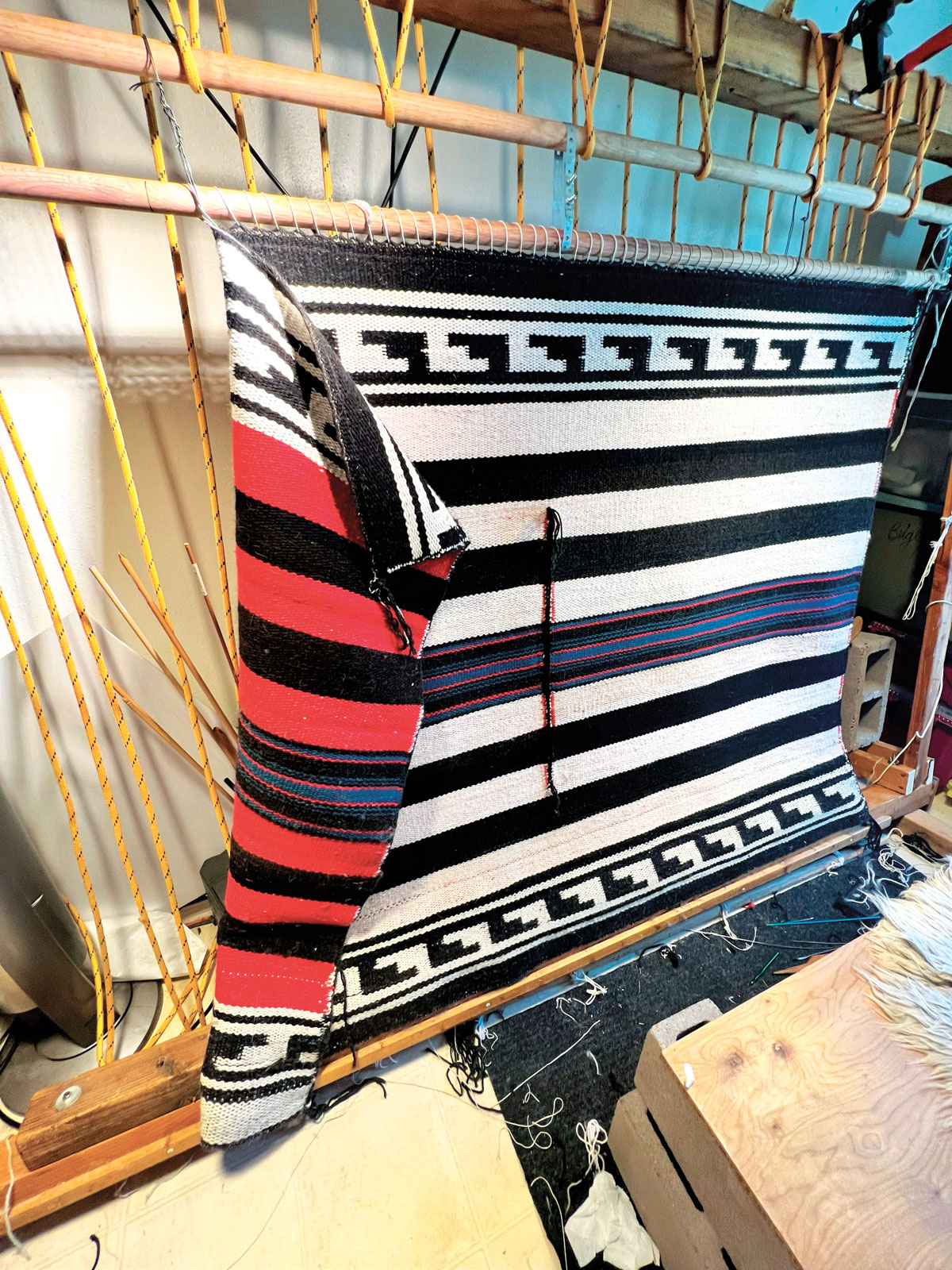
Zefren-M
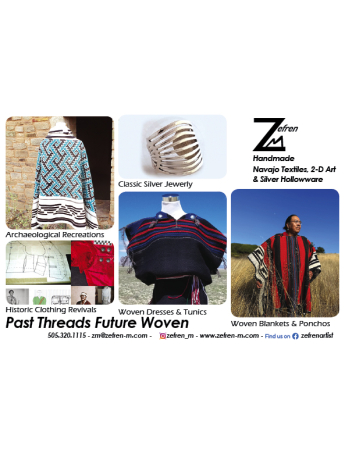
Navajo artist Zefren-M (Ephraim Anderson) works with techniques conjecturally reconstructed from images, oral story, archaeology and language, as seen in this double-weave piece titled Bad Moon Rising – The End is a New Beginning. “This gives me the penchant to recreate historical revivals from any era while allowing the freedom to create avant-garde, one-of-a-kind pieces that play with classifications, gender, sexuality and sensibilities,” says the artist. “Weaving and its application is the beginning of a stoic philosophy that has lived through the entire rise and fall of countless human systems since the beginning of time and somehow, it forever endures.”
(505) 320-1115 » info@zefren-m.com » www.zefren-m.com
Powered by Froala Editor