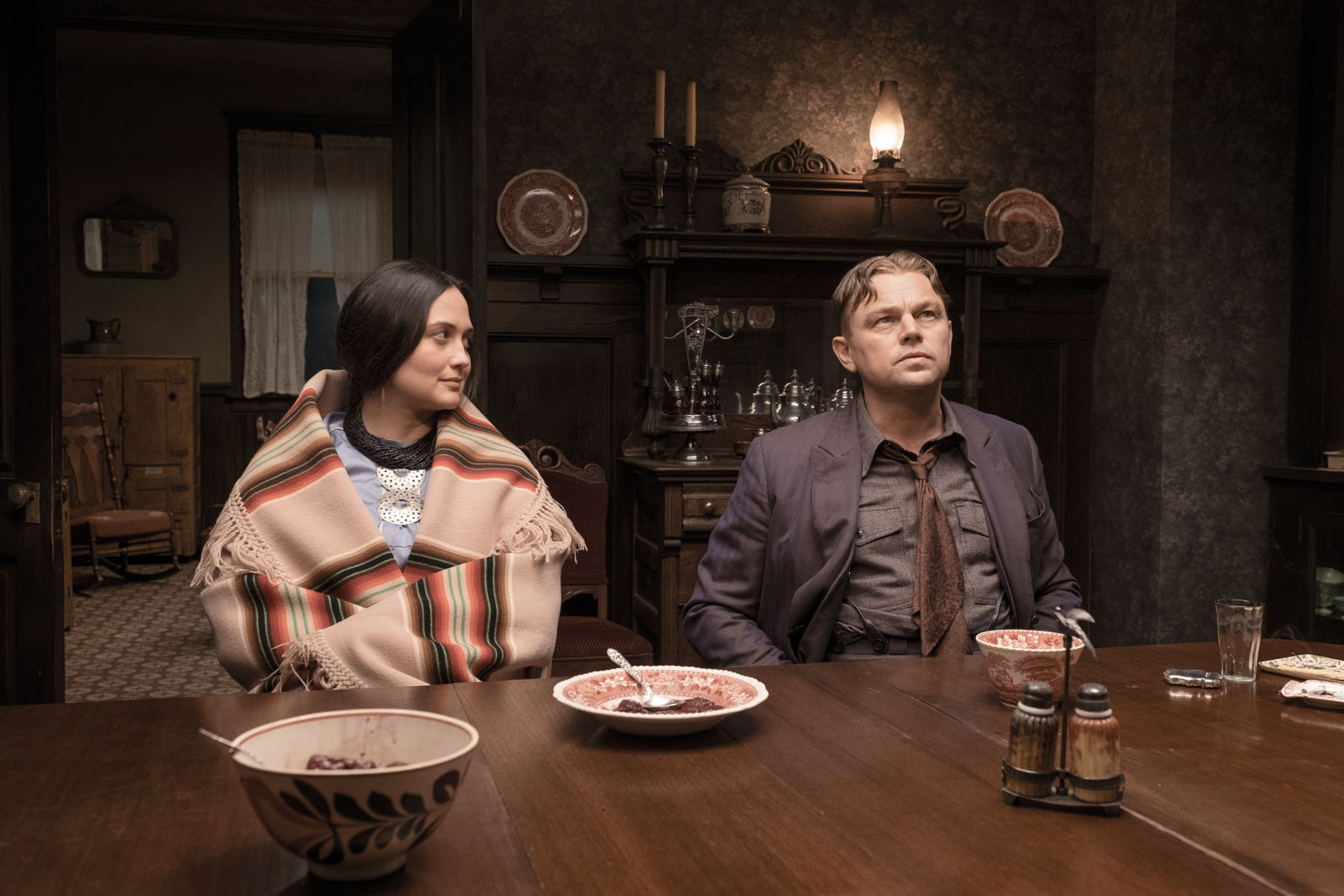
 Lily Gladstone (Blackfeet/Nez Perce) and Leonardo DiCaprio in Martin Scorsese’s Killers of the Flower Moon, based on a book by David Grann. Gladstone wears an Indian trade blanket in the scene and at various times throughout the movie.
Guiding the Apple TV+ production on this jump back in time was Julie O’Keefe, an Osage researcher who was brought onto the film in March 2022 to help make sure the production got all the details right. “The dedication to authenticity on this film was simply incredible. I had a wonderful experience working with Martin Scorsese and his team from the very beginning,” O’Keefe says. “I was brought in after the film had started, but it was so nice to walk in on my first day and see that the production team was doing its due diligence in representing the Osage people in the most authentic way possible. From the textiles to the shirt material to the broadcloth to the blankets that were used…all of the clothing and all of our history was considered for this film.”
O’Keefe says that she immediately started working with costume designer Jacqueline West, who already had some experience dressing Native American actors and characters for film when she worked on Alejandro González Iñárritu’s survival thriller The Revenant in 2015. While The Revenant was set in the Dakotas in the early 19th century, Killers of the Flower Moon was set in Osage County in the 1920s. The later setting provided some help to the filmmakers because there was an abundance of history, including photography, of that period, which gave the filmmakers plenty of examples to draw from as they dressed sets and actors. “We were generally reviewing material a week before filming. On Sundays, I would get a packet of material in advance of the scenes, and I would just go over everything to see how the film could best represent the time and the people,” O’Keefe says.
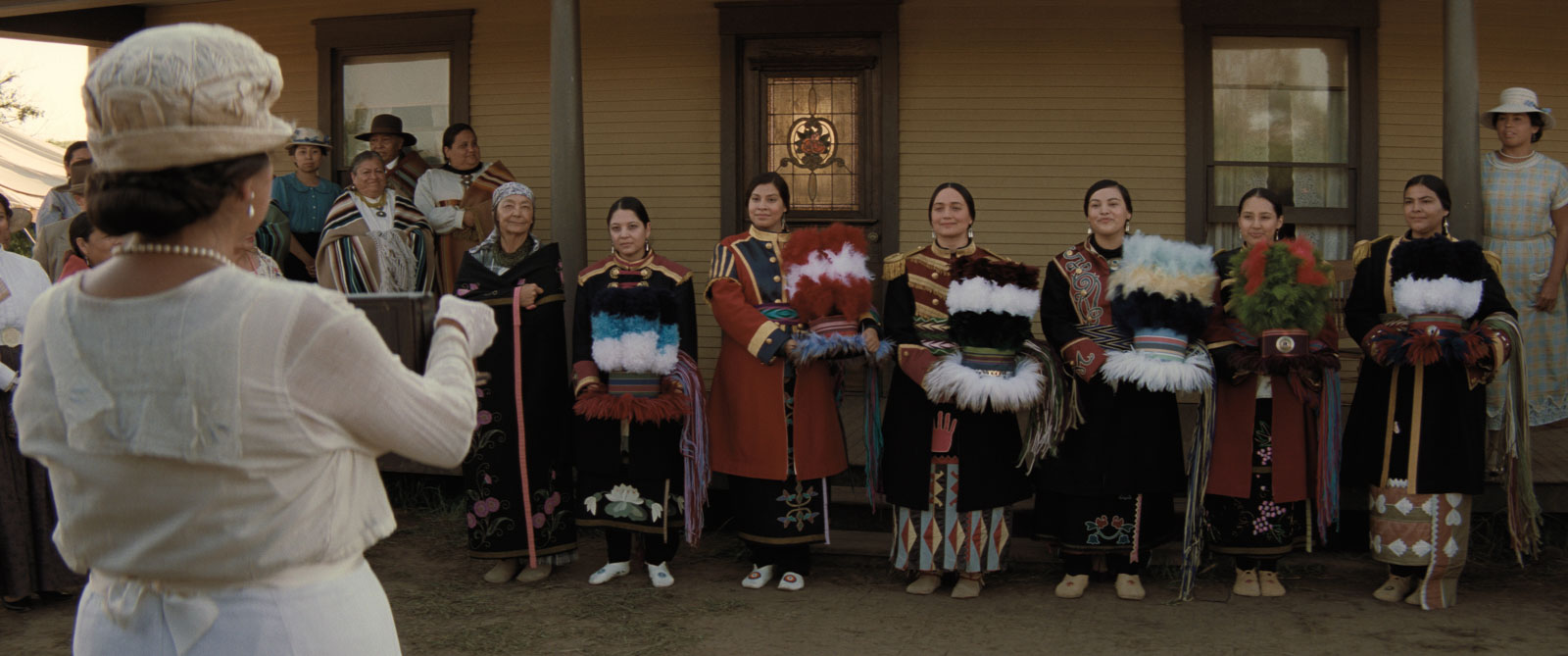 A wedding scene during Killers of the Flower Moon. Osage researcher Julie O’Keefe spent a great deal of time planning the materials and objects of this scene. Notice the military jackets, the finger-woven belts and the intricately feathered hats. All of these elements would have been common during an Osage wedding in the 1920s.
The film itself, and the true story it was based on, provided interesting challenges for West and O’Keefe. For starters, this wasn’t a historical epic in the vein of Dances with Wolves or The Last of the Mohicans—“leathers and feathers” is the phrase used often for these stories set primarily during westward expansion of the 18th and 19th centuries. Killers of the Flower Moon tells the story of the oil-rich Osage Nation and how a series of murders would threaten the vast wealth among its people. “A lot of things were at play in the story that made it unique. We had these women who were perfect examples of what it was like to take someone off the prairie and then put them in government-mandated schools. In many cases, these were the first English speakers of their families, and then they move on to the reservation and then get this Kardashian-sized money dropped on them from the oil in the ground,” O’Keefe says. “These were people who traded for everything and now they have unimaginable wealth. We had to tell that story through clothing and other objects.”
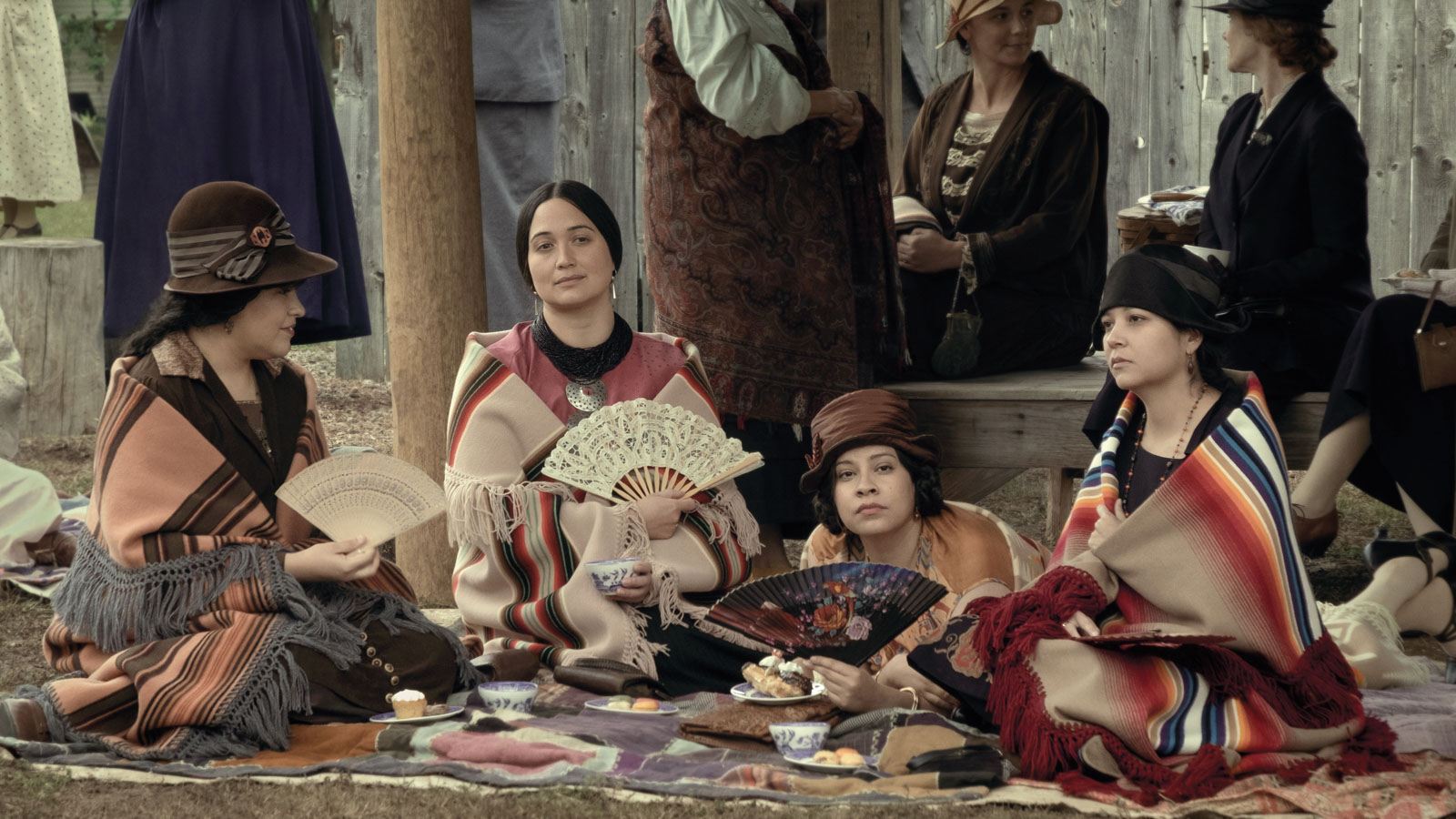 Lily Gladstone, center left, and other Native American actors in Killers of the Flower Moon. The film chronicles the murders and thefts that were designed to steal oil money from the Osage people in the 1920s.
O’Keefe points to a wedding scene that was especially rewarding to plan because of the unique items needed for the sequence. “In an Osage wedding, a very particular outfit is worn and it is intricate and layered. Everything the bride had on, all of it given away during the ceremony, had a purpose. Under the skirt there were leggings, and then a set of pins under her shirt, a necklace and a choker. A beautiful finger-woven belt went under the skirt. On top of everything was a military coat and then a larger belt that would remain unfinished so it can be given away,” the researcher says, adding that there were also blankets and ornate feathered hats. “The clothing was so bulky that the brides were carried on a blanket by six women. This particular wedding custom isn’t practiced anymore, so we had to research each piece.”
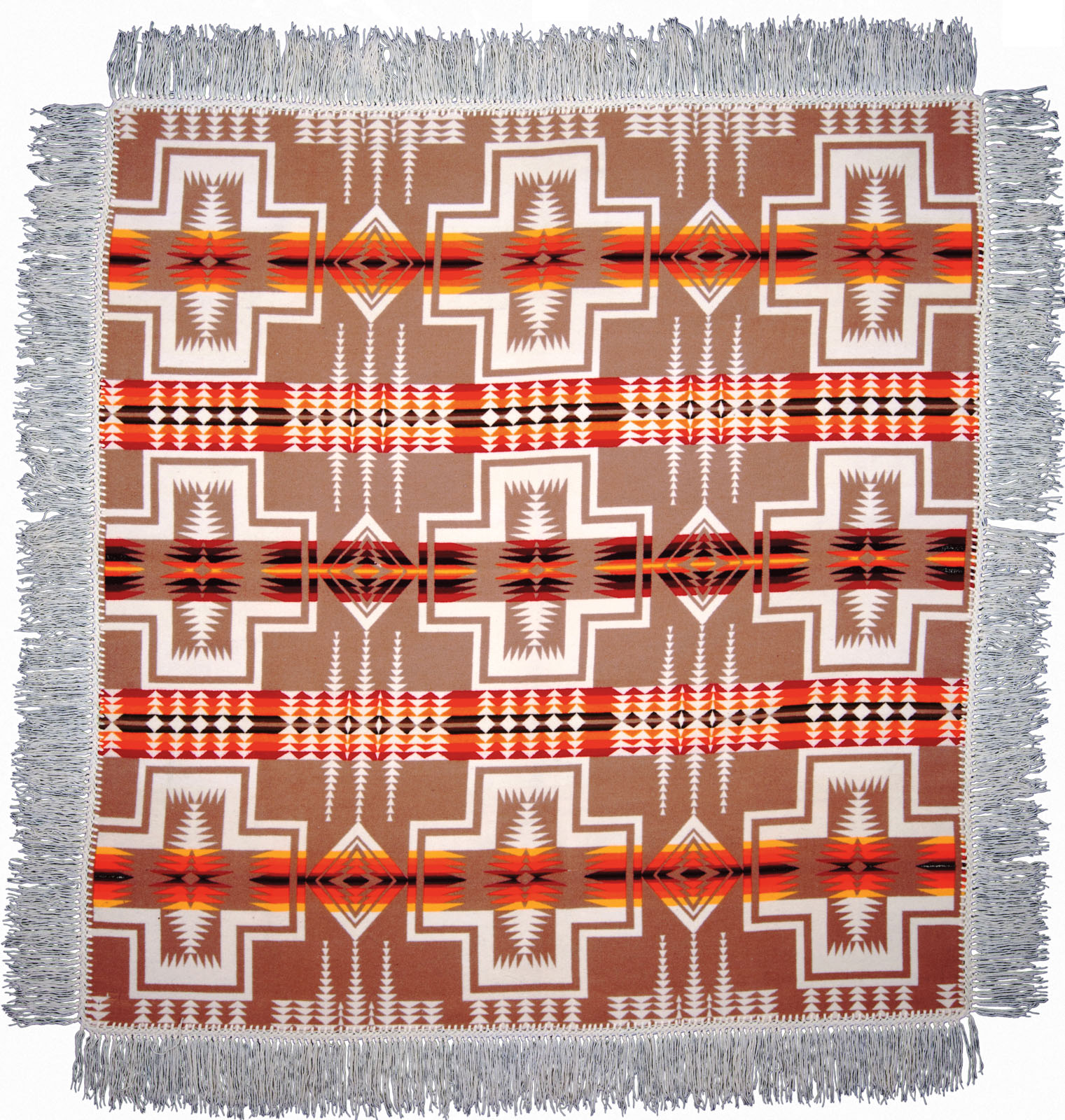 Pendleton shawl with Harding pattern, circa 1920s. This blanket was sold by Barry Friedman for use in Killers of the Flower Moon. Photo by Frank Salle.
The military coats, for instance, dated back to when Osage men would serve as delegates during treaty meetings in Washington, D.C. Some were given coats on the trips and because they were status symbols they were often used in wedding ceremonies. Other materials and art objects included in the picture were several styles of finger weavings and also ribbon work, for which Osage artists are well known. Not only were many of the items used in the movie authentic to Osage traditions, some were even the original objects from the 1920s. Other items were reproduced for key sequences in the film. O’Keefe says some of the wedding belts, for instance, were only half created since much of the belt was underneath the clothing, and only the ribbons would be seen on camera. Other pieces were made in their entirety. “Some of the Native artisans that worked on this film are in museums around the country. They are known for making traditional items that are museum-quality,” she adds. “These items that were produced for the film are valuable in their own right because of who made them, not because of the film. The fact is Apple TV+ owns some very valuable pieces of art in their costume collection for Killers of the Flower Moon.” She estimates as many as 25 Native American artisans worked on the production.
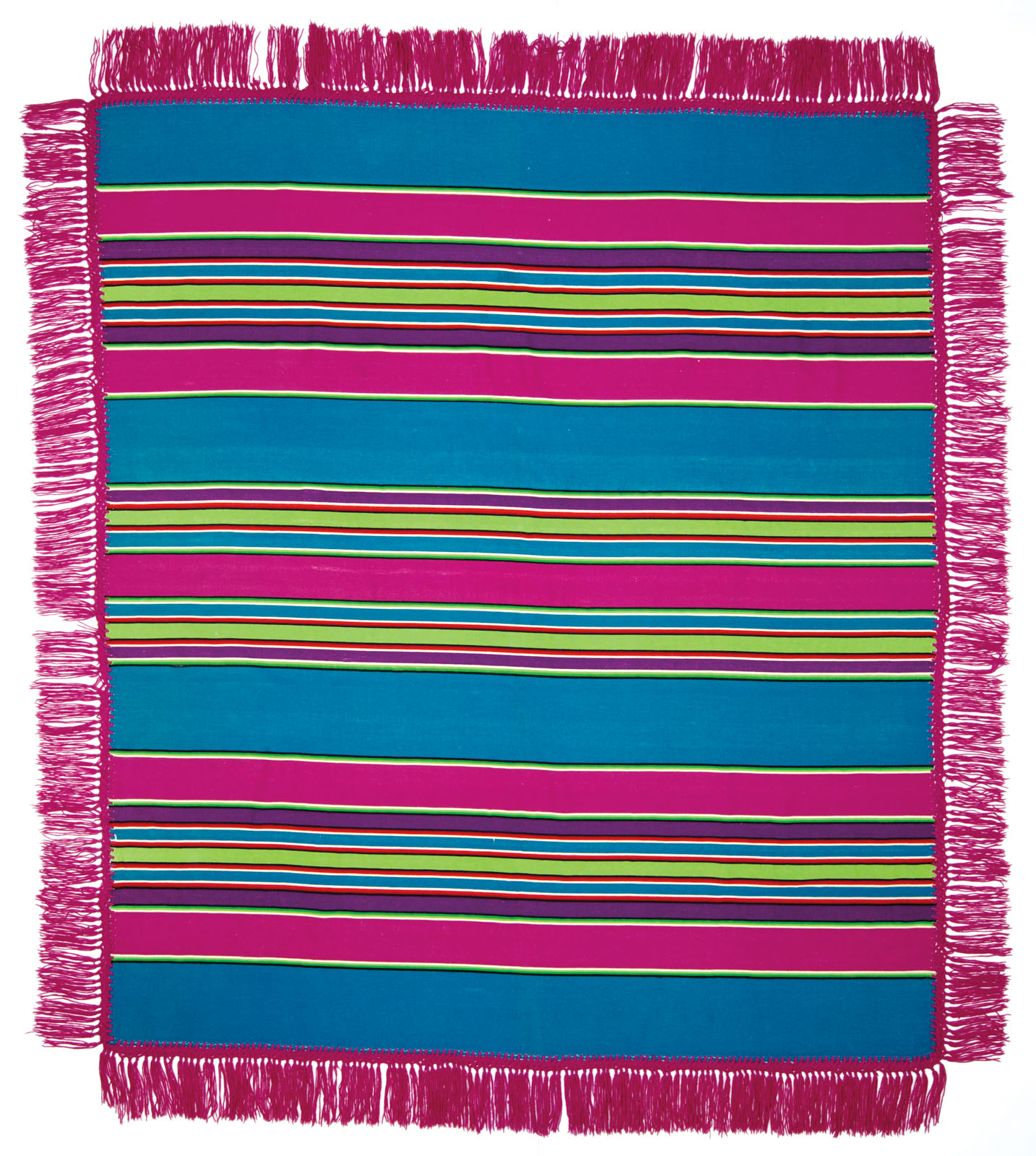 Brightly colored 1920s Pendleton shawl that will be used for Killers of the Flower Moon. Photo by Frank Salle.
One area of the film that has already drawn considerable interest—thanks in part to an early picture released to promote the film way back in May 2021—is the area of Indian trade blankets. In the middle of the pandemic, when it was widely thought Killers of the Flower Moon would be stuck in development hell for the foreseeable future, an image of stars Leonardo DiCaprio and Lily Gladstone was released showing Gladstone, whose heritage includes Blackfeet and Nimiipuu, seated at a table wearing a brown striped blanket. Many assumed it was a blanket woven by a Native American weaver, but it’s actually an entirely other segment of the weaving market.
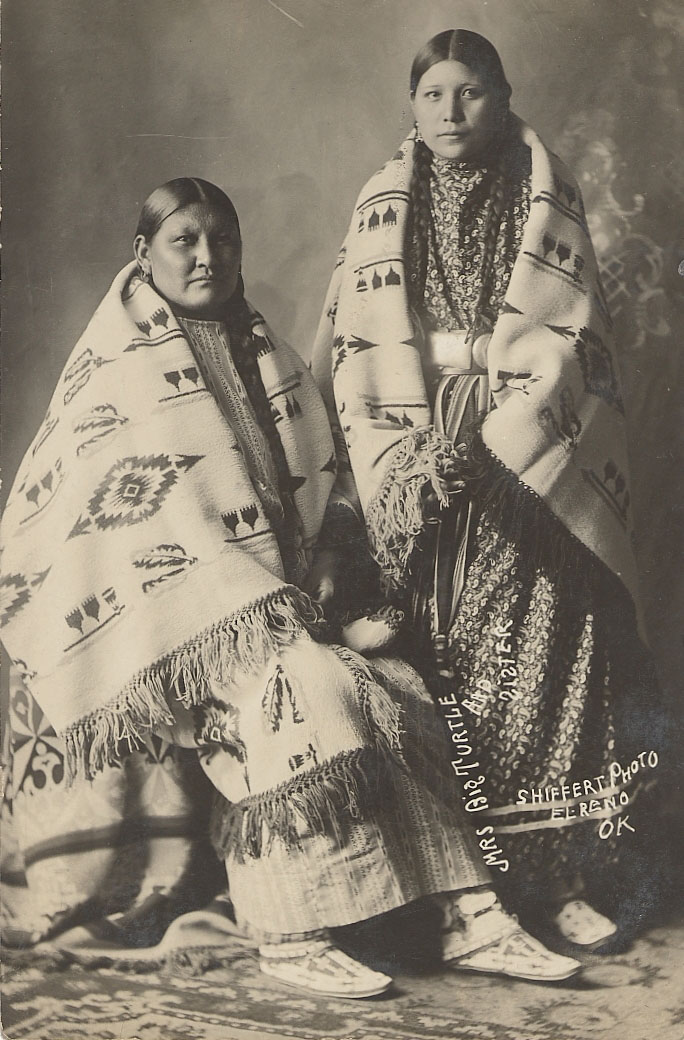 This picture is captioned “Mrs. Big Turtle and Sister.” It was taken in El Reno, Oklahoma, circa 1910. The Southern Cheyenne women are both wearing a design called the Pipe & Feather pattern. Image courtesy Barry Friedman.
“A lot of people see a blanket like that and think it’s probably a Navajo weaving, but there was an interesting thing that was happening starting in the late 1800s: Native American weavers basically made all their weavings for white people, but woolen mills like Pendleton were making all the blankets for the Indians,” says Arizona-based blanket dealer Barry Friedman, who owns Barry Friedman Indian Blankets. “When the Indian Wars ended in 1890, federally licensed traders were given the power to set up on reservations. These trading posts were popular meetinghouses and hubs because they had everything everyone needed, including essential items like tools, tobacco, coffee, sugar and all the other staples required. It was basically a convenience store. These blankets, from companies like Pendleton and Racine, were always on the traders’ shelves—hence the name, Indian trade blankets.”
Friedman says that these blankets were very common on the Osage Nation, particularly during the 1920s when the Osage could afford fine examples due to the wealth in the area from oil strikes. And even though the blankets were not made or even designed by Native Americans, the blankets are part of Native American culture all around the country. “The blankets are clothing, they’re bedding, they’re warmth, they’re status symbols. They were treasured. Some of the tribes, such as the Zuni and some of the Apache people, use these blankets as burial blankets,” he adds. “Pendleton still makes a blanket called the Zuni. It’s not for sale to the public because it’s used for burial ceremonies.”
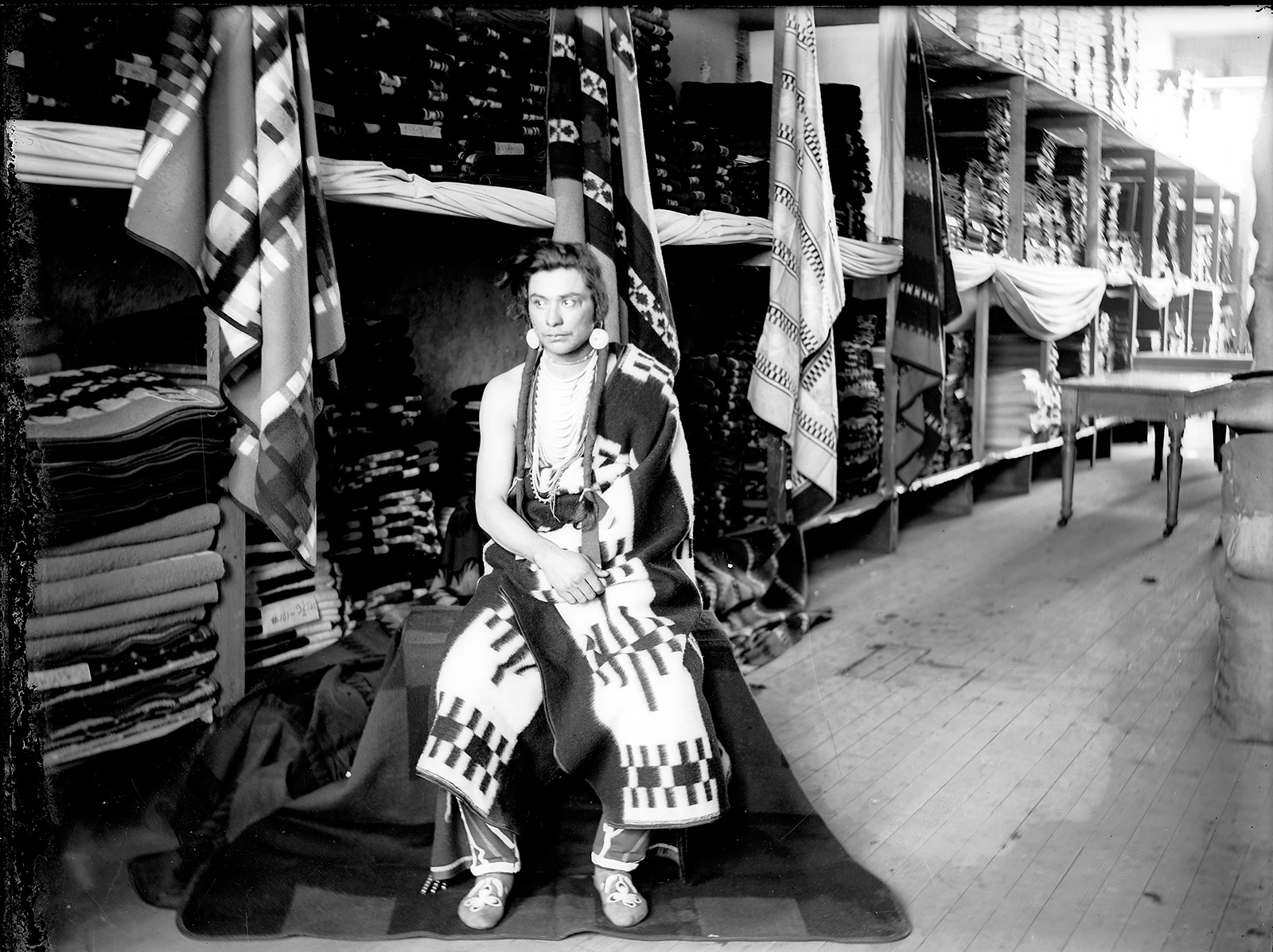 A Native American man named Chapman is photographed inside the Pendleton factory by Major Lee Moorhouse. This was strictly a publicity photo meant to imply Native Americans were involved in Pendleton blanket design and production. In reality, Native people were the mill’s primary customers and even today purchase half of the company's blankets. Image courtesy Barry Friedman.
The dealer was initially approached by Jacqueline West, the film’s costume designer, to rent some of the era-appropriate blankets he offers, but later the production relented and bought nearly 60 blankets that could be used on camera during the shoot. “They were looking for blankets from the early 1920s and ones that had a particularly dark color palette. Someone was here with me for two days going through all of them,” he says. “We spent a lot of time looking for the right ones. For instance, a man’s blanket is often called a robe and a woman’s blanket is called a shawl. Pendleton, the only pioneer woolen mill company still around, still to this day refers to them as robes and shawls. Another interesting part is that the Osage men were sort of flamboyant peacocks with these big bright colors and fancy designs. The women were more reserved with simpler colors and patterns, although they wore their blankets with tassels on the edges.”
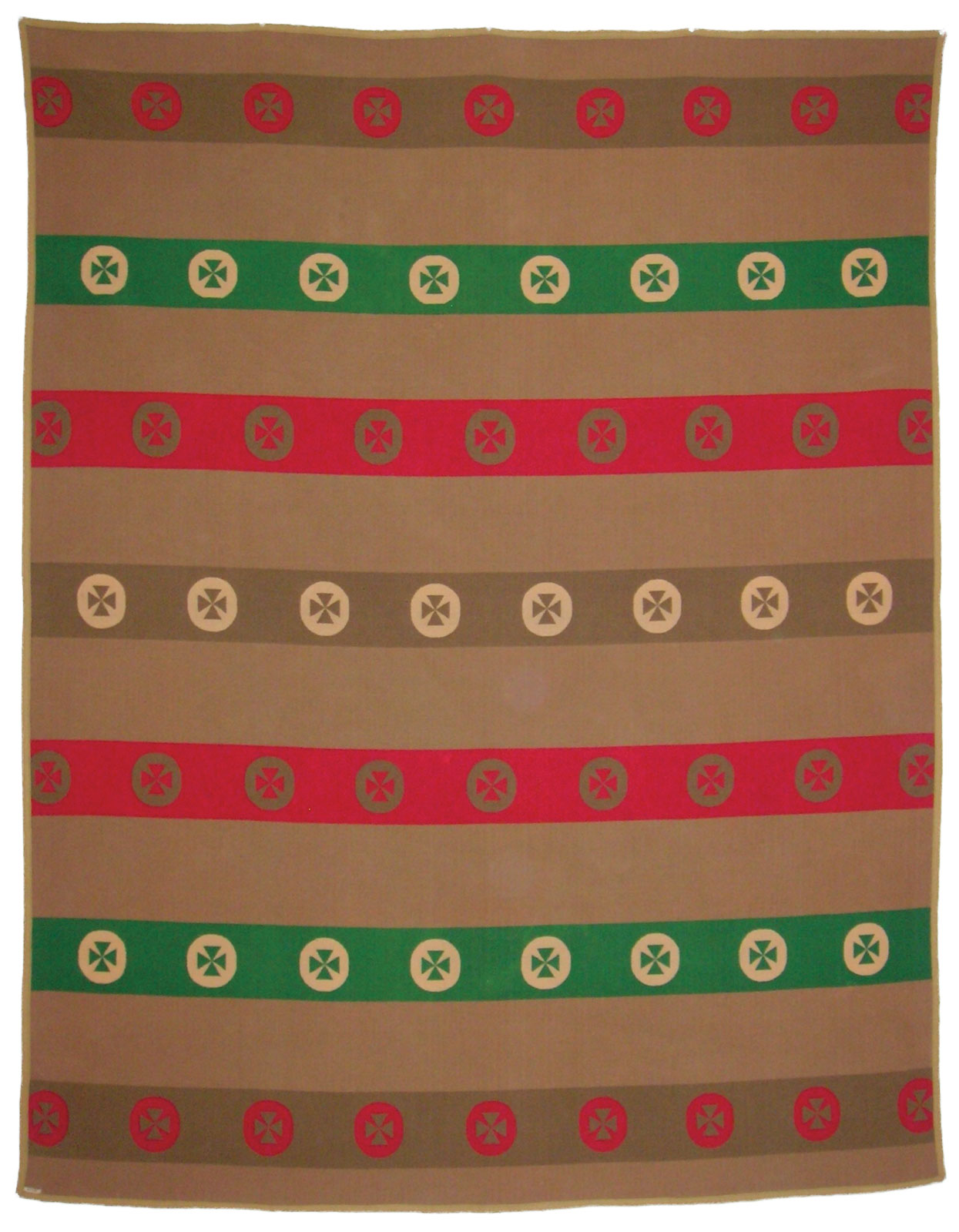 Pendleton blanket, circa 1915, that will appear in the film. Photo by Frank Salle.
Today these blankets are valuable collector’s items, particularly ones that go back to 1900 and earlier, and others because they are from mills that are now closed. Racine Woolen Mills, for example, does not exist anymore, so those blankets are treasured by collectors.
When the early photo with DiCaprio and Gladstone was released, Friedman was ecstatic because he sold the film the blanket that Gladstone wears in that scene at the dining table. “It was explained to me repeatedly how Martin Scorsese was a stickler for details and that the last thing he wanted was to make a mistake in his movies,” Friedman says. “The production found out that the Osage people preferred a certain type of China called Spode, and you can see those pieces in the pictures. They got a lot of stuff right, which is why it was exciting to see my blankets.”
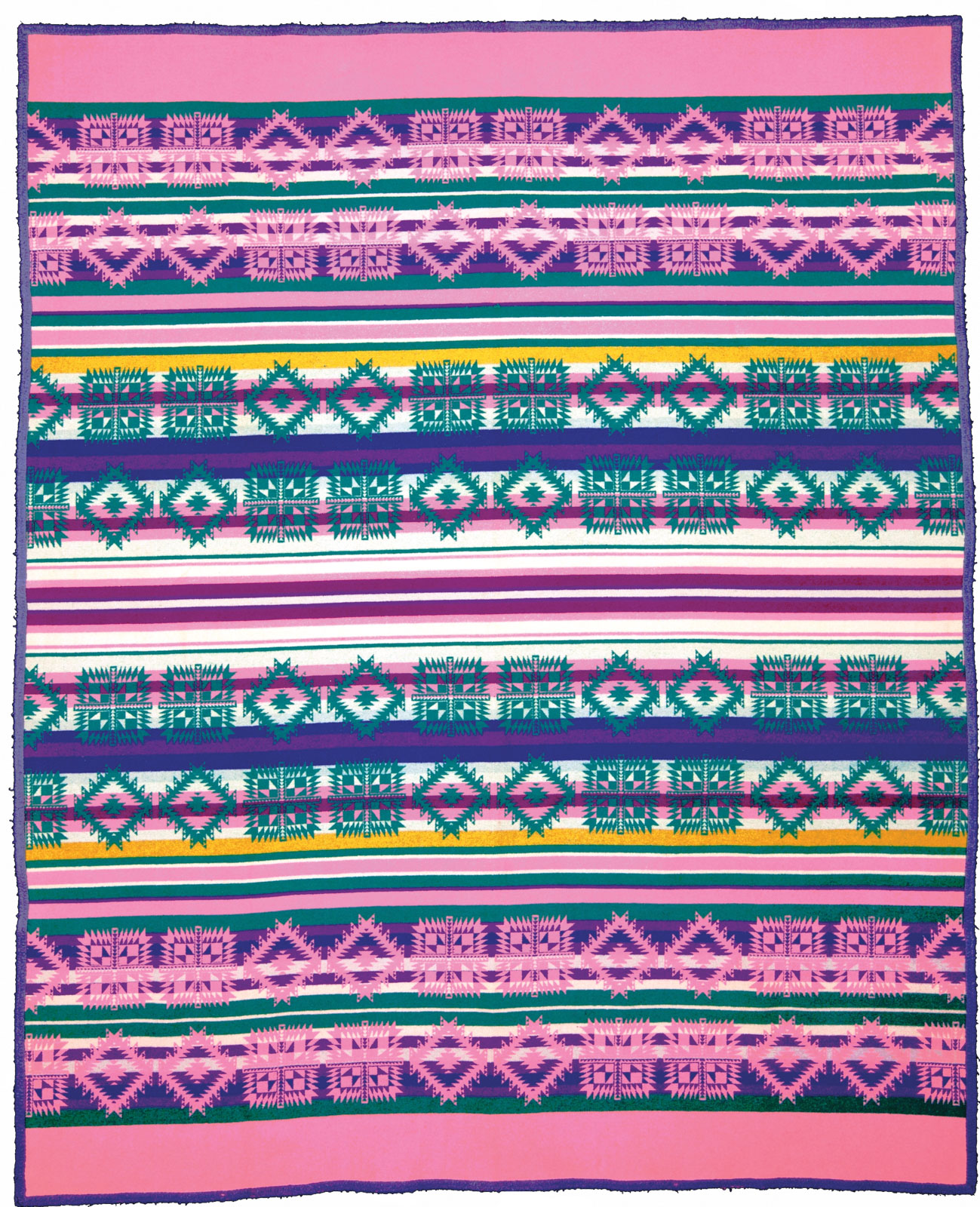 Blankets from Racine Woolen Mills of Wisconsin are especially prized by collectors. This vibrant example from around 1910 is owned by the elusive American novelist Thomas Pynchon. Photo by Frank Salle.
For O’Keefe, she can’t wait for the public and members of the Osage Nation to view the film so they can see all the work that went into telling a more authentic story using art and history. “Everything was done to bring these characters and the events they experienced alive in this story,” O’Keefe says. “We had to be true at every step.”
Killers of the Flower Moon opens in theaters this October.
Powered by Froala Editor