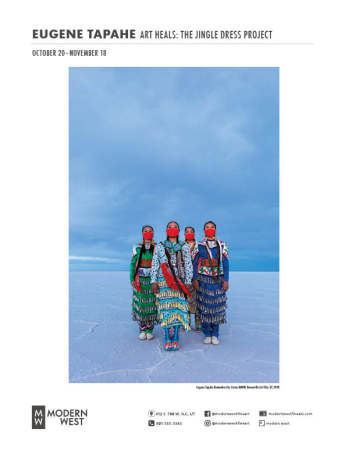
Artist Eugene Tapahe’s early years on the Navajo Nation, living off the land with his grandmother, were pivotal in understanding the importance of “respecting, preserving and protecting that which is sacred—the land, water and nature,” he says. In his thrilling show of new work for Art Heals: The Jingle Dress Project, hosted at Modern West Fine Art, Tapahe combines his love for nature and culture with approximately 16 photographic images—balancing past and present.
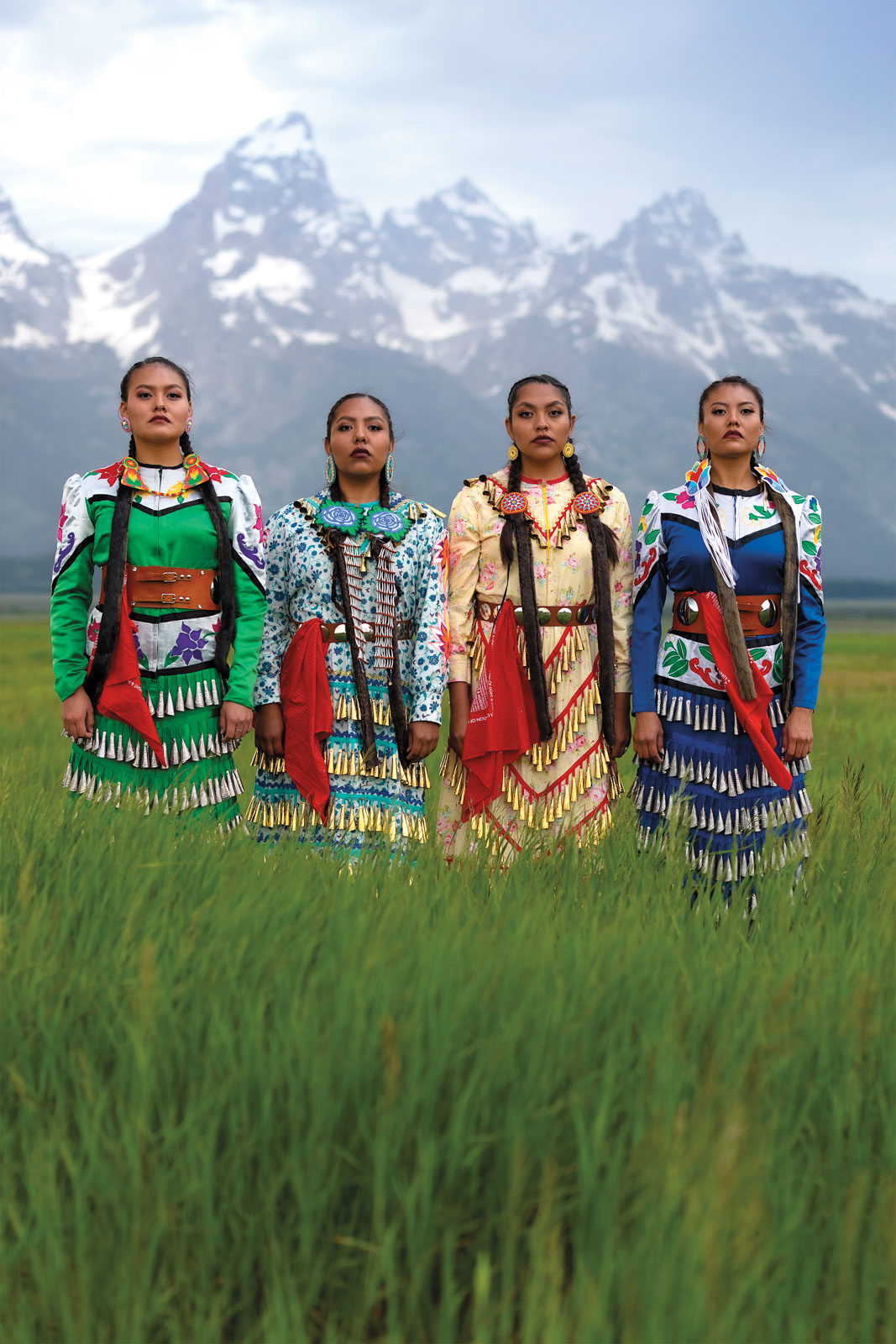 Four Worlds, Grand Teton National Park, WY, photograph, Art Heals: The Jingle Dress Project.
“Tapahe has a distinct ability to capture the essence of his subject matter, using natural light as a means of documenting the spiritual exchange of the Ojibwe jingle dress dance and the grounds his ancestors once walked,” says Shalee Cooper, gallery director and curator. Together, the photographs in Art Heals; The Jingle Dress Project create a profound viewing experience and bring global awareness to Native American issues.”
Tapahe explains that the concept behind the show originated from a dream to combine the beauty of the land with the healing power of the jingle dress dance during uncertain times due to the Covid pandemic. “The project itself is healing. It started from a dream—dreams are sacred and spiritual to Native Americans,” shares Tapahe. “They are our ancestors speaking to us, to give us insight to what we need and what we should do to better ourselves, our communities or our world.”
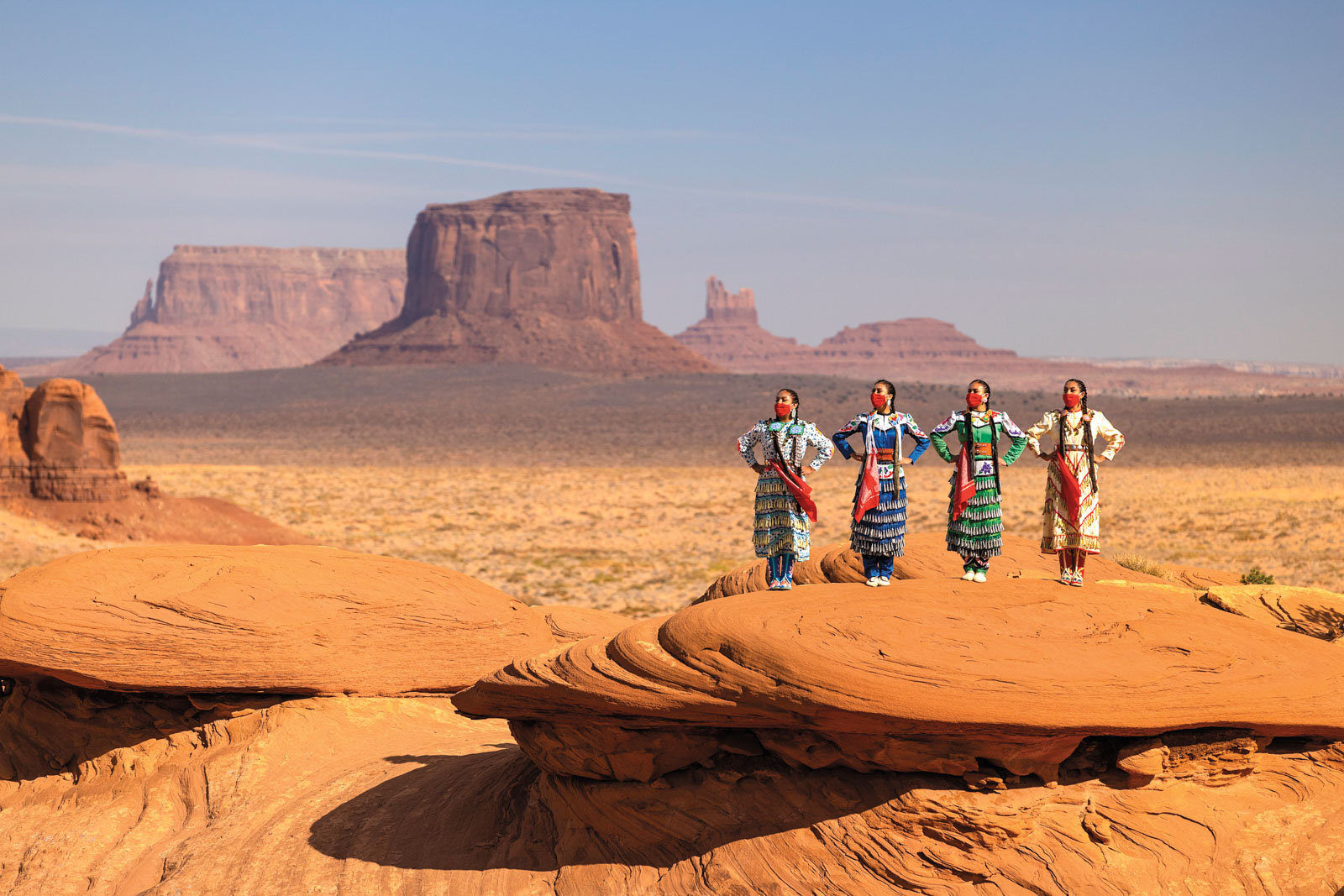 Nizhoni (Beautiful), Monument Valley, AZ, photograph, Art Heals: The Jingle Dress Project.
Dreams continue to be a strong theme throughout Tapahe’s project, beginning with the origin of the Ojibwa jingle dress. The artist explains, “The origin…happened during the influenza pandemic of 1918 to 19. It came as a dream to a father whose daughter was sick with the virus. His dream revealed the new dress and dance that had the power to heal. When the dresses were made, they were given to four women to perform the dance. When the sick little girl heard the sound of the jingles, she became stronger. By the end of the night, she was healed and danced too.”
In show piece Four Worlds, Grand Teton National Park, WY, an image that Tapahe considers to be the most iconic of the project, he shares, “This trip was very special for us all, but it didn’t start that way. It rained all day as we searched for a location. As we came to the end of the day, I had a feeling the rain would clear right before sunset, and it did. The sun came out, the tall, green grass and Teton mountains were vibrant from the moisture. What made it so special was when the girls danced on the land...what a spiritual moment it was for all of us. As we finished our photo session, it started to rain again. A blessing for all of us (culturally, rain is a blessing from above).”
In another significant photograph, Nizhoni (Beautiful), Monument Valley, AZ, it was the group’s first time since the pandemic when they were able to return to their traditional homeland. “The Navajo Nation, like most Native communities were hit hard by Covid,” Tapahe says, “which led the Navajo Nation to close their borders to the outside world. This was the first time this project became personal for us, and the first time the girls were able to dance on their homeland. It was a spiritual moment to be home again.”
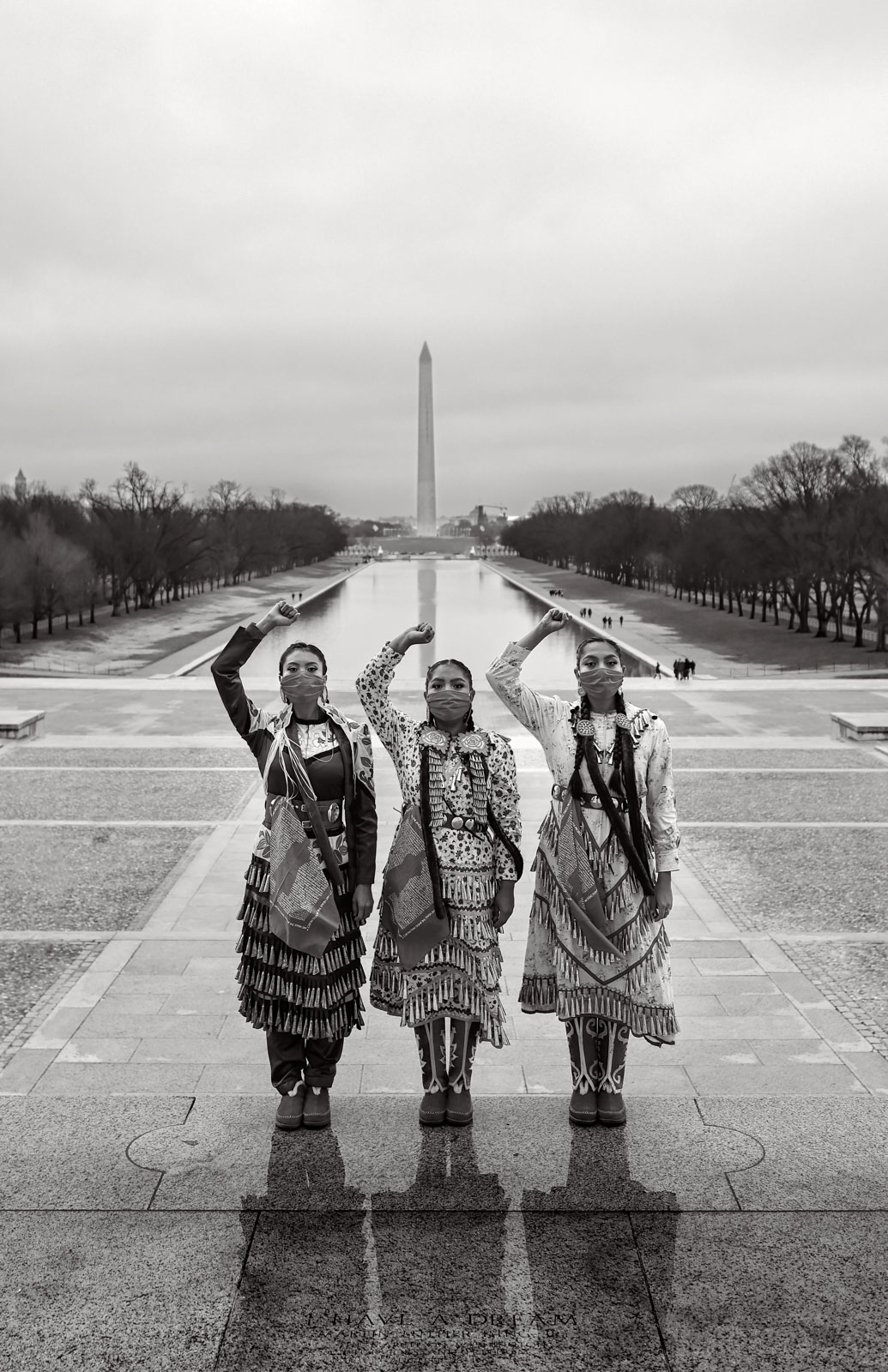 We Have a Dream, Lincoln Memorial, D.C., photograph, Art Heals: The Jingle Dress Project.
Tapahe’s hope for viewers of the show, is that they garner a sense of it being bigger than themselves, as it has felt for him—“That we are all blessed to be in the presence of such beauty,” he says. Experience the healing power of Tapahe’s art at Modern West Fine Art from October 20 through November 18, with a reception on opening day from 6 to 8 p.m.
Modern West Fine Art
October 20-November 18, 2023
412 S. Seventh West, Salt Lake City, UT 84104
(801) 355-3383, www.modernwestfineart.com
Powered by Froala Editor