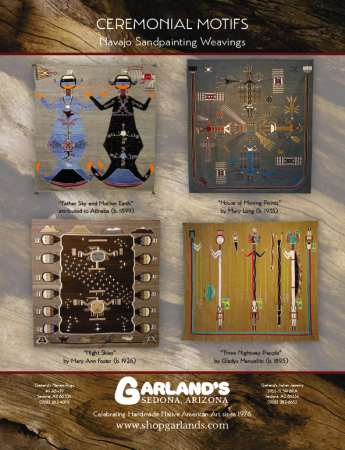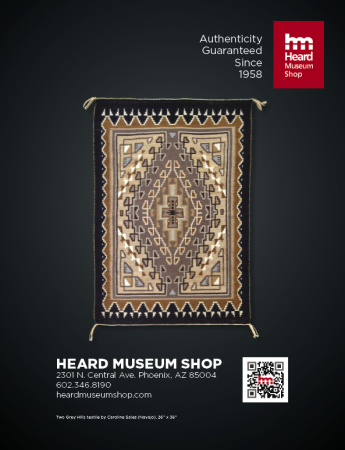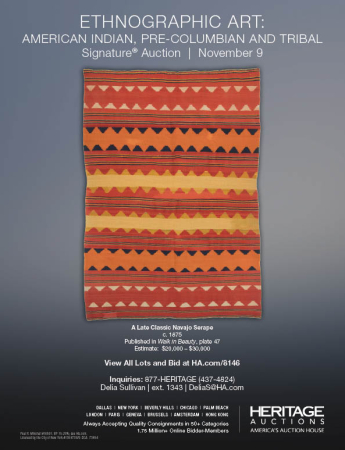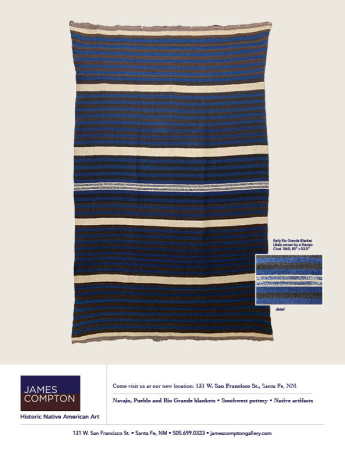
Navajo, or Diné, are recognized as great masters of textile weaving, a skill rooted in the mythology of the Spider Woman who is credited with teaching them how to weave. According to legend, Spider Woman made her home atop Canyon de Chelly’s towering spire where, after weaving the web of the universe, she shared the gift—and the way of life it symbolizes—with the Navajo people. Given the significance of Spider Woman in the Diné origin story and her home’s relative proximity to Four Corners, it is no surprise that some of the most impressive weavings have emerged from the region.
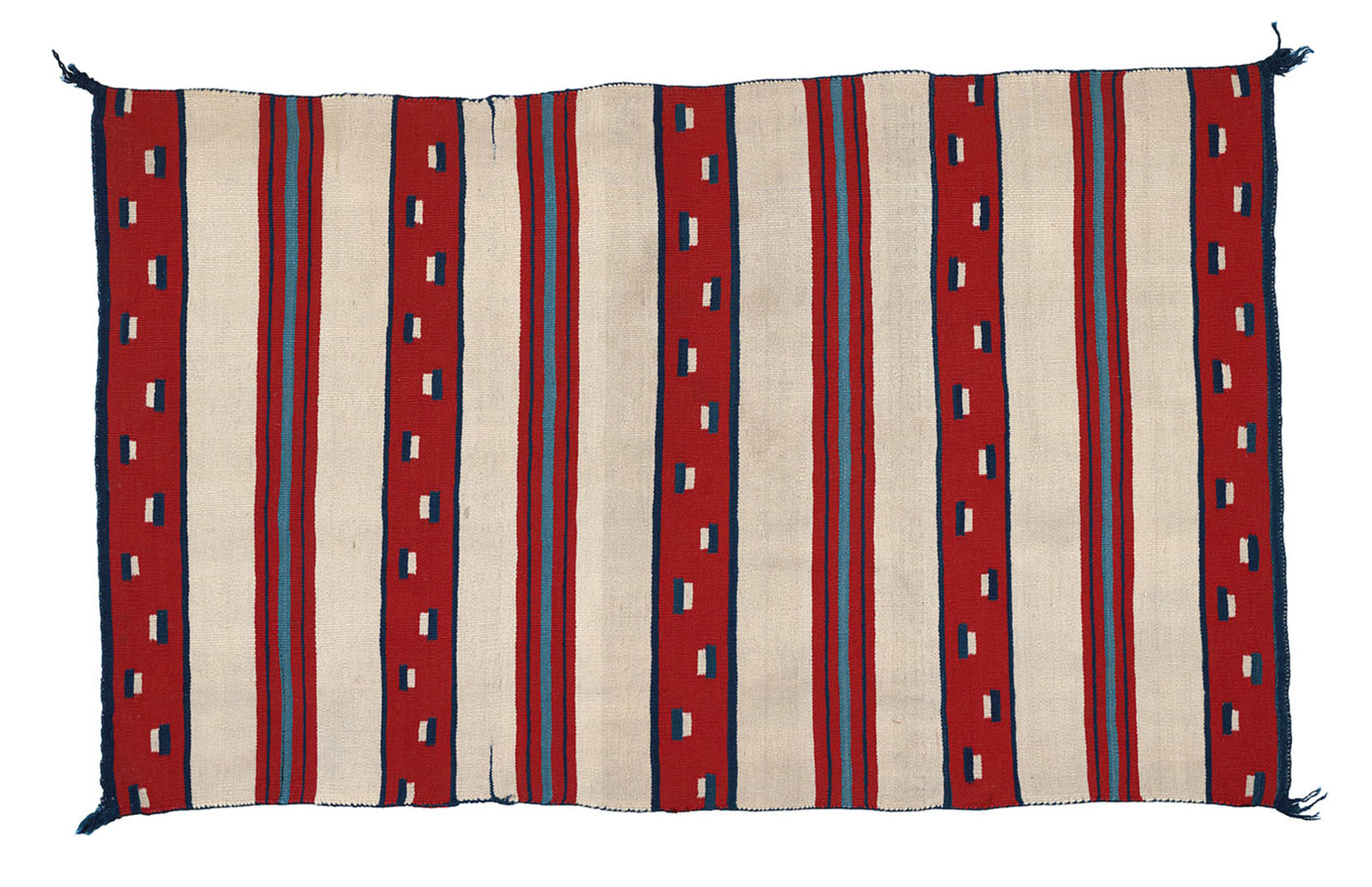 Classic Navajo Child’s Blanket, ca 1865. Cochineal dyed bayeta, light indigo blue, dark indigo blue and handspun white, 30 x 48”
An upcoming exhibition at the Taos Art Museum will zoom in on a specific woven form—the Navajo child’s blanket. Art of Timeless Beauty, the Navajo Child’s Blanket, which will be on view in the historic Fechin House from September 19 through May 30, 2024, will showcase some of the finest examples of the weavings from the 19th century, a time period scholars agree that produced some of the most profound and balanced designs. The exhibit will explore the evolution of blanket design, from simple bands and stripes to more elaborate and complex patterns, and the historical context for how the Navajo adapted their weaving in response to changing and often challenging circumstances.
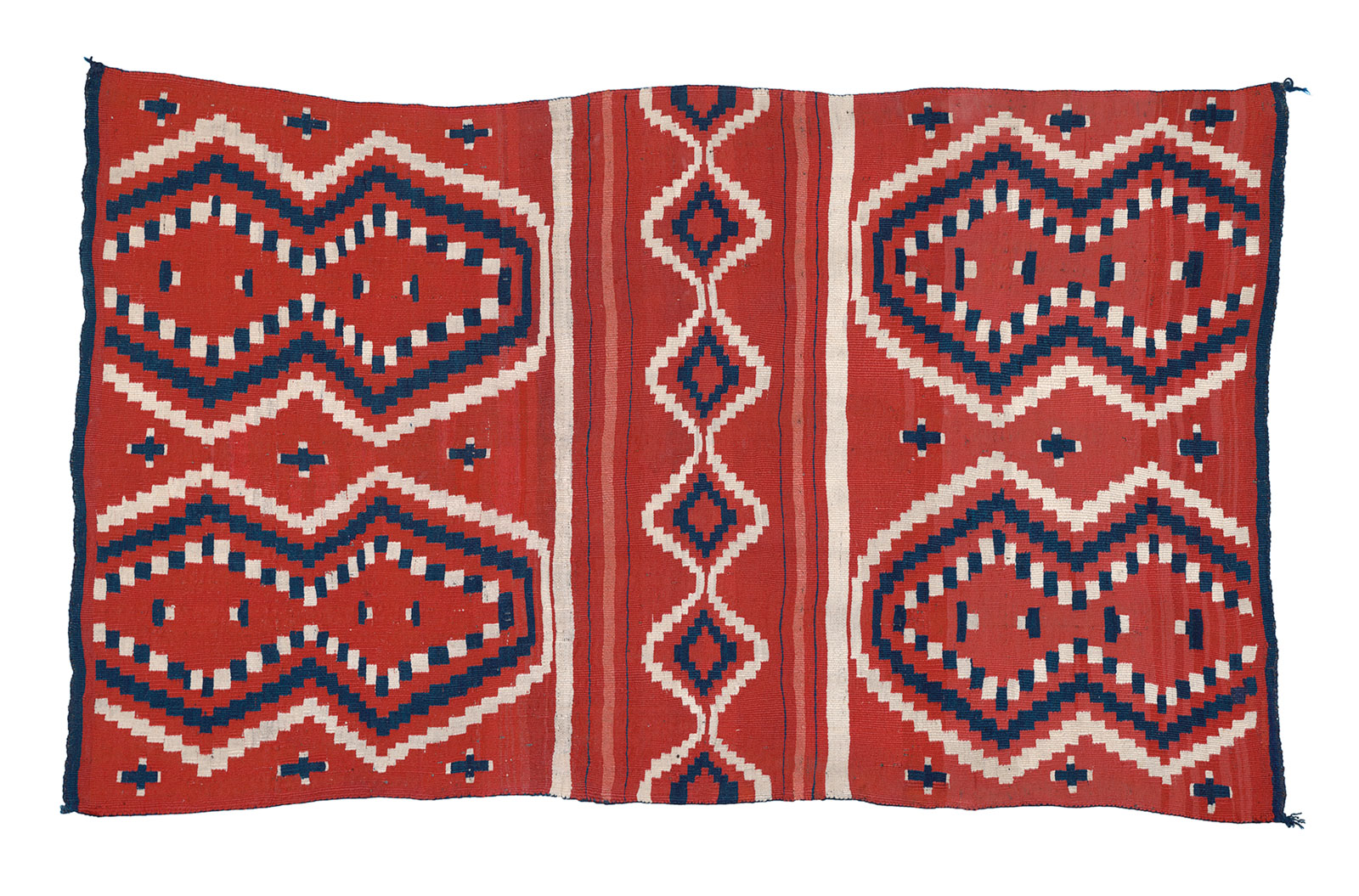 Classic Navajo Child’s Blanket, ca. 1860-1865. Lac-dyed bayeta, indigo blue, and handspun white, 32 x 52”
“The Navajo Childs’ blankets are testaments of the prowess of Navajo weavers,” writes Navajo (Diné) artist Tony Abeyta in the exhibition catalog. “Proportionally they were to have all the elements of the larger wearing blankets that preceded them but within the manageable scale of a Navajo woman’s dress half. The idea of the child’s wearing blankets as being utilitarian is often argued; there are only a few photos of these fine blankets worn by the Navajo people, most of them adults. The earliest versions were perhaps used to wrap and cradle small children. Regardless of their intended purpose, these smaller format blankets prevailed as some of the finest achievements from the Navajo loom.”
Navajo weavings contain the stories and the history of the Diné experience—their encounters and interactions with people and places, of ritual and ceremony, the early trading days with the Spanish, Utes and Anglos; colonialism, the years of conflict, dislocation, trauma and later assimilations.
“Experiences of these cultures are interwoven with a story of each encounter, marking the widths of indigo and dark brown bands from the nearby pueblos,” continues Abeyta. “Images of complex terraces forming central diamond motifs came from the Spanish. Pictorial elements woven in newfound colors of aniline dyes traded from the Anglos inevitably dictated directions that Diné weavers were to take into the century ahead.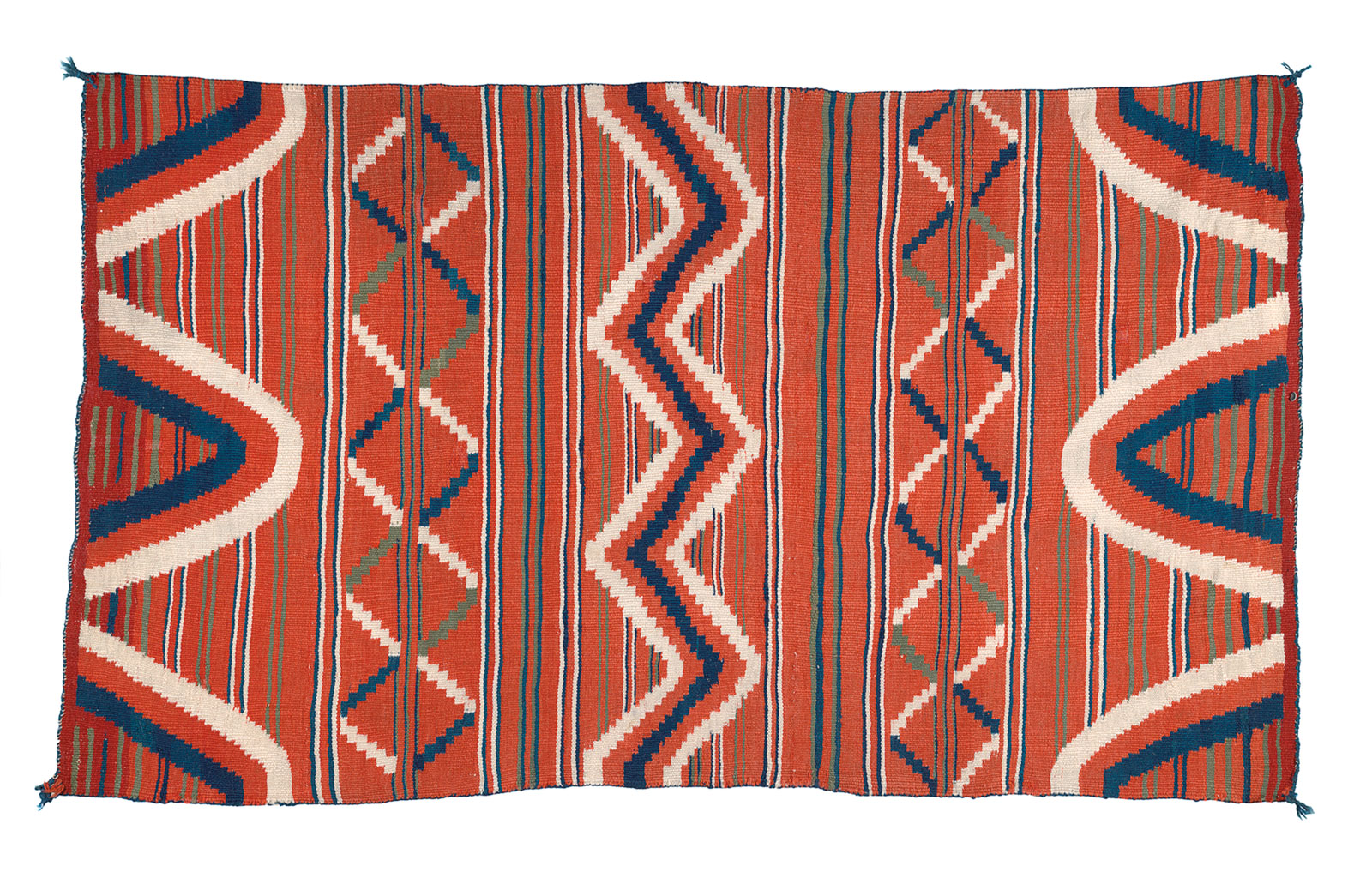 Late Classic Navajo Child’s Blanket, ca.1870. Aniline-dyed bayeta, cochineal-dyed bayeta, indigo blue, indigo and vegetal green and handspun white, 31 x 53”
“The Navajo experiences are woven into each of the blankets in this exhibit, each weft woven with songs and a sense of place where they were woven in a home with their own sheep’s wool. This tradition continues today with newfound directions, all informed by our past. The evolution is always returning to the original source of tradition and the teachings of Spider Woman, as well as the earlier weavers who lived these lives of survival and assimilation. The Navajo weaver often rubs a spider’s web into her hands to bless herself before beginning a weaving. A child also received the blessing of the web so that one day she may grow to be a fine weaver as well; a blanket woven by a child of Spiderwoman for a child.”
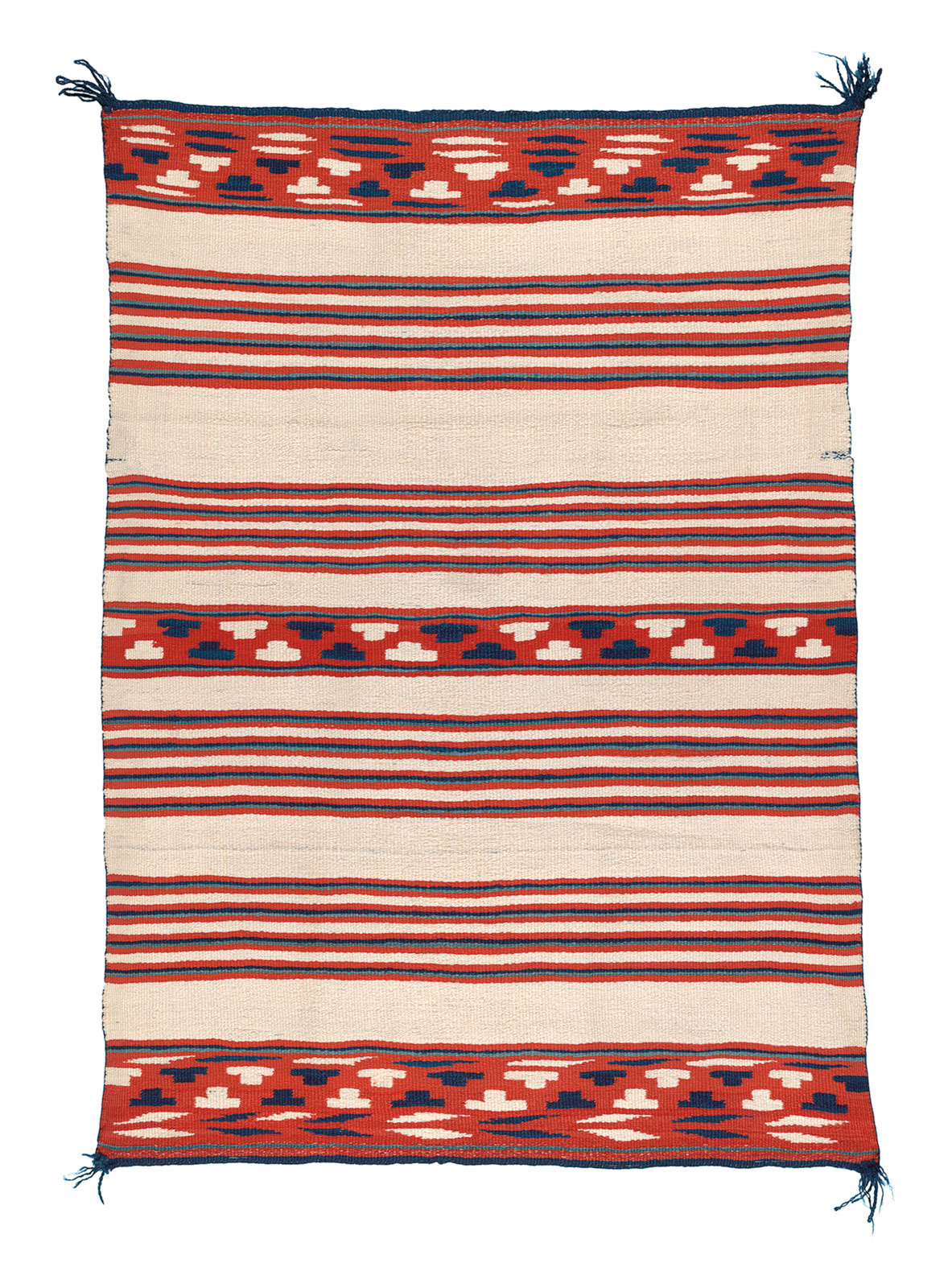 Classic Navajo Child’s Blanket, ca. 1865. Cochineal-dyed bayeta, indigo blue, indigo and vegetal green and handspun white, 43” x 31”
An exhibition reception for Art of Timeless Beauty, the Navajo Child’s Blanket will be held at Taos Art Museum on Saturday, September 23, from 5 to 7 p.m.
Sept. 19, 2023-May 30, 2024
Art of Timeless Beauty, the Navajo Child’s Blanket
Taos Art Museum, 227 Paseo Del Pueblo Norte, Taos, NM 87571 (575) 758-2690, www.taosartmuseum.org
Powered by Froala Editor