The Shelburne Museum has had Native American artworks in its collection since its founding in 1947, but in the 1990s, much of that work was removed from display. “At the time, they realized that because they didn’t have a curator of Native American art, they weren’t able to sensitively and appropriately display it,” says Victoria Sunnergren. Recently, the museum’s board made it a priority to rectify that gap, and Sunnergren was brought on board as the museum’s first associate curator of Native American art last October.
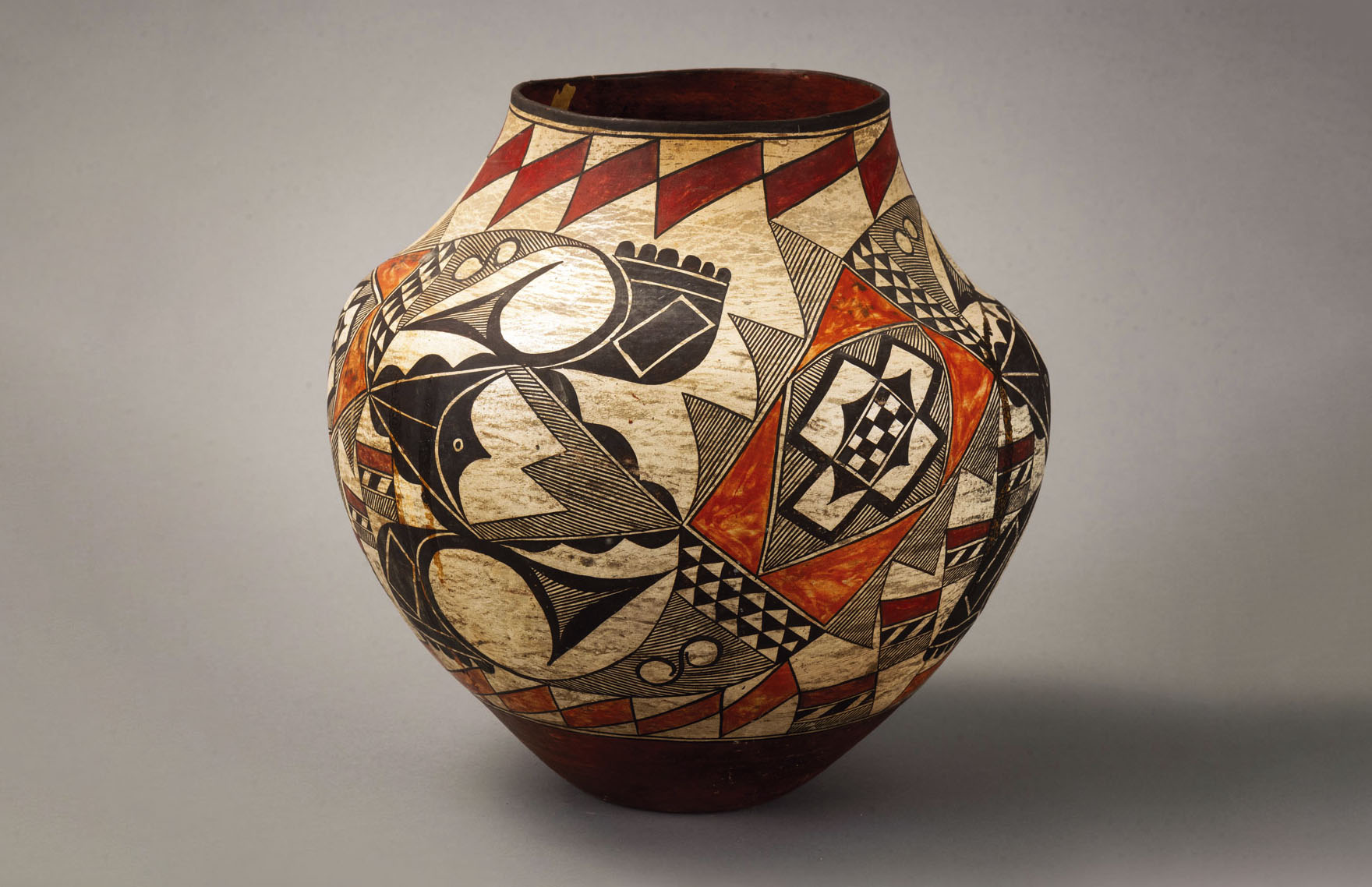
Maker formerly known [Haak’u (Acoma Pueblo)], Polychrome Jar, ca. 1890. Perry Collection of Native American Arts. PT47. Photography by Andy Duback.
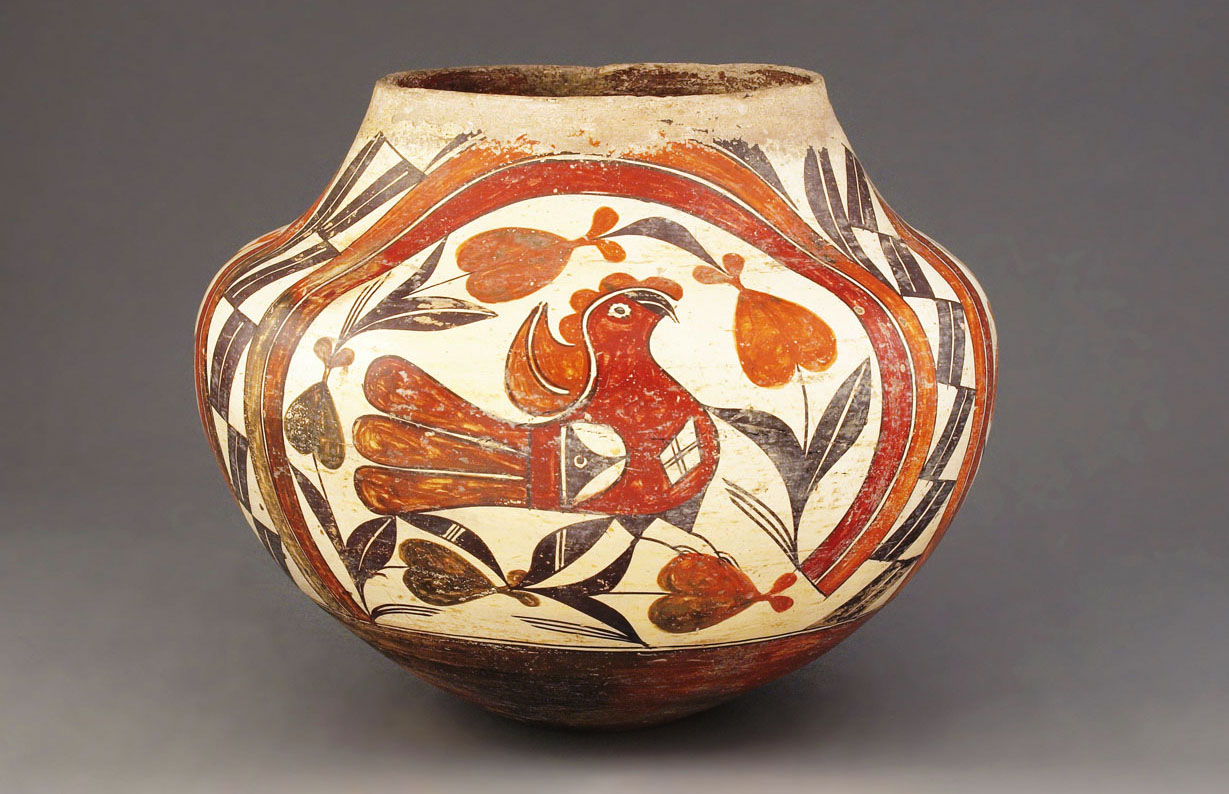
Maker formerly known [Haak’u (Acoma Pueblo)], Polychrome Olla, 1890s. Perry Collection of Native American Arts. PT44.
The museum will celebrate the return of Native art to its galleries with the exhibition Built from the Earth: Pueblo Pottery from the Anthony and Teressa Perry Collection. “I personally love pueblo pottery, and it really seemed like a natural place to start,” says Sunnergren. “We really see this as a community-building opportunity, and we’ve been working with a board of consultants made up of scholars and artists from all the Pueblos to make sure we’re doing everything right. I think that’s going to set a really great precedent for the Native American art exhibits we host in the future.”
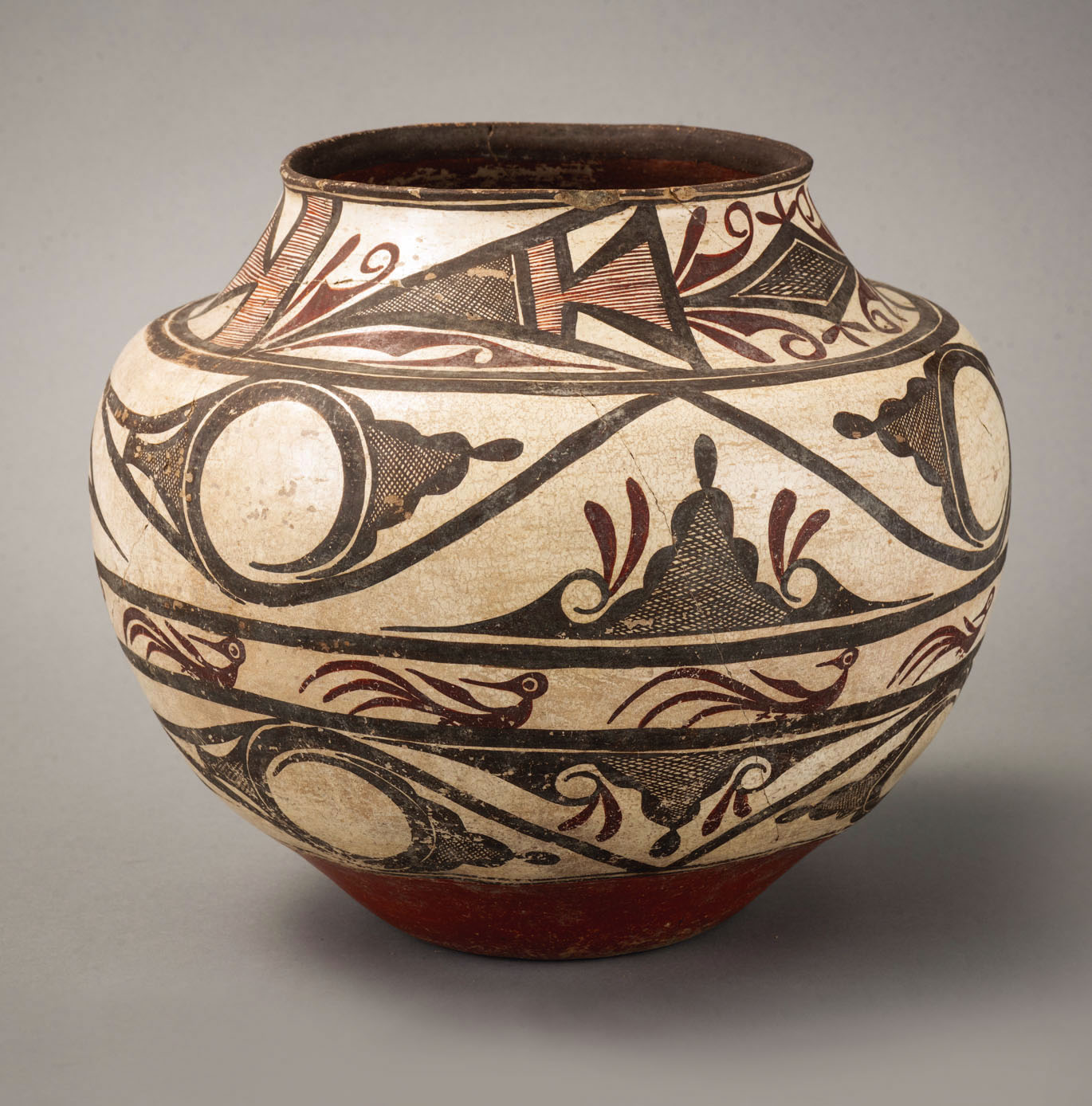
Maker formerly known [Halona:wa (Zuni Pueblo)], Polychrome Jar, ca. 1865. Perry Collection of Native American Arts. PT49. Photography by Andy Duback.
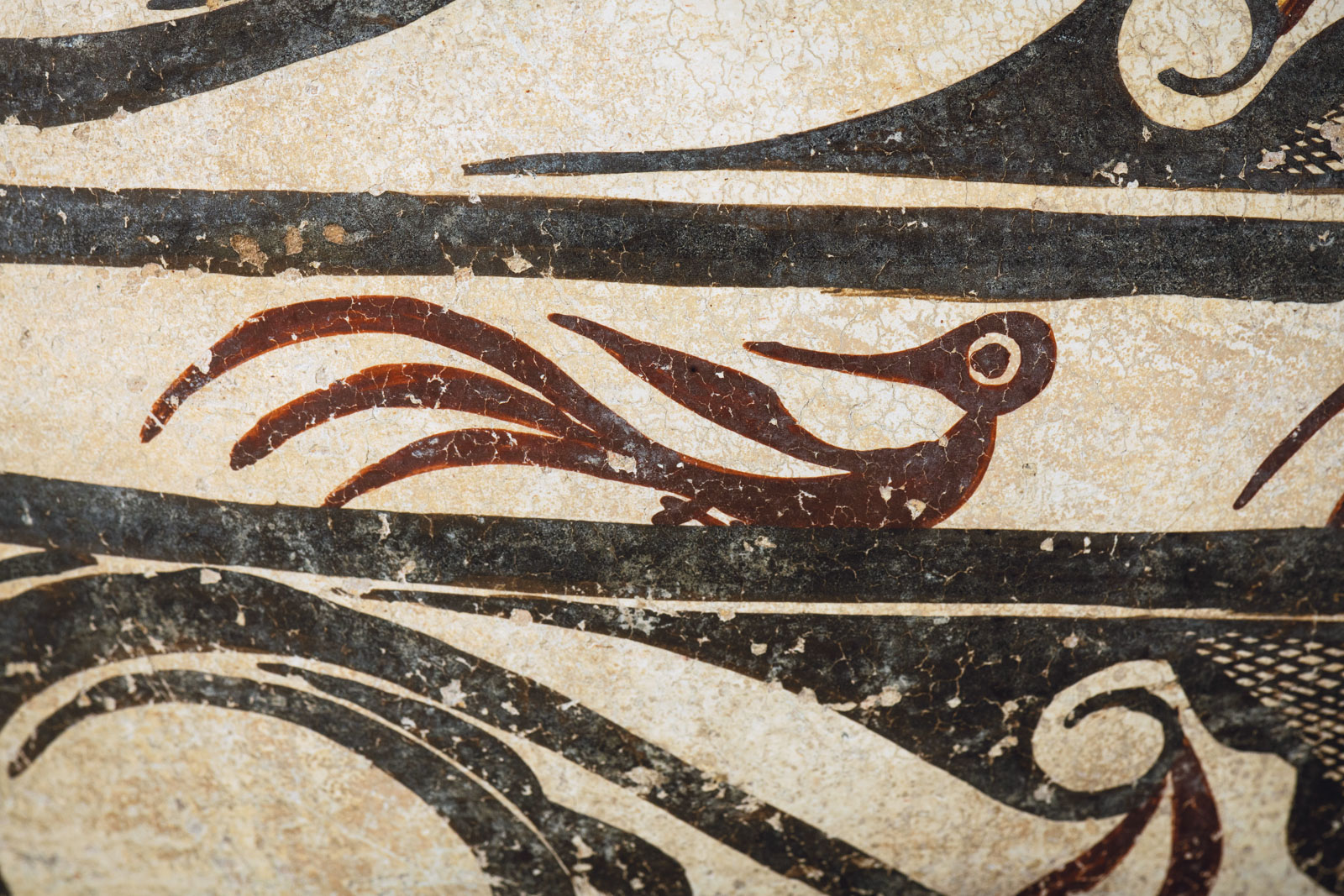
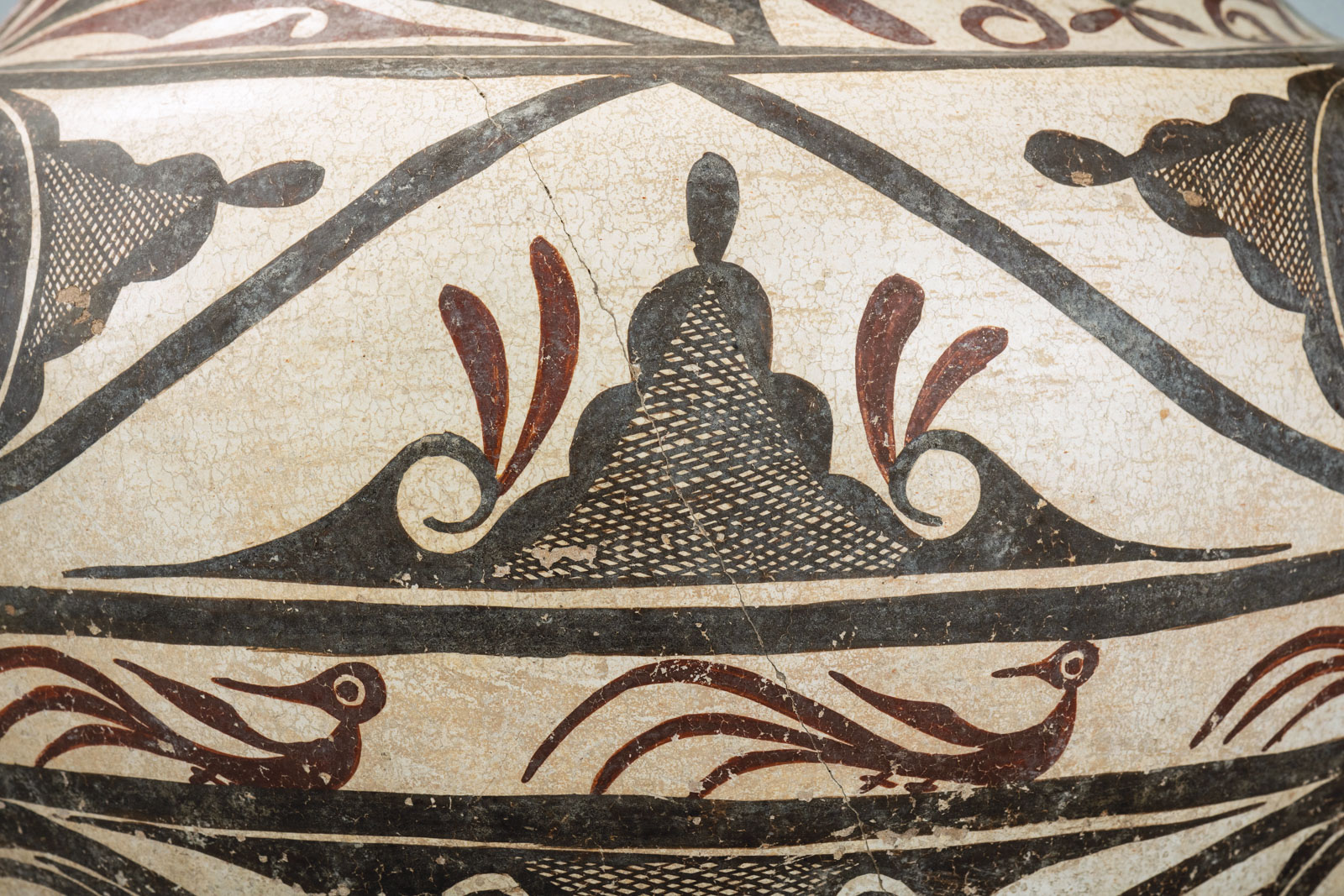
Though the Anthony and Teressa Perry Collection features more than 200 pieces of Native American art—including pottery, garments, moccasins and more—this exhibition will feature a selection of 24 pueblo masterpieces. A common theme among the pieces is the spiral, and the exhibition space will be laid out in a circle. As visitors move through, they will learn about how pueblo pottery is made. “For visitors with a Vermont background, they are likely much more familiar with pottery that’s made by being thrown on a wheel,” Sunnergren says.
One of the centerpieces of the exhibition is a storage jar from Acoma Pueblo that was created around 1880 to 1890. It features two large parrots with curved beaks. While parrots can be seen on many of the pottery pieces in the exhibition, this is a particularly beautiful example. Sunnergren describes, “Between the two birds, there’s a rainbow, and in person, the colors on the piece are really bold. It’s an incredibly lovely piece.”
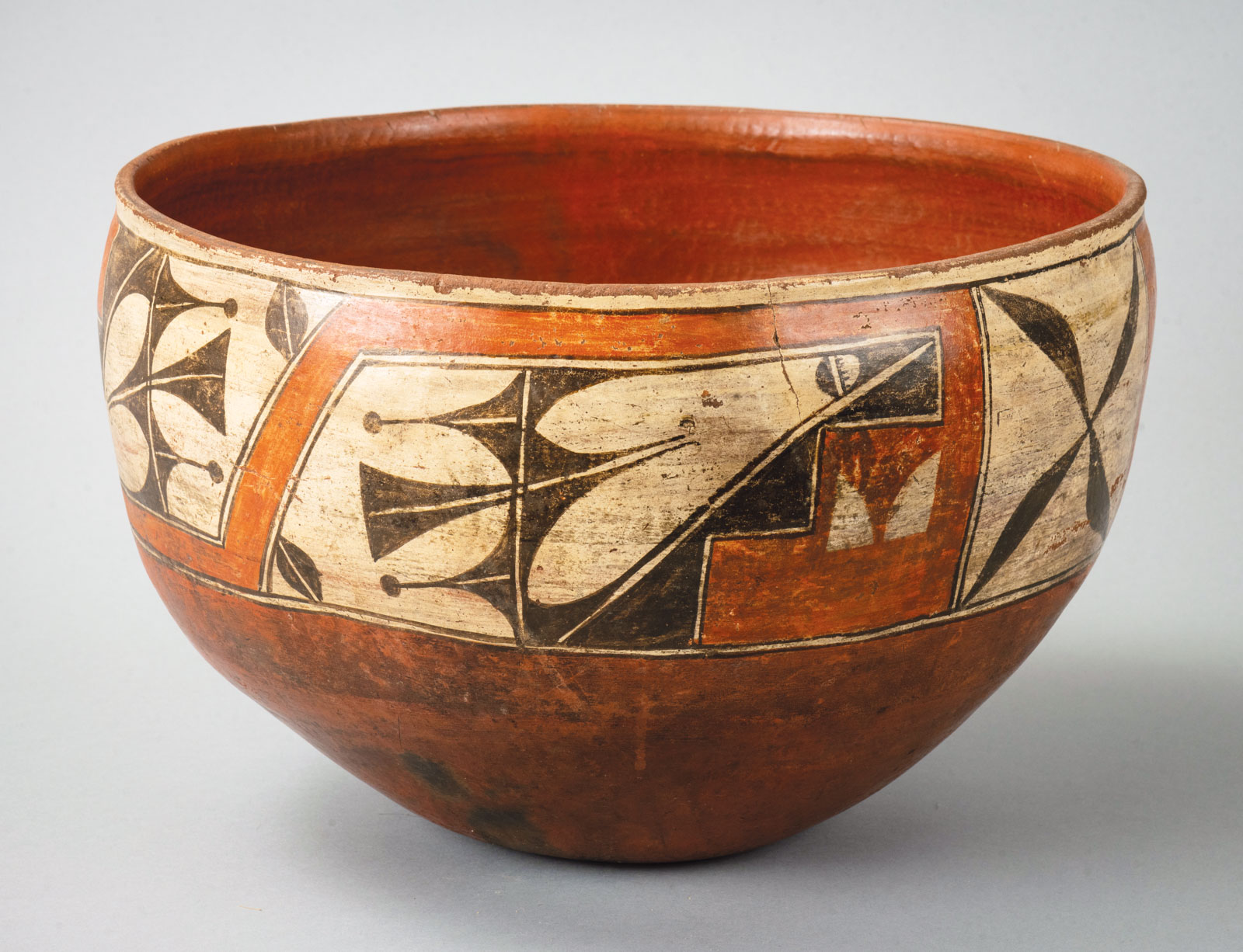
Maker formerly known [Ts’iya (Zia Pueblo)], Dough Bowl, 1930–40s. Perry Collection of Native American Arts. PT13. Photography by Andy Duback.
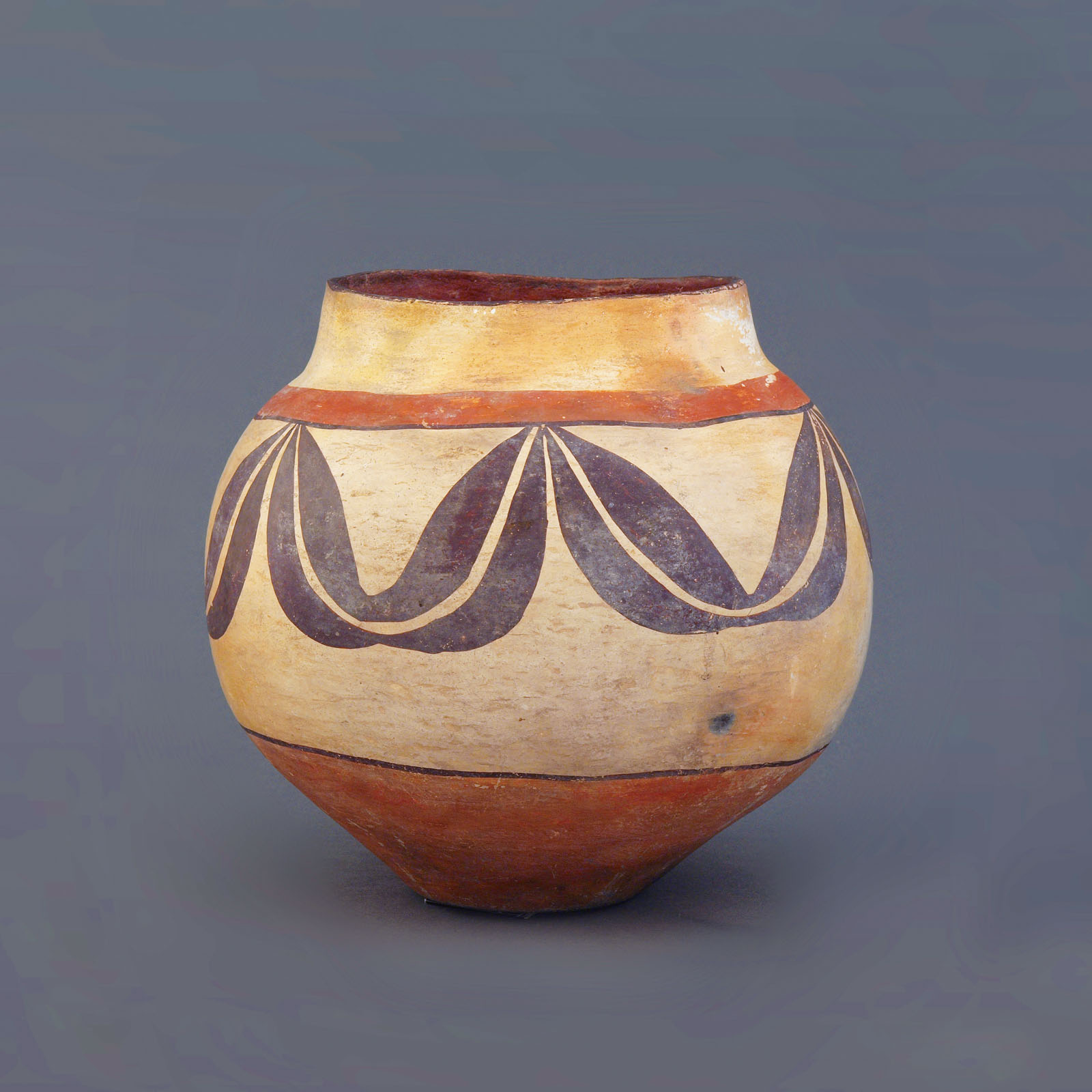
Maker formerly known [Haak’u (Acoma Pueblo)], Acomita Polychrome Jar, ca. 1840. Perry Collection of Native American Arts. PT48.
Another storage jar from Cochiti Pueblo, circa 1860 to 1880, prominently features a double spiral, one more spiraled than the other. “When I look at it, it makes me think about clan migration and travel, and how the spiral imagery reflects on how these pots have traveled as well as their creators,” Sunnergren says. “The pots have traveled from their home in the Southwest and now they are here in Vermont, and I think their creators were likely reflecting about their own migrations as well.”
Sunnergren sees this exhibition as a critical opportunity to introduce Southwestern Native art to a Vermont audience. “I really want people here to recognize the beauty of Native art, both historic and contemporary,” she says. “There were so many amazing artists, and there are so many amazing Native artists, and I see this as a jumping-off point. We’re thinking really hard about our Native art collection, and what’s the best way to present them and get them out of storage.”
For visitors who want to see a piece of art from local tribes in addition to the Southwestern pueblo pottery exhibition, the museum will have a Mohegan birchbark canoe on display in their lobby. “We think it’s a good way to welcome people to this land and acknowledge that this was Abenaki land before they enter into the Southwestern Native art,” Sunnergren says.
Built from the Earth will open June 24 and remain on view through October 22.
June 24-October 22, 2023
Built From Earth: Pueblo Pottery from the Anthony and Teressa Perry Collection
Shelburne Museum, 6000 Shelburne Road, Shelburne, VT 05482, (802) 985-3346, www.shelburnemuseum.org
Powered by Froala Editor