
The Smithsonian American Art Museum’s highly anticipated Renwick Invitational, now in its 10th installment hosted at the museum’s Renwick Gallery, highlights more than 50 artworks addressing the “nuanced visions” of six Native American and Alaskan Native artists. The theme of the exhibition, exposed within the title Sharing Honors and Burdens, focuses on honor in Native American family and community, while also illuminating the burdens that affect them as well.
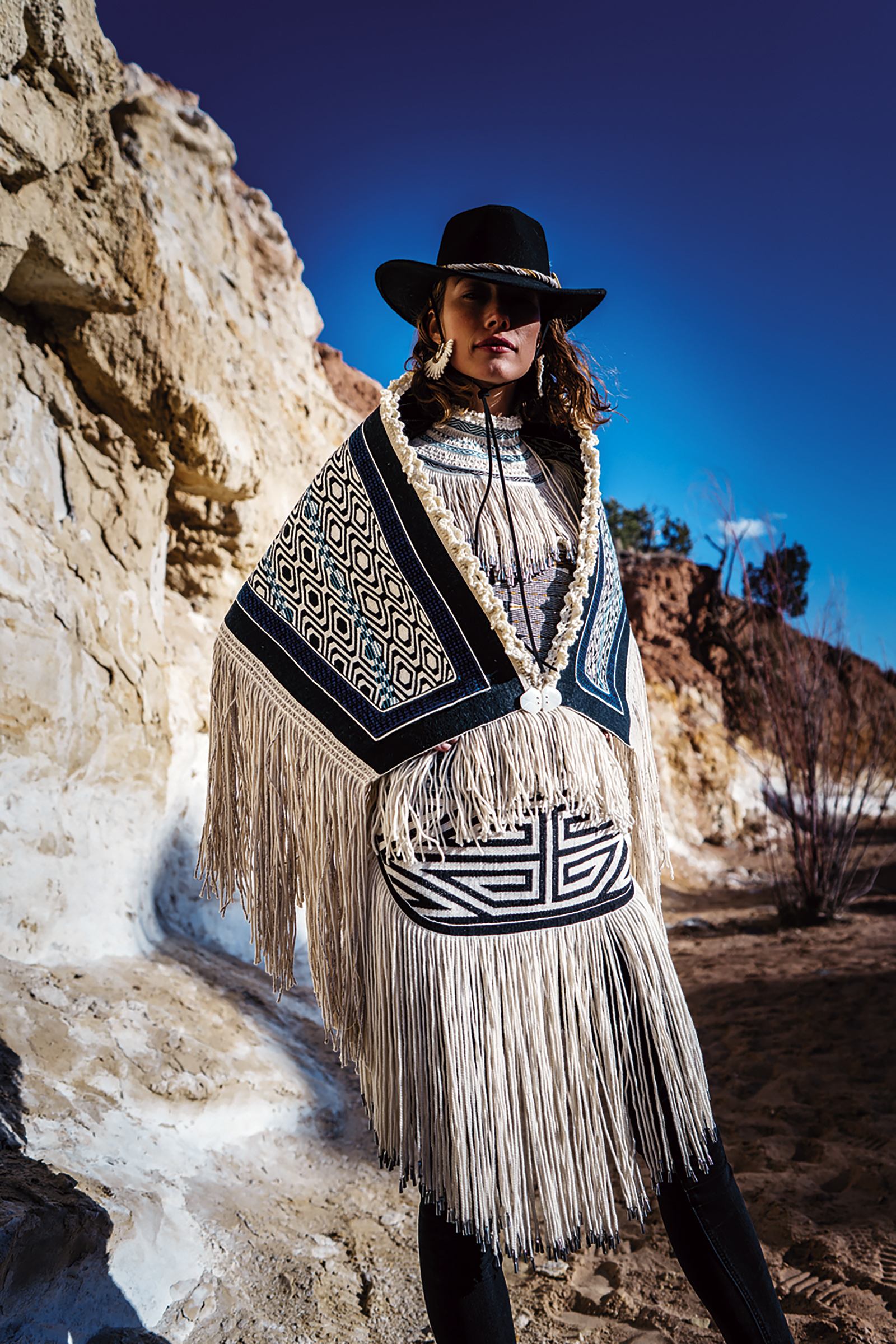
Ursala Hudson (Tlingit), We Are the Ocean, 2021, collar: merino, silk, steel cones and leather; Woman As Wave robe: thigh-spun merino and cedar bark with silk; Tidal apron: merino, silk, leather, steel cones and Tencel, women’s size 6, National Museum of the American Indian, Smithsonian Institution. Purchased with support from the Ford Foundation, 27/717. Photo by Kahlil Hudson.

Erica Lord (Athabaskan/Iñupiat), Adrenocortical Cancer (Diabetes Complication) Burden Strap, DNA/RNA Microarray Analysis, 2021, glass beads and wire, 7½ x 50 x ¼." Courtesy of the artist and Accola Griefen Fine Art, 2023.35. Photo by Addison Doty.
As for the museum’s development process involving a juried panel, “we were looking at the selection of works by these artists, noticing some overlaps with theme and we were really struck by some of the art forms and material,” says Lara Evans (Cherokee Nation), guest curator for the Renwick Gallery, vice president of programs with First Peoples Fund, and formally the founding director of the Research Center for Contemporary Native Arts at the Institute of American Indian Arts. “Our practice among [Native American people] is honoring relationships, traditions and one another—family, clan and even intertribal connections.” The exhibition was also organized in partnership with Nora Atkinson, the Fleur and Charles Bresler Curator-in-Charge at the Renwick Gallery. Evans also discusses how honor often comes with responsibilities and burdens. “Some of these works are addressing the burdens or the negative aspects in our communities,” she explains. “For example, Erica Lord (Athabaskan/Iñupiat) looks at the burden of disease by using visual representations that come from genetic testing.” This is illustrated in pieces Lord calls Burden Straps, like Adrenocortical Cancer (Diabetes Complication) Burden Strap, DNA/RNA Microarray Analysis or Leukemia Burden Strap. The multimedia works, incorporating glass beads and wire, are combining the genetic disease patterns with objects that might normally convey honor.

Lily Hope (Tlingit), Memorial Beats, 2021, thigh-spun merino and cedar bark with copper, headphones, and audio files, 16 x 4 x 10." The Hope Family Trust. Photo by Sydney Akagi.
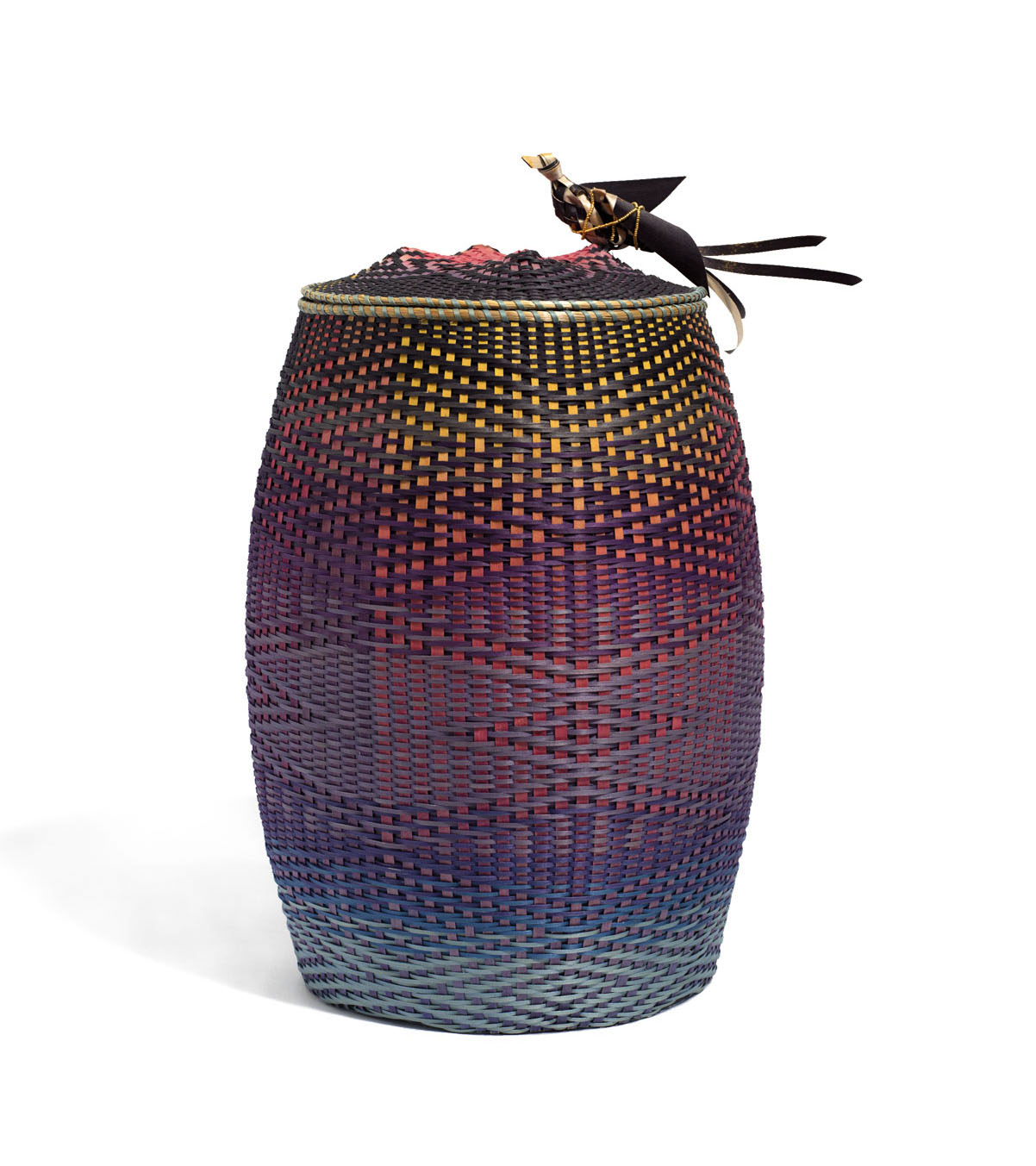
Geo Neptune (Passamaquoddy), Apikcilu Binds the Sun, 2018, ash and sweetgrass with commercial dye, acrylic ink and 24-karat gold-plated beads, 16½ x 9." Bowdoin College Museum of Art, Brunswick, ME, Museum purchase, The Philip Conway Beam Endowment Fund. Photo by Luc Demers.
“Some of the artists in the exhibition are prompting us to think about the burdens we carry intentionally and proudly, as well as the burdens we don’t have any choice in and are imposed upon us from external sources,” says Evans. “All of the works were also created with the intent to address contemporary issues and communicate cross culturally.”
Sisters Ursala Hudson and Lily Hope, both Alaskan Native Tlingit of the T’ak Dein Taan Clan and from the Snail House of the Raven moiety, have astonishing woven textiles in the exhibition that combine this contemporary discussion tied-in with family. For Hope, “all of my work is rooted in the traditions of ceremonial regalia with a hand on the pulse of contemporary expression…,” she shares. “All of the works speak to the themes of supporting and uplifting each other, relying on one another and co-creating.”
Hope’s piece Memorial Beats, a set of woven headphones, “speaks to the relationship of my sister and I to our mother. We utilized the ‘sisters’ pattern, intending that the wearer tune-in to ancestral weavers in their lineage. These [exhibition] works and so much of my other work is about listening to our teachers (even from beyond the veil), honoring the work that they left in our care, and the burden of carrying their teachings with integrity and grace.”
For Hudson, woven pieces like her collar We Are the Ocean, with robe; Woman As Wave and apron; Tidal, “speaks to this idea of vast multi-generational unfolding,” she says. “The hypnotic pattern is representative of our interconnectedness; the stories/journeys we navigate get flipped back-and-forth through the generations, blurring the lines between the past, present and future. Just as a wave is a brief expression of the ocean—raised up by the precise swelling of a zillion molecules below—we are a brief expression of the Greater Spirit.”
Several components within her ensembles demonstrate how Hudson is embracing the diverse traditions of her mixed-race lineage. “They honor my full bloodline, telling a story of a contemporary Indigenous woman who has been influenced by infinite sources,” she says.
Maggie Thompson (Fond du Lac Ojibwe), another textile artist, explores themes of grief, loss and trauma as part of her own healing process, and to inspire healing in others—the honor she found within the burden. Her exhibition piece I Get Mad Because I Love You, “speaks to psychological abuse experienced in relationships,” she explains, while pieces like The Equivocator “speaks to the physical reaction of the body that is experienced when something is not right. One is a representation of the mental while the other is a representation of the physical.”
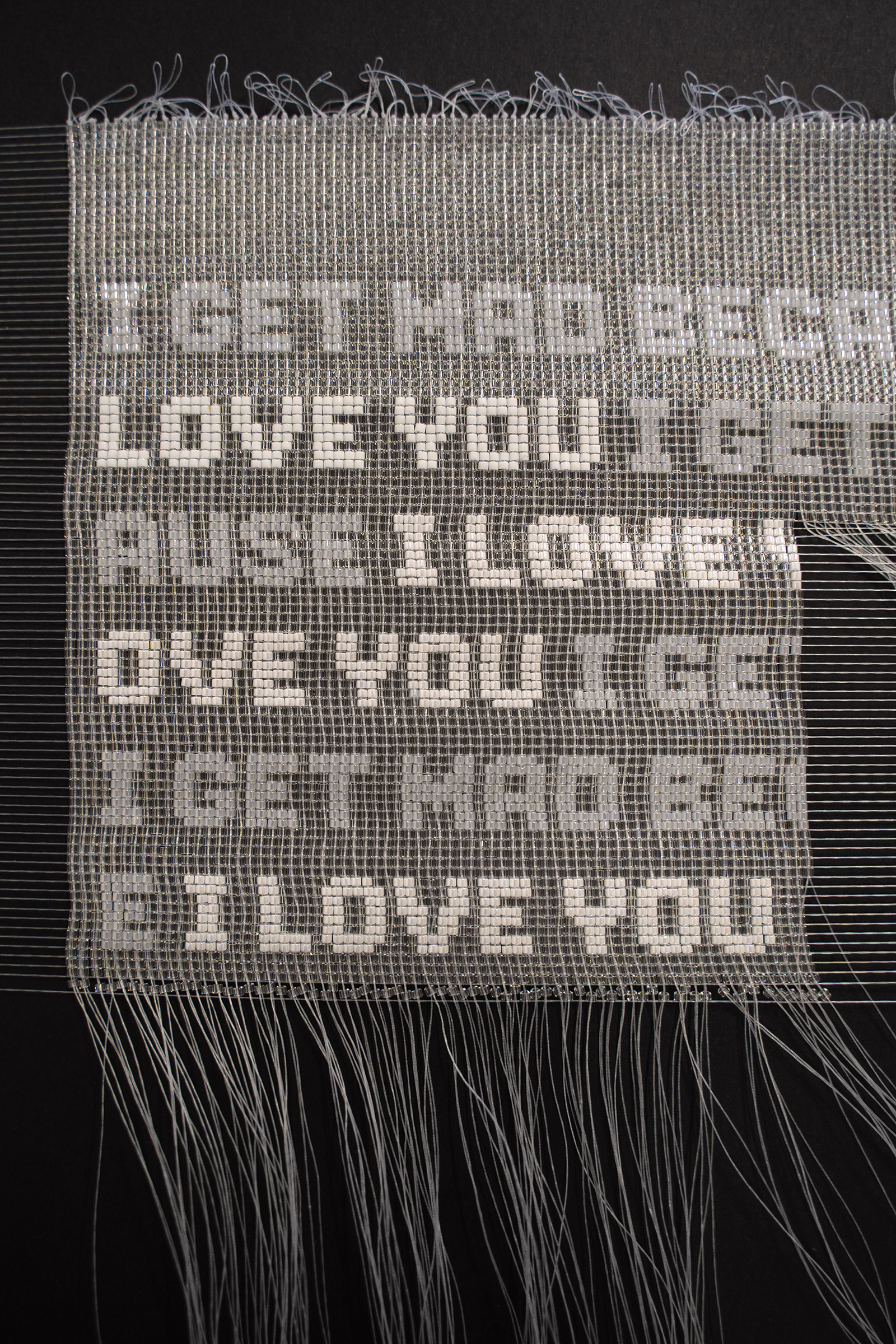
Maggie Thompson (Fond du Lac Ojibwe), I Get Mad Because I Love You, 2021-22, glass beads and filament, 48 x 72 x 1." Courtesy of the artist and Bockley Gallery. Image courtesy of the artist.
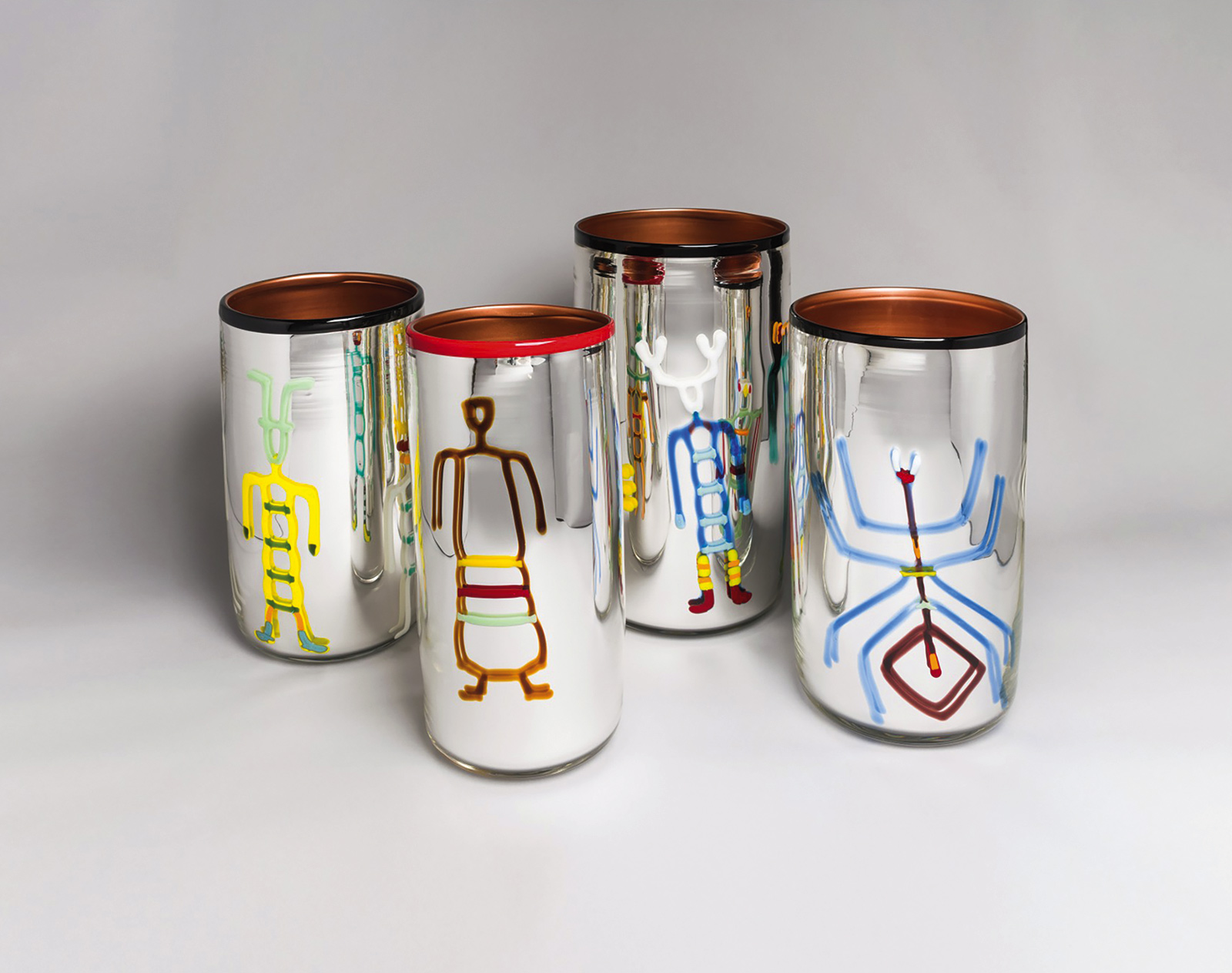
Joe Feddersen (Arrow Lakes/Okanagan), Social Distancing series, 2021, mirrored and blown glass, six vessels: approx. 16 x 8" each. Anonymous, Museum of Glass, Tacoma, WA, Gift of the artist; and Courtesy of the artist. Photo by Mario Gallucci.
Additional works not to be missed include Joe Feddersen’s (Arrow Lakes/Okanagan) glass vessels from his Social Distancing series, and prints like Bestiary 5. Geo Neptune (Passamaquoddy) showcases his basket making abilities in beautiful examples like Apikcilu Binds the Sun and Basket with Cover.
The exhibition, opening May 26 and running through next March, will also include a film documentary of artist interviews and demonstrations alongside the artworks. Artists Lord, Feddersen and Thompson will have installation pieces on display as well.
May 26, 2023-March 31, 2024
Sharing Honors and Burdens: Renwick Invitational 2023
Smithsonian American Art Museum at Renwick Gallery
1661 Pennsylvania Avenue, NW #1, Washington, D.C. 20006, (202) 633-7970, www.americanart.si.edu
Powered by Froala Editor