Catawba pottery, a unique creation that has evolved in complexity over time, is made by tribal members who now live on or near the Catawba Reservation, on the banks of the Catawba River near Rock Hill, South Carolina.
The Catawba people refer to themselves as “yeh is-WAH h’reh” which means “people of the river.” They are the only federally recognized tribe in the state, dating back at least 6,000 years. They are named for their watery location, but are known by their distinct pottery made directly on open-flame pits, using all the elements of earth, water, air and fire.
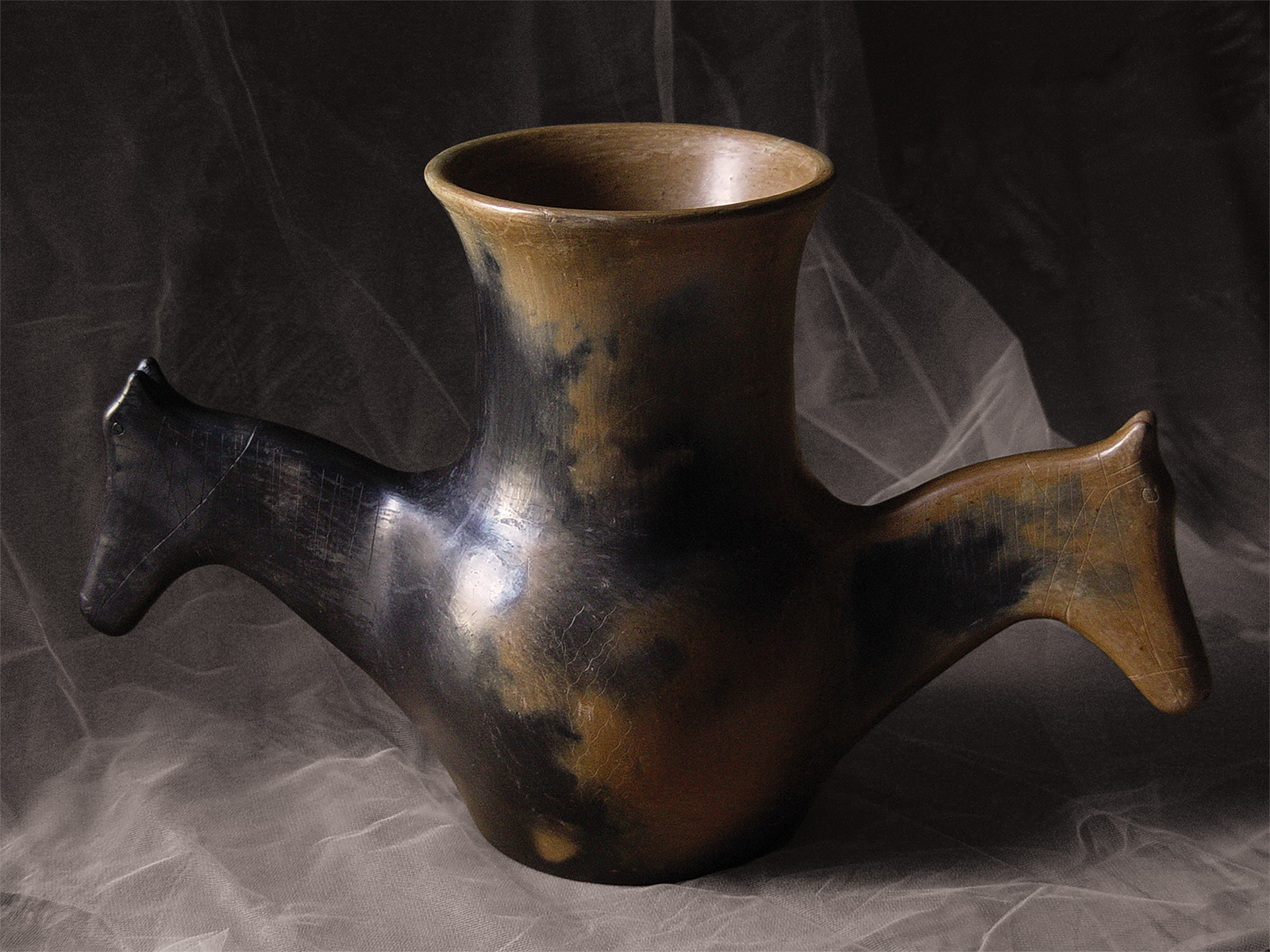
Earl Robbins (Catawba Nation, 1922-2010), Horse Pot, earthenware, 30 x 50 x15½”. The University of South Carolina Lancaster. Photo by Brittany Taylor-Driggers and Fran Gardner. Photo courtesy Cultural Services Division of the Catawba Nation.
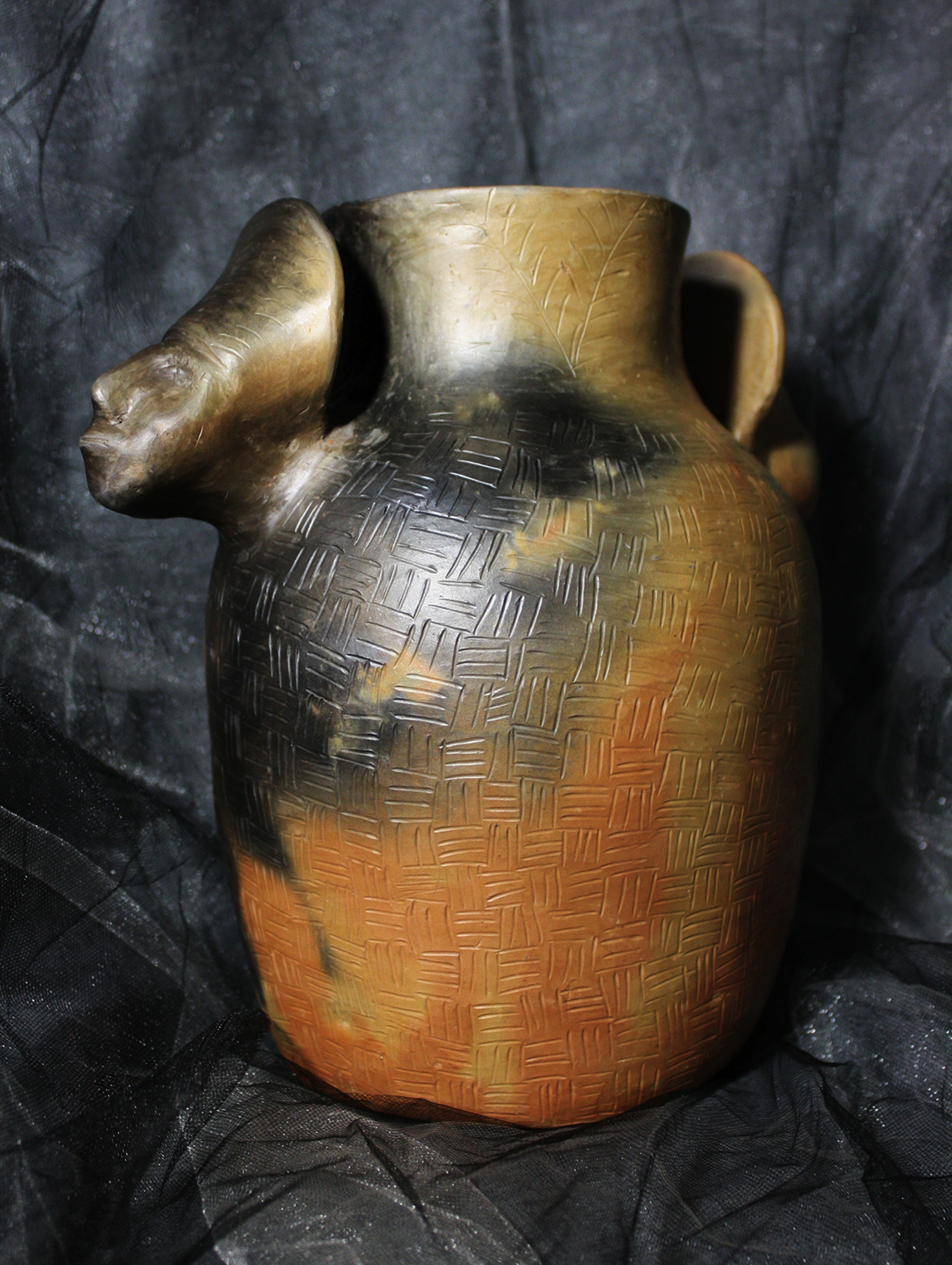
Sarah Ayers (Catawba Nation, 1919-2002), Indian Head Jar, earthenware, 13½ x 19 x 9½.” The University of South Carolina Lancaster. Photo by Brittany Taylor-Driggers. Photo courtesy Cultural Services Division of the Catawba Nation.
Formed by hand-coiling local clay gathered from the riverbanks that is then mixed with Spanish moss, air-dried, then rubbed with smooth stones, antlers or a knife edge. The stones are often prized possessions, handed down from mother to daughter through the generations. The pot is then fired directly in burning wood pits, the result is an unusual ombre mixture of cream, brown and black from the heat and smoke. The color mix depends on the clay and the position of the pot in the flaming pit.
Handles, heads and legs are attached by riveting (pushing the clay attachment through a hole pierced into the pot) rather than by direct application to the pot’s surface. This technique creates features that will not break off so easily. The firing process is precarious because in the pit there is a higher chance of uneven temperatures that cause the pottery to crack or break apart.
“Catawba pottery is the oldest continuous ceramic tradition in North America,” says Stephen Criswell, director of the Native American Studies Center and a professor of English and folklore at University of South Carolina, Lancaster. “Our late archivist, Brent Burgin, once observed that when the Egyptians were building the pyramids, Catawbas were making pottery. I would add to that when the Magna Carta was signed, when the Revolutionary War and the Civil War broke out, when the Japanese bombed Pearl Harbor, and probably last week, Catawbas were making pottery.”
The Native American Studies Center in downtown Lancaster is a 15,000-square-foot, state-of-the-art facility established in 2012, and bridges art, archaeology, archives, rare film, folklore, history and language. The center includes the largest single collection of Catawba pottery in existence.
The center held an exhibit in 2022 that had exquisite examples along with wall murals and vintage footage of the Catawba people from the early 1900s. Animal shapes of horses, owls, foxes and other regional woodland creatures make their way into the vessels along with regal-looking human heads.
“Catawba Indian pottery, while less familiar than its Southwestern counterparts and many other traditional American Indian art forms, is recognized by scholars and collectors as a tradition which often features, paradoxically, strict adherence to tradition and vibrant creativity and innovation,” Criswell says. “It is an art form that reflects history and heritage, but at the same time, offers the best of potters a vehicle for expressing their own individual talents and creativity.”
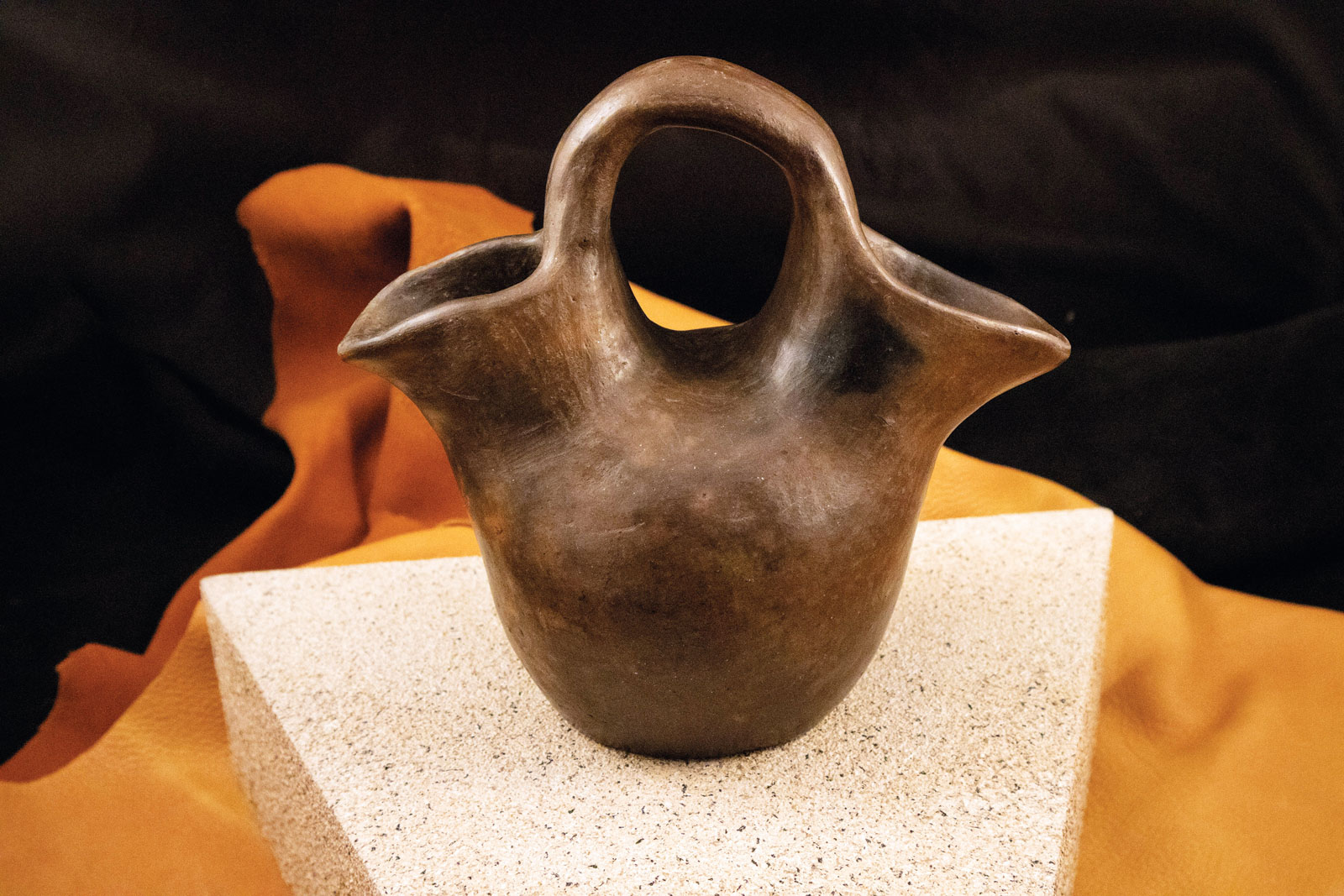
Beulah Harris (Catawba Nation), Wedding Vase, earthenware. Photo courtesy Cultural Services Division of the Catawba Nation.
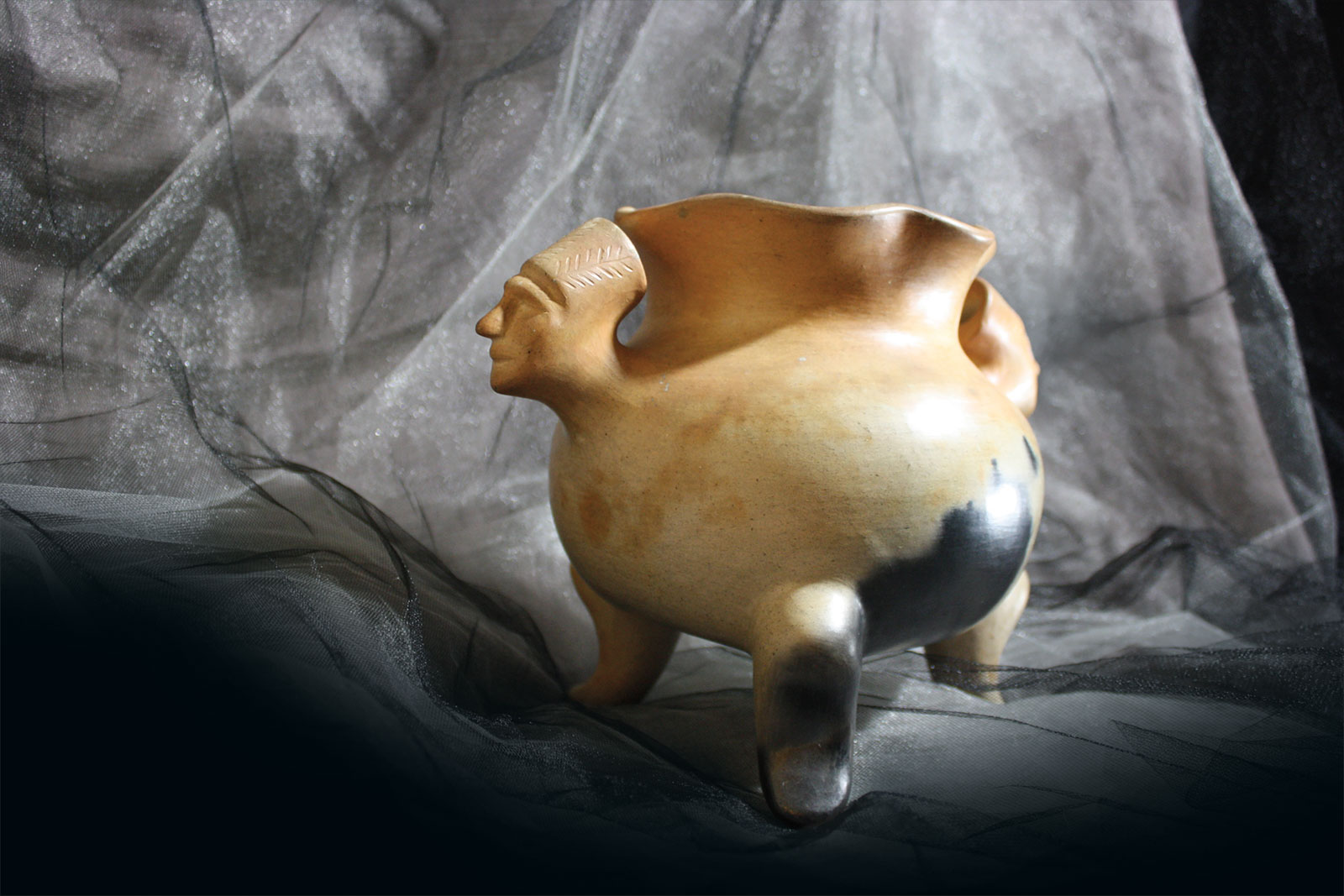
Georgia Harris (Catawba Nation, 1905-1997), Indian Head Bowl with Legs, earthenware, 7½ x 12½ x 7¾.” The Thomas J. Blumer Collection. The University of South Carolina Lancaster. Photo by Brittany Taylor-Driggers. Photo courtesy Cultural Services Division of the Catawba Nation.
While the number of Catawba is small, around 3,300, they were once 10,000 strong, but reduced in number to less than 100 around 1849 after European oppression and disease. Criswell says, “The vitality, quality, and the cultural and historical significance of their work deserve greater public recognition.”
More pottery can be found at the Catawba Cultural Center in Rock Hill, South Carolina, which houses exhibits of how the tribe lived thousands of years ago, the wildlife, clothing and pottery they used. There are walking trails in the woods and a trading post sells pots, jewelry and other items made by the tribe. They are the world’s largest buyer and seller of Catawba pottery.
In Rock Hill, Catawba pottery was sold at the gates of Winthrop University from 1895 through the late 1920s. It was taken by the potters and sold and traded door to door for clothing and other goods on the main road through the reservation, and traded with local merchants for other goods as recently as the 1960s. The first museum to exhibit Catawba Indian pottery was the York County Children’s Nature Museum in 1952. Twenty years would then go by before the Native craft was brought to the public again.
An exhibition in 1973, Catawba Indian Trade Pottery of the Historic Period, at the Columbia Museum of Art, started the recognition they needed to begin a revival of this purest of tribal South Carolina folk art. Prices and public interest went up and have continued. New potters are continuing the tradition, learning from their parents and from the surviving master potters. These contemporary masters strive for the desired classic qualities, pots that are gracefully curved, well-crafted shapes, delicate decorations, properly burnished, and correctly fired.
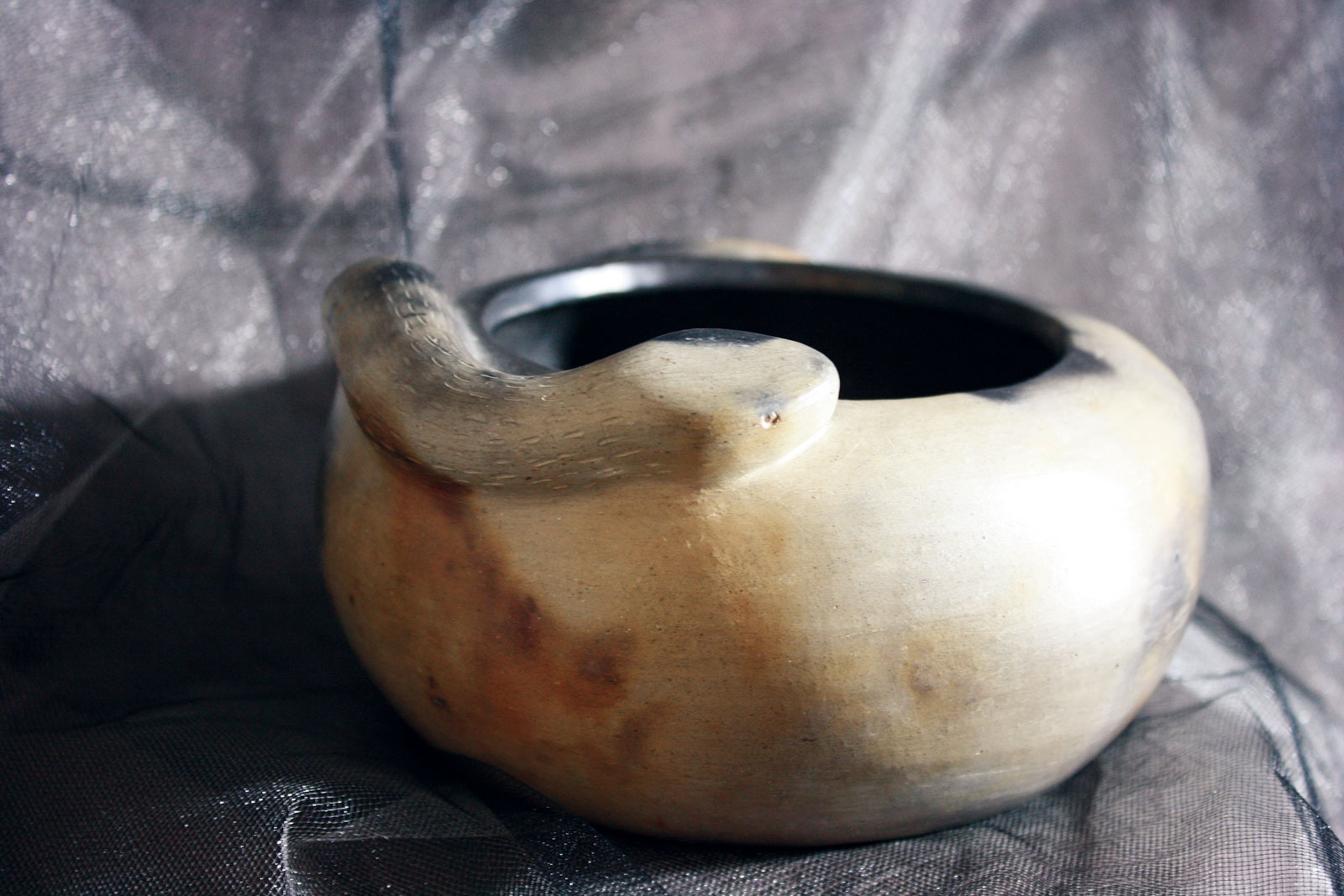
Doris Blue (Catawba Nation, 1905-1985), Snake Bowl, earthenware, 3½ x 6½ x 4.” The Thomas J. Blumer Collection. The University of South Carolina Lancaster. Photo by Brittany Taylor-Driggers. Photo courtesy Cultural Services Division of the Catawba Nation.
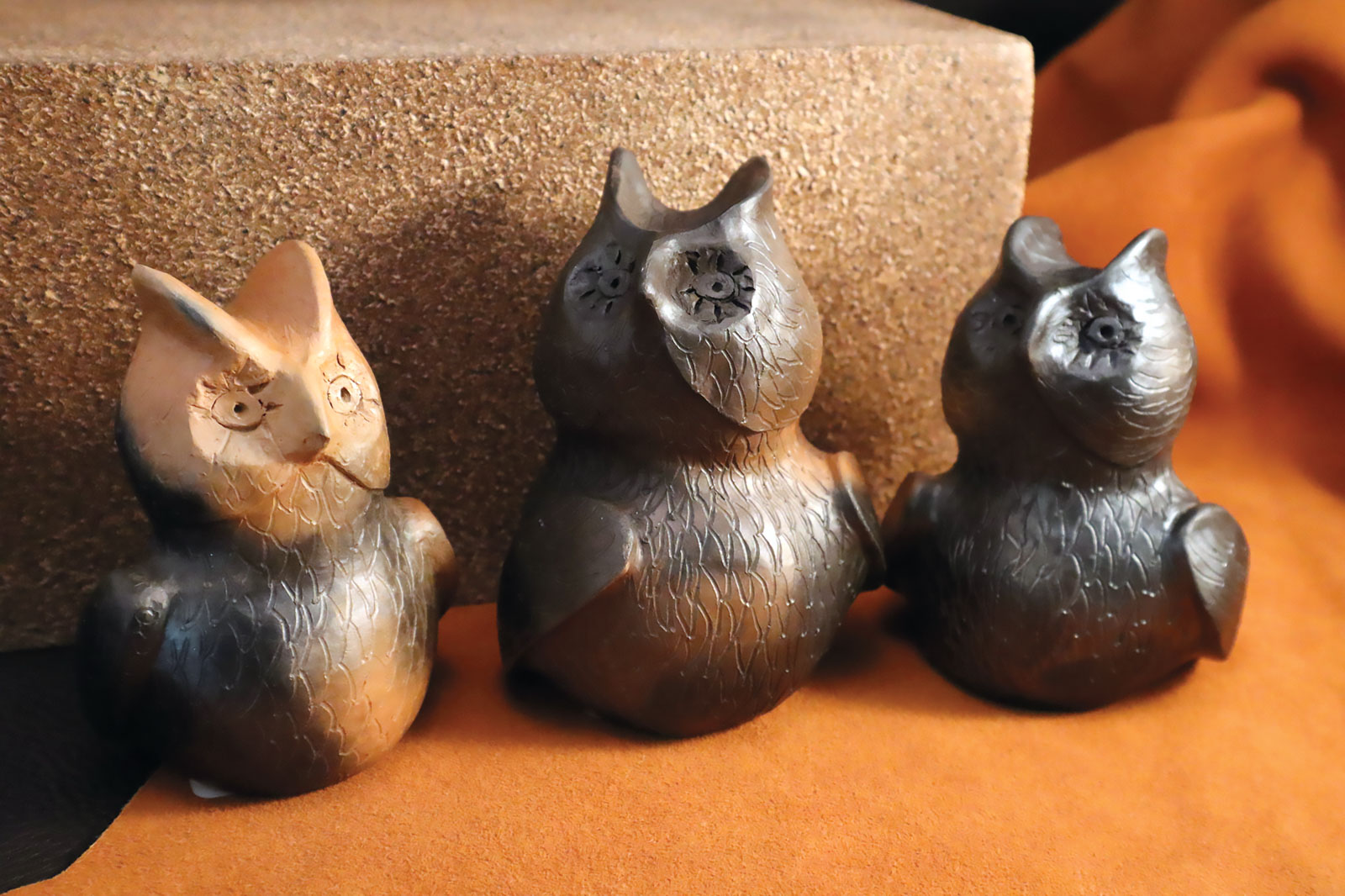
JoAnn Bauer (Catawba Nation), Owls, earthenware. Photo courtesy Cultural Services Division of the Catawba Nation.
A Catawba pot is even in the collection of the Metropolitan Museum in New York City, a black and cream Cupid Jug, 2000, by Earl Robbins, that has a handle on top and a decorative spout.
Virtually unchanged since the Woodland (1000 B.C.–600 C.E.) and Mississippian (600–1600 C.E.) periods, the significance of Catawba traditional culture and their pots has been recognized by institutions as wide-ranging as the Smithsonian, which includes Catawba artists in its Festival of American Folklife; the American Philosophical Society; the American Museum of the American Indian; the American Folklife Center at the Library of Congress; and the White House Library.
The quality of Catawba traditional art is evidenced by potter Georgia Harris’ selection by the NEA in 1997 as a National Heritage Fellow, the selection of Catawba’s Nola Campbell, Florence Wade and Evelyn George as South Carolina Folk Heritage Award winners, and the exhibition of countless other Catawba artists in museums around the region.
Potter Joan Garris came to the craft later in life. “I did not start making Catawba pottery until I was an adult,” Garris says. “But I grew up watching many of my relatives making and selling their pottery. Many times trading it for food or clothing. I was taught at different times by different potters along the journey of pottery making. Evelyn George, her daughter Faye George-Griener, Florence Wade, Caroleen Sanders, just to name a few of my mentors.”
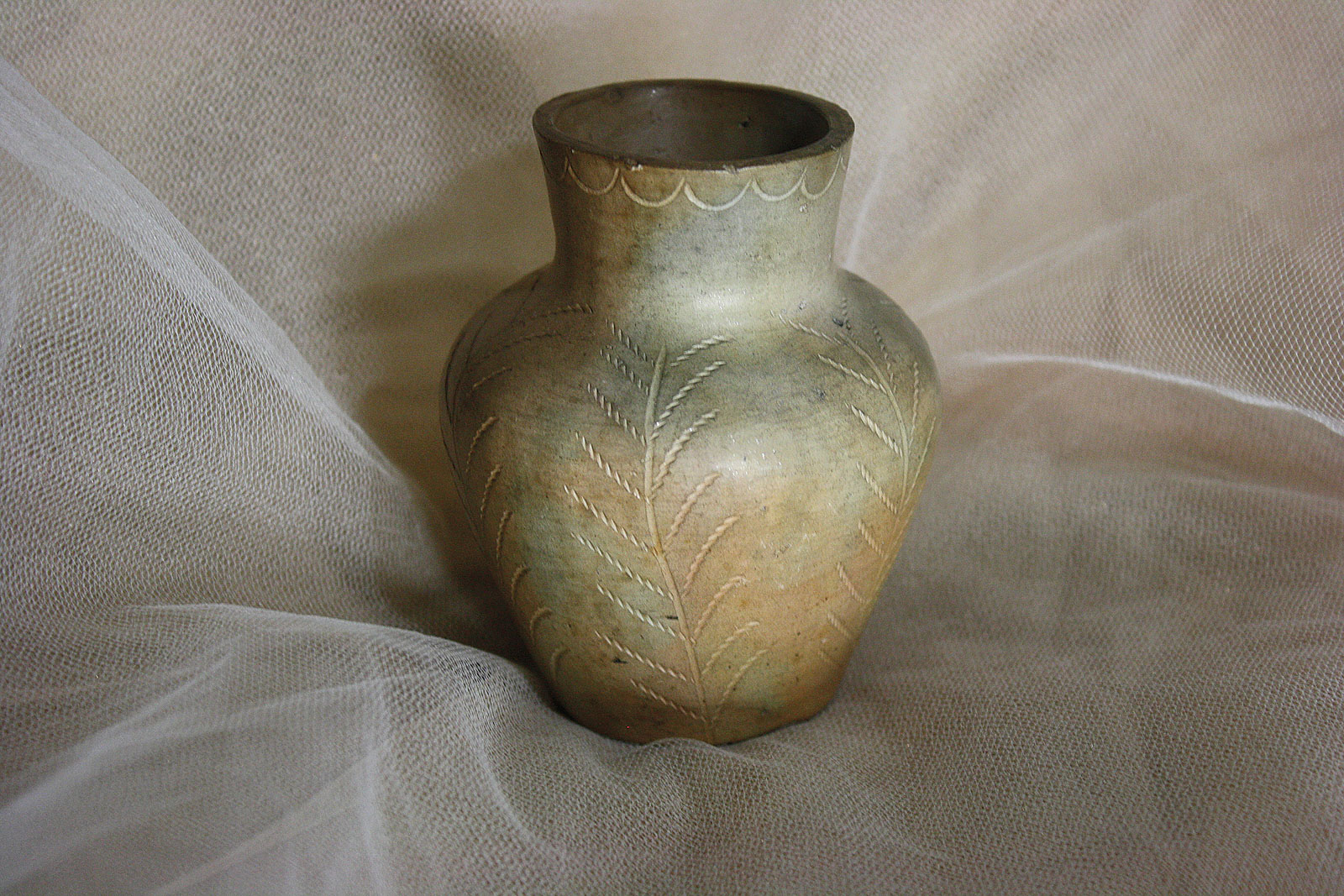
Jar with Incising, earthenware, 5 x 6½ x 4.” The Thomas J. Blumer Collection. The University of South Carolina Lancaster. Photo by Brittany Taylor-Driggers. Photo courtesy Cultural Services Division of the Catawba Nation.
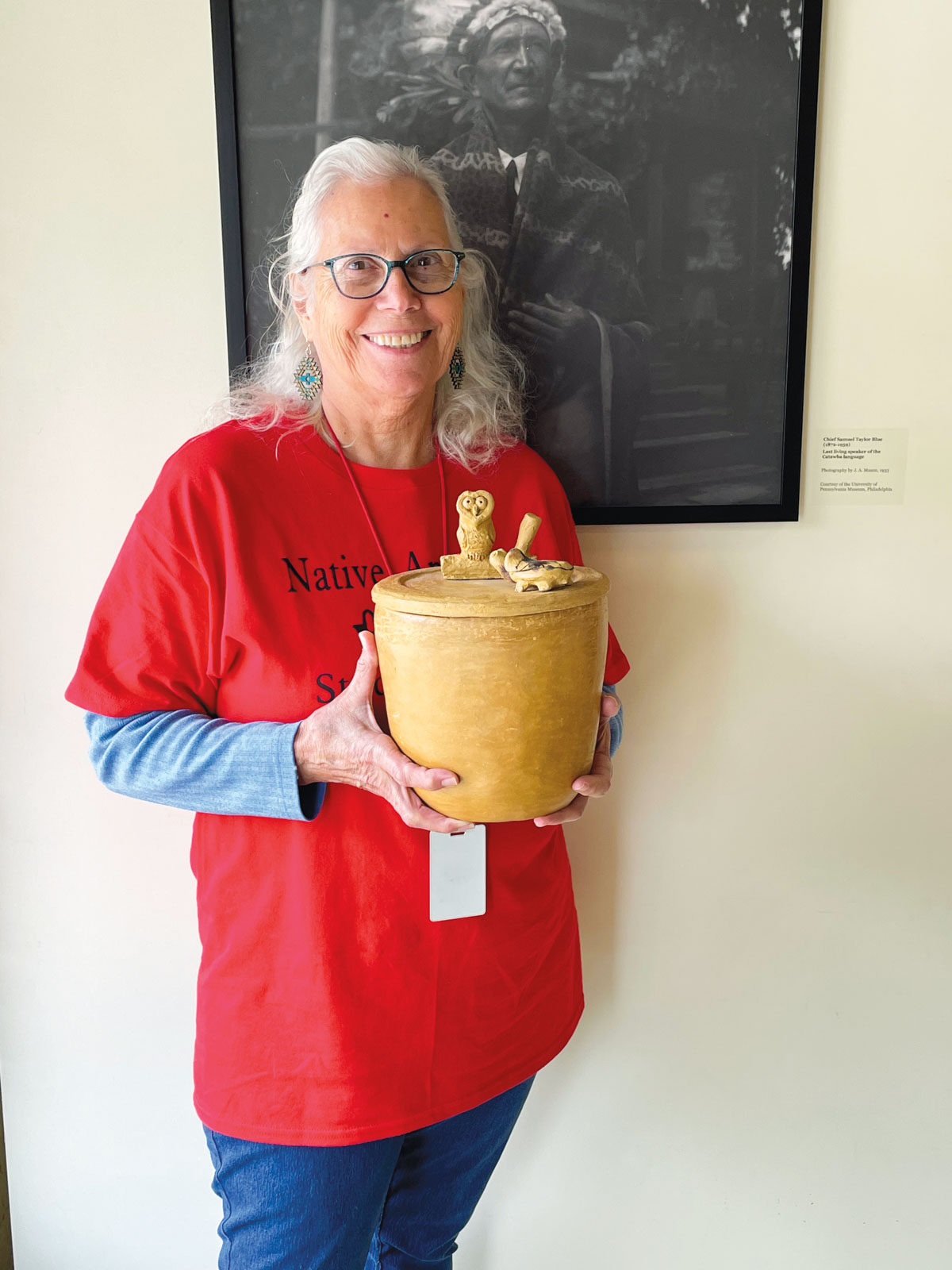
Joan Garris, known as Beckee, with urn and photo of her great-grandfather, Catawba Chief Samuel Taylor Blue (1873-1959).
It took her some time to find her own style. “Like many of us, I can only make pottery when spirit has lead [or] called me to make a piece of pottery. I have tried forcing myself to make something in the past and failed at the process each and every time,” she says. “I have made a lot of owls, which to some of my tribal family think is a bad luck bird. But I made an urn for my sister’s ashes. I tried making a turtle to put on the lid. As many turtles as I have made, I could not make one. I heard my late sister’s voice saying she liked owls. I mentally replied,’ but I don’t!’ I again, not only heard her voice, but I heard her stomp her foot and saying through her clinched teeth, ‘but I do’ Therefore, that started my fate, if you wish to call it that, of making owls.”
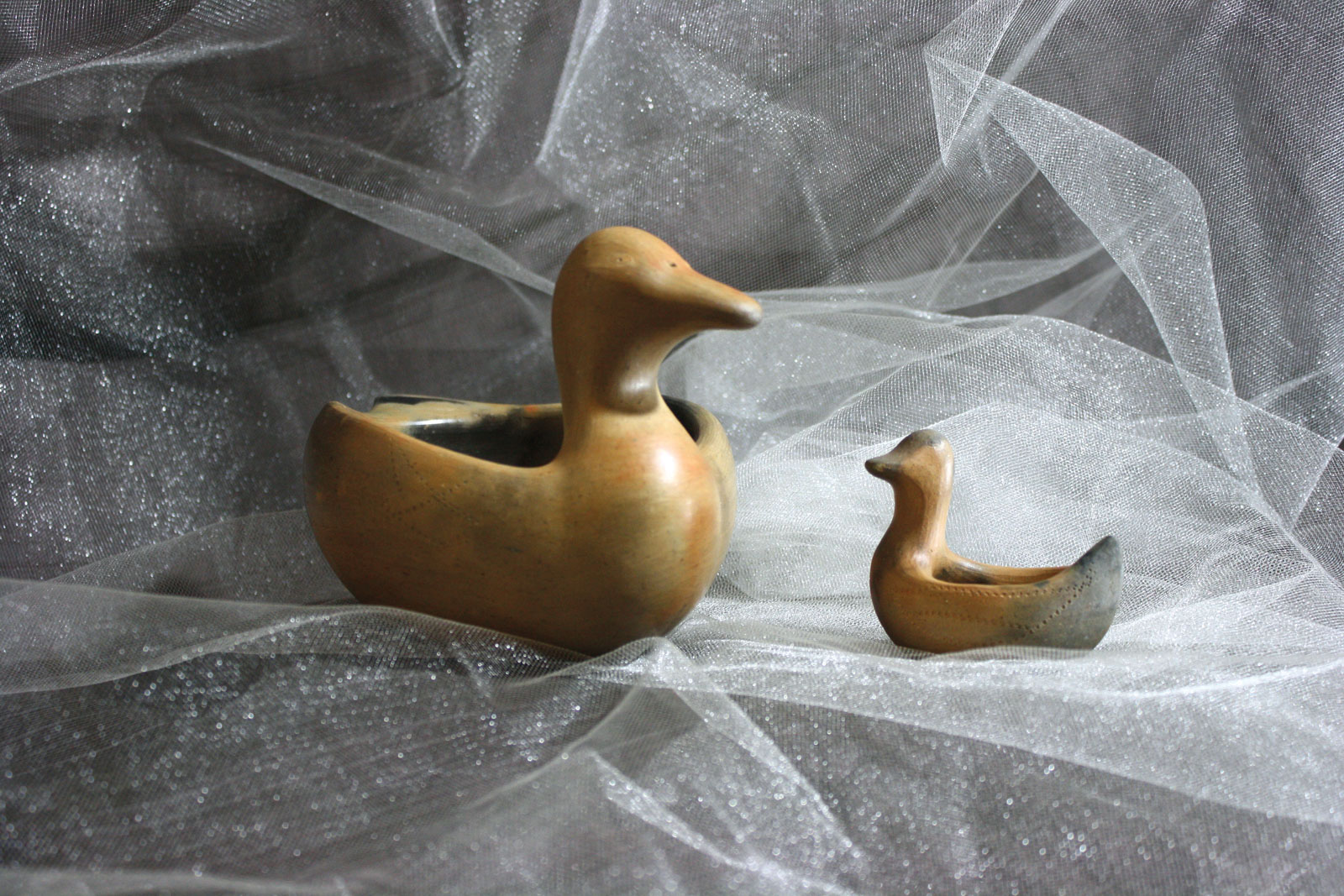
Nola Campbell (Catawba Nation, 1918-2001), Duck Canoes, earthenware, 4½ x 6¾” and 2½ x 2½”. The Thomas J. Blumer Collection. The University of South Carolina Lancaster. Photo by Brittany Taylor-Driggers. Photo courtesy Cultural Services Division of the Catawba Nation.
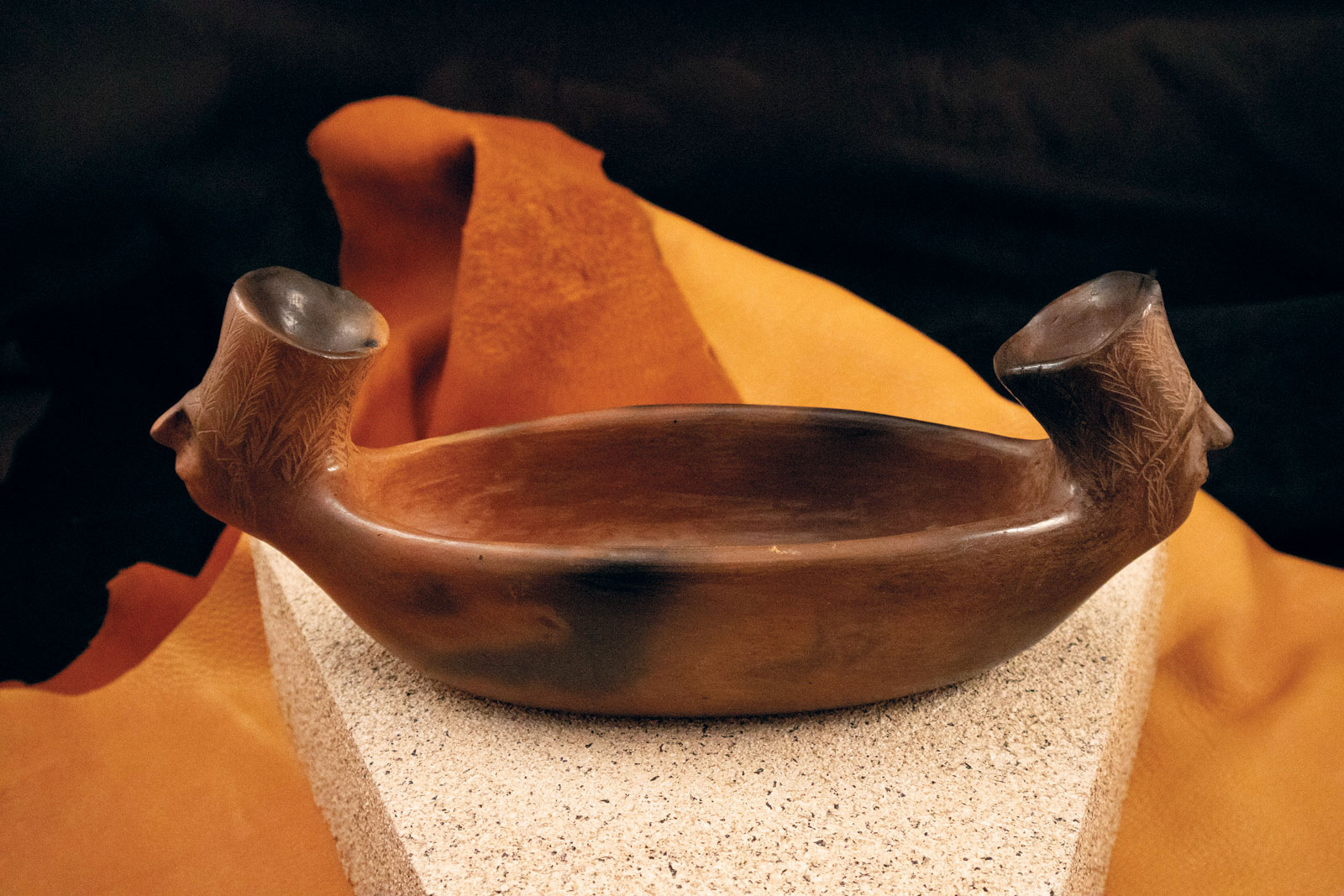
Eric Canty (Catawba Nation), King Haigler Canoe, earthenware. Photo courtesy Cultural Services Division of the Catawba Nation.
“I have and do make other styles of pottery such as a Rebecca pitcher, wedding jugs, four stem piece pipes, bowls, etc. We can trace our pottery tradition back 4,000 to 10,000 B.C., as new archeological sites have proven. We do not use a potter’s wheel nor a kiln to fire our pottery. We still pit-fire it. So, it’s very important to the Catawba and myself not to be the one who lets this sacred tradition die.”
Sandra Hale Schulman, Cherokee Nation descent, has been a Native American arts writer since 1994. The recipient of a Woody Guthrie Fellowship, she is the author of four books, has contributed to shows at the Smithsonian’s National Museum of the American Indian, the Grammy Museum, the Museum of Modern Art NYC and has produced four films on Native musicians.
Powered by Froala Editor