The beadwork of Ojibwe artist Jessica Leigh Gokey has as much in common with a painting as a bandolier bag. “It is more about interweaving tradition and contemporary art,” says Gokey. “I’m just trying to show the world that Native art should be looked at as more of a fine art with everyone else instead of a craft,” she says.
With her piece for the U.S. Embassy to the Holy See—better known as the Vatican—Gokey is bringing the art form to the world stage. Her beadwork will be on view there for three years next to other works representing the American art canon.
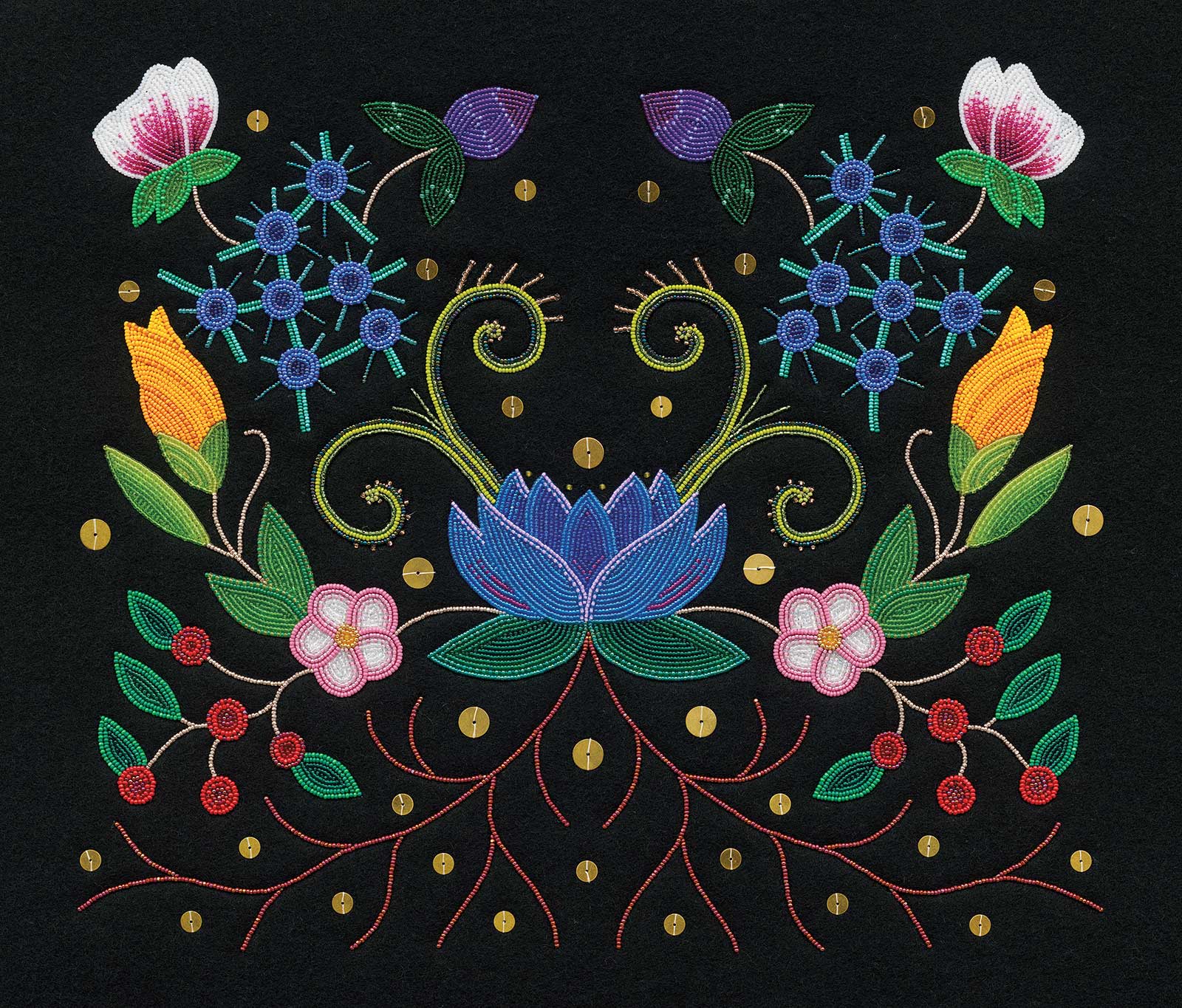
A Dance With Florals, 13/0 Czech seed beads, 17 x 12½"
Traditional patterns act as a jumping-off point for the Wisconsin-based artist who also designs tattoos and commercial textiles. During the pandemic, a competitive nudge from a fellow beader motivated Gokey to push her subject matter. “I took that challenge and created The Sturgeon back in 2020, and that was one of my first pieces where I worked with animals,” she says. “I try to find more artistic freedom in my animals and it’s more of a challenge,” she says. “As an artist, it’s more of a flex.”“I love nature. That comes from being a game warden,” says Gokey, who often incorporates memories from her former career into designs. “I tend to bead stuff that I’ve seen,” she says of works like Flamboyant Drake. “And fitting to bead a drake. I often think about pow-wows and the male dancers and how beautiful their regalia is, or men’s fancy dances. A lot of that thought and those vibes went into that wood duck,” she says.
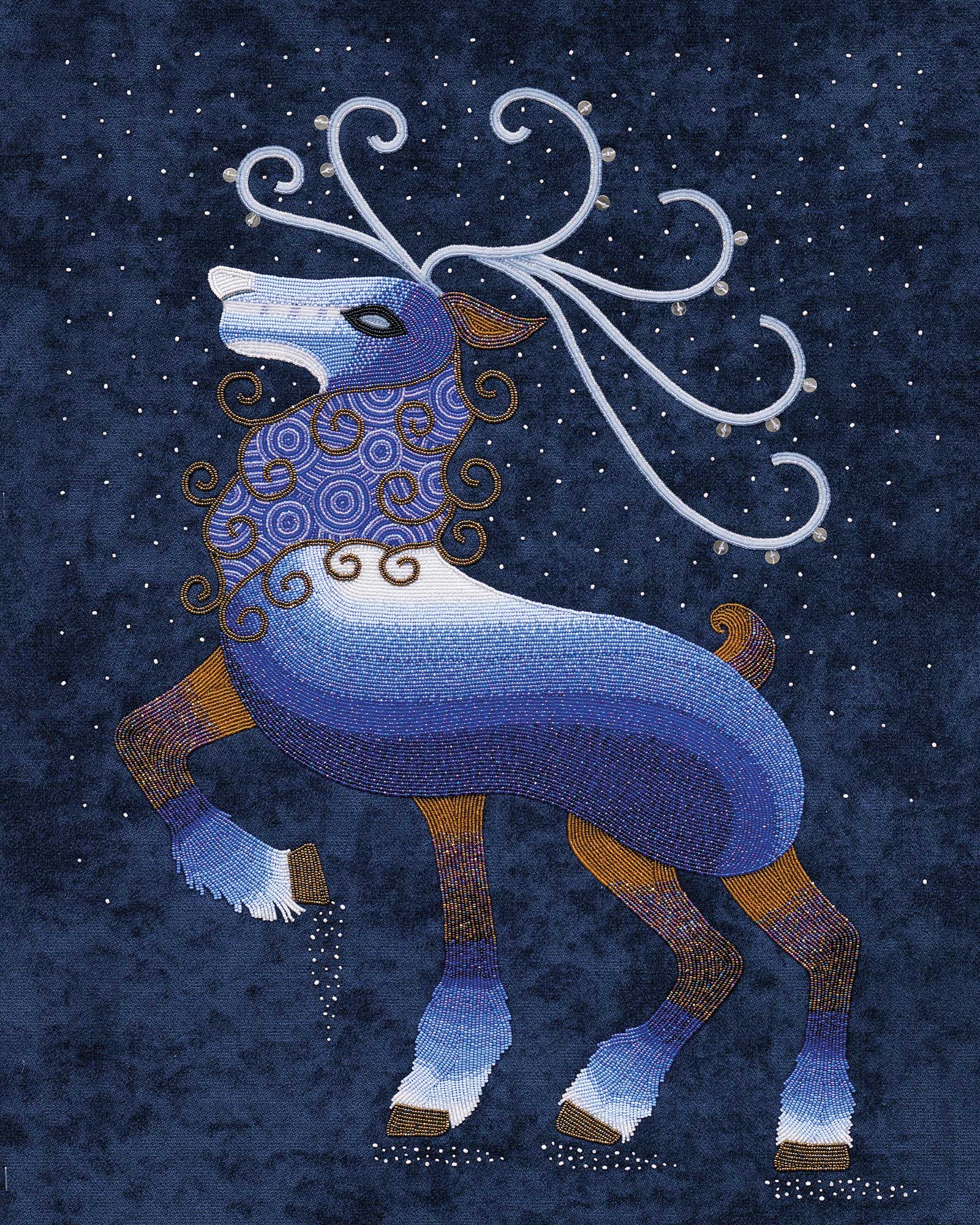
Winter Maker’s Stag, beaded with size 13/0 Czech seed beads, accent with brass sequins and beaded on a dark sapphire fabric, 21 x 16”
While Gokey is largely self-taught, she credits the online beading community for sharing information. “It was really awesome when I first started out because I connected with a lot of elders that have passed away. But I still have some of their patterns. I’ve kept every single pattern that someone has given me or that I have drawn in my artist lifetime,” she says. “I tell my students—and I was told this too—just keep everything,” she says. “If it’s half an idea, eventually it may become a full idea. And that whole idea may become a design. And that design could become a piece of artwork. It may not happen all at once, but eventually it will happen.”
One of the first people Gokey connected with online was Angela Swedberg, a conservator of Indigenous art. “What blew me out of the water about her was her graphic design ability,” says Swedberg. “She is able to take pretty traditional Ojibwe material, but is 100 percent putting her own spin on it. And she’s really careful about the material she uses too, which I think is really important,” says Swedberg. “I love seeing new material and new exploration of it and how people do it.”
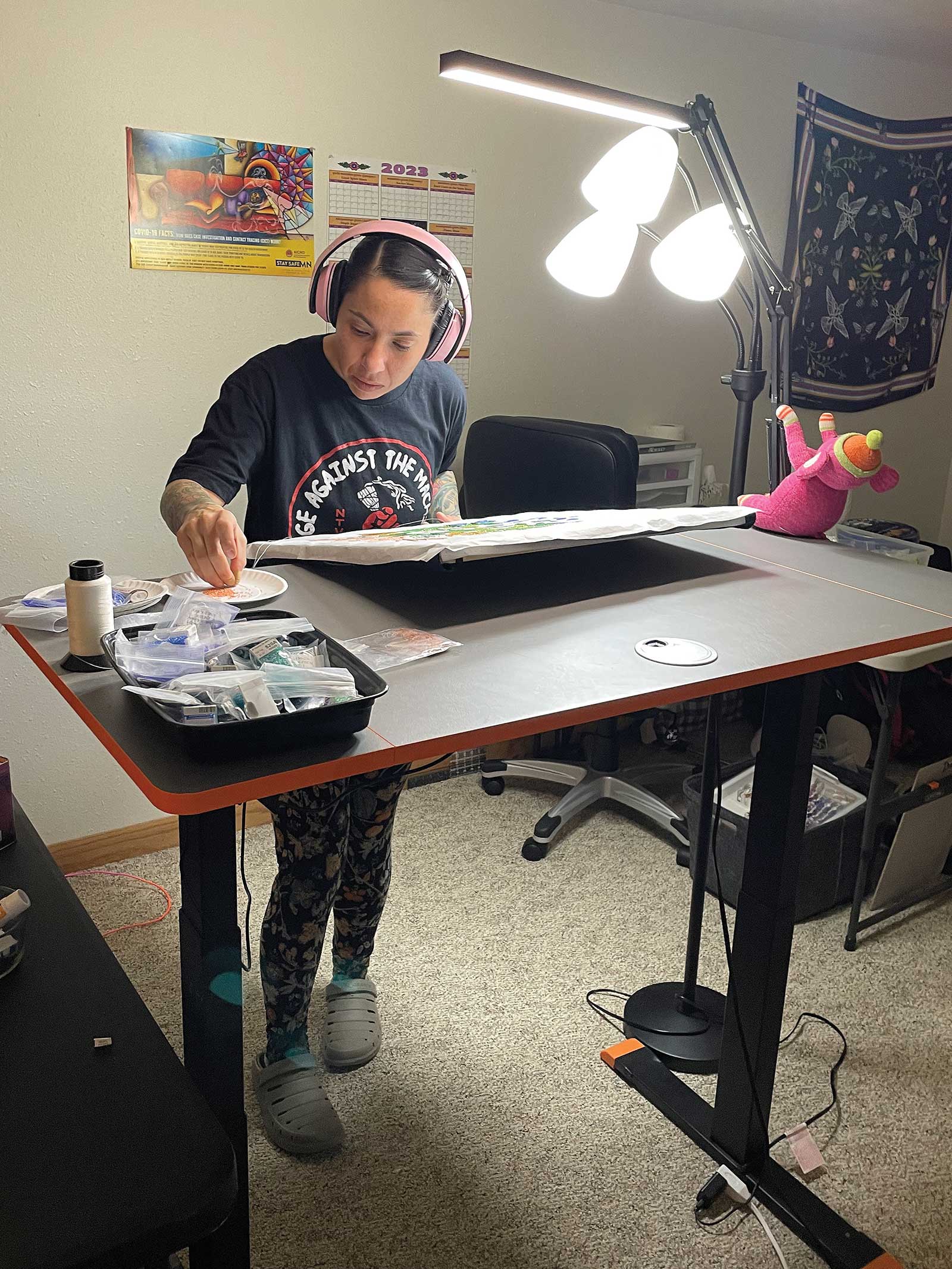
Jessica Leigh Gokey in her home studio. Image courtesy the artist.
For Gokey, part of that journey also meant looking to the past. In 2014, she began a six-month residency at the Minnesota Historical Society, which enabled her to study their museum collections. The program grew out of a need to improve transparency and access to materials and knowledge, says Ben Gessner, former curator of the museum’s Native American collection and their residency program manager at the time.
“Collections can be these platforms for learning, for conversation, for healing,” says Gessner. “You know that sometimes there are art forms that were interrupted and the idea that museums—especially during the kind of salvage anthropology era—played a role in these art forms and knowledge being transferred,” Gessner tells us. “Until you can know how things were done, then you can’t really properly expand on them,” says Swedberg.
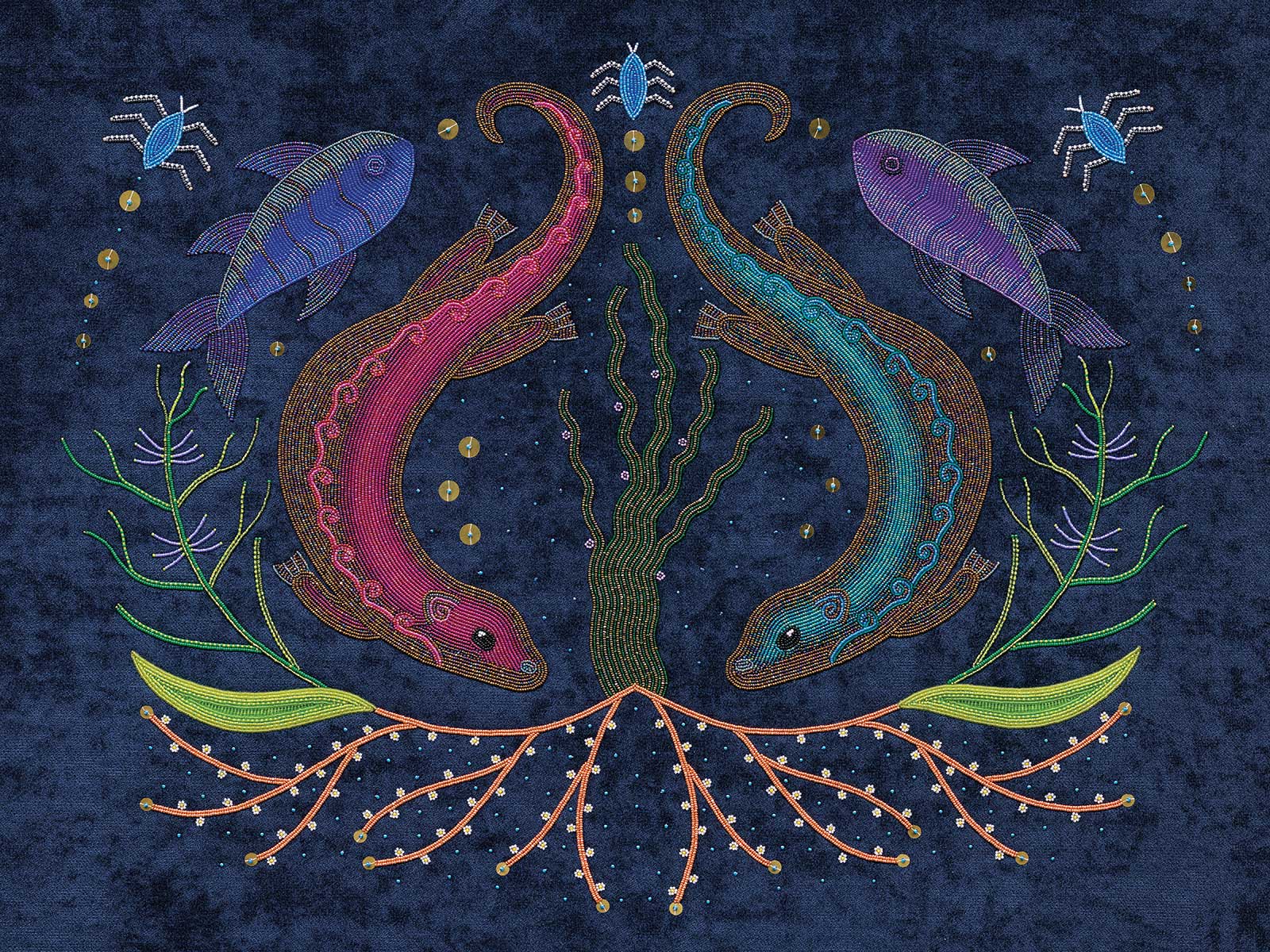
Companions, beaded with size 13/0 Czech seed beads, accented with brass sequins and 11/0 Czech seed beads, 21 x 26”
Having hands-on access to the museum’s archives was a turning point in Gokey’s career. “I saw that these designs are shared,” she tells us. “In Ojibwe work, you can see shared floral patterns in the Métis work or Cree florals. It was really amazing and I wanted to be able to share that with the world,” Gokey continues. “I look at it like I’m preserving some floral patterns and this type of artwork for future generations, and I want to do everything that I can to open everyone’s eyes to this type of art form.”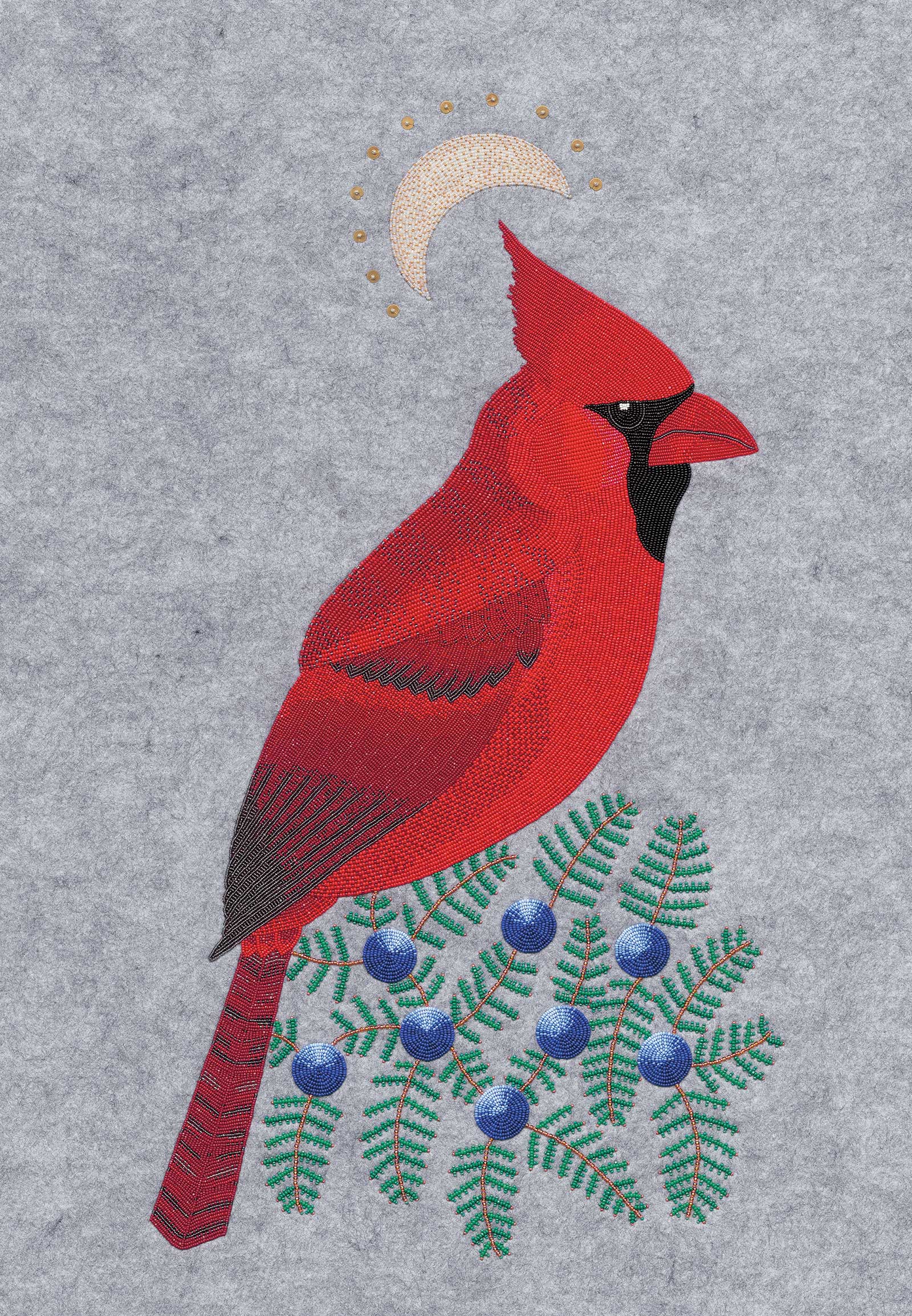
The Loved One, beaded with Czech seed beads, 26 x 18”
As part of her fellowship, Gokey spoke at North Coast Nosh, an event at the museum featuring Indigenous chefs in the Twin Cities area. “I got really inspired by The Sioux Chef, Sean Sherman,” says Gokey. His mission sparked the idea for a large-scale tablecloth featuring edible plants of the region, which the historical society acquired at the end of her residency.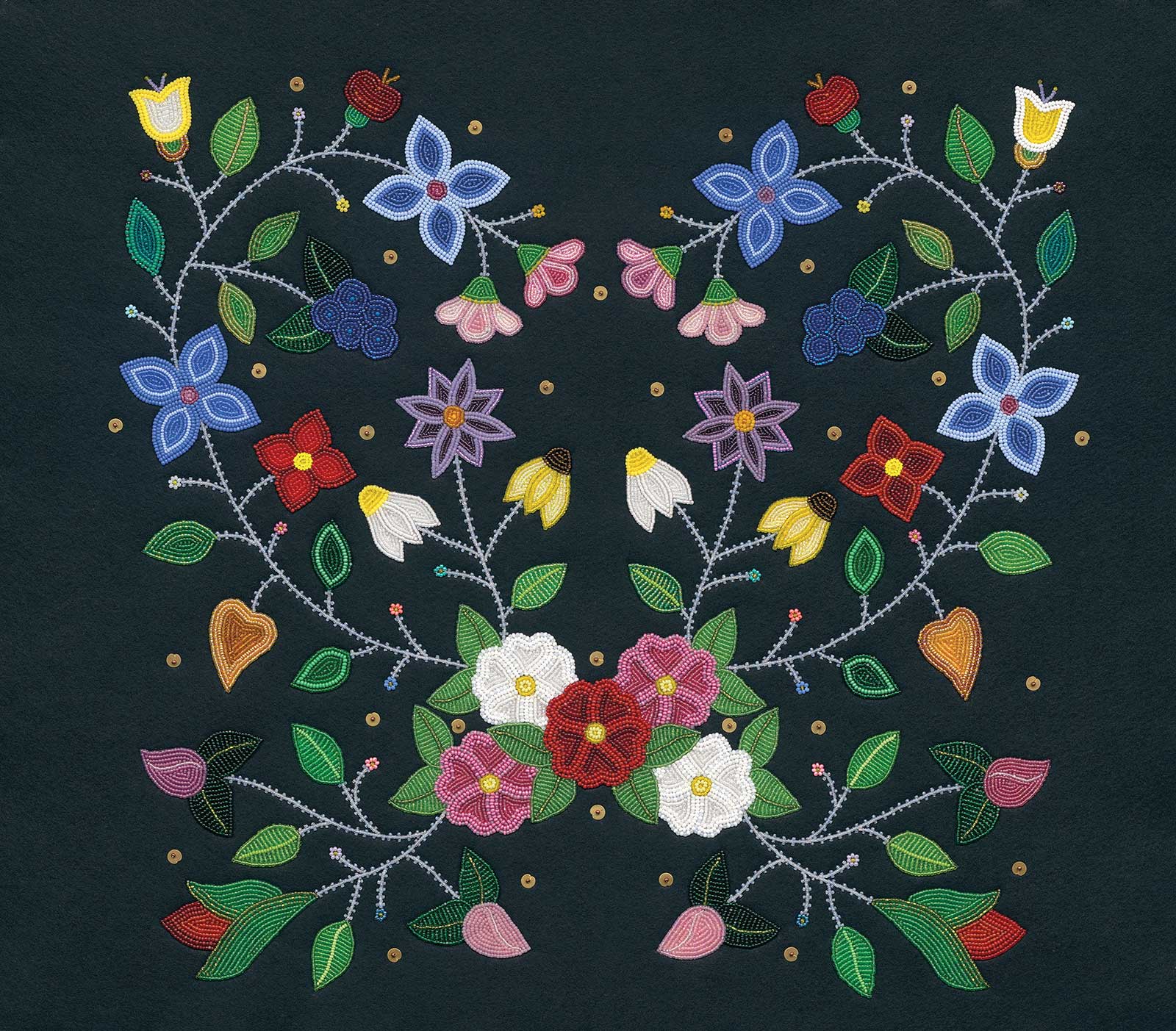
Beaded Floral Heart, beaded with size 13/0 Czech seed beads, 26 x 24”
“The way that she took all of those plants and composed this really beautiful, almost bouquet, this kind of explosion of all these different plants...is really lovely,” says Gessner. “I always say it’s the tightest beadwork I’ve ever seen,” he adds. “It’s just precision in terms of her skill level and her application of it, but also her subject matter.”
See More www.jessicaleighgokey.com | Instagram:@j_leigh_gokey
Powered by Froala Editor