Monica Raphael (Anishinaabe/Sicangu Lakota) started doing beadwork out of necessity. “When I was a young teenager, I was doing pow wows, and I wanted more than one outfit,” she remembers. “My mother said, ‘If you want more than one outfit, then you need to learn how to do it yourself.’ And that’s when I really started.”
Though she began with beadwork, quillwork is in her DNA, as she’s preceded by four generations of quillworkers. “My grandparents and great-grandparents were all renowned quillworkers in their day,” she says. “Some of them have pieces in the Smithsonian that were made as part of the Works Progress Administration.”
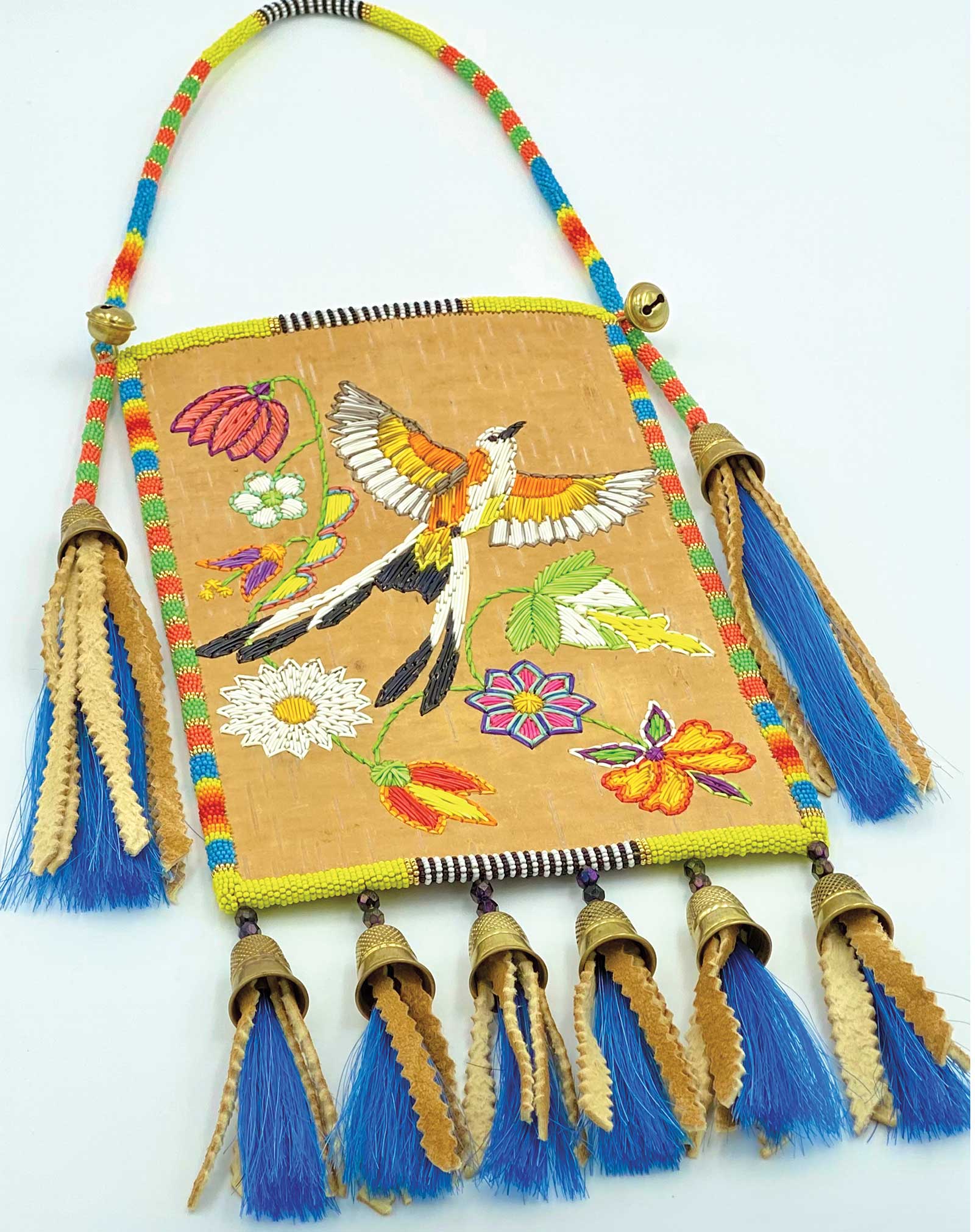 Nuh-Mah-Nuh Daawina Akiin (Homelands of the Comanche People), birch bark, natural and dyed porcupine quills, antique and 24k gold Czech seed beads, antique brass thimbles and hawk bells, black fire-polished antique glass beads, dyed horse hair and traditionally brain-tanned and smoked deer hide
In the 1990s, a Woodland quillworker from Raphael’s village named Catherine Baldwin received a grant from the Smithsonian to mentor one young person and one adult in quillwork. Raphael’s 9-year-old daughter was selected as the young mentee, and Raphael decided she also wanted to learn. Baldwin had already selected another adult to teach as part of the grant, but she agreed to let Raphael study alongside her daughter.
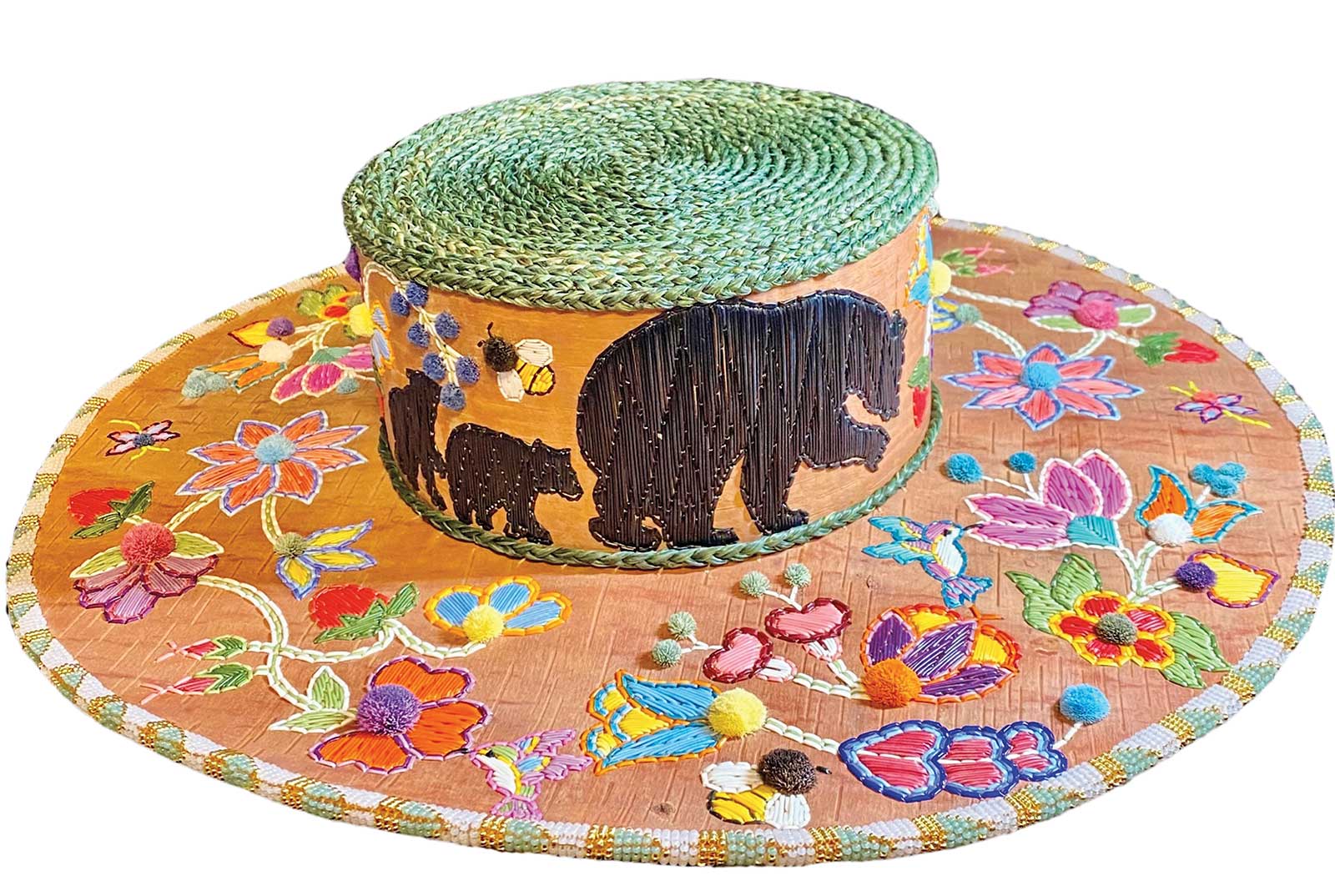 Gizhe’ Manidoo Gitigaan “God’s Garden,” porcupine quill embroidery, caribou hair tufting, sweetgrass coiling on spring birch bark hat lined with smoked deer hide and edged with size 11 Czech rue-cut beads, including 24k, and vintage French glass seed beads.
“I really credit Catherine for teaching me, but she actually originally learned quillwork from my grandmothers,” Raphael says. “So even though my grandmothers had passed away, it was nice to have indirectly learned from them.”
Initially, she created small items like earrings, necklaces, and boxes, and sold them to a local gallery while she worked as a community organizer. “I worked for 30 years in evidence-based prevention,” she says. In 2018, she retired to focus on quillwork as her full-time career. “My daughter encouraged me. She was already showing her beadwork, and she said, ‘Mom, you could do this, too.’”
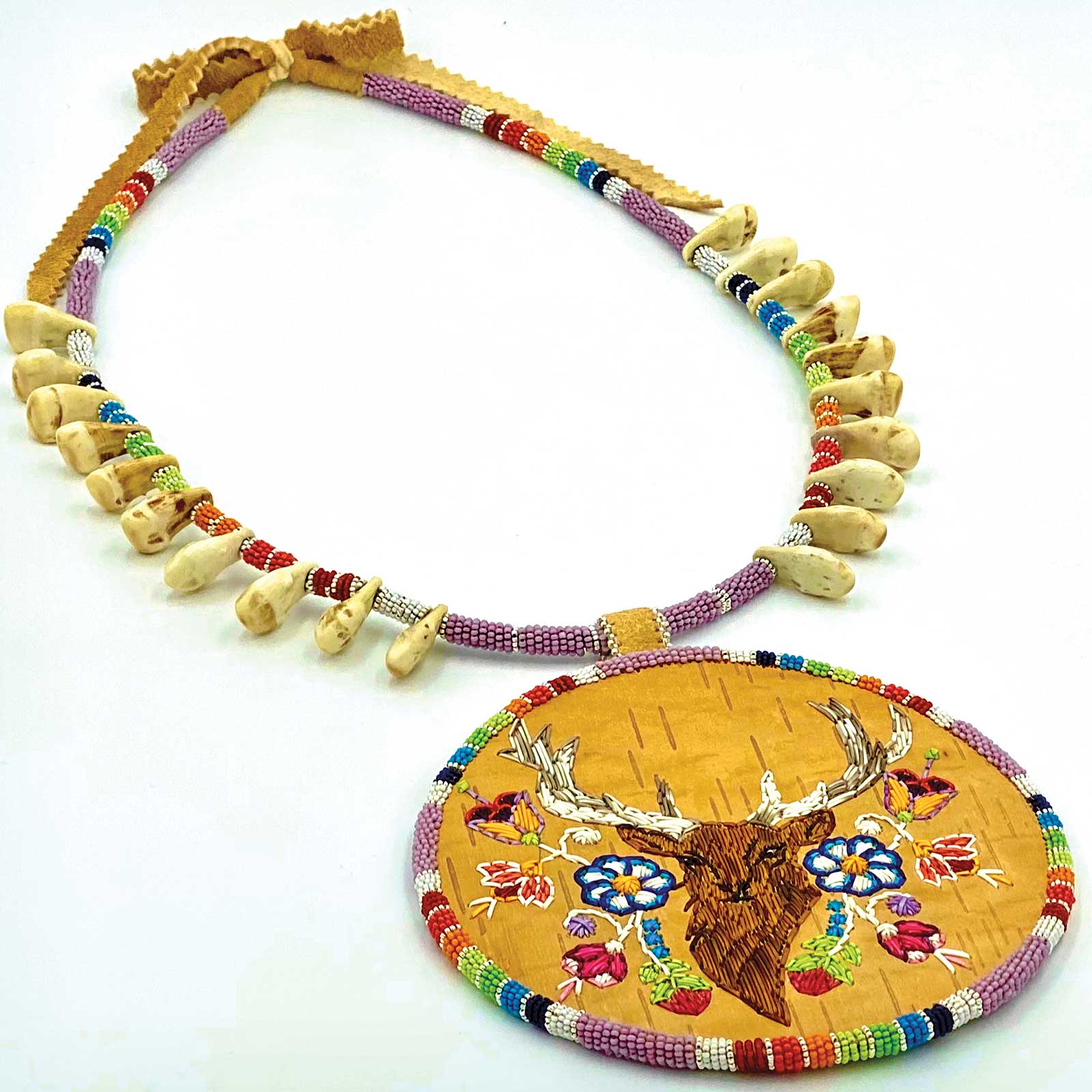 Zaagi-Mashakiki “Love Medicine” amulet, wooded porcupine quillswork on birchbark backed with smoked deer hide edged on a beaded rope using vintage size 13 French glass beads, sterling silver Czech cut beads, various rare vintage seeds and 10 pairs of elk ivories.
To create her quillwork, Raphael collects all her materials herself. She uses birch bark as her canvas, and it can only be harvested from birch trees during a two-week period in early summer.
The quills she collects are typically from porcupines that have been killed by cars. “I don’t go hunting for porcupines,” she says. “Traditionally, we believe that if you hunt it, you have to eat it, and I don’t want to eat porcupines, so I look for roadkill. They tend to get hit after it rains.” She also uses sweetgrass and cedar root in her pieces, which are each collected at different times throughout the year.
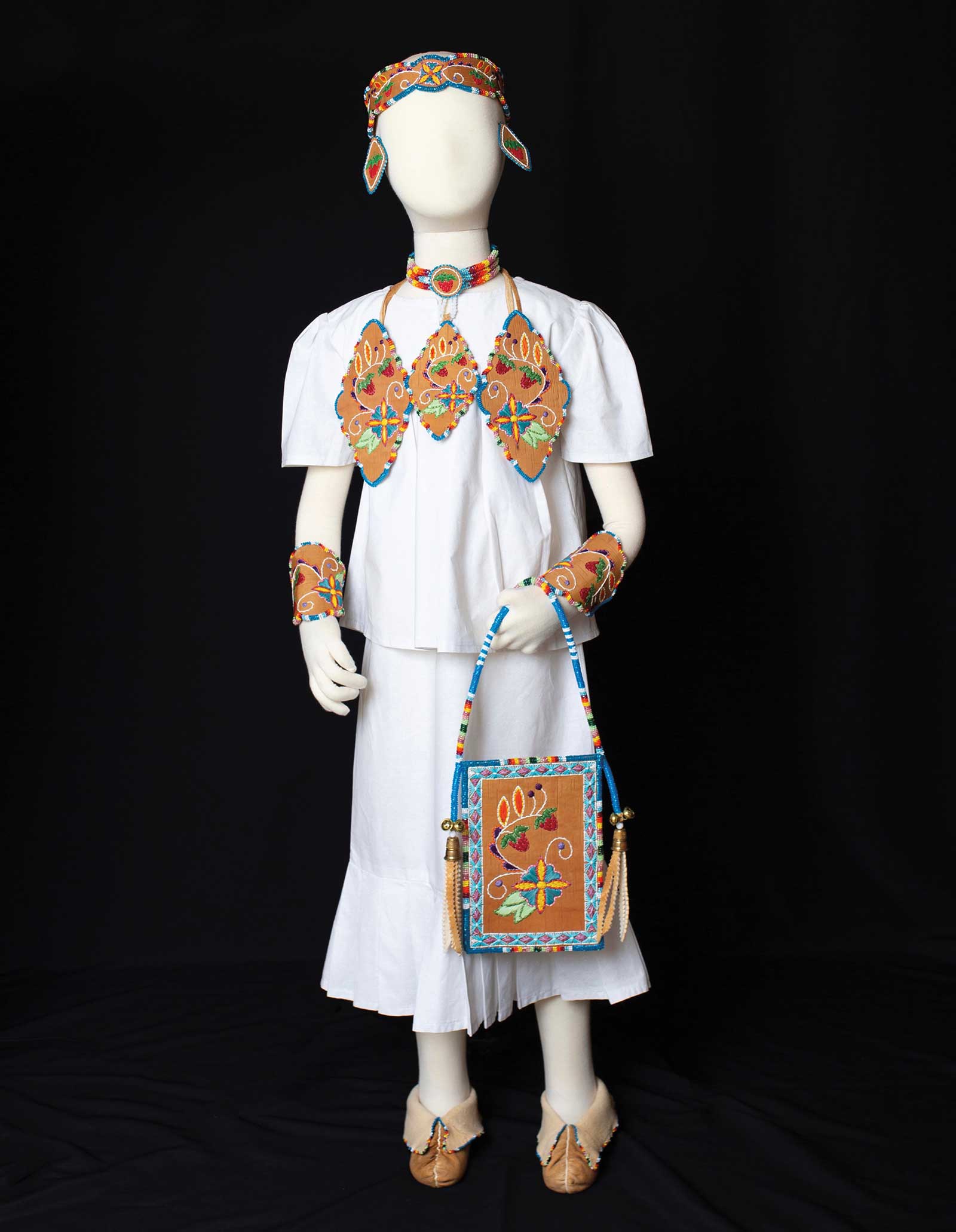 Debwaywin (Her Berry Fast), traditional attire, porcupine quills, glass beads, horse hair, brass, buckskin and birch bark
“It’s a very labor-intensive and time-consuming process,” she says. “For my Heard competition piece this year, it took me two weeks just to dry and prepare my materials, and that was after everything had already been collected and cleaned.”
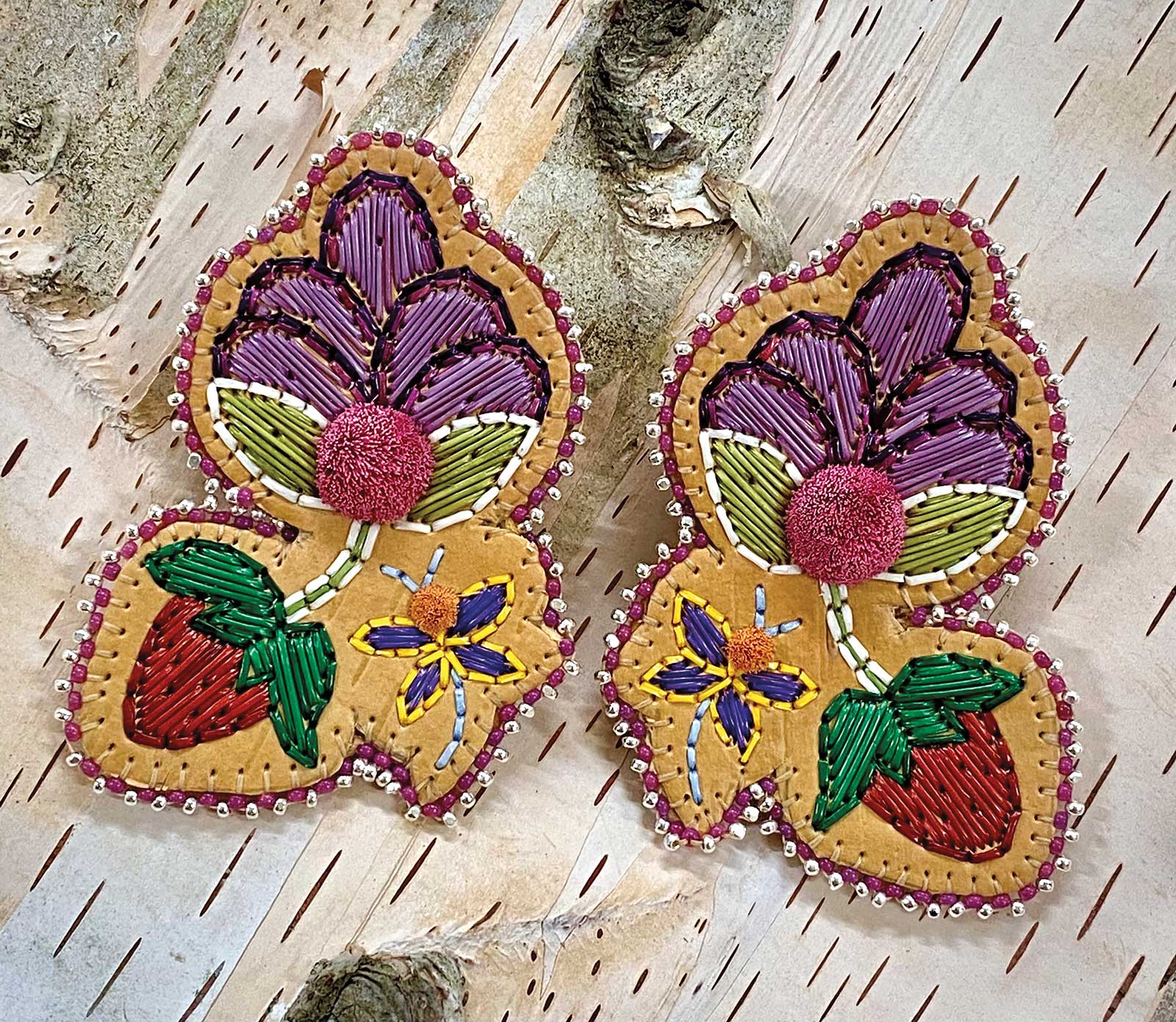 God’s Garden earrings, birch bark, porcupine quills, smoked deer hide edged with sterling silver size 11 cut and Czech true-cut glass seed beads
One of her larger pieces is a wide-brimmed hat, which she gave the name In God’s Garden. On it, viewers can see plants and animals that each carry their own meaning. “There are strawberries and tobacco plants and flowers that are the different medicines that God gave us,” Raphael explains. A hummingbird, bumblebees, and a mother bear and her cubs can also be seen on the hat.
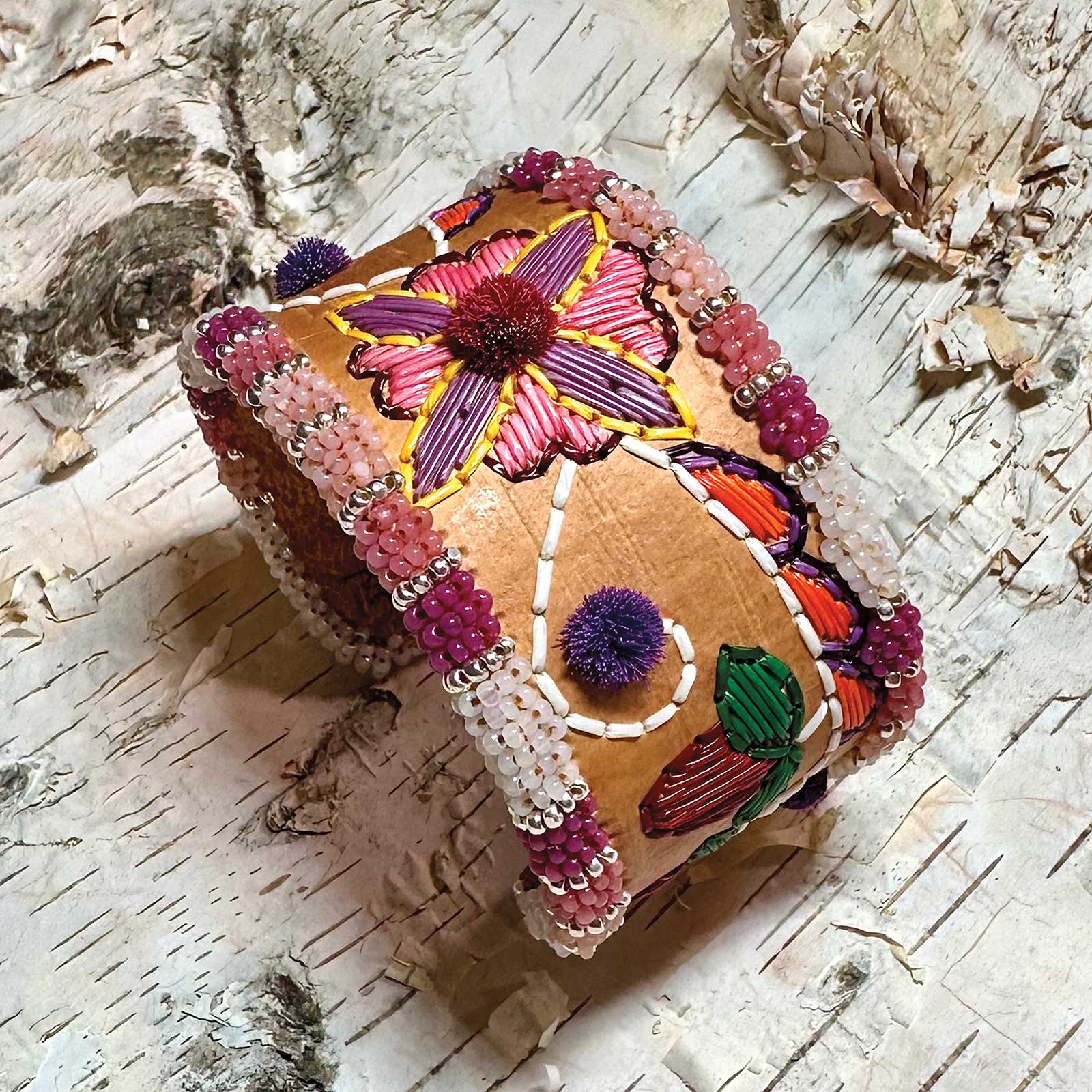 Awasaakwaa “Beyond the Woods” bracelet cuff, woodland porcupine quillwork on birchbark bracelet cuff on a brass blank backed with smoked deerhide edged with Czech sterling silver true-cut and Sheen-cut size 11 seed beads
“As Anishinaabe, we believe that God created a beautiful place for us to live and placed us here in this part of the country with everything we need,” she says. While she was creating the hat, Raphael was thinking about problems like climate change and natural disasters. “My reflection was that we need to take better care of God’s garden.”
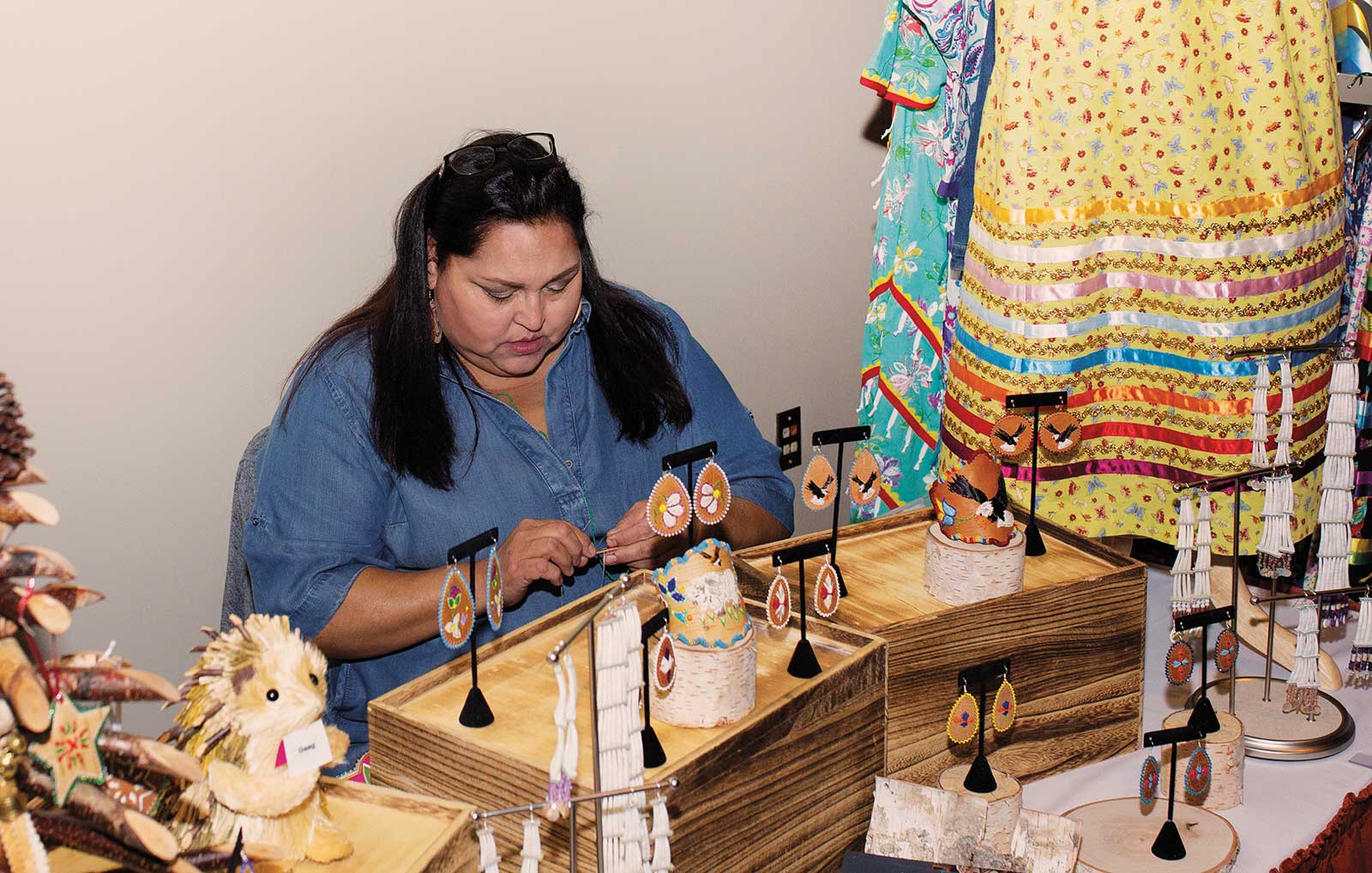 Bead and quill artist Monica Raphael (Anishinaabe/Sicangu Lakota) at work in one of her market booths.
Another of her pieces is an amulet featuring an elk, with elk teeth incorporated into the design. She explains, “I made that piece during the pandemic. I think of it as a protection piece, because the elk looks out for us, and the birch bark is also something that protects us.”
Raphael says, “All of my large pieces include one of our traditional teachings. They tell a story.”
See More www.monicajoraphael.com | Instagram:@miikawaadad_beautiful_things
Powered by Froala Editor