In the spring of 2022 photographer Zoe Urness turned her attention to a theme that would eventually become its own series within her work. Titled Indigenous Motherhood, the series saw the Tlingit photographer point her cameras at Indigenous mothers all around the Pacific Northwest. Sometimes they were with their babies, or even older children, and sometimes the figures were photographed alone but pregnant. Often her subjects were wearing regalia that spoke to their heritage and upbringing.
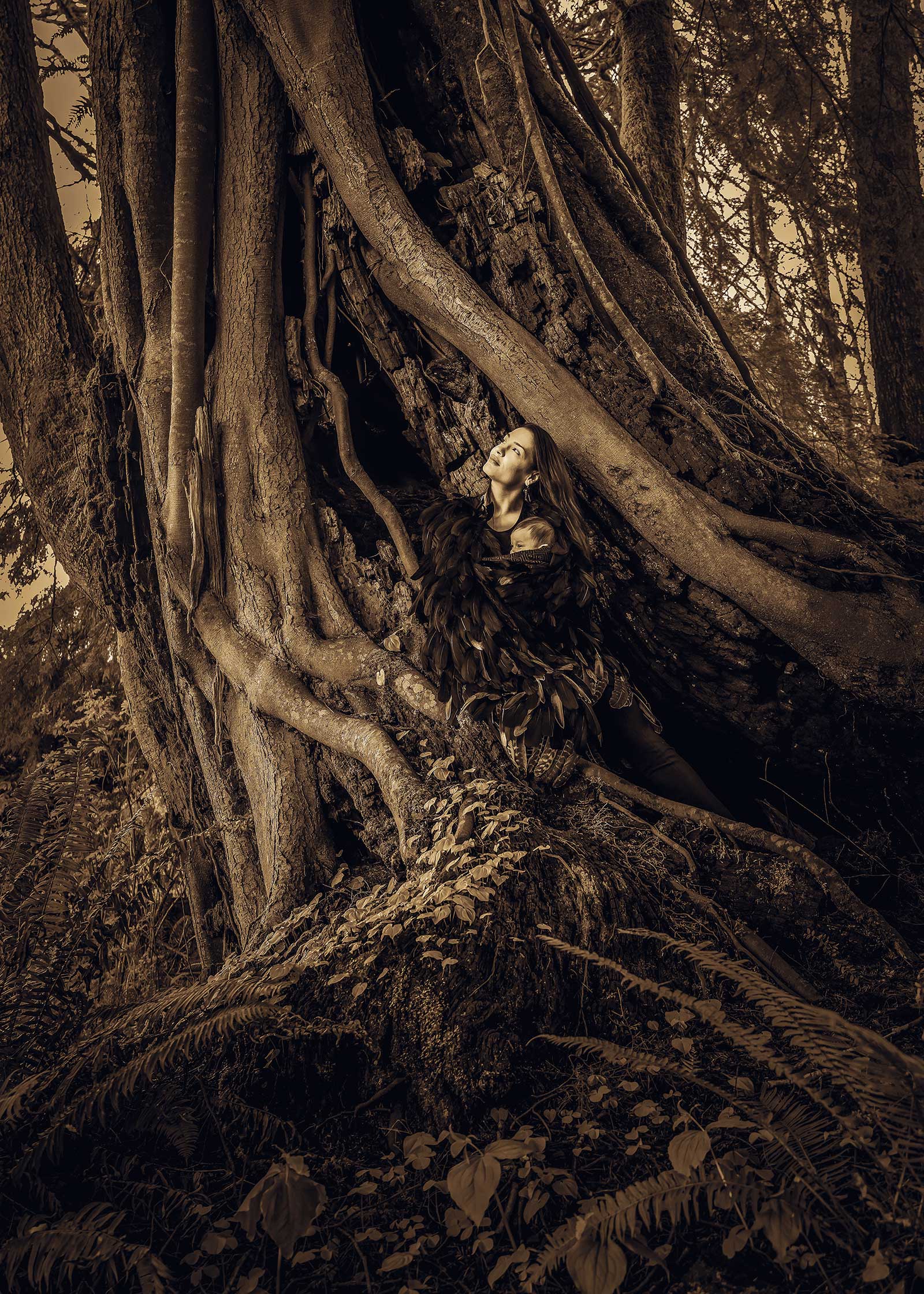
Zoe and Violet (Tlingit Tribe)
Urness was connecting deeply with the subjects because she was a new mother herself. And in many cases she was shooting her subjects with her own baby, three-month-old Violet, wrapped tightly to her chest. The series was funded by an Alpha Female+ grant that Urness won in March 2022 through Sony and its Alpha camera platform. The grant and the series came at a great time for the photographer, who was ready to start shooting after the pandemic.“Being a mother has changed how I see the world in so many ways,” Urness says. “This Indigenous Motherhood project was in reaction to moving back home to the Pacific Northwest, having a new baby and then receiving the Sony Alpha Female+ grant. We had been cooped up during Covid and this gave me a chance to go and meet other Indigenous mothers and celebrate their journeys.”
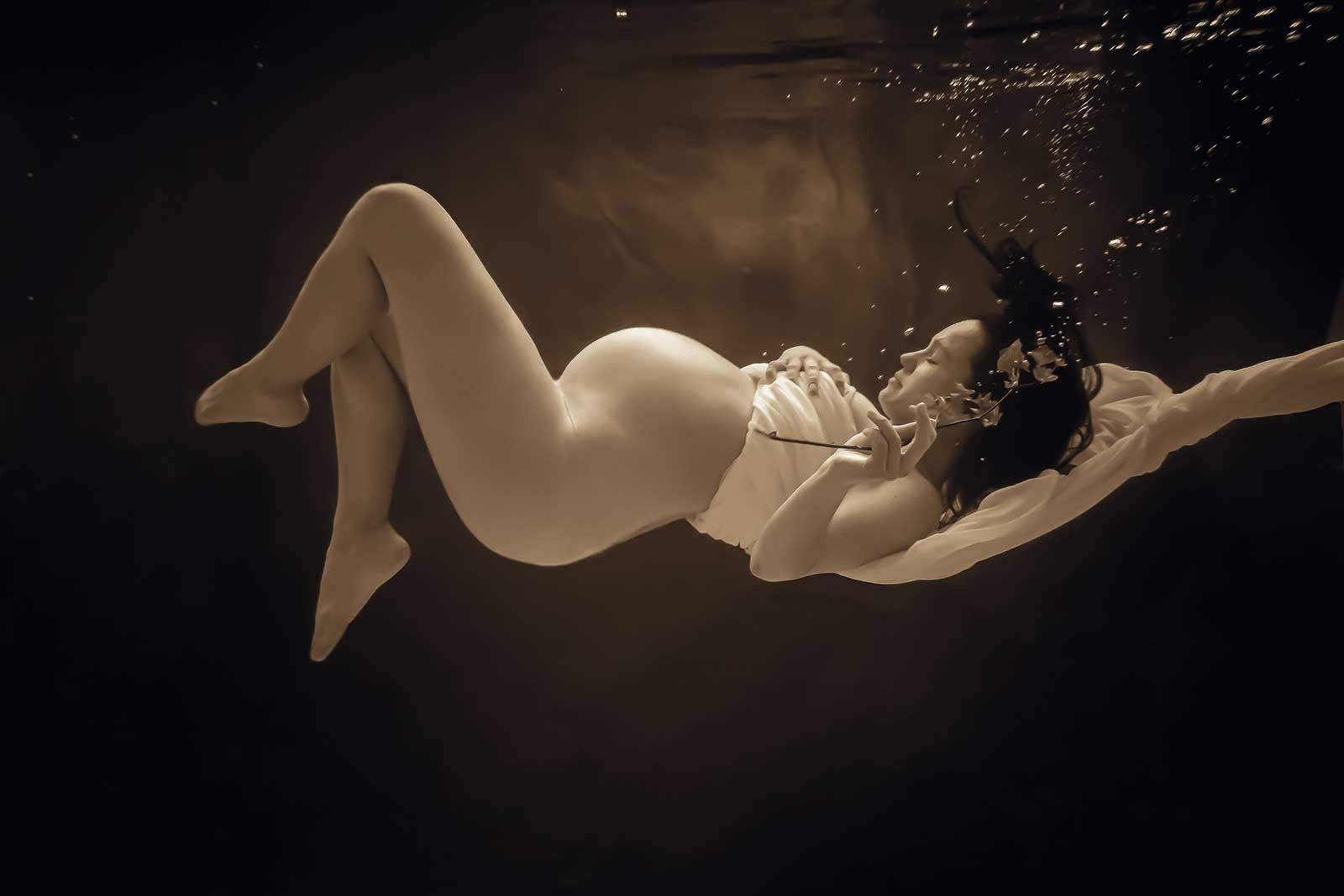
Mariana (Yakama Nation)
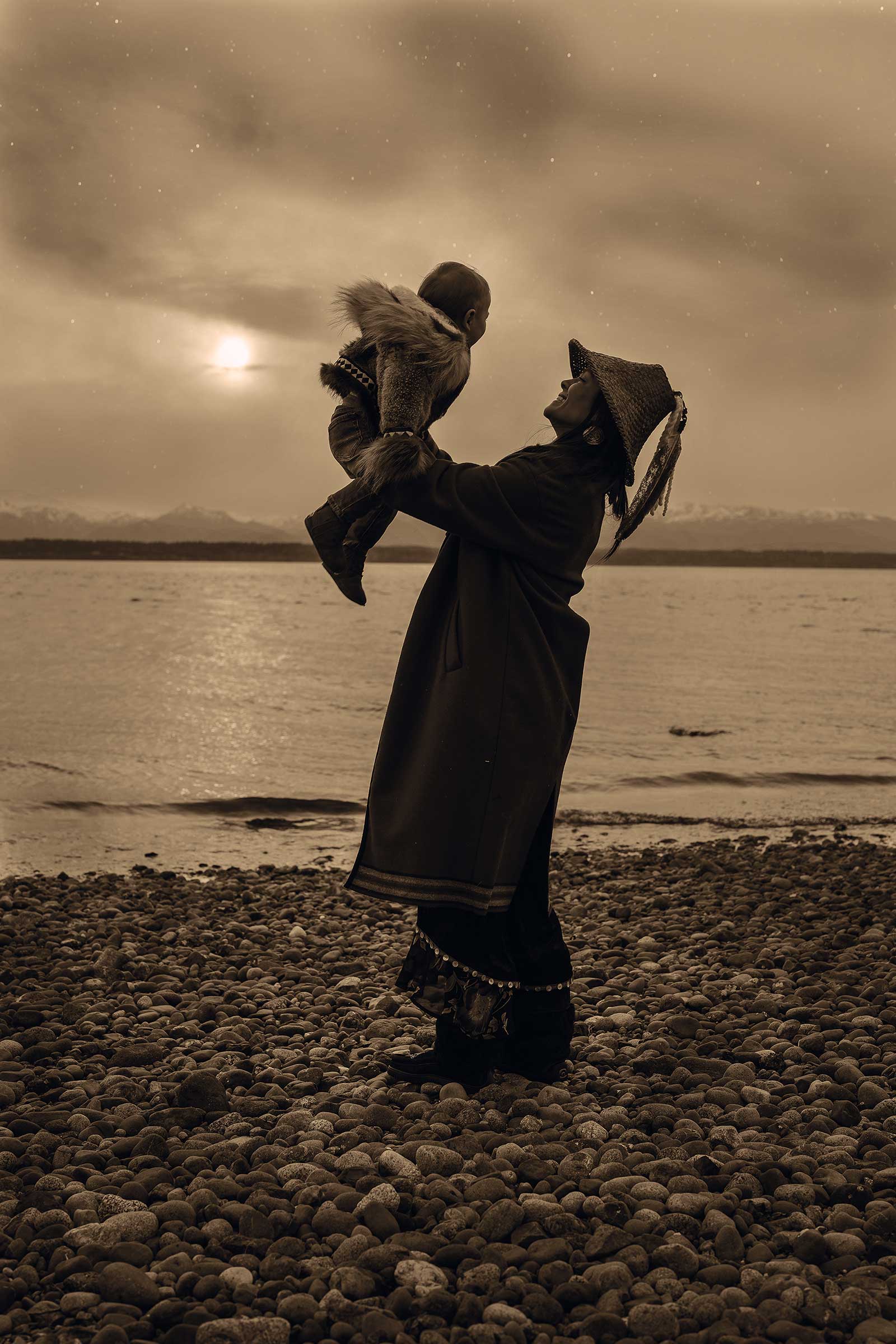
Temryss and Aquila Jay (Lummi Nation)
New images include Temryss and Aquila Jay (Lummi Nation) and Raven, Renae, Dem-I-Thia (Lummi Nation), both of which show parents with infants, and then also Mariana (Yakama Nation) showing a pregnant woman underwater. Many of the new pieces are presented in a sepia-tone image, which unites much of her work together. “Ultimately the sepia tone treatment allows the work to look cohesive and is a natural continuation of my overarching method,” she wrote in her Alpha Female+ profile. In addition to shooting in medium-format and 35mm film, she also shoots in digital. Her cameras include Mamiya 645 AFD, Sony Alpha 7R, Nikon 35mm and a Canon 5D mark IV.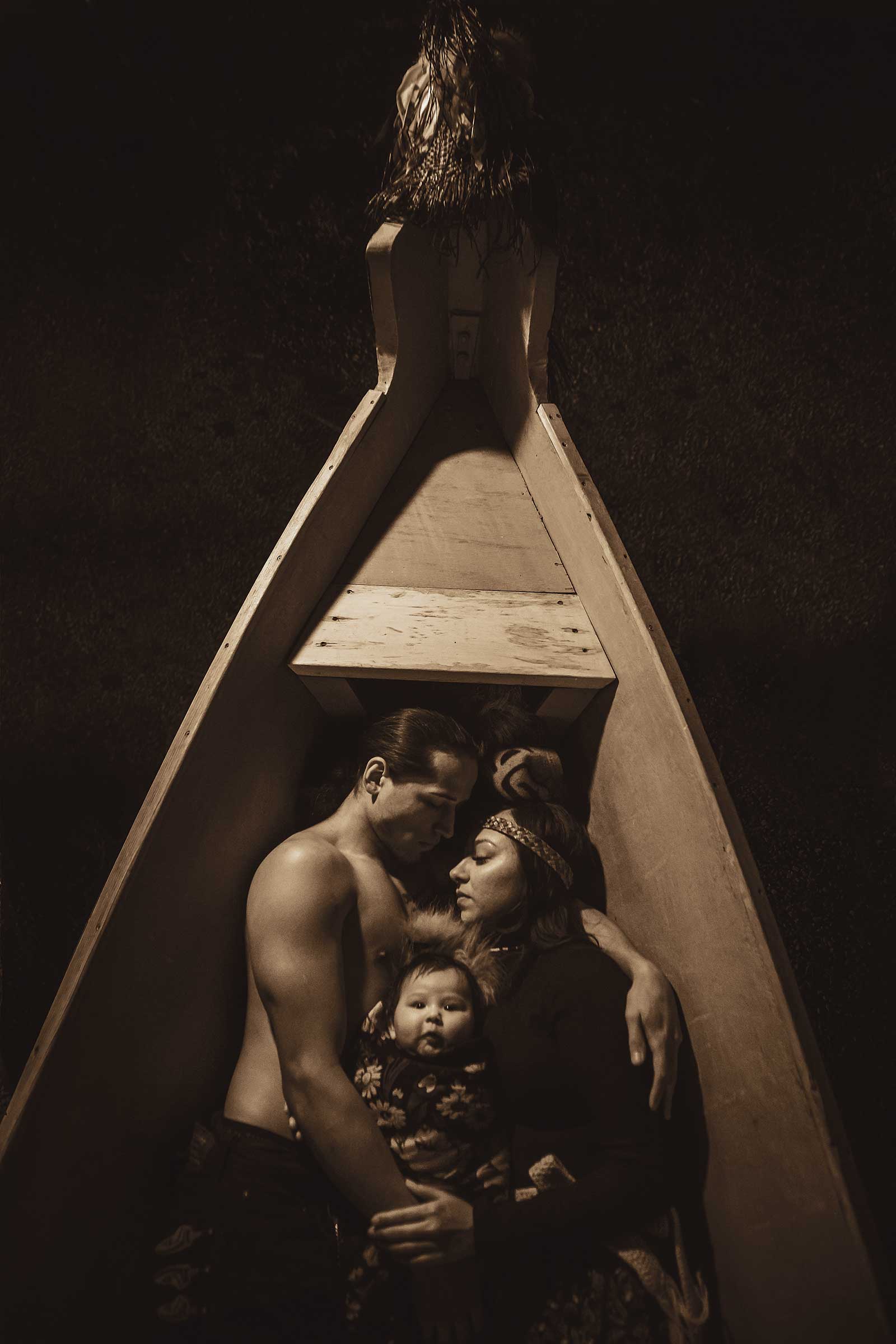
Raven, Renae, Dem-I-Thia (Lummi Nation)
Many of the new works are also shot outdoors, which allows her to explore natural environments and stunning landscapes. “Being a member of the Tlingit tribe, my goal with how I photograph my subjects and the land is to create a visual story that shows the view Indigenous peoples have for land as a sacred living being, and how this view sustains the traditional values and important life ways,” she says. “This view is with deep spiritual beliefs displayed in how we treat the land and how Mother Earth has always provided for us.”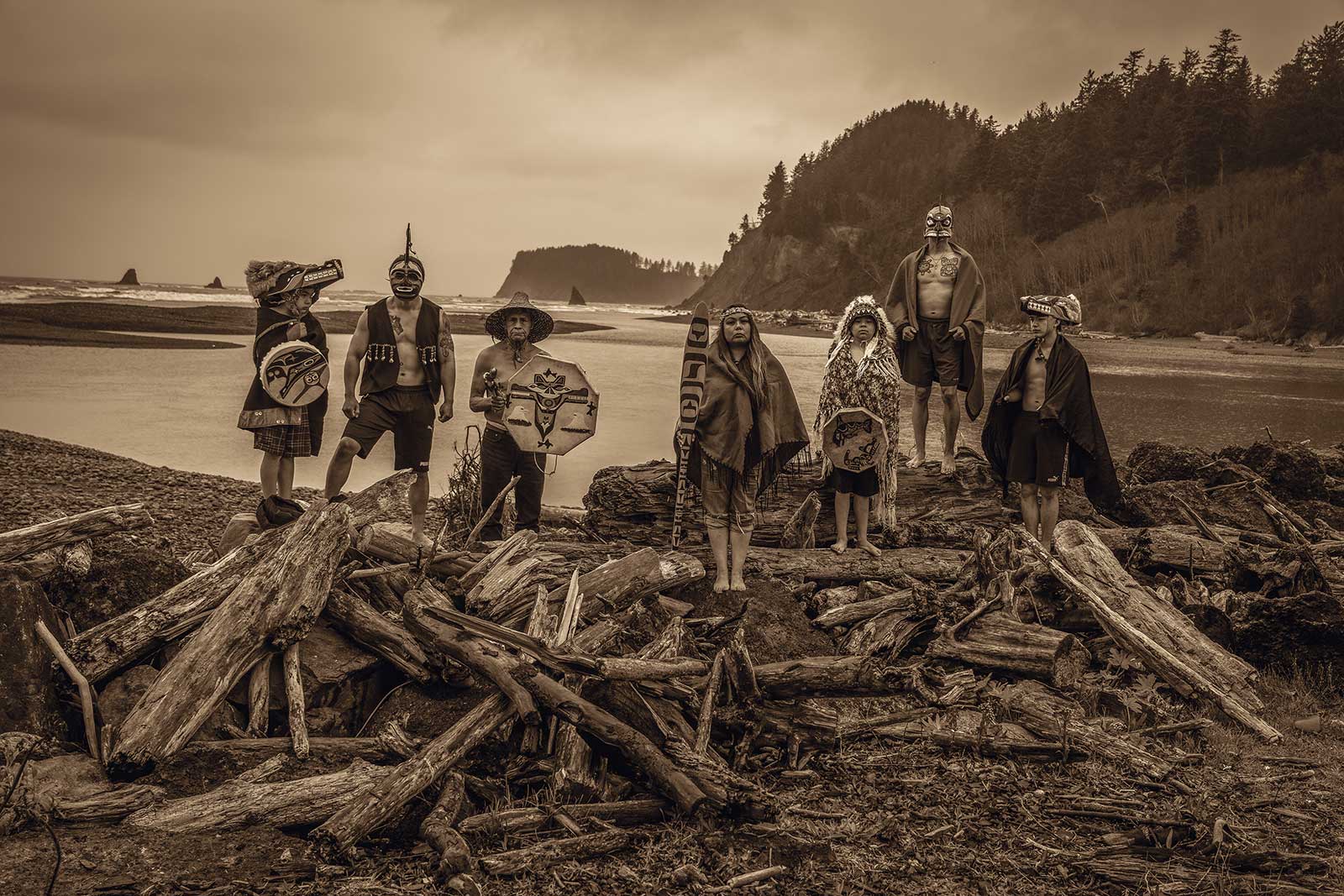
Samantha (mother), father and sons (Chala’ Nation, People of the Hoh River)
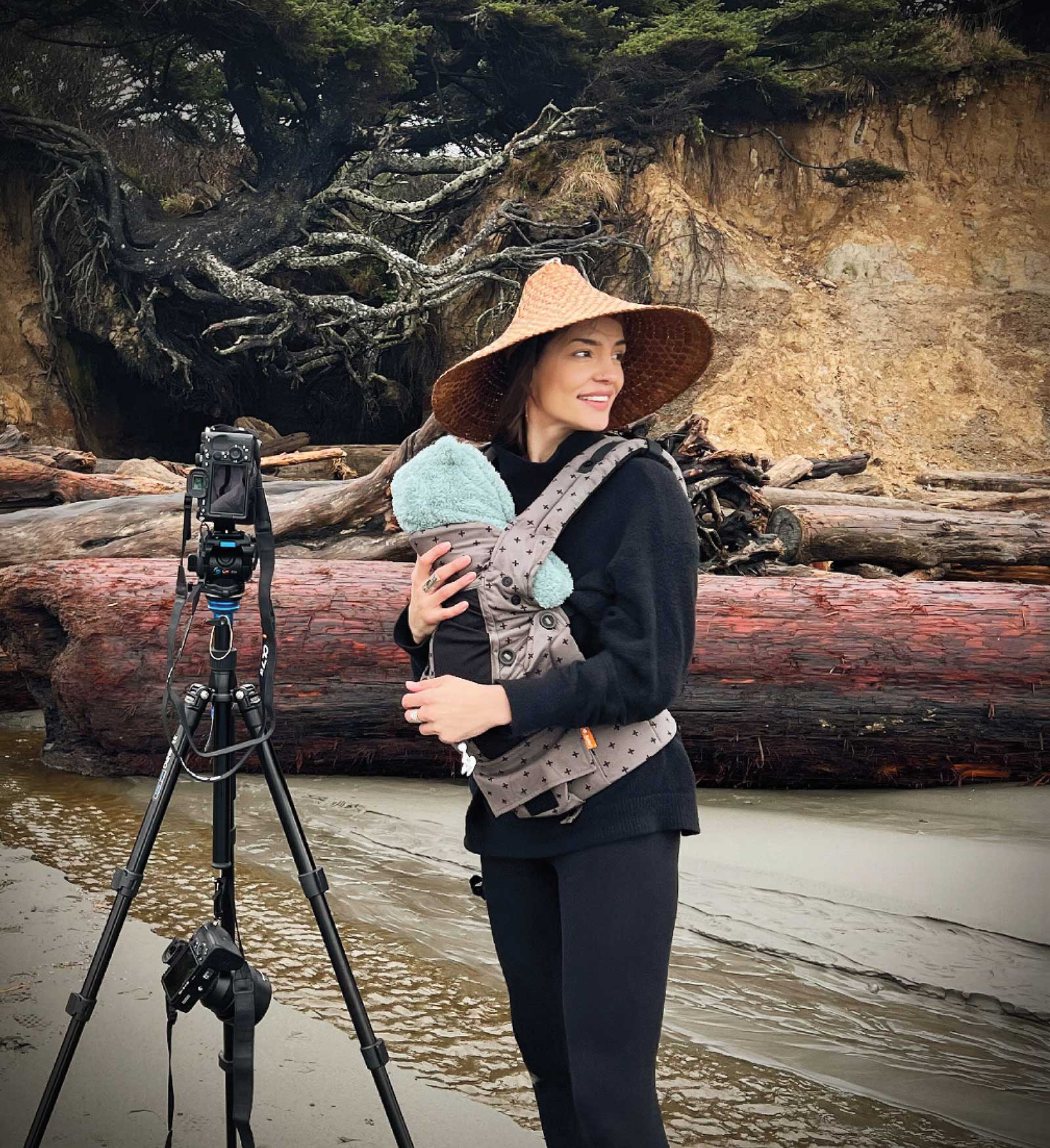
Zoe Urness and Violet out on location for Indigenous Motherhood.
One of the new pieces, also shot outdoors, is a self-portrait with Violet. Urness is wearing a feathered cape as her baby peeks delicately out. They are nestled against a huge tree with vine-like limbs that are exposed and weathered. “The black and white feathers on the cape wrapped around my daughter and I represent the eagle, as I am Eagle Clan, and in Tlingit matrilineal tradition, the children become members of their mother’s clan,” she says. “We sit surrounded by the roots of the tree, as if it’s a safety blanket around us both. This reflects the importance of our deep ties to each other and symbolizes the family tree from which we come, always providing protection. We are looking up and out in wonder of the journey ahead; the comfort and stillness of the pose suggests that any path taken, mother and child are always rooted in each other. Shortly after my daughter was born, I buried her placenta, also known as the tree of life, under a cedar tree on a winter night under the moonlight near the ocean where I live. The purpose was to ceremoniously enjoin her to Mother Earth and to ground her spirit in this plane.”See More: www.zoeurnessphoto.com
Artist Spotlights: Dive deeper into the genre with these established artists
Tedra Begay (Navajo (Diné))
www.tedrabegay.com

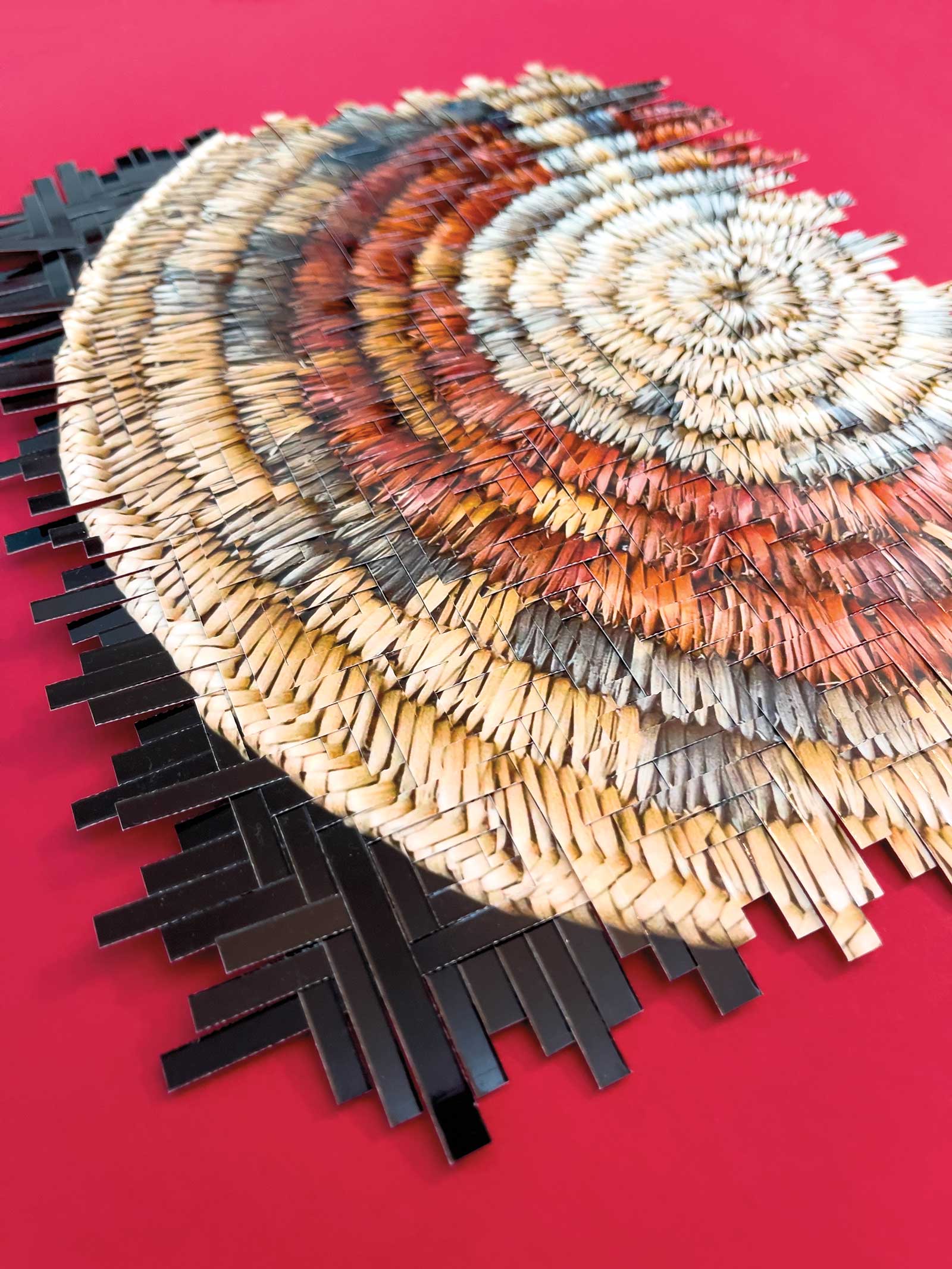
New Mexico-based Tedra Begay takes photographic images and turns them into mixed media creations that utilize weaving techniques. She calls the process photoweaving. For many of her works, Begay starts with two photos cut into strips and woven back together with a pattern designed in the weaving. Some works are directly inspired by Navajo basketweavers such as her grandmother. “The Navajo wedding basket symbolizes sacred mountains, rain, clouds and sun,” Begay says. “But the outside rim of the basket represents a person’s thoughts, prayers and values. My grandma has given me a lot of knowledge to learn to weave and to always create beauty within myself and around me. I will live every day with her teachings.”
Sky Hopinka (Ho-Chunk Nation/Pechanga Band of Luiseño Indians)
www.skyhopinka.com

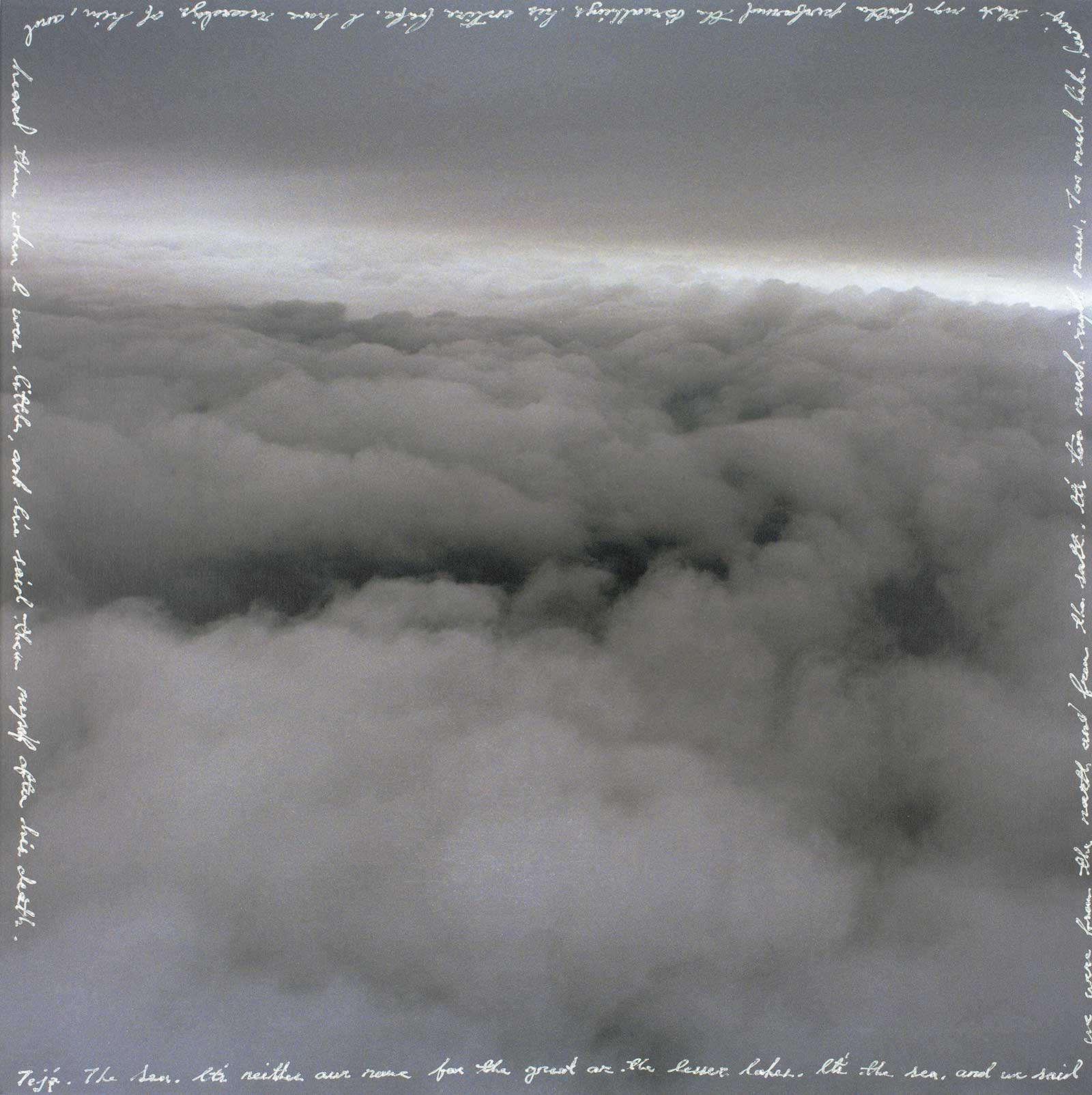
Sky Hopinka’s newest work, some of which is paired with single- and multi-channel video presentations, is taken with medium-format or 35mm film, and then the artist uses a rotary tool to etch and scrape around the edges of the pictures. The resulting images are both beautiful and poetic. Not only does Hopinka use some of his own text, but he also borrows from Ho-Chunk mythology, poems, songs and other media. For one recent work, he quotes from Bob Dylan. Born and raised in Washington, Hopinka’s works have appeared at film festivals all around the world and he has also guest curated major exhibitions around the country.
Jeremy Dennis (Shinnecock)
www.jeremynative.com
Jeremy Dennis is seeing his star rise in the world of fine art photography. His new series Rise “reflects upon the historical legacy of the Pequot War, King Philip’s War and the fear of Indigenous people in New England and later throughout the United States,” he says. “Fear, in this instance, comes from the acknowledgment of our continued presence, not as an extinct people, but as sovereign nations who have witnessed and survived 400 years of colonization. Playing with recognizable zombie film and TV show iconography, Rise highlights parallels between the apocalyptic rising undead and popular misinformation of Indigenous people as a vanished race.”
Powered by Froala Editor