Thomas Tapia has come a long way since taking first prize at Santa Fe Indian Market the very first year he entered in 1996. He’s participated nearly every year since, showing both watercolors and pottery, and has earned too many awards to count, there and at other notable art fairs such as the Heard Museum Guild Fair & Indian Market.
A Tewa Native from the Pueblo of Tesuque in New Mexico, Tapia comes from an extensive line of watercolor artists that stretches back to the 1880s with the birth of his late grandfather, Tomás Vigil. His four uncles were also highly regarded watercolorists, as was his brother, Joseph Tapia.
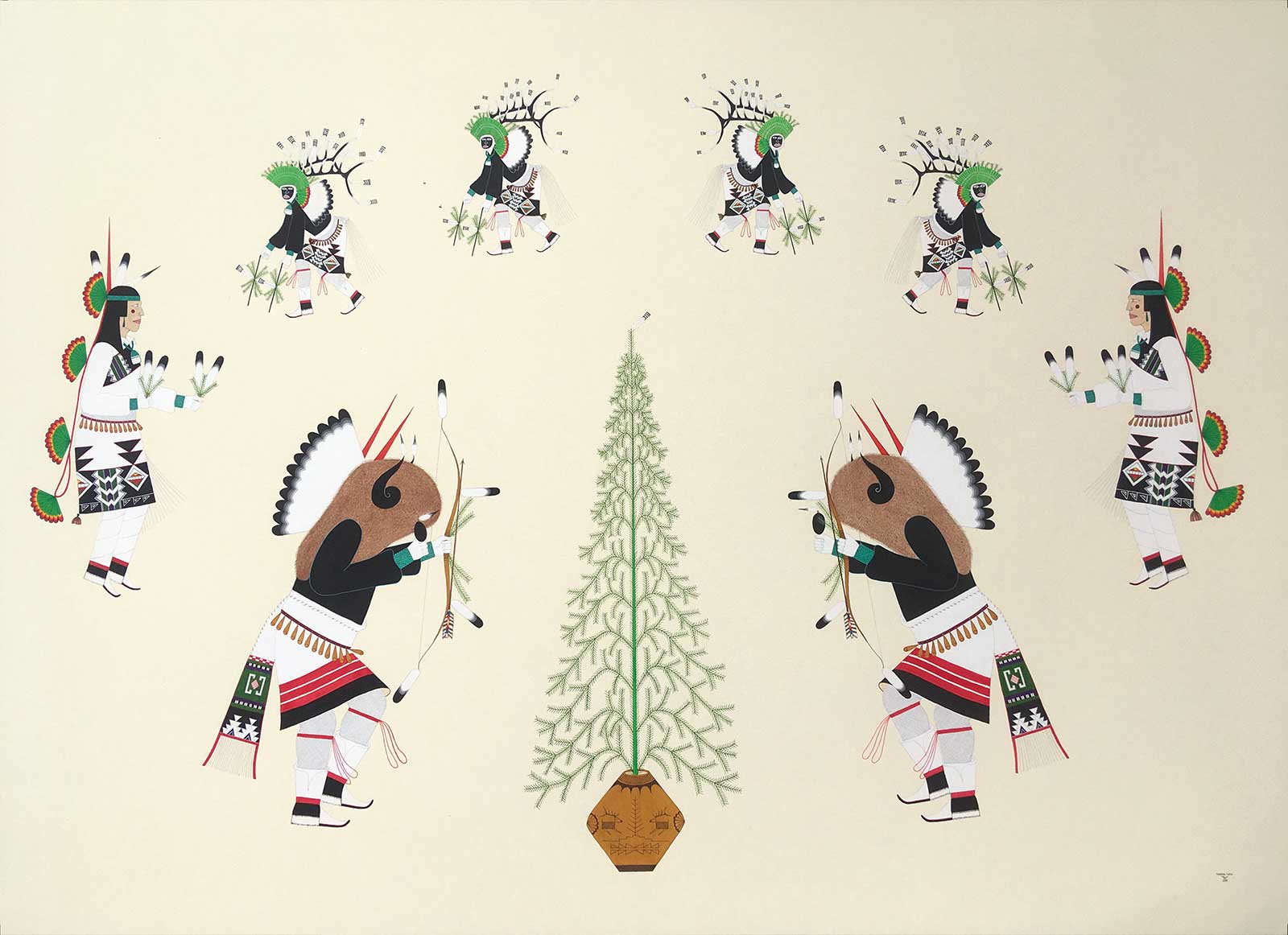
Buffalo with Elk Dance, watercolor on matte board, 24 x 36"
Although Tapia was surrounded by art-making as a child, it wasn’t until high school that he really took an interest in drawing, then watercolors. It evolved into what he still humbly calls a hobby (his second being pottery) and a means of relaxation and stress relief, which especially came in handy when he embarked on a career in law enforcement. In his mid-20s, his mother Theresa Tapia, a gifted potter, took note of his talent and began encouraging him to enter his work in the Santa Fe Indian Market, as has long been the family tradition.
“It was really intimidating to complete with all those renowned artists and artists of that caliber,” says Tapia, adding that the late Santa Clara Pueblo painter and potter Pablita Velarde came by to congratulate him. “She came to my booth and encouraged me to keep up the old, traditional style of painting. It was my boost…my inspiration and motivation.” Velarde became one of Tapia's mentors.
Like his grandfather’s watercolor painting of a traditional buffalo dance that is on permanent display in the lobby of La Fonda on the Plaza in Santa Fe, Tapia has remained unswervingly true to the “flat” illustrative style and subject matter of his culture, which often include scenes of Tesuque animal dances.
“As a hunter, everything we harvest we honor by dancing it,” says Tapia. “You have the buffalo, the elk; it’s the same with the ram, the antelope and the deer. That’s been our tradition since time immemorial. Everything you see is specific to Tesuque Pueblo—the attire, the animal dances." Of a piece he is currently working on, Tapia says, "The Corn Dance in June is for rain, a good yield, good faith and good fortune. If you’ve ever seen the dance, you’d know it was Tesuque Pueblo.”
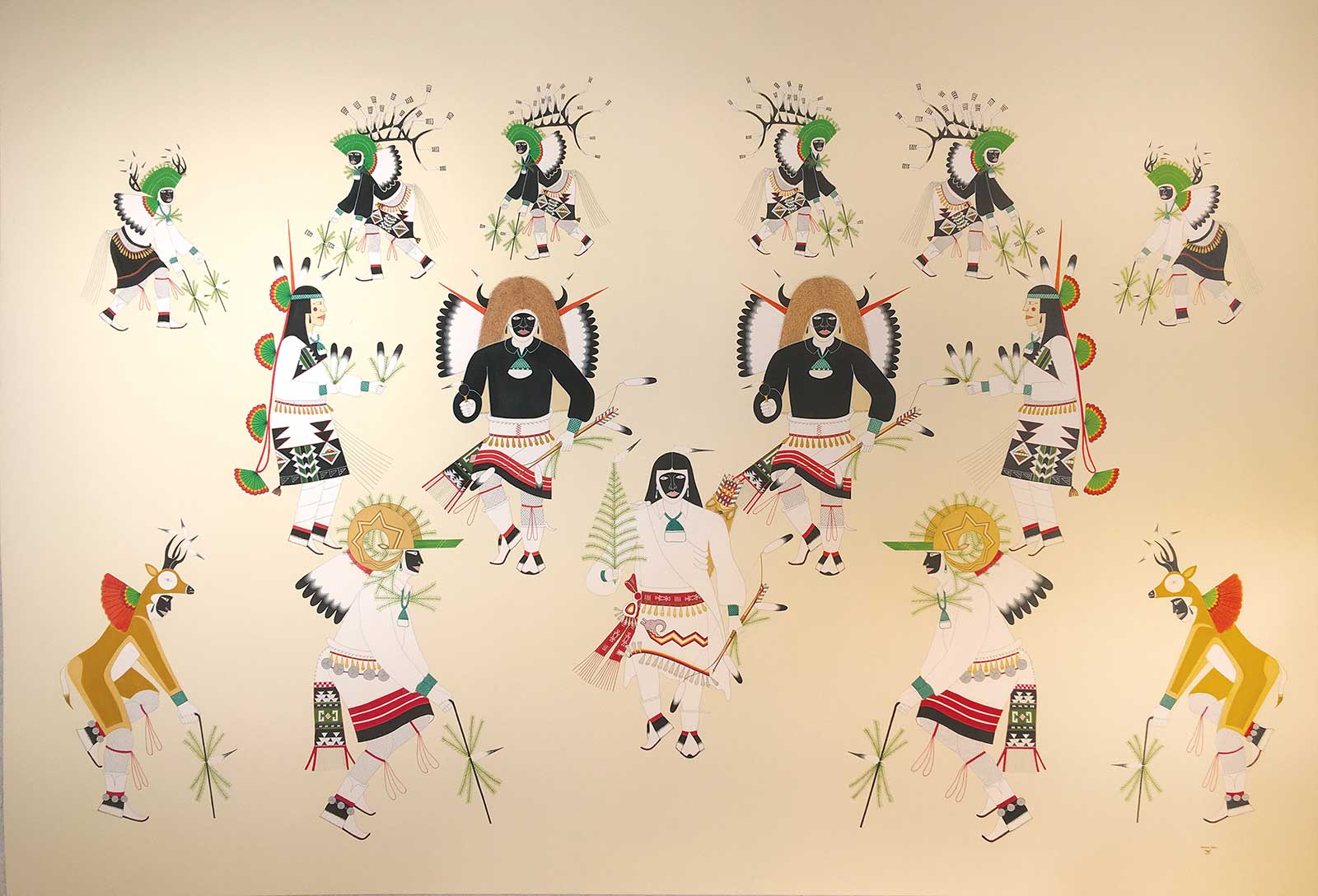
Buffalo Dance, watercolor on matte board, 27 x 40"
With a lifetime infused with these rituals, Tapia draws from memory and a knowledge of tradition that is simply a part of him. He starts with a pencil sketch before transitioning to watercolor, working from light to dark with brushes that have been modified down to four or five bristles to achieve the fine detail.
Before Tapia starts a major piece he looks to his mother, now 92, the artists who encouraged him and the family members who have since passed for guidance. “I call upon them and pray to them,” he says. “They’re the ones who provide the perfection and the relaxation. They’re ones that gave me the inspiration to do this.”
Learning about Tapia’s process makes it difficult to believe it is as relaxing as the artist insists.
“I work like a surgeon,” he says. “I cover the whole board with towels, keeping only the area I’m working on exposed. Watercolor is more unforgiving than acrylic or oil. You have one shot at it. You have to know where you’re going—if you stop mid-stroke you will leave a blob. With watercolor, you can’t erase; you can’t cover up. You will see that mistake, that flaw. I’m a perfectionist. It’s only a relief once it’s in glass—that’s when I am done.”
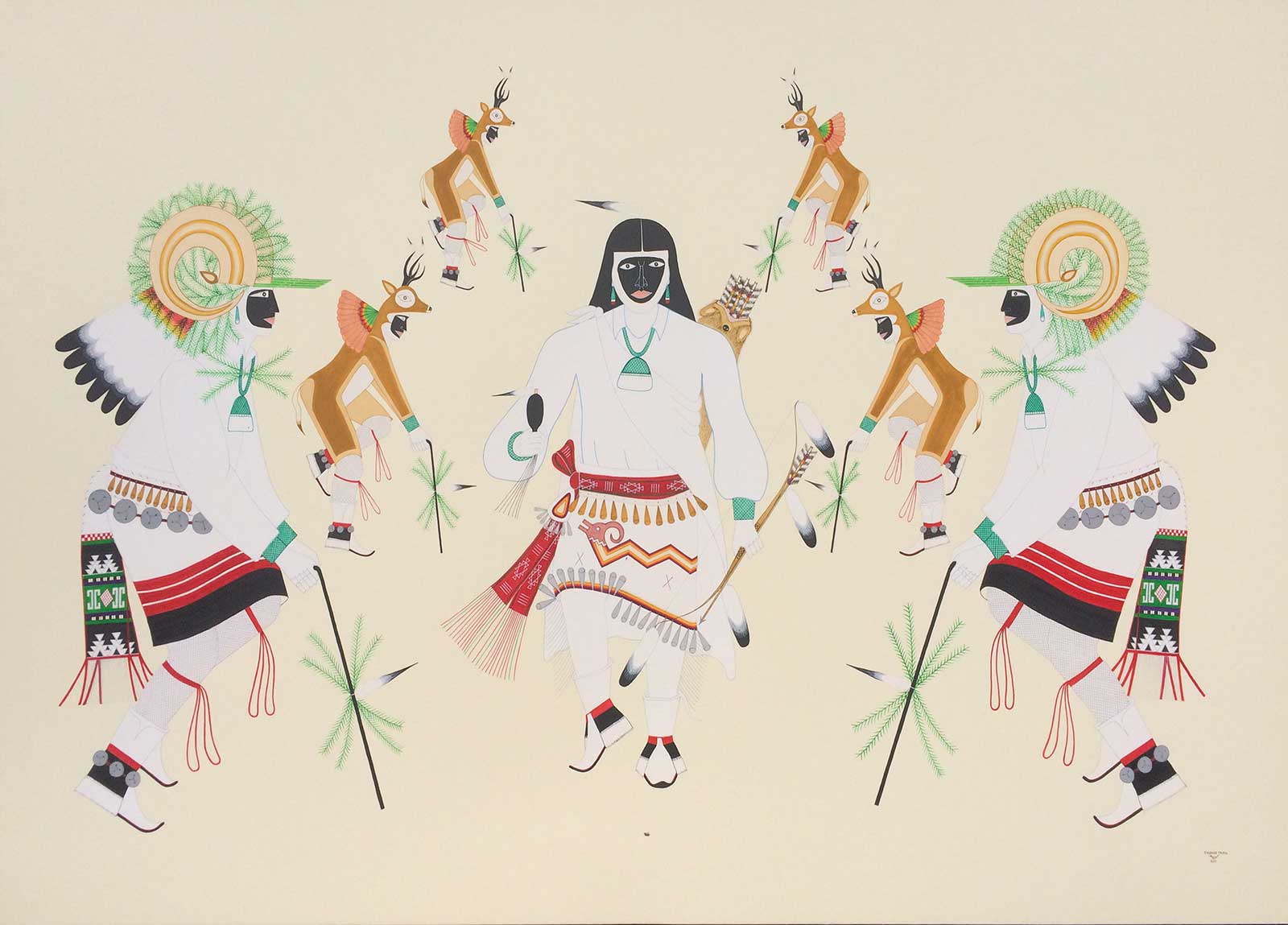
Mountain Ram and Antelope Hunter, watercolor on matte board, 24 x 36"
Tapia says his work has not changed at all over the years, no doubt in part because of his unwavering commitment to keeping the “old traditional style of watercolor” alive. “I don’t want it to die,” he says.
The future is looking bright. He’s especially proud that what began with his grandfather over a century ago has now been passed down yet another generation to his teenage grandson, Jalen Martinez, with whom Tapia has shared his market booth with for years and who is already gaining artistic recognition in his own right.
“Now it’s handed down to him to carry it on,” says Tapia. “I’m really proud of him. I hope my grandson keeps up the interest and continues to represent the Pueblo Tesuque and our family as well.”
See More tvtapia22@gmail.com
Artist Spotlights: Dive deeper into the genre with these established artists
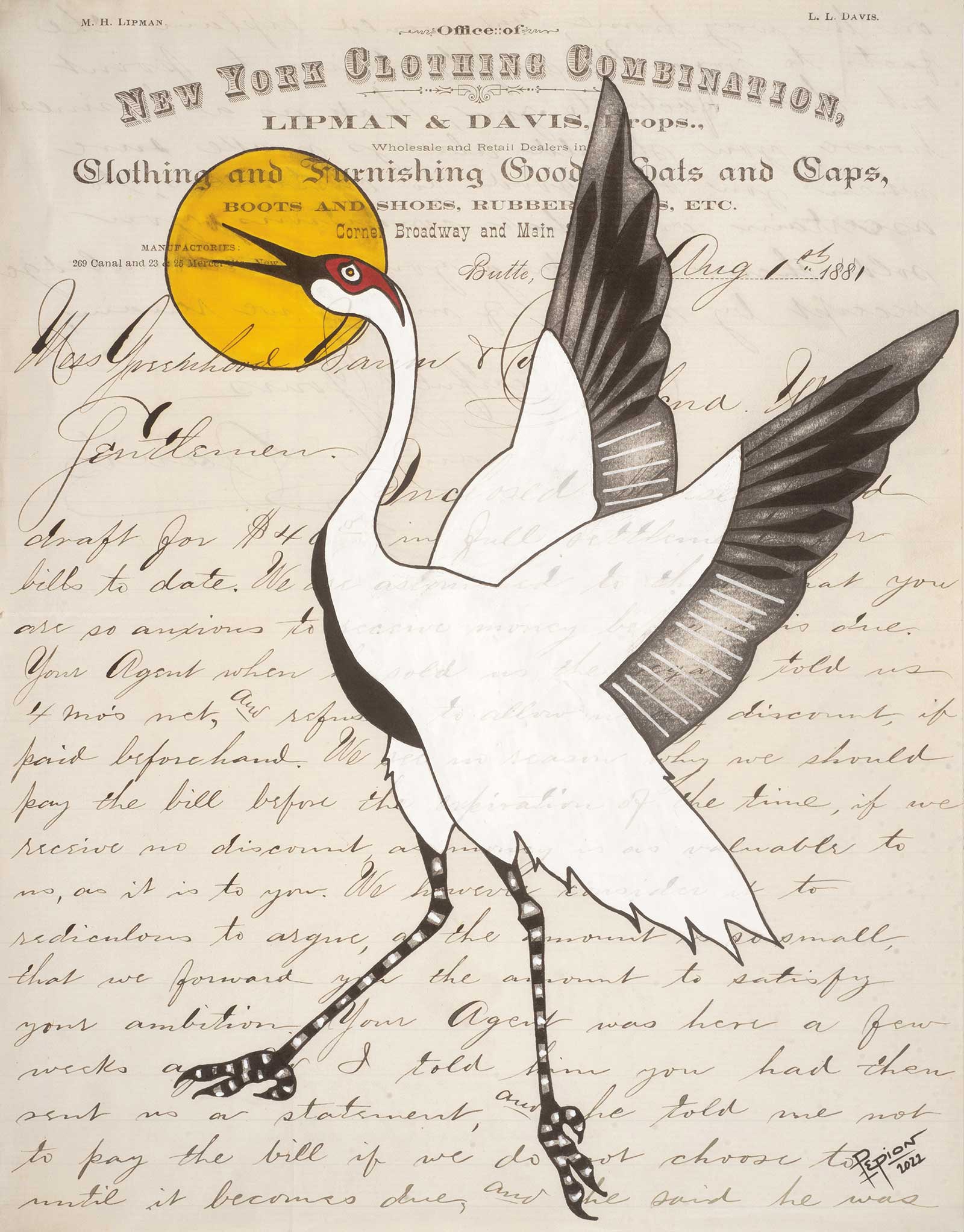
John Isaiah Pepion (Blackfeet)
www.johnisaiahpepion.com
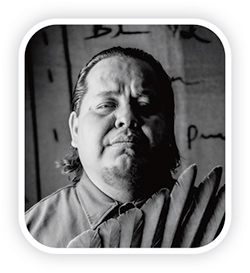
Bobby C. Martin (Muscogee (Creek))
www.bobbycmartin.com
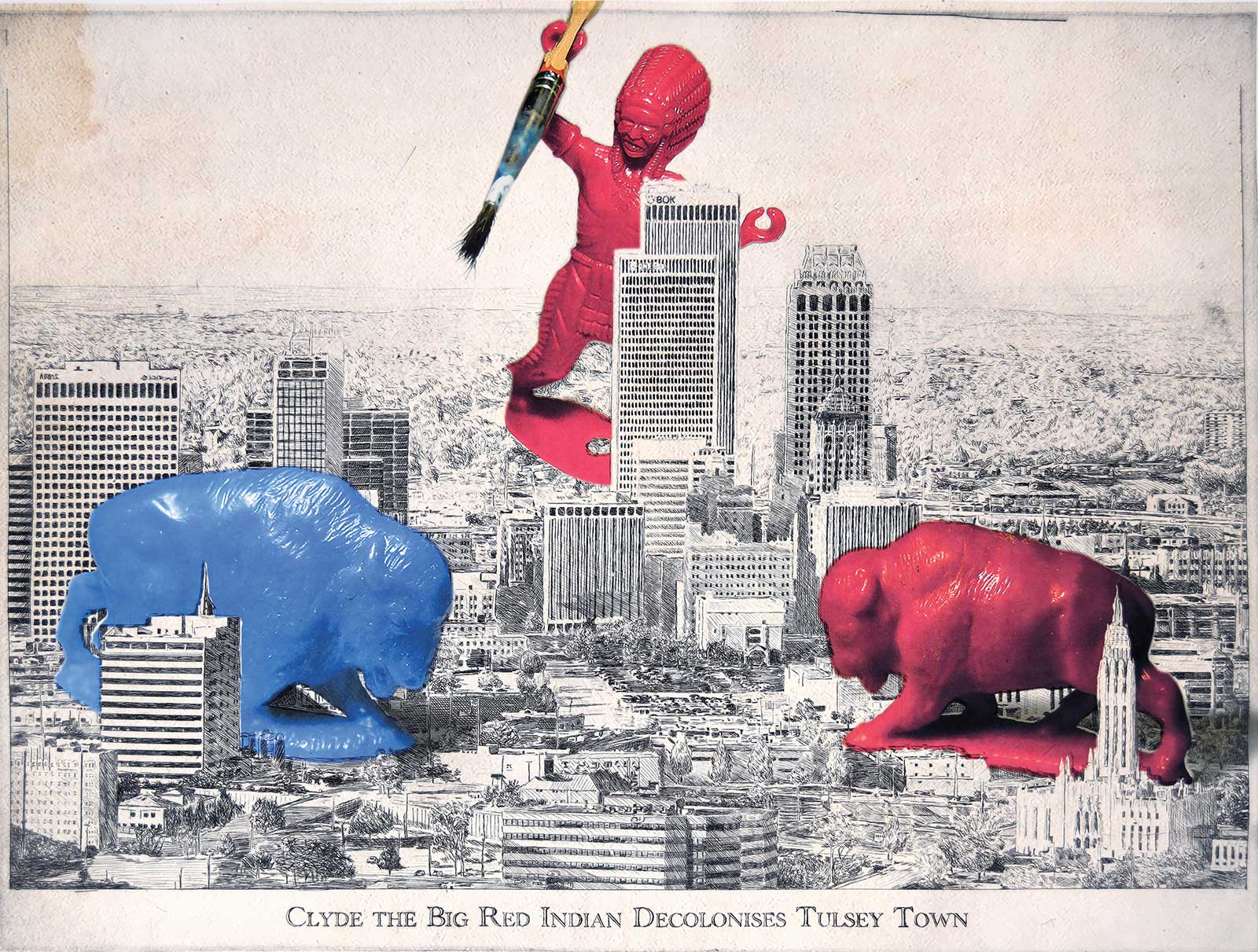
“My work has always contained a political undercurrent, but more recently I realize that I have the responsibility to tell my own story as a mixed-blood Native person in an increasingly fractious U.S. culture,” says mixed-media artist, Bobby C. Martin, whose piece here is a combination of drypoint and digital printmaking. “This has led to deeper explorations into identity politics and how that plays out in everyday Indian communities like the ones where I grew up in northeastern Oklahoma.” His most recent work probes deeper into the complicated nature of Native identity, individually and communally—“not to shock or divide, but in an attempt to find a common ground of shared experience.”
Bryan Waytula (Cherokee)
waytulajit.wixsite.com/bryanwaytula

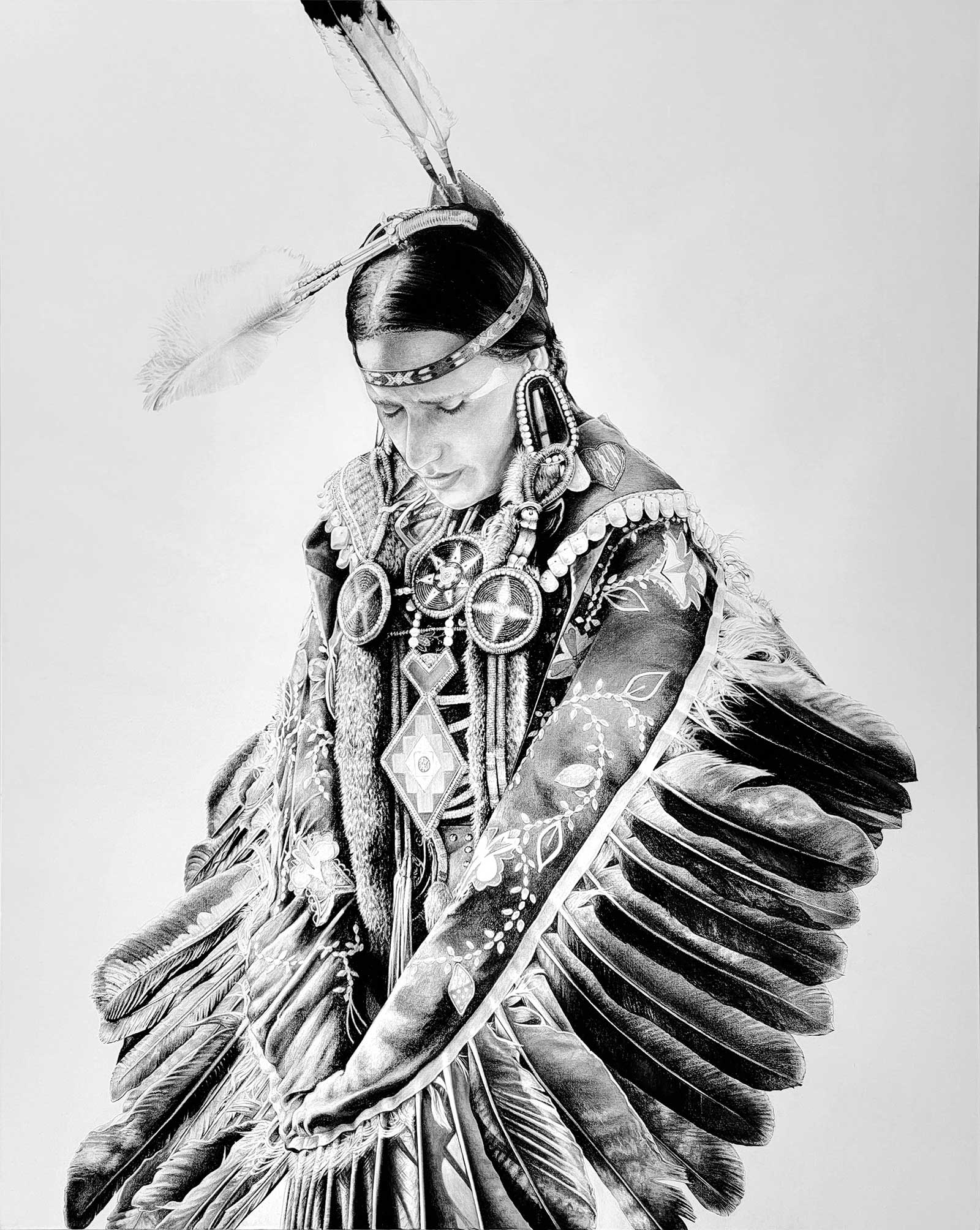
Following in the footsteps of his mother and grandmother, both of whom are Cherokee National Treasures in the art of basketry, Bryan Waytula works in a wide range of art mediums but has become known for his use of colored pencils and charcoals. Growing up, he spent a lot of time at his grandmother’s house on the weekends, where his sister, mom and grandma would weave baskets and teach him how to do it too. “Growing up I was trying to find my niche, just something I was good or excelled at,” Waytula says. “My hope is to create a visual story that depicts the beauty and history of our Indigenous culture that admirers can learn from.”
Powered by Froala Editor