Directly following part one of the thrilling exhibition A Part of the Earth, a celebration of new acquisitions at Millicent Rogers Museum, continues the second half with a focus on Taos Pueblo artistry. In addition, the exhibition strives to capture and honor the legacy of the museum’s namesake collector of the Southwest, Millicent Rogers, who felt “‘a part of the earth’ when passing by Taos Mountain during her years living in Taos, New Mexico, from 1947 until her death in 1953,” say museum reps.
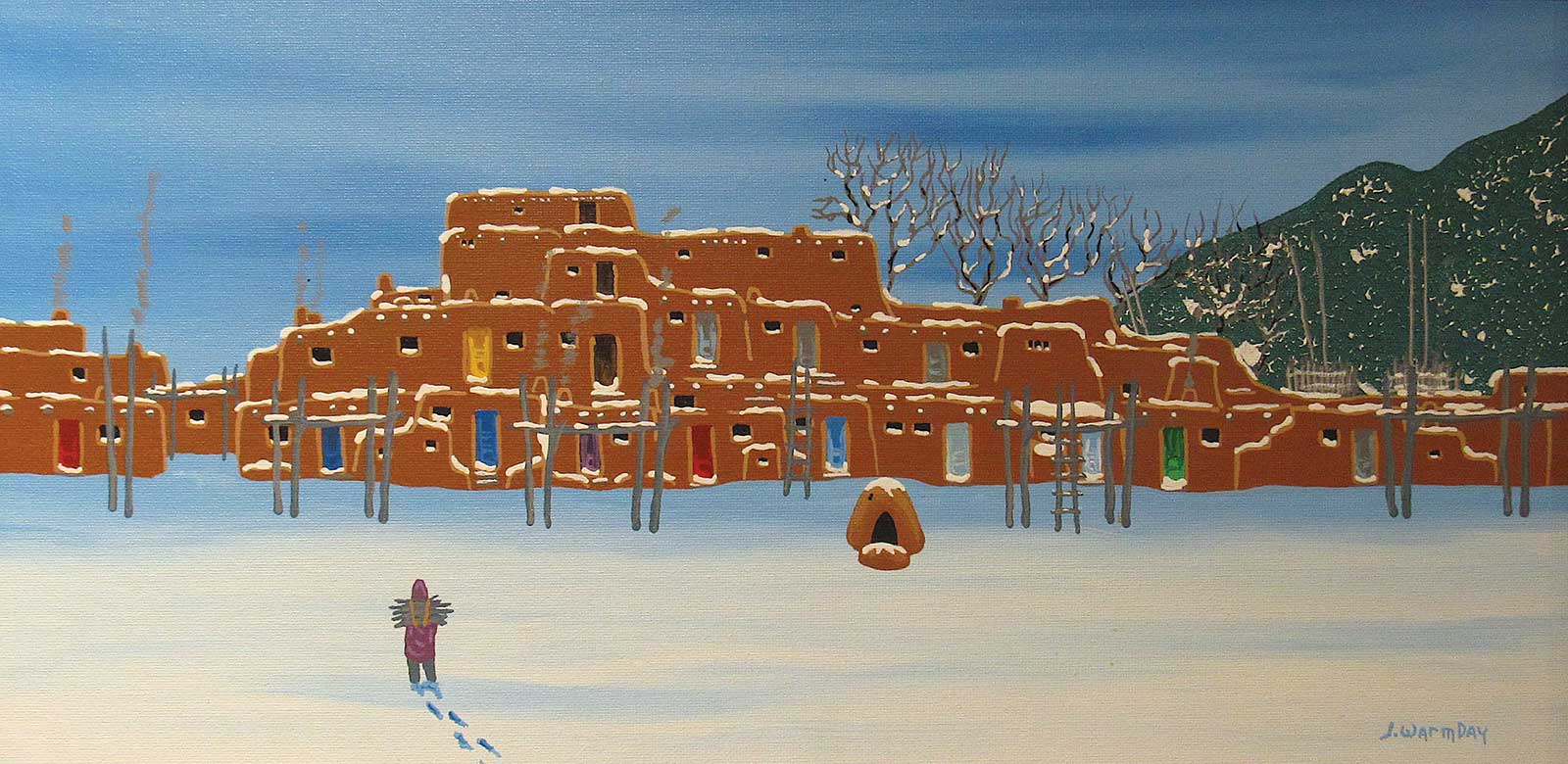
Jonathan Warm Day Coming (Taos Pueblo), Winter at Taos Pueblo (North House), ca. 2000, acrylic on canvas. Image courtesy and collection of the Millicent Rogers Museum, Taos, NM.
“We’re trying to find balance in showing visitors Southwest art that has joined our collection while speaking to our mission and founder, Millicent Rogers and her son Paul Peralta-Ramos,” explains Michelle Lanteri, curator of collections and exhibitions at the museum. “The exhibition is really a microcosm of our permanent collection. The first part in the series was more of a sampling or a snapshot of important Southwest art that joined our collection, while the second exhibition is an emphasis on four major categories: Taos Pueblo artists, Southwest artworks and Southwest Native weavings, pottery and jewelry.” The exhibition boasts around 50 extraordinary examples of Southwest and Native artworks ranging from around 1200 to present day—showing “continuity and change all at once,” says Lanteri. Every piece displayed has been acquired by the museum within the last four years, received from a variety of donors.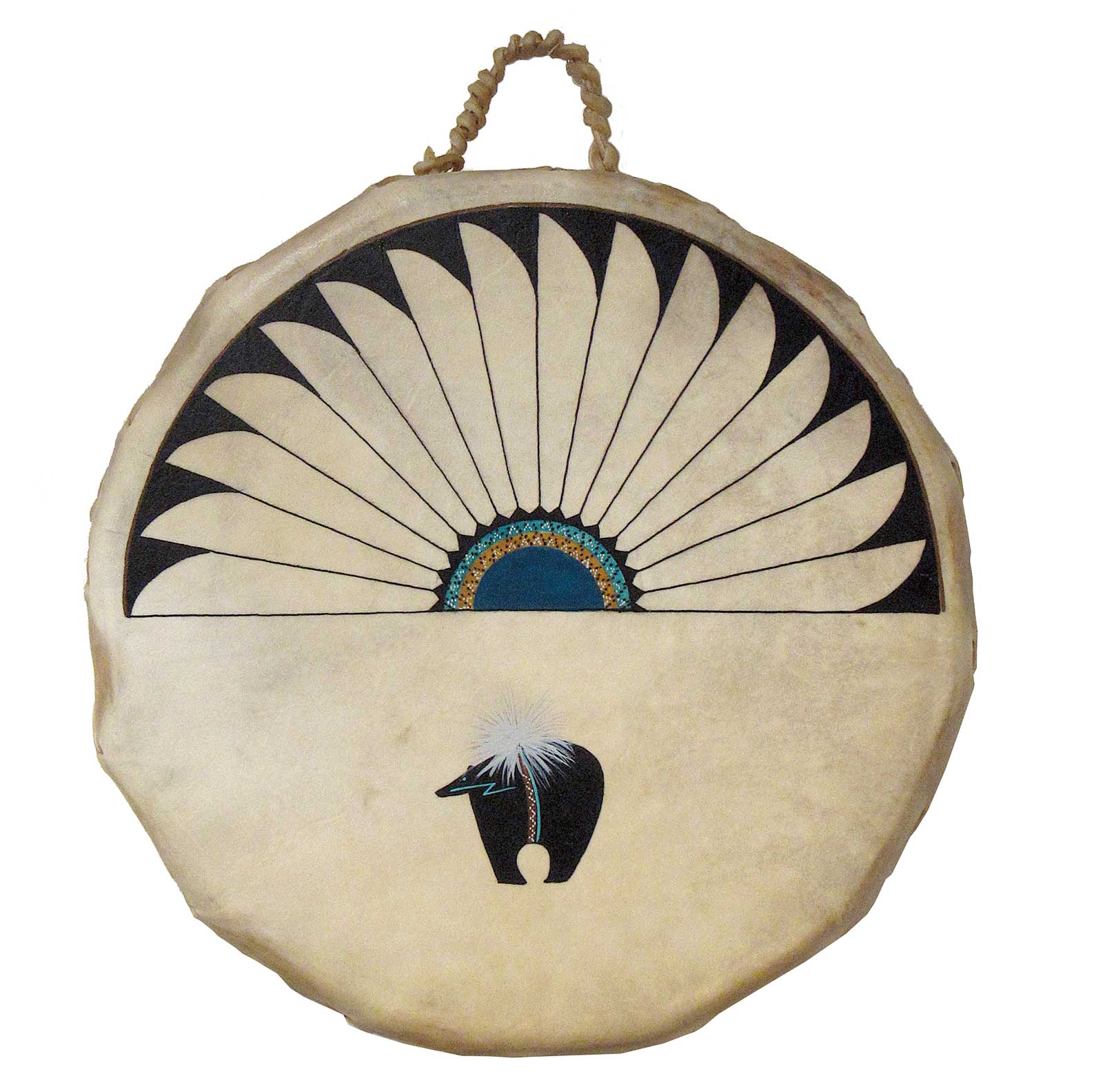
Phillip Martinez (Taos Pueblo), Drum with Feather Design, ca.1997, wood, paint and rawhide. Image courtesy and collection of the Millicent Rogers Museum, Taos, NM.
Such fine examples include paintings like Taos Pueblo artist Jonathan Warm Day Coming’s Winter at Taos Pueblo (North House), from around 2000, depicting a snowy scene. “Showing a Taos Pueblo perspective of a village during winter, and living according to the seasons is so important to the people here in the area,” Lanteri notes. “Having this painting also gets us into alignment with the timing of the exhibition.”Lanteri continues, “Having Jonathan’s painting helps us honor the Red Willow People of Taos Pueblo. “The museum is located on their traditional lands, so it’s important for us to honor them in as many ways as we can; to reinforce their reality and caring for the continuum of the lands.”
Another significant Taos Pueblo artist, Phillip Martinez, is also represented in the exhibition with his Drum with Feather Design. The artist, known for his use of rawhide in different mediums, represents another key element in the exhibition: speaking across art forms.
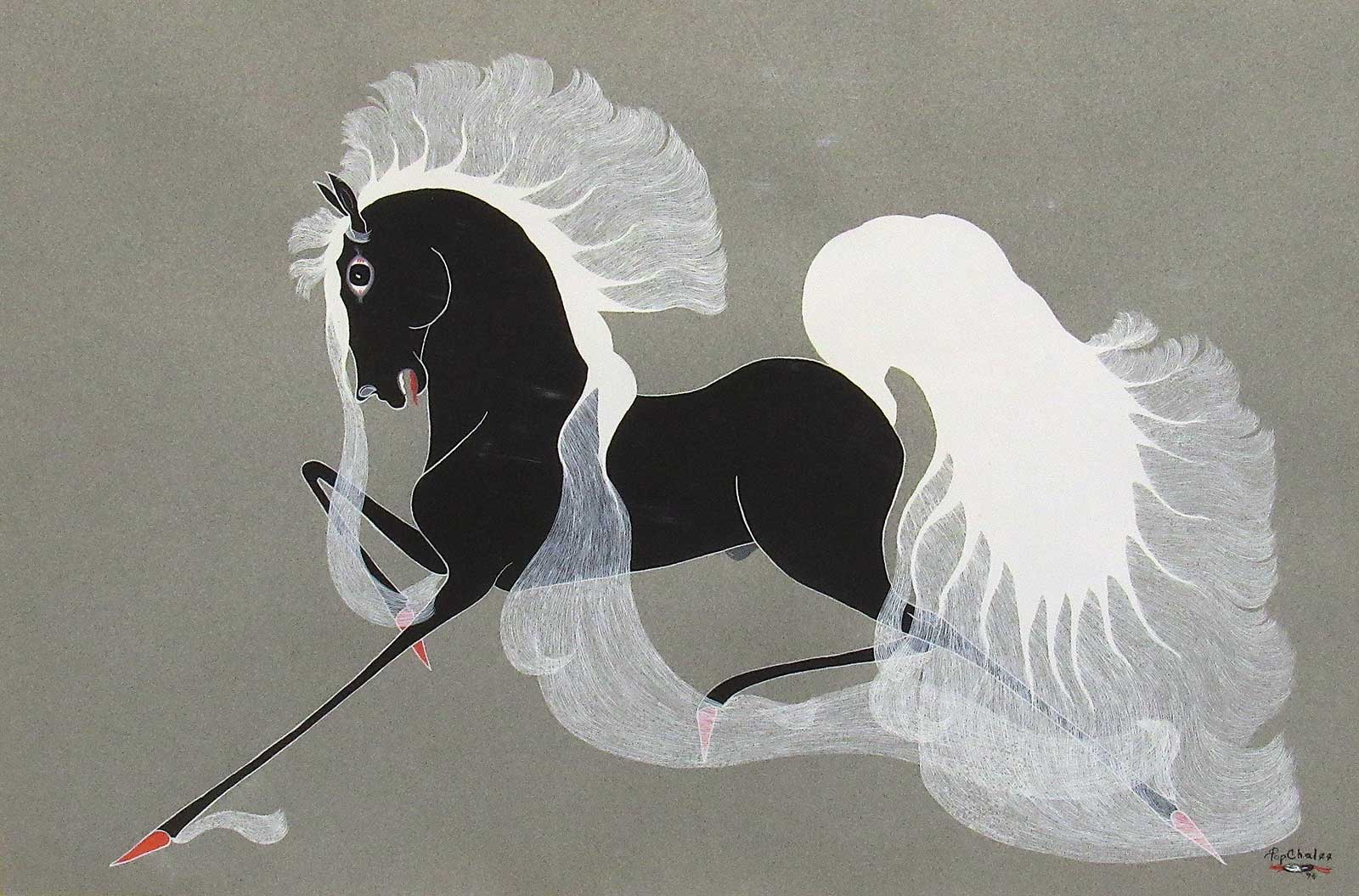
Pop Chalee (Taos Pueblo, 1906-1993), Mythical Horse, 1978, water-based tempera on French paper. Image courtesy and collection of the Millicent Rogers Museum, Taos, NM.
“In depicting the feather, he’s bringing pottery motifs into drum design,” Lanteri says. “The feather is known in the Southwest largely because of Maria and Julian Martinez (well-known husband and wife San Ildefonso Pueblo potters, with Maria represented strongly at Millicent Rogers Museum). There’s a sense of exchange between Pueblo communities and across mediums”—also seen in show piece Deer with Heartline, 2000, by Zuni Pueblo artist C. Haloo, where there's also a connection with Phillip’s use of a bear with heartline.Lanteri also takes note of prominent painting Mythical Horse, 1997, by in-demand artist Pop Chalee (1906-1993), that also “grounds the exhibition in honoring Taos Pueblo,” she says. “The horse alludes to a Taos Pueblo story, where a horse flies over the village in order to ensure that all the children are safe in their beds.”
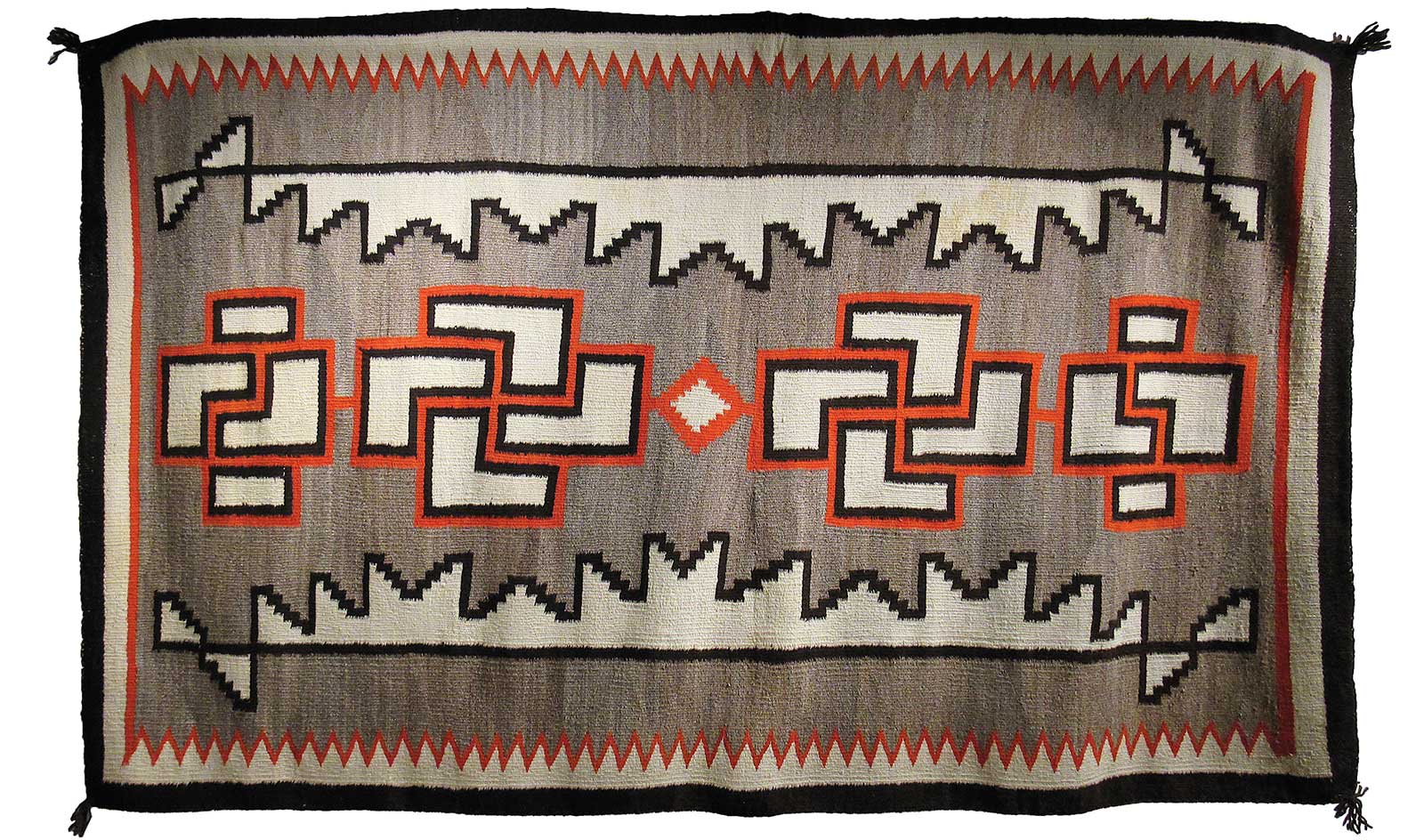
Unknown Artist, ca. 1920, Navajo (Diné) Weaving with Whirling Logs Motifs, hand-spun wool yarns, aniline and natural dyes. Image courtesy and collection of the Millicent Rogers Museum, Taos, NM.
For the textile portion of the exhibition, viewers will see important and topical works like the Navajo (Diné) Weaving with Whirling Logs Motifs, circa 1920. The symbol of the whirling log, speaking to the sacred number four in Navajo culture, was co-opted by Nazi Germany for a very different meaning. This led to a group of Southwest tribes to prohibit its use in Native works up until the past few decades, “when Navajo people have begun to feature it in their weavings as both a revival and a reclamation,” notes museum reps.This rich and robust exhibition will hang at Millicent Rogers Museum through May 14, “conveying the vitality and continuum of Southwest arts,” Lanteri reminds us.
Through May 14, 2023
A Part of the Earth: Part Two
Millicent Rogers Museum, 1504 Millicent Rogers Road, El Prado, NM 87529
(575) 758-2462, www.millicentrogers.org
Powered by Froala Editor