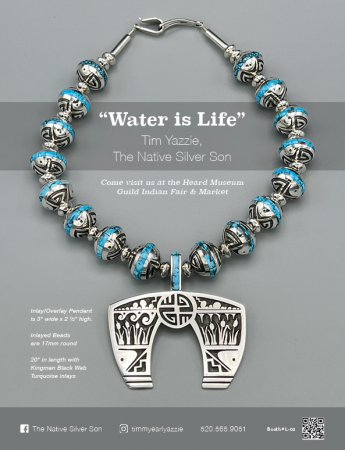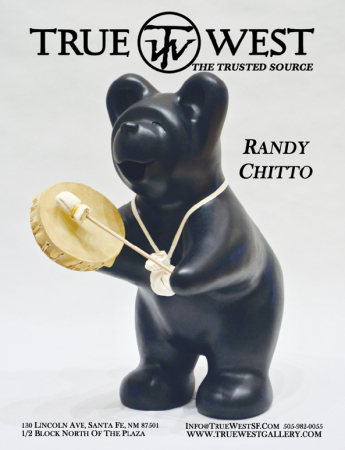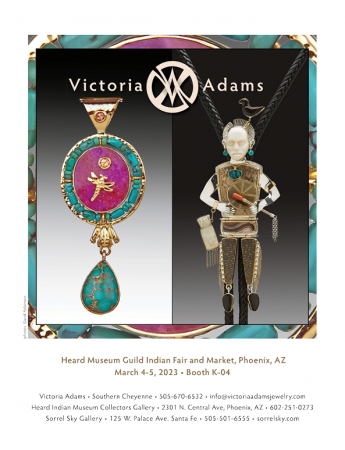
Nocona Burgess (Comanche) returns to the American Indian cowboy as inspiration for his upcoming show at the Marshall Gallery in Scottsdale, Arizona. The artist will be on-site for a meet-and-greet with collectors Thursday, March 2, from 5 to 9 p.m. during Scottsdale ArtWalk, which will be themed “Native Spirit Week” in conjunction with the Heard Museum Guild Indian Fair & Market.
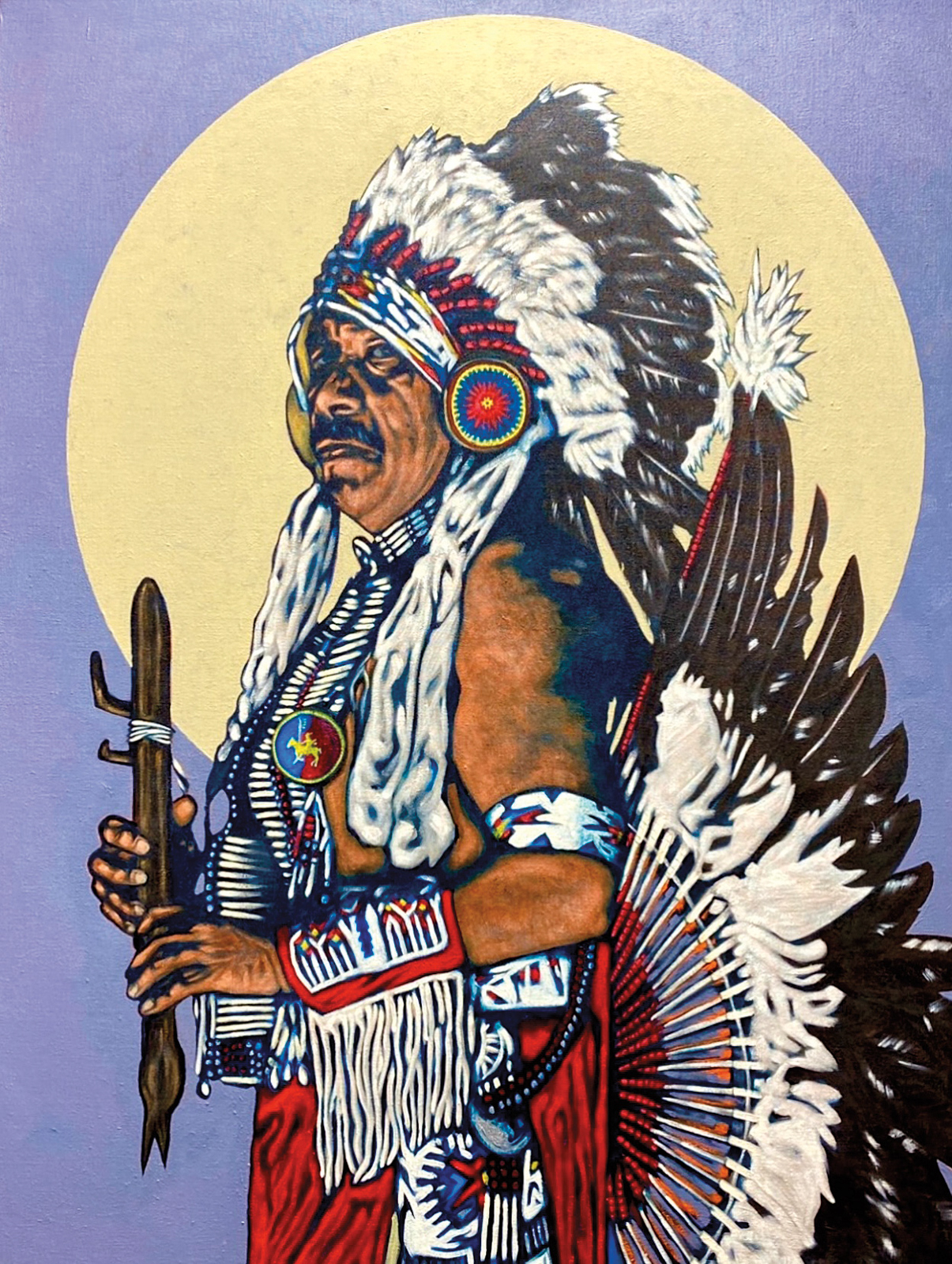 Doc Tate Nevaquaya, acrylic on linen, 48 x 36"
Represented are cowboys from roughly 1890 through 1950, figures who bridged the gap between free life and reservation life.
“Their dads and grandfathers were hunters and warriors, then all of a sudden they’re settled on the reservation and they’re still horse people, so what happens next?” Burgess explains of the individuals depicted in his newest paintings. “These guys were tribal police, they worked for ranches, some of them worked for the Wild West shows. Finding a new life really, but still being horseman and horse people.”
The two worlds they inhabited make for striking visuals.
“I always thought it was a cool crossover because these guys still have braids and earrings and beadwork cuffs, but now they have boots and chaps,” Burgess says.
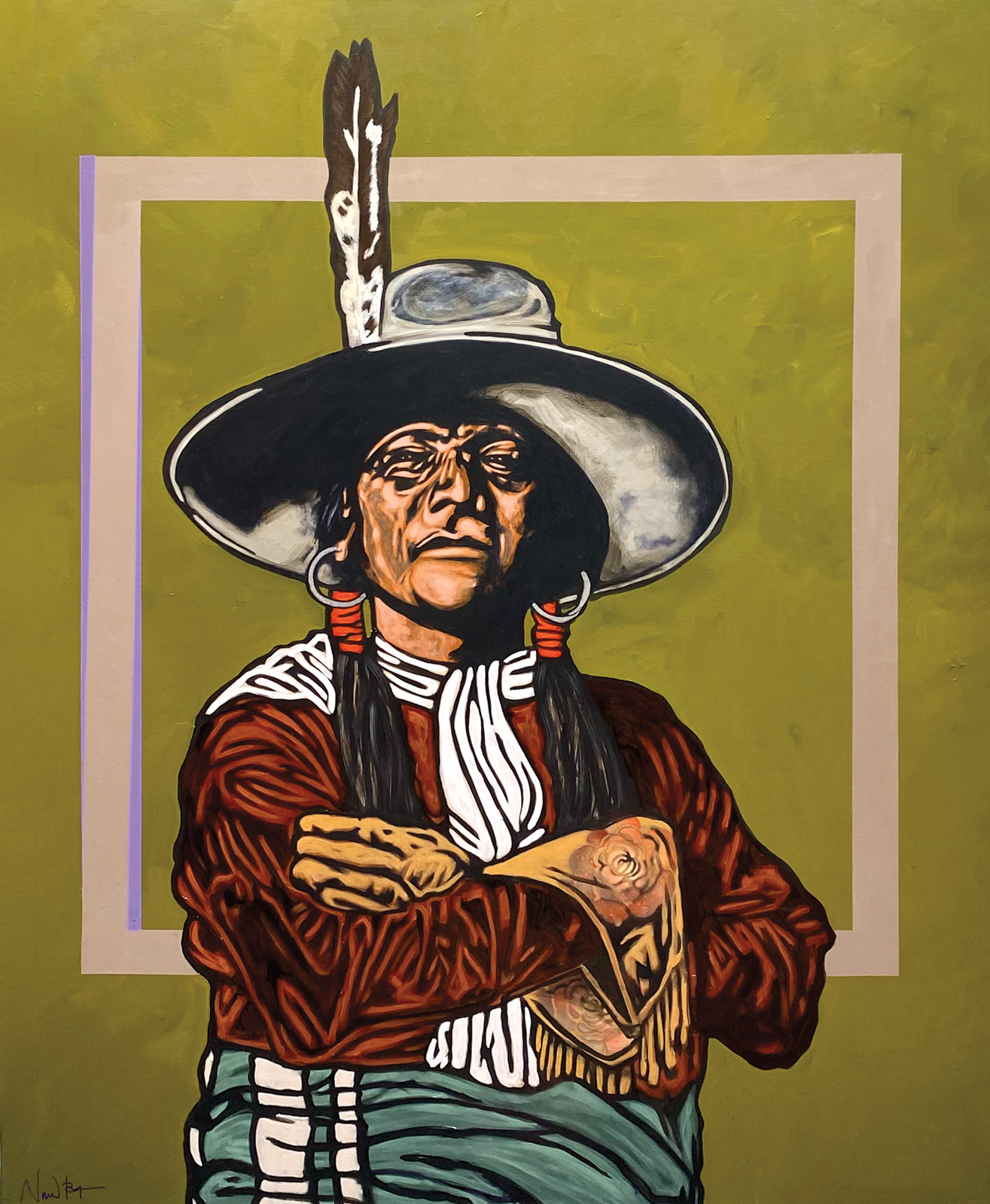 Na’atsi Boise / Shoshone, acrylic on canvas, 60 x 48"
Every portrait Burgess paints is a specific person. He begins with a photographic reference, then researches their history. For some, the details are scant, for others, voluminous. One such well-known figure included in this show is Jackson Sundown.
Sundown, was born in Montana in 1863, Nez Perce, believed to be a nephew of Chief Joseph. He fought in the Nez Perce War as a teenager, winding up in Canada with Sitting Bull and the Lakota. He would go on to win the world bronc riding championship in 1916, the first Native American to claim a major rodeo title. Sundown was instantly recognizable for the blazing orange angora chaps he wore, vividly depicted by Burgess in his painting.
“Real people, real stories, I’m trying to pull it away from the stereotypical. I want people to see that these guys were human beings,” Burgess says. “All we’ve ever seen was black and white photographs, so I feel like when I put a red shirt on, or a green blanket, that adds to retelling their story visually, that they existed, and that’s why I always try to find as much information [before painting]—who they were, where they were, their tribe, what their tribe is known for.”
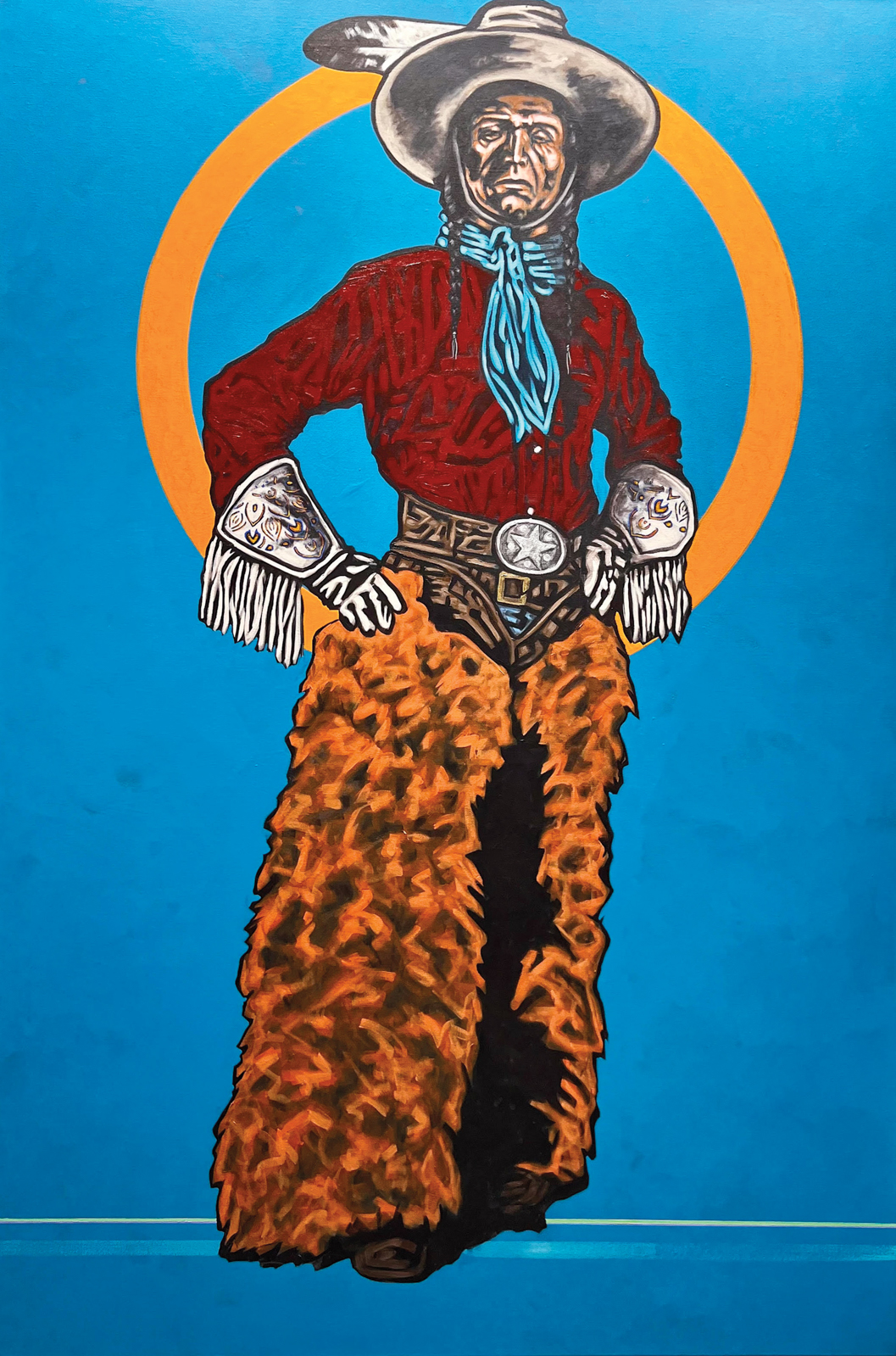 Jackson Sundown / Warrior Cowboy Champion, acrylic on canvas, 72 x 48"
While Sundown’s iconic orange chaps were well recorded, in bringing color to his other portraits from black and white photos, Burgess looks to the contemporary colors he sees when attending powwows or ceremonies. He further leans into his research of the era, items he sees in museums, the specific tribe, what trade cloth or items they were likely to have possessed, and a hunch.
“I think that most Natives would have probably dressed in more colorful attire and not just grays and blues,” he figures.
The Marshall Gallery
Opens March 2, 2023
7106 E. Main Street, Scottsdale, AZ 85251
(480) 970-3111, www.themarshallgallery.com
Powered by Froala Editor