Hailing from five generations of weavers who raised the sheep, sheared them, dried and spun the wool to create intricate, sophisticated rugs and tapestries, Barbara Teller Ornelas was raised near Two Grey Hills on the Navajo Reservation, where her father was a trader.
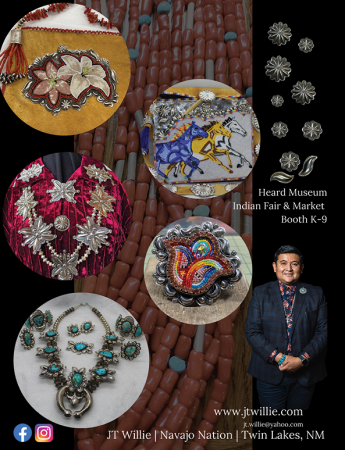
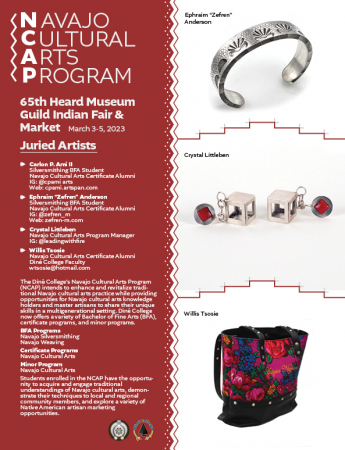
As a top featured artist annually at the Heard Museum Guild Indian Fair & Market which returns March 4 and 5, she will be there with new work in various sizes.
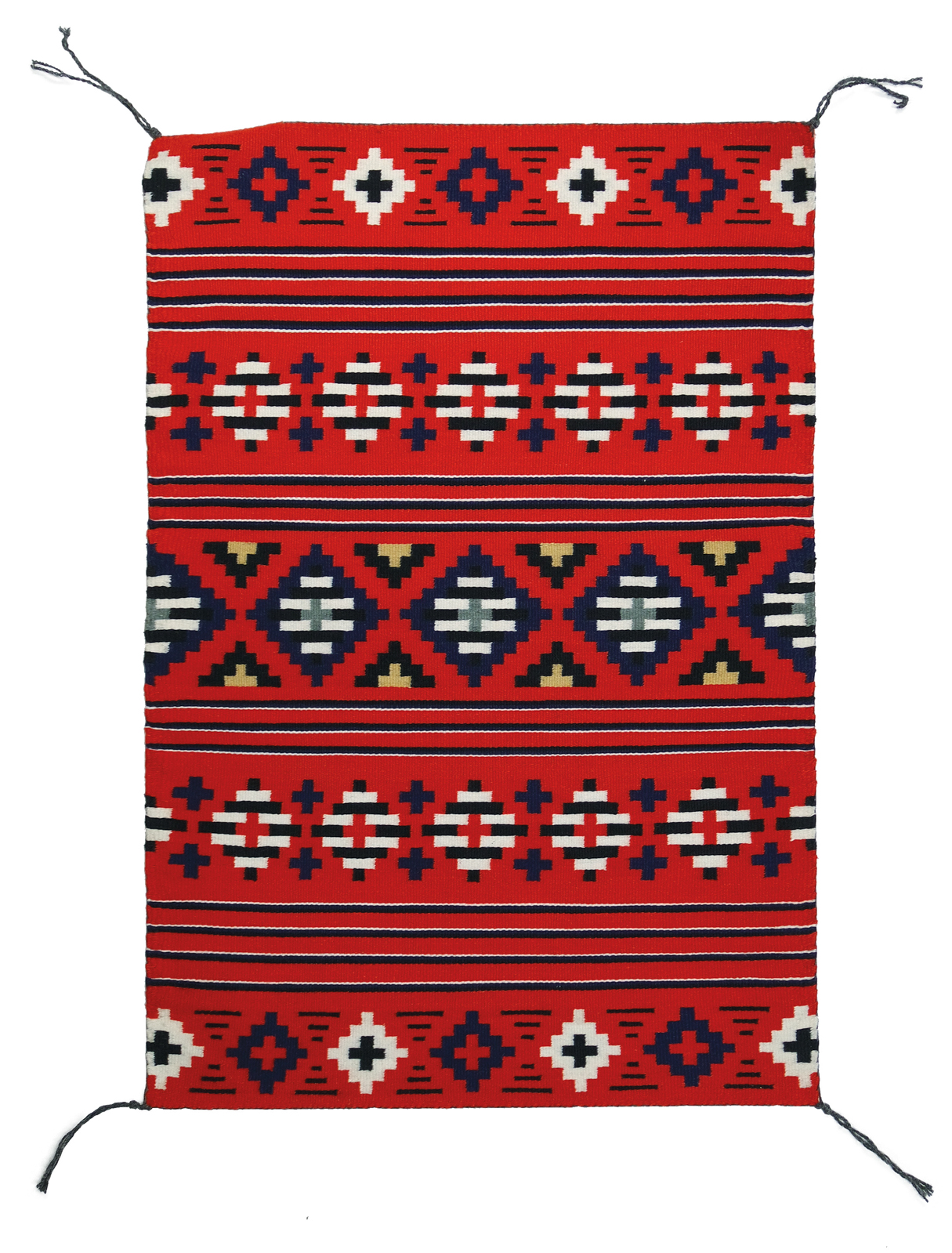 Child’s blanket with diamond motif by Barbara Teller Ornelas.
This premier event draws 15,000 visitors and more than 600 of the nation’s most preeminent American Indian artists. Teller Ornelas has been featured in National Geographic, Business Week, Americana and Native Peoples magazines, and won dozens of awards. She demonstrates her craft at museums and institutions around the world.
Growing up she saw her grandfather raise sheep, then her father sell to trading posts before he started running them. Her grandmother was a weaver with a large loom in the house. She watched as they sheared the sheep and boiled the wool and made the different colors of white and shades of brown and black.
“Me and my brothers lived with her during the summer, and she would always have a loom up for me. She was the one, my main teacher, and told me how to do things and kept telling me that I was born to be a weaver. That I was blessed by the weaving gods and that this was my calling. I was 6 and I associated Navajo weaving with old people because the only people I saw weaving were old people,” she says.
“I never saw people my age weaving. I go off to boarding school, I deny that I was a weaver. The dorm mothers would say, ‘You should bring your weavings here and teach all these other kids how to do it. You come from a famous weaving family.’”
But Teller Ornelas says she was embarrassed by it.
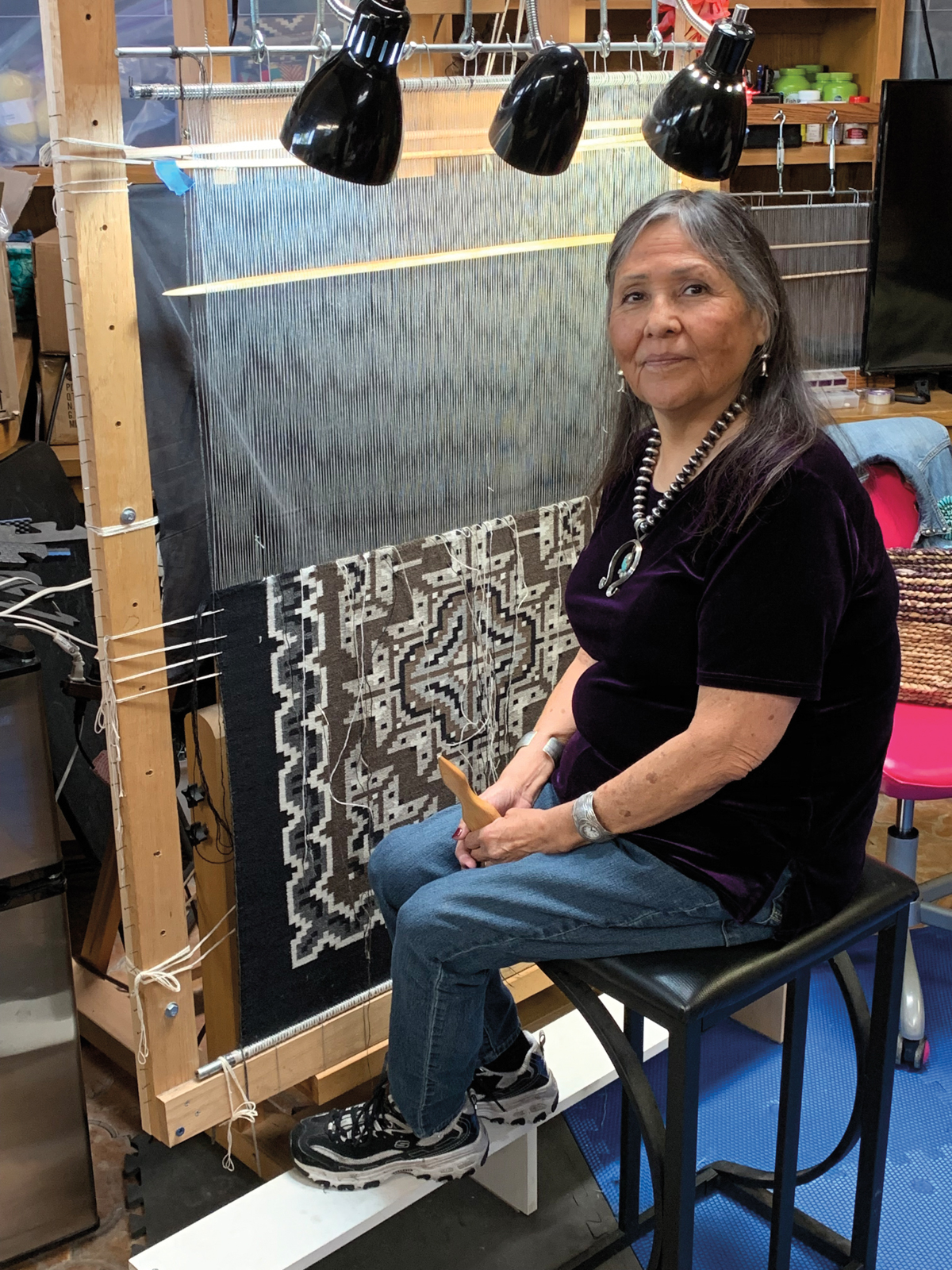 Barbara Teller Ornelasin her studio.
“It wasn’t until I moved to Phoenix to go to business school that things changed for me. I lasted two weeks in Phoenix by myself. I called my dad at the trading post, and I said I can’t do it. The city’s too big. I don’t have any friends and I just want to come home.”
Her father told her to stick it out, that that there was nothing for her back on the reservation. Soon she made some Navajo friends that were all in the same boat, missing their families but trying a new life.
”When my parents came to visit, my mom brought a loom, and I was so mad at her! Why did you do this? And she said you’ve had a loom in your life all the time, this is your best friend. You don’t have to weave on it, just keep it in your apartment, and it’ll help you find your balance. My Navajo friends would come by, and they would look at it and say, ‘What is that doing here? Why do you have a loom here?’”
Soon Teller Ornelas realized how strong and how important weaving was to her family.
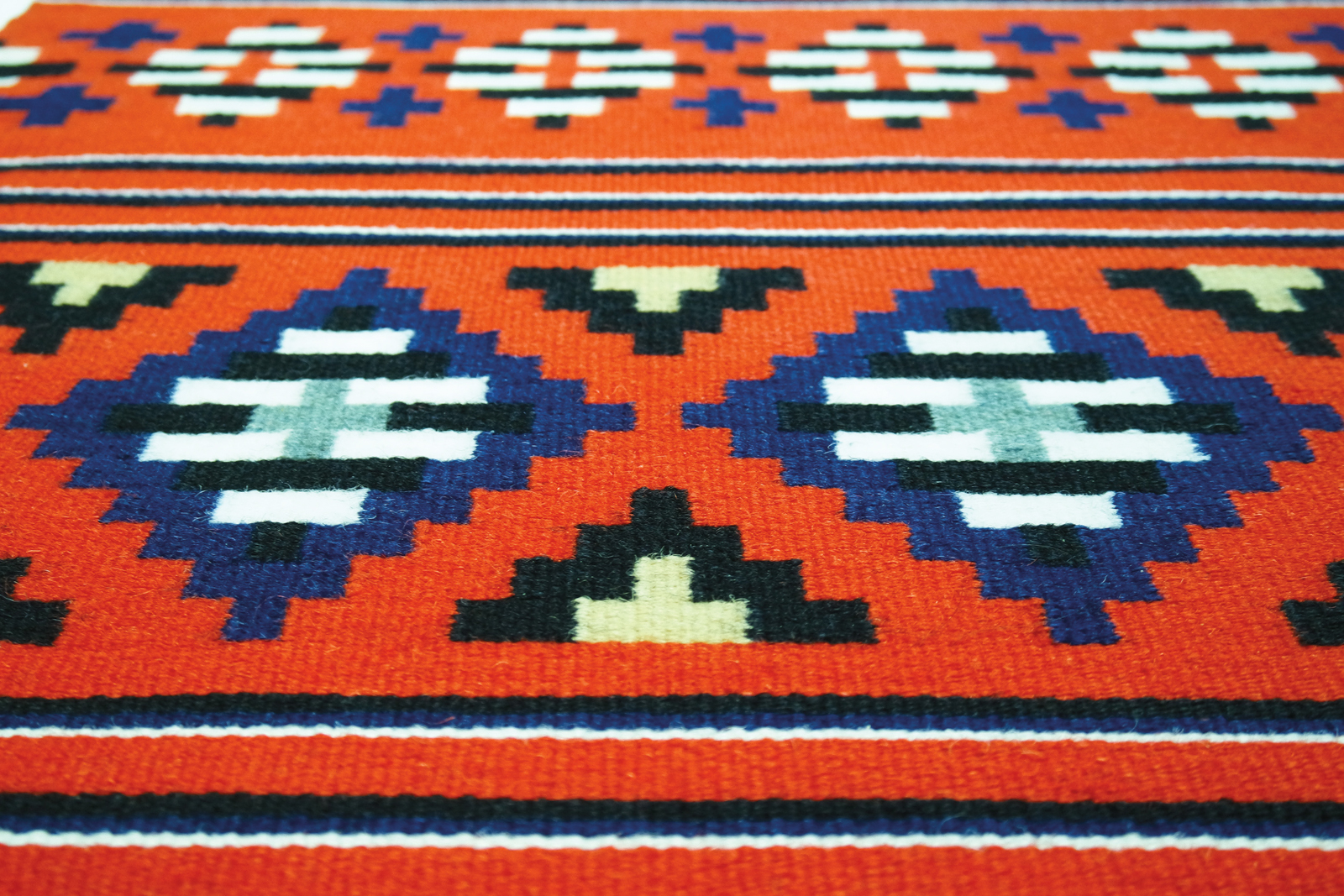 Child’s blanket with diamond motif by Barbara Teller Ornelas.
“I started to accept that this is who I am. I had other jobs, but somehow it all came back to weaving. Even when I met my husband to be, he was more impressed with the weaving than he was with me.”
“He would say, you didn’t work on it this week. To impress him more, I started weaving on it, just to prove I know how to do this. Then one day he says, ‘If we get married, you could literally do this and raise our kids without putting them in daycare.’ And that’s what happened. We got married, we had children, I was a stay-at-home mom, but I also had a job as a weaver.”
Teller Ornelas acknowledges that back then dealers, gallery owners and trading posts didn’t think of Navajo weaving as an art, but as a craft. She did not see how it could be a profitable career.
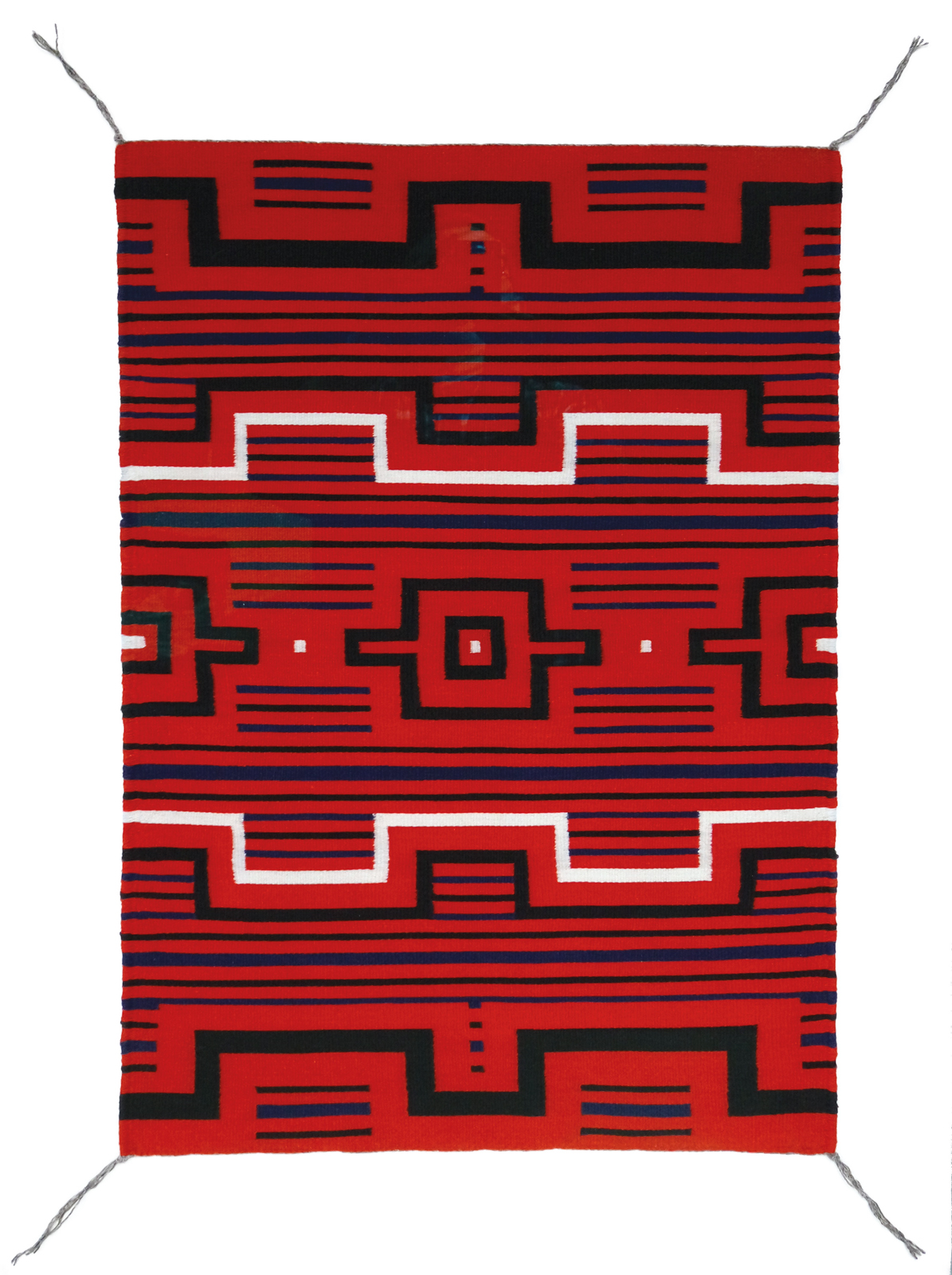 Interpretation of child’s blanket from mid-1800s
“I took my weavings to Scottsdale to try to sell to the galleries, and they wouldn’t buy it. They would say we don’t buy rugs from crafters, take it back to the trading post. If it’s on the delivery truck, we’ll buy it from them.”
Teller Ornelas says she couldn’t understand why they didn’t want to eliminate the middle person. Her father got upset with her because she would finish a piece and then drive it back to the post to sell it. He told her of a place in Scottsdale where she could sell directly; he knew a gallery owner there who bought her rugs after she used her father’s name as a reference.
At first, he consigned them for two weeks.
“Then he called me two, three days later and he said both my pieces had sold and to come pick up a check. He also said if you have any more, bring them. So that’s how I started. And then one day, in 1980, I took him two pieces and he says you’re too good for galleries and trading posts, you need to go down to the Heard Museum and the annual market, see if they give you a table.”
Unaware of the system of submitting applications months in advance, Teller just showed up the day before the market.
“I just showed up; they were setting up tables. They didn’t have tents then, they did all their markets inside the museum. It was still the old building.
I went there and this woman, Peggy Fairchild, was at the door. She was telling people what to do and where to go. I told her, I want a table for the show. She said, ‘We don’t do that. These people paid their booth fees months ago.’”
Fairchild told her if she wanted to apply for a booth for the next year she could.
“I started to walk away and she said, ‘Wait, what do you do? What kind of art do you do?’ I told her Navajo weaving, and she just stopped. She just dropped everything. She asked if I have pieces with me [and] I said yes, I have them here. I showed them to her and she said, ‘We never do this, but we’re going to give you a table.’”
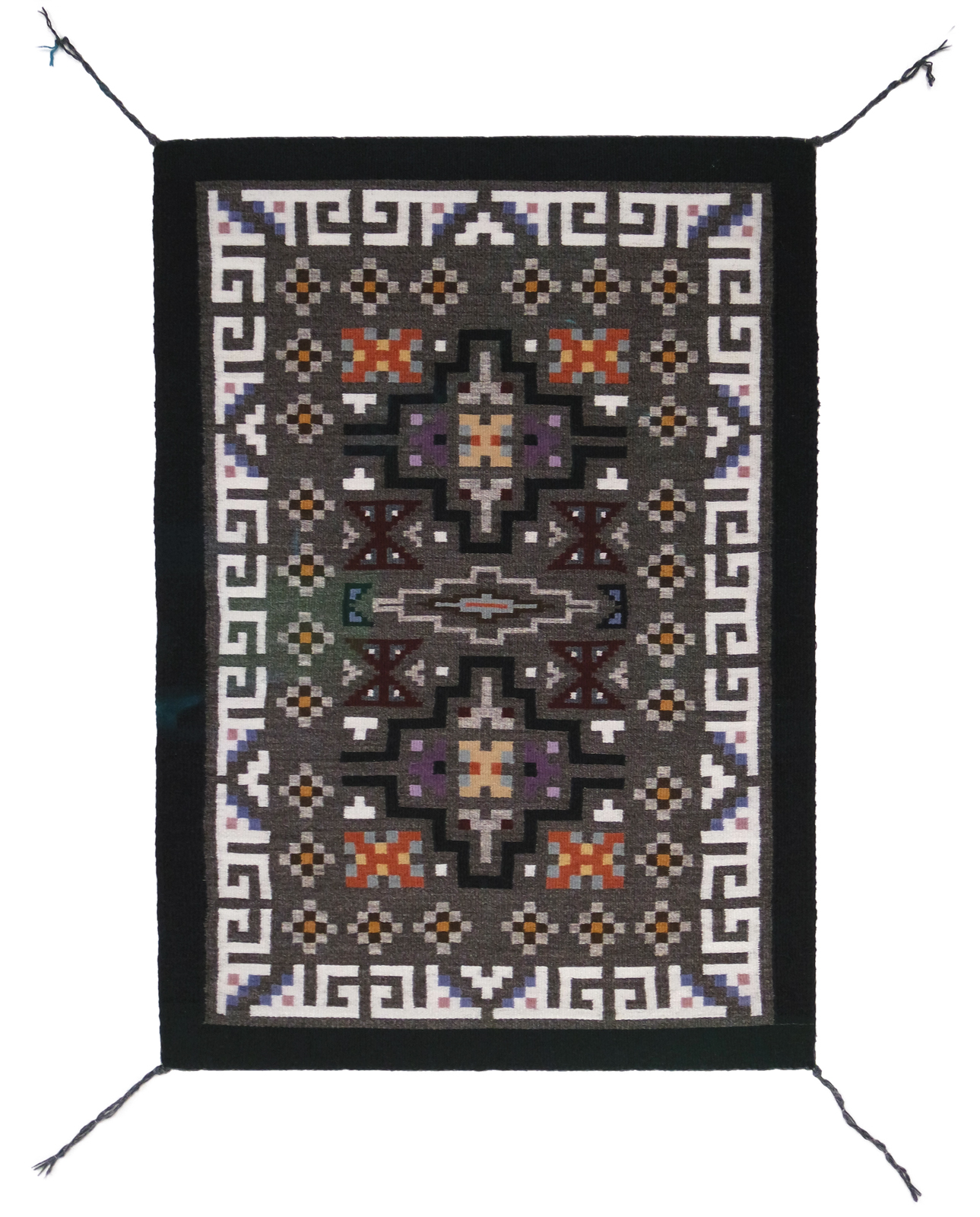 From the artist: “This is my interpretation of a Teec Nos Pos weaving. It was part of an exhibition of Tony Foster’s paintings. He painted all the sacred places in the Navajo Nation. This was my design for Canyon de Chelly, which includes the canyon walls and my family’s paths. My grandfather Paul Teller was originally from there. Most of the designs are of homes, plants and animals. It’s the first one I’ve ever done that was outside my realm.”
“Then she said because I did this for you, you have to do some things for me. I want you to be ready when you get up in the morning, have a rug on the loom. I’m going to be calling you to come in and do some demonstrations at the museum. She was true to her words: she would call me and she would say, come in, we got donors coming in, you need to be set up by 11. I would go down there and set up and weave for an hour or two, and then she would pay me. I did that every week and for special events, because they really believed in me.”
Teller Ornelas started a family and told the Heard. They told her to dress the kids up, bring them in, put them in their cradleboards.
“Both my kids, my daughter and my son, were raised at the Heard. They crawled all over the floors. They put me in the old gallery where they used to have this huge staircase going up to the second floor. My son learned to crawl around there, then he would start crawling up the stairs and the visitors would come to the desk and say, ‘Hey, there’s a baby crawling up the museum staircase!’”
The weaver told them to just pick him up and put him back on the floor.
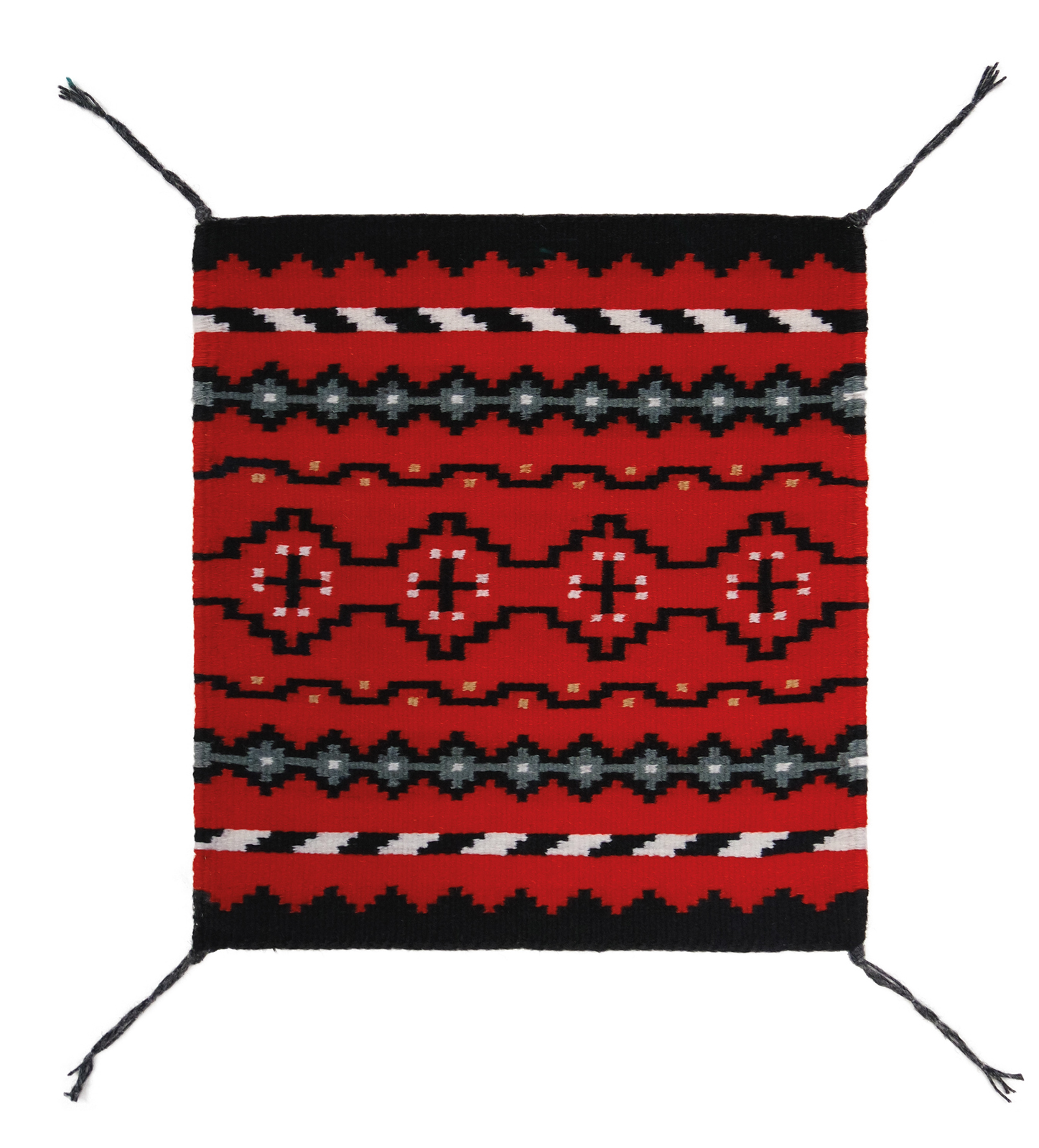 Child’s blanket, commercial wool and aniline dye, 10 x 12”
“I raised both my kids there. Then in 1987, I moved to Tucson when my husband wanted to go to pharmacy school. I had to stop working at the Heard because it was too hard to commute with two kids. But I’ve always, always had a connection with the Heard. They call me in when big events are happening, or they nominate for me for trips to demonstrate and give talks.”
Fairchild told her to attend the other big market, the Santa Fe Indian Market. She has now been exhibiting there for 38 years and says that even in the pouring rain at last year’s market she sold all her weavings on Saturday. She has won Best of Show at Santa Fe Indian Market twice. (In early 2023, as this issue was going to press, Teller Ornelas was named a 2023 USA Fellow and was awarded an unrestricted $50,000 prize.)
“The buyers were out, and they were serious about what they wanted to buy,” she says.
With all her success at the markets, at the heart of her craft is the deep connection she has to her family and their way of life.
“It’s tradition,” she says. “My grandfather, Paul Teller was a horseman and he raised sheep. His main job was shearing sheep and then selling the wool to the markets in Farmington or Gallup, New Mexico. He had over a hundred head of sheep. They lived out by Chaco Canyon. He was an expert horseman; he used his horses and wagons to help the trading post. At the time, White Rock Trading Post was owned by JB Tanner, the respected Indian trader. My dad grew up with Joe Tanner, that was the connection to the gallery owner in Scottsdale that my dad knew. His job from 11 years old to the day he passed was being a trading post guy.”
It was all a natural progression from her grandfather selling to the posts then her father running them.
“Traditionally I’m a Two Grey Hill weaver,” Teller Ornelas says.
Two Grey Hills rugs are known for their exclusive use of natural wool colors, the different shades of browns and greys that are produced in the carding of the wool. The artisticlly complicated designs combined with the fine hand spinning of the wool makes these unique to the Navajo.
Design patterns incorporate a border, four matching corner elements with a belted diamond or large central full design. There are also different weights.
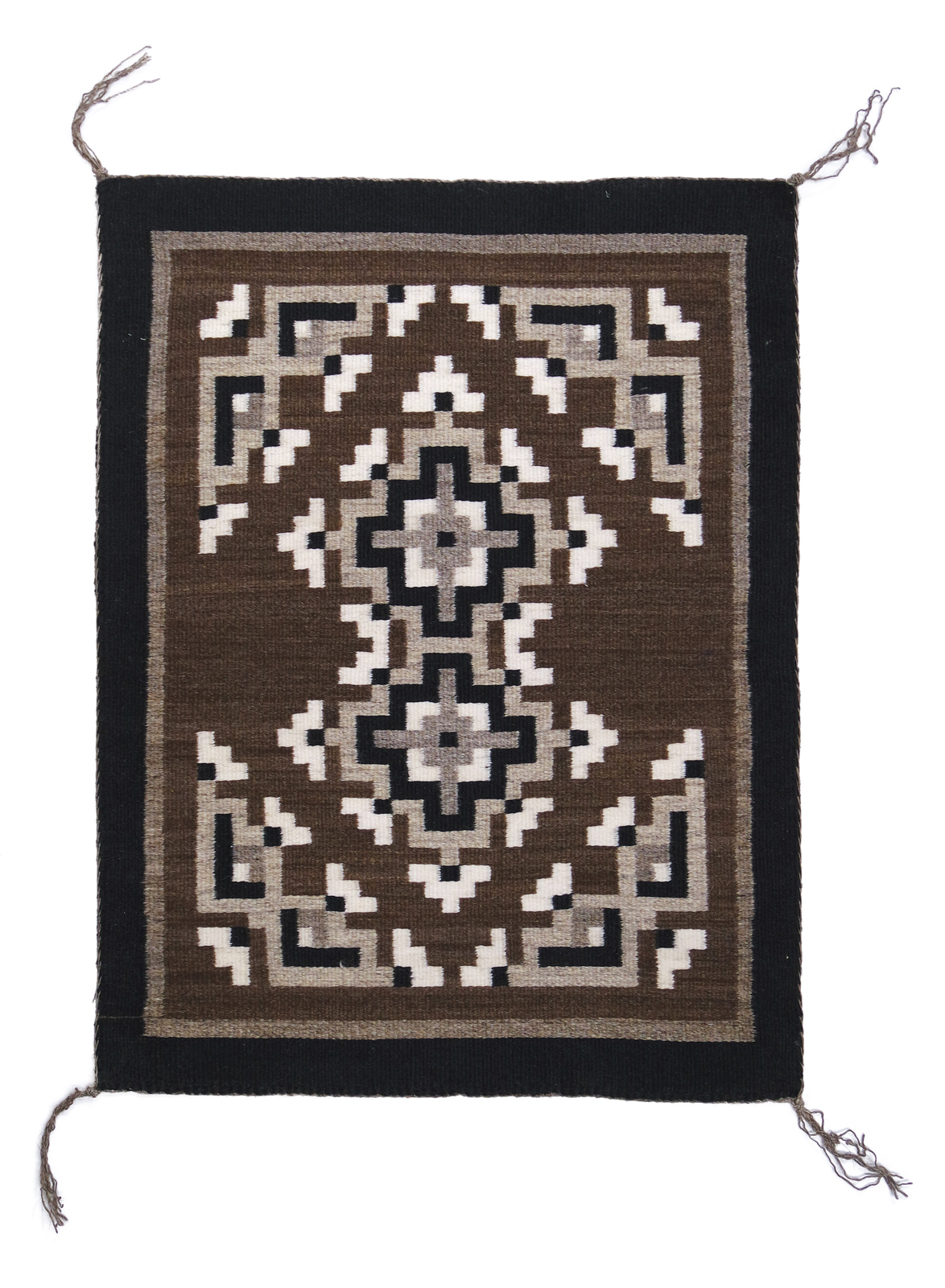 Two Grey Hills weaving. “I always have one on the loom because it reminds me of home and it gives me my sense of balance. I’m a fifth-generation Two Grey Hills weaver, and it’s what I’m most known for.”
Teller Ornelas explains that, “In Navajo weaving we call knots per inch weft, so many weft counts per inch. Anywhere from 20 to 40 is considered a heavy weave, that’s like a rug—you can put those weavings on the floor or use as saddle blankets, and they will last forever. A medium weave is from 60 to 80, that’s a decorative wall piece but can also go on the floor. What I do is called tapestry weave, anything over 80 wefts per inch is considered tapestry. My work is anywhere from 108 to 122 wefts.”
She continues: “I come from a long, long line of Two Grey Hill weavers, and it wasn’t until I started working at the Heard that I realized there are other styles of weaving and that you could use beautiful pastel and bright colors. I started looking at their collections and looking in the Phoenix shops, and I realized that there were other styles of weaving with different colors and designs. People would see me weaving and they would say, I would love to get a piece of yours, but I want one in colors that go with my interior.”
Margaret Kilgore from Margaret Kilgore Gallery in Scottdale brought her a box full of different colors and Teller Ornelas says, “It was like a whole new world for me. It just opened up and I became more creative, but in the meantime, I upset my mother, my grandmothers and my two aunts, and they literally had a meeting about me saying that I was going outside the box…you can’t do this, you can’t do that. You’re a Two Grey Hill weaver. You shouldn’t be doing other styles, the trading posts won’t buy from you. You have to be loyal to the trading posts. And I said, I have bypassed all that. I don’t need to do that anymore. I need to make different styles of weaving so I could feed my children. I make pieces that people want, and they order.”
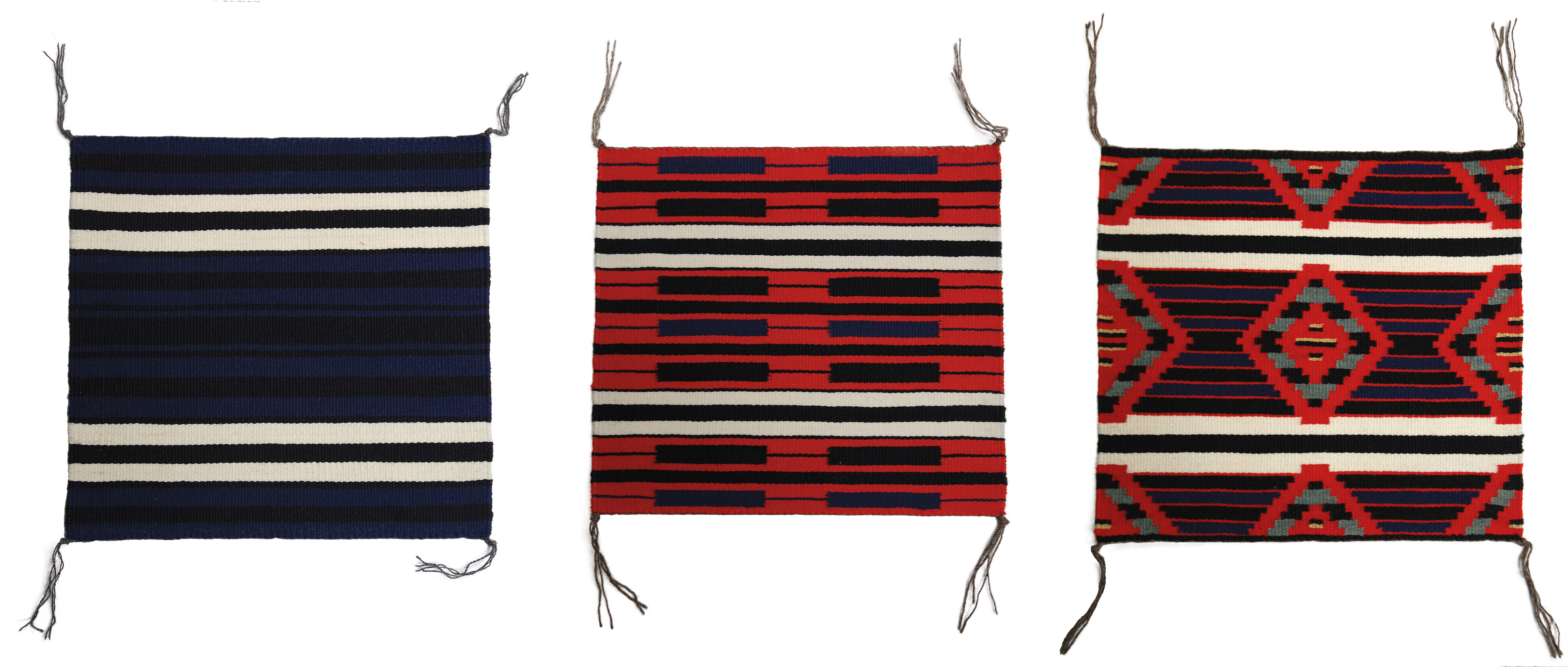 Miniature examples of First Phase, Second Phase and Third Phase Navajo Chief’s blankets. Weavings courtesy a private Arizona collection.
“At that point they realized that I don’t have a middleman anymore. I’m free to weave whatever
I want, any styles I want to do. Then they seemed to be more open after I explained to them why I’m doing what I’m doing now. But my mom made me swear that I would do at least two or three of them a year to keep with the tradition.”
Teller Ornelas says she was willing to do that and now keeps a few looms going with the traditional weave. She doesn’t card her own wool anymore or keep sheep but buys from the same trading post the traditional Two Grey Hill weavers come from. She spins in large quantities to keep continuity.
“It gives me a sense of balance. It gives me a sense of purpose. I work on other styles. Like right now, I’m working on a huge pastel-colored piece. But then I have a little tiny Two Grey weave going on the side, that will be available at the Heard market. I’m hoping to have three. I’ll have a couple of small child’s blankets, and one large piece and then a couple of small ones. “I’m very loyal to the Heard, I wouldn’t be where
I am today without their support.”
Powered by Froala Editor