The photographer Nicholas Galanin writes, “Culture is rooted in connection to land; like land, culture cannot be contained. I am inspired by generations of Lingít and Unangax creative production and knowledge connected to the land I belong to.”
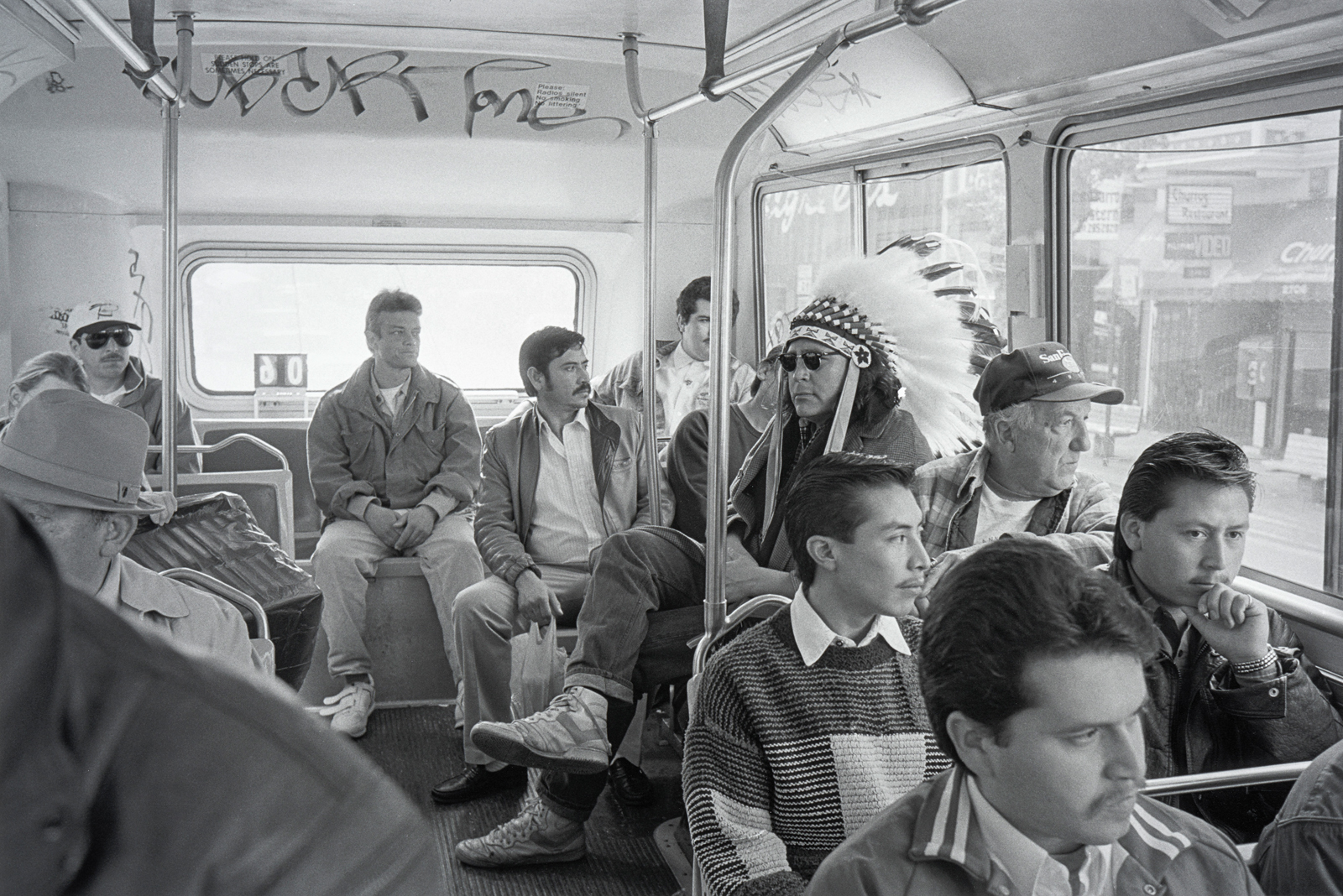 Zig Jackson (Mandan/Hidatsa/Arikara), Indian Man on the Bus, Mission District, San Francisco, California, 1994, Inkjet print. Amon Carter Museum of American Art, Fort Worth, Texas, P2021.7. © Zig Jackson Mandan, Hidatsa, Arikara, North Dakota.
His photograph, Get Comfortable, depicts a road sign for Indian River with “River” obliterated with the spray-painted word “Land.” It is included in the exhibition Speaking with Light: Contemporary Indigenous Photography, at the Denver Art Museum February 19 through May 21. The exhibition originated at the Amon Carter Museum of American Art, Fort Worth, Texas, where it continues through January 22. It features work by more than 30 Indigenous artists. With nearly 70 photographs, videos, three-dimensional works and digital activations, the exhibition forges a mosaic investigation into identity, resistance and belonging.
Christoph Heinrich, director of the Denver Art Museum, comments, “Our location on the homeland of the Arapaho, Cheyenne and Ute peoples underscores the importance of highlighting historically underrepresented views and voices of Indigenous communities. The works in Speaking with Light aim to shift power dynamics and bring attention to misrepresentations by focusing on Indigenous perspectives.”
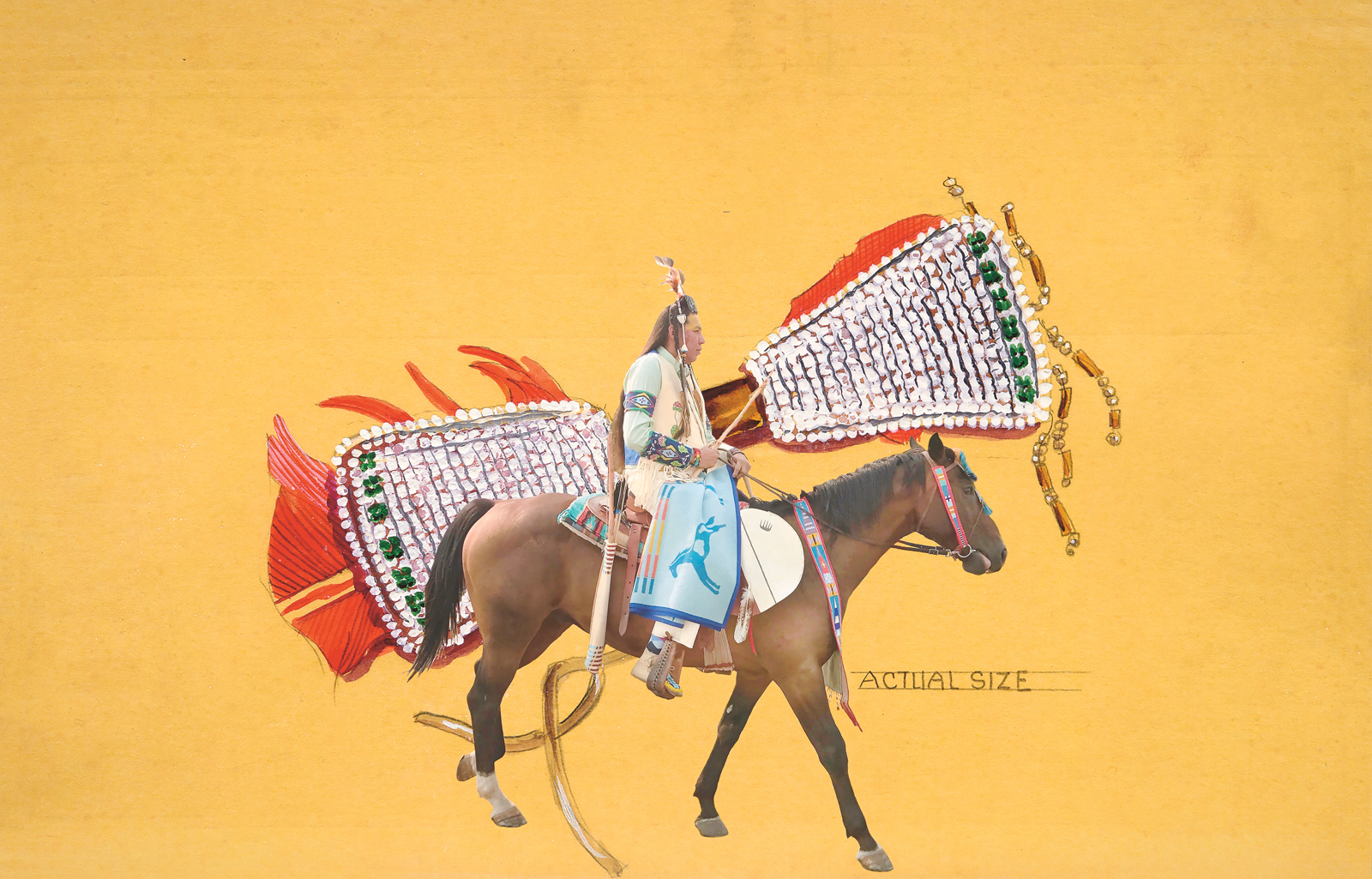 Wendy Red Star (Apsáalooke), Catalogue Number 1941.30.1, from the series Accession, 2019, Inkjet print. Amon Carter Museum of American Art, Fort Worth, Texas, P2020.166.5. © Wendy Red Star.Cara Romero (Chemehuevi) says of her photograph, Evolvers, “The image features four special time travelers (spirits) who have come to remind us of our deep connection to the land, the stories contained within it and how we can live in relation to it. They are manifestations of oral traditions, bringing visibility to the individuals, cultures and history that continue to inform this landscape.
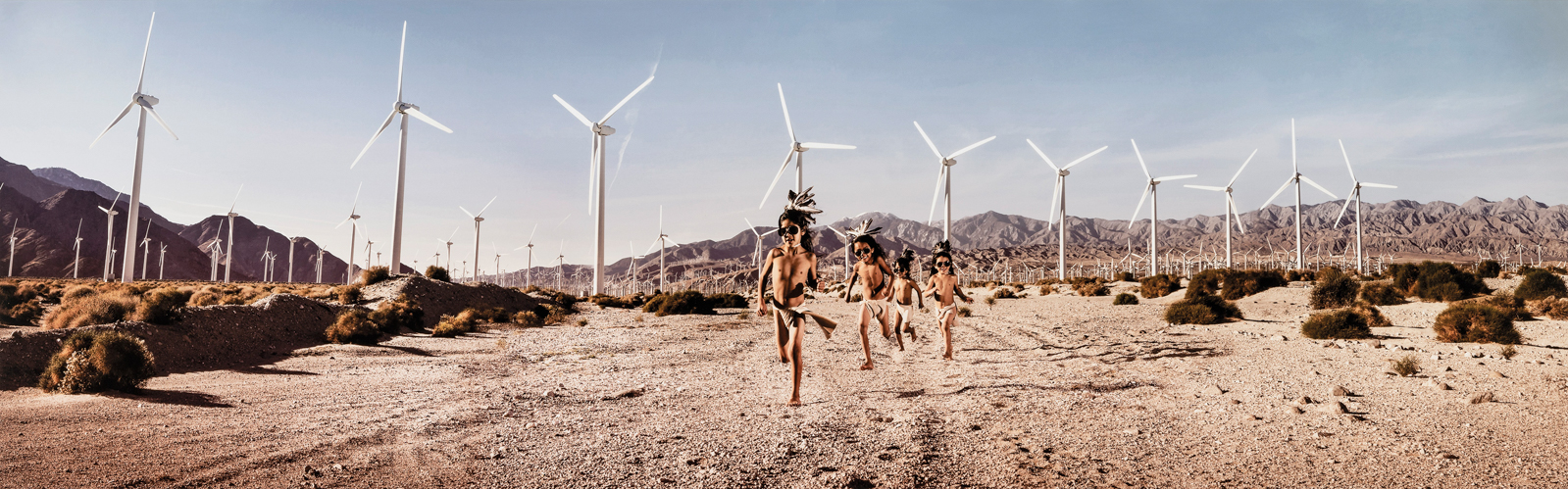 Cara Romero (Chemehuevi), Evolvers, 2019, Inkjet print. Amon Carter Museum of American Art, Fort Worth, Texas, P2021.55. © Cara Romero. All rights reserved.
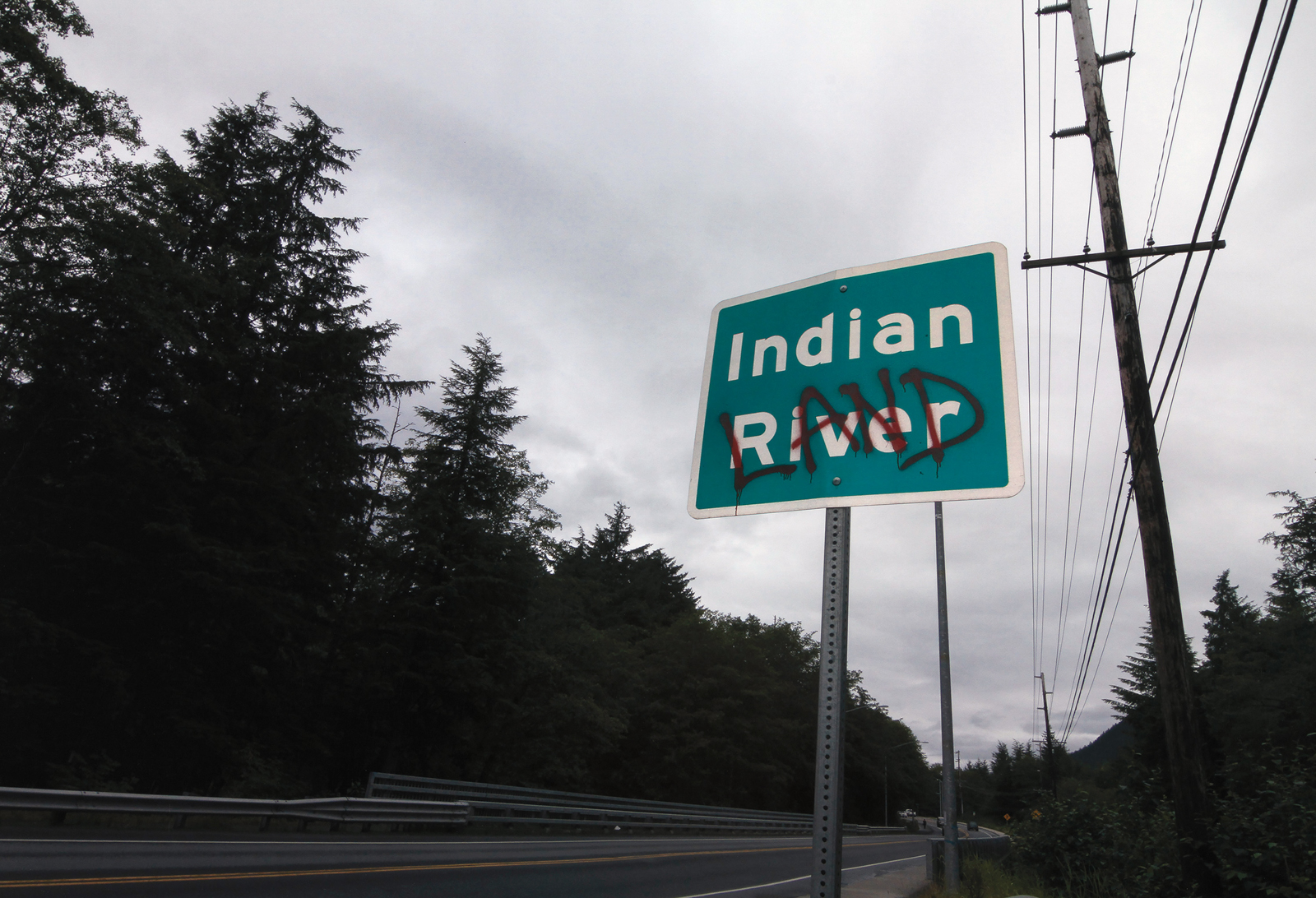 Nicholas Galanin (Tlingit/Unangaxx^), Get Comfortable, 2012, chromogenic print. Amon Carter Museum of American Art, Fort Worth, Texas, P2021.42. © Nicholas Galanin.
“In bringing visibility to modern Native people, I purposefully use color to convey their modernity, resilience and courage. These four boys are cousins and tribal citizens of the Chemehuevi Indian Tribe.”
In Peyton Grace Rapp, Tom Jones (Ho-Chunk) poses his subject gazing directly at the viewers, engaging them in her world. He says, “I extend the boundaries of photography by incorporating beadwork directly onto the photograph. The use of Ho-Chunk floral and geometric designs is a metaphor for the spirits of our ancestors who are constantly looking over us.”
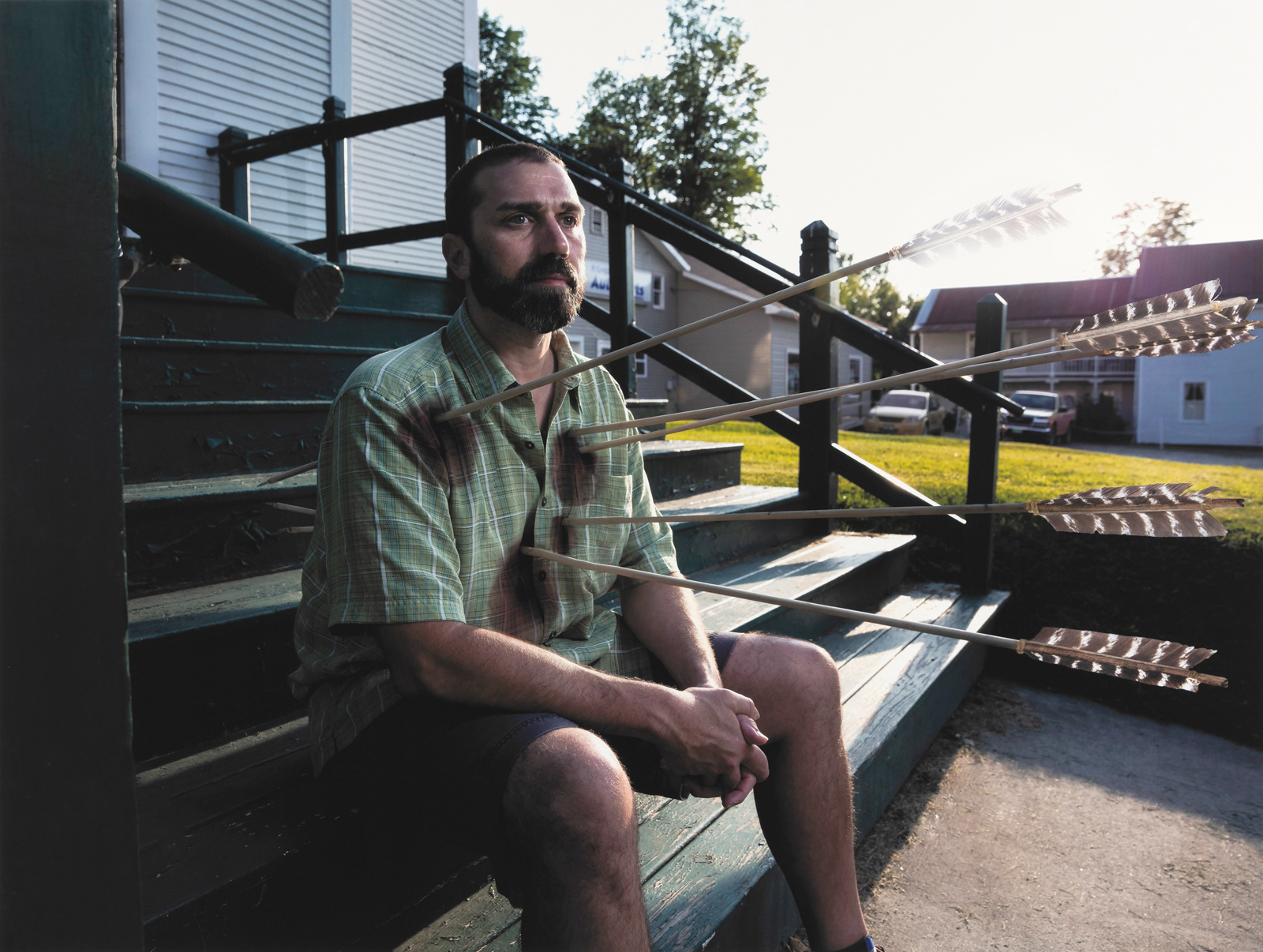 Jeremy Dennis (Shinnecock), Nothing Happened Here #10, 2016, Inkjet print. Amon Carter Museum of American Art, Fort Worth, Texas, P2021.9. © Jeremy Dennis.
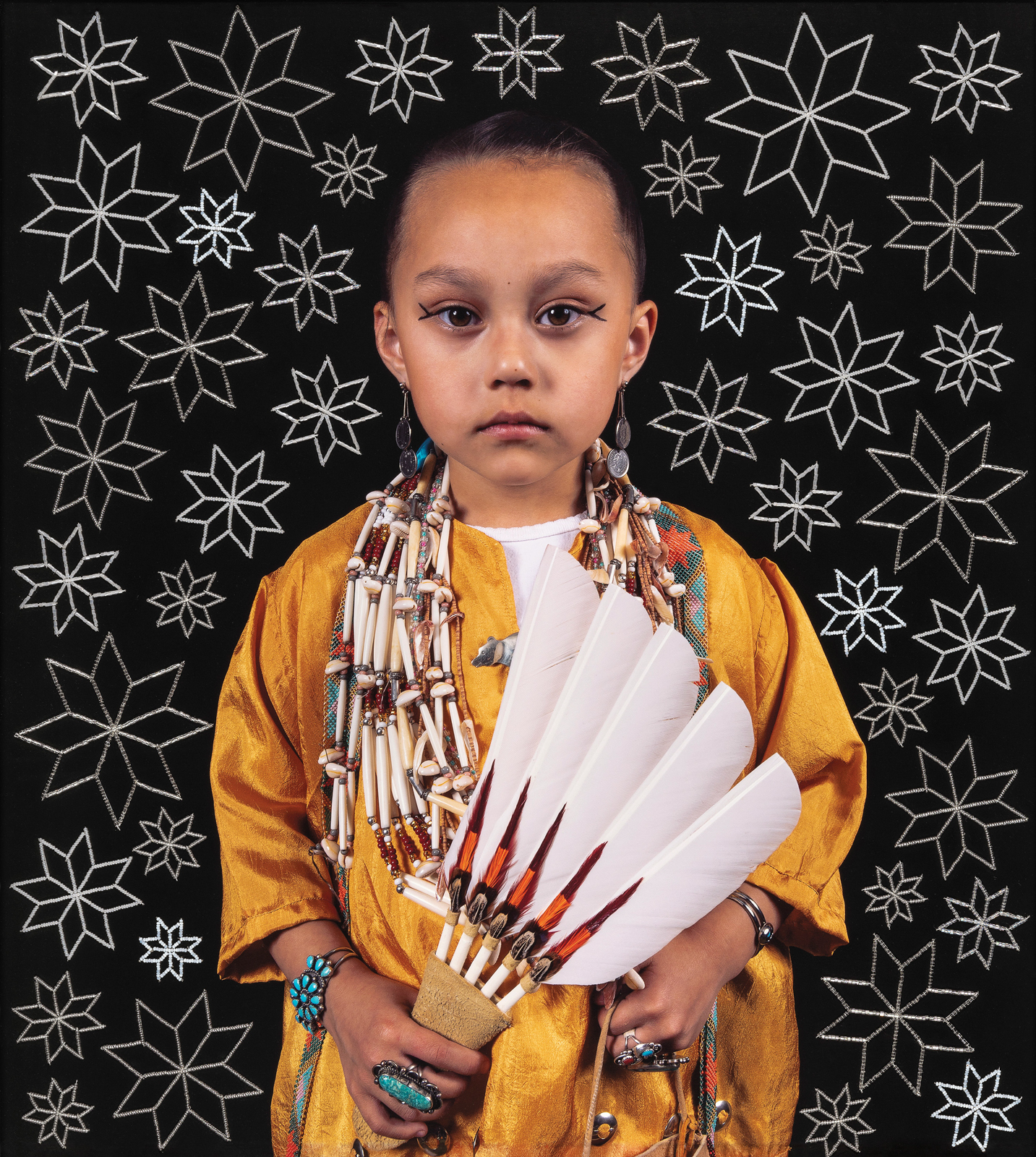 Tom Jones (Ho-Chunk), Peyton Grace Rapp, 2017, Inkjet print with hand beading. Amon Carter Museum of American Art, Fort Worth, Texas, P2021.49. © Tom Jones.`
Wendy Red Star (Apsáalooke) was a Native Arts Artist-in-Residence at the Denver Art Museum in 2016 and 2017. In her series Accession, she incorporates object cards of the museum’s collection of Native objects painted on small catalog cards by Works Progress Administration artists. She says, “I felt a connection with the artists who created the work, and I was jealous of the time they got to spend with my ancestors’ materials.”
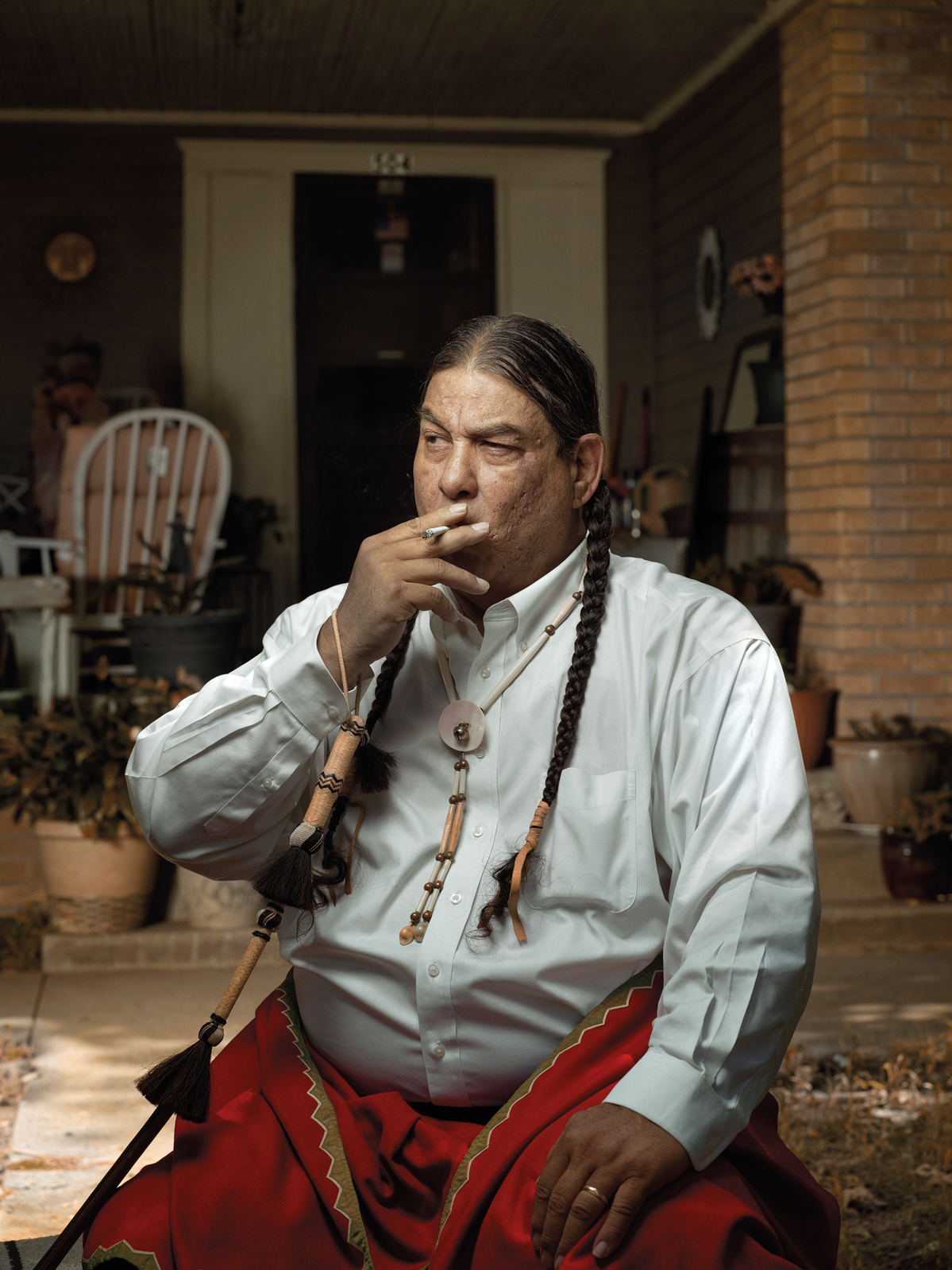 Ryan RedCorn (Osage), Everett Waller, (Hominy Whipman), 2021. Dye sublimation print on polyester fabric. Amon Carter Museum of American Art, Fort Worth, Texas, P2022.2. © Thomas Ryan RedCorn.
Kiliii Yüyan (Nanai/Hèzhé and Chinese American) visited an Alaskan village and recorded his experiences there. He writes, “The village of Gambell lies on Saint Lawrence Island in Alaska, in the middle of the Bering Sea. Gambell is closer to Siberia than Alaska, but its remoteness has not insulated its indigenous Yup’ik population from the devastating effects of colonization. Alaska Native youth have a rate of suicide 18 times greater than that of the continental United States, with Yup’ik communities impacted the most.
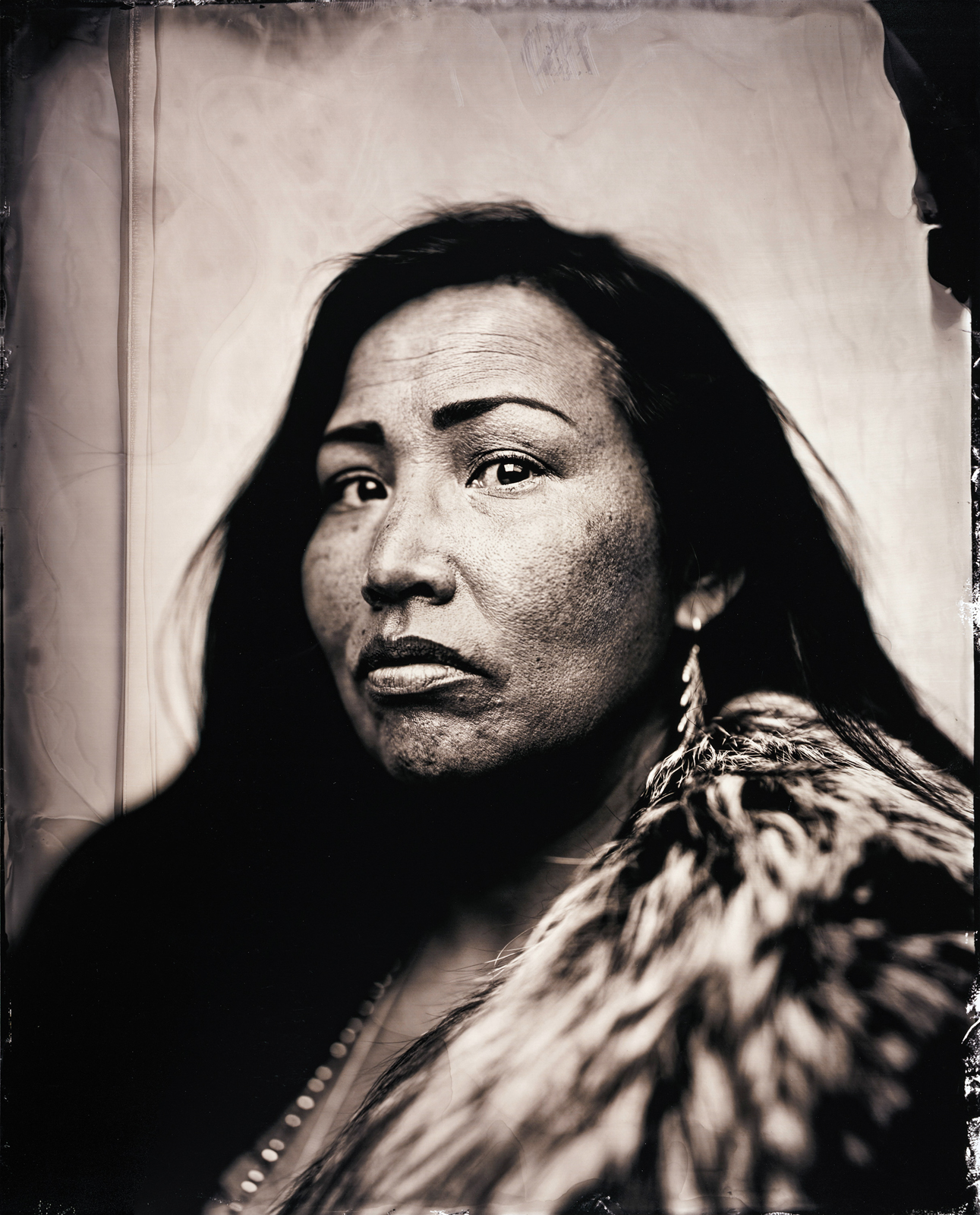 Kali Spitzer (Kaska Dena/Jewish), Audrey Siegl, 2019, chromogenic print with audio: Owl Song. Amon Carter Museum of American Art, Fort Worth, Texas, P2021.58. © Kali Spitzer.“When I arrived in March of 2018, my task was to create a suicide-prevention program at the Gambell School in collaboration with the art teacher and staff. As a form of art therapy, we made papier-mâché masks with the students. I asked the students to work on two masks: one representing their internal grief and darkness, the other representing their joy and hope.”
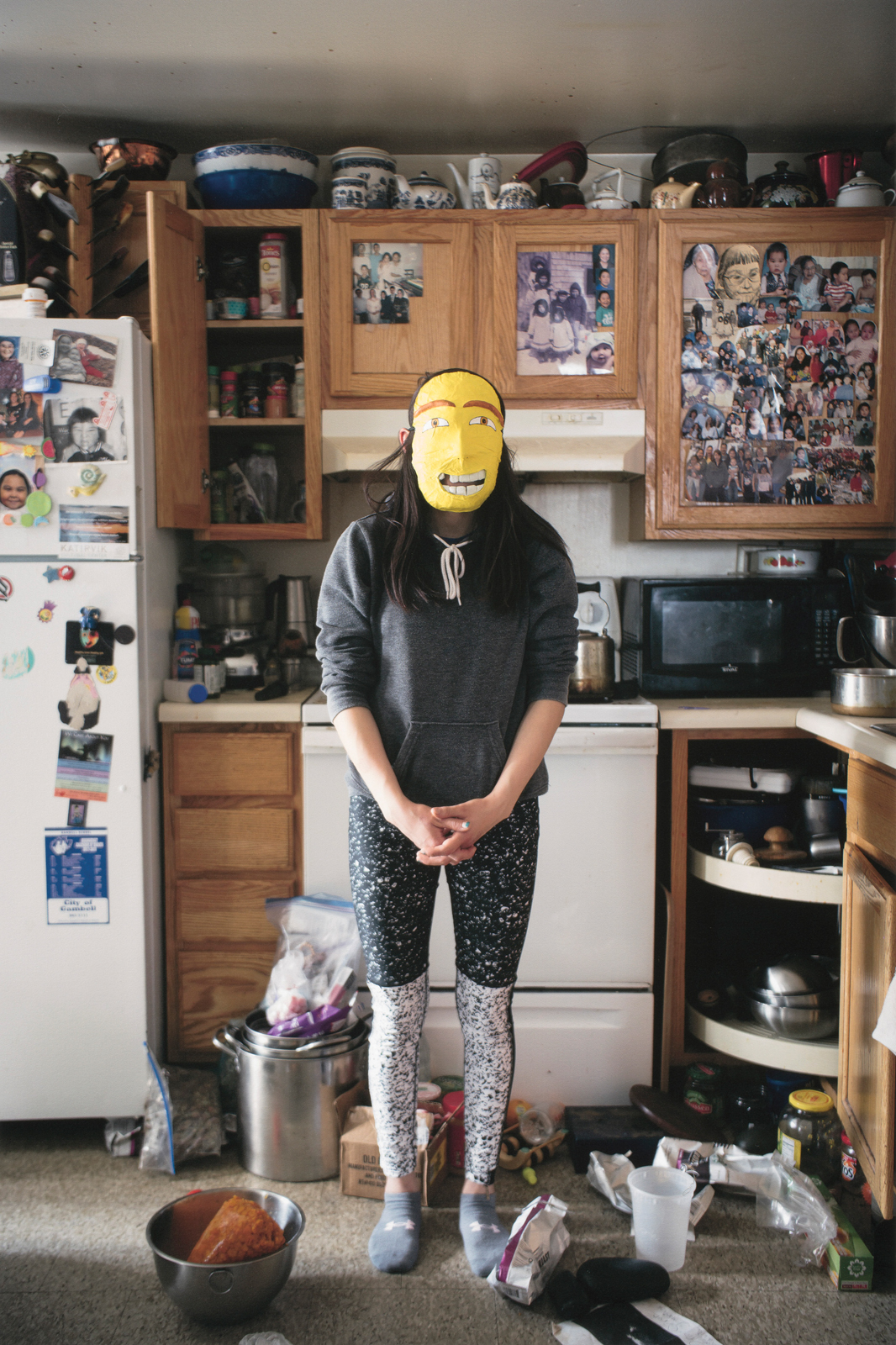 Kiliii Yüyan (Nanai/Hèzhé and Chinese American), Joy Mask, IK, from the series Masks of Grief and Joy, 2018, Inkjet print. Amon Carter Museum of American Art, Fort Worth, Texas, P2021.41. © Kiliii Yüyan.
Describing the young girl in his photograph Joy Mask, IK, from the series Masks of Grief and Joy, he writes, “IK feels a sense of relief when she is at home with her family. She wears her hope mask in the family kitchen, where so many of her joyful memories come from.”
February 19-May 21, 2023
Speaking with Light: Contemporary Indigenous Photography
Denver Art Museum
100 W. 14th Avenue Parkway, Denver, CO 80204
(720) 865-5000, www.denverartmuseum.org
Powered by Froala Editor