Markets like the Heard Museum Guild Indian Fair & Market are great places to buy art, to meet new friends or connect with old ones, to experience the beautiful richness of Native American culture, and to sing and dance with the performers. It’s also a great place to listen. We encourage collectors, both novices and veterans, to go to markets and be prepared to listen to the stories they hear. Soak up what the artists share about how they create art, or why. What you learn from a market like this is incredible because there are few places in the entire world where this many artists of this caliber are all together at once. There is an opportunity every 10 feet to experience something profound. We hope this guide gives you a head start on your journey through this year’s Indian Fair & Market.
Jewelry & Lapidary
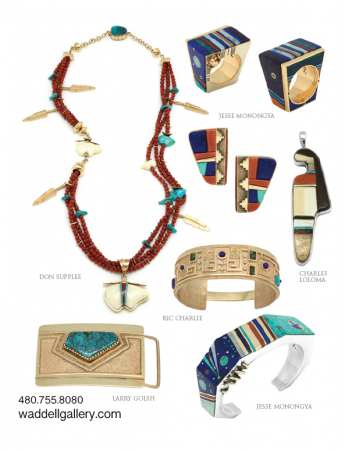
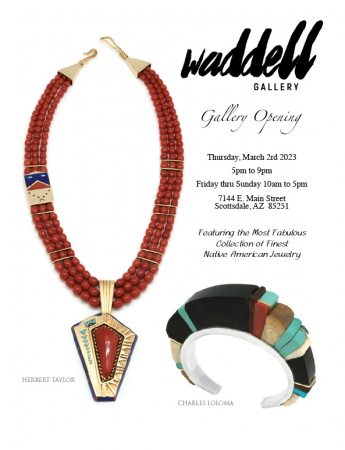
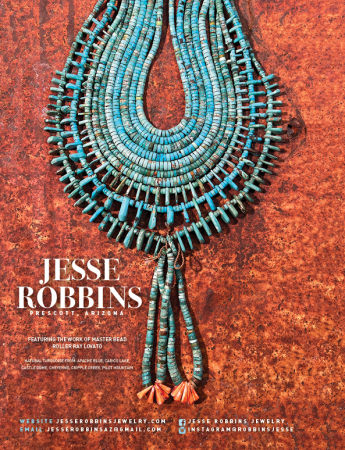
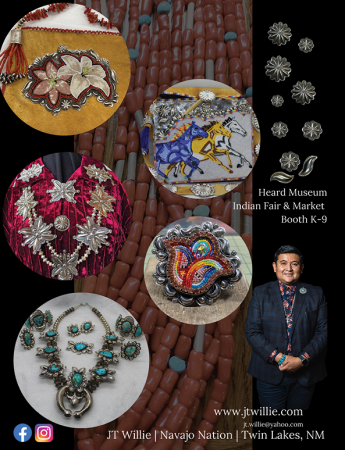
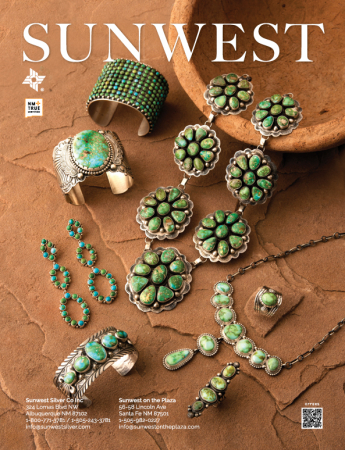
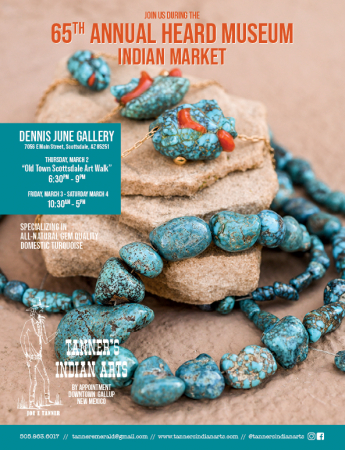
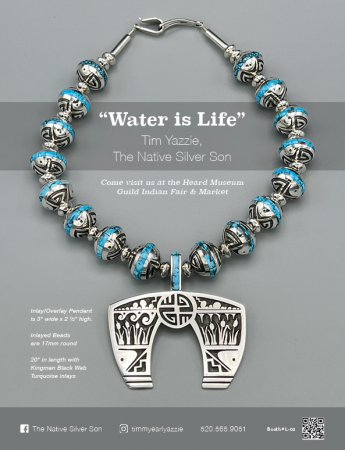
Of all the categories found at the 2023 Heard Indian Market, Native American jewelry and lapidary can often be the most eye catching—laden with generous amounts of shine, opulence and enchantment. Artists present a wide variety of items including necklaces, rings, bracelets and earrings, that showcase the mystique of both traditional and contemporary styles and designs. While turquoise is often the most widely used for decoration in Native American jewelry, there’s also the use of gemstones, beads, bone, shell, silver and gold, among many others. Every piece, in all its unique richness, represents a lineage of tradition and culture that is remarkable to each individual artist. Read below to learn more from participating jewelry and lapidary artists at this year’s market.
Artists to Look For
Ivan Howard (Navajo (Diné))
Karlene Goodluck (Navajo (Diné))
Wyatt Lee-Anderson (Navajo (Diné))
Cody Sanderson (Hopi/Navajo/Pima/Nambe)
Arland Ben (Navajo (Diné))
Cheyenne Custer (Navajo (Diné))
Fortune Huntinghorse (Wichita)
Matthew Charley (Navajo (Diné))
Aaron Garcia (Santa Domingo)
HOW IT'S MADE
Leonard Gene (Navajo)
Booth #H-11
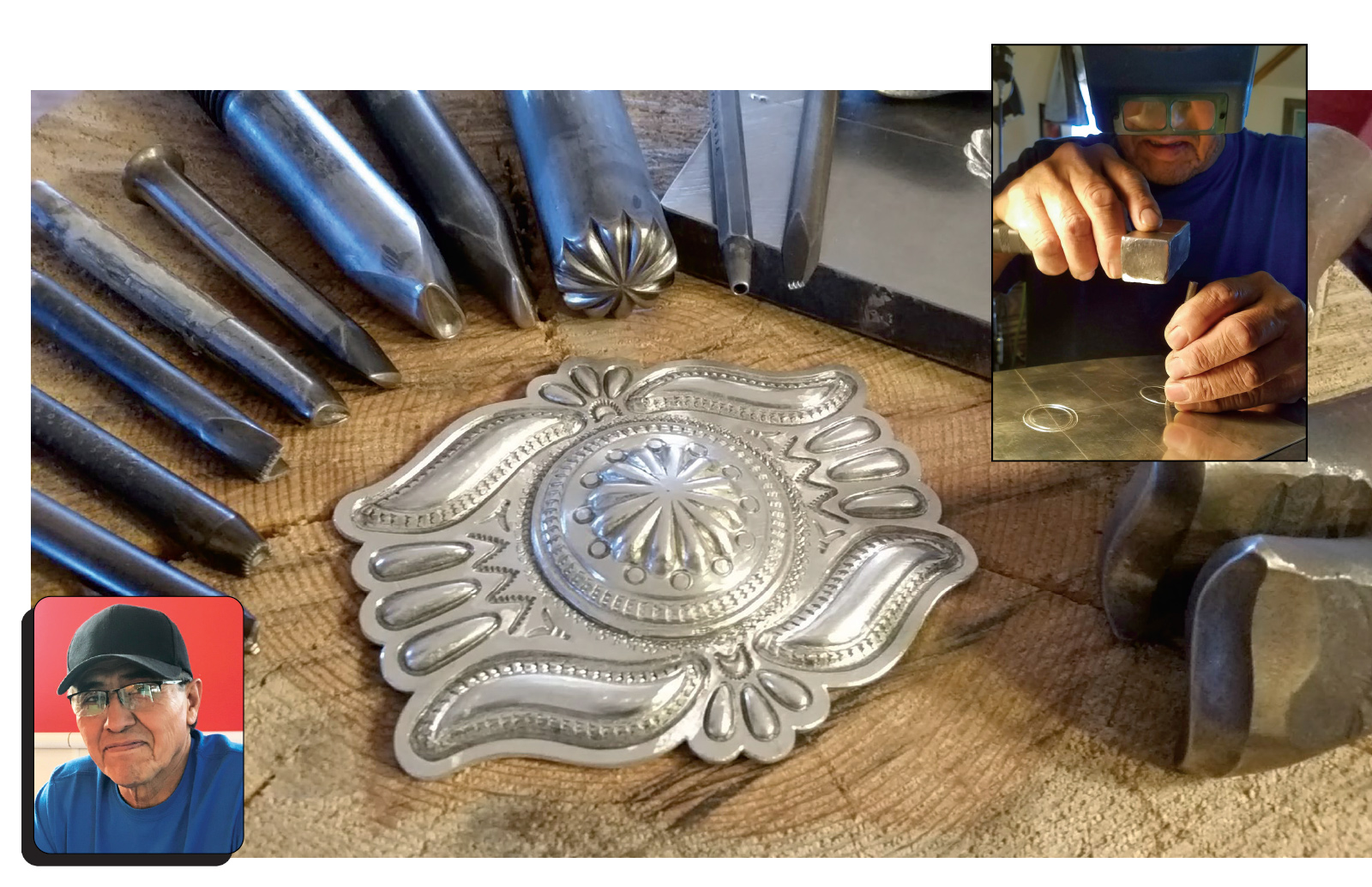
Self-taught silversmith Leonard Gene challenges himself to create original and innovative jewelry pieces that reflect today’s fashions and yet still maintain the traditional Native American traits. He is known for creating his traditional and modern silver purse designs. “Each purse starts off with a flat sterling silver plate,” Gene explains. “I then draw my design layouts on the silver plate before the stamping process begins. Each stamp and repoussé are done one indention at a time, and they often require multiple pounds of the hammer to ensure even and perfect design sets…After completing the stamp work, I then carefully bend/roll the silver plate to form a U-shape. Then I begin to solder the [remaining pieces].”
Alex Sanchez (Navajo)
Booth #I-25
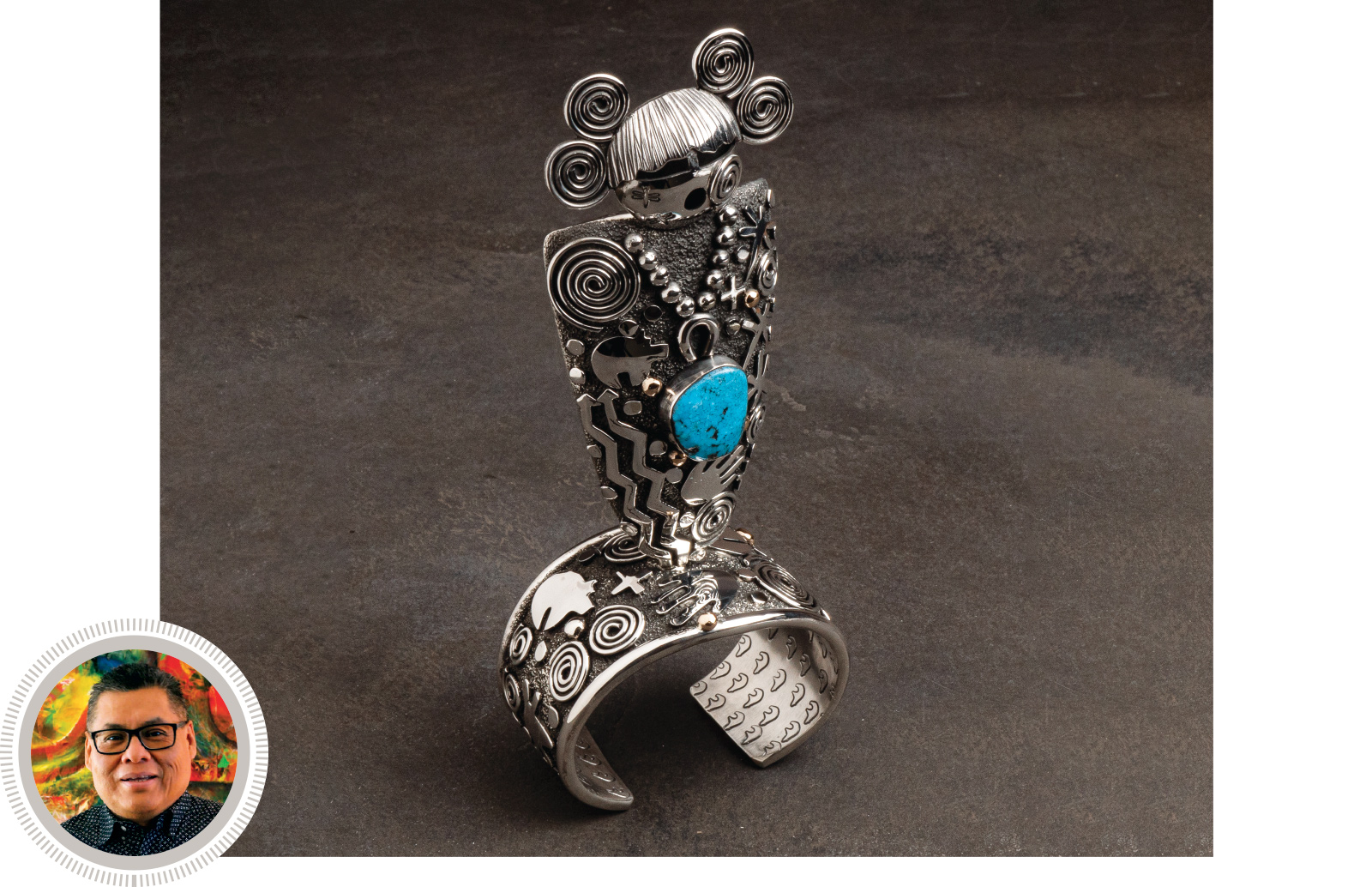
Alex Sanchez reflects on his inspirations through family, faith, love and passion for nature and the world around it. “I bring the traditions of my people to life using a custom yet, personal repoussé and Petroglyph style I have mastered over the years,” he says. “Both good and bad life experiences have been poured into my work to further deepen the Nizhoni (Beauty). I strive to design new more unique pieces and set personal goals to keep my style fresh and exciting whilst staying true to my ancestral roots.”
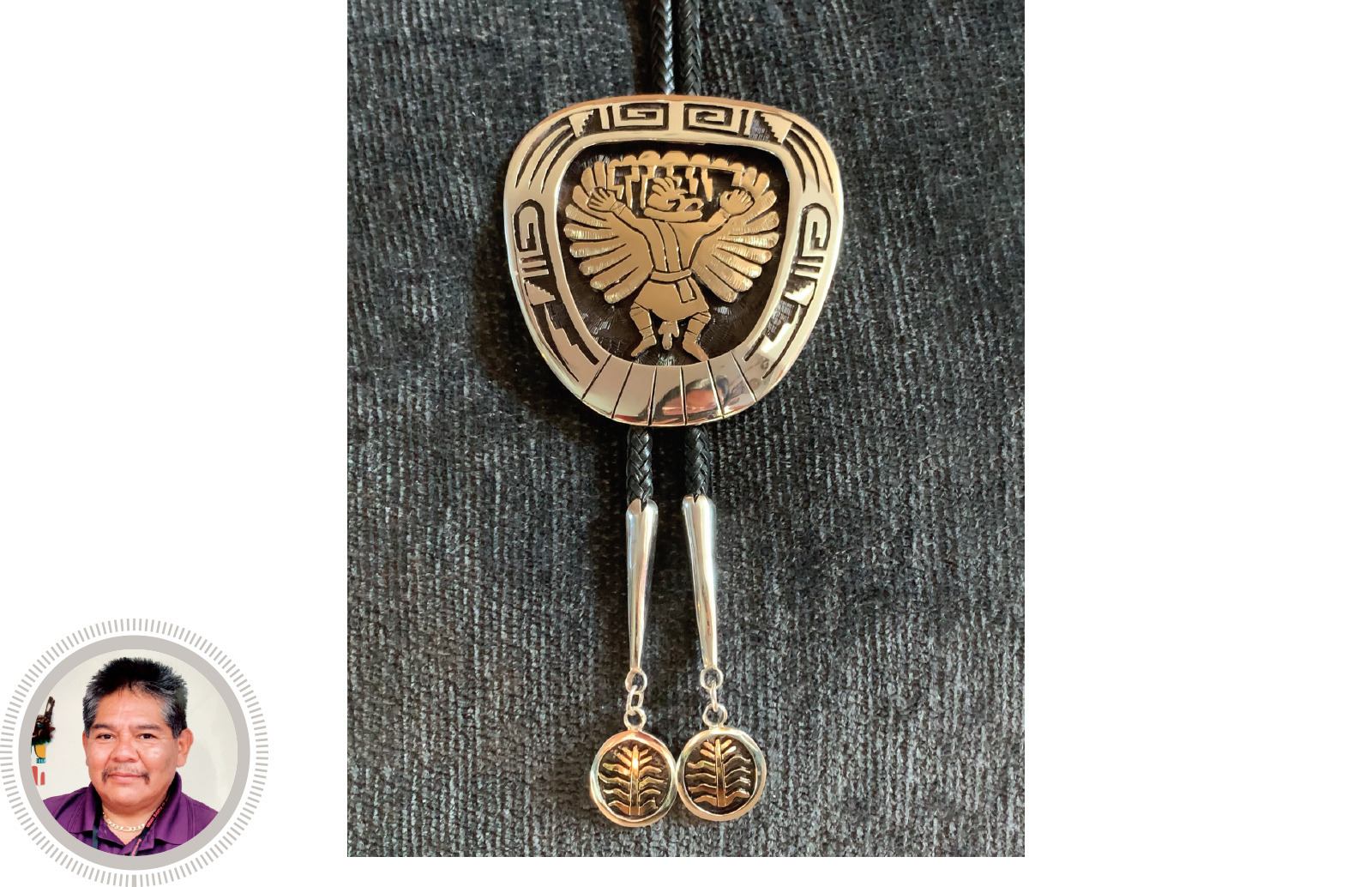
Watson Honanie (Hopi)
Booth #H-49
Watson Honanie has been able to create alluring jewelry for more than 50 years. He began his career at an early age, starting as an apprentice under his late uncles and brother. They encouraged him to make small pieces and gave him whatever scraps of silver they had. Soon after, he began to experiment with different materials, including gold. As of now, Honanie is known for his gold and silver overlay technique and free-handed designs that depict the Hopi culture and life.
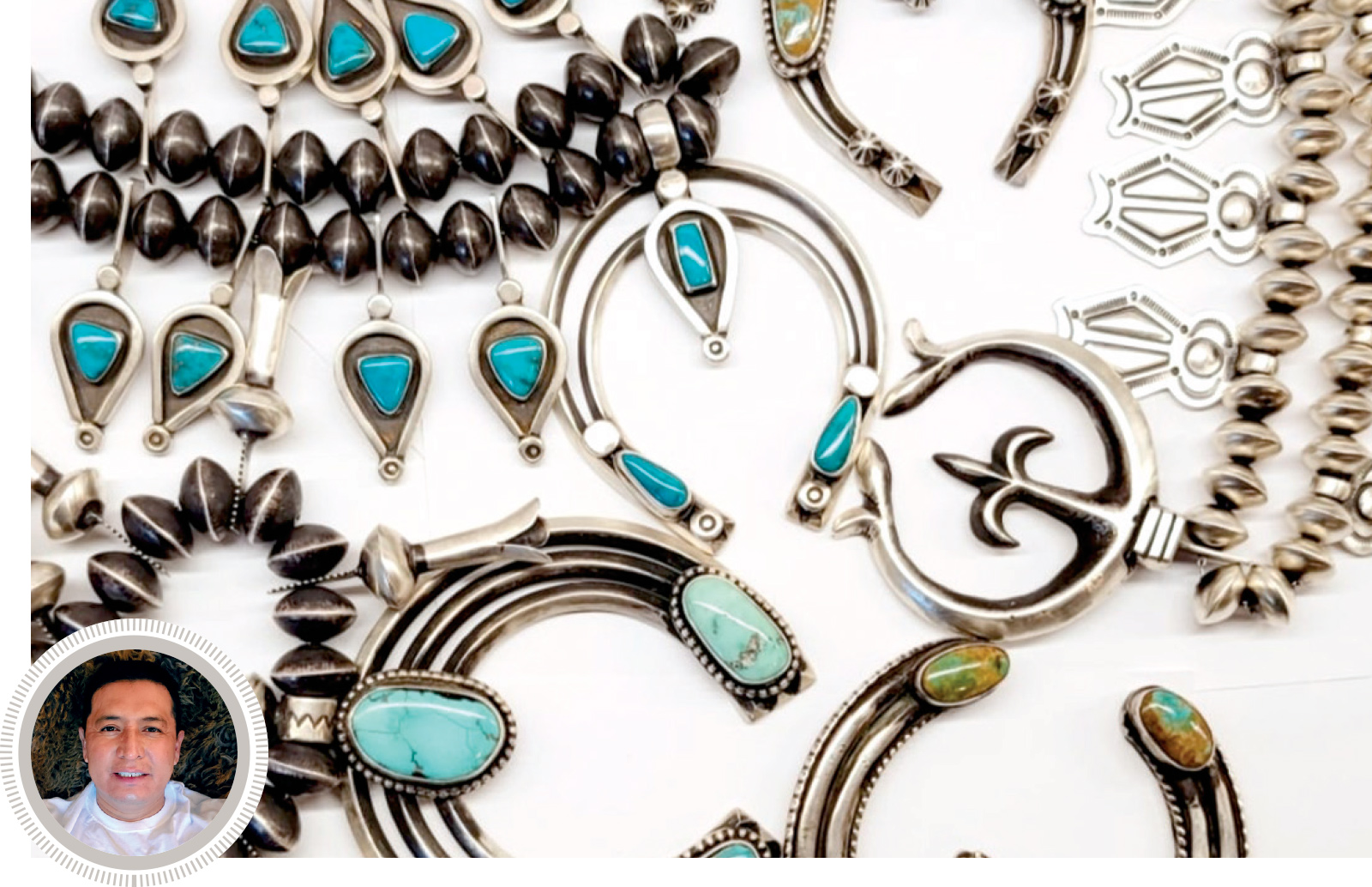
Jay McCray (Navajo)
Booth #A-09
“I like to think of my jewelry as cool enough that my grandma would wear it,” says jewelry artist Jay McCray. “Growing up on the Navajo reservation, I remember my grandma dressing up as she got ready to go to town. She would put on a skirt with a beautiful velveteen shirt. Her outfit always included a concho belt and her squash blossom necklace. I think the jewelry that I make reminds me of my grandmother.” McCray’s jewelry often includes deep, heavy stamp work and turquoise stones.
Pottery
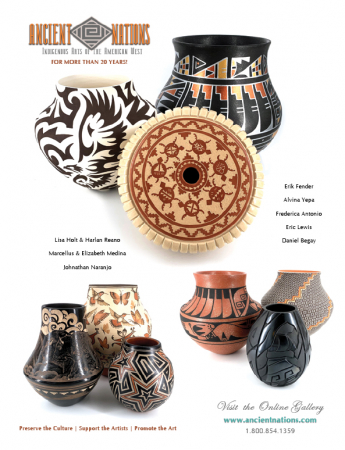
This year’s Heard Indian Market will see many Native clay masters featuring their dynamic pottery creations, ranging from traditional to contemporary designs, techniques and methods. Many potters often rely on family and community to not only learn their trade—the firing process, form, color and cultural artistry—but they also utilize the very clay from the lands they call home. The entire craft is a special one, seeking to connect the Native potter to the earth; their roots; their traditions. Featured in this section, we highlight several outstanding potters at market in 2023, carrying on their traditions while also creating new ones.
Artists to Look For
Preston Duwyenie (Hopi)
Judy Lewis (Acoma)
Gwen Setalla (Hopi)
Frances Martinez (San Ildefonso/Tewa)
Dusty Naranjo (Santa Clara Pueblo)
Lisa Holt (Cochiti)
Carolyn Concho (Acoma Pueblo)
James Ebelacker (Santa Clara Pueblo)
John C. Whiterock (Navajo)
Merlin Little Thunder (Southern Cheyenne)
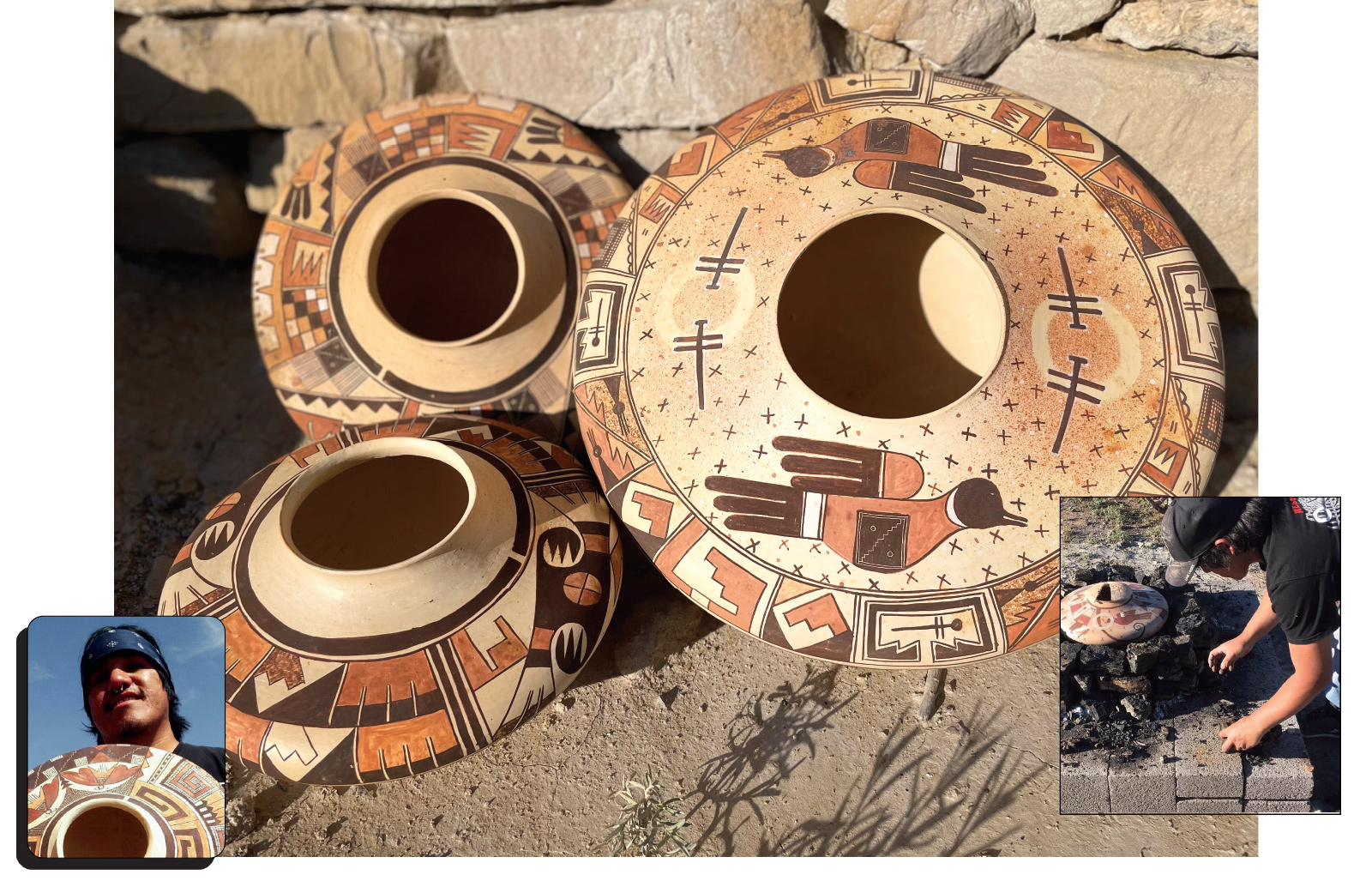
HOW IT'S MADE
Bobby Silas (Hopi)
Bobby Silas is a Hopi pottery artist from the village of Bacavi, Arizona, and is a member of the Coyote Clan. He is also a first-generation potter and is known for his traditional work with Hopi and Zuni style pottery. He learned the historical method of Hopi pottery at age of 14, but years later would meet his late partner Timothy Edaakie of Zuni Pueblo, and the two would go on to revive the historical forms of Zuni pottery from large water jars to dough bowls and win numerous awards for their classic Zuni style. Today Bobby has accomplished his goal in reviving several other styles of prehistoric wares from Sikyátki yellow ware to Mesa Verde black-on-white, using traditional methods of firing from lignite coal to trench kiln firings. Today, Bobby Silas still continues the legacy of making traditional style pottery in the ancient form.
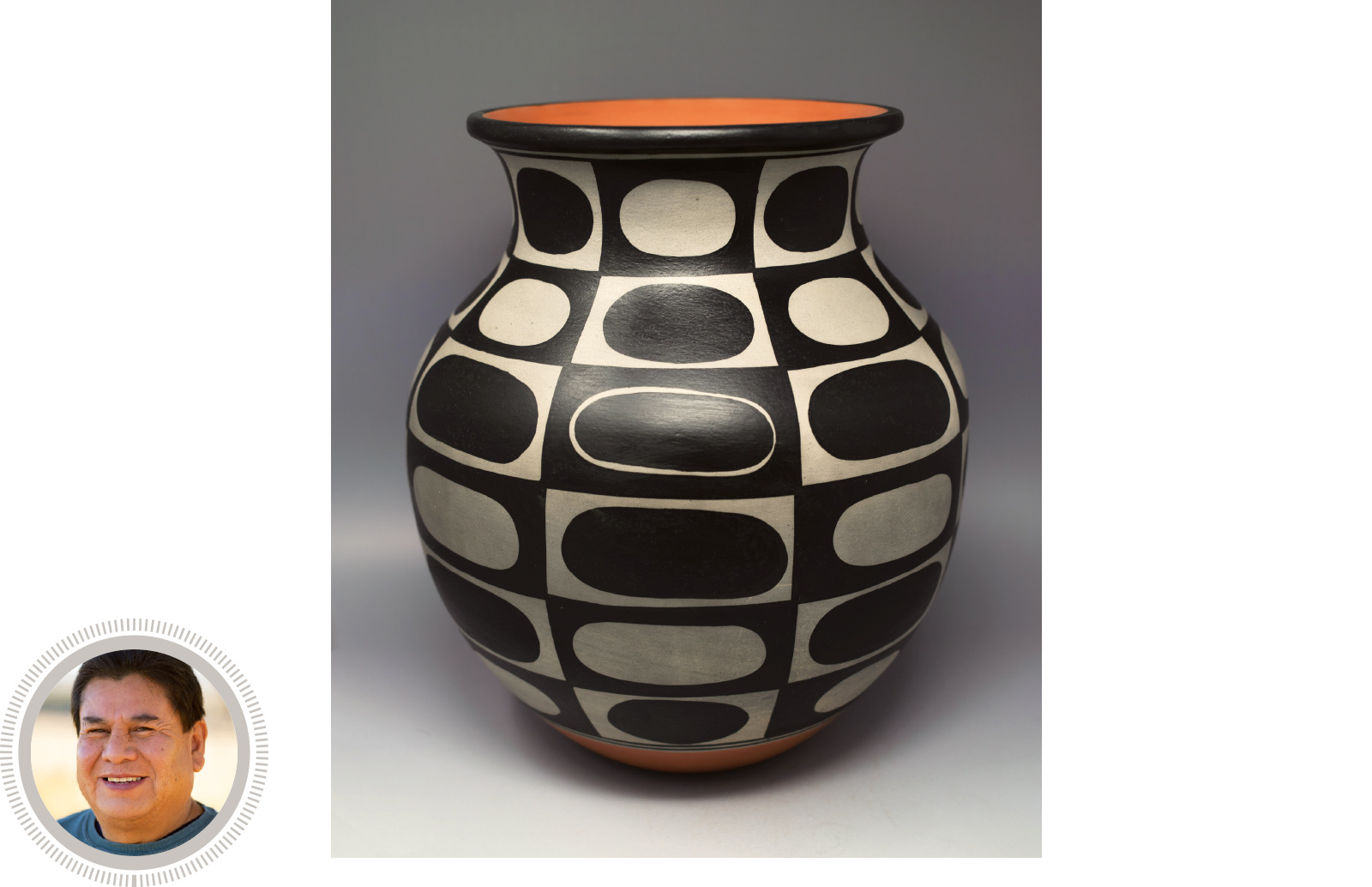
Thomas Tenorio (Santa Domingo Pueblo)
“I am inspired by all the potters who came before me,” says potter Thomas Tenorio. “I taught myself how to make the pots and mix the clay, but I think that the old Kewa potters and their designs are my teachers also.” Some of Tenorio’s pieces don’t exactly look traditional, but they still come from old designs. The dots in the piece pictured here, for example, are inspired from designs from the late 1920s.
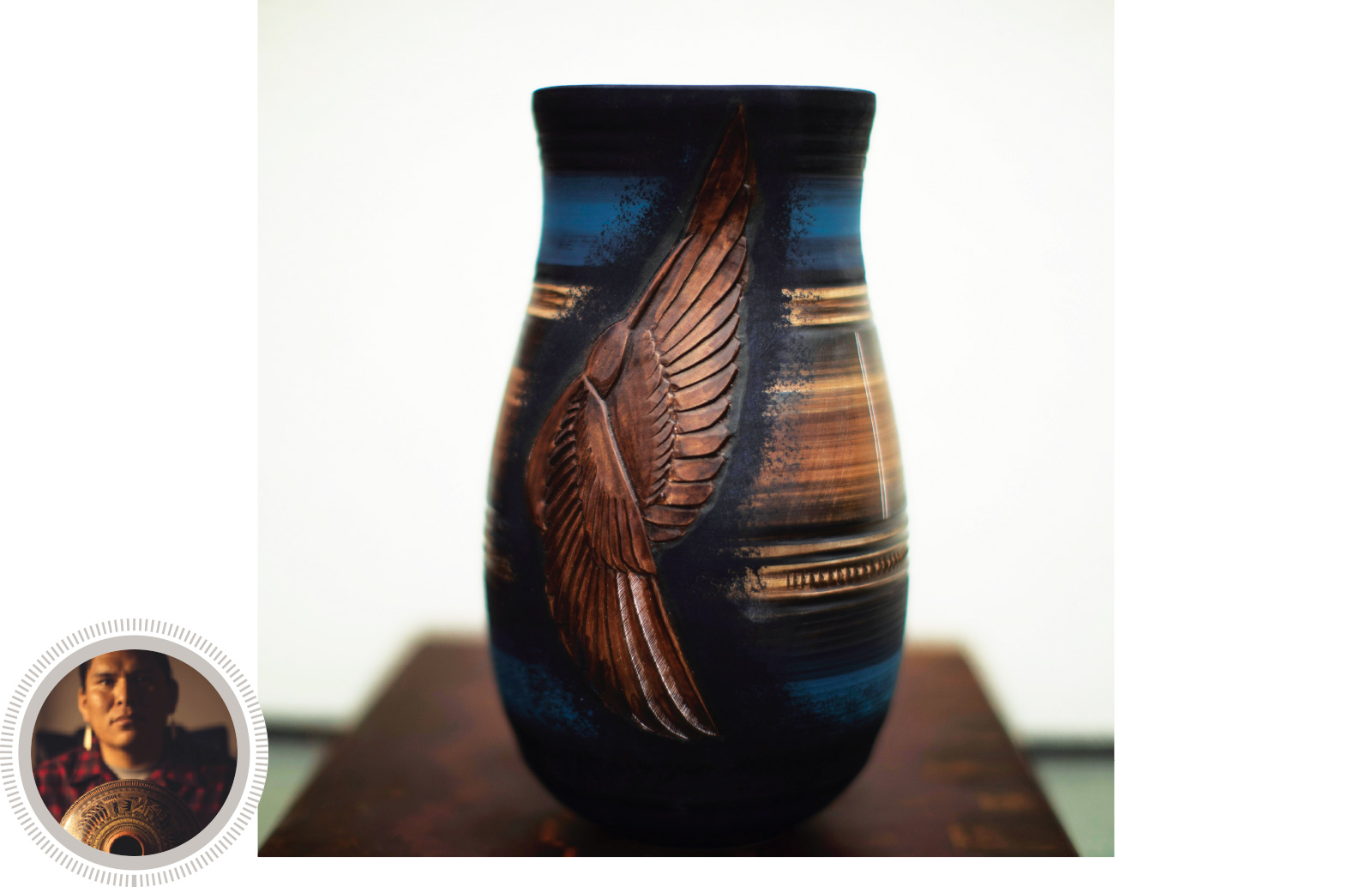
Tyler Lansing (Navajo (Diné))
Booth #C-01
“My journey is not to conquer the mountain and reach the summit,” says potter Tyler Lansing. “That aspiration is a tremendous amount of effort for an evanescent sensation of accomplishment. I find my inspiration in every step of the journey, embracing my connection with the earth as a Diné. I am the remnant of an enduring and resilient people. My journey is to share my story and creations with you.”
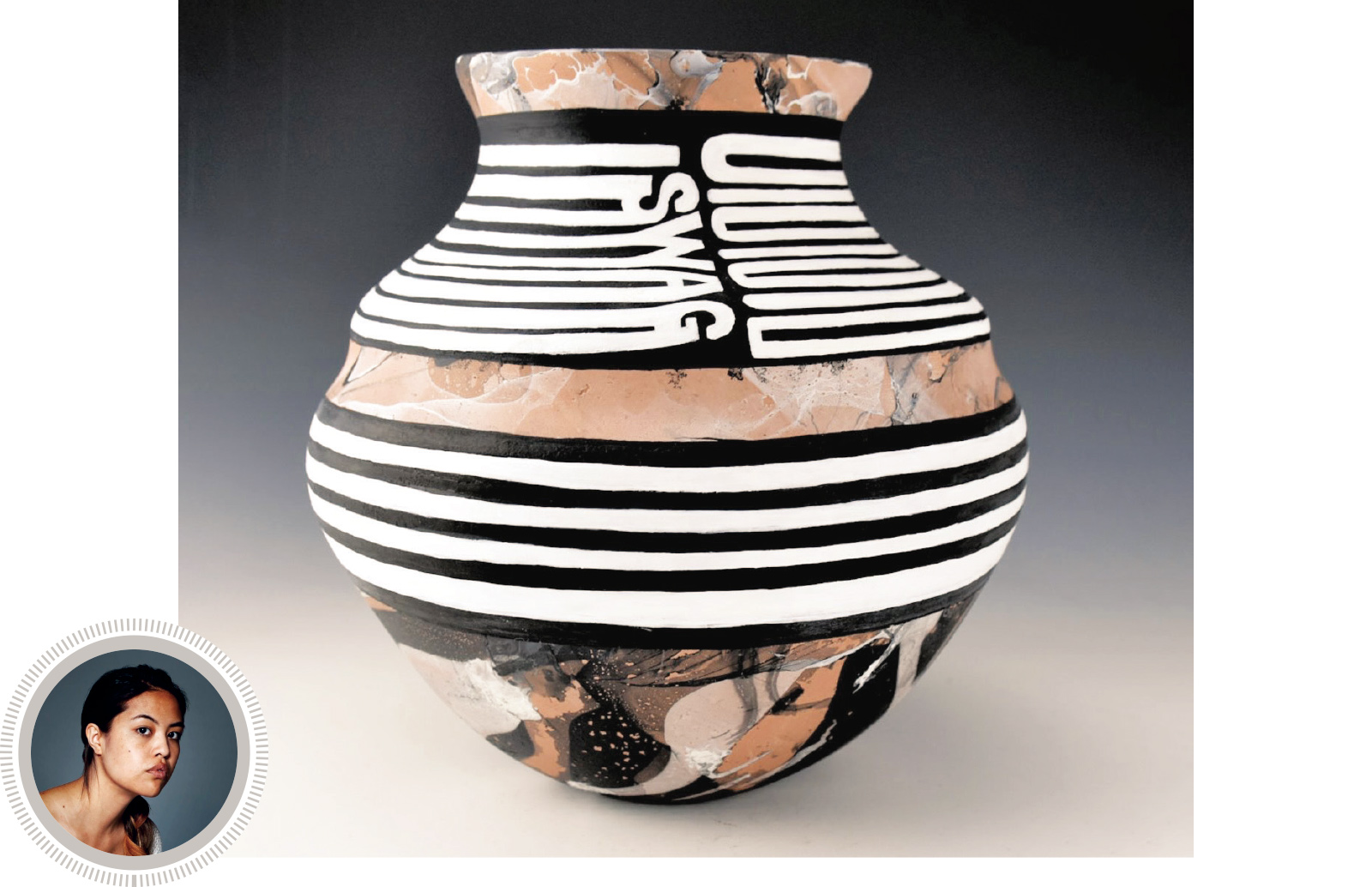
Kaa Folwell (Santa Clara Pueblo)
Booth #D-26
Artist Kaa Folwell believes that the process of creating pottery is a community effort. “I think a lot of people assume being a Pueblo potter is a solo mission, it’s not!” She remarks. “From the start of harvesting the clay at ancestral claypits, to taking the pots to the gallery (King Galleries) or setting them up at an NDN market, it’s always a community effort. To learn the skill, it comes from generations of hands before you. Pueblo pottery, may it be traditional or contemporary, is always that silent strong reminder of where and who the potter comes from.”
Two-Dimensional Art
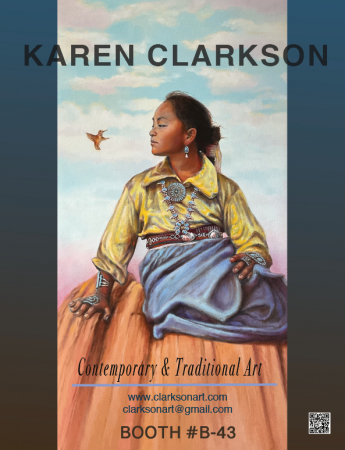
With technology growing at a rapid rate, the Two-Dimensional Art category carries, possibly, the strongest dichotomy between tradition and innovation. However, these concepts are not at odds with one another. Countless Indigenous artists, many of them exhibiting at the 2023 Heard Indian Market, are carrying the stories and traditions of their cultures, while also drawing inspiration from resources, materials and other elements of modern day life. The beautiful thing about two-dimensional art is the sheer diversity it brings, and we’ll always celebrate that. From the cutting-edge to the wholly traditional, this category is really something special.
Artists to Look For
Gilmore Scott (Navajo (Diné))
Marla Allison (Laguna Pueblo)
Tracy Tohannie (Navajo (Diné))
Everton Tsosie (Navajo (Diné))
Cara Romero (Chemehuevi)
Avis Charley (Spirit Lake Dakota/Diné)
Ryan Singer (Navajo (Diné))
Eugene Tapahe (Navajo (Diné))
Deborah Lujan (Taos)
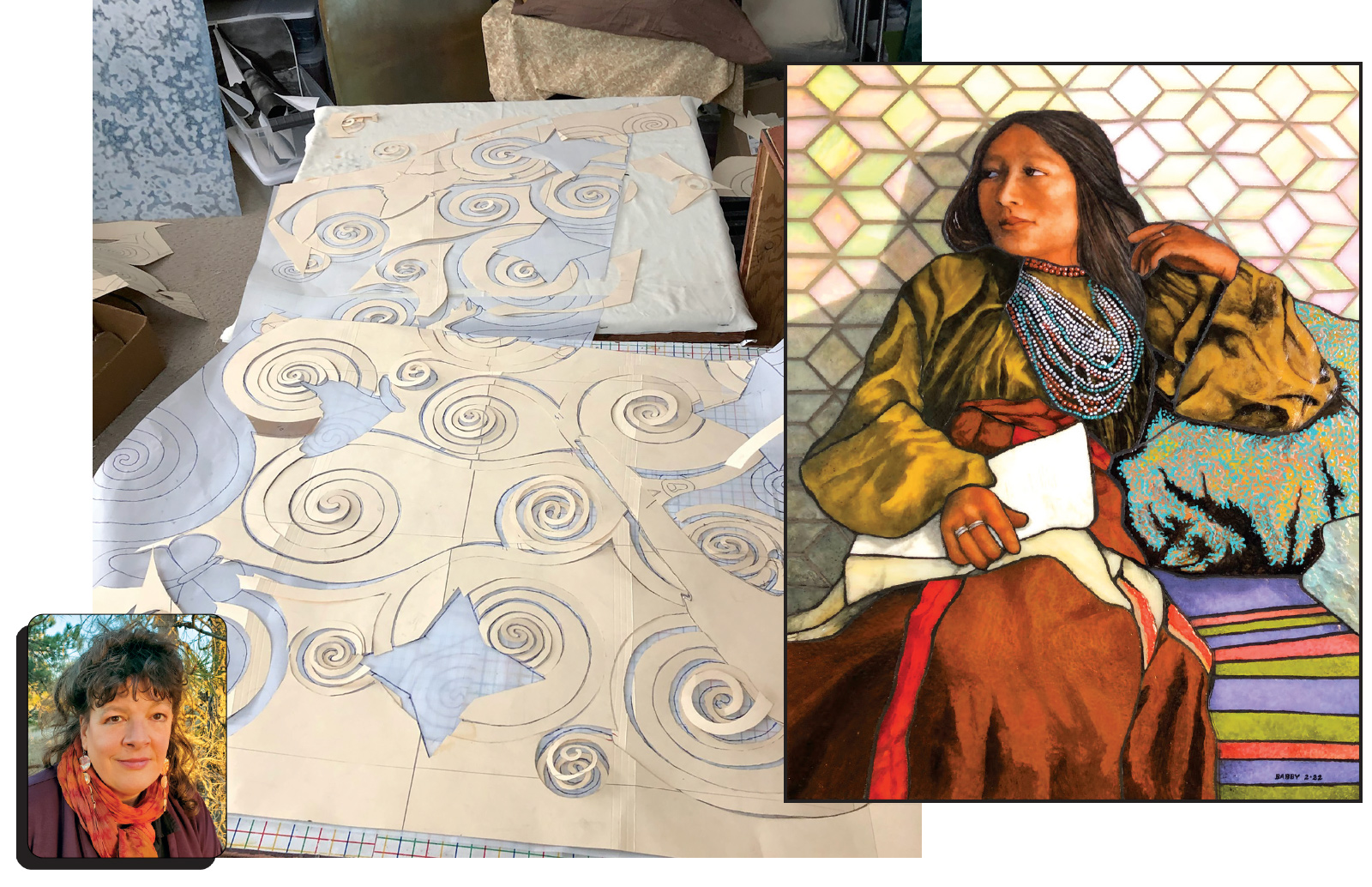
HOW IT'S MADE
Angela Babby (Oglala Sioux)
Booth #B-04
Angela Babby’s artwork is made up of glass mosaic tiles, with most of her imagery based on black-and-white photographs of her ancestors. “The saturated colors, transparent and light capturing qualities, iridescence, textures and patterns of glass captivate me. My artwork requires a myriad of steps to coax the contrasting areas to coalesce. Each artwork that I create cycles through three different mediums: stained glass, vitreous enameling and tile work. All of the pieces of glass must be hand-cut and ground, some or all of the pieces are painted with glass enamel (powdered glass mixed with a medium) and fired slowly in a kiln to over 1,000 degrees (often multiple times) creating a glass-on-glass piece. All are then set in place by hand. Only after the very last step—the application of custom tinted mortar—the whole [piece] becomes visible for the first time.”
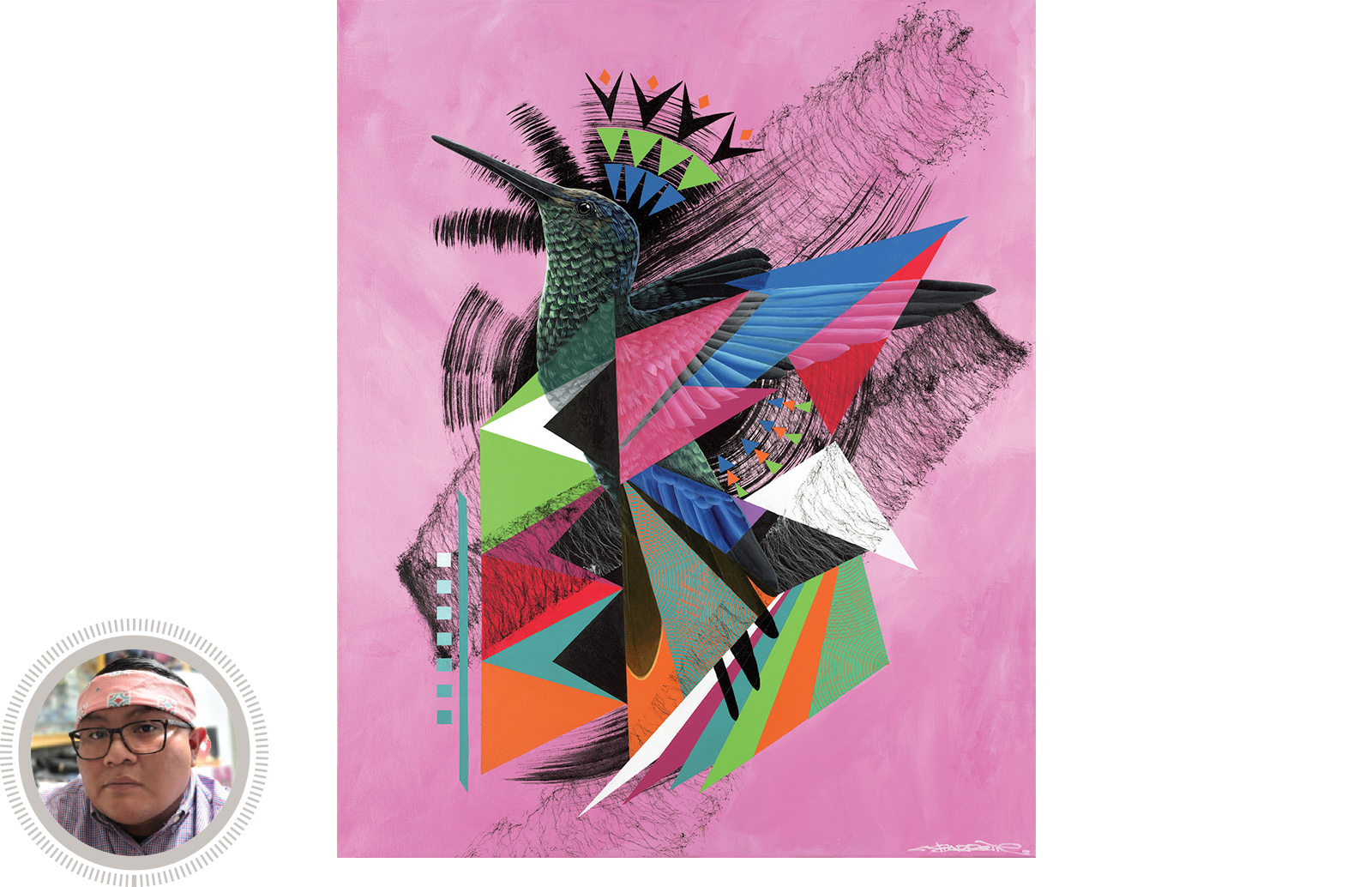
Garrett Etsitty (Navajo (Diné))
Booth #B-01
Born and raised in Chinle, Arizona, Garrett Etsitty grew up with a deep love of painting and culture. From the petroglyphs on the canyon walls to the stories passed down from his elders, his work draws upon the inspiration of what it means to be a Diné person. He hopes his art will inspire young Indigenous minds to preserve their culture. “I want to make our stories come alive,” says Etsitty. “I want the viewer to feel like they can reach out and touch the stories that have been handed down.”
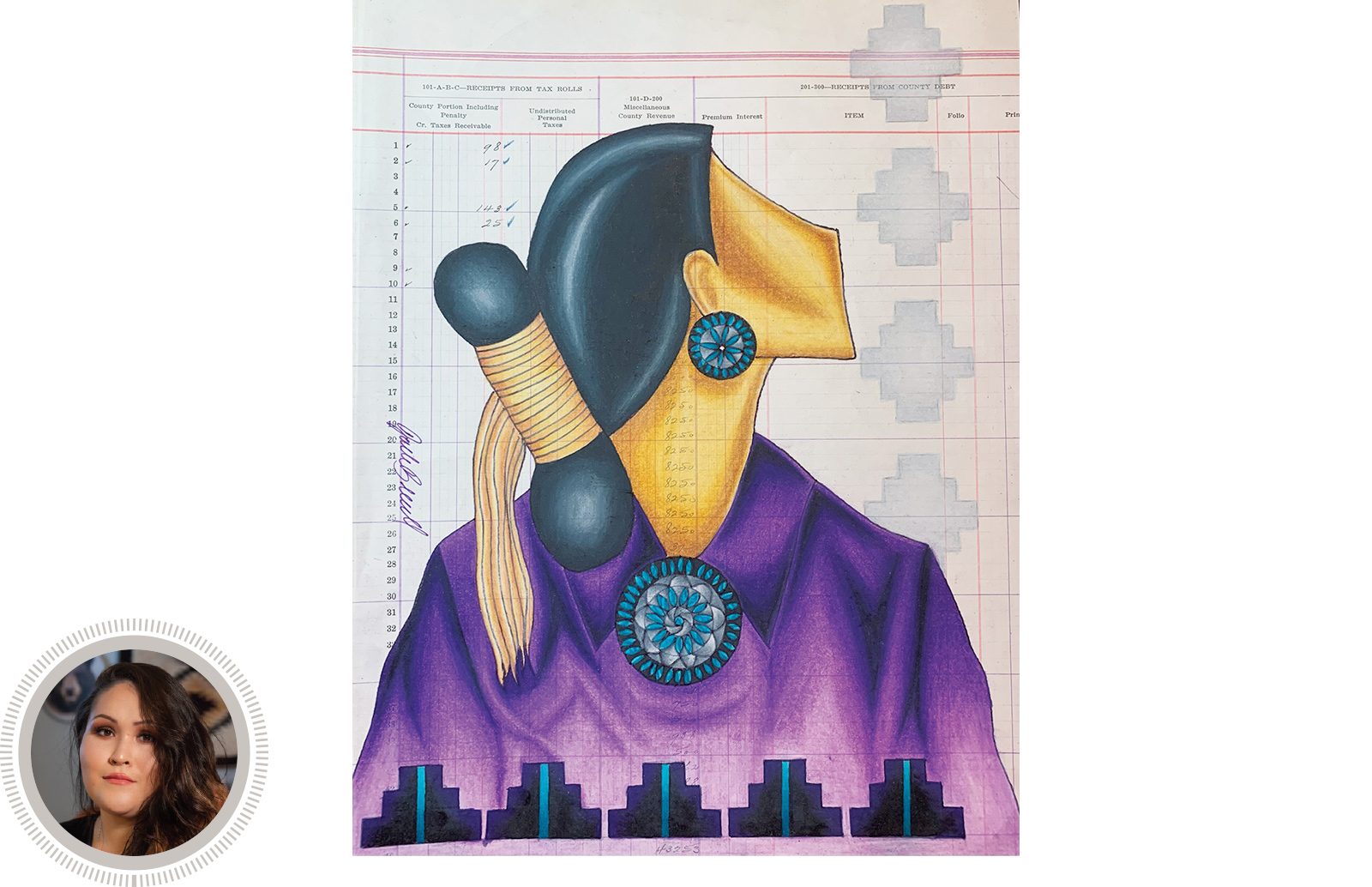
Jade Bread (Navajo/Apache/Blackfeet)
Booth #H-28
Jade Bread’s inspiration comes from the lifelong joy of watching her mother nurture and grow her own art career. “Watching her excel not only as a Native American artist but as a female artist has given me the desire, motivation and confidence to begin to tell my own story and build my own career,” says Bread. “My children also inspire me to do for them as my mother did for me. To be able to pass our culture and stories to them so they may begin to build their own special bond with it as I have.”
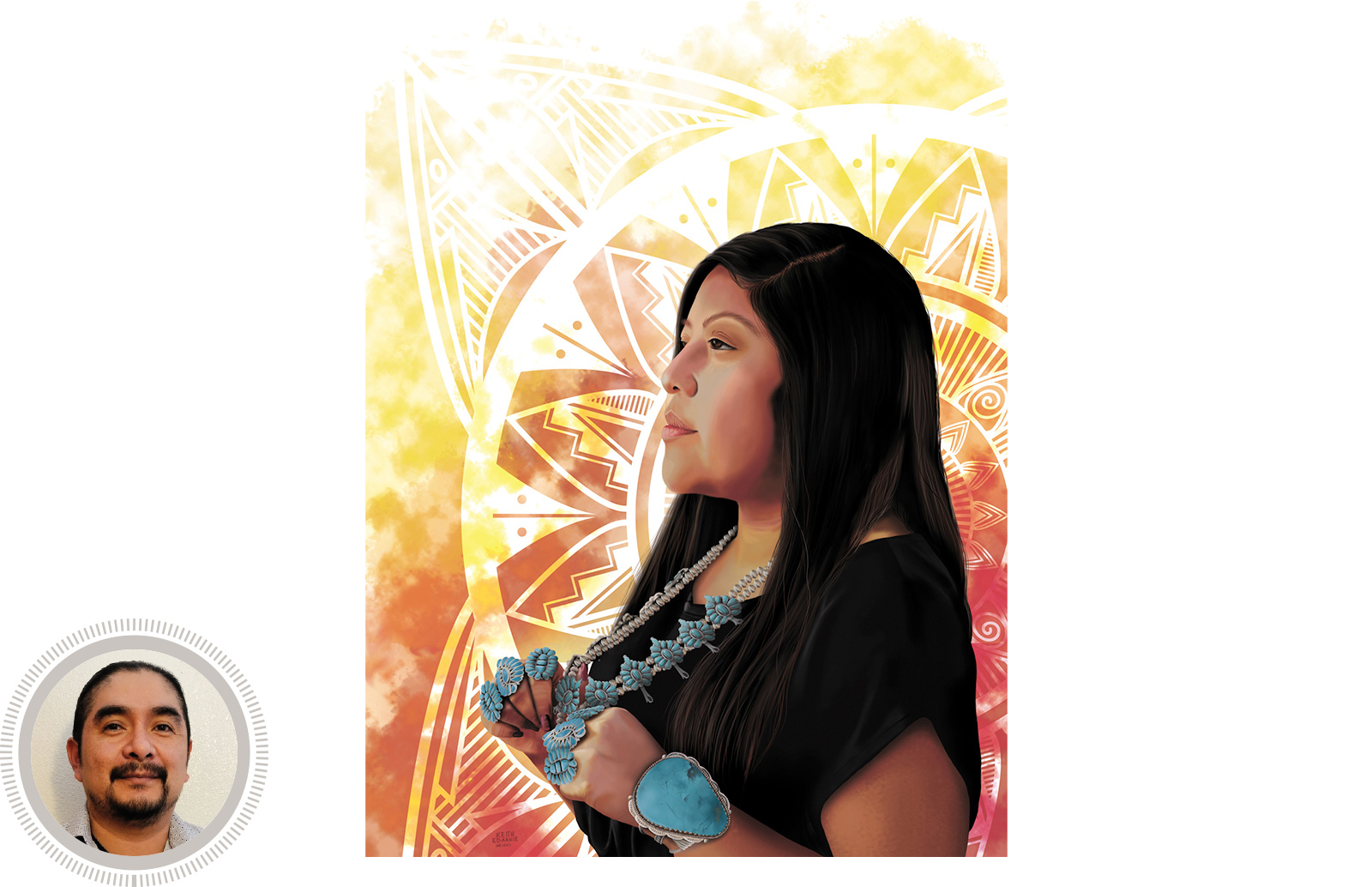 Keith Edaakie (Zuni Pueblo)
Booth #D-21
The vision of Keith Edaakie’s artwork is inspired by the rich culture and traditions of the Zuni people, while also finding balance in the modern world. “My art tells the stories that have been passed down from generation to generation and depicted in a way that will stand the test of time. Just as the ancient Puebloan left petroglyphs carved into the stones, my goal as a Zuni artist is to leave an impression for all to see even when I am no longer around.”
Pueblo Carvings
The cottonwood root is a resilient medium. It’s soft enough to carve and shape, but hard enough to hold a strong form. It’s difficult to split, and it retains paint and pigment well. It’s also an abundant resource near the pueblos of Arizona and New Mexico, where artists use cottonwood roots to create stunning katsina figures and other carvings. The pueblo carving classification is a fan favorite of visitors at the Heard Museum, which has an extensive and noteworthy doll collection from hundreds of artists, including many that are at the Heard Museum Guild Indian Fair & Market.
Artists to Look For
Randy Brokeshoulder (Navajo (Diné))
Manuel Chavarria (Hopi)
Aaron J. Fredericks (Hopi)
Arthur Holmes (Hopi)
Ernest Honanie (Hopi)
Kevin Honyouti (Hopi)
Mavasta Honyouti (Hopi)
Kevin Horace-Quannie (Hopi/Diné)
Wilmer Kaye (Hopi)
Brendan Kayquaptewa (Hopi)
Eric Kayquaptewa (Hopi)
Raynard Lalo (Hopi)
Adrian Nasafotie (Hopi)
Edward Seechoma (Hopi)
Donald Lomawunu Sockyma (Hopi)
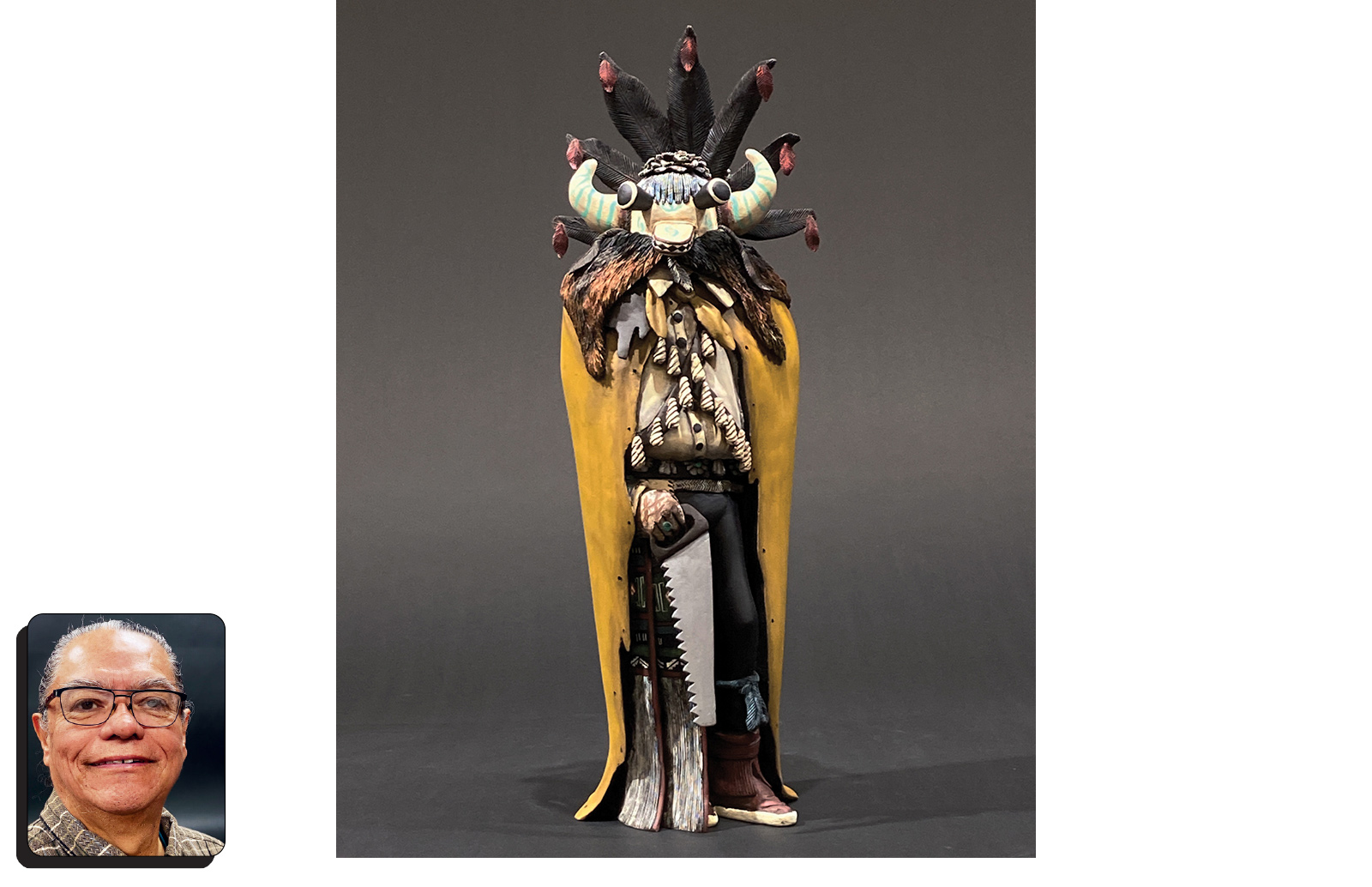 HOW IT'S MADE
Gerry Quotskuyva (Hopi)
When Gerry Quotskuyva became an artist in 1994, the Heard Museum quickly embraced his contemporary direction for Hopi katsinam. “I studied the works that were prevalent at the time and fused what was considered the traditional carvings with a newer contemporary direction to create more of a unique personal interpretation with an additional element of spiritual meaning,” he says. “Even now, as I continue to refine the style, they continue to encourage me in my continued growth in the artform. I use a flexible shaft rotary tool called a Foredom to rough the shape in from the raw wood, then quickly switch to my trusty pocket knife and gouging tools to finish carving the piece and apply additional texture using a wood burner. After the sculpture is sanded and sealed, I use acrylic paints to achieve a level where many people think my work is clay when they first see the end result.”
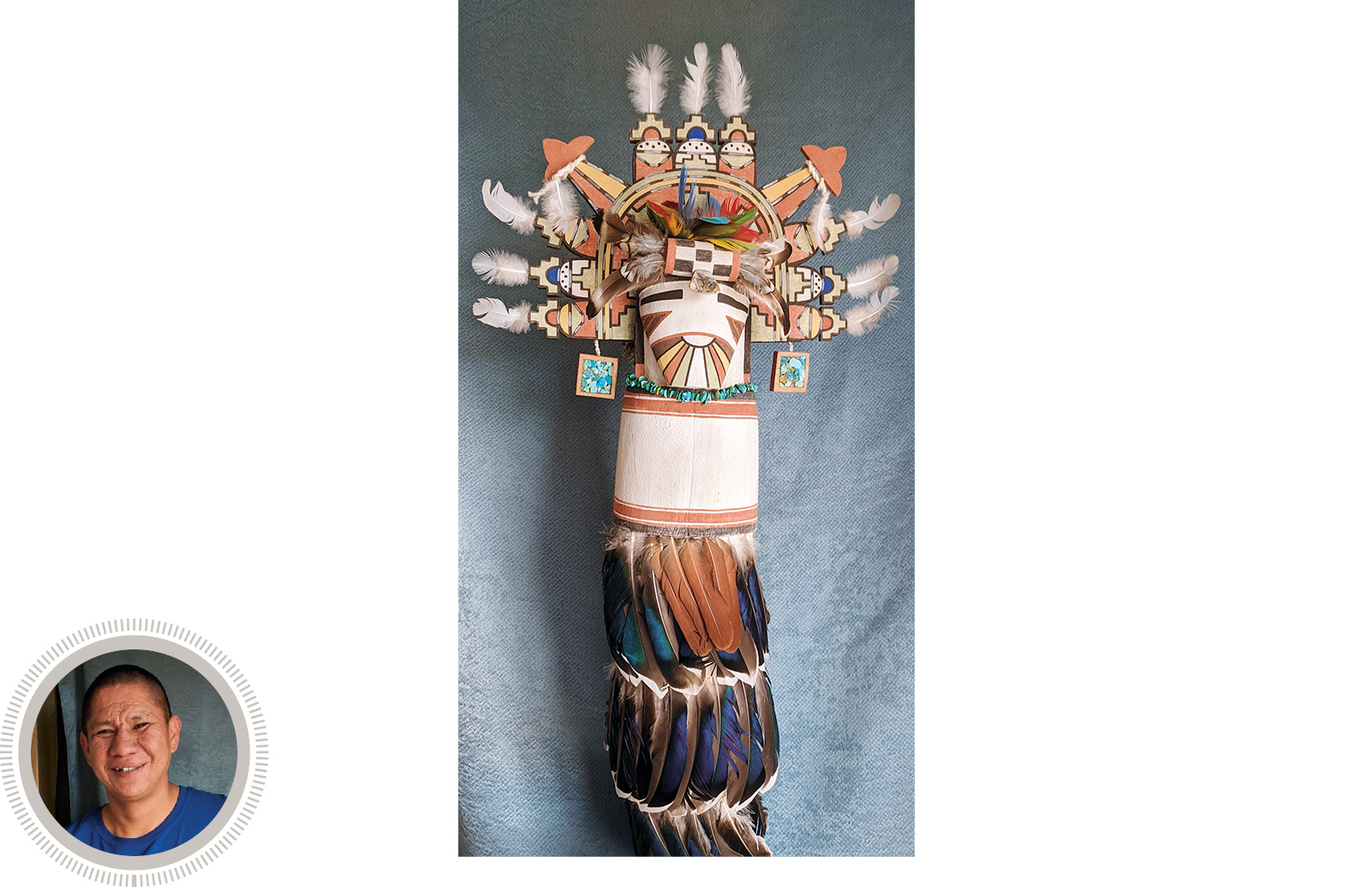
Cory Ahownewa (Hopi)
Booth #M-01
When it comes to his carvings, artist Cory Ahownewa, of the Badger Clan, gives thanks to his family, and also Edward Seechoma, who taught him much of what he’s learned. “I do traditional-style katsina dolls with natural pigment that I go out and pick around the village of Hotevilla,” Ahownewa says. “It took me to the age of 33 to finally realize we, as Hopi, should learn as much as we possibly can of our culture.”
Justin Lomatewama (Hopi)
Booth #I-10
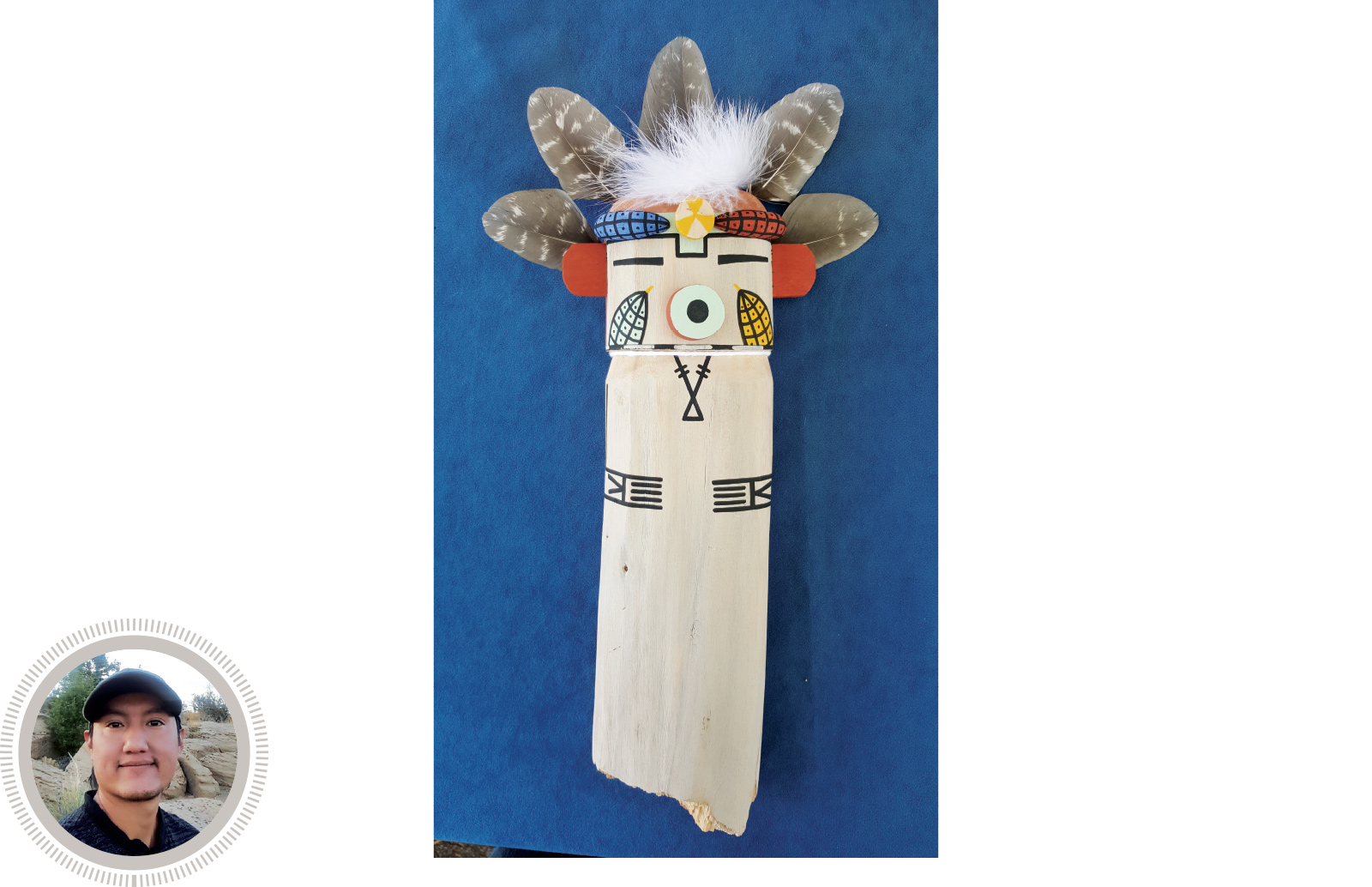
Justin Lomatewama creates a more traditional variety of katsina, something he refers to as an “archaic style of carving.” He continues, “They are meant to depict a style that was done hundreds of years ago. In my work, I try to use a lot of the same materials and techniques that were available back then. [For instance,] the paints are all-natural pigments. To help shape and smooth down the cottonwood root, a sandstone, rather than sandpaper, is used. ”
Michael Dean Jenkins (Hopi/Pima)
Booth #H-52
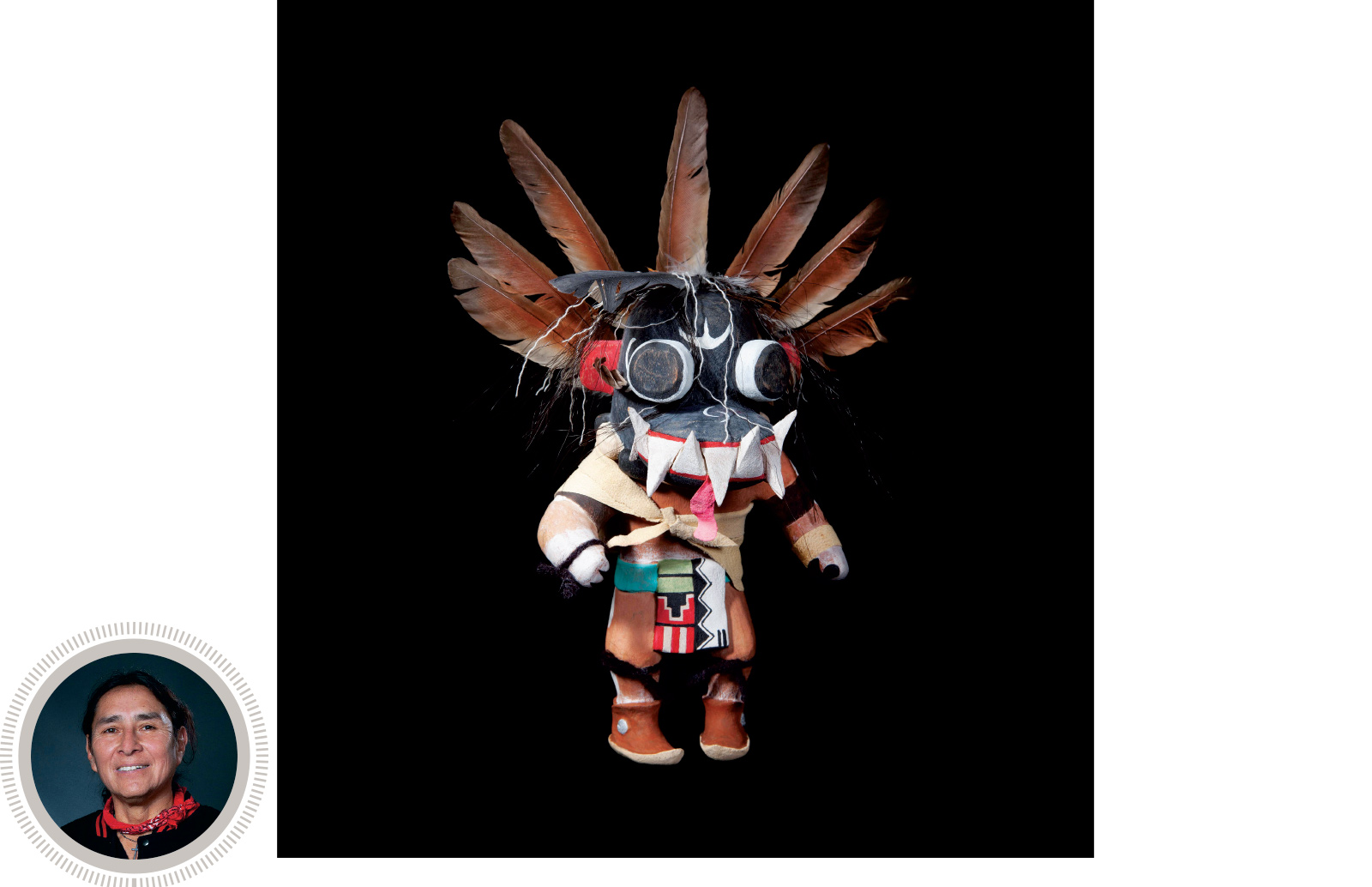
Carver Michael Dean Jenkins has shown at the Heard market since 1995. After requesting to show his work with his two mentors, Cecil Calnimptewa and Johnathan Day, Jenkins helped start carving shows at the Heard Museum, which snowballed into larger events as new artists join in. “I enjoy that my art has influenced many young katsina carvers and the artist in me loves
the challenge of creating new, unusual ideas from old traditions,” he says. “My influences come from my life’s experiences and seeing other artists’ work…”
Sculpture
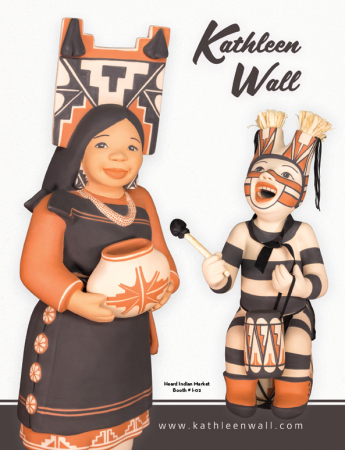
Taking materials like clay, stone and glass, artists transform elements of the earth into three-dimensional art forms. From tiny Zuni fetishes to grand, elaborate creations, this category is truly full of possibilities. At one booth, you might spot an ornate bronze of a historic Native American figure, and in another, you might glimpse the twisting form of a bird winding up toward the sky. The ways in which these artists are able to mold their materials into entirely new forms existing within three-dimensional space almost makes them feel alive.
Artists to Look For
Adrian Wall (Jemez)
Cliff Fragua (Jemez)
Ira Lujan (Taos)
Keli’i Eli (Zuni)
Kathleen Wall (Jemez)
Joseph Begay (Navajo (Diné))
Troy Sice (Zuni)
Upton “Greyshoes” Ethelbah Jr. (Santa Clara/White Mountain Apache)
HOW IT'S MADE
Loren Tsalabutie (Zuni)
Booth #H-19
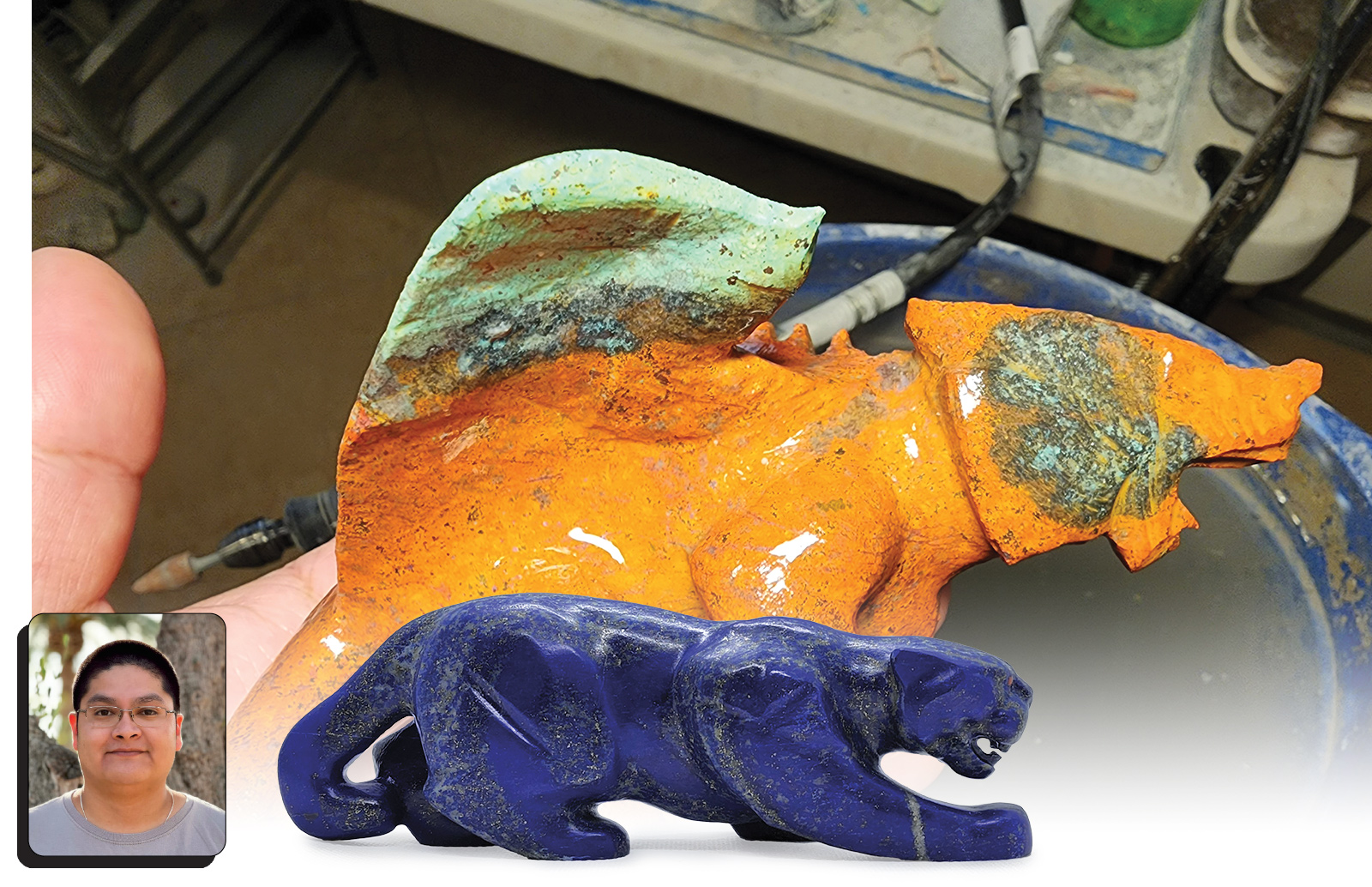
Loren Tsalabutie carves various animals out of different stones found throughout the world. He says, “The process in creating my art is first finding the perfect stone; the next step is seeing what the stone wants to become. Once an agreement is made comes the carving process.” Tsalabutie utilizes lapidary tools, his motor and a stone grinding wheel for shaping, followed by the dremeling process, using diamond bits and a lot of water for cooling. “The last few steps are sanding with sandpaper by hand, and drilling and inlaying for the eyes. The fun part is polishing, which is the final process using a polishing wheel and compound to bring out the perfect shine.”
 Portrait photo credit: Leslie Dimmick
Alvin K. Marshall (Navajo (Diné))
Booth #A-37
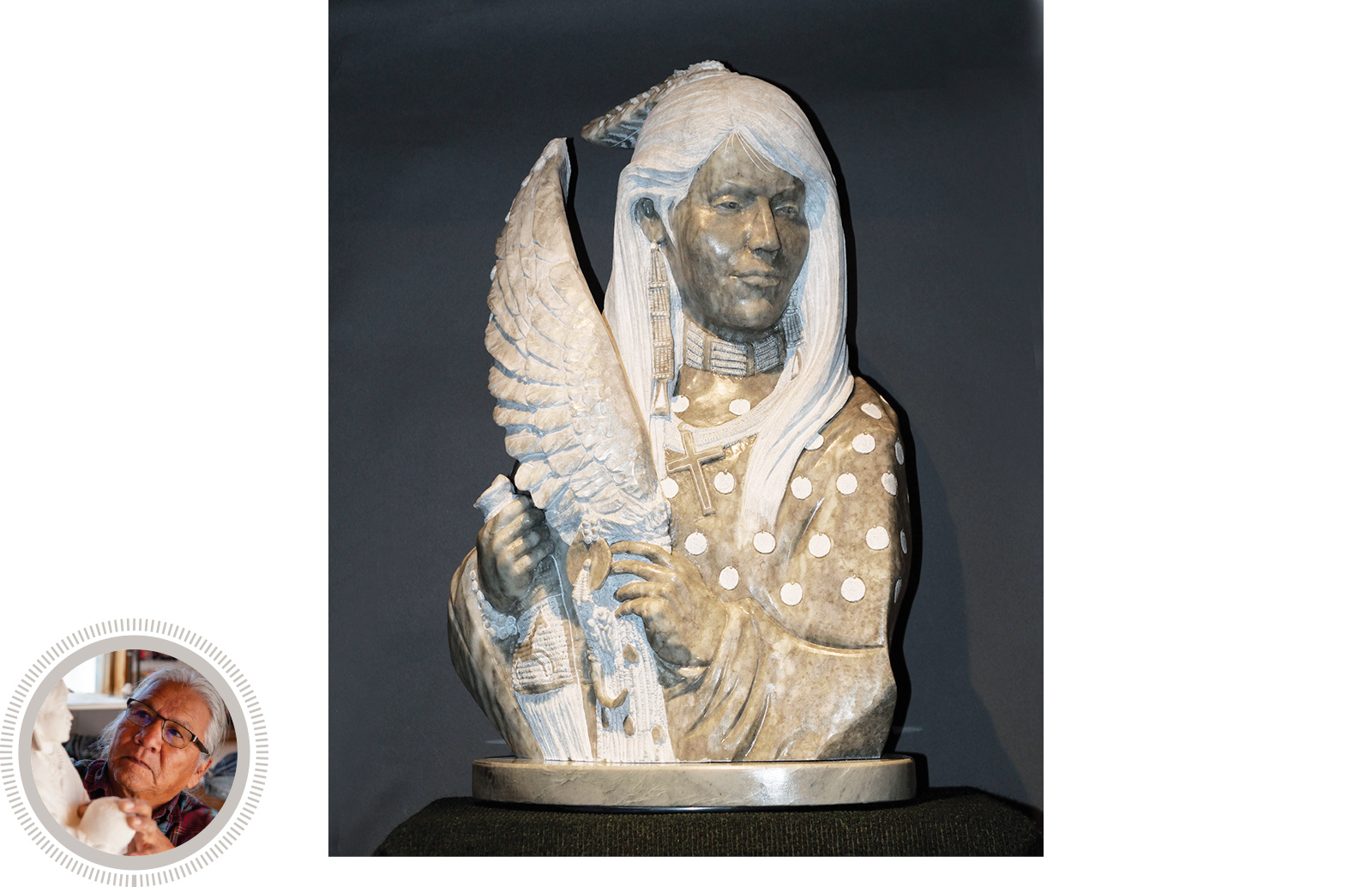
Alvin K. Marshall creates his sculptural art with basic stone and tools, sculpting outside in the natural light. “Most of my work is done in alabaster. Beautiful and forgiving, it lends itself to me,” he says. “It speaks quickly. It doesn’t fight or argue. Rather, it accepts my feelings, whether sad or joyous. The deeper I carve into it, the more it enables me to reach its soul and spirit.”
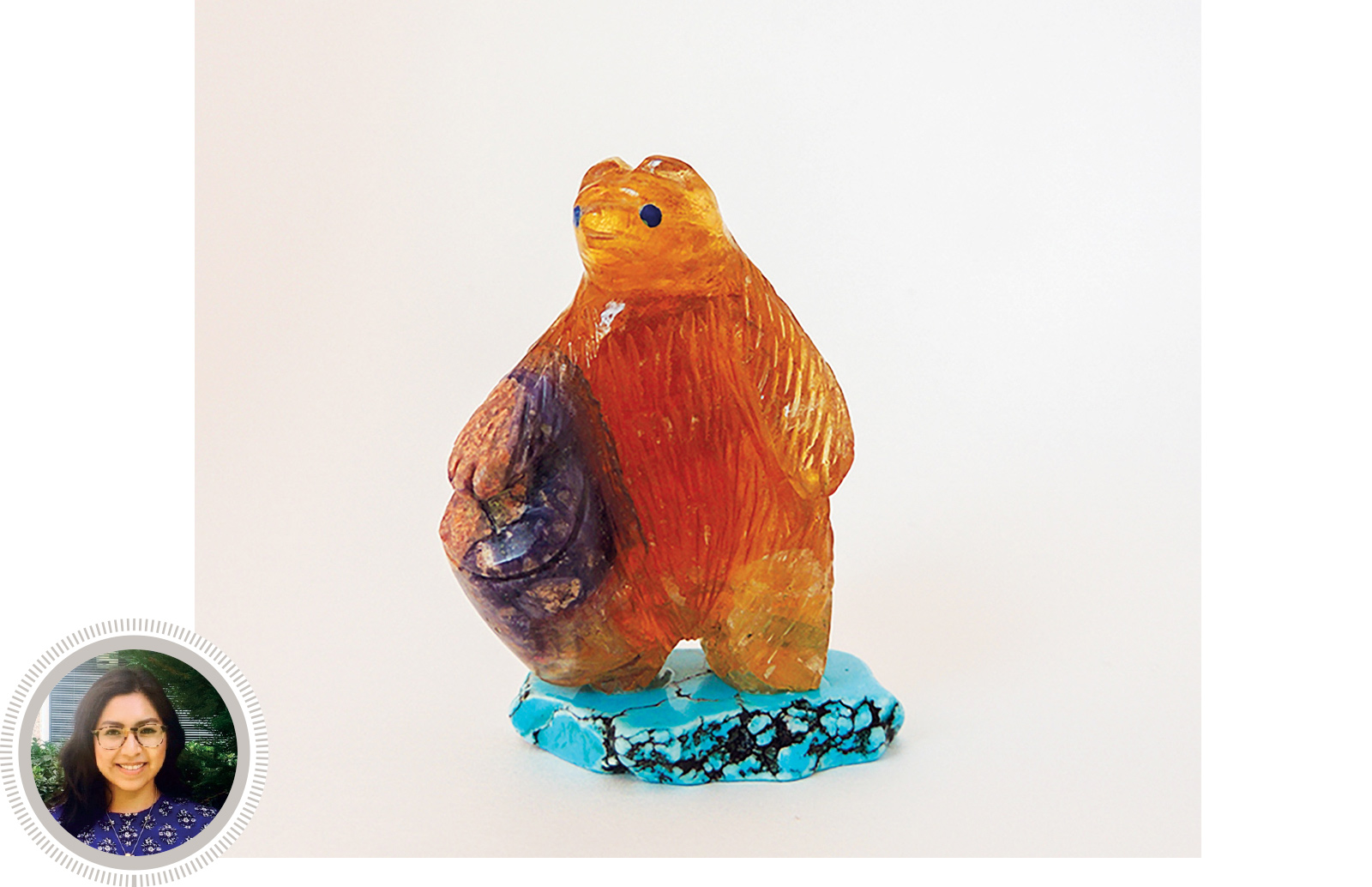
Talia Quandelacy (Zuni/Laguna/Choctaw)
Booth #H-46
Self-taught artist Talia Quandelacy is a sculptor and fetish carver who combines traditional Zuni styles with modern approaches to create unique animals and maidens. “I’m inspired by the designs I learned from my mother, Faye Quandelacy, and grandmother Ellen Quandelacy, but also by my own travels and experiences. I love carving traditional corn maidens but also love creating animals that you don’t usually see,” she says.
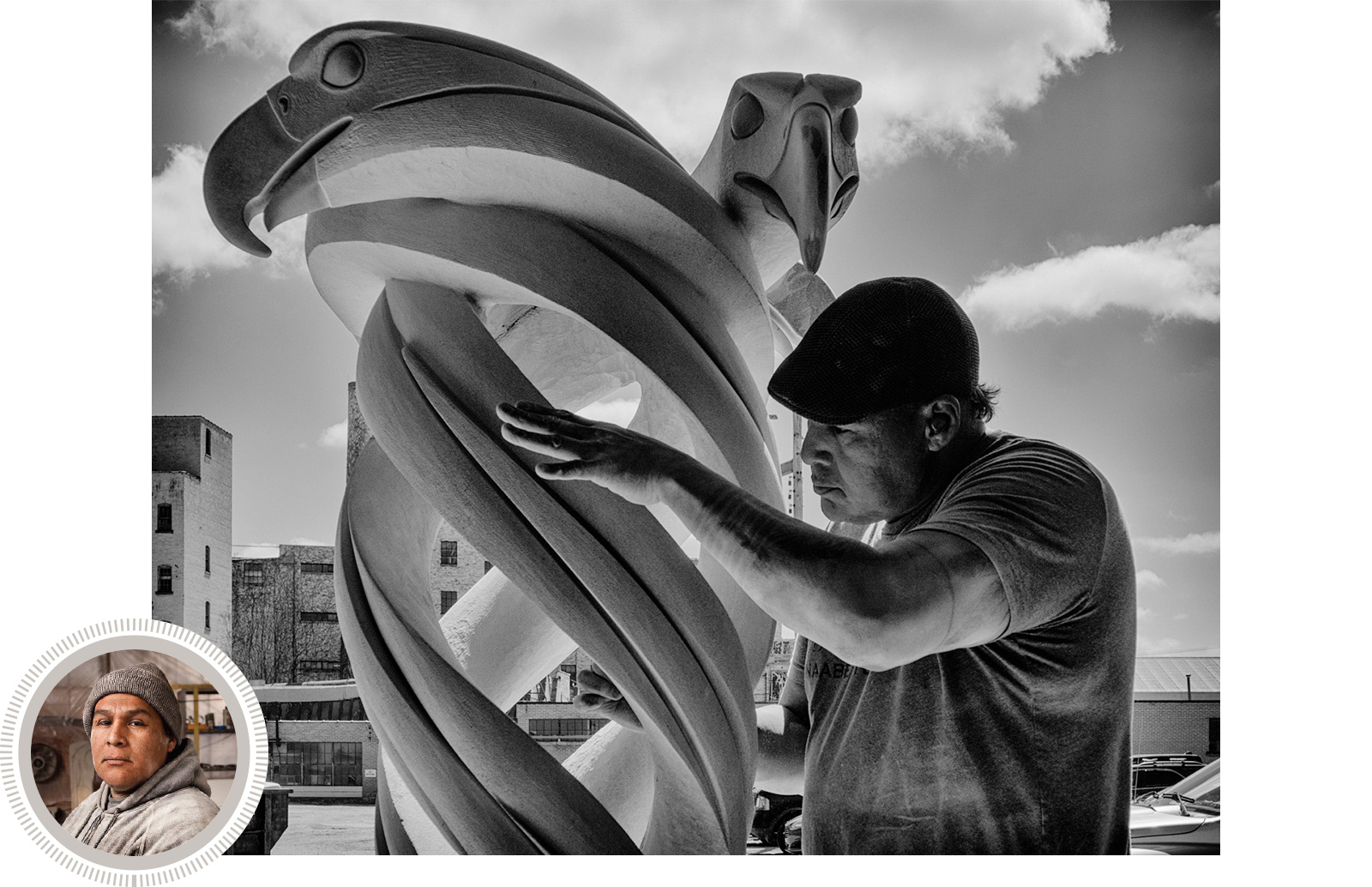 Portrait photo credit: Brian Kelly. Photo credit: Eric BouwensJason Quigno (Anishinaabe)
Booth #D-29
Born in 1975 in Alma, Michigan, Anishinaabe artist Jason Quigno works in a wide variety of stone, constantly evolving his art form and pushing the boundaries of what is possible in his sculpture. Quigno sculpts his materials into beautifuland modern, animals, abstract shapes and more, often creating forms that are just as tall (or taller) than a person.
Weavings & Textiles
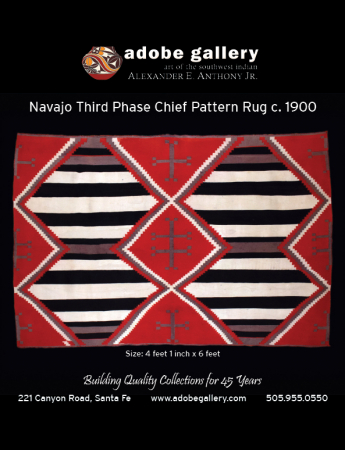
Weaving is a nearly 2,000-year-old skill passed through down each generation of Indigenous weaver, perhaps most visibly in the Southwest. For many centuries Ancestral Puebloan men grew cotton that was spun into thread and woven into fabric on upright looms. They would weave blankets and fabric for everyday clothing, ceremonial dress, saddle blankets and other utilitarian purposes. Today, many look to the Navajo or Diné for their unparalleled weaving and textile skills and designs. Typical Navajo textiles have strong geometric patterns and incorporate culturally significant motifs like Spider Woman, the mythological teacher of weaving; the four sacred mountains; spirit lines; and lightning, symbolizing strength and power, illustrating the spectrum of possibilities within this culturally and spiritually rich medium.
Artists to Look For
Alisa Peacock (Navajo (Diné))
Michael Teller Ornelas (Navajo (Diné))
Charlene Laughing (Navajo (Diné))
Jason Harvey (Navajo (Diné))
Tyrrell Tapaha (Navajo (Diné))
Vivian Descheny (Navajo (Diné))
Jeanette Clah (Navajo (Diné))
Louise Y. Nez (Navajo (Diné))
HOW IT'S MADE
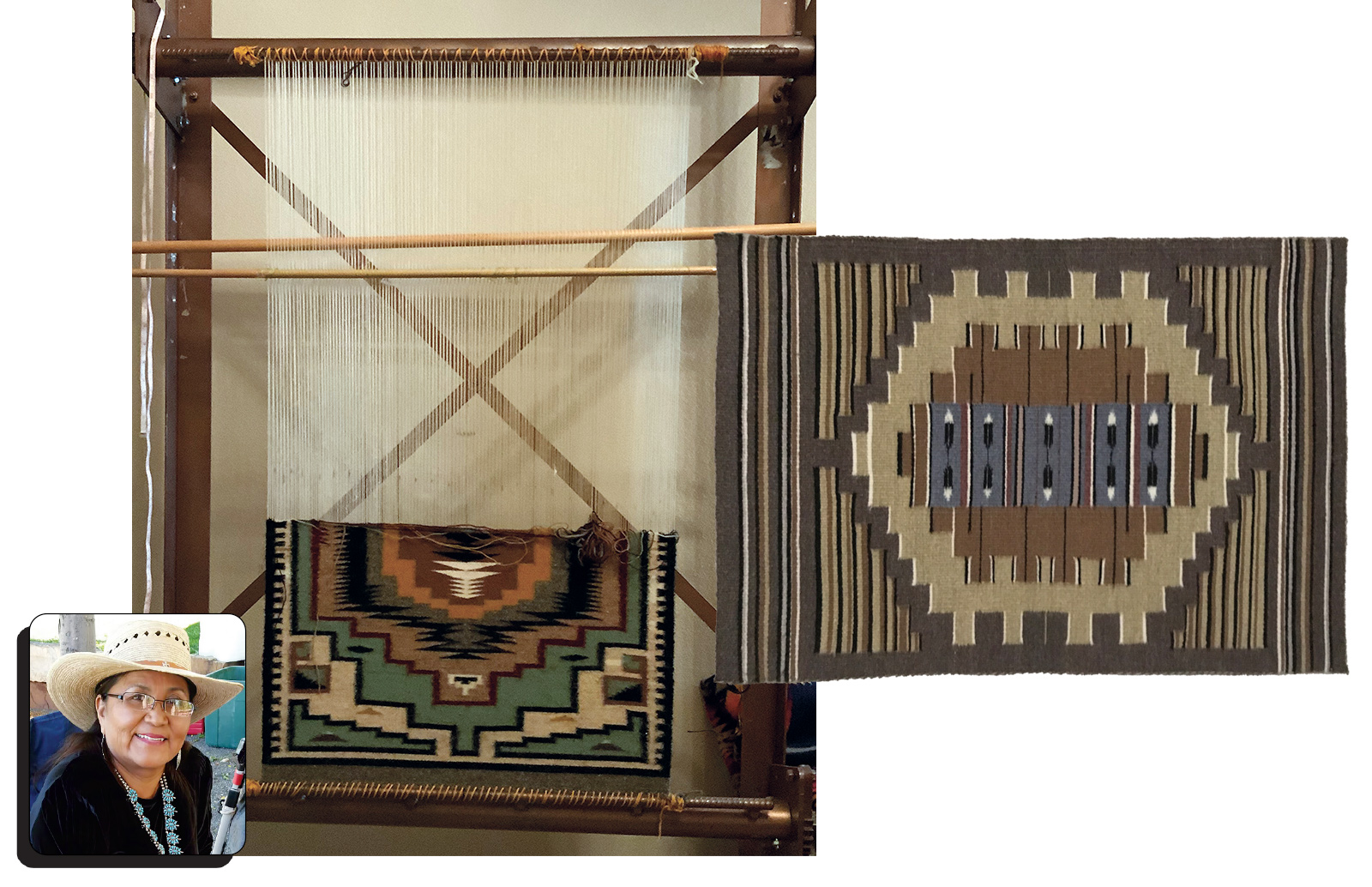
Rosie Taylor (Diné)
Booth #H-11
A fifth-generation weaver who learned the skill from her mother when she was 8 years old, Rosie Taylor has woven countless rugs and developed a style all her own. She works with an assortment of wool varieties, including merino, charro and other sheep wool. She hand-cards (the process of separating and straightening the fibers using bristled wooden paddles), hand-spins, and hand-dyes the wool with herbal plants. After setting up the warp to the appropriate size and placing it on the metal frame,
“I simply separate which colored wool I plan to use and what kind of design I will weave,” she says. “I sing and pray for my weaving and talk to my rug when finished. It’s like a child…when it sells you don’t know when you will cross paths again in life. [I like to think that] my artwork is in a good home.”
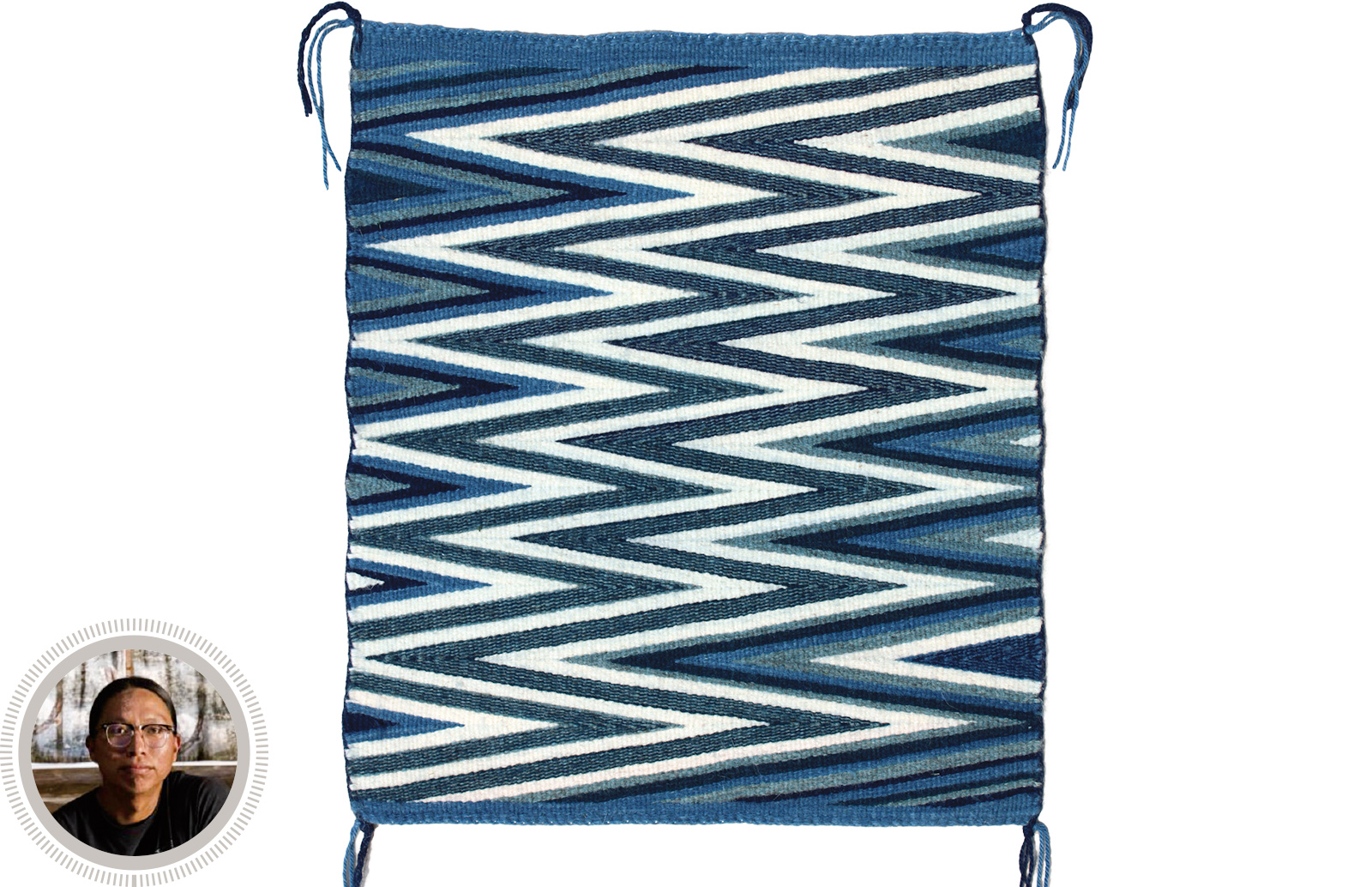
Kevin Aspaas (Navajo (Diné))
Kevin Aspaas utilizes the traditional Diné sheep-to-loom weaving process and specializes in the wedge-weave, or pulled warp, “Once I see the colors of the wool after the dyeing process, I begin to ‘see’ what I am going to weave,” he says.
“The creativity of Navajo weavers throughout our history has been about adaptation. That alone encourages me to think outside the box and bring to life what isn’t thought of as the norm of Navajo weaving."
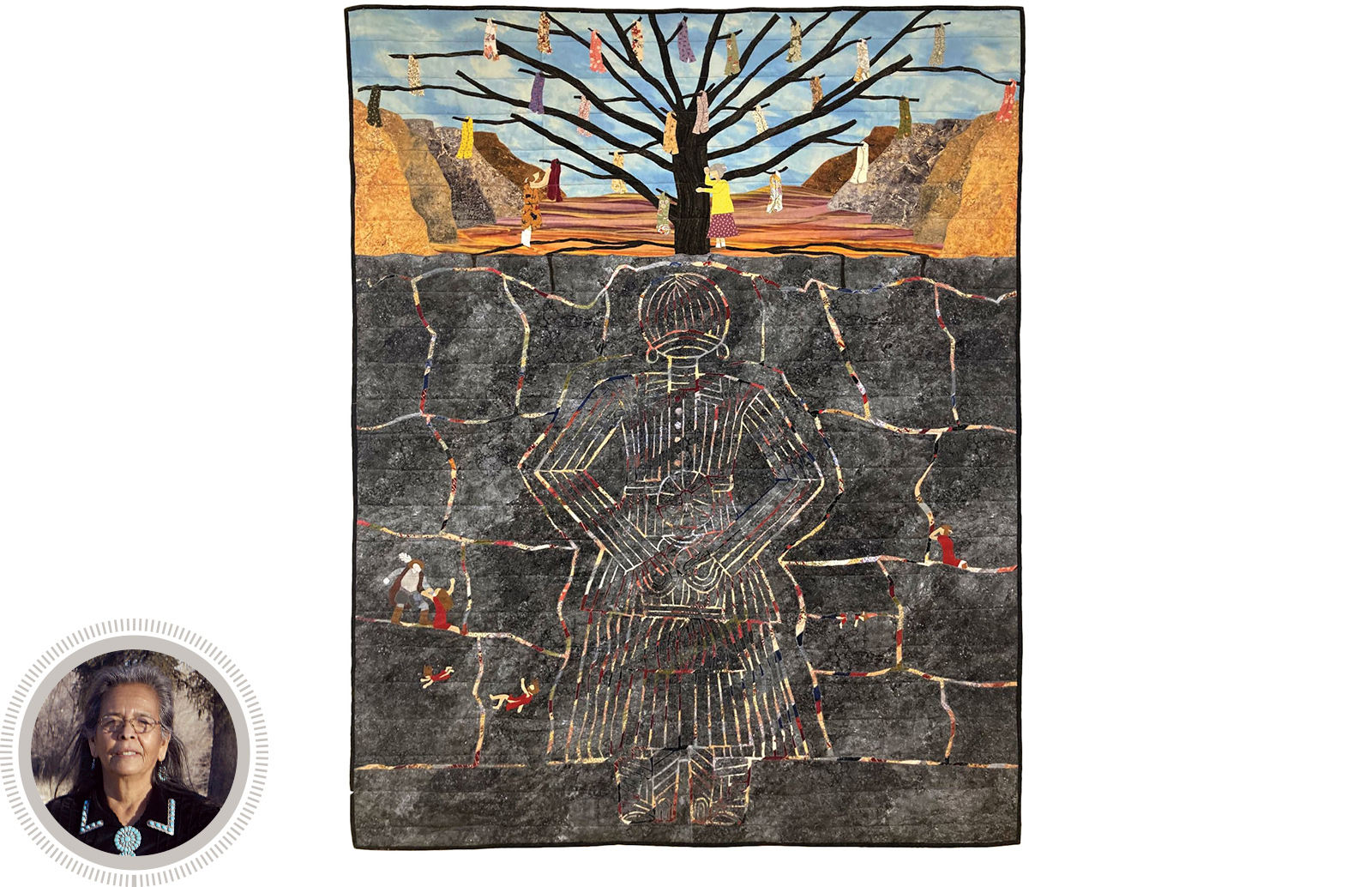
Susan Hudson (Navajo (Diné))
Booth #J-12
Even with 55 years of experience, it still takes Susan Hudson 18 months to make a single show quilt. “Nothing in this world can replace my original sewing machine—my hands," she says. “From the very first dream that I have been blessed with, to sewing it into reality, to the very last stitch, I am able convey the emotional impact that the quilt had on me. To ensure that our ancestors’ stories are
never forgotten."
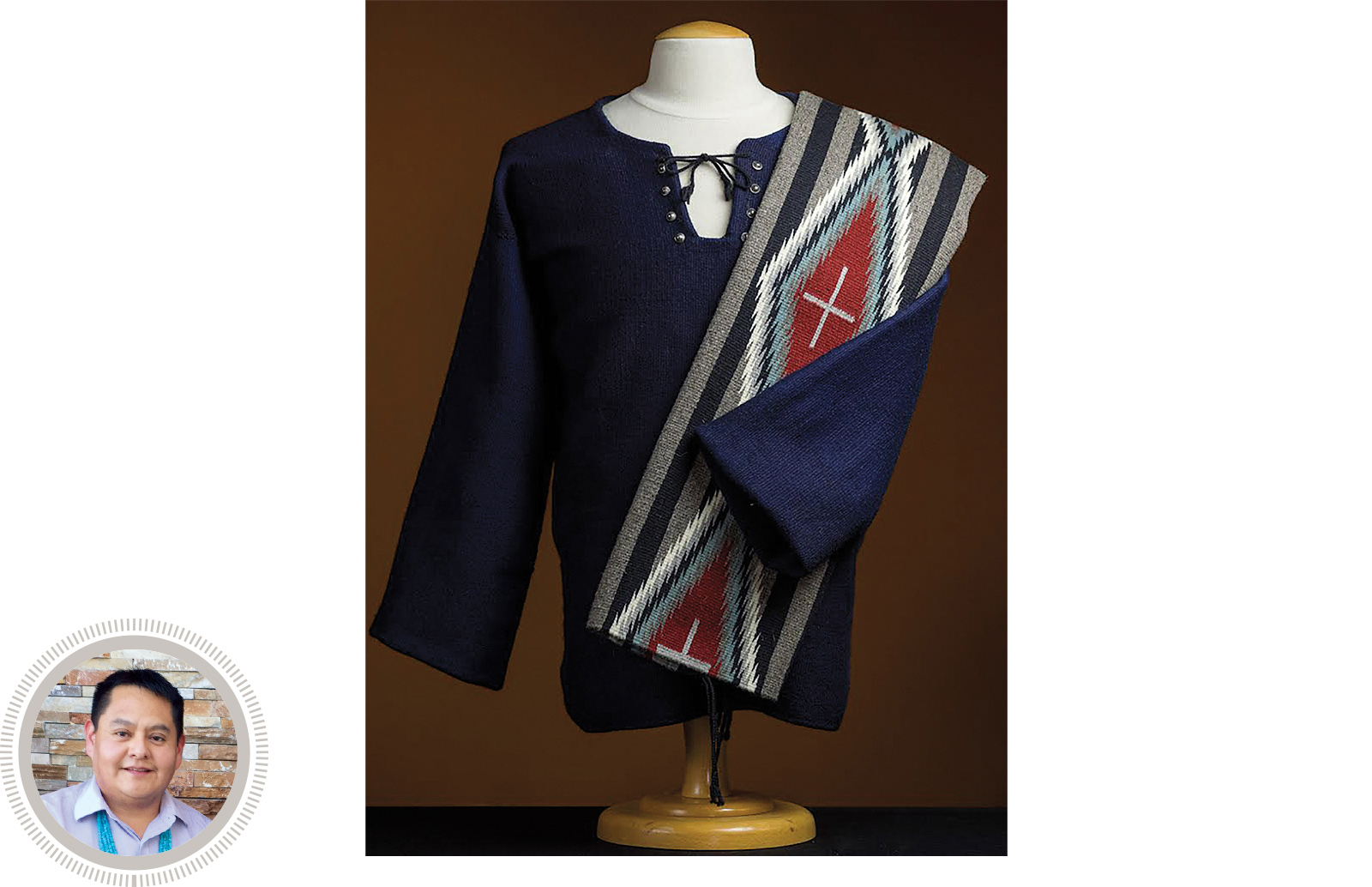
Gerard Begay (Navajo (Diné))
Booth #C-05
Originally from Indian Wells, Arizona, Gerard Begay’s two grandmothers introduced him to weaving as a young boy. He enjoys weaving most traditional rug patterns, blankets, twill saddle blankets, rug dresses and contemporary designs. Begay sees weaving as a therapeutic tool to overcome our day-to-day challenges and carry on an art that nearly vanished from his immediate family. Most importantly, Begay, whose motto is “sharing a legacy of beauty and harmony,” is honored to bring life back to his grandmother’s weaving tools and carry on the tradition.
Diverse Arts
Simply put, and as its name suggests, “diverse arts” encapsulates any object that does not neatly fall within the other more clearly delineated categories featured in the market. For instance, while “personal attire” may incorporate traditional beadwork and weaving, neither term aptly describes the art form. The same is true of many other objects under this broad classification, like Native American totems, dolls and figurative pieces. Unlimited in terms of styles, materials and techniques, it refers to functional, decorative and ritualistic items. This includes weapons, cradleboards, vessels, musical instruments and ornamental pieces, as well as pieces that more specifically honor cultural tradition, like medicine bags, pipes, hide paintings, parfleche items, tabletas, masks and sandpaintings. Eclectic by nature, its very broadness is what makes this category one of the most exciting at the market.
Artists to Look For
Joe Cajero Sr. (Pueblo of Jemez)
Lauren Good Day (Arikara/Hidatsa)
Dallin Maybee (Arapaho/Seneca)
Kevin Pourier (Oglala Sioux Tribe)
Lisa Chavez-Thomas (Isleta Pueblo)
Ryan Gashweseoma (Hopi)
Aydrian Day (Hochunk/Ojibwe/ Odawa/Potawatomi/Lakota)
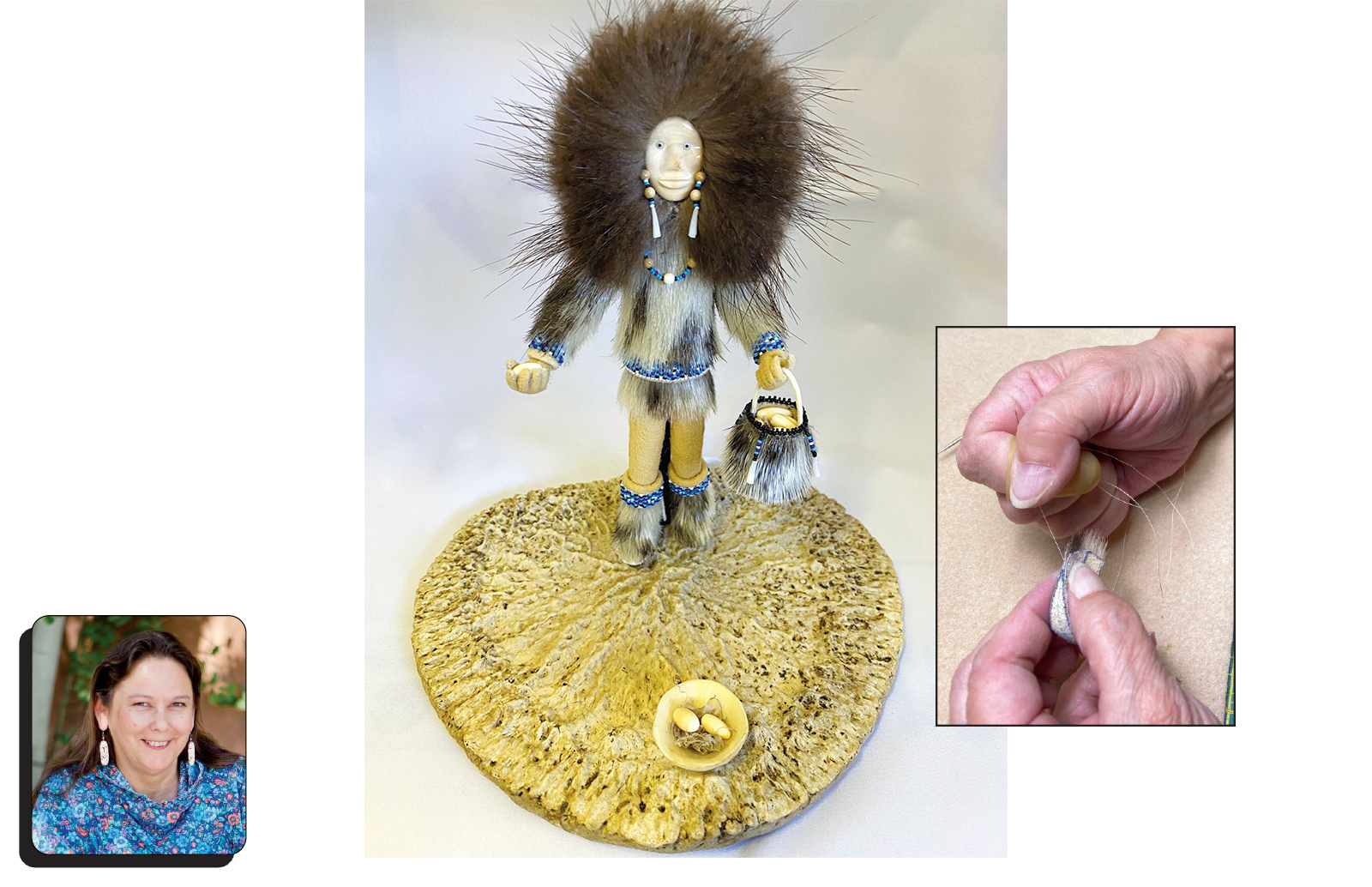 HOW IT'S MADE
Glenda McKay (Ingalik/Athabascan)
Booth #C-04
Glenda McKay was taught to survive off the land at a very young age. She uses only the finest, ethically sourced materials for her traditional creations. The doll featured here incorporates hand-carved fossilized walrus ivory for the face and eggs, whale baleen inlays and shavings, mammoth ivory beads, seal skin, brain-tanned smoked deer skin, dentalium shells, glass beads, fossilized fish and whale vertebra.
“I learned many things from my mother, grandmother and aunts (Ingalik-Athabascan,Yupik and Inupiat-Eskimo),” she says. “They wanted us to survive off the land and to never forget our culture. My artwork portrays traditional and historical items, stories, events of my culture and people I’ve met. They depict actual ceremonies, lives, culture and history. All my dolls tell a story of my culture or from stories told to me. This way our culture never dies.”
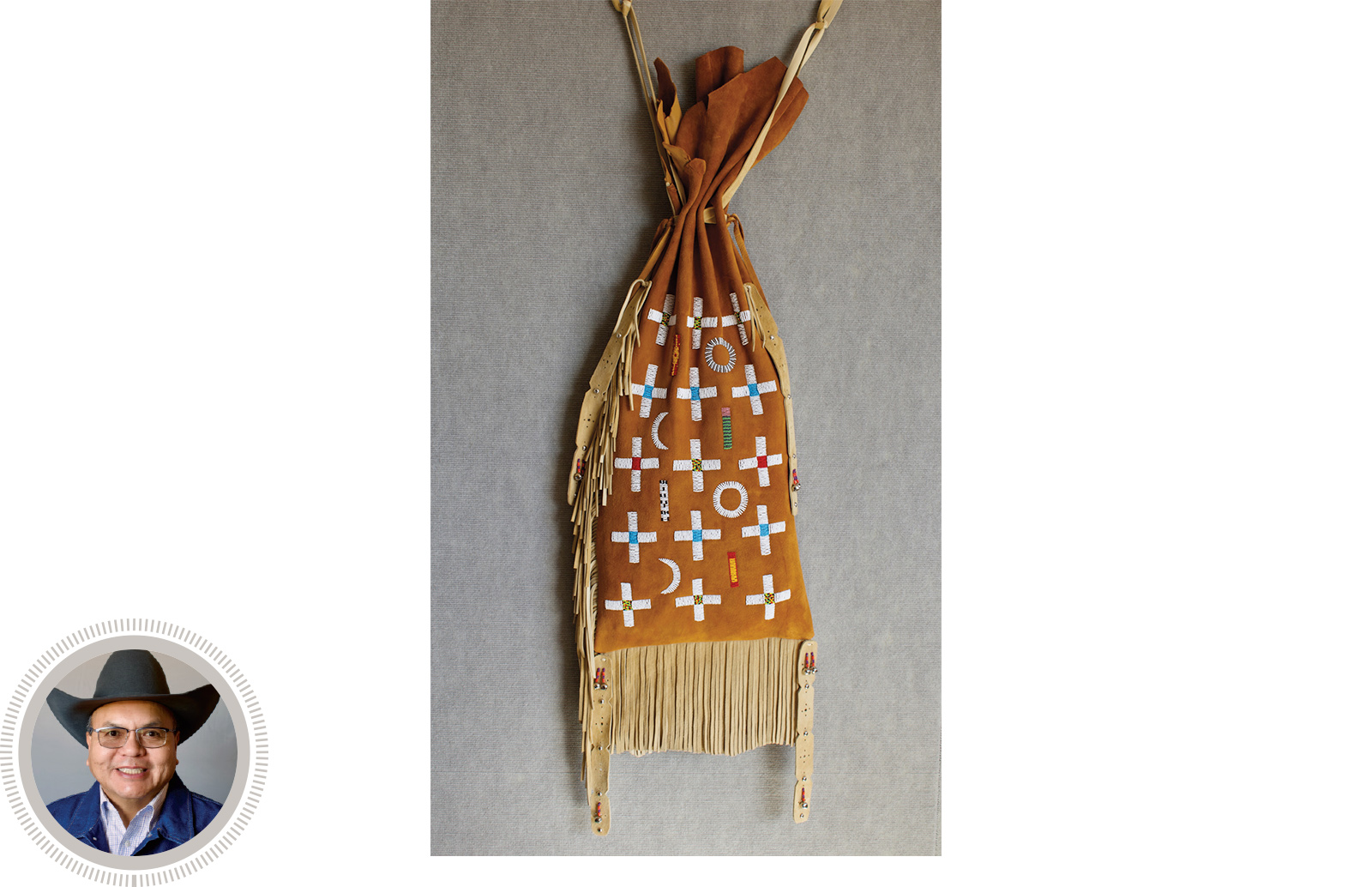
Leslie Bitsie (Navajo)
Booth #M-02
Leslie Bitsie Jr. works with a carefully curated assortment of glass, metal and crystal seed beads and organic materials which he hand-embroiders onto natural and synthetic foundations. “I bead to help bring beauty into the world,” says Bitsie. “In Navajo, we have a philosophy: ‘learn to know how to live, to know how to do, and to make.’ I hope this teaching radiates throughout my beaded art.”
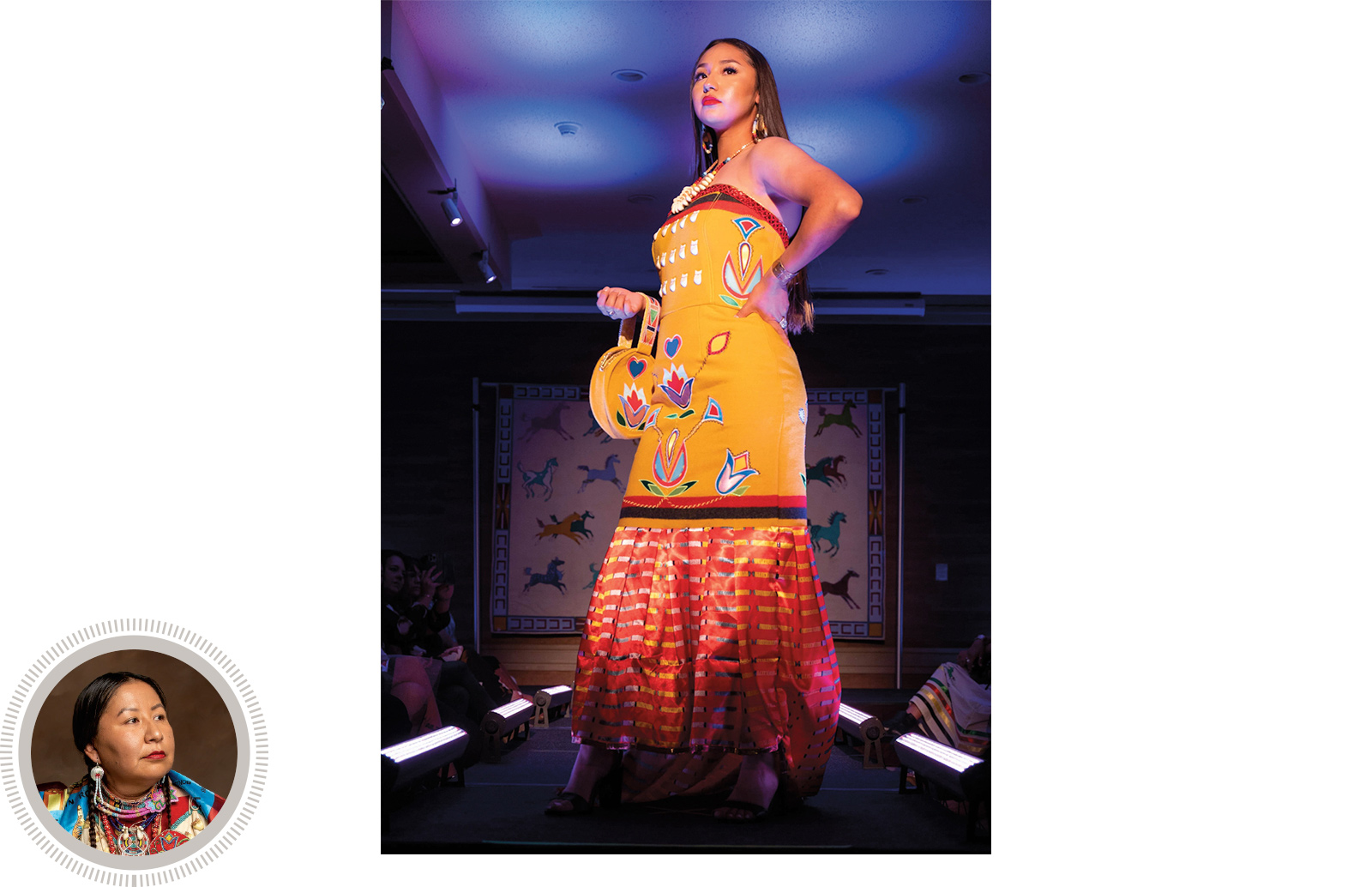
Della Big Hair-Stump (Apsáalooke/Crow)
Growing up, Della Big Hair-Stump watched her elders sit around the table beading, sewing, doing feather work, and drawing out Crow designs. She thus figured how to combine the traditional and modern worlds into wearable fashion. “I always wanted to wear and express who I am and where I come from,” she says. “Our cultural tribal designs, colors and beadwork are amazingly beautiful and one of a kind. That is why all my gowns and attire are one of a kind. No two are the same—similar but never the same.”
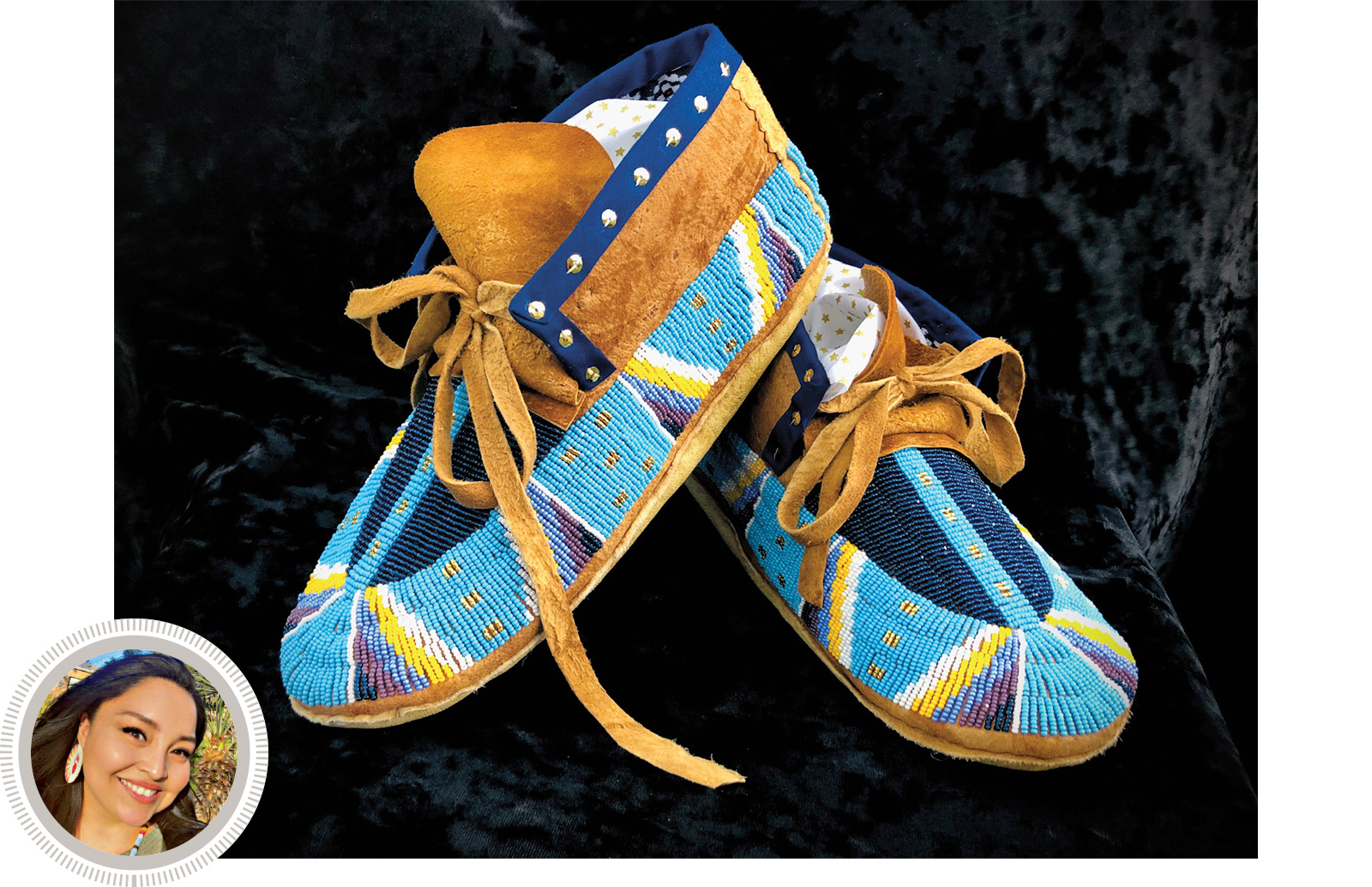
Alexa Rae Day (Anishinaabe/Hochunk/Lakota)
Booth #D-20
Alexa Rae Day creates intricate wearable designs that range from jewelry and accessories to footwear and more. “My work is focused on the revitalization of our Indigenous lifeways,” she says. “In my art, I look to our ancestors to show that we are still here. I strive to couple our teachings and techniques from the past with new methods of learning of dominant society to strengthen our Indigenous lifeways."
Basketry
The best baskets are stunning examples of precision, design and, most of all, patience. Baskets require a meticulous focus and not just at the creation stage, but also in the material-gathering stage, during which, reeds, bark, grasses and other materials are harvested, flattened and prepared for use. As the basket form starts to take shape, patterns require exact counts and precise design, and constant repetition from the artists must be maintained. It can be an exhausting endeavor, but it’s why baskets are so cherished by museums and collectors around the world.
Artists to Look For
Iva Honyestewa (Hopi/Navajo)
Darlene James (Kashia Band of Pomo Indians)
Kathryn Kooyahoema (Hopi)
Alicia Nelson (Navajo (Diné))
Alberta Selina (Hopi)
Leona Romero (Tohono O’odham)
Theresa Secord (Penobscot Nation)
Sally Black (Navajo (Diné))
Marvene Dawahoya (Tewa/Hopi)
Don Johnston (Aleut)
Sarah Sockbeson (Penobscot)
 HOW IT'S MADE
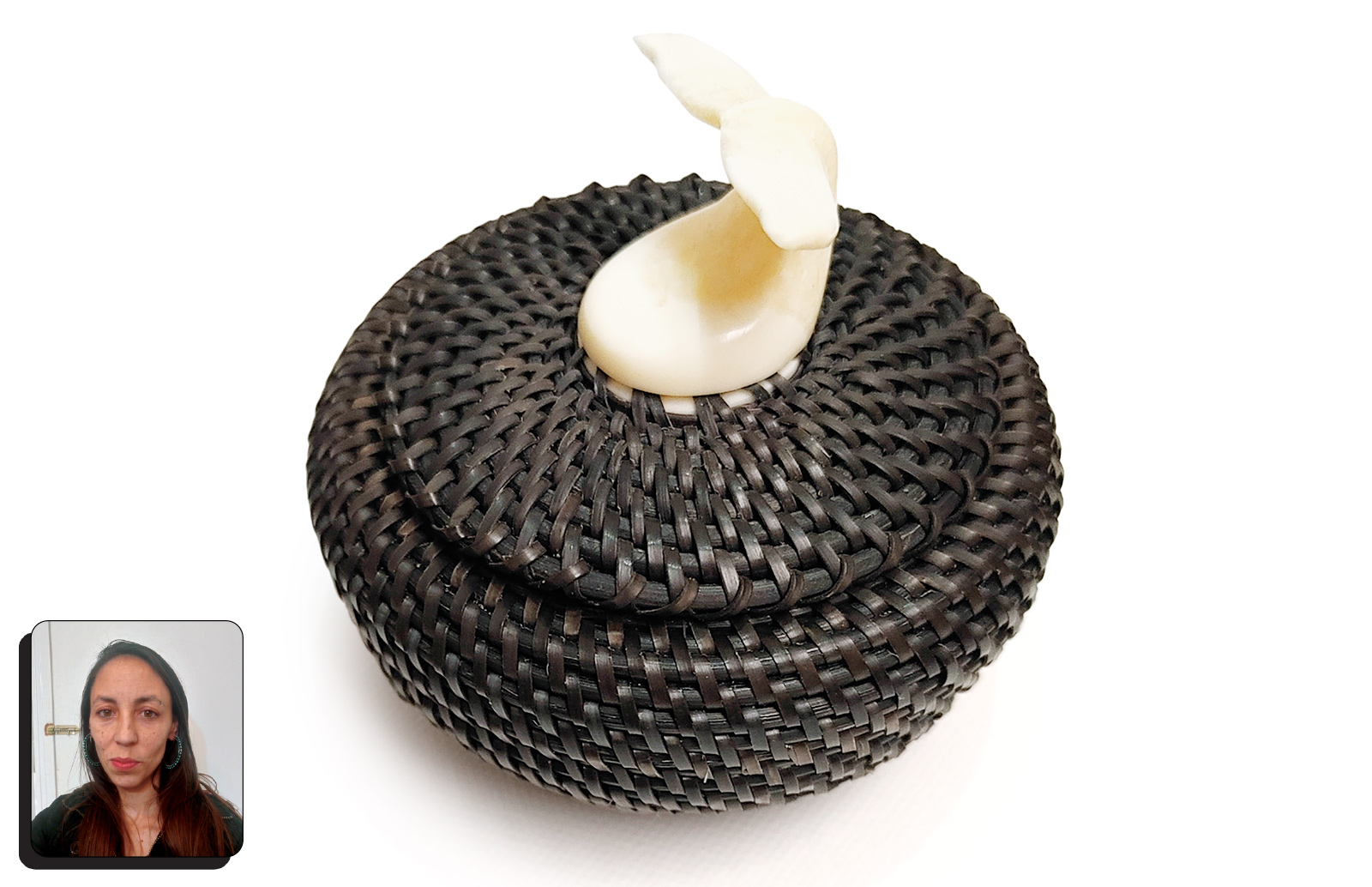
Alma Johnston (Alutiiq)
Booth #I-20
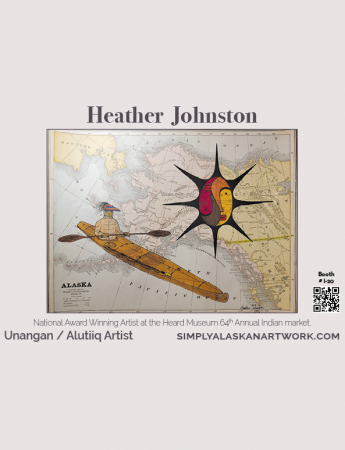
Alaska-based Alutiiq baleen basket weaver Alma Johnston didn’t have to go far to learn her marvelous technique for her baskets. “I make hand-woven baleen baskets with hand-carved walrus ivory finials. I learned this wonderful art form from my father Donald Johnston, who is a master weaver. This will be my first year at the market. I am very honored to be sharing a booth with my father and my sister Heather Johnston,” she says. “I make the baskets by cutting and splitting baleen into long strips. I then hand-shave them into smooth uniform threads. Each thread can take up to an hour to prepare. My baskets are a coil weave design. I hand-carve the walrus ivory finials. I use dozens of tools including a Dremel, my knife and even some I must custom make myself.”
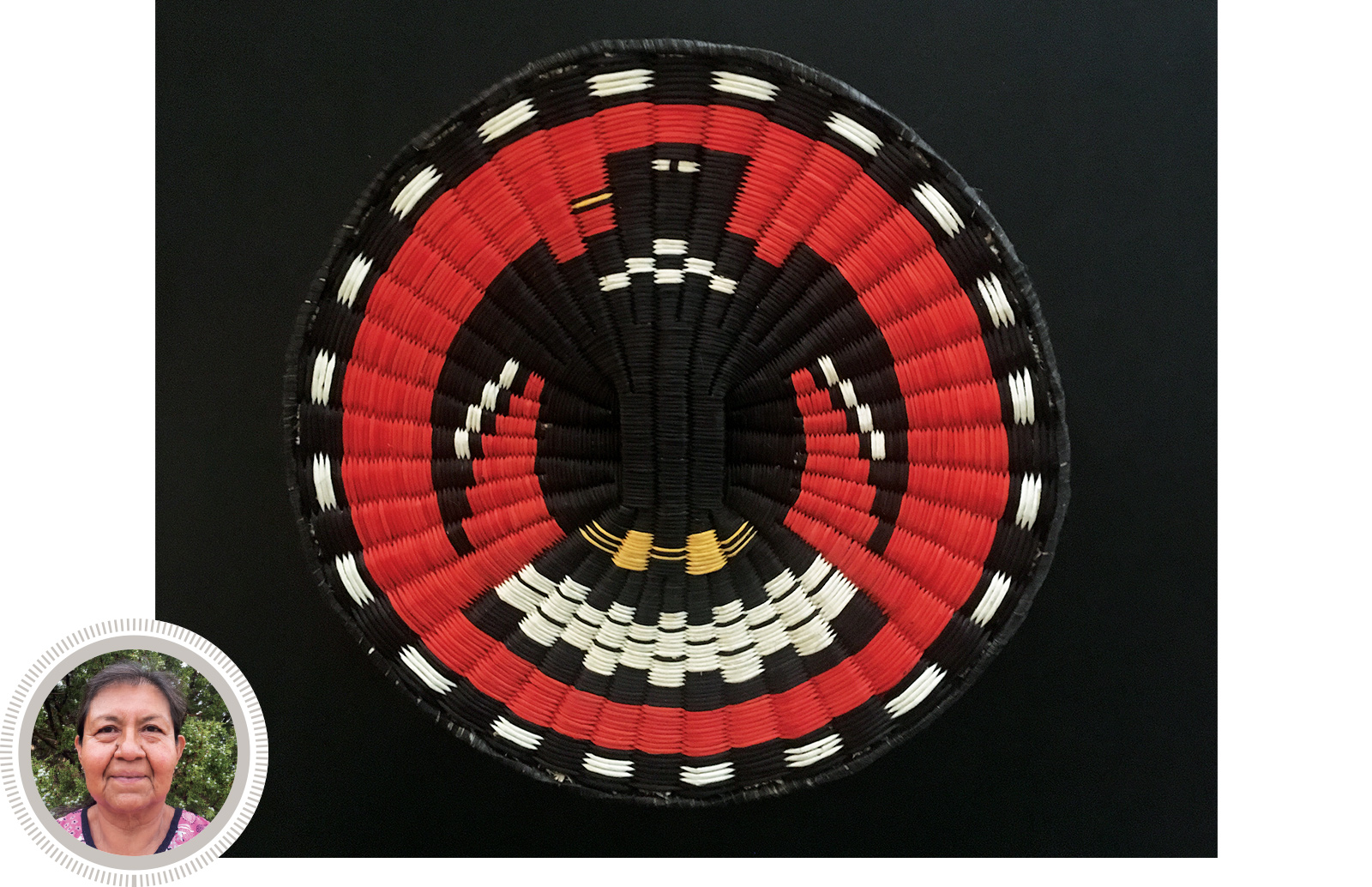
Jessica Lomatewama (Hopi)
Booth #I-10
Jessica Lomatewama has been weaving the Third Mesa-style of basketry for more than 40 years. A friend who made baskets encouraged Jessica to learn to weave and even took her out to the desert to gather materials and prepare them for weaving. Some of her materials include: Sivaapi (rabbit brush plant), the weft or the colored sticks used to weave the design, and Siiwi (dunebroom plant,) used for the warp of the basket.
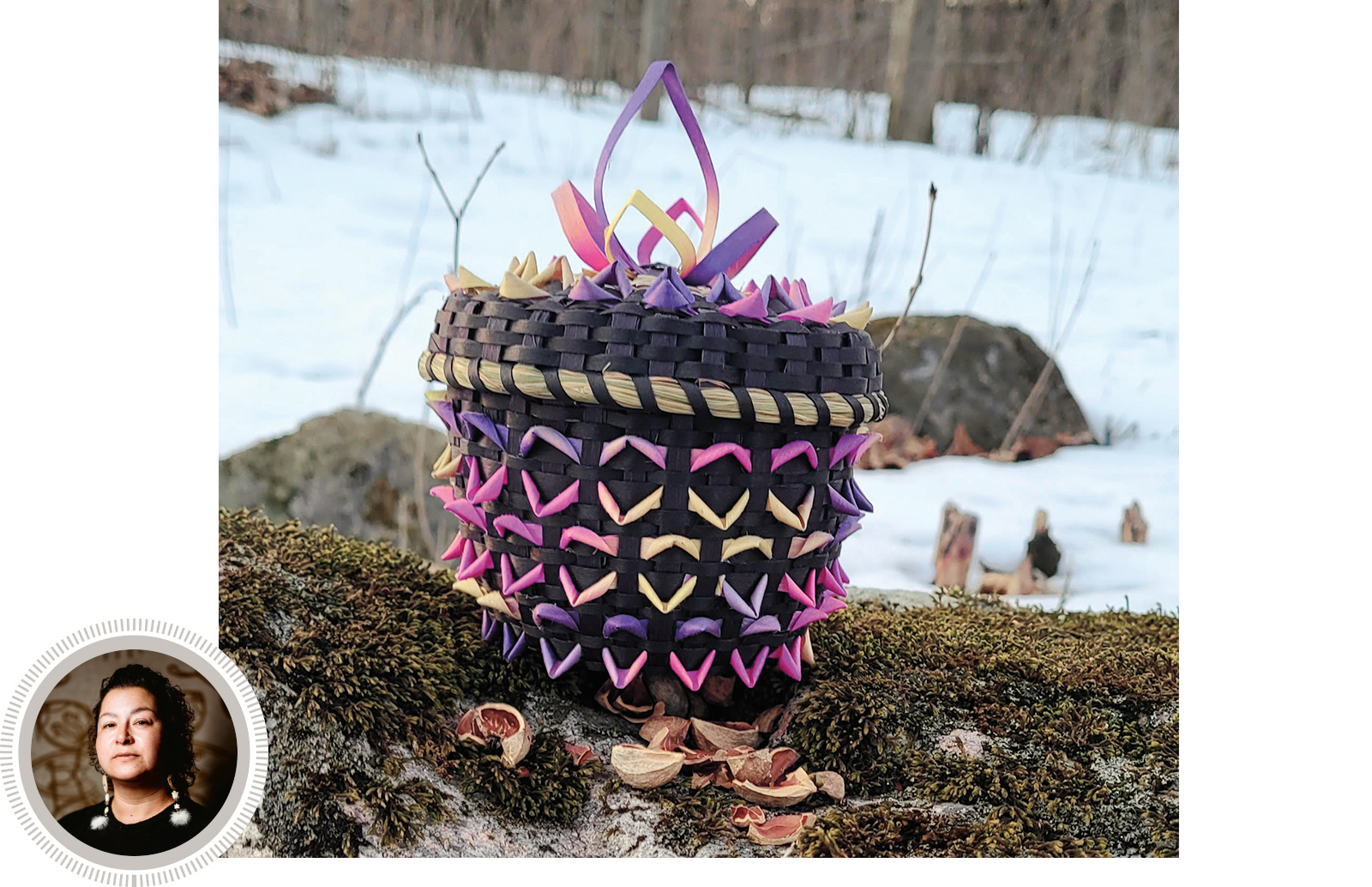
Carrie Hill (St. Regis Mohawk)
Booth #M-05
Basketmaker Carrie Hill works with traditional materials, including hand-split black ash growth rings and hand-picked sweet grass. “It has been in my family for many generations,” Hill says. “My uncle made most of the tools I utilize and my aunt taught me traditional Haudenosaunee weaving techniques…I am inspired by the natural world around me, watercolor paintings, nature and my own creativity. Weaving is one of my biggest passions.”
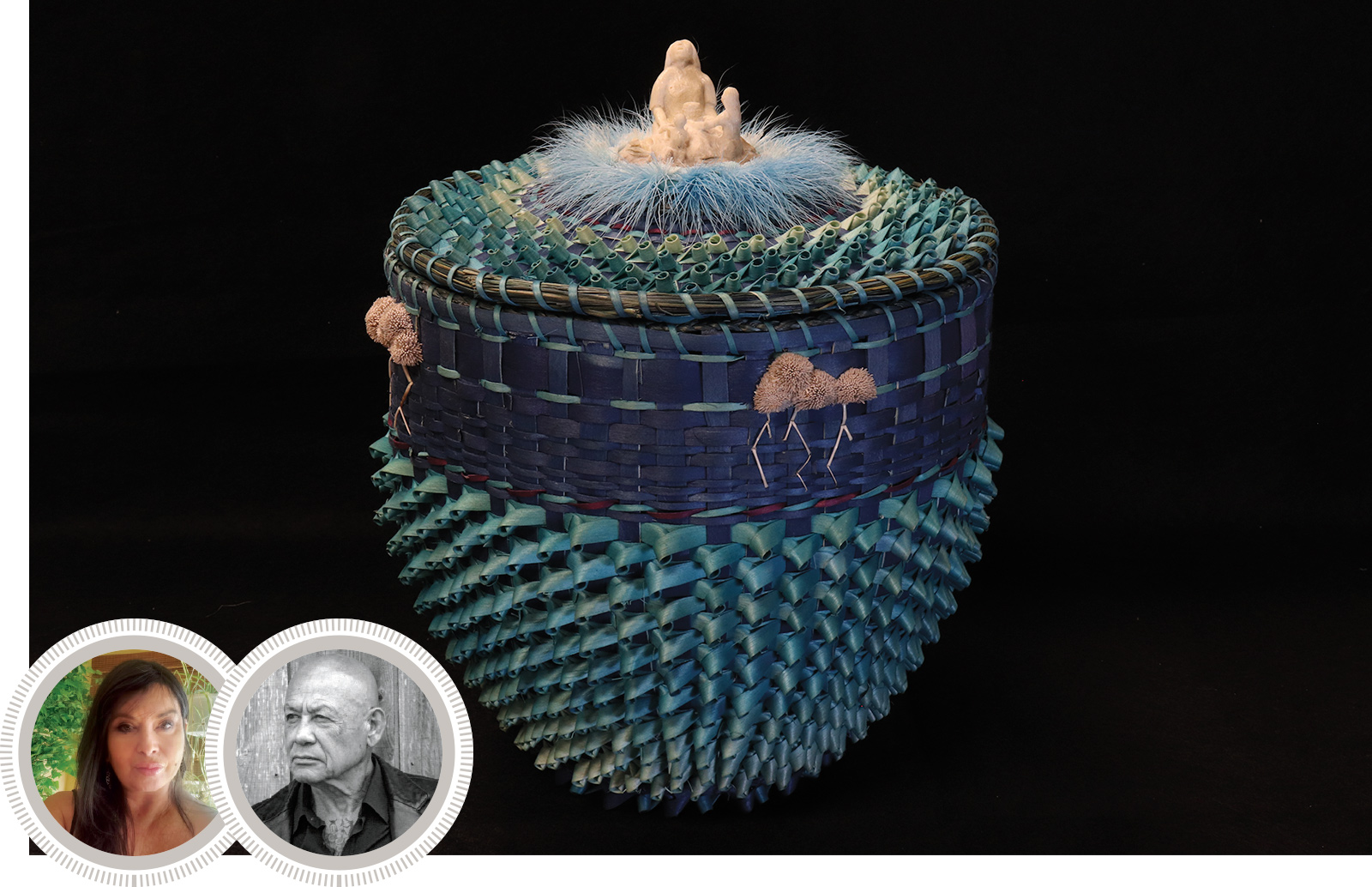
Ronni-Leigh Goeman (Onondaga Nation/Eel Clan) & Stonehorse Goeman (Tonawanda Seneca)
Booth #F-54
Ronni-Leigh and Stonehorse Goeman create artwork together, often incorporating baskets with sculptural work. “We started participating at the Heard over 20 years ago,” Ronni-Leigh says. “It's important to not only show the beauty of black ash baskets but also tell a story of our people. Some baskets tell a story of strength. Other times they tell a story of sorrow. Many of the stories have been passed from generation to generation.”
Powered by Froala Editor