In 2006, the Museum of Indian Arts & Culture in Santa Fe began awarding outstanding Indigenous artists with the designation of “Living Treasure” during the museum’s annual Native Treasures Festival. “These artists, who have left their mark in the field of contemporary Indigenous arts and culture, have achieved excellence in the areas of painting, sculpture, beadwork, pottery and jewelry.” In 2008 the honor was awarded to Connie Tsosie-Gaussoin (Picuris Pueblo/Navajo).
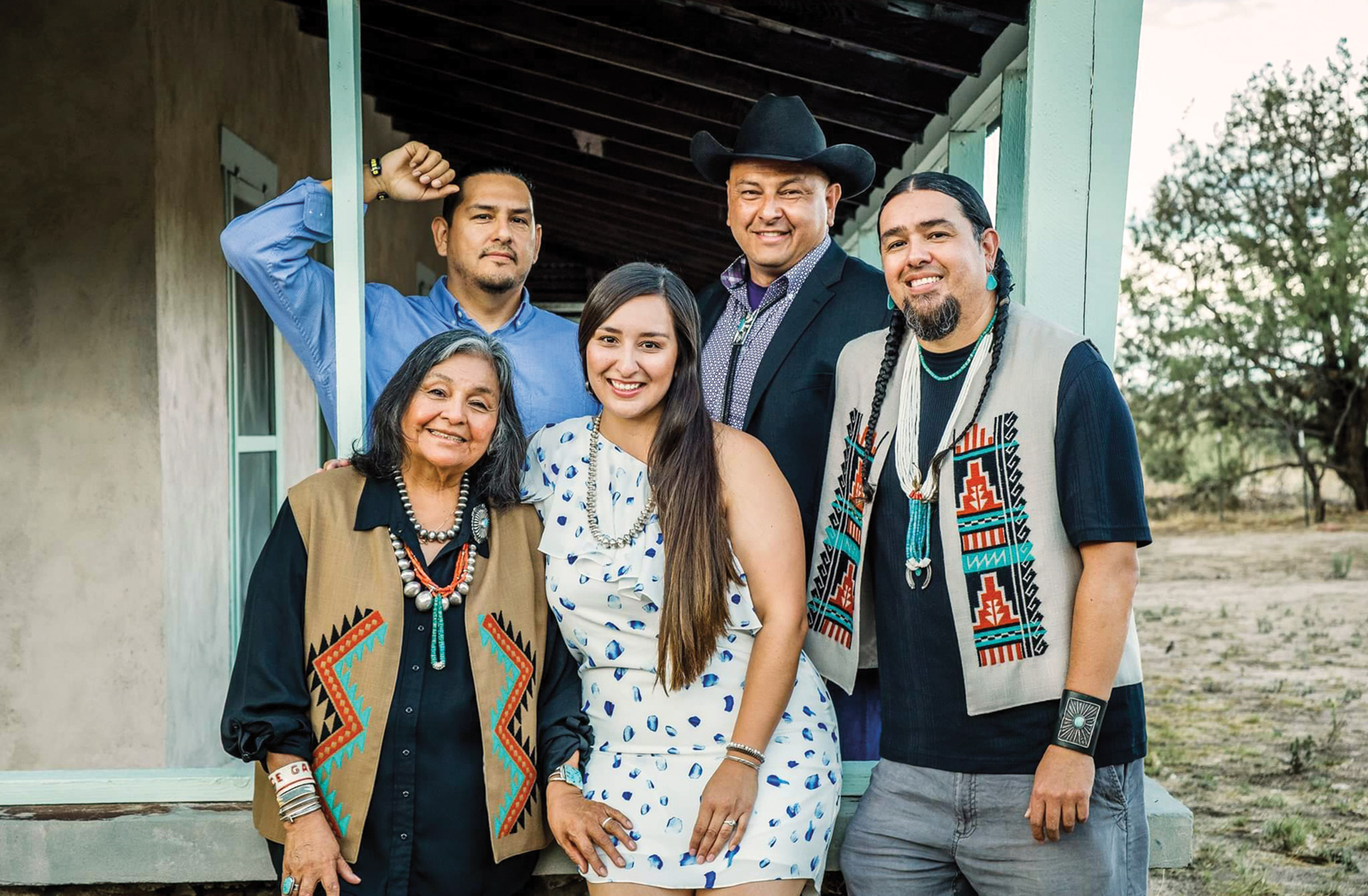 The Gaussoin family, left to right: Connie Tsosie-Gaussoin, Wayne Nez Gaussoin, Tazbah Gaussoin, Jerry Gaussoin Jr. and David Gaussoin. Photograph by C. Miracle Photography, Arizona.
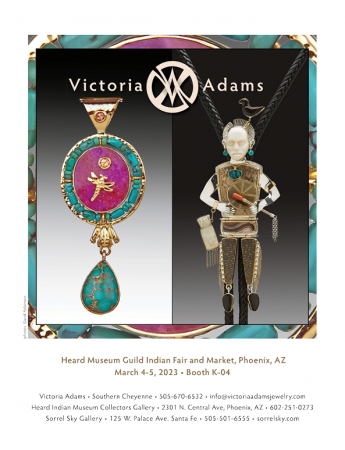
Connie comes from a long line of painters, weavers, silversmiths, sculptors and potters and is the matriarch of a family of creative artists. She and her sons, David, Wayne Nez and Jerry Jr., will be exhibiting at the Heard Museum Guild Indian Fair & Market. Her daughter, Tazbah, designs fashion accessories and is a museum specialist for the Smithsonian’s National Museum of the American Indian.
Her mother, Lydia Tsosie, was an embroiderer and her brother, Robert Dale Tsosie, is a sculptor. She recalls as a young girl being taken with her sister, Judy, out to the Navajo Reservation where they would watch their aunts weave huge Navajo rugs, already having herded the sheep, sheared them, and carded, spun and dyed the wool. She and her sister also learned to herd the sheep on horseback.
On the trips to and from the Navajo Reservation and at home, her father would sing Navajo songs, some of them corn-grinding songs, which Connie thinks may have influenced the corn motifs she incorporates into her jewelry.
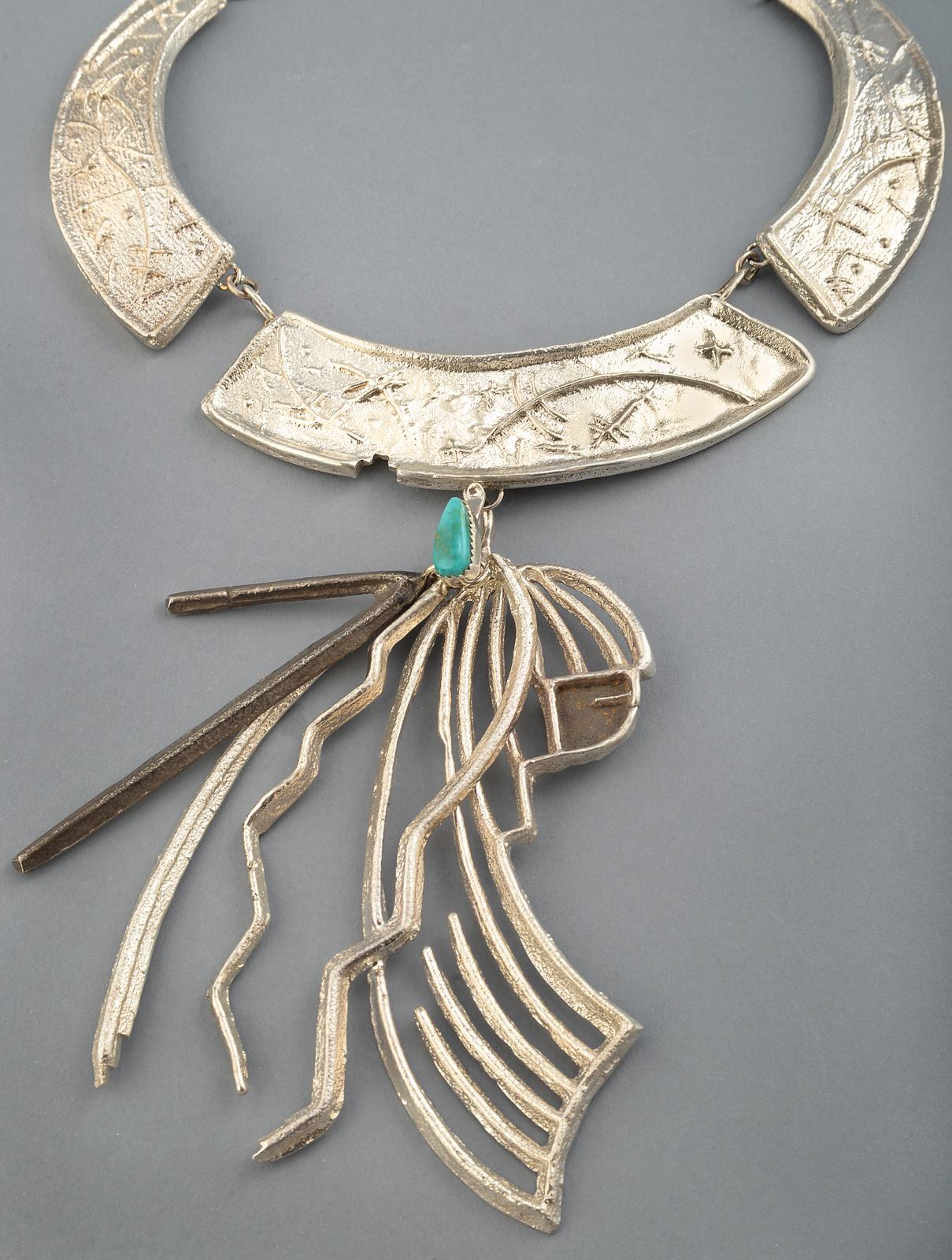 Connie Tsosie-Gaussoin (Picuris/Navajo), Pin,wel Corn Maiden Collar, tufa-cast sterling silver and turquoise, 7½ x 10½”. Private collection. Photograph by Carolyn Wright.
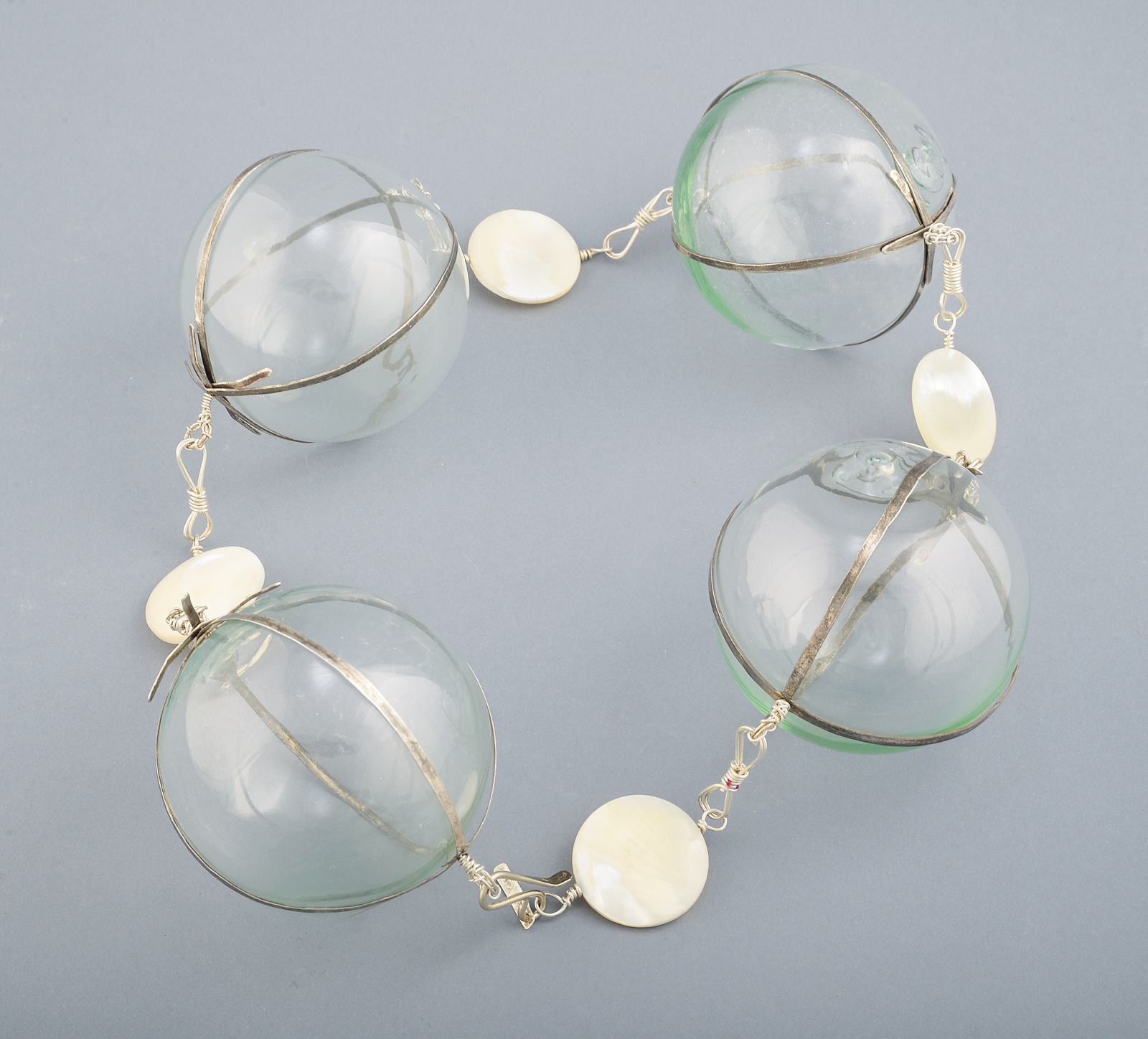 David Gaussoin (Picuris/Navajo), Iceberg Collar, sterling silver, Japanese fishing weights, shell, 3 x 6½ x 10”. Private collection. Photograph by Carolyn Wright.
One of the pleasures of meeting Indigenous artists is to see their respect for traditions—both tribal and familial—and their pushing their art forms into new areas.
David recounts that when the family were all working in the same room, “we would bounce ideas off of each other and get immediate feedback. We always had different music playing. Mom always said, ‘Respect your traditional upbringing but don’t be afraid to create what you want.’ She always made things fun. Even if we made a mistake by burning something up or melting silver completely down, she would say, ‘Make something from your mistake. Use your imagination. Make something of it.’”
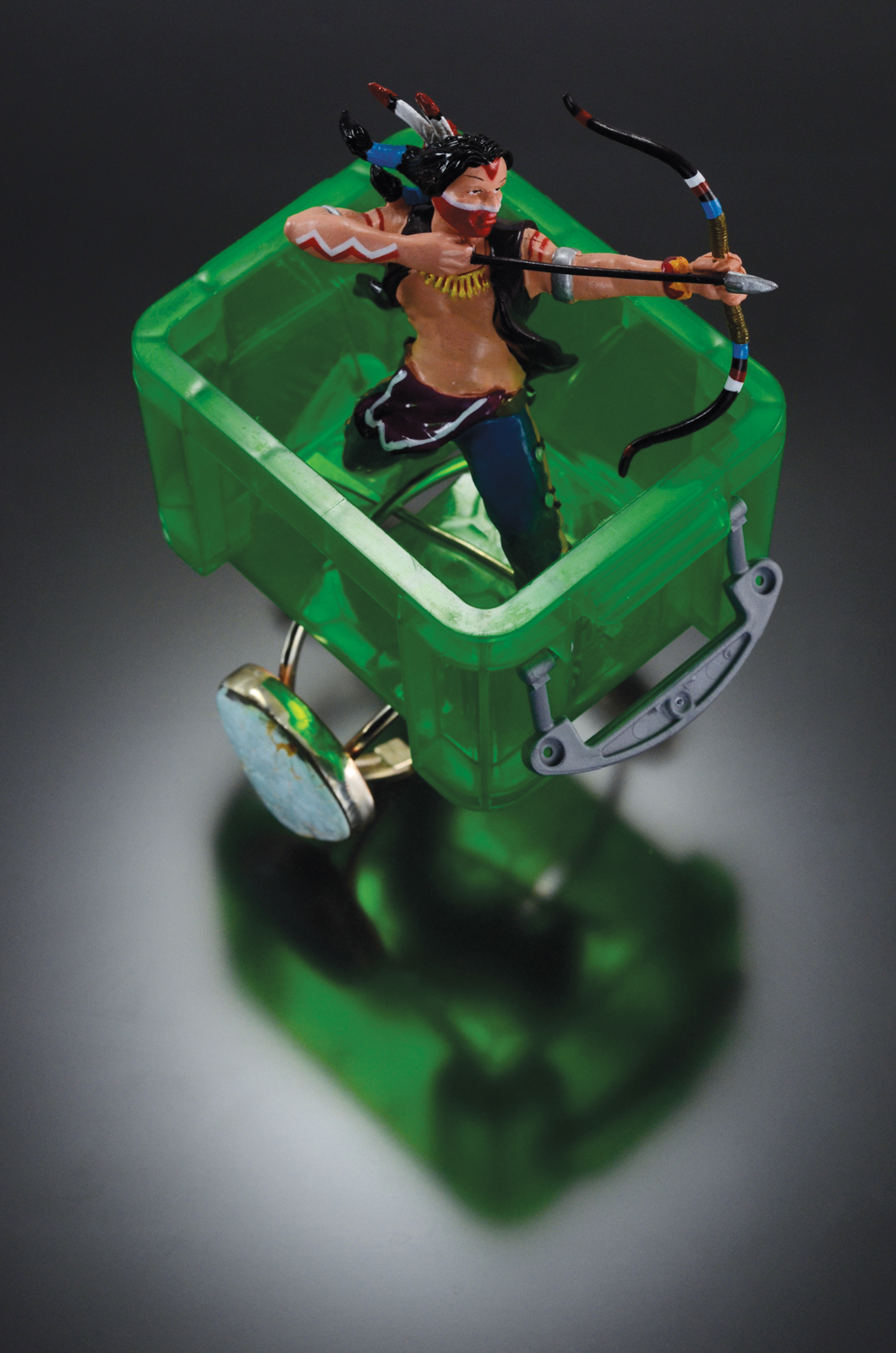 David Gaussoin (Picuris/Navajo), Get Back in Your Box, bracelet, 2011, sterling silver, copper, chalk turquoise and found object
David also recounts how his brothers and sister grew up hearing about her travels which began when she performed around the world with the group Up With People. (An amusing irony is that Connie and I go way back but didn’t know it. When the group performed at what was then C. W. Post College on Long Island in the late 1960s, I was an usher at the performance.)
In her travels, Connie was exposed to the design ideas of different cultures. “The cast would walk around a town,” she says, “and, especially in Scandinavia, I would go into galleries and museums and furniture stores. I was impressed by the simplicity of their jewelry and furniture. It related to the simplicity of the Navajo style.”
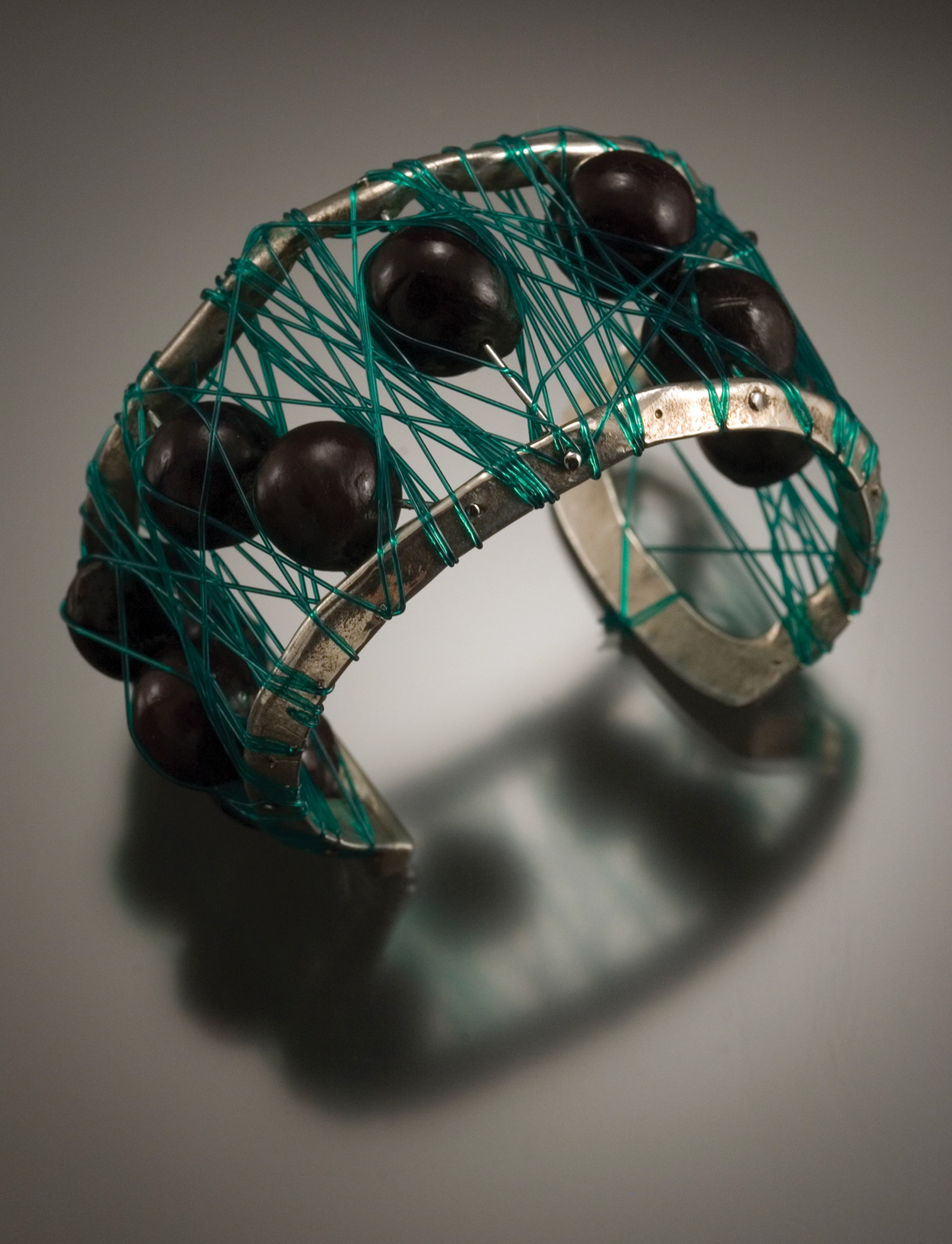 Wayne Nez Gaussoin (Picuris/Navajo), Non GMO, 2016, tufa-cast sterling silver, stainless steel and polyurethane cord. Private collection. Photographer Mark Herndon.
Connie was among the first women to excel in tufa casting, carving designs into limestone and pouring in molten sterling silver. The silver picks up the texture of the carving which she leaves rather than sanding it off. Her Corn Maiden Necklace is a fine example of her work.
David and Wayne have turned to non-traditional forms. David’s bracelet, Get Back in Your Box, is a response to the criticism he received for pushing beyond the traditional. “I tried to fit into a box,” he explains. “But, with age comes confidence. I was done fitting in other people’s boxes. Once I did that and crossed a bridge of no return, the real artist just came out.”
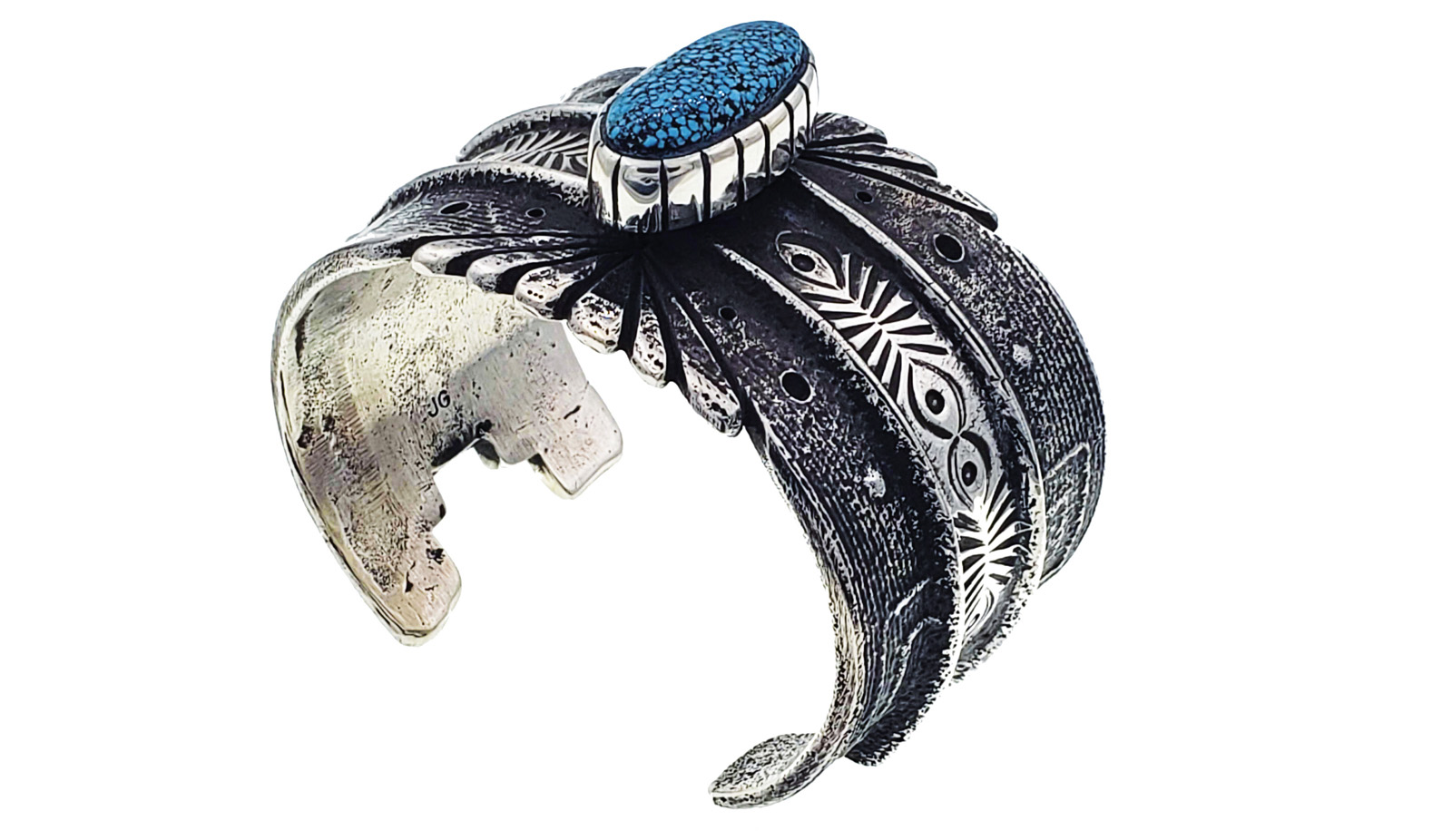 Jerry E. Gaussoin Jr. (Picuris/Navajo), Ancient Ruins, 2020, sterling silver, natural Kingman turquoise, 1½ x 5¾”. Private collection. Photographer Jerry E. Gaussoin Jr.
When he was living in Chicago he bought some Japanese fishing floats he saw in an antique shop. They sat on his desk awaiting a future use. He and his partner were on a trip to Alaska and took a boat trip to see the glaciers up close. “I was struck by the glaciers,” he says. “I was looking at the floats when I got back from Alaska and decided to incorporate them into a collar with silver and shell that I called Iceberg Collar. My collars are statement pieces. It takes a special person to wear them.”
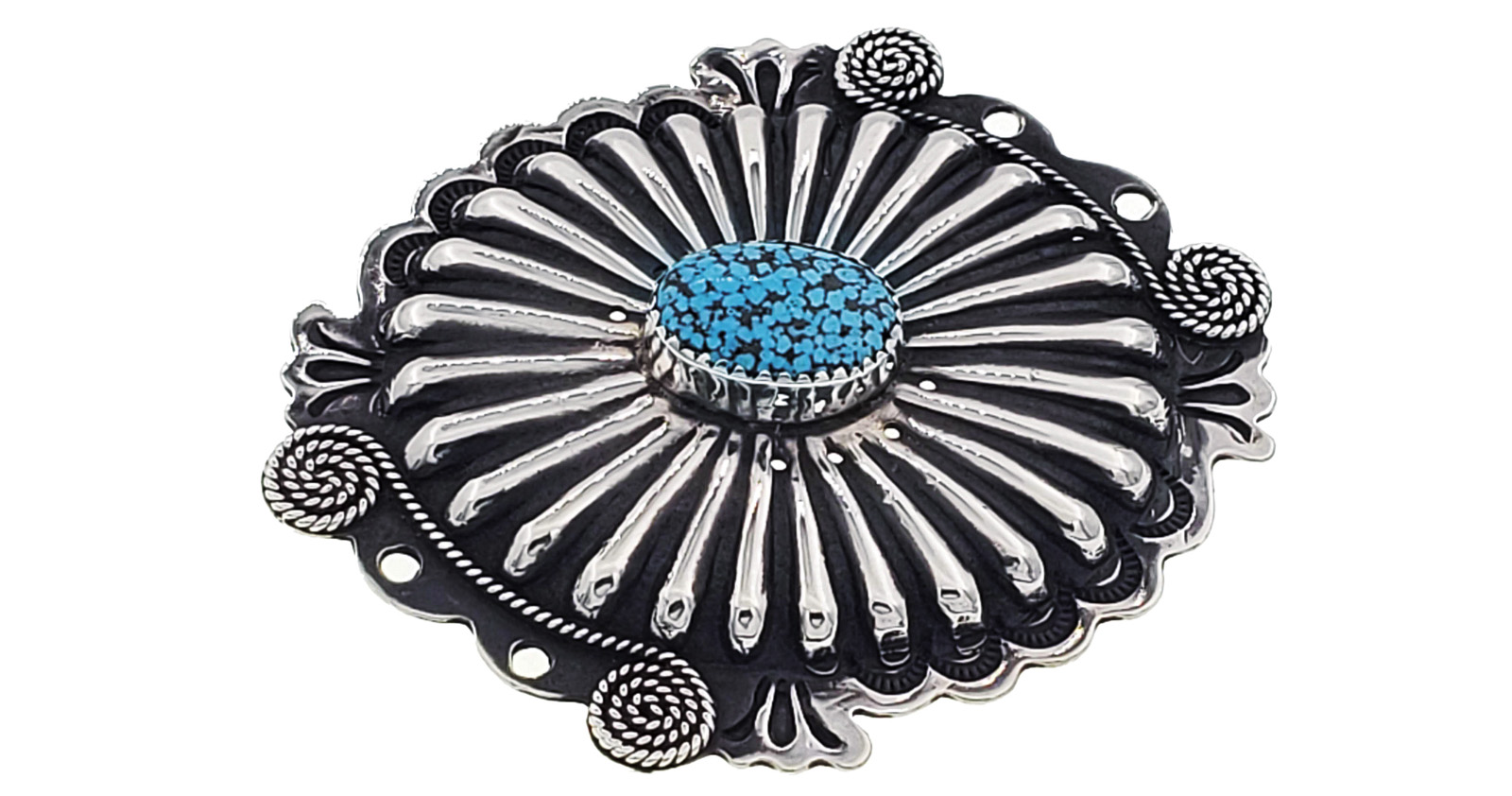 Jerry E. Gaussoin Jr. (Picuris/Navajo), Dine Flower, 2021, sterling silver, natural Kingman Turquoise, 2½ x 2”. Private collection. Photographer Jerry E. Gaussoin Jr.
Wayne says, “My artwork began with traditional Navajo silversmithing and has evolved into wearable sculpture and monumental installation art. The materials and style of my jewelry has challenged the stereotype of Native American adornment that has aroused controversy and brought forth new challenges and new perspectives that have redefined the classifications of Native American jewelry in the 21st-century. This continually inspires me to be able to create a voice for a new era of Native American artists alike.”
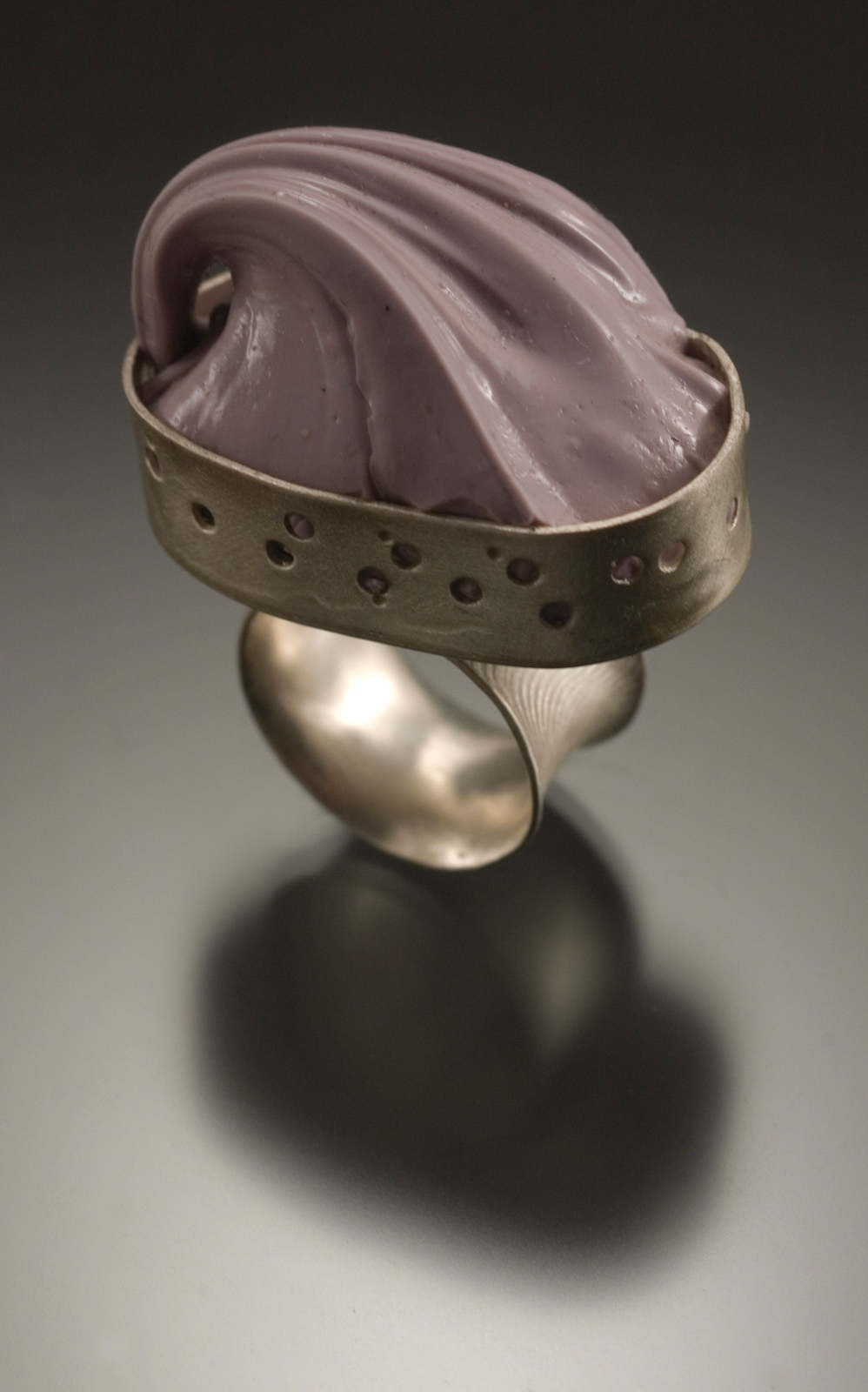 Wayne Nez Gaussoin (Picuris/Navajo), Soft Serve, 2017, sterling silver and silicone polymer, Private collection. Photographer Mark Herndon.
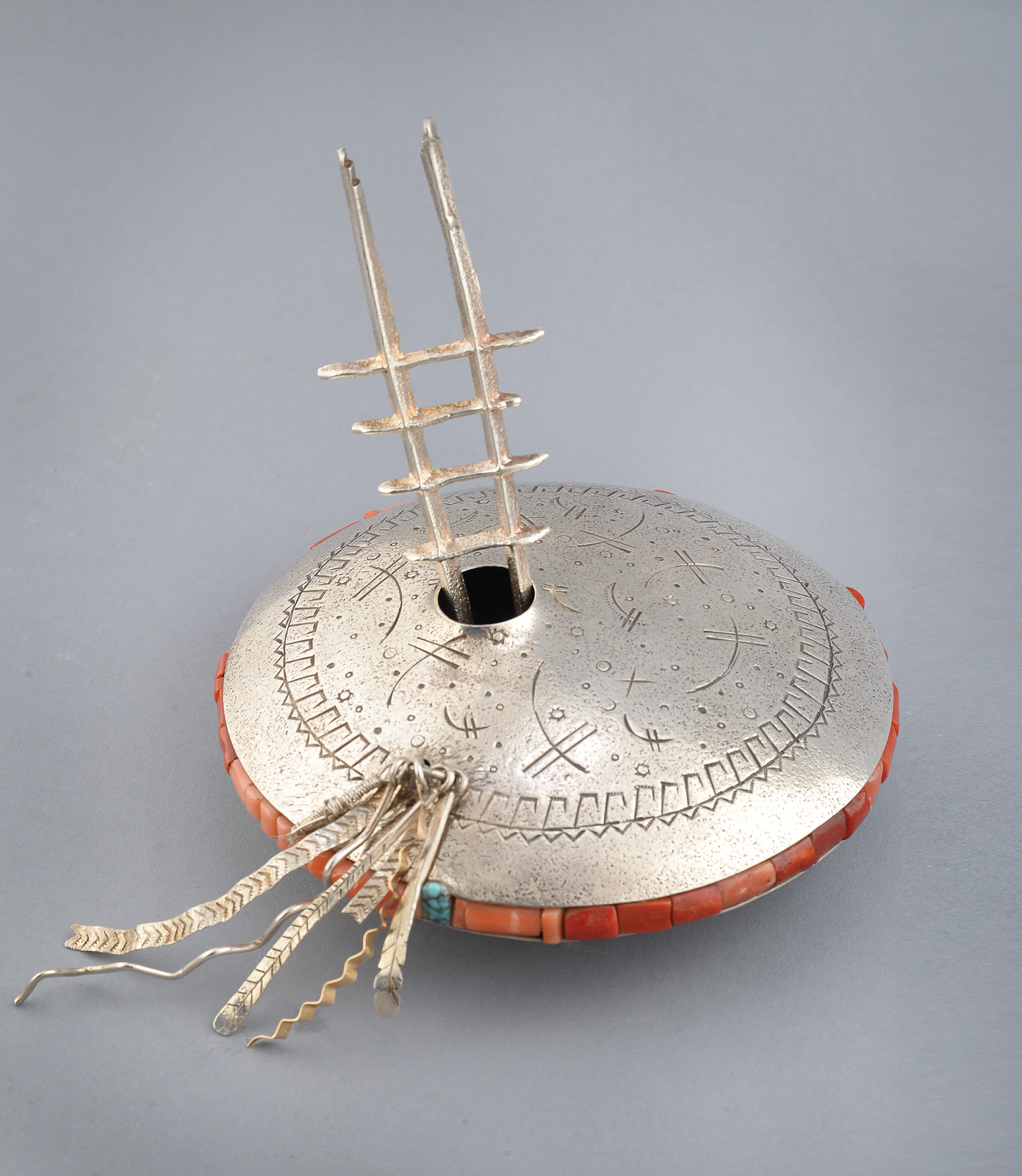 Connie Tsosie-Gaussoin (Picuris/Navajo), Dragonfly kiva seed bowl, tufa-cast sterling silver, gold, Italian coral, 6 x 6½ x 6½”. Private collection. Photograph by Carolyn Wright.
His bracelet, Non GMO, is tufa cast and incorporates sterling silver, stainless steel and polyurethane cord. A bit of good humor creeps in in his sterling silver and silicone polymer ring, Soft Serve.
Col. Jerry E. Gaussoin Jr. is a logistics officer. He also uses tufa casting in his traditional creations with a modern influence. His tufa cast bracelet, Ancient Ruins, incorporates sterling silver and natural Kingman turquoise. His Flower of the Sea ring incorporates sterling silver and natural Mediterranean coral.
Connie notes, “As we move forward, we don’t forget our roots. You have to know where you come from.”
Powered by Froala Editor