The Heard Museum is the new home to a world-renowned collection of contemporary Native American soft-sculpture figural dolls. What was once a “promised gift” of 23 soft-sculptures from Charles and Valerie Diker, officially became part of the Heard collection in late December 2022. The significant donation is surely the most stunning contemporary exploration of the medium housed in any public institution. With this growing collection, the Heard Museum is paving a new path of public interest in the soft-sculptures and their continuous contributions to the Native art world.
The soft-sculpture medium, within conversation, can commonly be referred to as “dolls.” But, if you’re new to this medium, please don’t restrict or limit the full scope of their contributions by tying them to the connotation of just a child’s play toy. While there is a deep history that needs to be addressed to fully respect the legacy and growth of this specific genre, the contemporary lives of these figures have developed a new outlet for traditional arts and how to engage with Indigeneity in past, present and future simultaneously.
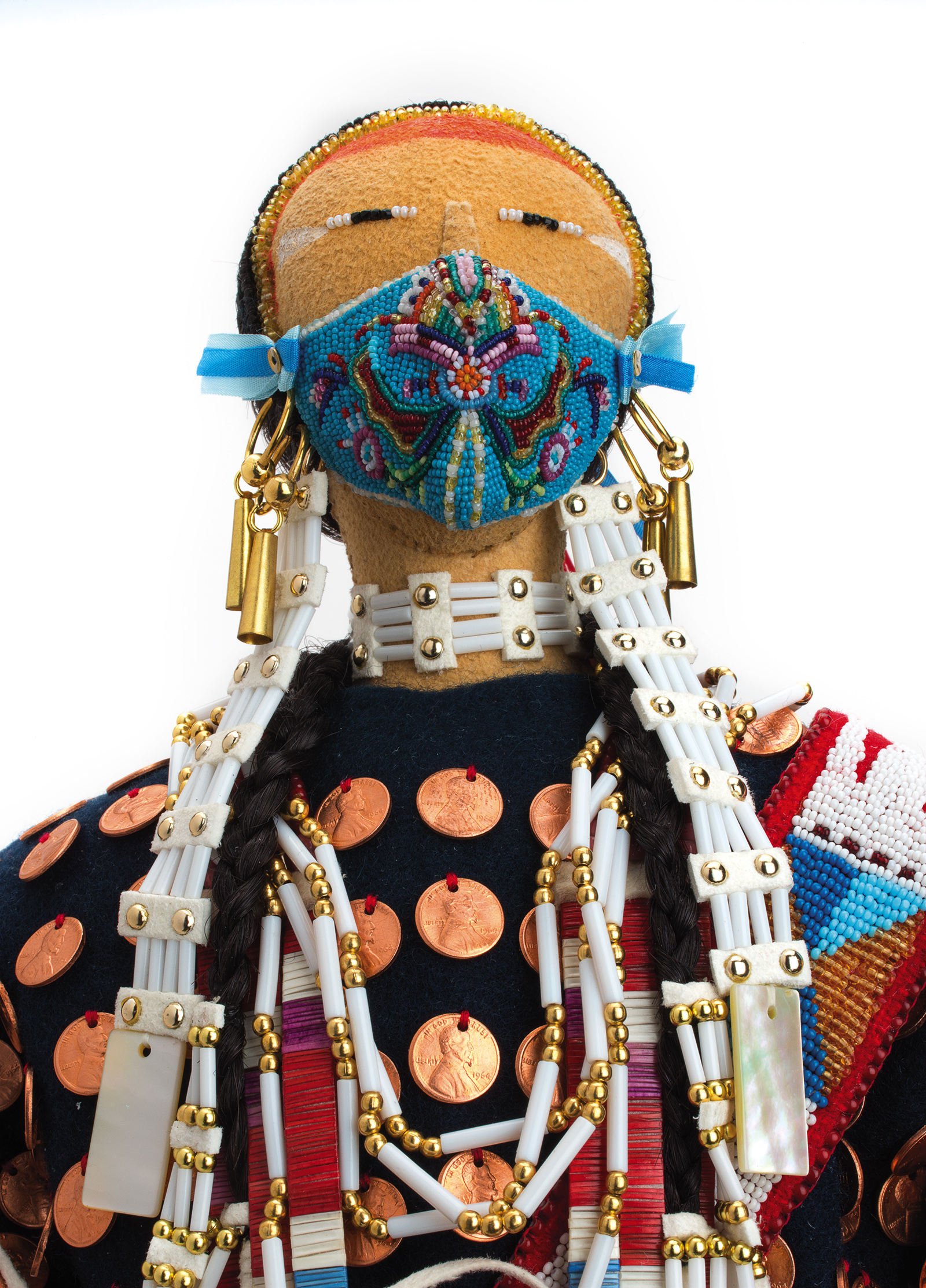 Juanita Growing Thunder Fogarty (Fort Peck Dakota/Nakoda), Wakitantanka (Strong-Willed), 2021, soft-sculpture doll figure, smoked brain tanned buckskin, size 18-20 antique seed beads, porcupine quills, trade wool, silk ribbon, miniature copper pennies, 19 x 7 x 5”
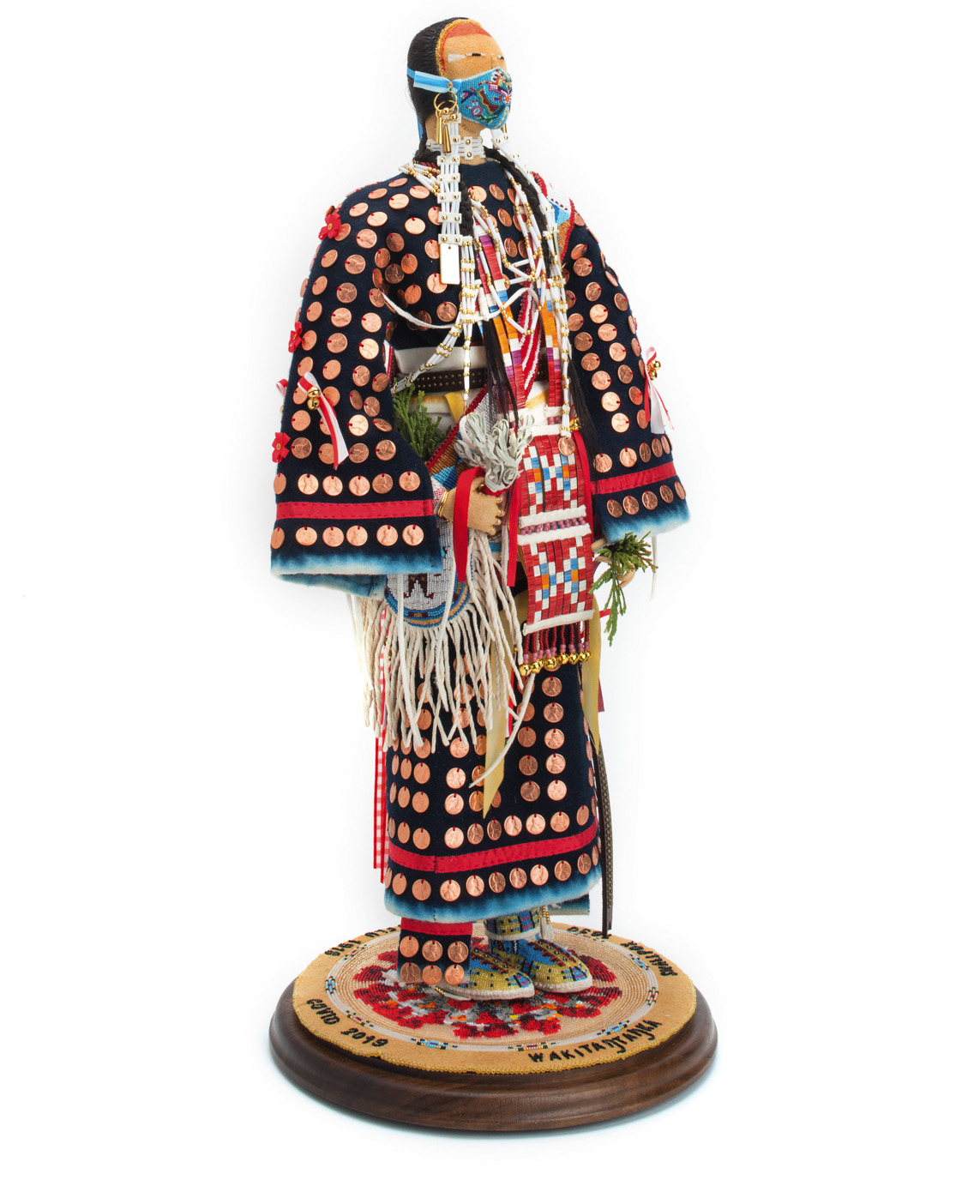 Juanita Growing Thunder Fogarty (Fort Peck Dakota/Nakoda), Wakitantanka (Strong-Willed), 2021, soft-sculpture doll figure, smoked brain tanned buckskin, size 18-20 antique seed beads, porcupine quills, trade wool, silk ribbon, miniature copper pennies, 19 x 7 x 5”
Historically, dolls were used by young girls across many cultures to learn common values of kinship and compassion. In the Northern and Southern Plains more specifically, dolls were commonly dressed in fully beaded regalia with accessories, all miniaturized so that the young girls were playing with small replicas of their surrounding communities. The dolls were typically soft-bodied, much like a baby doll that is easy to carry in a child’s arms as they run and play. This style of doll on the Plains was common from the mid 19th century through the early 20th century, with the evolution of dolls following the introduction of trade items; with more access to seed beads, silk and cloth, the more elaborate dolls became. While they never fully vanished, with ongoing efforts for Native communities to conform, many beadwork styles saw dramatic shifts.
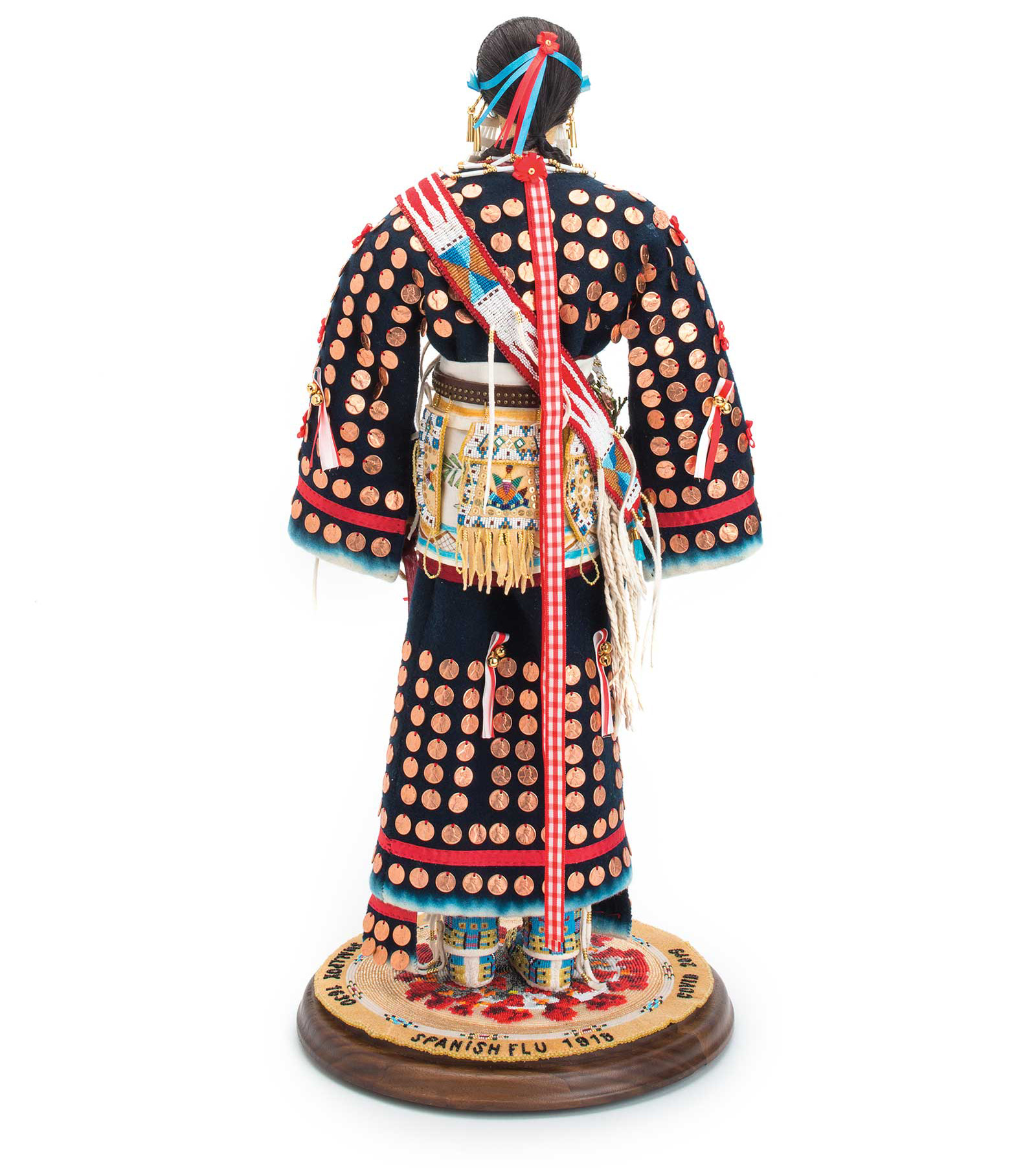 Juanita Growing Thunder Fogarty (Fort Peck Dakota/Nakoda), Wakitantanka (Strong-Willed), 2021, soft-sculpture doll figure, smoked brain tanned buckskin, size 18-20 antique seed beads, porcupine quills, trade wool, silk ribbon, miniature copper pennies, 19 x 7 x 5”
In the 1980s, dolls re-emerge in the Native art world, taking on a new form of possibility. Joyce Growing Thunder and Rhonda Holy Bear began producing Northern Plains dolls meant for the fine arts world. Still present are the miniaturized details of regalia, but instead of an audience for young Native girls, these artists began shifting the concept of dolls by introducing a soft-sculpture form. Over the next several decades, Growing Thunder and Holy Bear contributed to the evolution of the soft-sculptures, ultimately providing new opportunities for artists to (re)visit traditional arts that pay homage to historical pasts in tangible ways while remaining confident in the ever-present contemporary existence of adaptation—meaning, Native peoples can be traditional and tied to their ancestors in tangible ways, but are simultaneously always adapting, growing, and thriving throughout contemporary experiences.
The new contemporary exploration of soft-sculptures offer conversations of traditional regalia across territories and give context on how to view regalia in practice. The soft-sculptures offer a figurative reference of traditional regalia’s from the 19th century, occasionally spanning the 20th century. These references are masterfully created using antique micro-beads, often so small they resemble grains of sand. All the materials used are scaled down in size and provide so much intricate detail, the audience continues to experience hidden details upon every visit. From the miniature brass sequins, brass rings, shell earrings, knife cases, moccasins, porcupine quilled wrapped horsehair adornments and fully beaded dress tops, the details speak volumes of generational knowledge, all scaled to size.
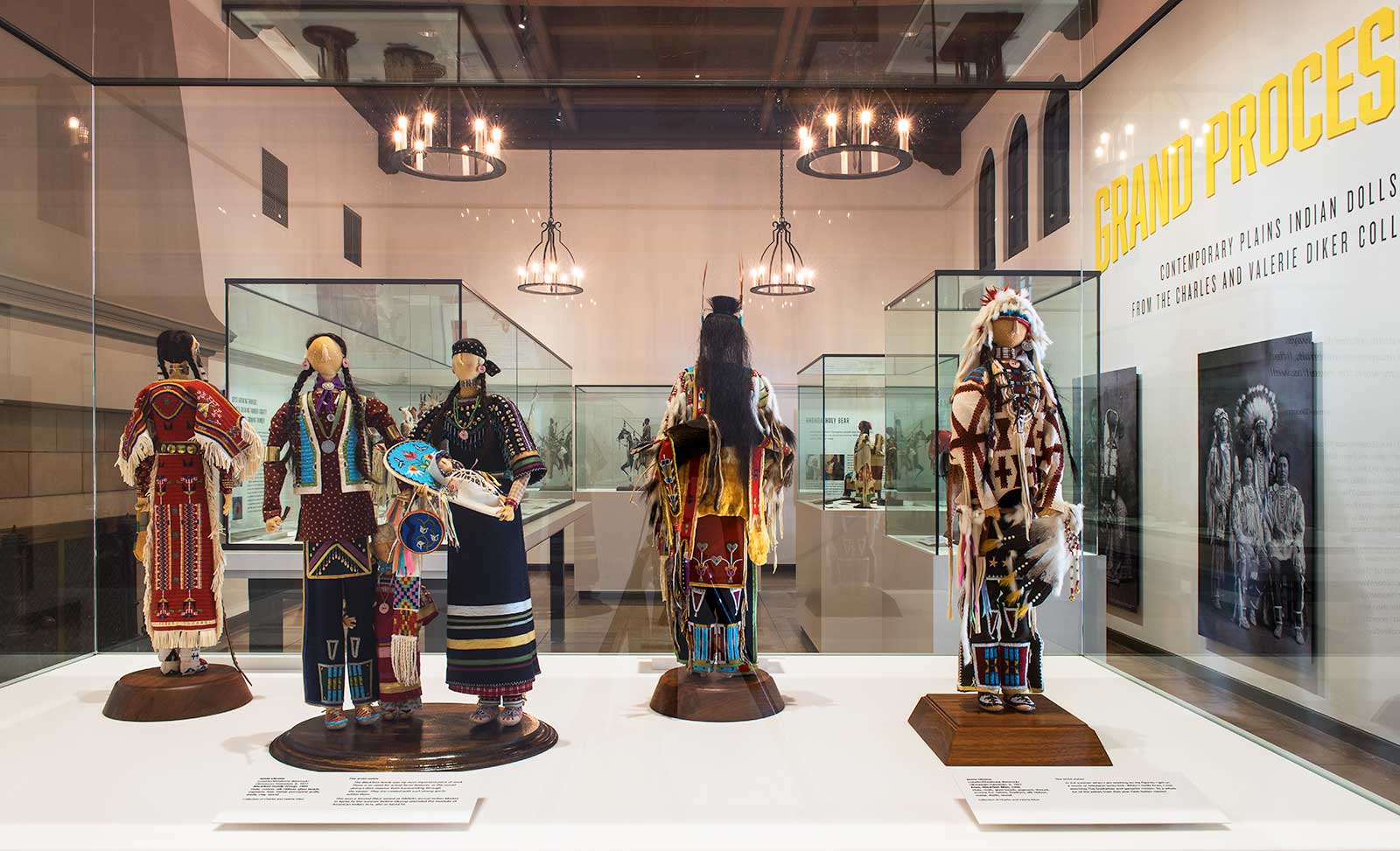
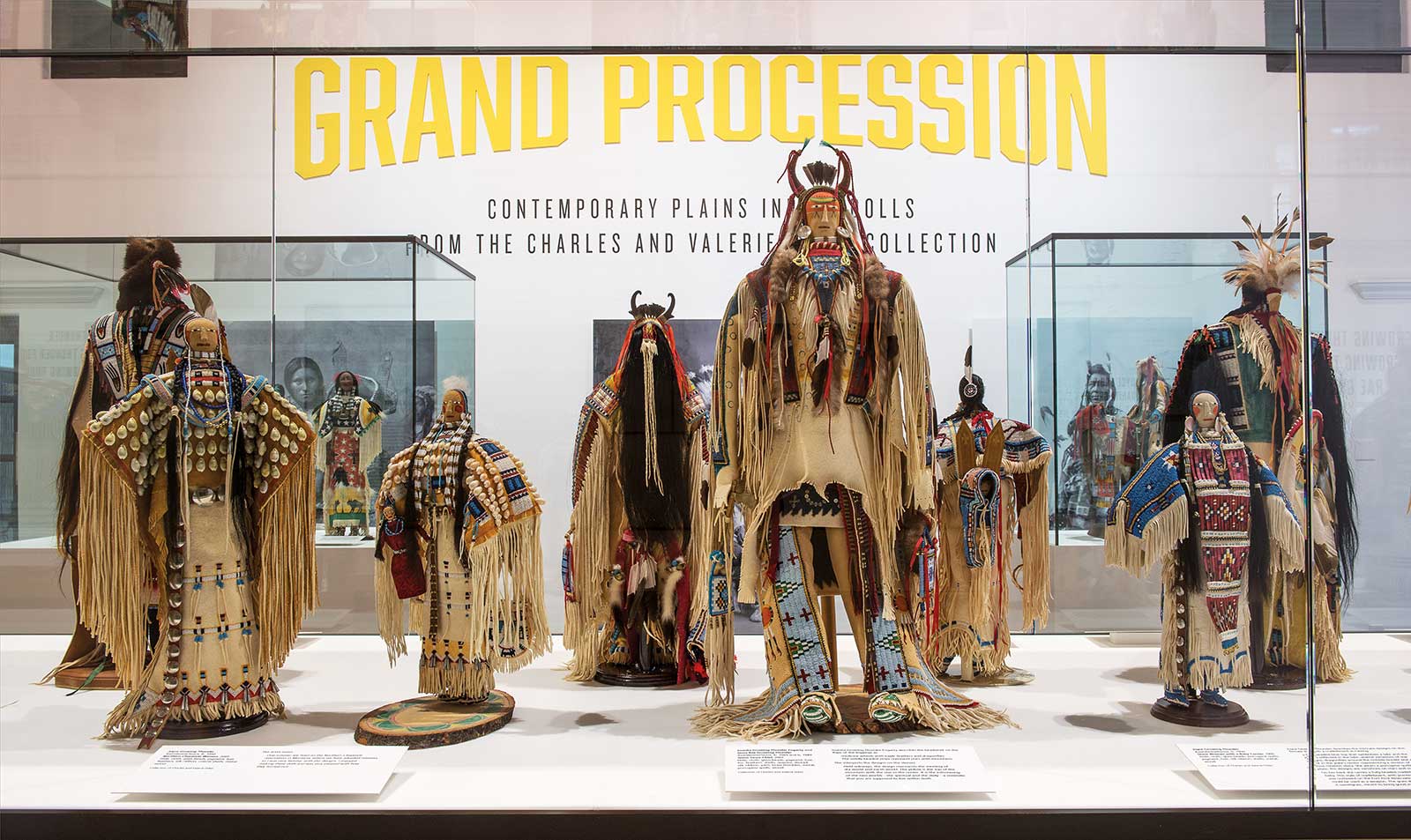 Installation view of Grand Procession: Contemporary Plains Indian Dolls from the Charles and Valerie Diker Collection.
Charles and Valeria Diker recognized the significance of this medium early on and began collecting pivotal soft-sculpture figures that have advanced Native art in remarkable ways. The prized Diker collection of 23 soft-sculptures would evolve into the traveling exhibition, Grand Procession: Contemporary Plains Indian Dolls from the Charles and Valerie Diker Collection. The collection consists of work from Jamie Okuma (Luiseño and Shoshone-Bannock), Rhonda Holy Bear (Cheyenne River Sioux) and three generations of Growing Thunder family members; Joyce Growing Thunder, Juanita Growing Thunder Fogarty and Jessa Rae Growing Thunder (Fort Peck Assiniboine/Sioux). After the collection traveled to the Smithsonian National Museum of the American Indian and the Denver Art Museum, it found its way to the Heard Museum where it has been on continuous display since 2019. With annual visitation of the museum at 125,000, the Phoenix—and global—audience have praised the exhibition’s conversations of detailed excellence; Grand Procession is the only exhibition ever curated around contemporary soft-sculpture figures and it has encapsulated the artistic practice as a form of mastery.
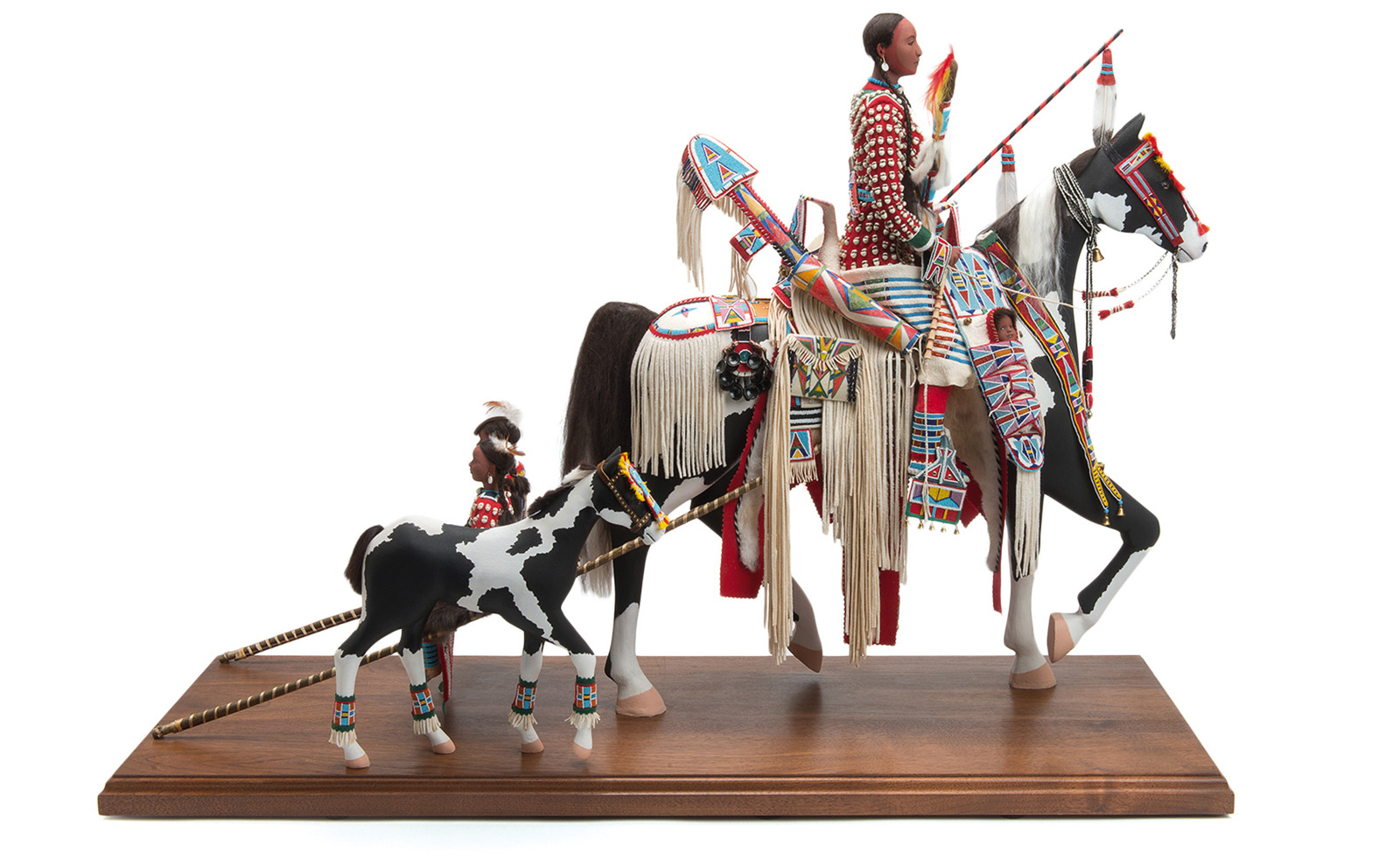 Rhonda Holy Bear (Cheyenne River Sioux/Lakota), Maternal Journey, 2010, wood, gesso, paint, hide, cloth, yarn, fur, glass beads, hair, shells, feathers, metal. Collection of Charles and Valerie Diker.
With the success of the exhibition at the Heard Museum, the prestigious Charles and Valerie Diker collection of soft-sculptures have found a remarkable new home with the Heard Museum. “When we first discovered these sculptural figures, each with tiny, authentic examples of all the objects of Plains traditions, it was revelatory to Val and me,” notes Charles. “We could now appreciate the totality of Native American creative expression on an entirely different level. The sculptures represent the broad aesthetic of a glorious American Plains people. Because our figures are contemporary, they speak to us of today and tomorrow, while at the same time they preserve a dynamic living history. We wish to thank the leadership of the Heard Museum for enabling us to share these works of art with future generations.”
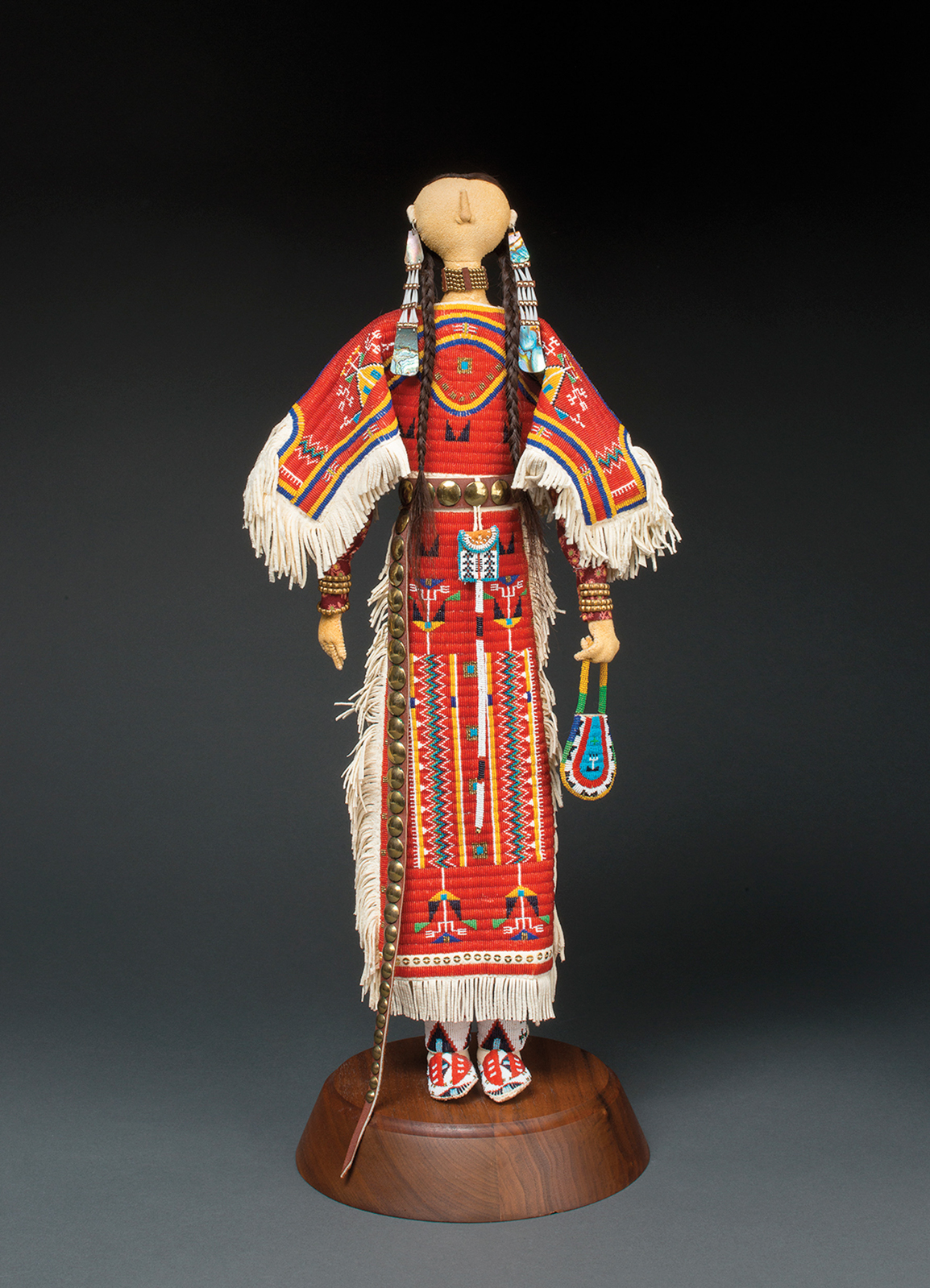 Jamie Okuma (Luiseño/Shoshone-Bannock/Okinawan-Hawaiian), Lady in Red, Lakota Woman, 2003, hide, cloth, glass beads, hair, dentalium and abalone shells, metal, sequins and wood. Collection of Charles and Valerie Diker.
This generous gift has been received with excitement. “It is a singular collection in the world of contemporary Native art, impossible to replicate,” says David M. Roche, the museum’s director and CEO, in making the announcement. “The dolls reflect customary cultural practices including painting on hide, and sewing with porcupine quills and glass beads, but at such a transcendent level that they are truly world-class works of art. This gift will immeasurably strengthen and enhance the Heard’s collection, and we are deeply grateful to Chuck and Valerie Diker for their generosity.”
 Works from the Diker Collection are on view at the Heard Museum.
The Heard Museum’s growing collection is also in part to their recent acquisitions which expands on its interest in the medium. The museum has purchased three soft-sculpture doll figures from the individual artists, Juanita Growing Thunder Fogarty and Okuma. Growing Thunder’s two soft-sculpture figures represent her cultural background, one is a mid 19th-century style Nakoda (Assiniboine) man adorned with a beaded hat. The second soft-sculpture from Growing Thunder, the 2021 Heard Museum Guild Indian Fair & Market Best of Show winner, is a statement about the multiple pandemics Indigenous peoples have endured; specifically, it is a Dakota (Sioux) woman wearing a fully beaded mask and armed with traditional medicines from the Northern Plains. Okuma’s soft-sculpture titled, Protect, Honor, Cherish, was the 2018 Heard Museum Guild Indian Fair & Market Best of Show winner. The soft-sculpture figure is a remarkable display of Plateau knowledge, tradition, and practice; the stunning figure is a seated Shoshone-Bannock woman with a cradleboard, all representing the significance of caring not only for children, but all generations forthcoming.
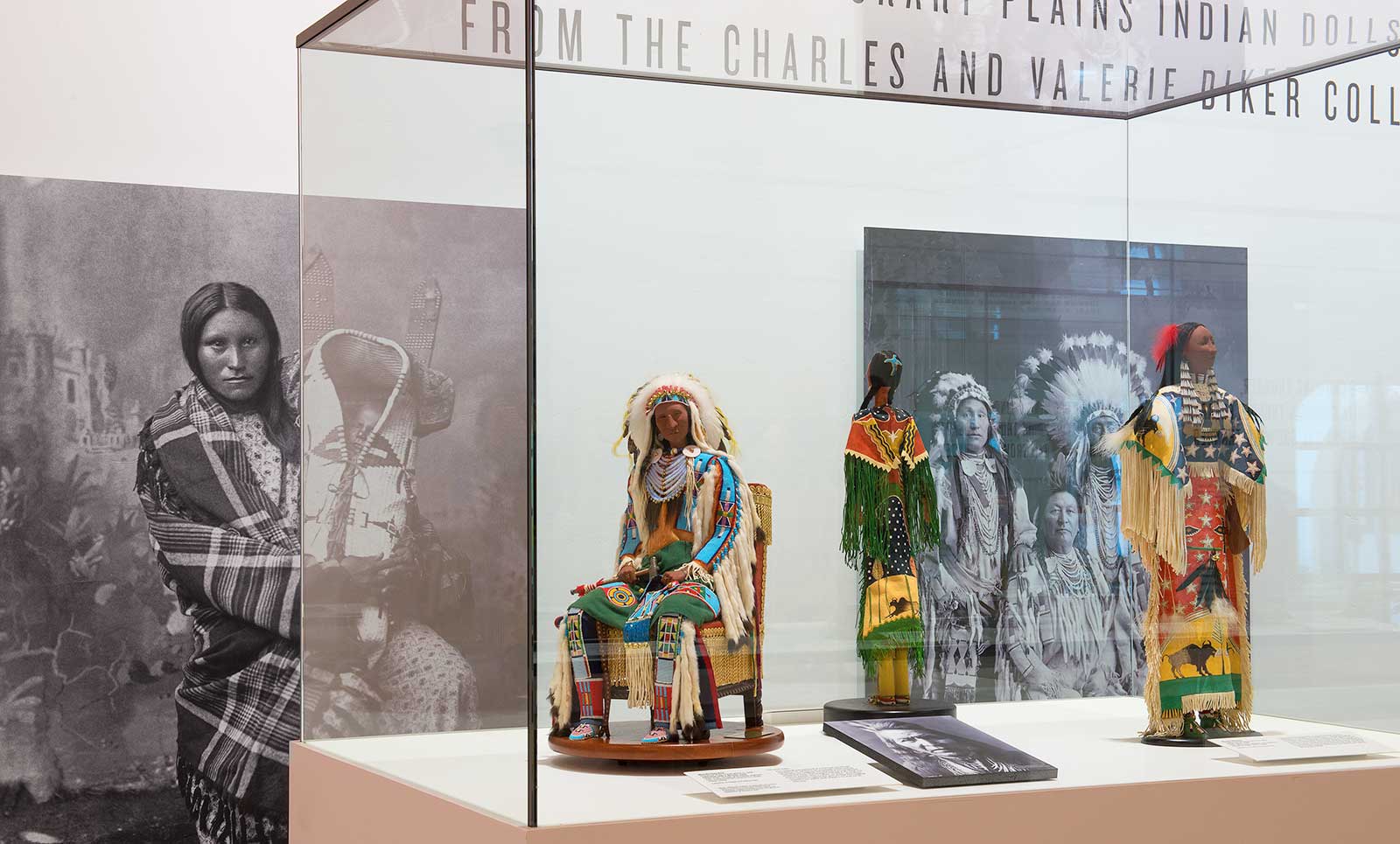 Installation view of Grand Procession: Contemporary Plains Indian Dolls from the Charles and Valerie Diker Collection.
The excellence of the Heard Museum’s growing collection of soft-sculpture doll figures is built upon the details offered. Every figure references the cultural background of the artist. Much more than that, the artists are not only master creators of the medium, they’re also researchers, historians and knowledge keepers of regalia practice, construction and design. Every masterpiece created replicates a specific moment in history and is reflected in the intricate details that were common for that region and time period. A soft-sculpture could take years to create, but the artists have also spent decades dedicated to learning about every detail associated with regalia. The Heard Museum recognizes this significance, has sparked new conversations about where traditional arts meet contemporary existence and is forging a new path forward for other institutions.
Ongoing
Grand Procession: Contemporary Plains Indian Dolls from the Charles and Valerie Diker Collection
Heard Museum 2301 N. Central Avenue
Phoenix, AZ 85004, (602) 252-8840,
www.heard.org
Powered by Froala Editor