Every year, the Museum of Indian Arts & Culture names a new “Living Treasure.” Part of the annual Native Treasures Art Market, the award honors Native American artists who have made outstanding artistic contributions to the field of Indigenous arts and culture. Cochiti Pueblo artist Virgil Ortiz, the 2022 Living Treasure, is one of the most innovative potters and designers of his time, combining elements of decor, fashion, and even film, within his artwork.
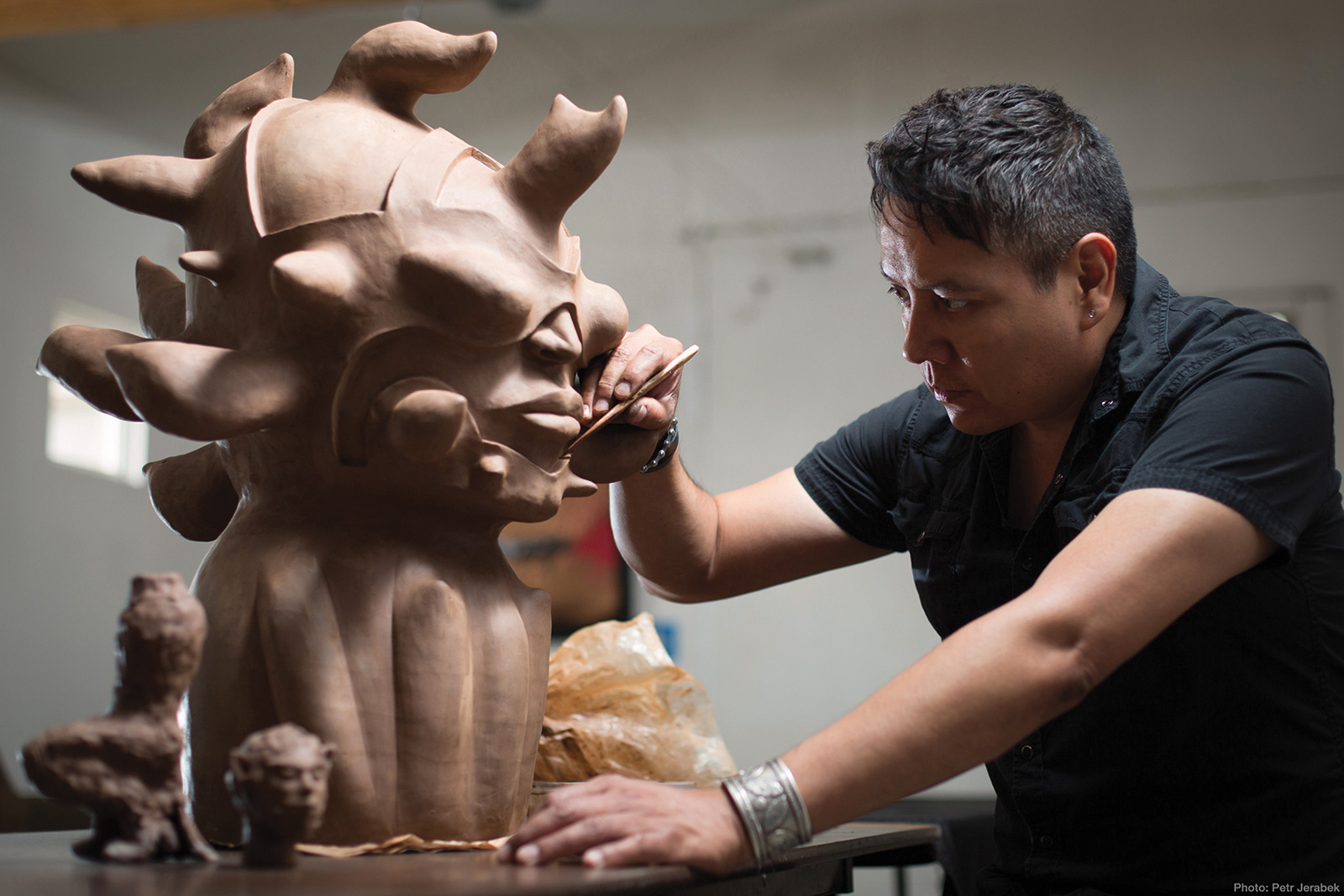 Virgil Ortiz in the studio carving his Watchman character. Photo by Petr Jerabek.
Currently on view at the MIAC, ReVOlution celebrates the vast and varied work of Ortiz. The exhibition runs through April 1, 2023.
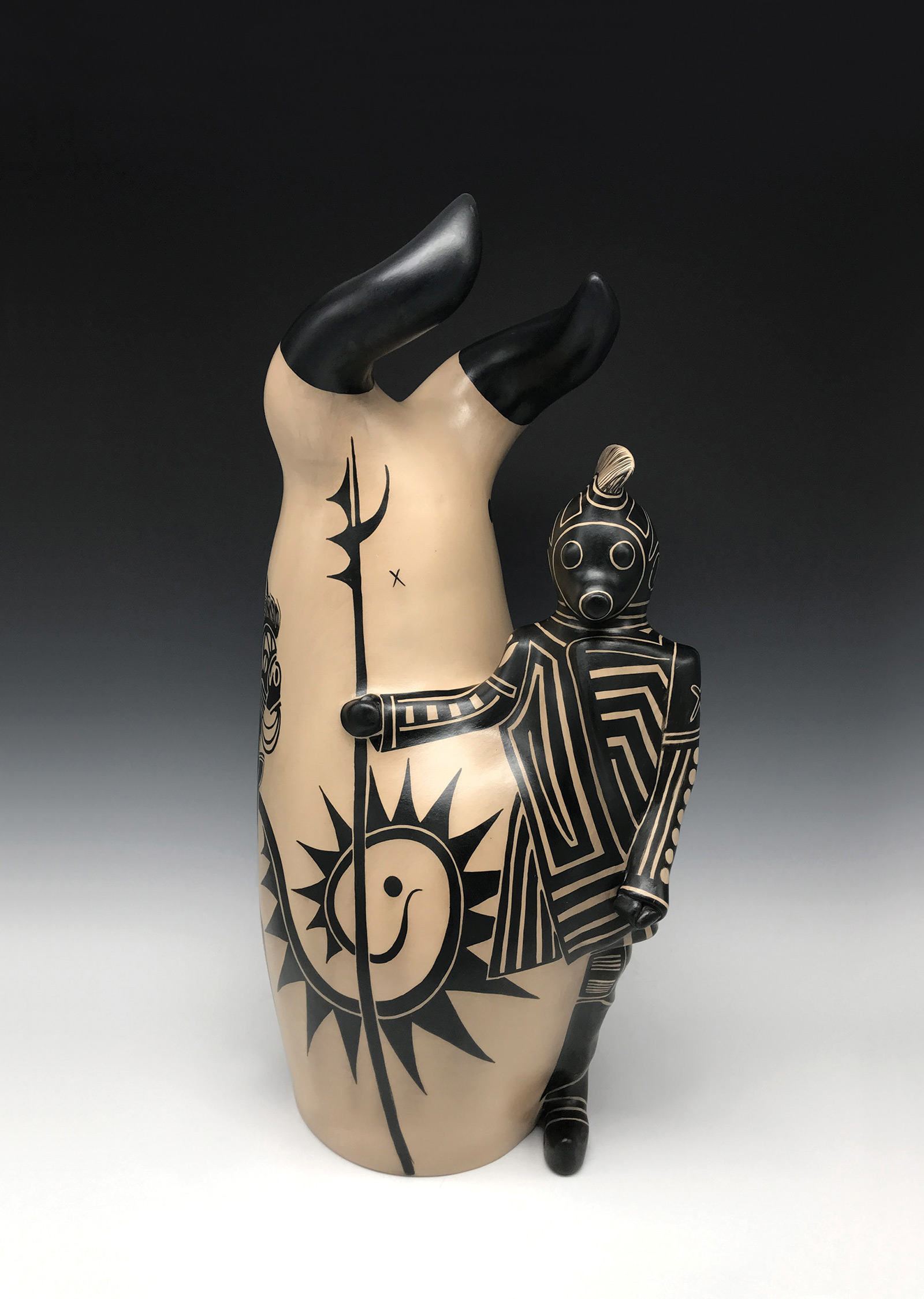 Virgil Ortiz (Cochiti Pueblo), Venutian Soldiers Quest, from Revolt 1680/2180 Series, traditional methods and materials: Cochiti red clay, white and red clay slip, wild spinach plant (black pigment), 24 x 13 x 12”
With a career spanning four decades, Ortiz’s work is undeniably electrifying. He combines his oueblo culture with sci-fi, fantasy and apocalyptic themes—creative works of art that feel way ahead of their time. Think traditional Native themes meet gothic, cyber-punk, post-apocalyptic worlds. Elements of Star Wars, in particular, are frequently explored. “Reminiscing back when I was 6 years old, I was mesmerized by everything sci-fi, from movies to television,” says the artist. “I find it easier to create a storyline in an imagined world filled with fantastical characters and superheroes. It’s my secret sauce in giving the younger generations a history lesson without making them feel they’re getting one.
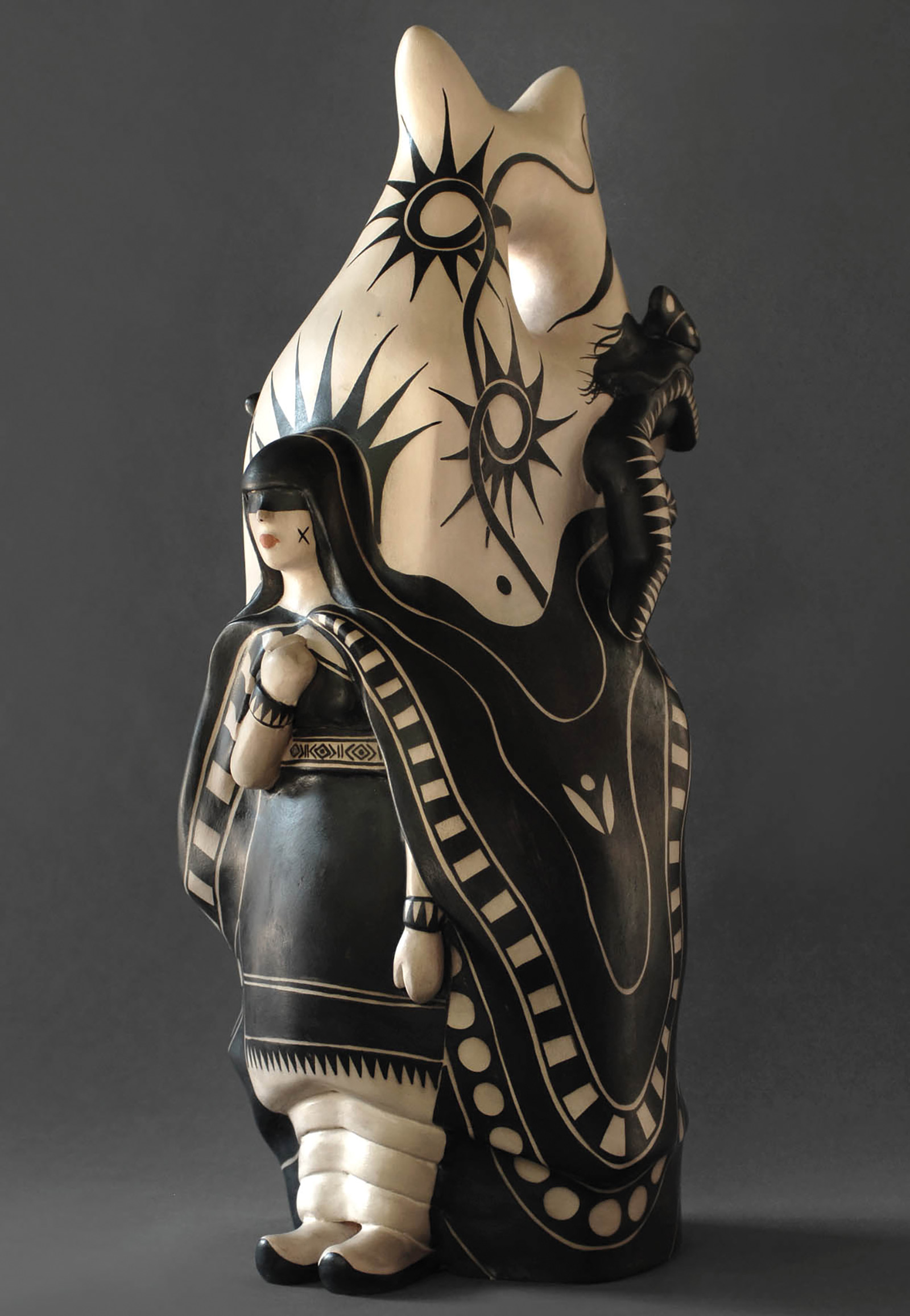 Virgil Ortiz (Cochiti Pueblo), Tahu and her Blind Archers Army, from Revolt 1680/2180 Series, traditional methods and materials: Cochiti red clay, white and red clay slip, wild spinach plant (black pigment), 25½ x 14 x 12”
“Artwork that teaches our history has been concealed for ages, a mirror of today and a glimpse into our future,” Ortiz continues. The artist describes his work as “creations [that] perpetuate Cochiti Pueblo pottery-making traditions by reviving and creating with age-old traditional methods and materials. Telling a story to protect the Pueblos of the past, preserving and recording practices so they can survive and be passed on. We Puebloans are still here thriving, living and creating.”
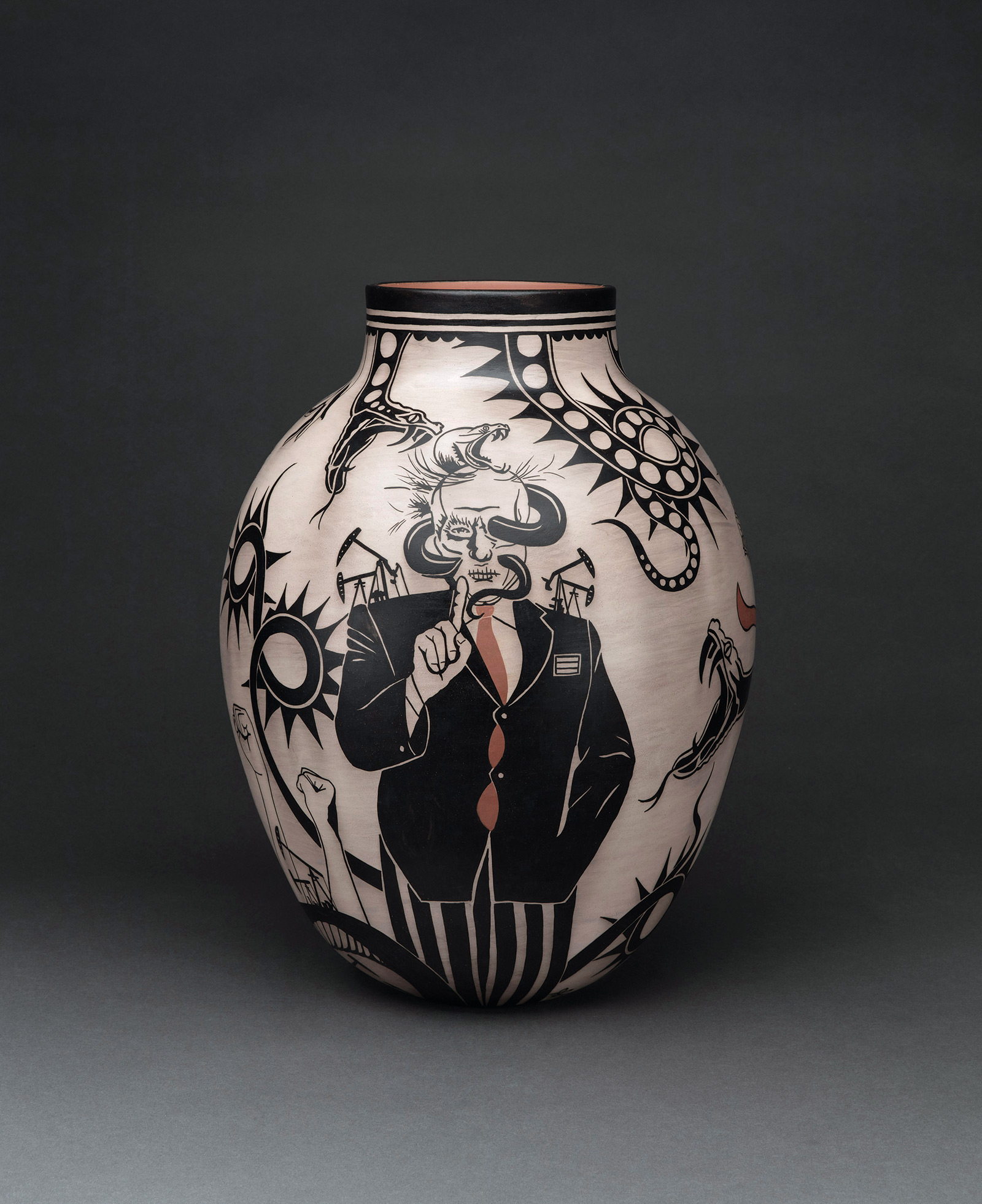 Virgil Ortiz (Cochiti Pueblo), Rise Up, traditional storage pot, from Taboo Series I, traditional methods and materials: Cochiti red clay, white and red clay slip, wild spinach plant (black pigment), 19 x 15”
Visitors to ReVOlution can experience a range of works by Ortiz, including ceramics and photographic pieces that initiate a conversation between contemporary media and ancestral methods of Cochiti ceramics.
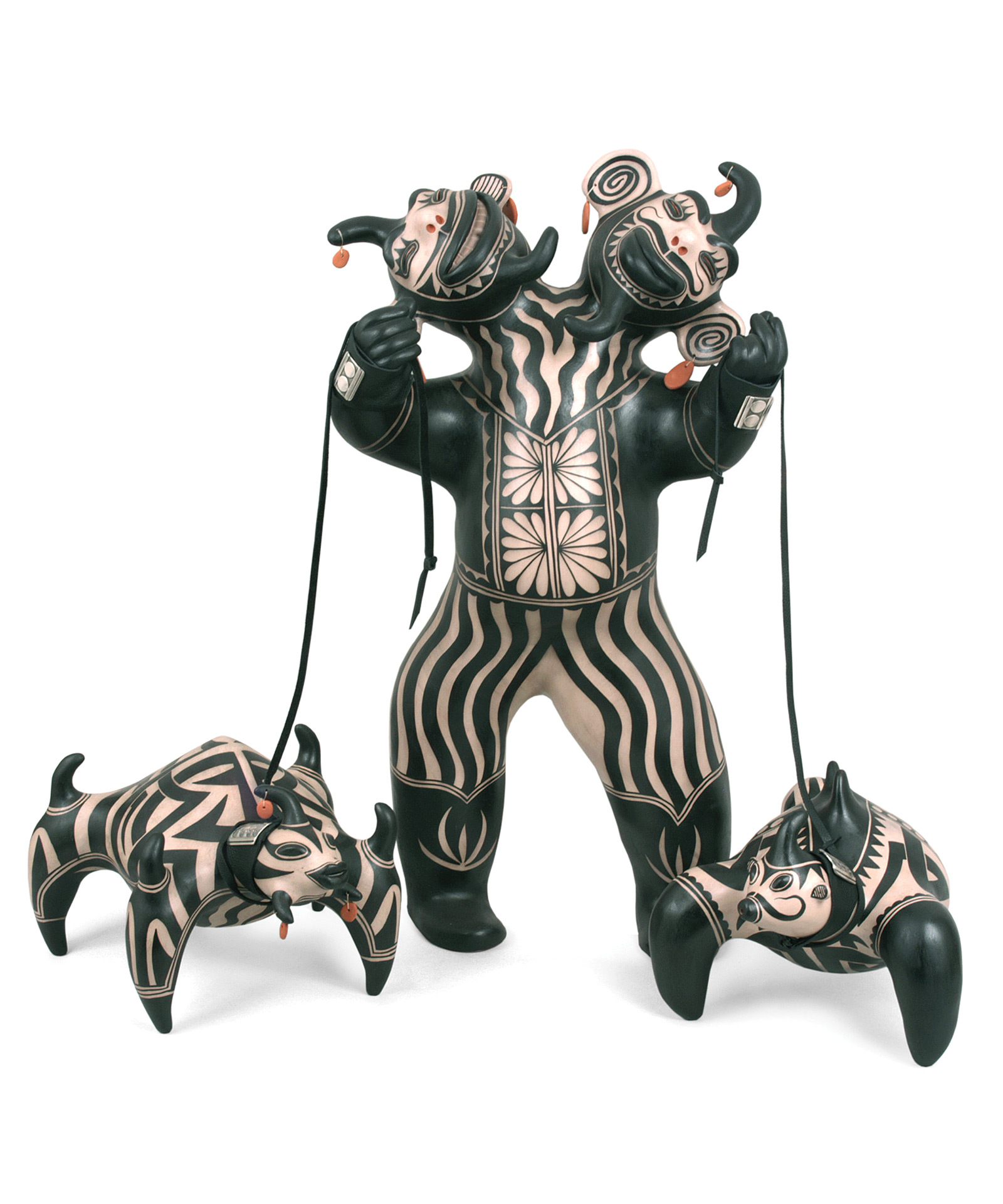
Virgil Ortiz (Cochiti Pueblo), Ring Master and Tics, traditional methods and materials: Cochiti red clay, white and red clay slip, wild spinach plant (black pigment), 22”
On being named a Living Treasure, Ortiz says, “If I were to select a handful of words: humbling, exciting, moved, inspired, grateful and thankful to give voice back to our clay mother. I am honored to join this award’s many great artists and recipients. Given the opportunity to educate globally about our people’s history and culture, using art is invaluable and vital.”
ReVOlution
Museum of Indian Arts & Culture
710 Camino Lejo, Santa Fe, NM 87505
(505) 476-1269, www.indianartsandculture.org
Powered by Froala Editor