Artistic pendants made as jewelry forms by Native American jewelers took off after World War II. Midcentury pendants for adornment, hung on silver beads or chains, became a popular cross-cultural form at roughly the same time as the bolo tie with its decorative central plate. These new suspended ornaments charmed buyers seeking the novel and inventive. Each piece aptly highlighted its maker’s unique use of materials, techniques and personal vision. The designs that resulted could be abstract or figural, but always featured something appealing about Indian culture.
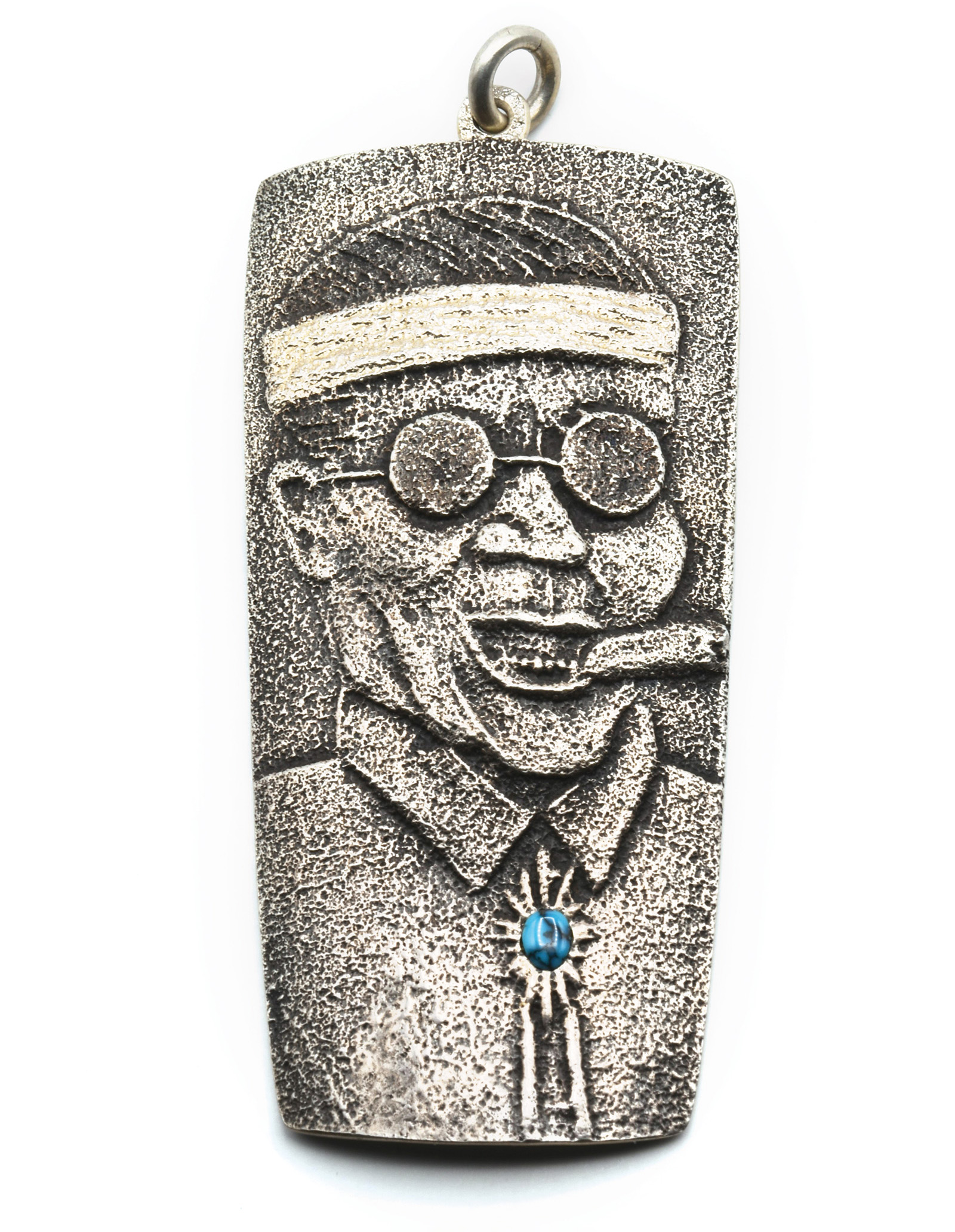 Robert Whitehair Begay (Navajo (Diné)), A Most Interesting Man, 2019, silver and turquoise, 3½”
Seven recent examples of contemporary artistic pendants exhibit distinctive design characteristics. Some of these pendants pay direct homage to tribal tradition, others spin off into a visually satisfying stylishness. Each decorative composition exhibits at least two superb visual examples of design elements at their very best: form, shape, texture, color, contrast, line, tone, balance, hierarchy of arrangement, dominance, emphasis, scale, proportion, gradation, unity and harmony. The dual combination of strong design elements that each pendant displays represent aesthetic trends and innovations in today’s Indigenous jewelry artistry.
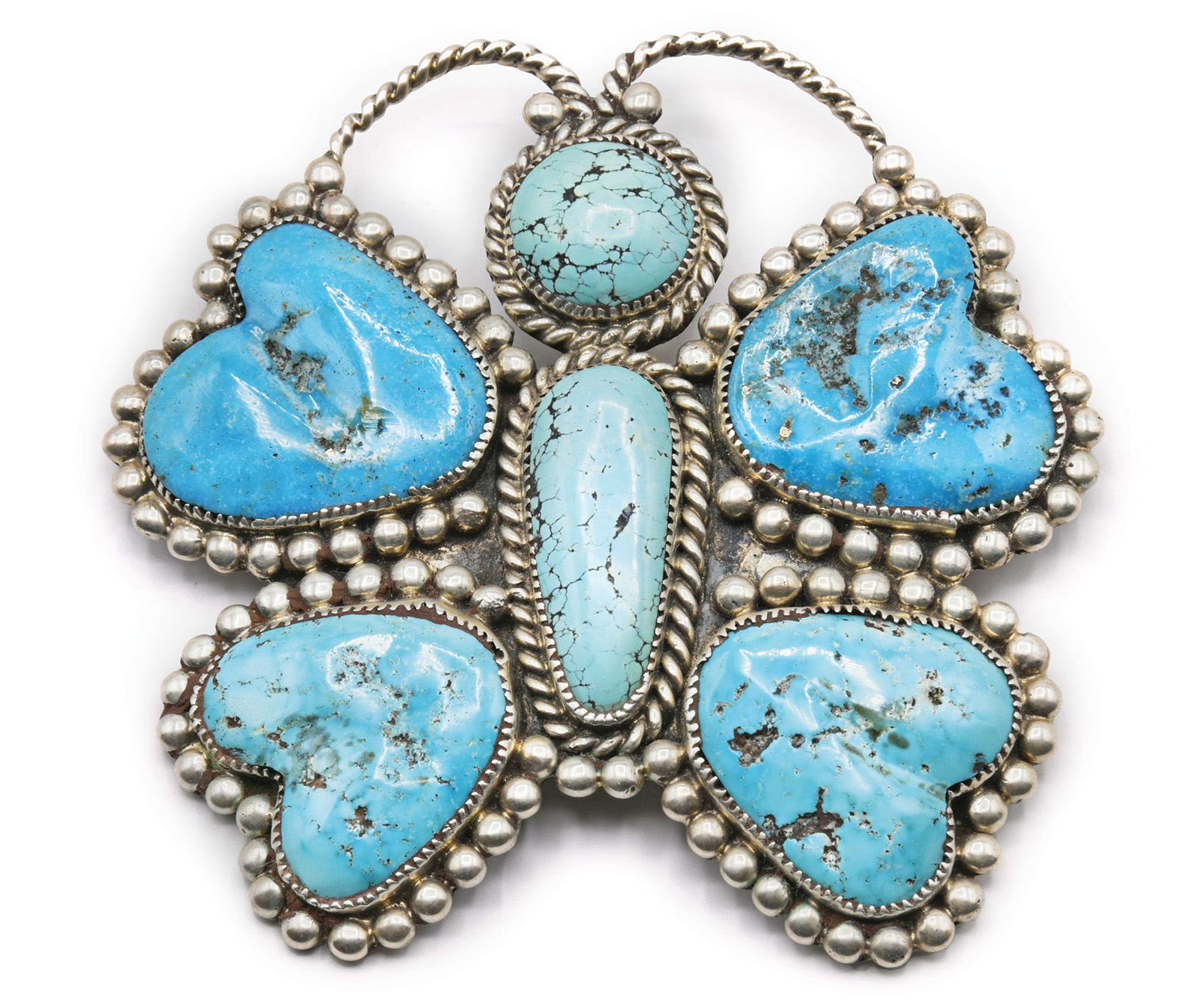 Diane Lonjose (Zuni), Butterfly, 2019, carved turquoise and silver, 2½”
One of Native America’s most notable realities is how artistic talent passes easily through the generations. Robert Whitehair Begay made this pendant entitled A Most Interesting Man as a young teenager. The portrait is a loving tribute to his master silversmith father, Darryl Dean Begay. There’s more than a hint of playfulness here, as young Begay demonstrates his technical and figurative skill. His design reveals an adroit use of line and proportion. He’s already winning awards at the key arts shows. He won second place at the 2022 Heard Museum Guild Indian Fair & Market for a concha belt he calls The Peoples’ (Diné) Pandemic. Begay will be someone to watch in the years ahead.
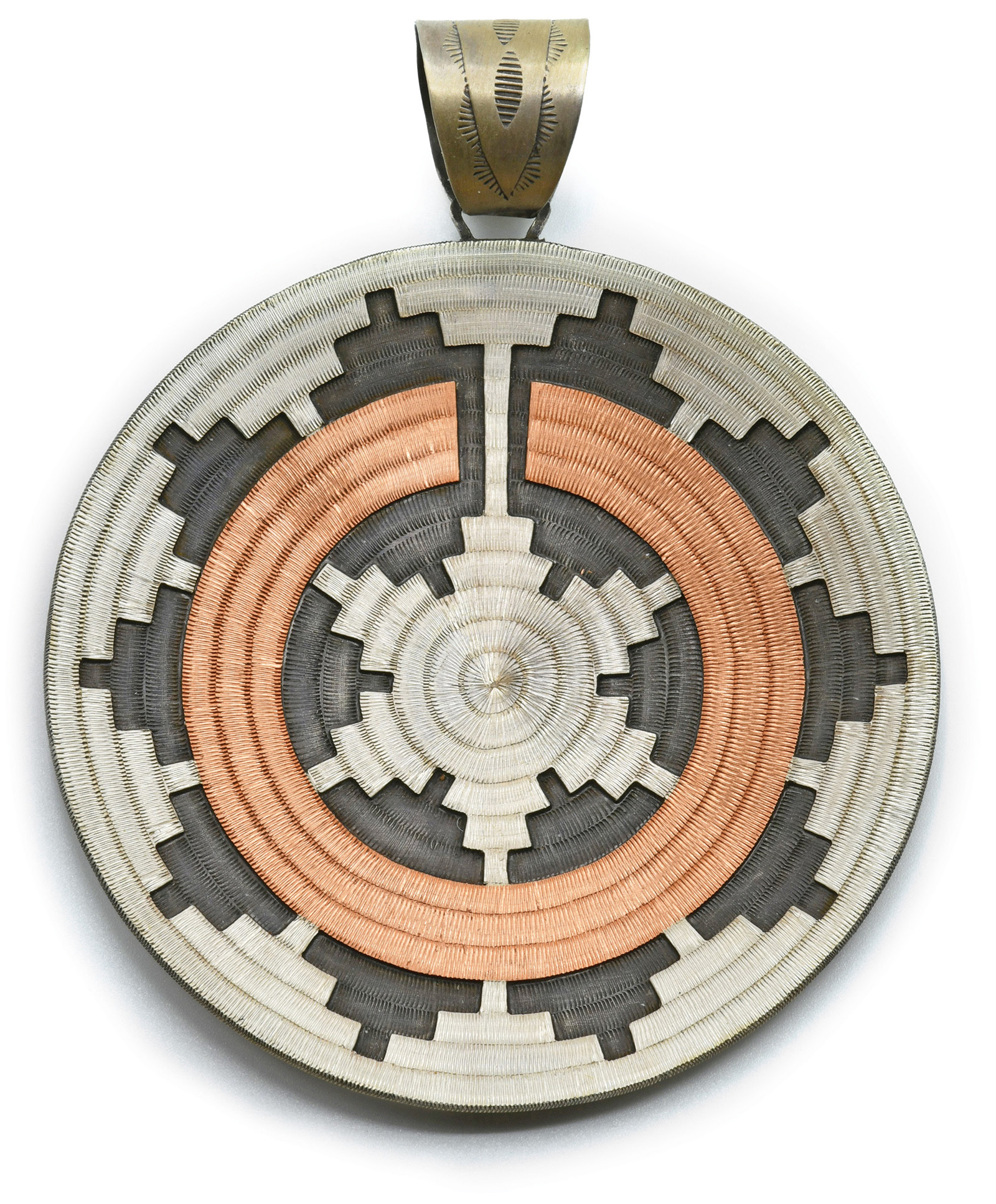 Roland Hogan Begay (Navajo (Diné)), Navajo Wedding Basket, 2019, copper and silver, 3”
Tradition plays a central role in the jewelry of Diane Lonjose. She creates pieces alone or with her husband Rodney Lonjose. This “butterfly” design pendant is her own work and very much drawn from the best of Zuni’s silver and lapidary practices. Note the wings are heart shaped. The daughter of famed cluster-work artist Alice Quam, Lonjose makes butterfly and dragonfly pieces much favored in the pueblo. Her work for sale is notable for its use of carved and quality turquoise. Her organic designs emphasize shape and scale.
Roland Hogan Begay’s pride in his Navajo heritage is reflected in his silverwork designs. Experienced in leatherworking, he turned to jewelry creation in 1974. His pendant Navajo Wedding Basket is rendered in silver and copper. This piece shows his expertise in fashioning intricate and innovative metalwork. Begay is one of a growing number of Native designers who honor specific adornment forms. In recent years, jewelers have borrowed compositional designs from ketohs, jaclas and traditional najas. Begay translates the tribal power of his peoples’ ceremonial wedding basket pattern through his deft use of contrast and tone.
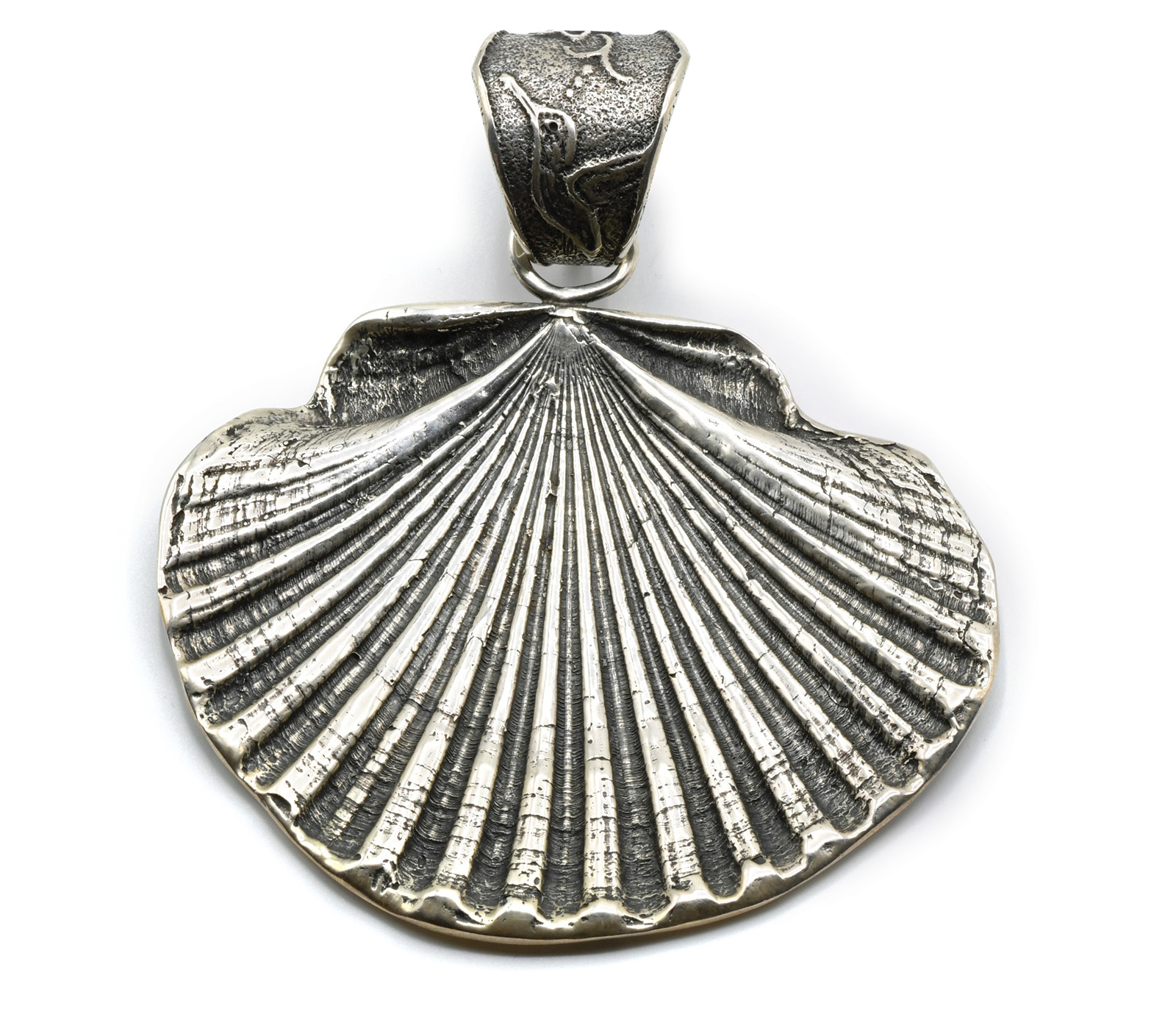
Marian Denipah (Ohkay Owingeh), Scallop Shell, 2018, silver, 4 x 3”
Marian Denipah continues to be one of the best jewelry artists in the field. She sometimes collaborates with fellow artist and husband Steve LaRance. In recent years, Denipah has been exploring her Tewa roots, living near her mother’s pueblo, Ohkay Owingeh. Here she turns from her more frequent use of beads for expression to vivid silverwork. Her pendant Scallop Shell is a tour de force of balance and texture. The verso of this pendant contains one of Denipah’s personal motifs—a hummingbird design meant as a tribute to her war veteran Navajo father. The artist studied tufa casting under master jeweler Ric Charlie, and enjoys shaping pieces with a sculptural feel.
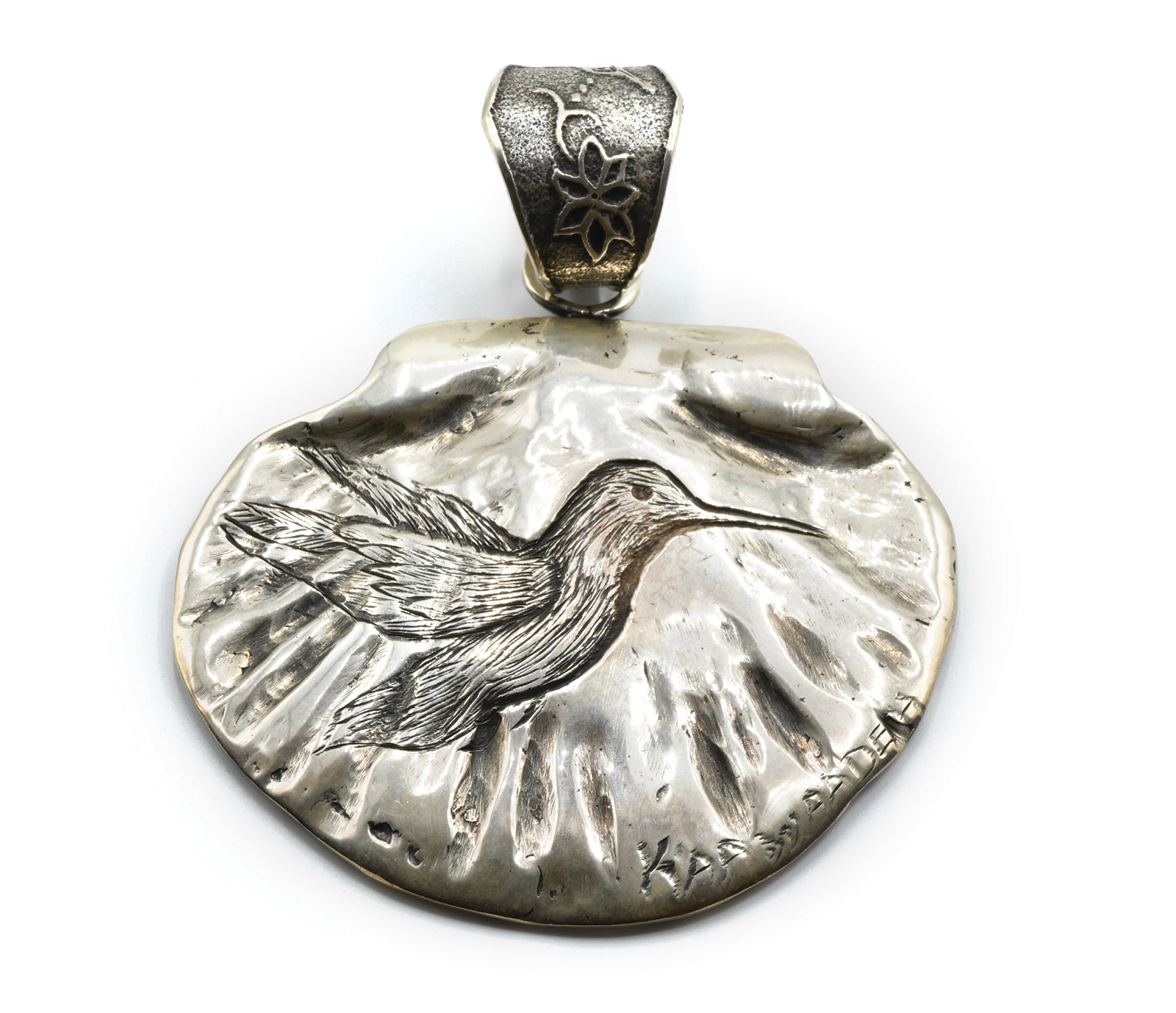 Marian Denipah (Ohkay Owingeh), Scallop Shell, 2018, silver, 4 x 3”
Self-taught Ervin Tsosie began creating jewelry in 1987 when he was a teenager. His works are immensely popular with his Navajo people. Tsosie’s designs are inspired by his culture’s long-established observances and prayers; for example, his grandmother had danced in the Yei bi Chei ceremony. He is an expert in the highly skilled technique of micro-inlay. His Mankind pendant is composed of hundreds of tiny pieces of hand-cut stones. Tsosie makes freehand drawings of his chosen design before he begins to set the stones. The artist then uses tapered sterling silver to frame his compositions. This piece’s key design elements, form and gradation, are emphasized for maximum effect.
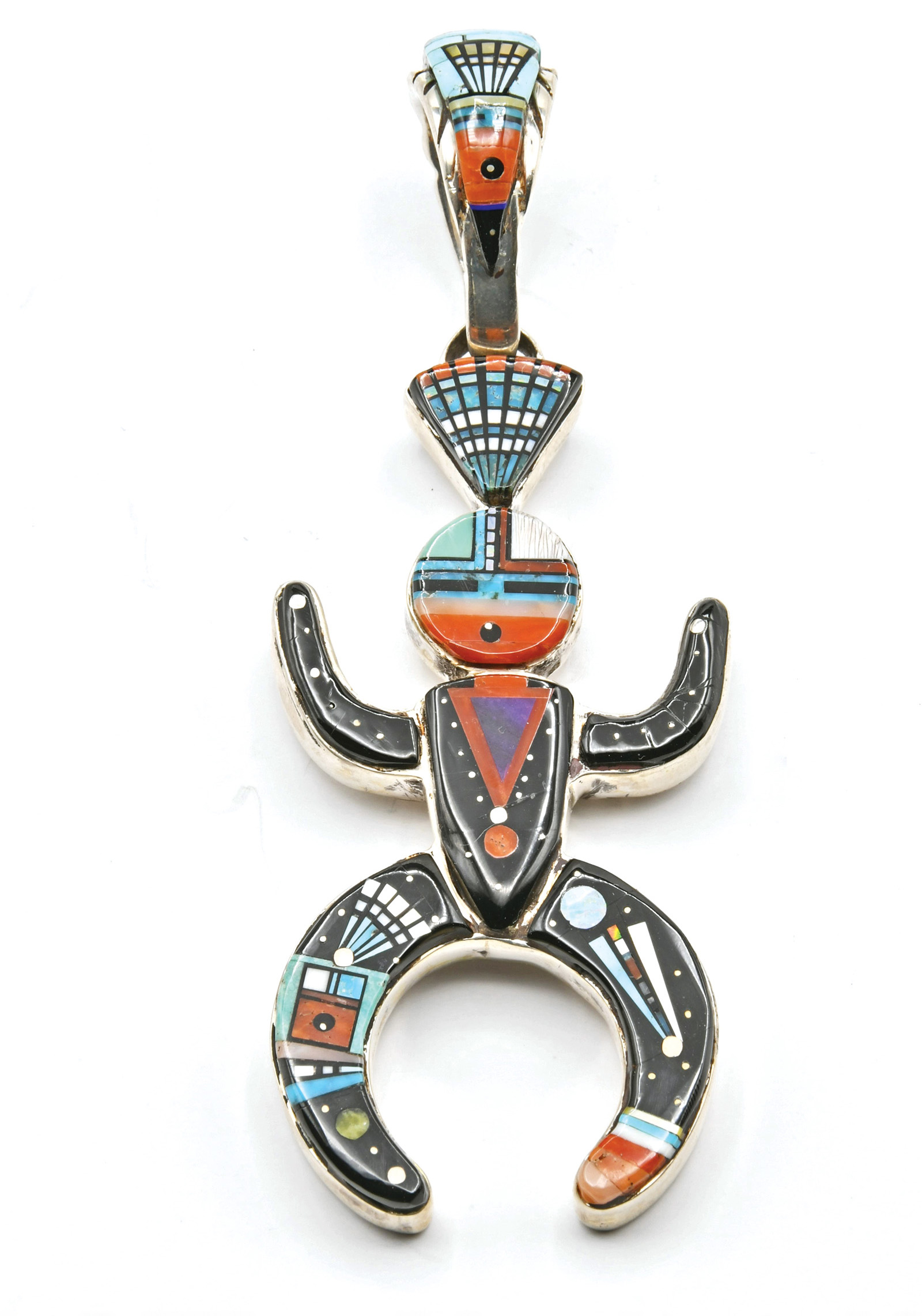 Ervin Tsosie (Navajo), Mankind, ca. 2010s, multi-stone inlay on jet, silver, 4”
A number of fine artists, including painters, occasionally turn to jewelry making. Silvester Hustito’s painterly eye and deep understanding of color and emphasis mark this playful pendant. Not bound by metalsmithing conventions, Hustito brings his understanding of art history and its modes to fashion a pendant in wood and ceramic. He mixes abstract and realistic elements to create a cloud with lightning, and references a significant art style, Pop Art, to unify this work. His Zuni heritage helps Hustito imbue his art with symbolism from nature and private belief.
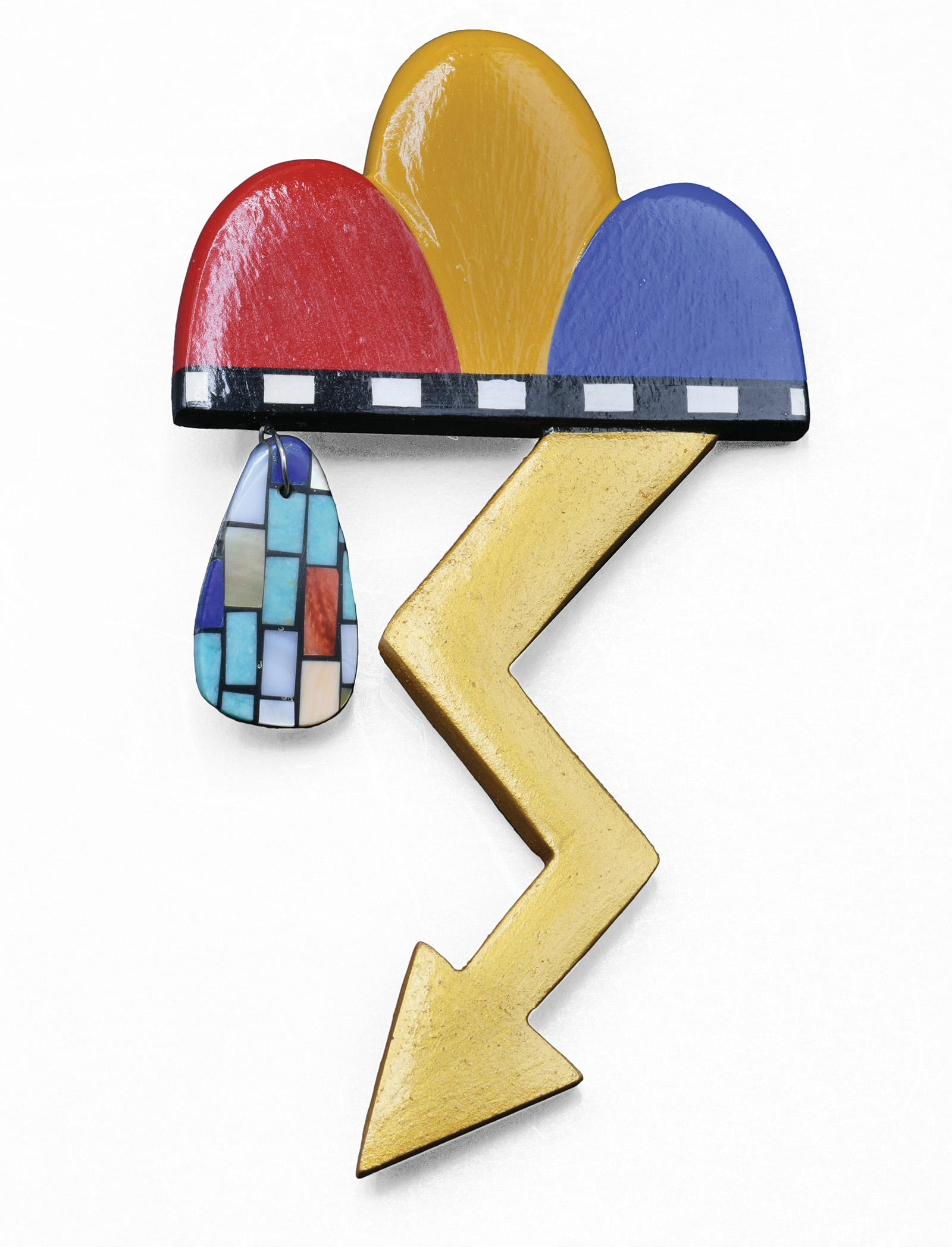 Silvester Hustito (Zuni), Painterly Pendant, ca. 2010s, wood and ceramic, 41/3”
Innovation is the watchword for Picuris artist Wayne Nez Gaussoin. He comes from a very talented family of jewelry artists known for infusing fashion and popular culture into their works. Gaussoin has studied art at a number of institutions, traveled the world widely and is considered one of the best multidisciplinary Native artists working today. For this piece he takes a conceptual art approach through design dominance and a quirky hierarchy of arrangement. When contacted, he suggested a title for this pendant, Synthetic Resistance. The ball is actually a seed from Latin America which is believed to ward off bad intentions and bring luck, much as the silver naja signifies. Gaussoin says the use of these features relate to the world’s farming industry and the use of GMOs, and how resilient Indigenous peoples’ traditional farming practices have remained.
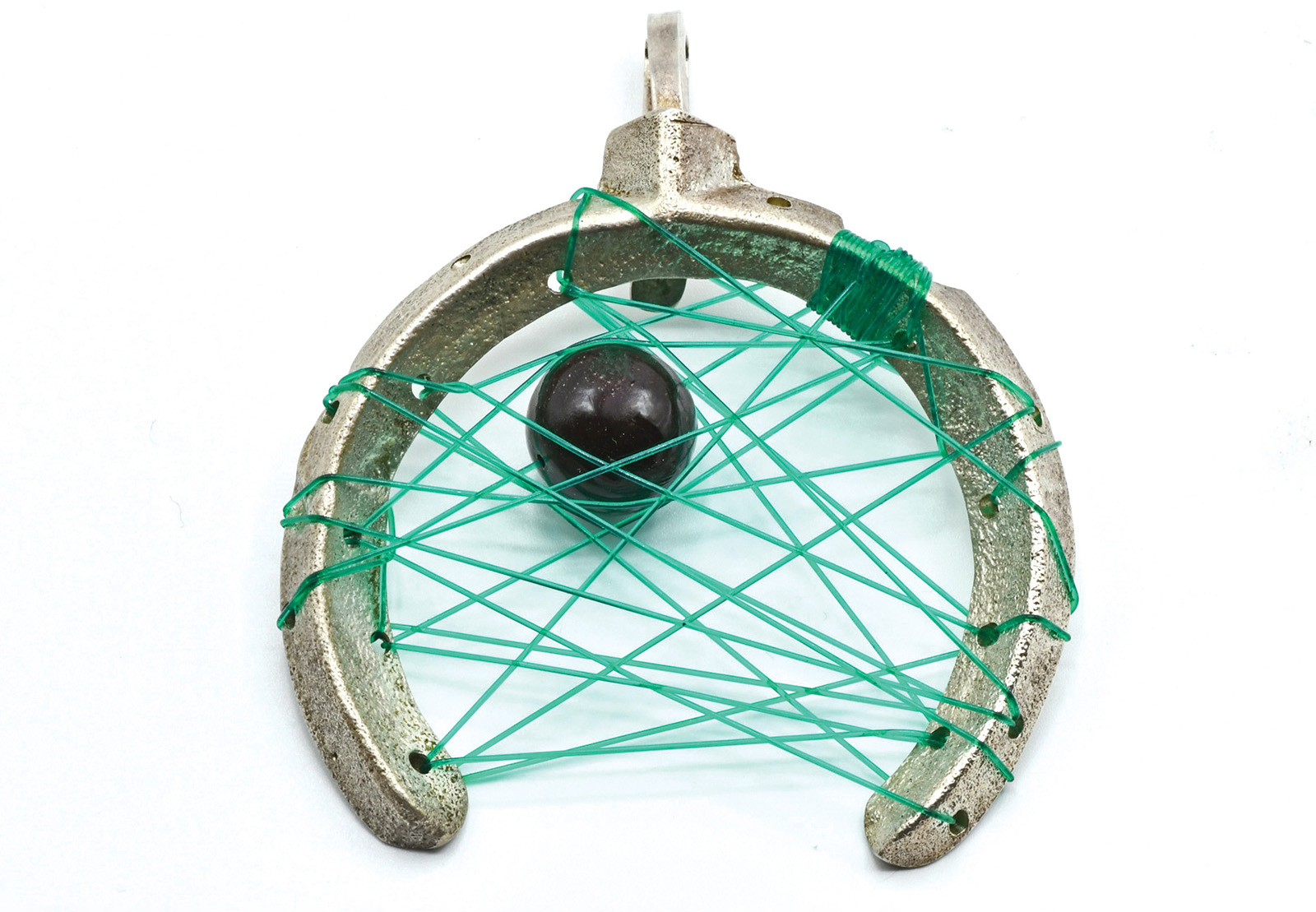 Wayne Nez Gaussoin (Navajo [Diné]), Synthetic Resistance, ca. 2010s, mixed media, 2¾”
All of these pendant design elements culminate in unity and harmony, despite their different approaches. In today’s world, this jewelry form is both decorative and popular in the marketplace. The works shown here, all made within the last ten years, offer a snapshot of Native design at its best. Whether traditional in origin or contemporarily unique, they serve as “statement” pieces. In other words, these pendants are knockouts.
Powered by Froala Editor