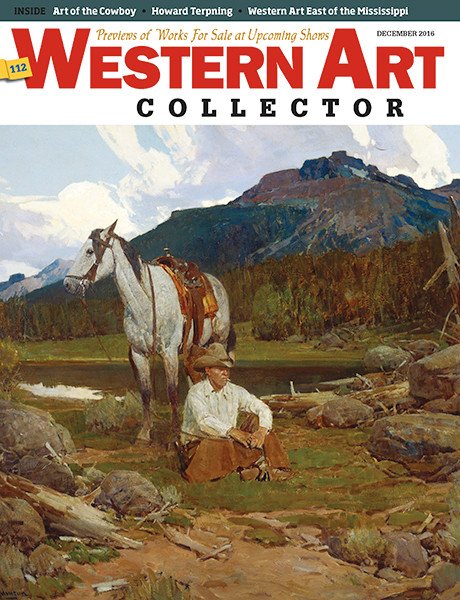
Rare Work, Echoing Tradition: Hopi Embroidered Plaques is a new book devoted to the study of a little-known form of Hopi textiles. Our intention is to present fresh analysis and thinking regarding Hopi embroidered plaques and, by association, traditional Hopi wicker plaques. We have studied design motifs in Hopi wicker basketry and katsinam for five decades and have identified numerous wicker plaque designs. In addition to our primary research among Hopi weavers we have personally inspected many major museum collections throughout the United States. As long-time admirers of the Hopi people and their material culture we strive to discern and absorb what we as non-Hopis can within our limitations.
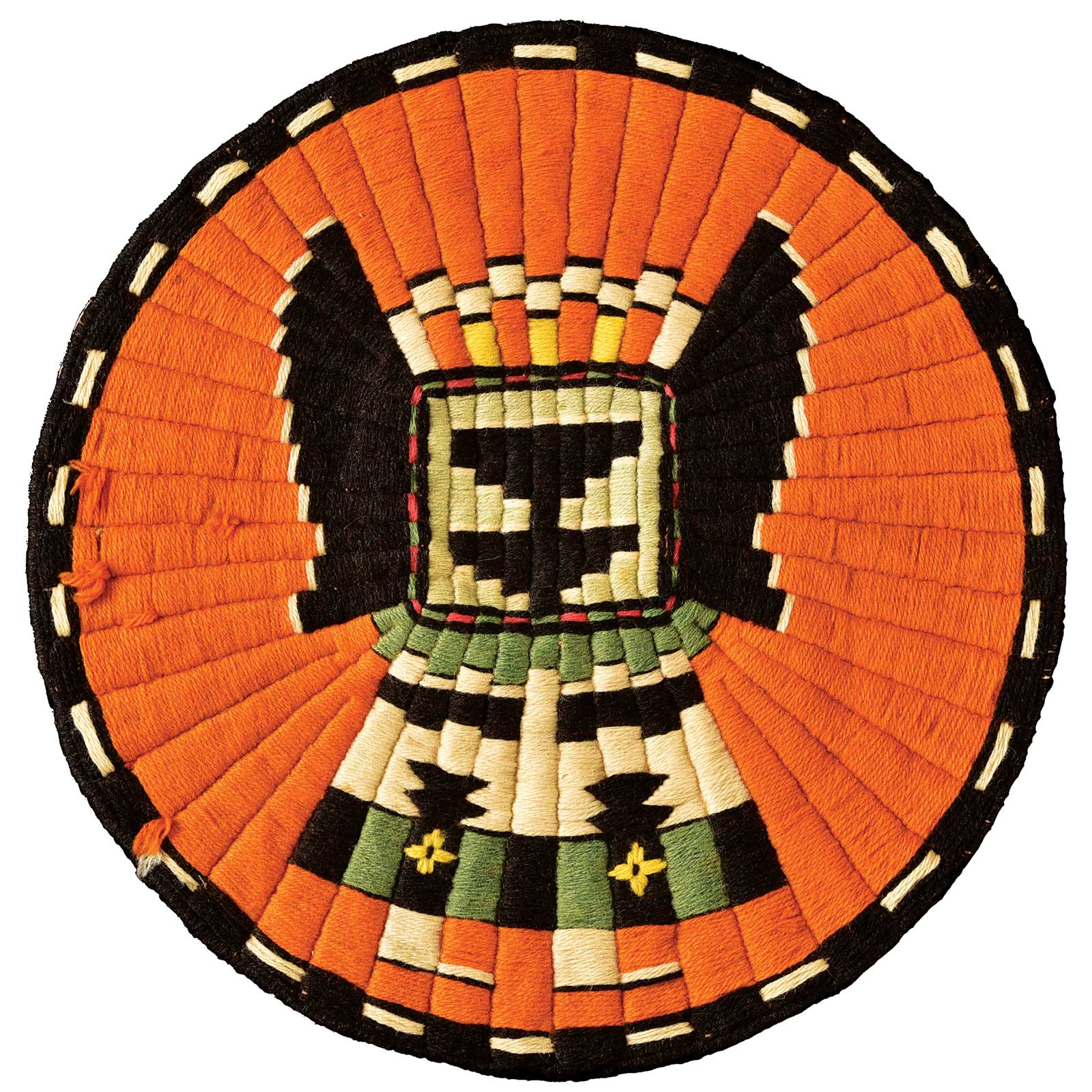 Crow Mother Katsina (Angwusnasomtaqa), ca. 1920-1930, embroidered plaque with yarn, 13”
In 1998, we curated the very first exhibition of Hopi wicker basketry at the Southwest Museum in Los Angeles. During the exhibition, in conjunction with the Southwest Museum, we hosted a group of Hopi Third Mesa weavers whose visit in Los Angeles was sponsored by the National Museum of the American Indian (Smithsonian) Hopi Basket Weavers Project. In a lively round table symposium, we shared information about Hopi wicker basketry design motifs, which was extremely enlightening and beneficial to all parties. What is so interesting is the embroidered yarn plaques echo these traditional wicker plaque designs in both artistry and color. When looking at a photo of an embroidered yarn plaque, in excellent condition, it is easy to mistake it for an actual wicker plaque due to the exactness of its design and skillful execution.
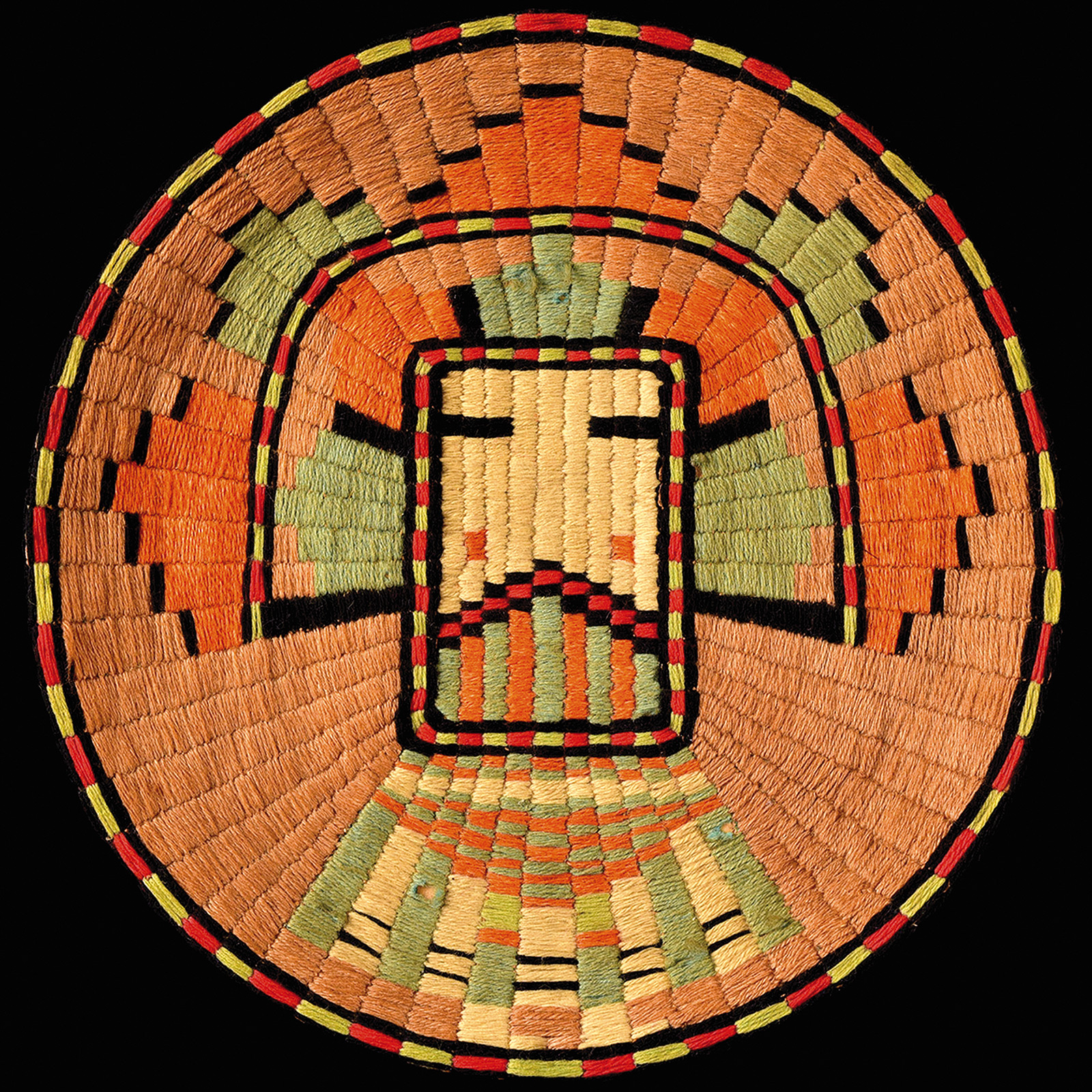 Shalako Maiden Katsina (Sa’lakwmana), ca. 1900-1920, embroidered plaque with yarn, 13”
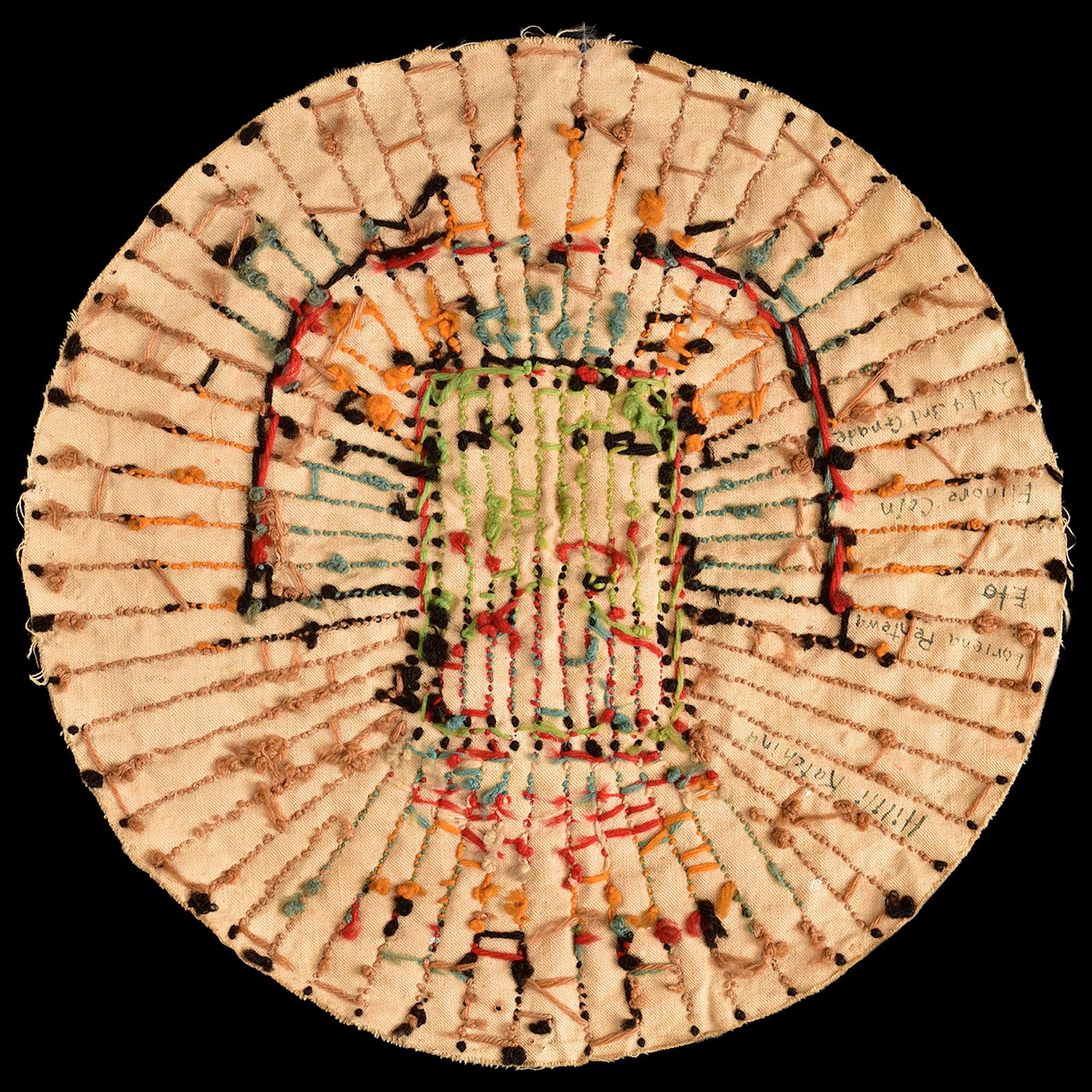 Shalako Maiden Katsina (Sa’lakwmana), ca. 1900-1920, embroidered plaque with yarn, 13”
With few exceptions, we have found that most people, including the Hopi themselves, other collectors, dealers and museum professionals are unfamiliar with Hopi embroidered yarn plaques. They have been overlooked, and there are so few of them extant.
Hopi Third Mesa basketry motifs have frequently been misidentified even up into the 21st century both by individuals and institutions. In reality, not much has been published about the topic relative to other subjects of Native American inquiry although many good books have been published about Hopi katsinam and katsina dolls. To our knowledge we are the first to explore Hopi yarn plaques in depth.
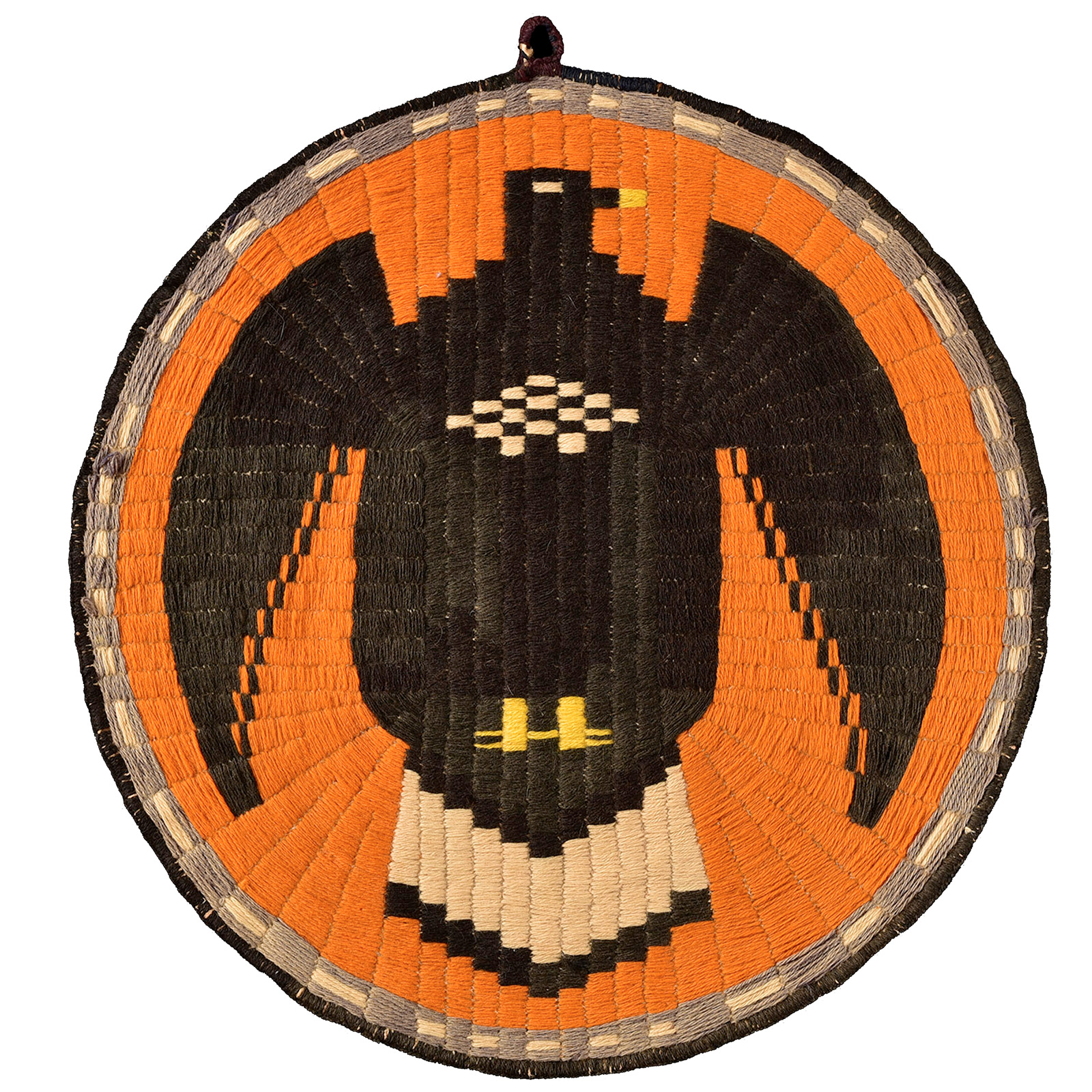 Golden Eagle (Kwaahu), ca. 1920-1930, embroidered plaque with yarn, 17 x 17¾”
About 20 years ago, an unusual Hopi plaque caught our attention. From a distance we initially mistook it for a wicker plaque, but upon further inspection we were amazed to discover it was a textile embroidered with yarn and backed with calico fabric. What was it and who made it? It had to be Hopi-made because who or why would anyone else make such a perfect stand-in for an authentic Hopi wicker plaque? With thanks to Gregory Schaaf, director of the Center for Indigenous Arts and Cultures, Santa Fe, New Mexico, we began to unravel the mystery of who made them and for what purpose.
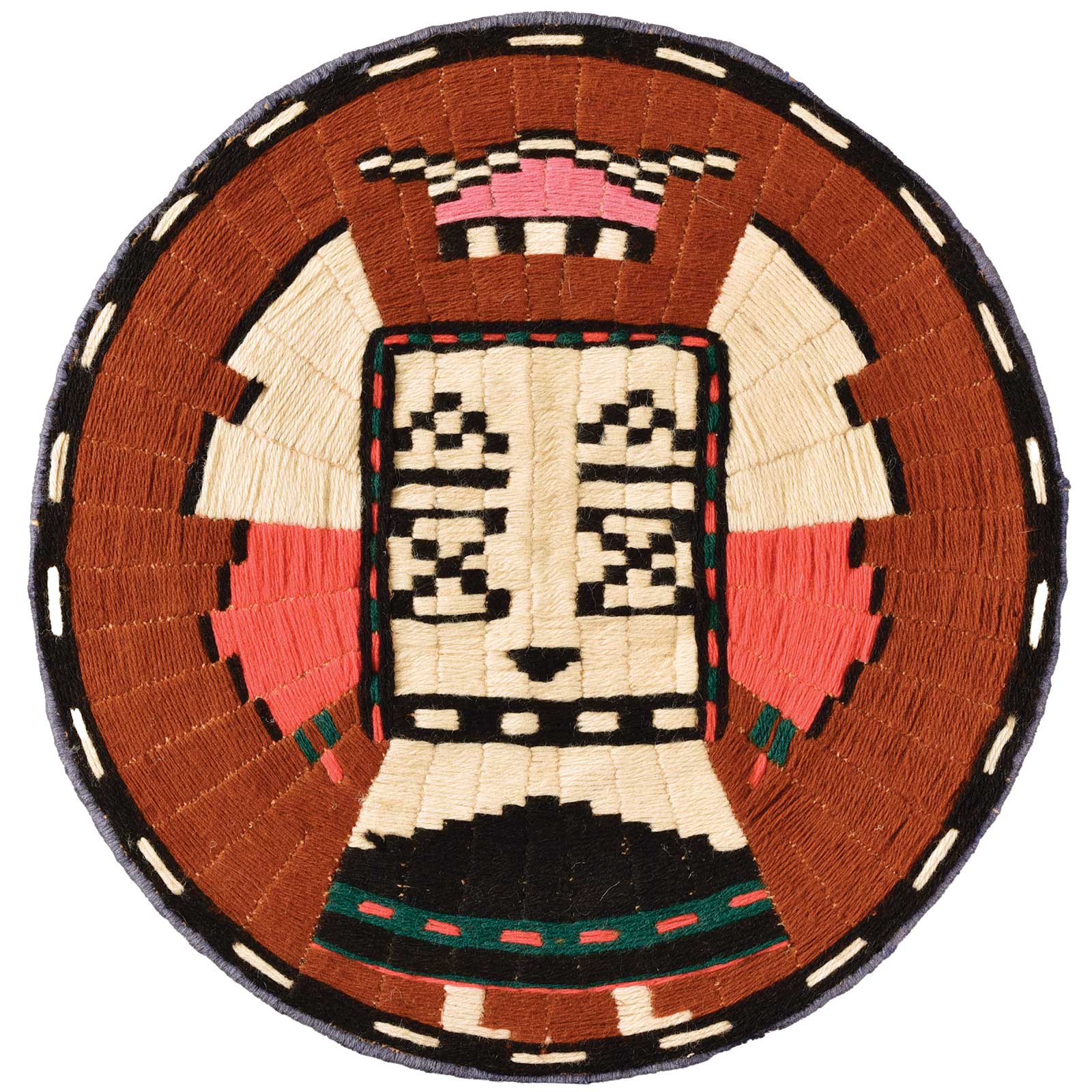 Snow Katsina Maiden (Nuvakatsinmana), embroidered plaque with yarn, 16"
In 1996, in a joint project between the Pojoaque Pueblo Museum and Southwest Learning Centers, Schaaf mounted an exhibition called Honoring the Weavers. In the catalog to the exhibit, on the next to last page under the heading “Embroidered Plaques,” Schaaf included a sole entry which describes a Hopi embroidered yarn plaque featuring a Crow Mother design (XV-B-4.). The following story appears along with it: Hopi weaver, Fermina Banyacya explains, “We girls wove those in the 30s at the day schools. Our teachers sold them for a few dollars to the trader, Lorenzo Hubbell. The money went to fund our field trips to the Grand Canyon and other places. The men artists used to draw the designs on paper with the colors written in. We embroidered them on a cotton mesh material and put a cloth backing on them. I haven’t seen one in 50 years!”
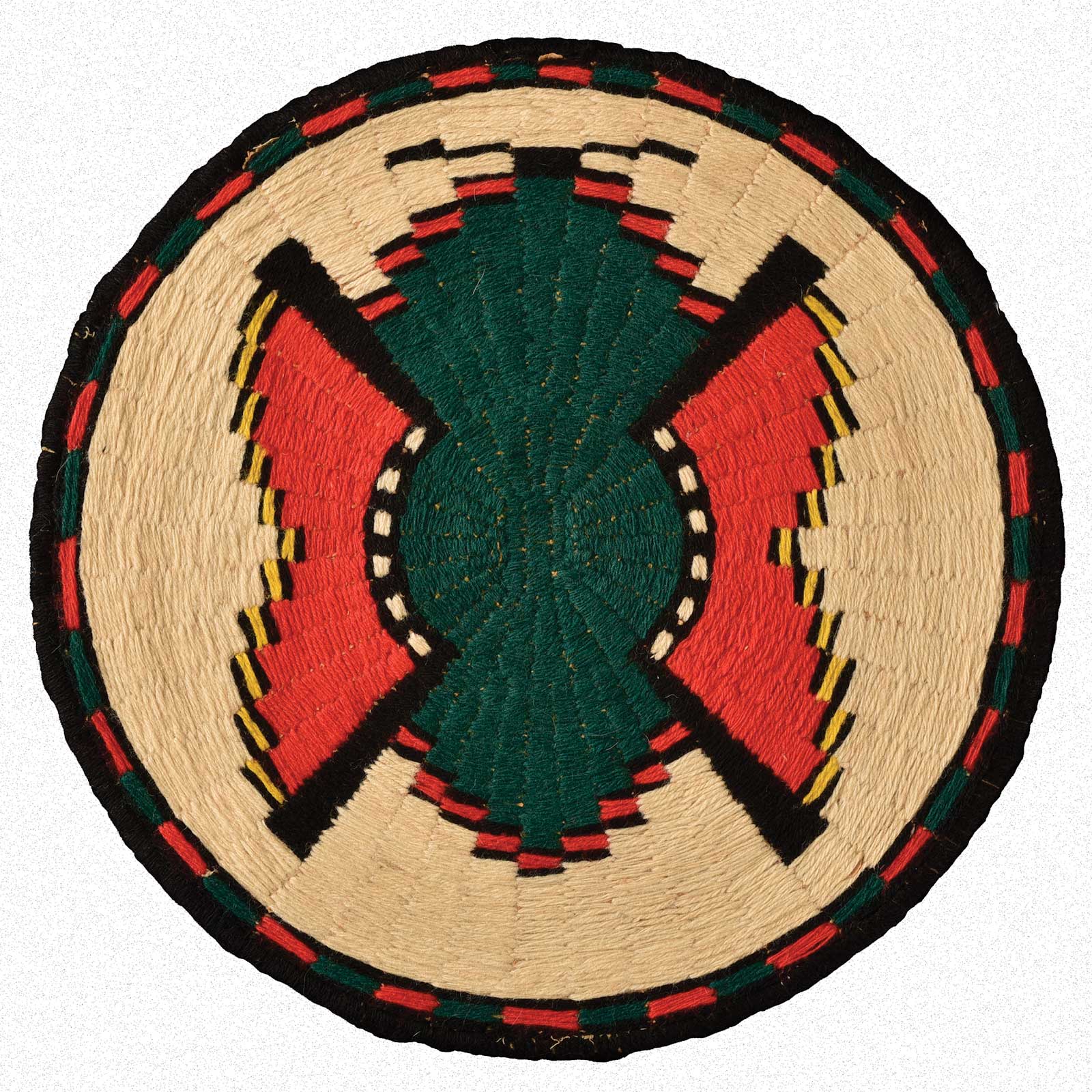
Butterfly (Povolhoya), ca. 1920-1930, embroidered plaque with yarn, 14"
Although we may never know how embroidered yarn plaques were used, since they were made to sell to tourists, we hypothesize their end-use might have been as pillow covers or parlor decorations. It occurs to us they also would have made great teaching tools for budding basket weavers. It would have been much easier to acquire cloth and yarn to practice with than to seek out and prepare the traditional weaving materials used in Hopi wicker plaques.
Regardless of their use, John Lorenzo Hubbell, also known as “Don” (a Spanish term of respect) Lorenzo Hubbell, was a major figure in developing and promoting Southwestern Native American crafts. He was born in Pajarito, New Mexico, in 1853. He opened his first trading post at Ganado Lake in partnership with C. S. Cotton in 1876; and shortly thereafter, in 1878, he opened his trading post on the site of what is now widely known as Hubbell Trading Post in Ganado, Arizona. Its location is within about 35 miles of what is today the eastern border of the Hopi Reservation.
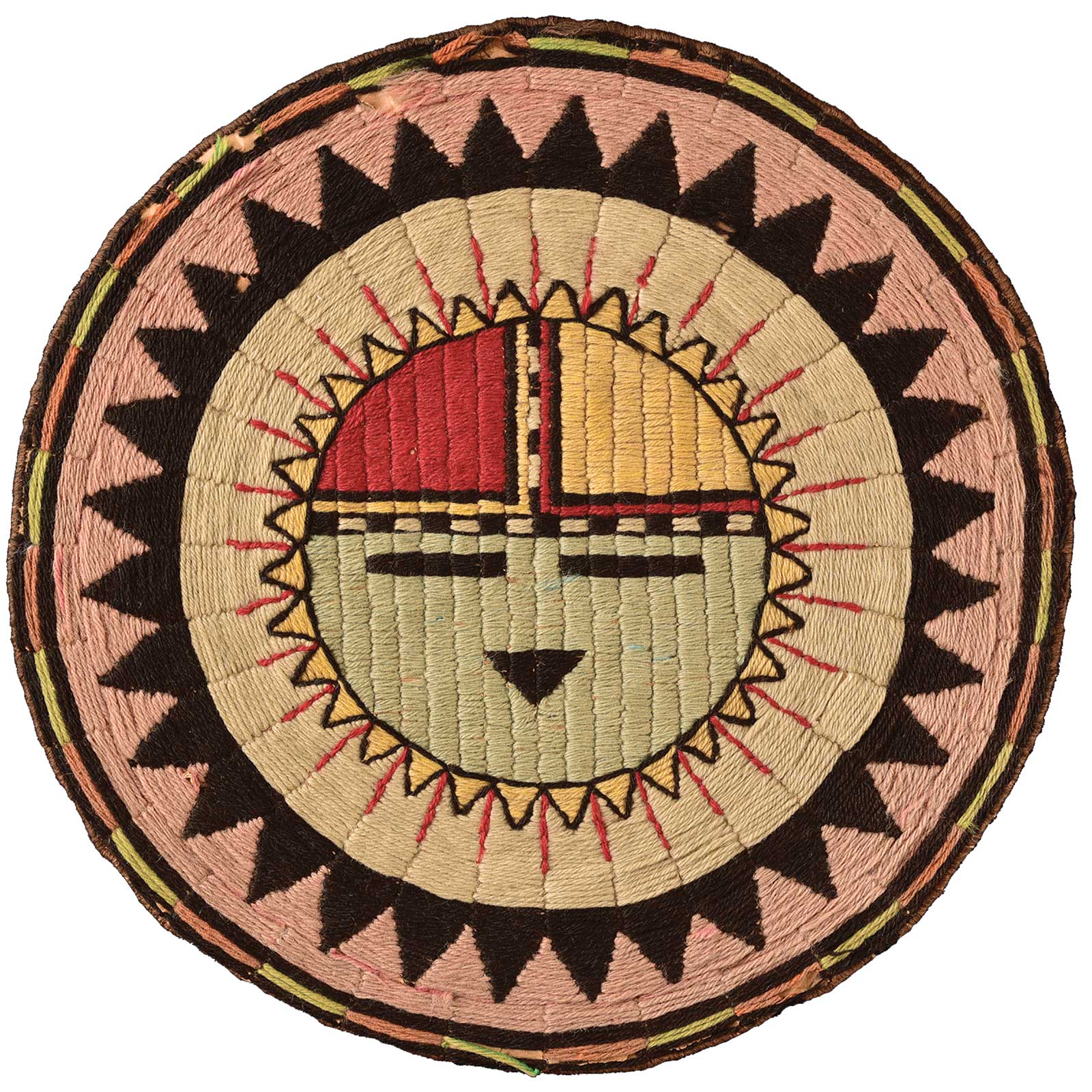
Sun Katsina (Taawa Katsina), embroidered plaque with yarn, 13½"
John Lorenzo Hubbell Sr. died in 1930, however, Ms. Banyacya recalled her teachers selling the yarn plaques to a gentleman with the same name. We have concluded that they were purchased by his son, Lorenzo Junior, in the 1930s.
Did the Hopi girls’ teachers initially sell to “Don” Lorenzo Senior, perhaps in the early 1900s up until his death in 1930 and then continue selling to his son? When did the Hopi girls begin making them?
With expert help from Dr. Kathleen Whitaker, former director of the Indian Arts Research Center School for Advanced Research in Santa Fe, New Mexico, we looked at the material and construction of the yarn plaques and found several variations among them. We were able to determine that some of the Hopi yarn plaques are backed with Victorian-era cotton and linen cotton indicating that they might date back to the late 1800s or early 1900s.
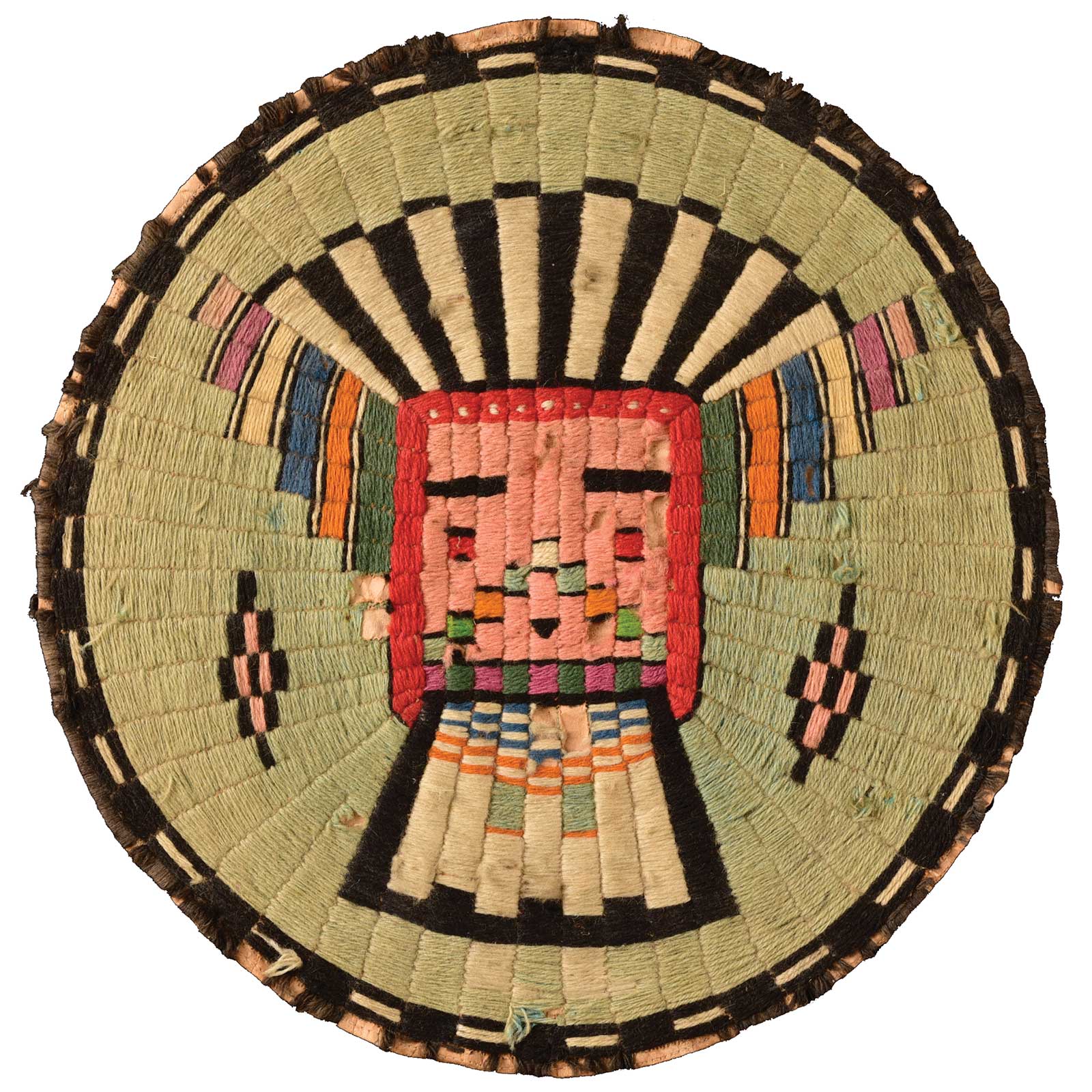 Havasupai Katsina Maiden (Kòoninkatsinmana), embroidered plaque with yarn, 13½ x 14"
The yarn itself could also be an indicator of their age. In the latter part of the 19th century into the first quarter of the 20th century four-ply Germantown, Pennsylvania, yarns, as well as yarns coming from Philadelphia and New York, were popular among native weavers. Sometimes embroidered plaques incorporated more than one kind of yarn. It can be difficult to distinguish four-ply Germantown yarns from similar manufactured yarns. The spin direction and the twist of the yarn is an important criteria for accurate identification. The Calico fabrics used to back the embroidered plaques may also help to date them as the popularity of certain Calico color combinations and patterns are associated with different time periods.
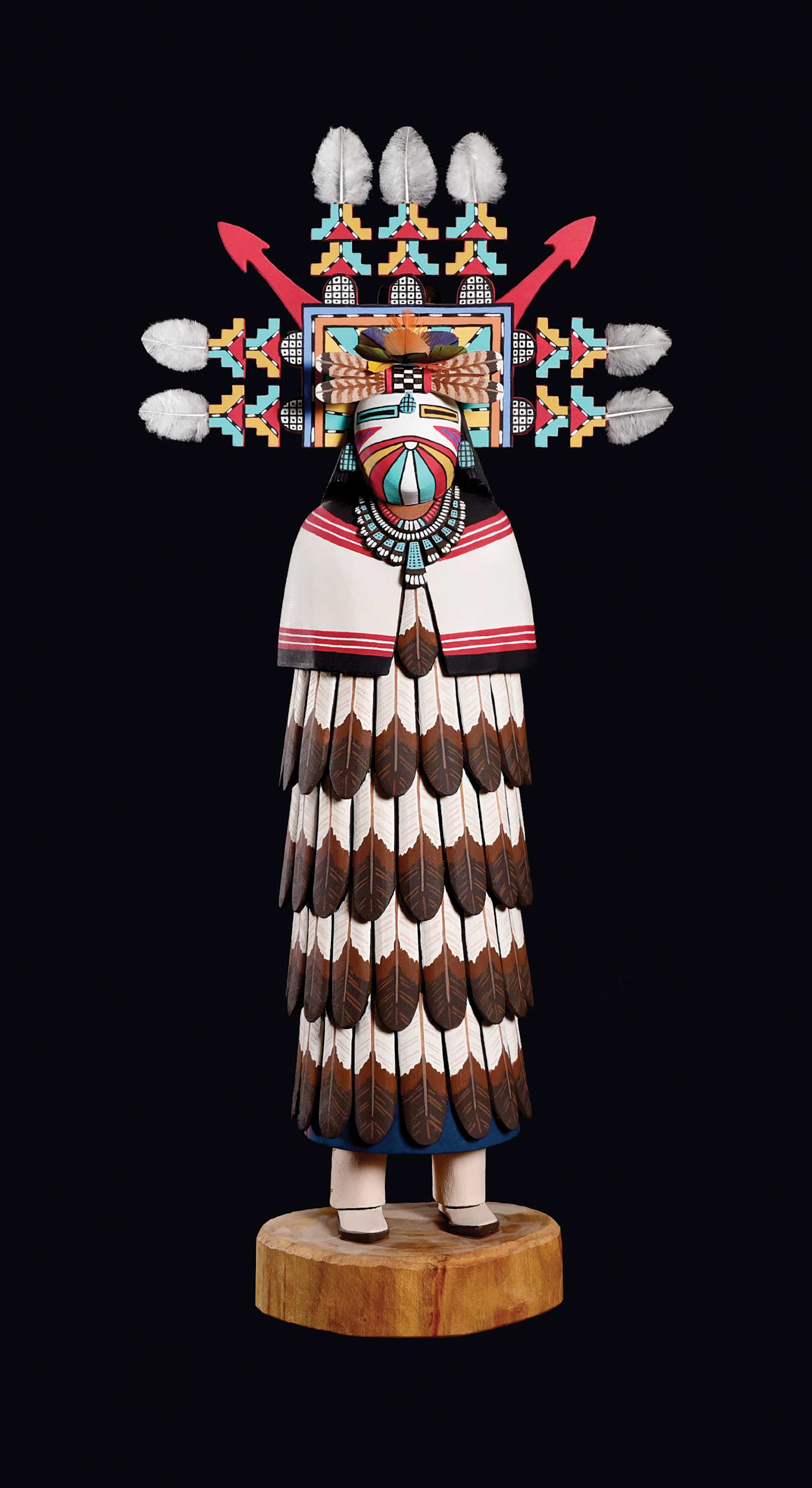 Ernest Moore (Hopi, 1934-2009), Shalako Maiden Katsina Doll, ca. 1980, carving, 21"
Based on our research we surmise that girls began making Hopi embroidered yarn plaques in the late teens and 1920s at the Hopi Day Schools in the Villages of Orayvi (Oraibi) and Kiqotsmovi (Kykotsmovi); and at Keams Canyon. In 1926, the Meriam Report recommended that schools abandon the teaching of European-American cultural values in favor of teaching students skills they would need to be successful within and outside of their tribal communities. The creation of Hopi embroidered yarn plaques by school girls during this time period reflects these new directions in education.
As you join us in taking a closer look at Hopi embroidered yarn and wicker plaques and katsina dolls, we hope it will enhance your appreciation of these rare works. Please note we have endeavored to be sensitive to what is today considered to be culturally and politically correct terminology to describe both people and places. We would like to express our sincere appreciation to all those who generously provided assistance to our project. Thank you for your guidance and friendship.
Rare Work — Echoing Tradition: Hopi Embroidered Plaques
By Barbara Goldeen and John Selmer
Published by Santa Fe Crafts,
South Pasadena, California
73 pages, $39.95
Available for purchase online at www.santafecrafts.com
Powered by Froala Editor