Just as glass is composed of sand, limestone and sodium carbonate, Angela Babby’s artwork is composed of stained glass, vitreous enameling and tile work. Vitreous enamel, itself, is made of powdered glass that is then fired. The complex composition of her materials is echoed in her complex compositions that reflect her interest in world history and the history of her tribal roots, as well as the people in those histories.
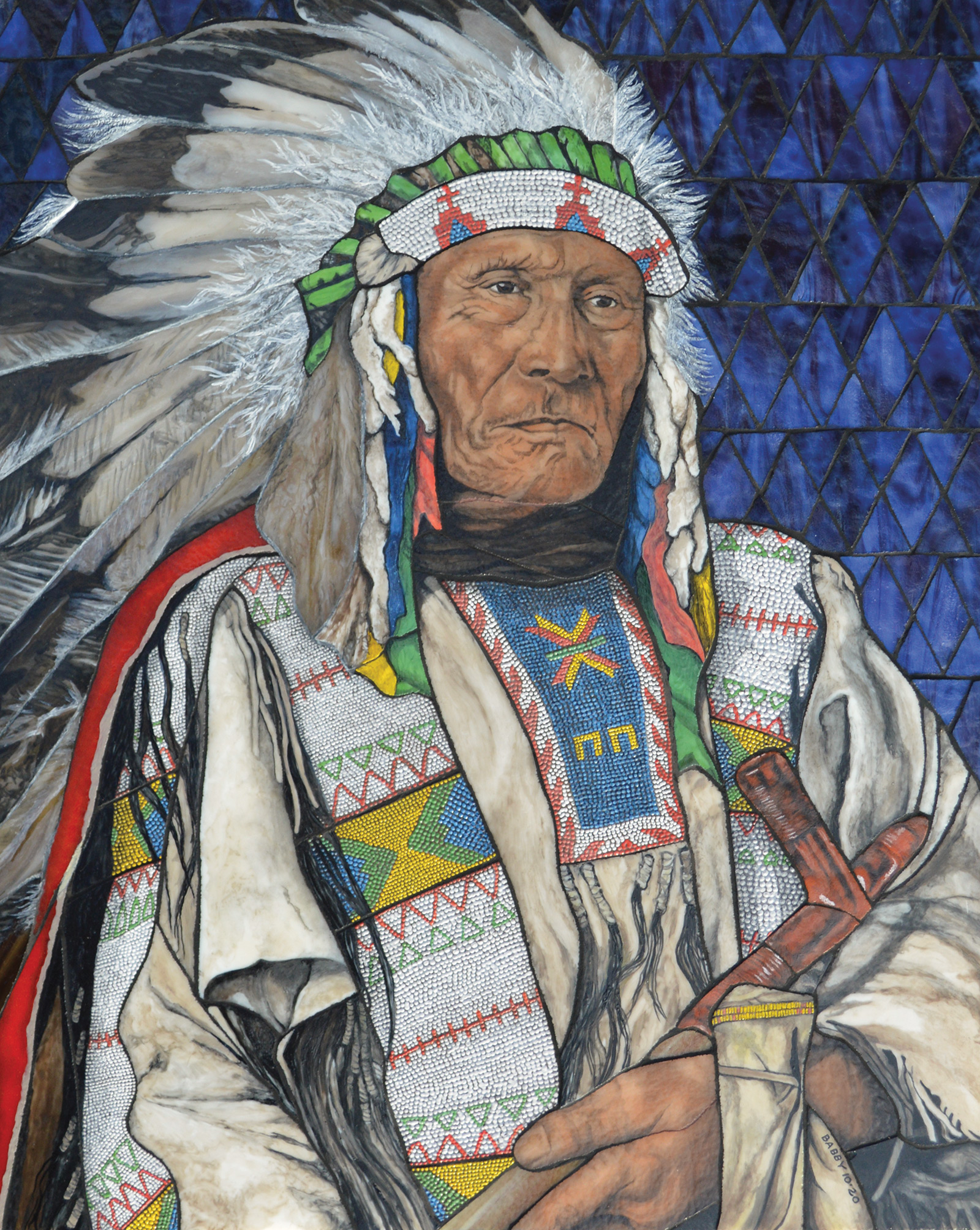 Jhon’s Grandfather, kiln-fired vitreous enamel on glass mosaic tile board, 2017, 24 x 20”
In the last half of the 19th century, photographic portraits were the rage and, fortunately, many of the subjects were famous Indigenous leaders as well as everyday people going about their lives. She discovered a photograph of the Dakota warrior Medicine Bottle taken when he was a captive awaiting his execution after the U.S.-Dakota war of 1862. It inspired her to interpret its emotional content in her work.
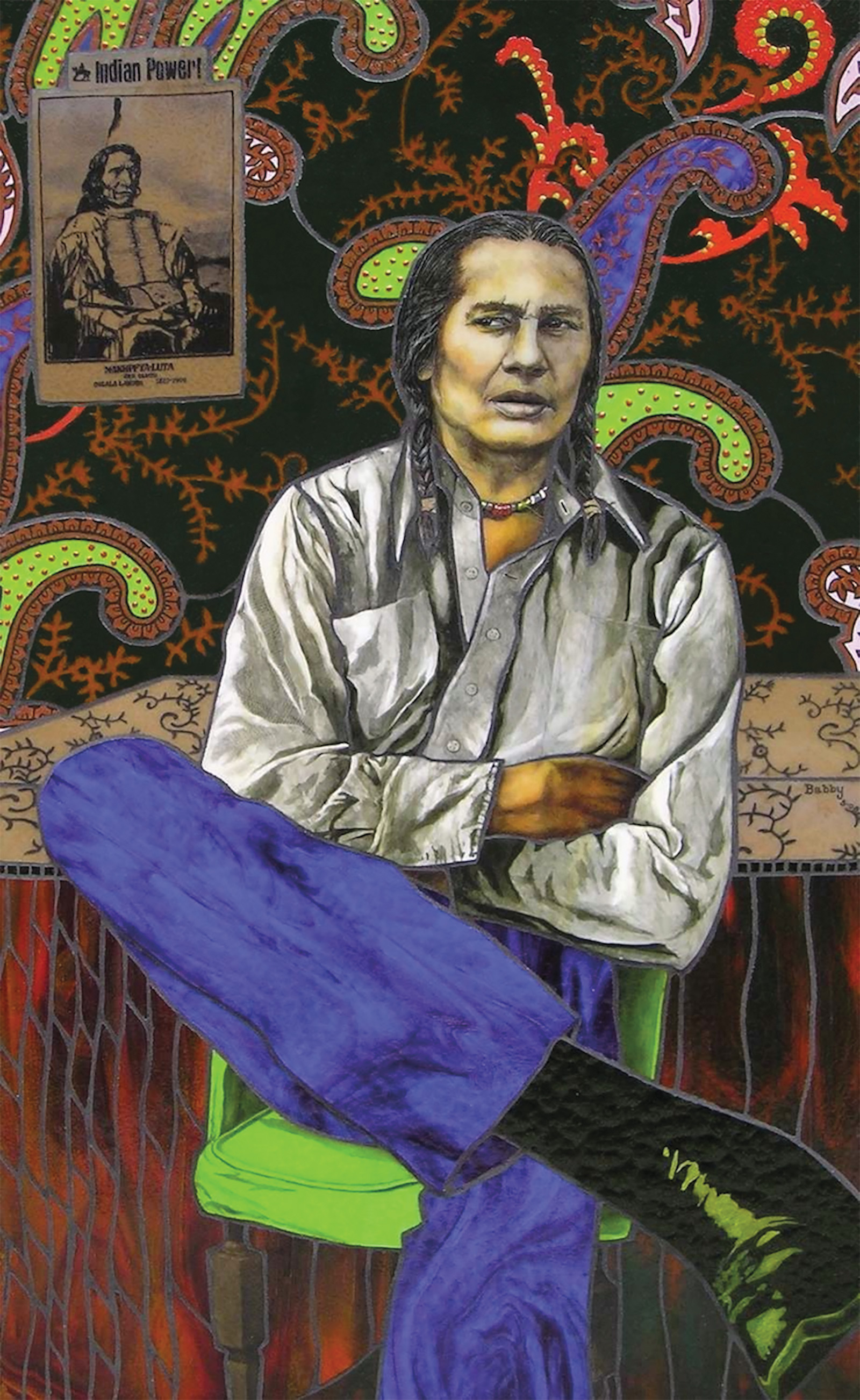 The Means Justify the Ends, kiln-fired vitreous enamel on glass mosaic board, 34 x 20”
The exhibition Vitreous Visions: The Glass Art of Angela Babby, displaying her interpretations of history, will be at the Brinton Museum in Big Horn, Wyoming, through October 31.
“When I study black-and-white images to create portraits in glass, I look very carefully at what the people are wearing to try to express and interpret accurately the personality of the person,” she says.
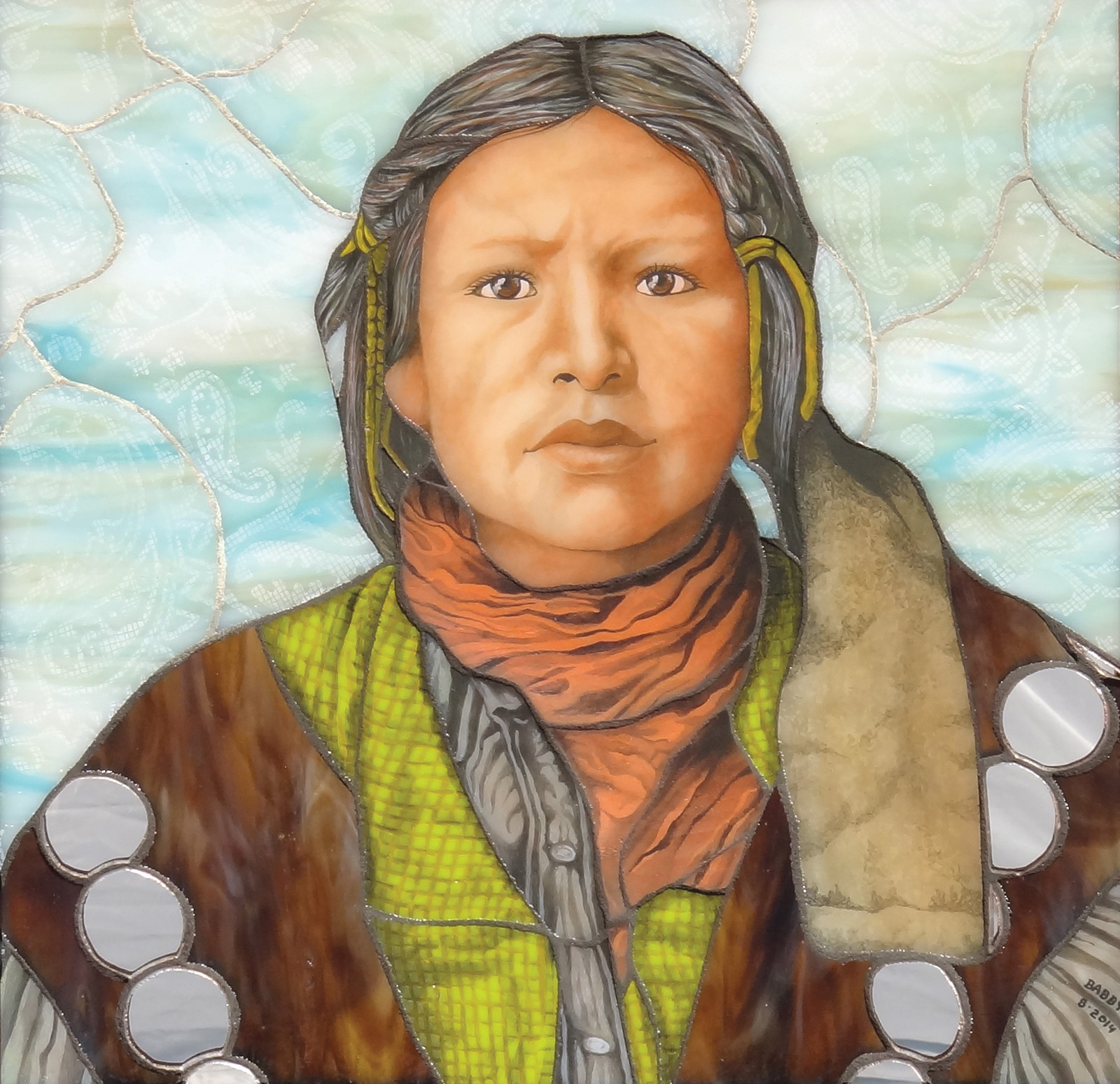 Mounts Thrice, 2014, kiln-fired vitreous enamel on glass mosaic tile board, 12 x 12”
“I set out to render them in the most elegant and honest way that I can. Iridescent and vividly colored glass intensifies the emotional power of the work.”
In Jhon’s Grandfather, every bead in the chief’s regalia is a minute drop of vitreous enamel that has been fired in a kiln. The background of The Means Justify the Ends is a paisley pattern that “brings to mind natural forms, but also historical references from shawls and textile trade goods from the 1800s,” she explains.
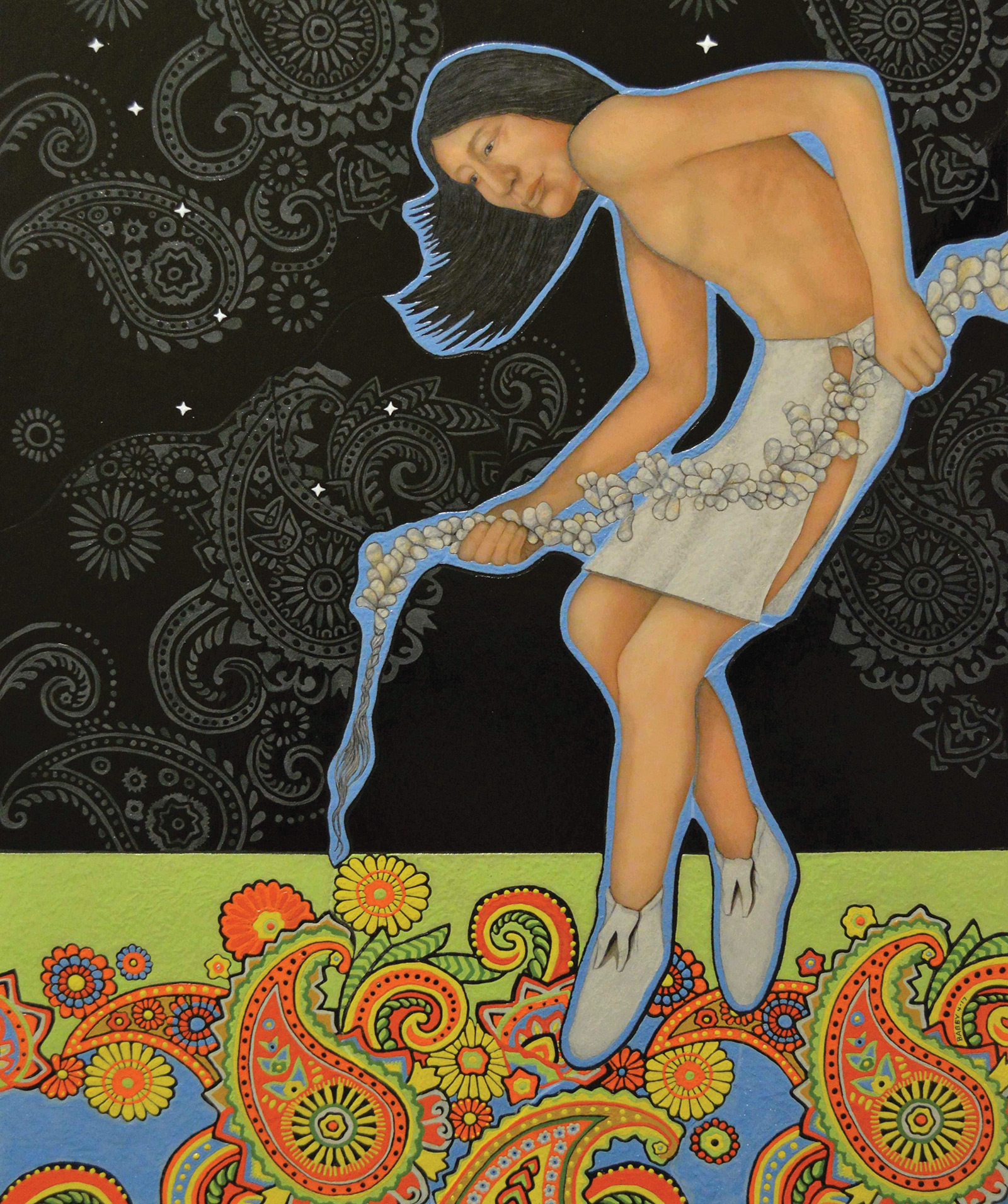 Wicahpi Hinhpaya (Fallen Star), We Need a Hero, 2017, kiln-fired vitreous enamel on glass
“My Lakota ancestry and the mysterious nature of glass inspire my fascination with making art,” she says. “Glass contains light. When I depict a person from the past in glass it has a three-dimensional depth that I could never achieve with paint.
“Color is central for emotional power but the true value of an artwork lies in its ability to communicate directly with the viewer.
“We are all connected if we choose to notice. What we think and create makes a great deal of difference in the big picture. We each affect our world in a tangible way.”
Through October 31, 2022
Vitreous Visions: The Glass Art of Angela Babby
The Brinton Museum
239 Brinton Road, Big Horn, WY 82833
(307) 672-3173, www.thebrintonmuseum.org
Powered by Froala Editor