This article is excerpted from my soon-to-be published book, Hopi Katsina Art Anomalies: The Unusual, the Rare and the Unique, from Rio Nuevo Press in Tucson, Arizona. The topic is general carving styles from 1880 to present. A photo accompanies each category in order to illustrate the specific characteristics.
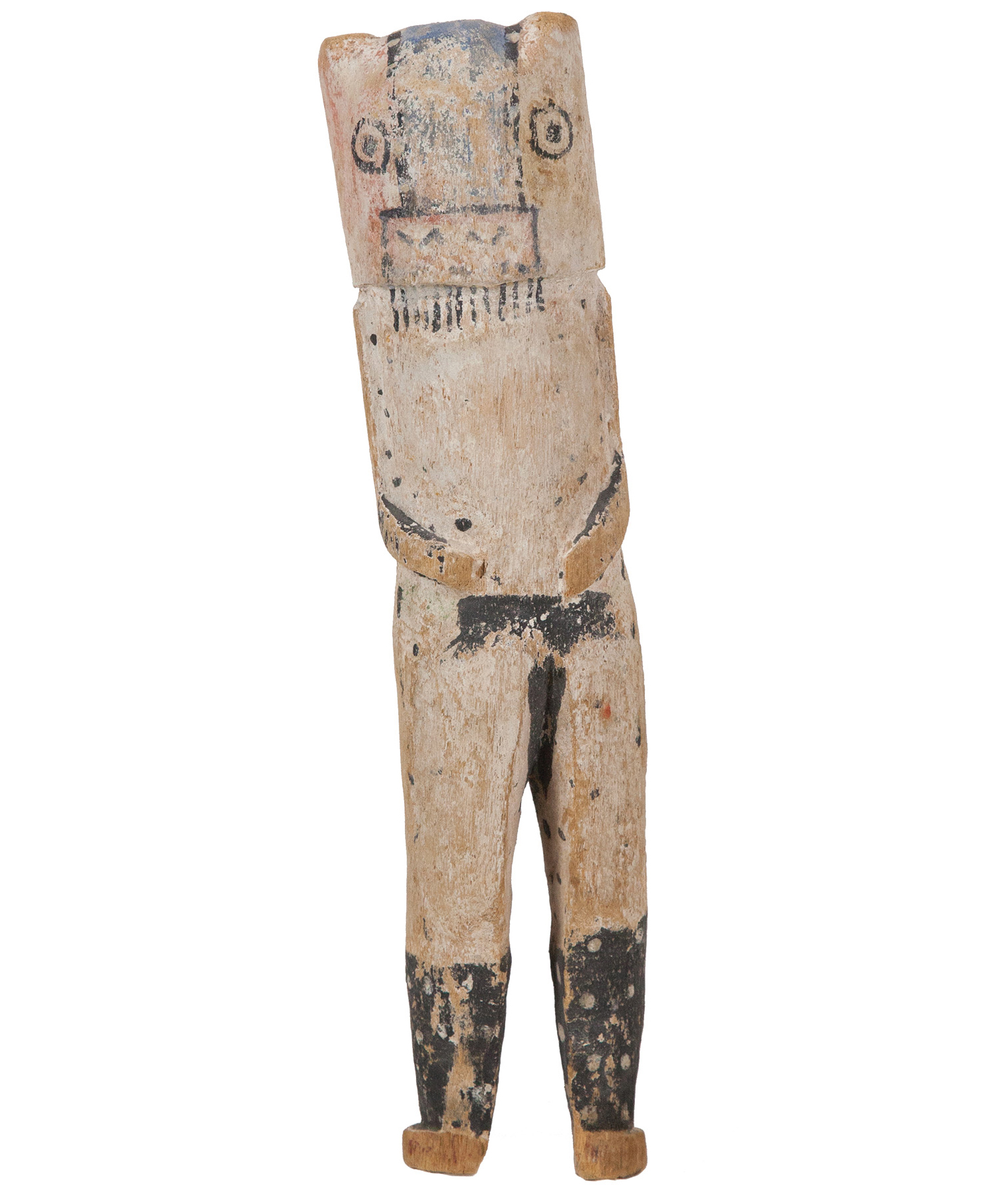
Category 1
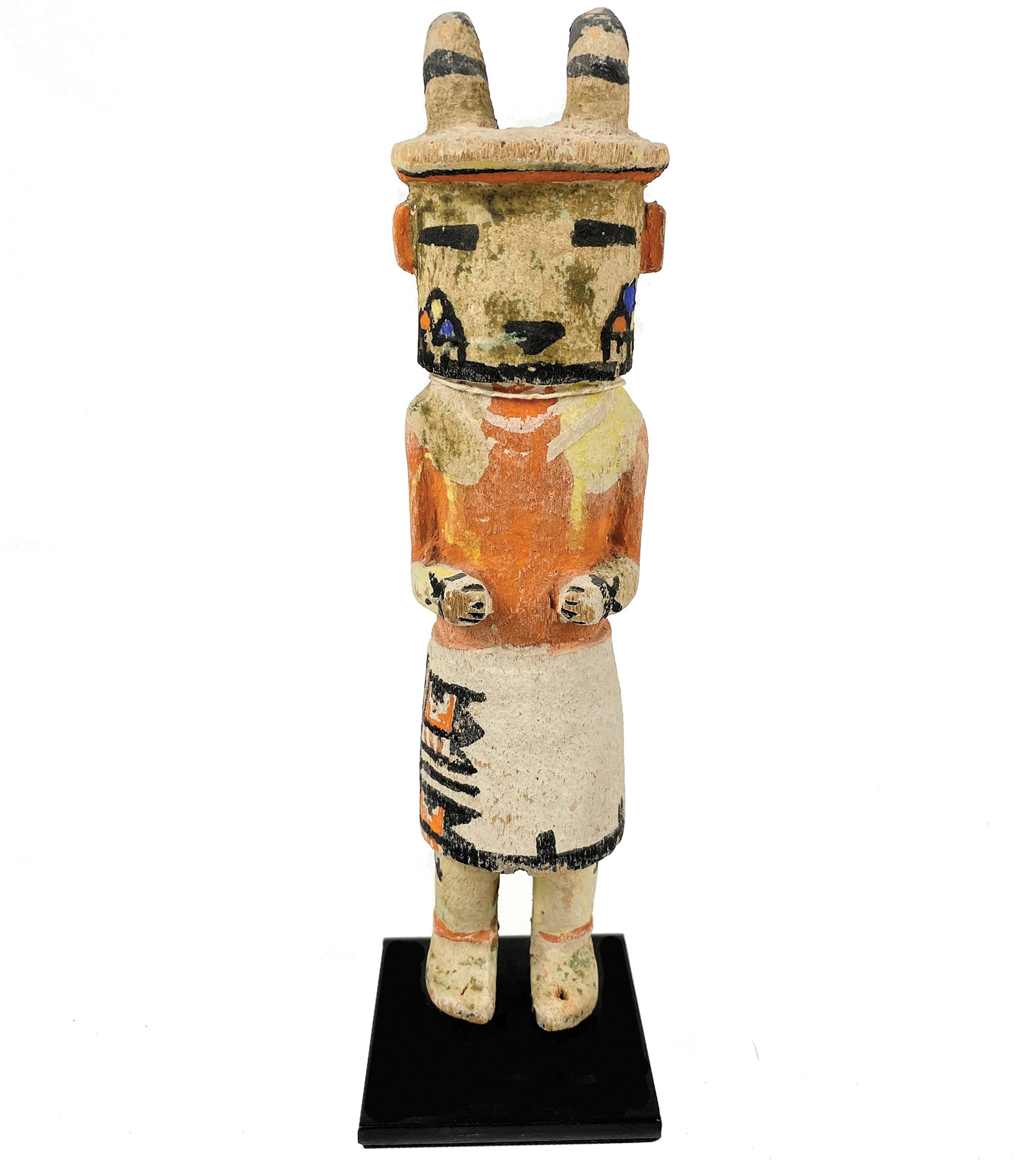
1880 to 1910: Early Traditional
Note the very minimal carving and simple paint (although worn). This is a minimalist form.
Category 2
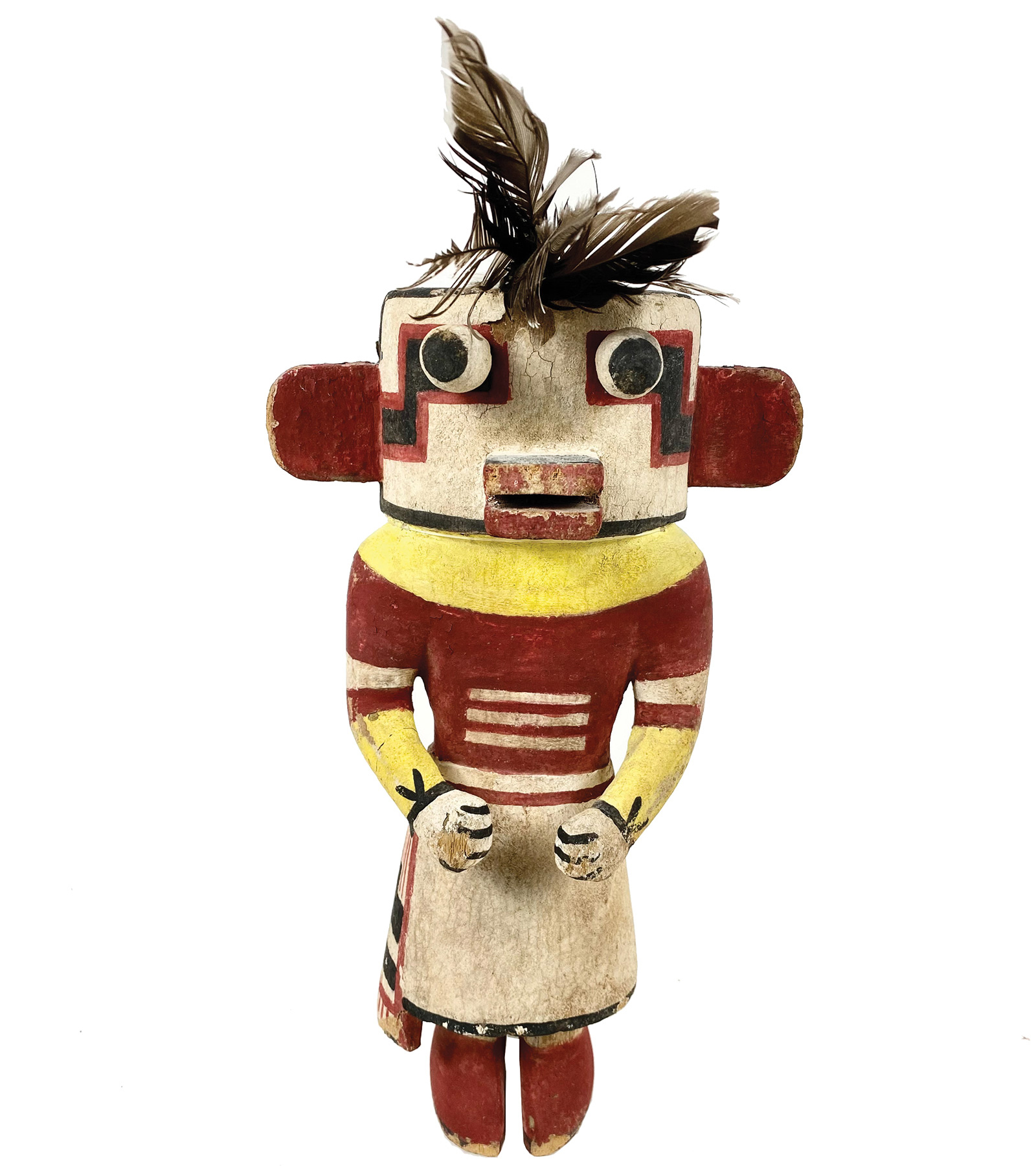
1910 to Late 1920s: Late Traditional
This katsina is Aaloosaka, a deity. By the 1920s, many katsinam had become rather standardized in form. Hands were generally placed in the so-called “belly or tummy ache position.” The Hopi call such carvings “ponotutuyqa” or “one with a stomach ache.” The hands in this position were not carved separately from the bodies but appeared in bas relief over the lower chest or abdomen.
Category 3
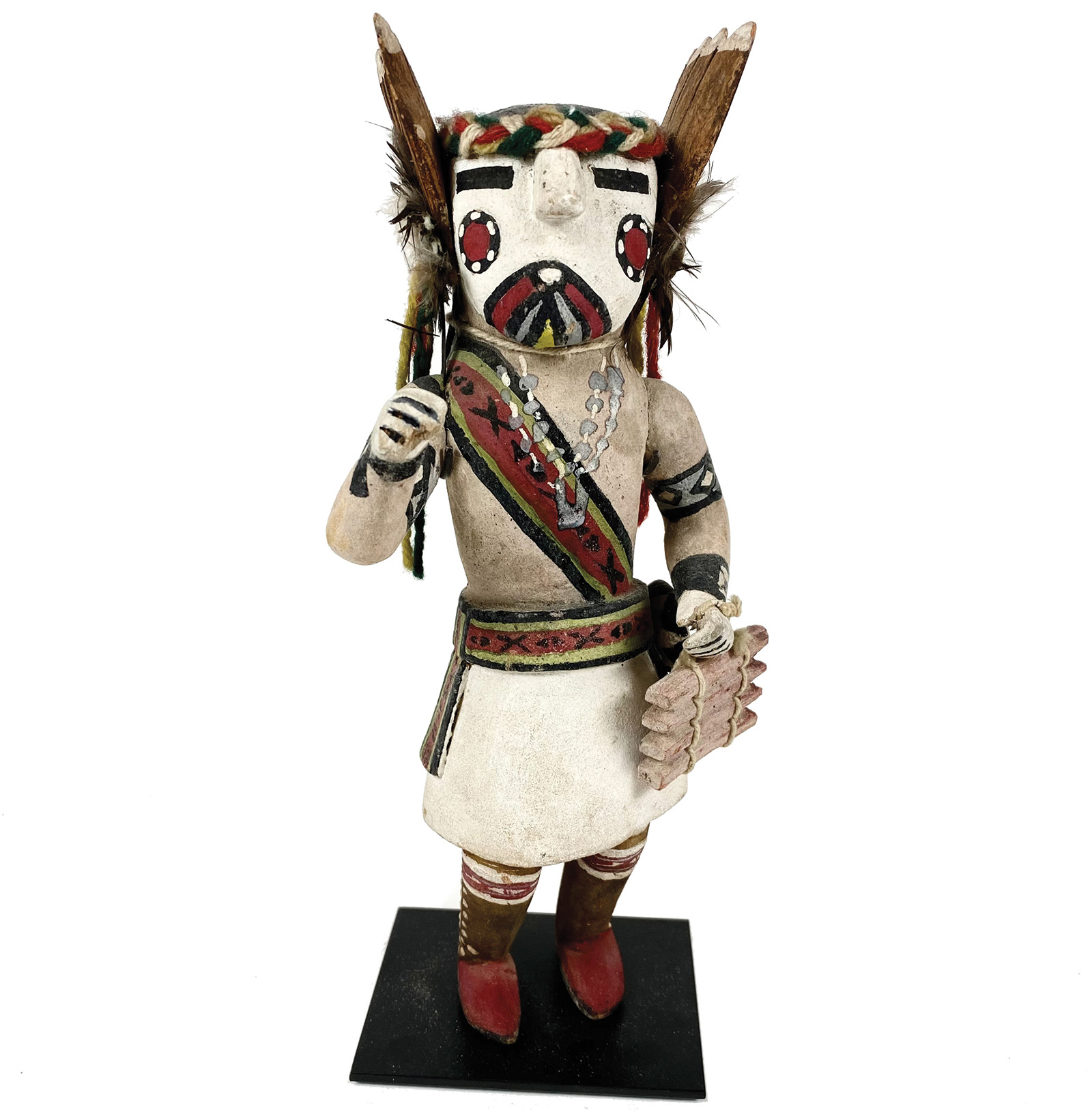
1930 to Mid-1940s: Early Action
By the 1930s, katsina carvings were beginning to show some “action.” As with the example here, a Susukholi katsina, arms were now quite commonly extended from the bodies. And the kilts were often flared as with the real dancers.
Category 4
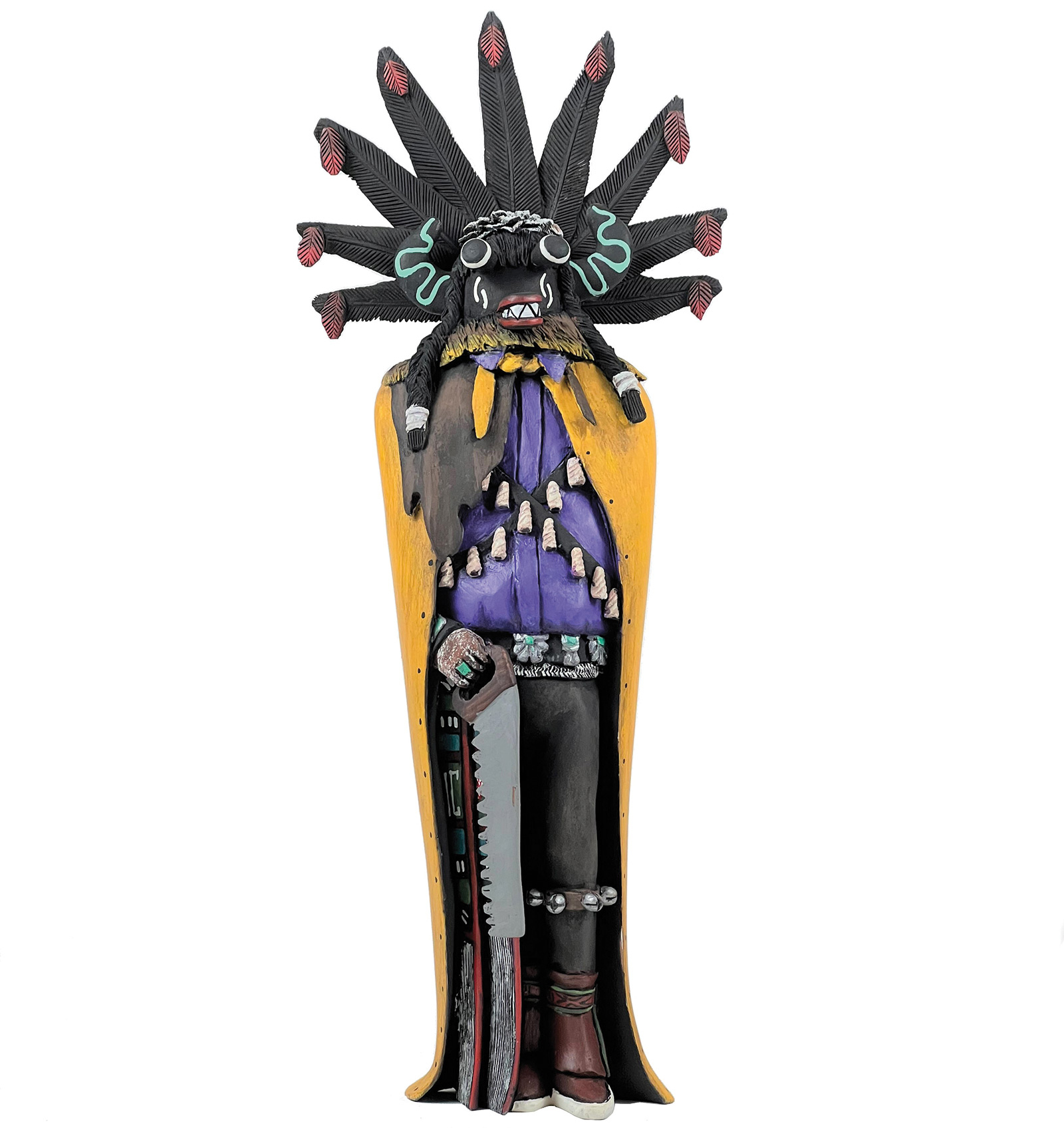
Mid-1940s to 1960s: Late Action
Note the substantial change as to upraised arm, bent knees, garment detailing and added accoutrements that are present here in this Komantsi katsina.
Category 5
Mid-1960s to Present: Ultra-Realistic
This era represented a radical change in katsina execution. This example here is Nata’aska or Black Ogre by artist, Gerry Quotskuyva. Note the exceptional detail on this carving. For example, look closely at the crown of feathers on the top of the head. The artist has carved the individual vanes of these feathers. Note also the meticulously rendered shells on the bandoliers, the teeth of the saw, individual turquoise stones on concho belt and the bells on the left calf. This new direction has presented katsinam as art objects.
Category 6
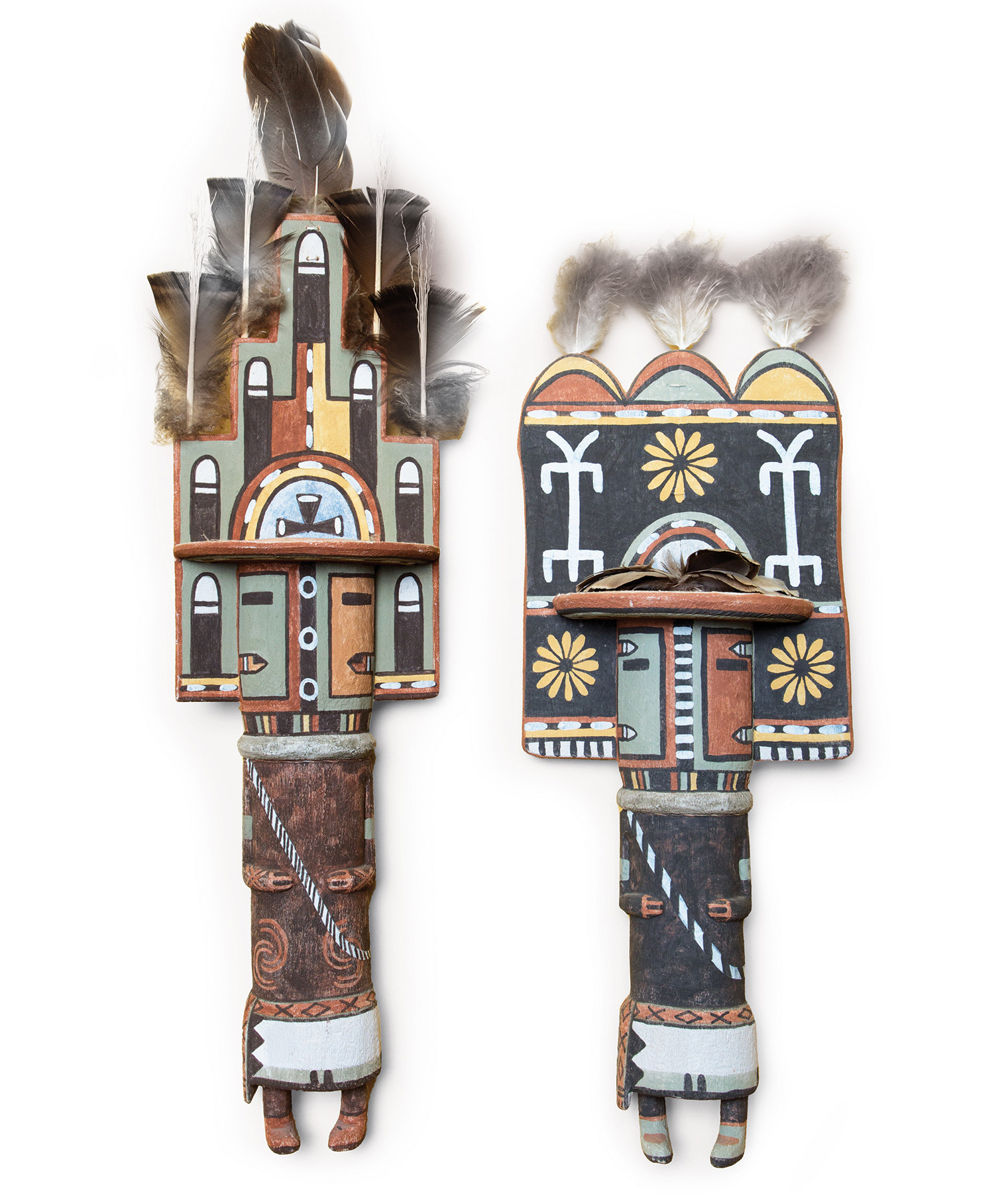
1970s to Present: Traditional Style Revival or just Traditional
These Siohemis and Hemis katsinam were made by Manfred Susunkewa, who retrieved and revived the traditional style. Notice how his katsinam echo the same simple body lines and stomach-ache position of the arms and hands of the carvings from the 1920s. Manfred initiated this style because he thought the spirit of the katsinam was being sacrificed to the emphasis on ultra-realism.
Category 7
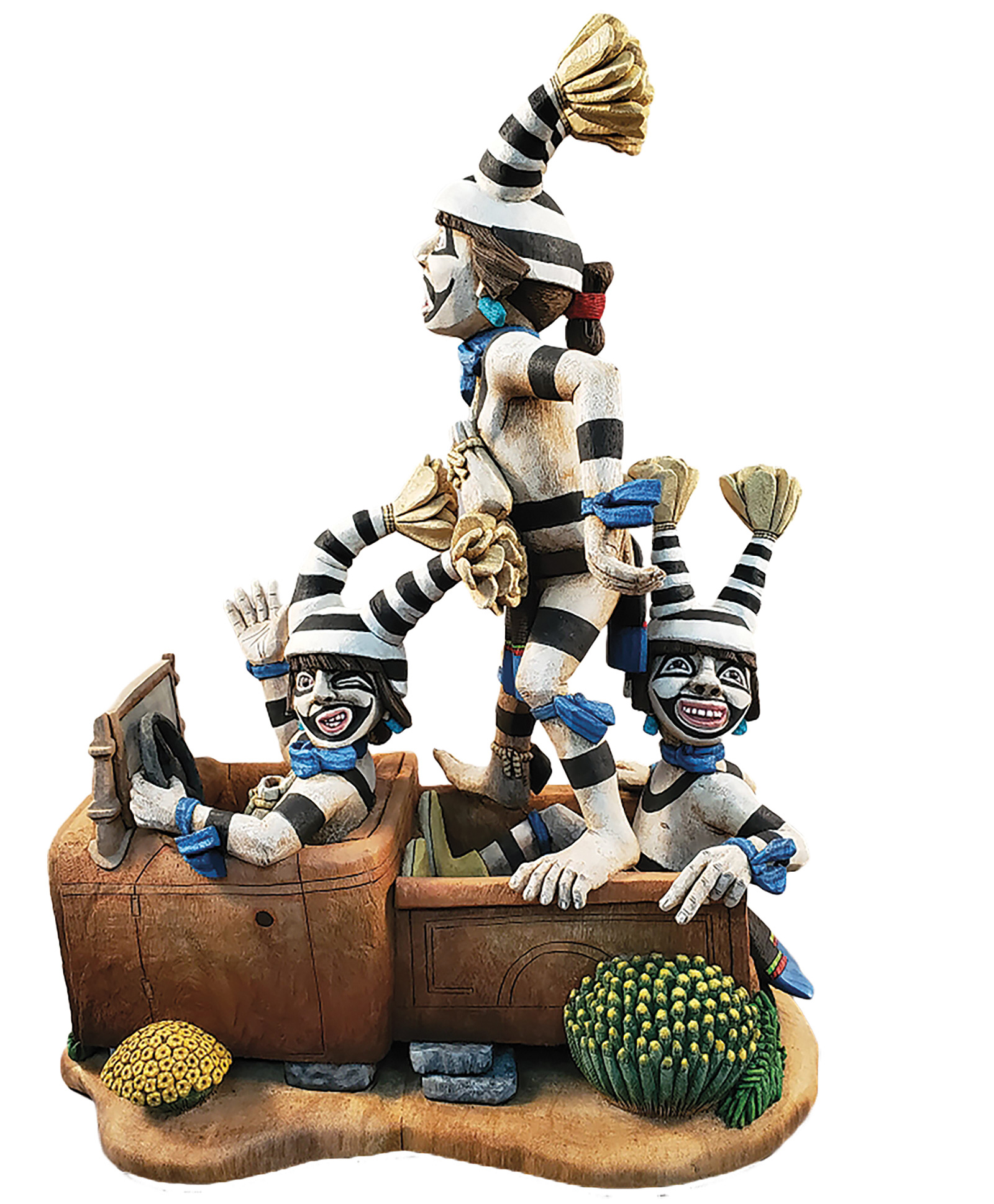
Mid 1980s to Present: Sculptural Style
Here is an exceptional example of a katsina sculpture by gifted artist Robert Albert. In this elaborate work of art, he has depicted three Koyaalas playing around zanily in an abandoned vehicle. Albert has titled this masterpiece Cruzing in My Junky Old Jalopy. Note that the jalopy has no wheels so they won’t be cruising very far, except in their imaginations. Such complex works not only employ ultra-realism, they also include multiple figures within an integrated scene or motif; therefore, they are generally referred to as “sculptures.”
For a full discussion of these styles, please consult my book, The Great Tradition of Hopi Katsina Carvers, 1880 to Present (2019) by Rio Nuevo Press. These categories are meant only to be general guidelines and tools for summing up trends. What matters are the individual carvings themselves, not reductionistic categories. Above all, these katsinam, regardless of period or style, represent Spirit Beings. Those that evoke the spiritual dimension of the figure portrayed are generally the most culturally authentic and also the most effective artistically.
Powered by Froala Editor