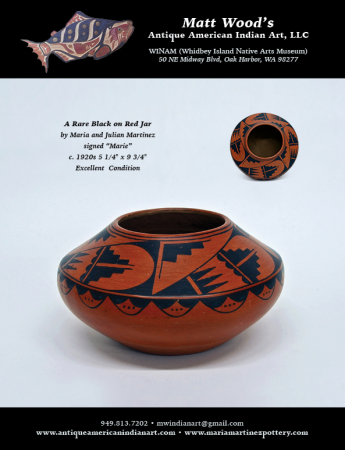
One hundred years ago Maria and Julian Martinez exhibited their pottery in the Southwest Indian Fair and Industrial Arts and Crafts Exhibition which would later become the Santa Fe Indian Market. They had already established themselves as innovative artists and had won many awards for their work.
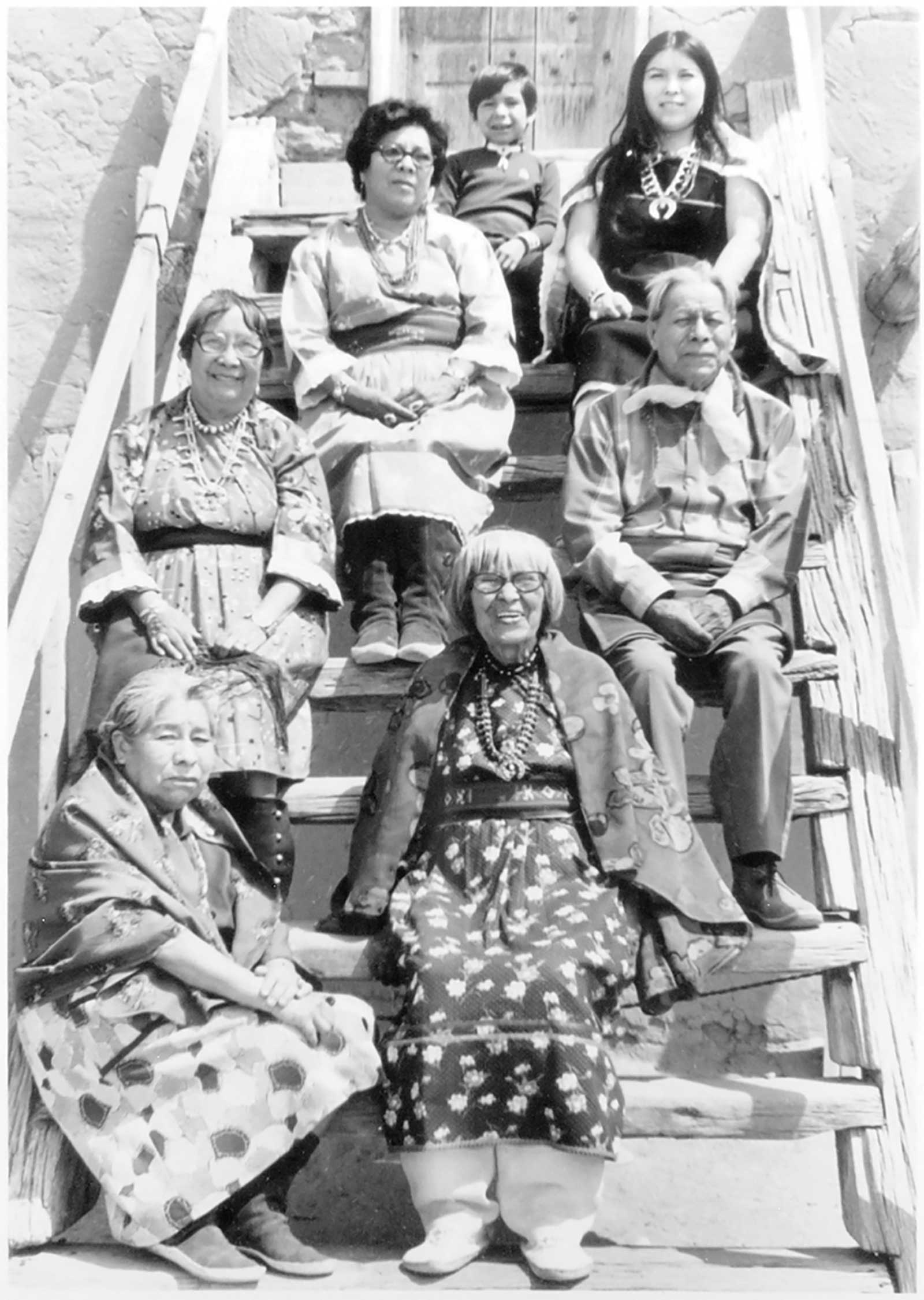 Maria Martinez and members of her family. Maria is at the bottom center next to her sister Clara Montoya. Above them are Maria’s son Adam and his wife Santana. Above them is Anita Pino Martinez, their daughter, and the mother of Barbara Pino Gonzales who sits above her with her eldest son, Cavan Gonzales, the father of Charine and Tyler Gonzales.
Maria (1887-1980) and Julian (1879-1943) were born at San Ildefonso Pueblo and were instrumental in the revival of the pottery-making tradition. In 1909, the archaeologist and anthropologist Edgar Lee Hewitt found a shard of highly polished black pottery in a nearby dig. He sought out Maria to see if she could produce a similar pot. She and Julian experimented with different clays and different ways of firing until one day they decided to smother the fire with manure to keep the smoke in. The result was a shiny dense black pot. Hewitt had hoped they could reproduce the ancient pot but they had come upon a new art form. Maria hand built the pots with coils of clay and Julian painted matte black designs on their polished surface.
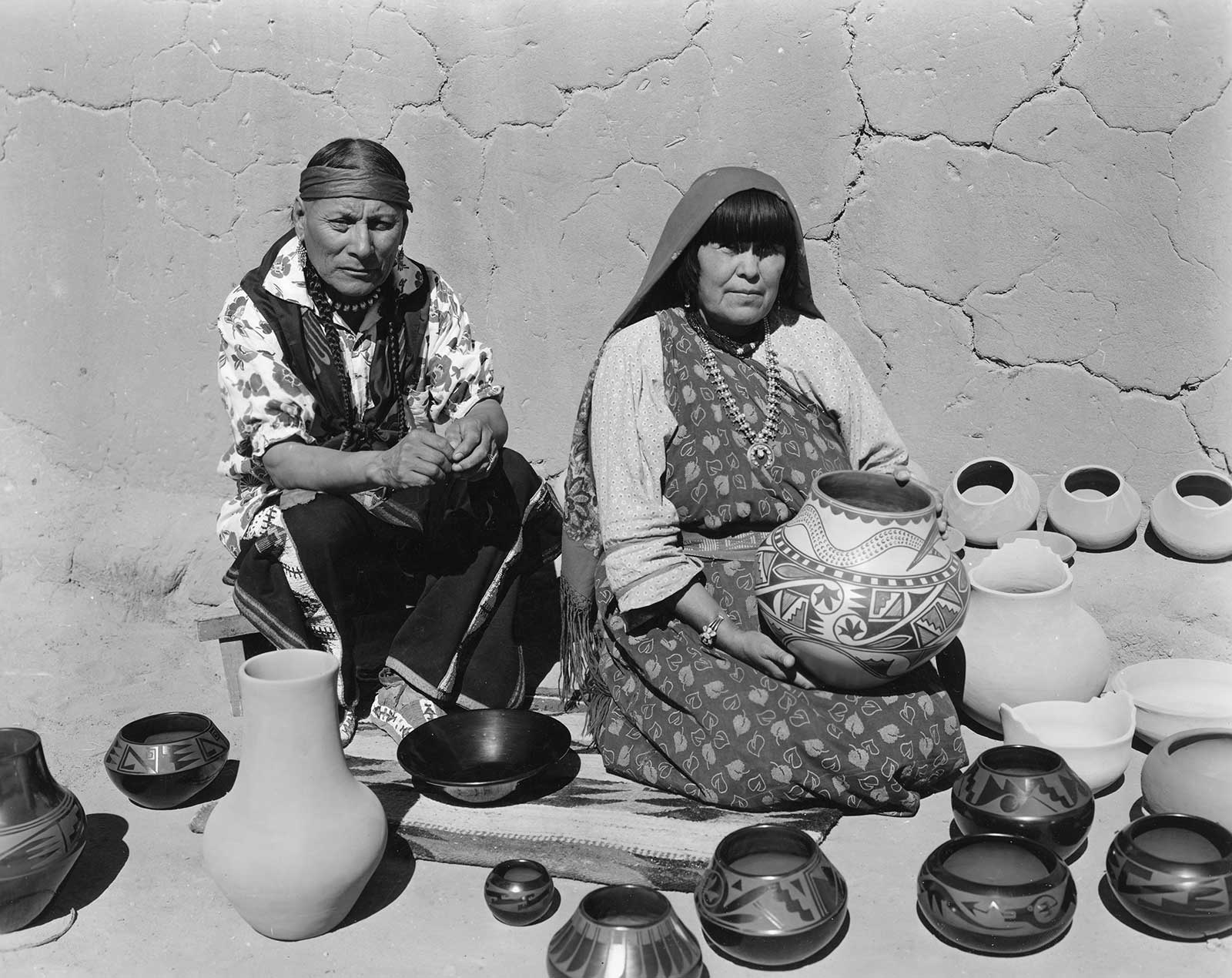 Julian and Maria Martinez displaying finished pottery, San Ildefonso Pueblo, New Mexico, ca. 1937-1938, by Wyatt Davis for New Mexico State Tourist Bureau. Courtesy of the Palace of the Governors Photo Archives (NMHM/DCA), 004591.
Barbara Gonzales lived with her great grandmother Maria from the time she was 4 until about the fourth grade. “I’ve polished pots since I was 9 or 10 years old,” she says. “I didn’t want to do polishing work but as the oldest of eight children I knew it was my part in helping to make pottery to support the family. Polishing is a communal affair. I would sit with my great grandmother, her sister Clara Montoya and my grandmother Santana Martinez and polish the pots.
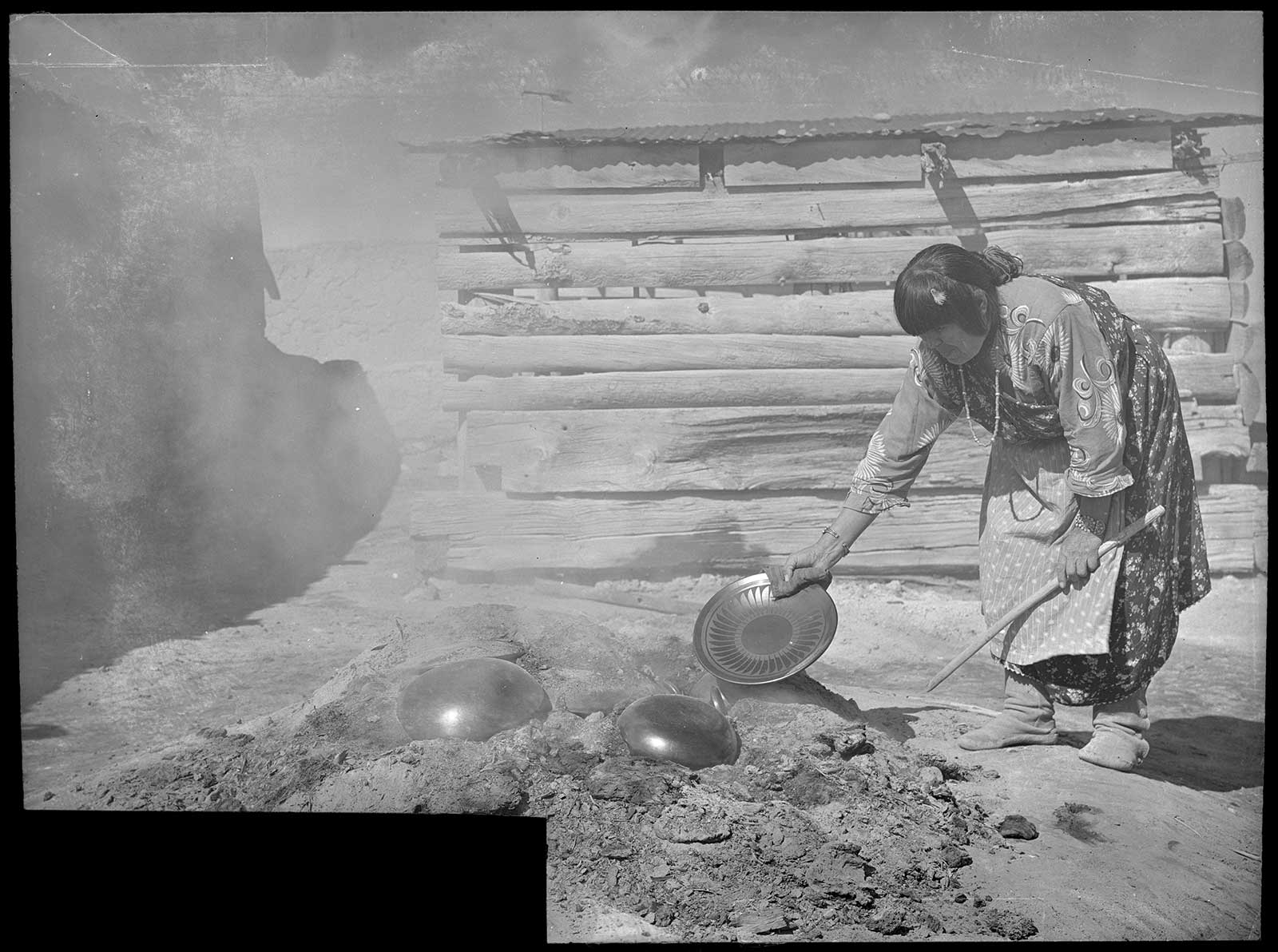 Maria Martinez firing pottery, San Ildefonso Pueblo, New Mexico, ca. 1930-1935, photo by Tyler Dingee. Courtesy of the Palace of the Governors Photo Archives (NMHM/DCA), 073450.
“I would go with Maria and sleep on the porch of the Palace of the Governors [on the historic Santa Fe Plaza] so she could claim her spot for the market early in the morning. At other times, I would sell her pots at the Palace, sitting on the porch. Sometimes it was only me and the piñon man. At that time a little plate would cost about $35 and a small bowl about $45.”
Barbara learned to make pottery by watching and experimenting. Maria would quietly encourage her to be patient and to keep working. “There was no boastful ‘Oh, that’s beautiful!’” she explains. “There’s a subtle understanding that occurs. Watching became second nature. There was no serious teaching. You watched and you did it on your own.”
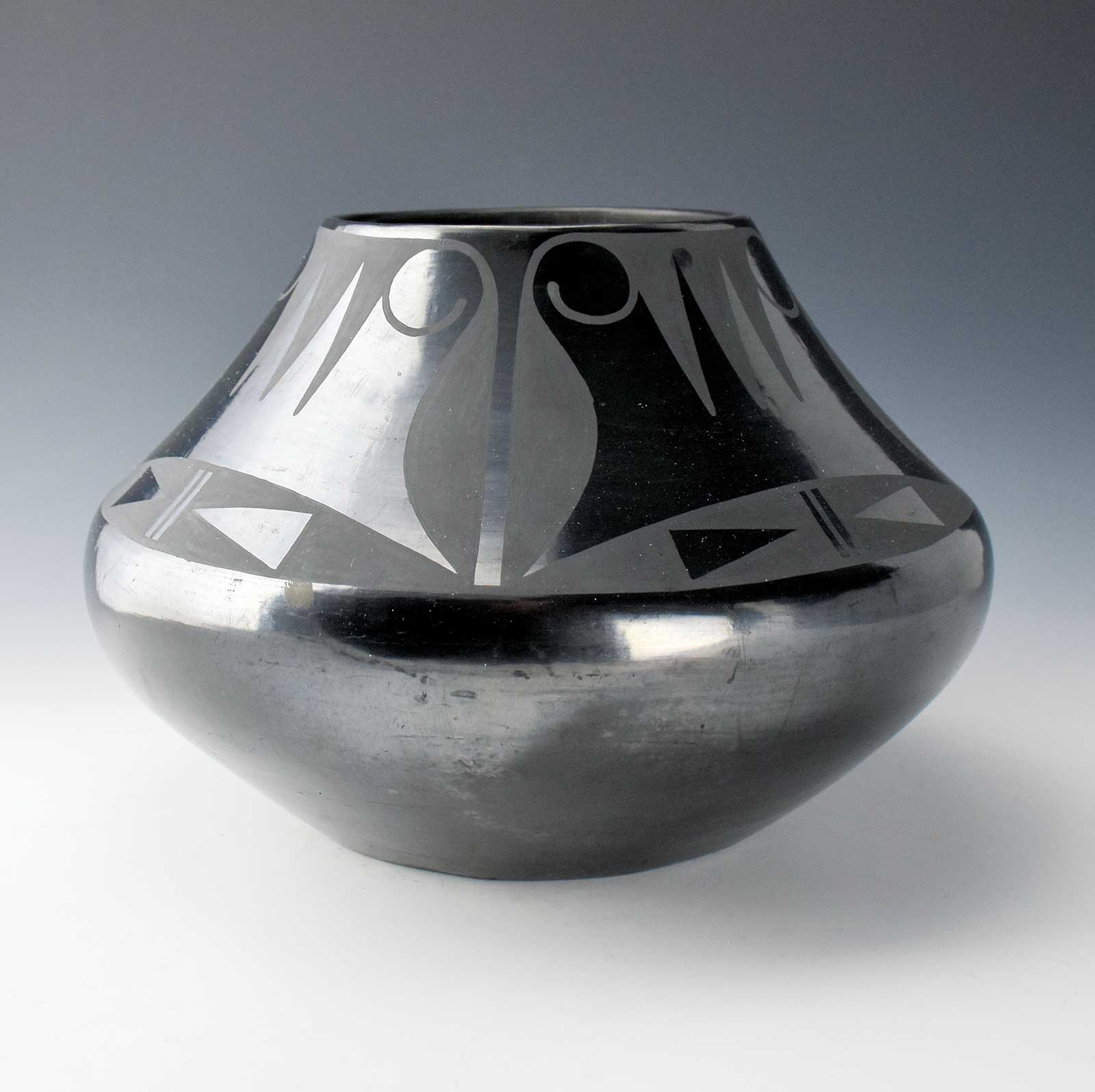 Maria Martinez (1887-1980, San Ildefonso Pueblo), Jar with Seed Designs, 1920-1925, 10½ x 6¾”
“I used to go with my great grandmother to gather the clay. Today, my son Cavan enjoys gathering the clay and makes sure we never run out of it. He says an opening prayer and a concluding prayer after gathering the clay, giving thanks with corn meal. My great grandmother would say, “Gather as much as you need and use it to the best of your ability. In the end you hope things go well and you can share with other people.” Cavan carries on the San Ildefonso tradition of building and painting polychrome vessels.
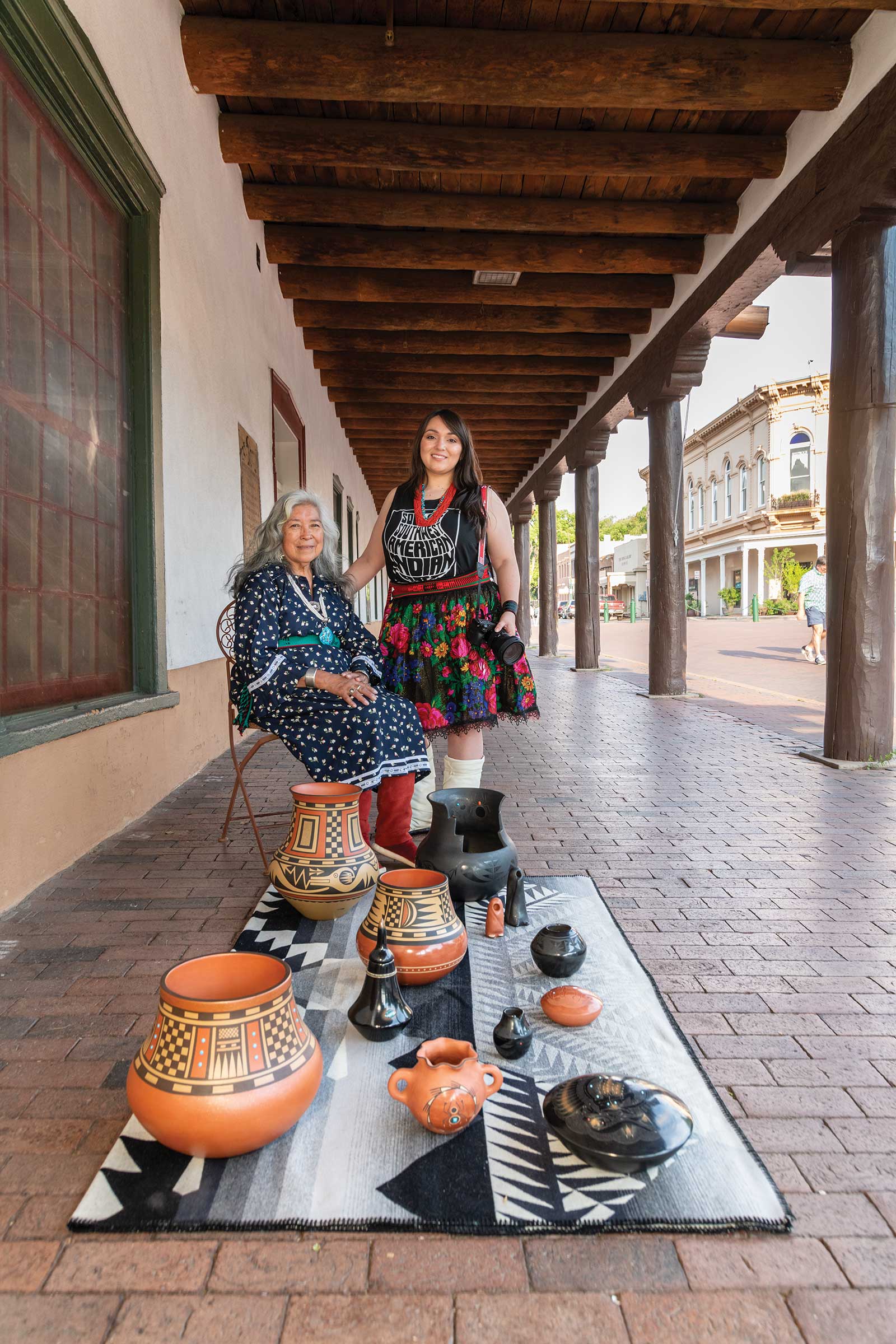 Barbara Gonzales and her granddaughter Charine Gonzales under the portal of the Palace of the Governors with pottery by members of her family. Photo by Garret Vreeland.
Barbara developed her own distinguishing style. “I am very traditional but etching on my pot and incorporating turquoise, shell and beads made it more of my own style. My ‘swish pots’ are something I’d never seen anyone else do. At first I left a little opening but then enclosed it with different sizes of beads, stones and coral that make a swishing sound when you shake it. I also wanted to add something unique to my engraving. My mother always said, ‘If you see a spider, make a wish.’ When I was thinking of something I hadn’t seen before I thought of the spider and now incorporate it in the etching on my pots.”
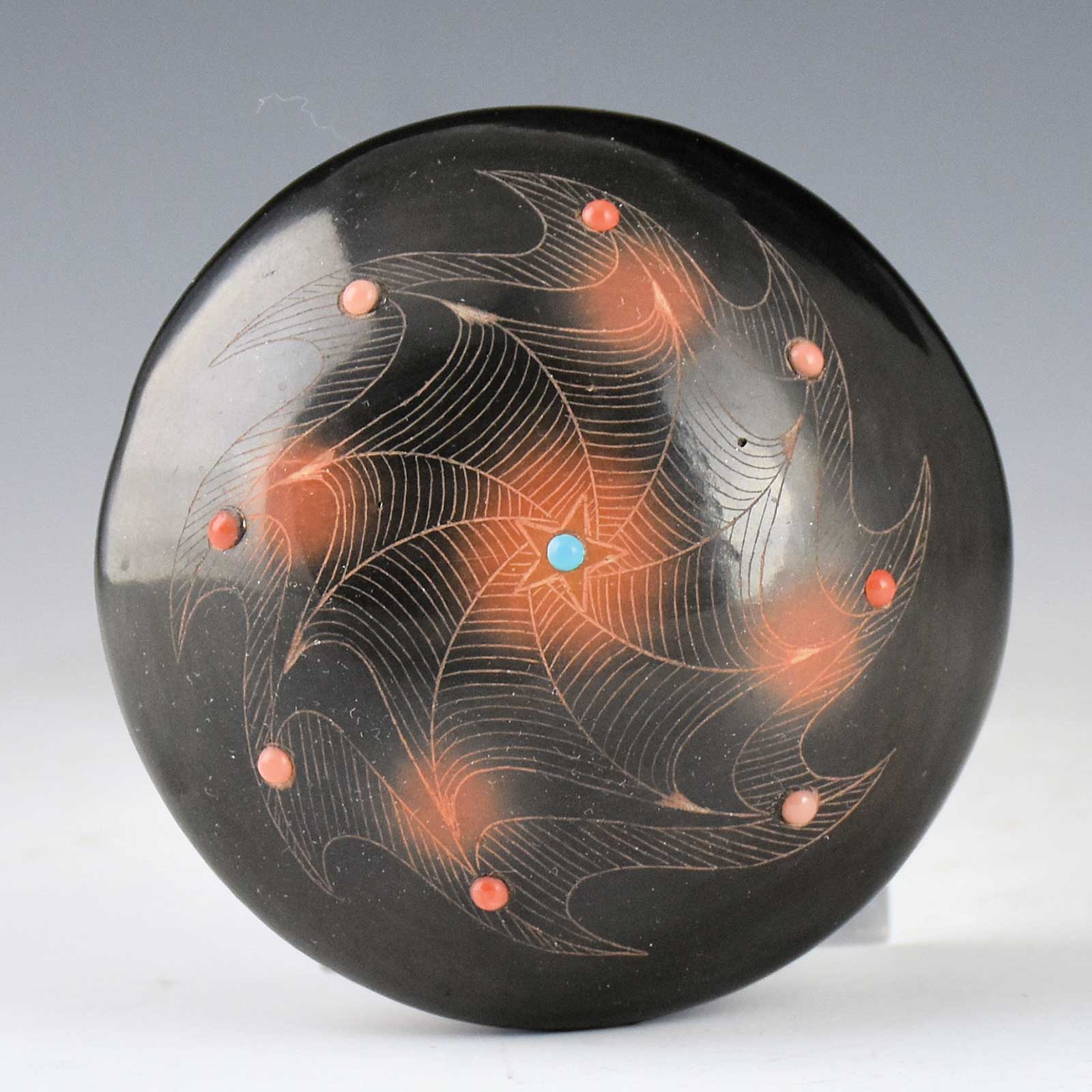 Barbara Gonzales (San Ildefonso Pueblo), Swish Pot, black and sienna with spider web design, inset turquoise and coral, 4 x 3”
Barbara’s granddaughter and Cavan’s daughter, Charine, is a filmmaker. “I feel there’s a lot of artistic spirit that runs through my family that Maria brought to life,” she comments. “Maria’s intelligence and artistic values have inspired us to seek those same expressions within ourselves. When I was a little kid learning about Maria, what stuck out to me was her desire to preserve those traditions we hold sacred, including the pottery making process. When my dad, Cavan, was teaching me, he always emphasized that the clay has a spirit of its own. When we work with the clay we have an idea of how something might come out. We have an idea for the shape but, ultimately, the clay is going to tell us what it wants.”
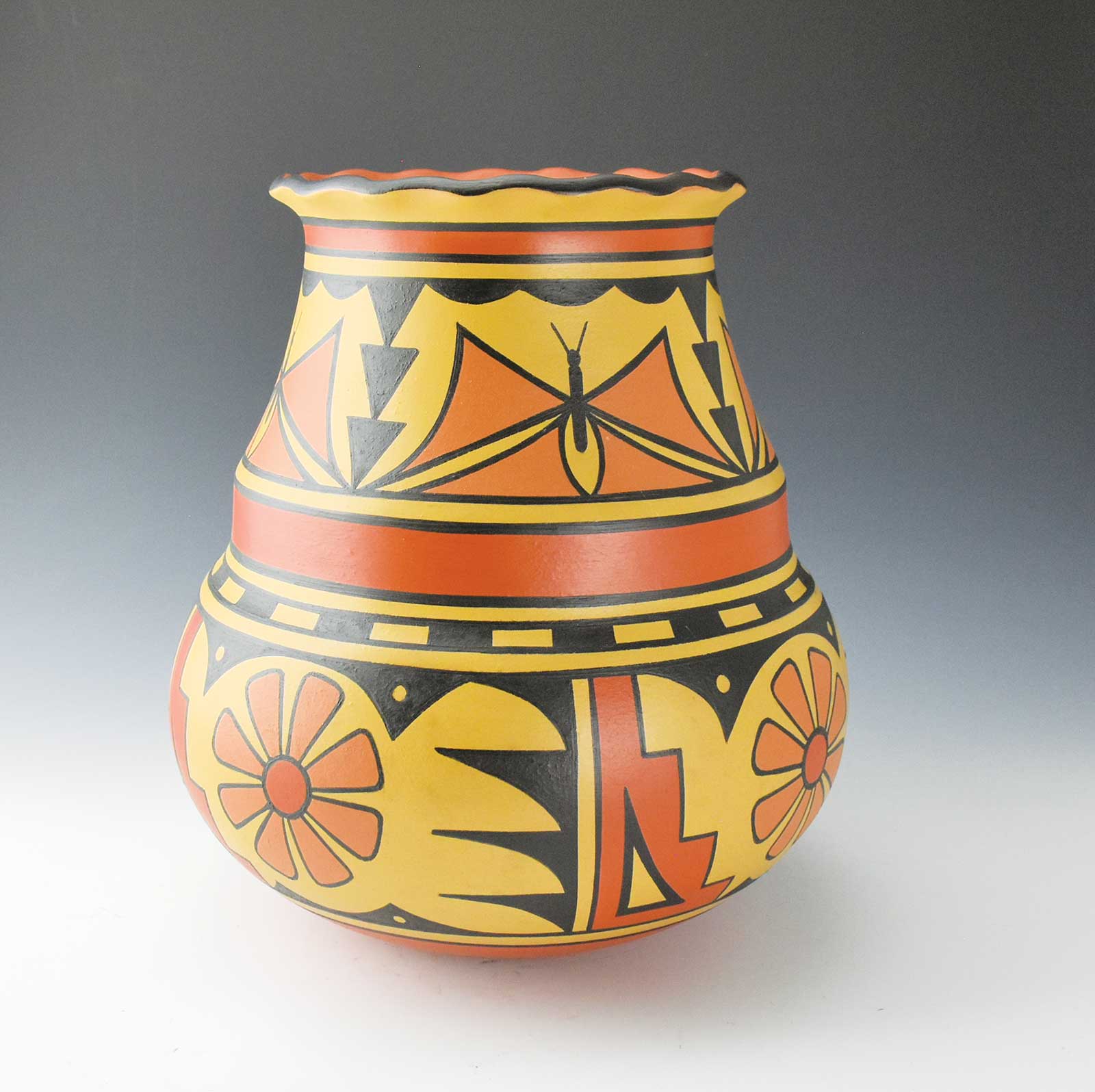 Cavan Gonzales (San Ildefonso Pueblo), Polychrome Water Jar with Butterflies, flowers and fluted rim, 10 x 8”
In her short film, Our Quiyo: Maria Martinez, there is scene of her father, Cavan, offering corn meal and gathering and sifting the clay. The film is a microcosm of the creative genius of Charine’s family with her father Cavan, uncle Aaron and grandmother Barbara talking about their work and Cavan showing a polishing stone that belonged to Maria. It also shows the design work of her Uncle Derek who also designed the Sunbeam Indian Arts logo. Maria Martinez named her great granddaughter “Tahnmoowhe,” a Tewa word that means Sunbeam. Sunbeam Indian Arts is the name of their pottery shop at the Pueblo and Barbara signs all her work with her Tewa name.
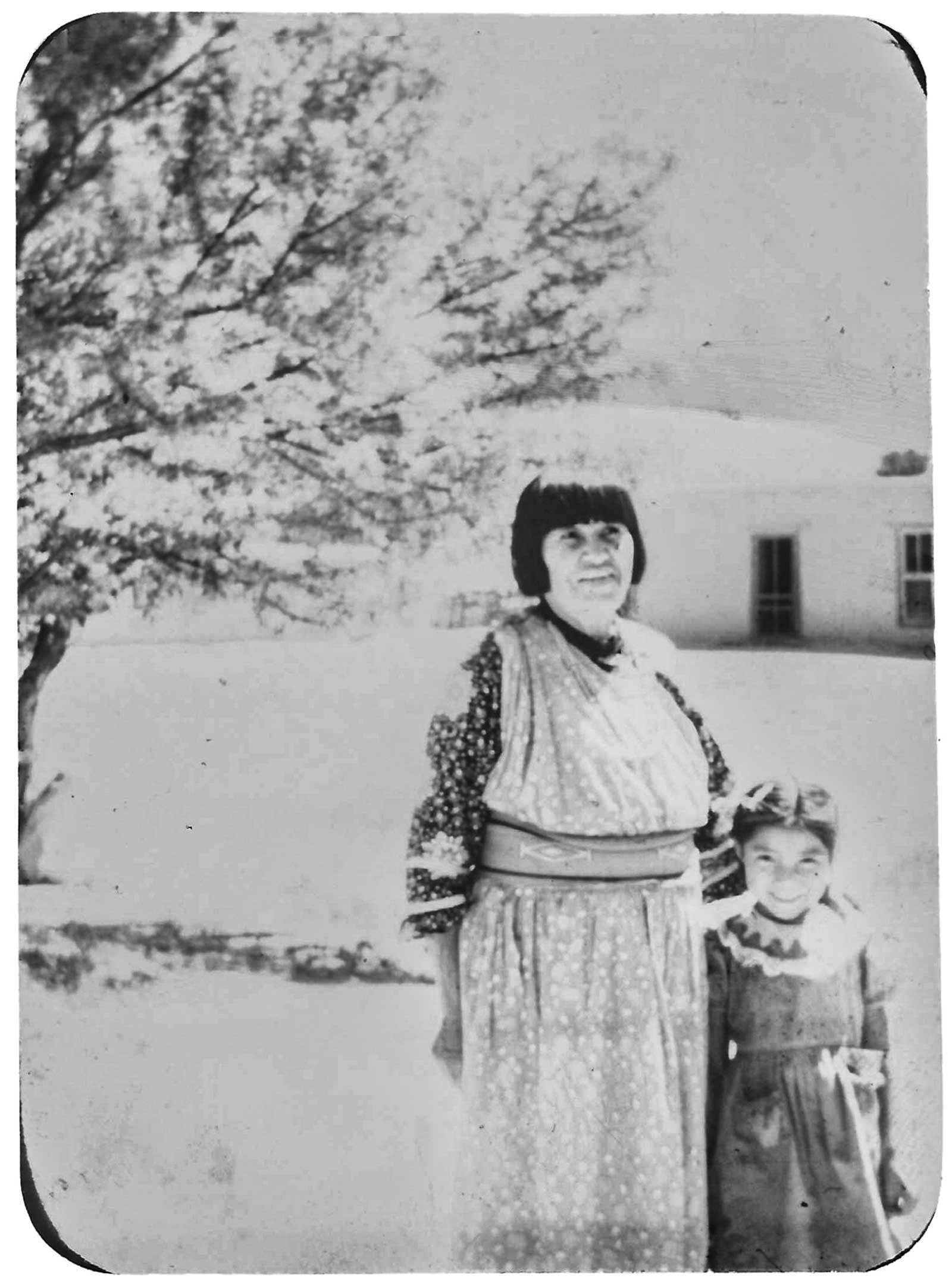 Maria Martinez and her great granddaughter, Barbara Pino Gonzales.
The communal aspect of making pottery carried over into Our Quiyo: Maria Martinez. The film premiered at the Kennedy Center during the We the Peoples Before event in July 2022. Charine is in post-production for her short narrative fiction film River Bank, a modern interpretation of Robin Hood where a young Tewa woman gives to the river and the river gives back to the Tewa people. Charine adds, “My Saya (grandmother), Barbara Gonzales also acted in River Bank. The film is supported by the Sundance Institute Indigenous Program, the Senator John Pinto Memorial Fund, and First Peoples Fund.”
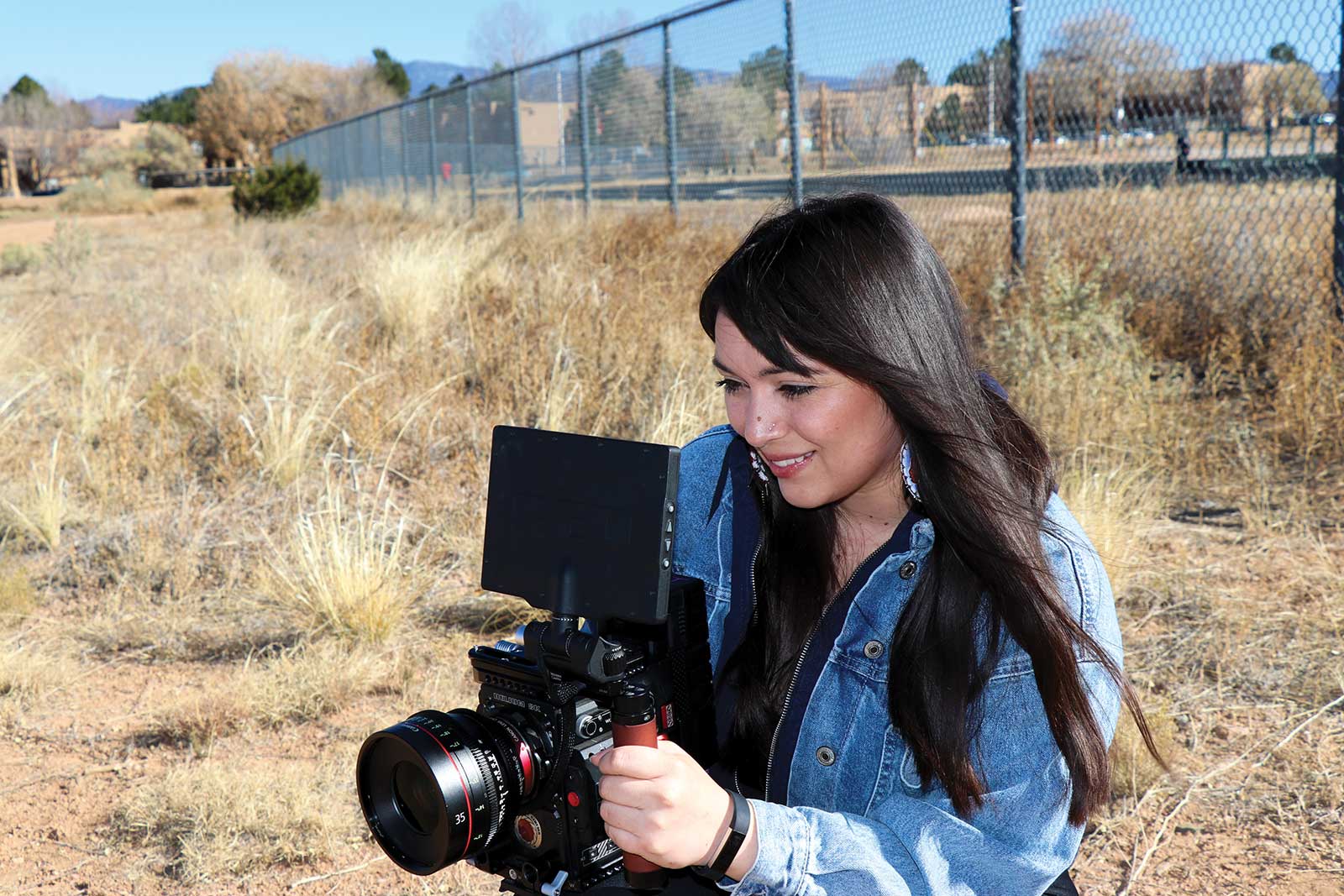 Charine Pilar Gonzales at work behind her camera.
Her family’s artistic spirit also imbued the short life of her younger brother Tyler who died tragically after emergency heart surgery at the age of 19. Tyler was about to graduate from Army basic training, and in a moving ceremony on Memorial Day, he received full military honors.
“Tyer was very artistic and good at polishing pottery,” Charine relates. “He enjoyed graffiti art and calligraphy, was a creative writer and talented in math and sciences too. When I was writing my pilot script for the Native American Media Alliance TV Writers Lab, I came across something he wrote about the process of writing. Even though he’s been gone over five years, he still finds ways to help guide me, to point me in the right direction.”
Commenting on the work of Maria Martinez, she says, “When I see Maria’s pottery, I can feel all of the stories that she was telling through her work. Each different design, even with just different shapes, how something was polished and fired recalls the stories she left behind.
“Maria’s love and teachings and stories are very much present in each of her pieces. She’s still very much here with us through her work.”
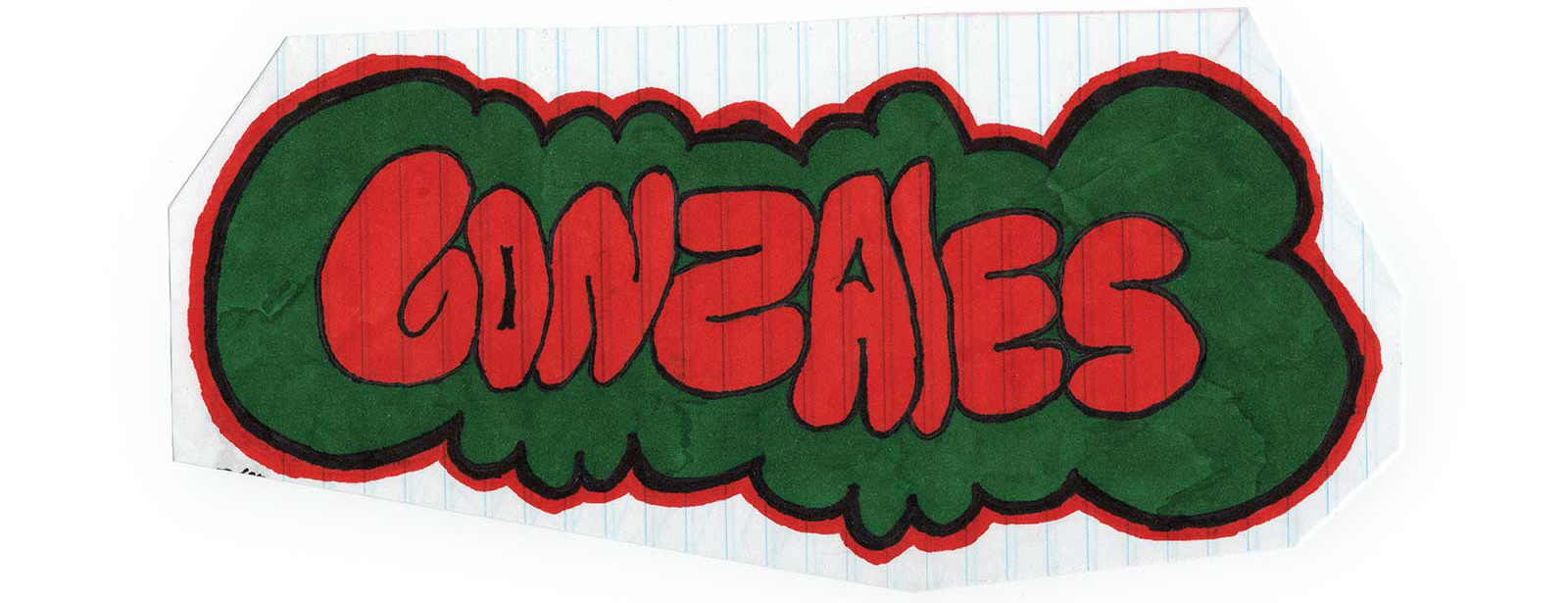 Tyler Gonzales (1997-2017), Gonzales, graffiti art
Barbara expresses her gratitude to “the people that made it possible for pottery to be a worthwhile art making adventure—to make it possible, with their patronage, for us to make a living over the years.” Pottery making went into decline in the pueblos as metal and ceramic utilitarian utensils became available. Pottery was used for barter, with a potter trading a pot for a blanket or other items. As Maria and Julian developed their unique work they began to grow a market for pottery as art. Maria once told a writer, “We want everybody to get something so we tell others how to make the pottery,” thus establishing the production of high-quality work at San Ildefonso Pueblo.
In her children’s book, Shaped by Her Hands: Potter Maria Martinez, Barbara writes, “…Maria’s capacity for sharing her clay knowledge, and her experience as a traditional leader of women, had a great influence on me. She stressed learning as a key aspect of life…. Six generations of Maria and Julian’s descendants continue the legacy of black pottery today. The future is in their hands.”
Powered by Froala Editor