Every region of North America is unique, and every form of art is precious to its people and culture. The Southwest is known for its magnificent weavings and jewelry. The Pueblos have their exquisite pottery forms. The Great Plains has astounding beadwork and quillwork. The Northeast has its intricate ash baskets. Even when the mediums shift around and diverge from the classic categories, each region’s artists make work that is so uniquely designed that its place of origin is unmistakable.
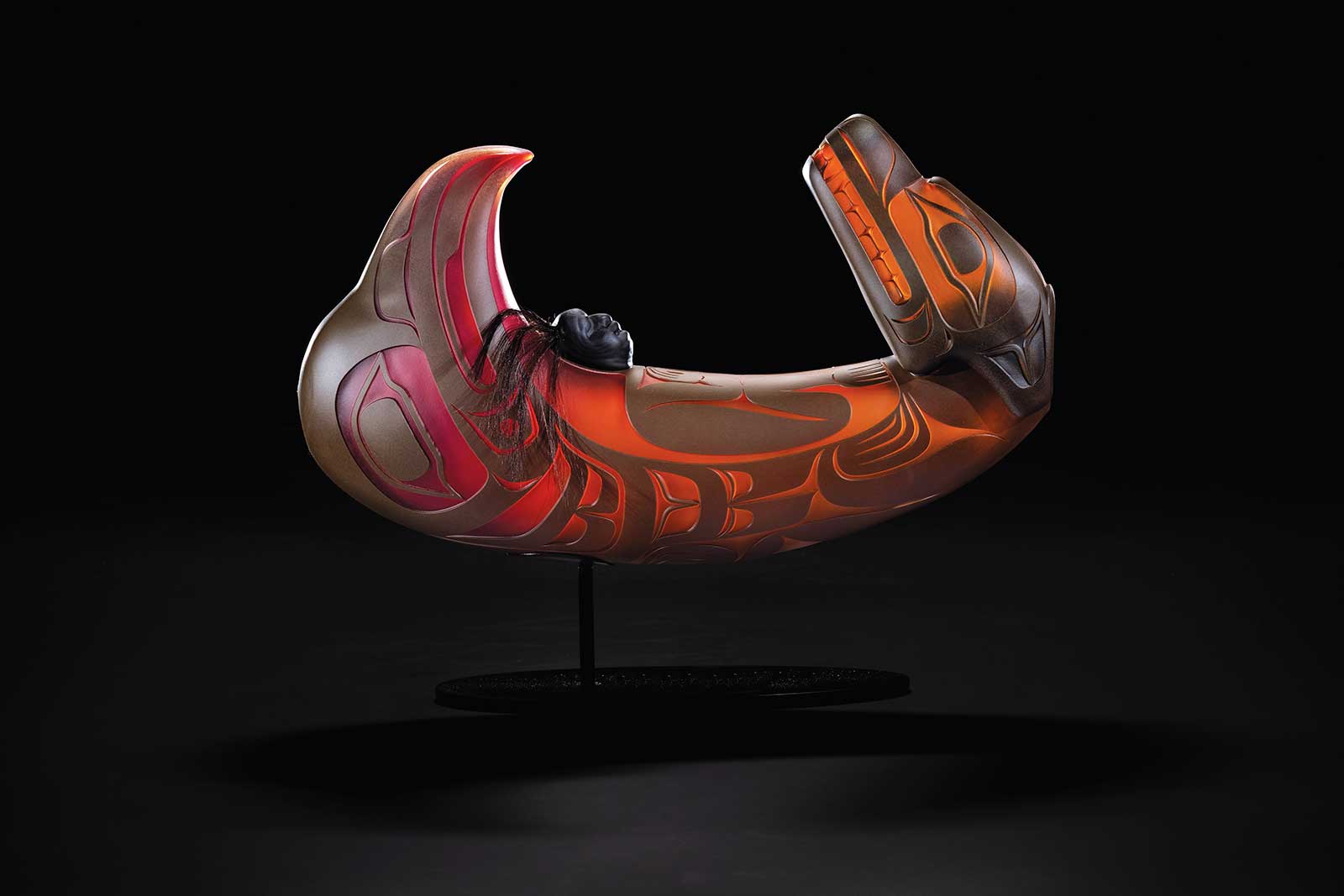 Preston Singletary (Tlingit), Nature Connections, blown and sand carved glass, 15 x 19 x 5”. Courtesy Blue Rain Gallery.
This is certainly true of the Northwest Coast, which has produced artwork for thousands of years, much of it so specifically designed that there is nothing even remotely comparable to it anywhere else in the world. The nations and tribes that have made this work include Tlingit, Tsimshian, Haida, Bella Coola, Kwakiutl, Coast Salish, Chinook and many others.
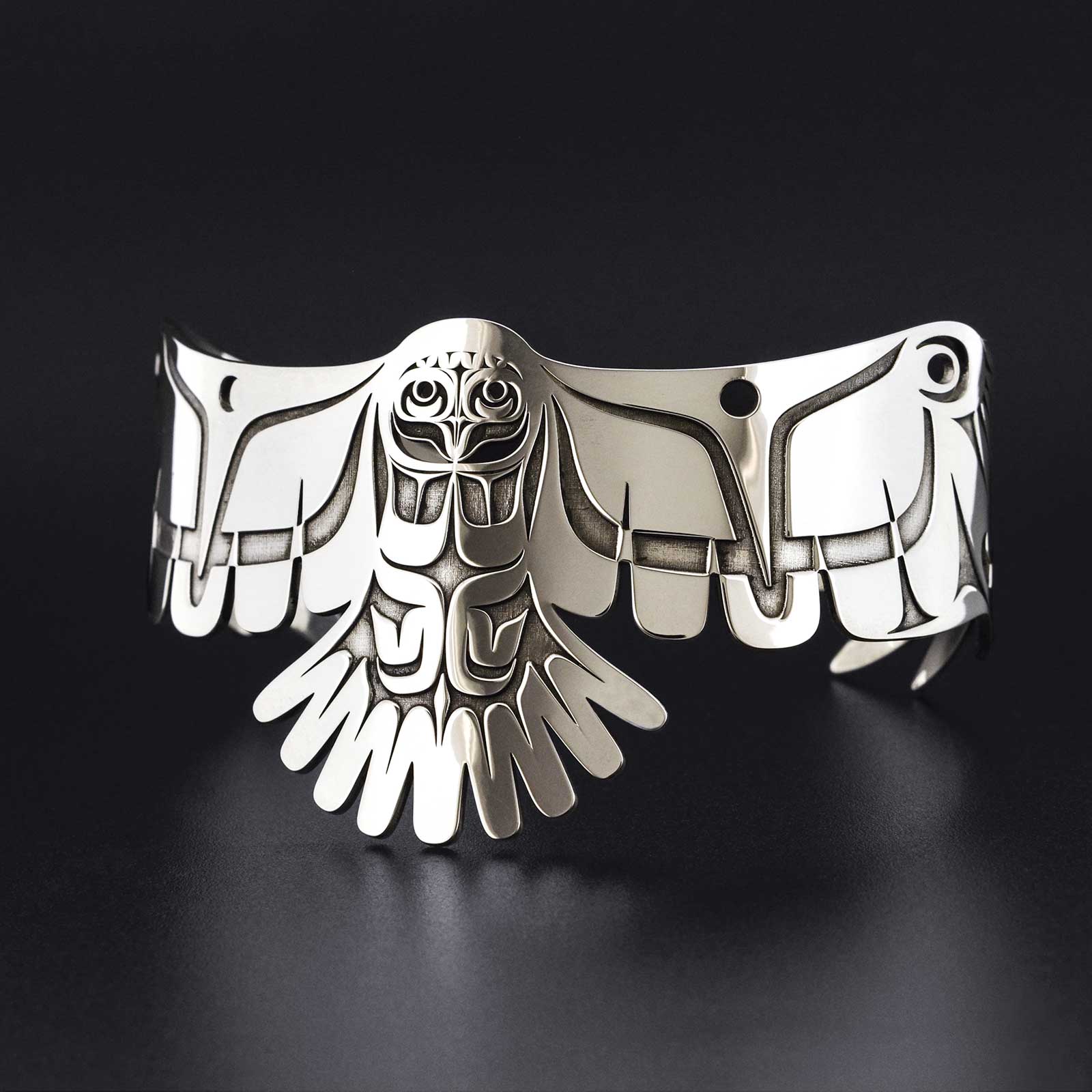 John Velten (Dené), Owl, sterling silver bracelet. Courtesy Lattimer Gallery.
One of the artists creating amazing work, some of it in “formline” style that is typical of the Northwest Coast, is Tlingit glass artist Preston Singletary. His work is a stunning display of technical ability and creative design. His blown glass, which is often then sandblasted, is a staple at museums around the country, and he’s also represented by Blue Rain Gallery, which shows his incredible glass totems, colorful masks and animal figures, such as orcas and birds, as well as his pottery collaborations with many top potters in the Southwest. “Over time, my skill with the material of glass and traditional formline design has strengthened and evolved, allowing me to explore more fully my own relationship to both my culture and chosen medium,” Singletary writes. “…My work with glass transforms the notion that Native artists are only best when traditional materials are used. It has helped advocate on the behalf of all Indigenous people—affirming that we are still here—that that we are declaring who we are through our art in connection to our culture.”
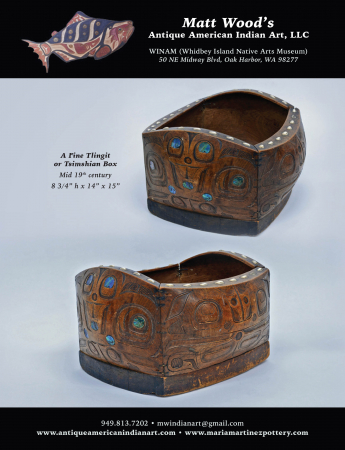
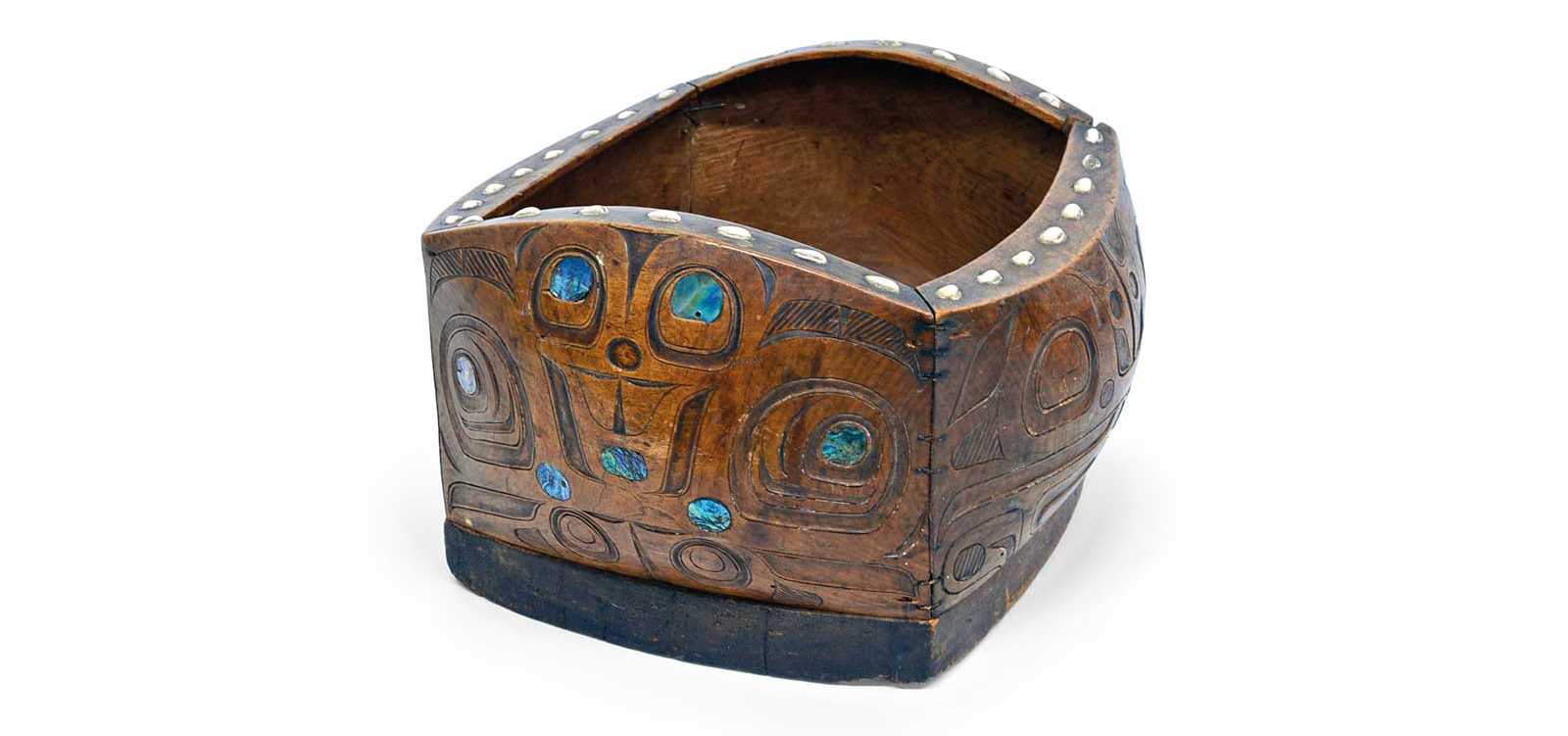 A Fine Tlingit or Tsimshian Box, mid-19th century, 8½ x 14 x 14" Courtesy Antique American Indian Art.
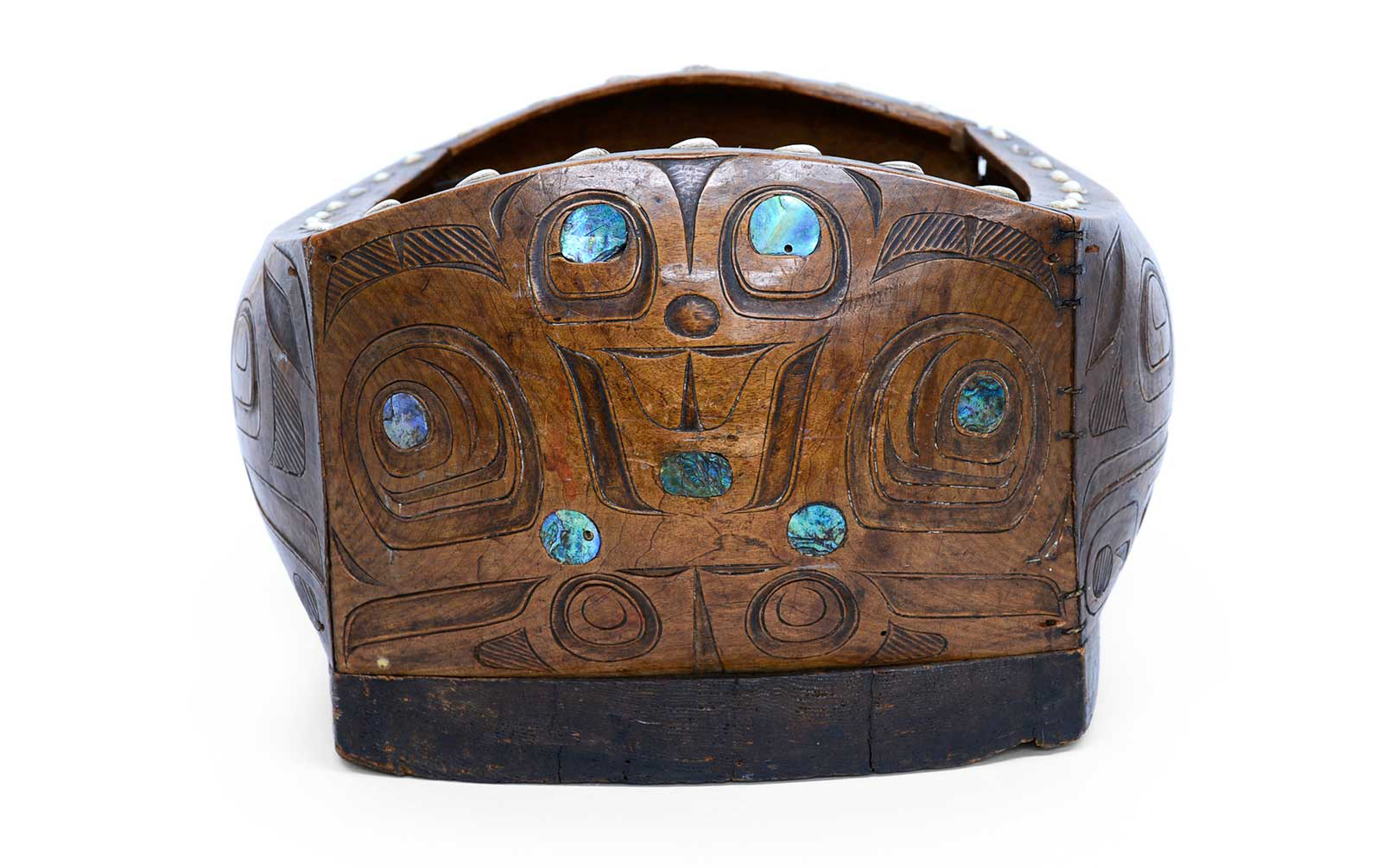 A Fine Tlingit or Tsimshian Box, mid-19th century, 8½ x 14 x 14" Courtesy Antique American Indian Art.
Dené artist John Velten is another artist who is using material to explore his creativity. His preferred material is silver, which he shapes into mesmerizing works of wearable art. Lattimer Gallery represents his work, which includes bracelets, rings, sculptural pieces and also two-dimensional art.
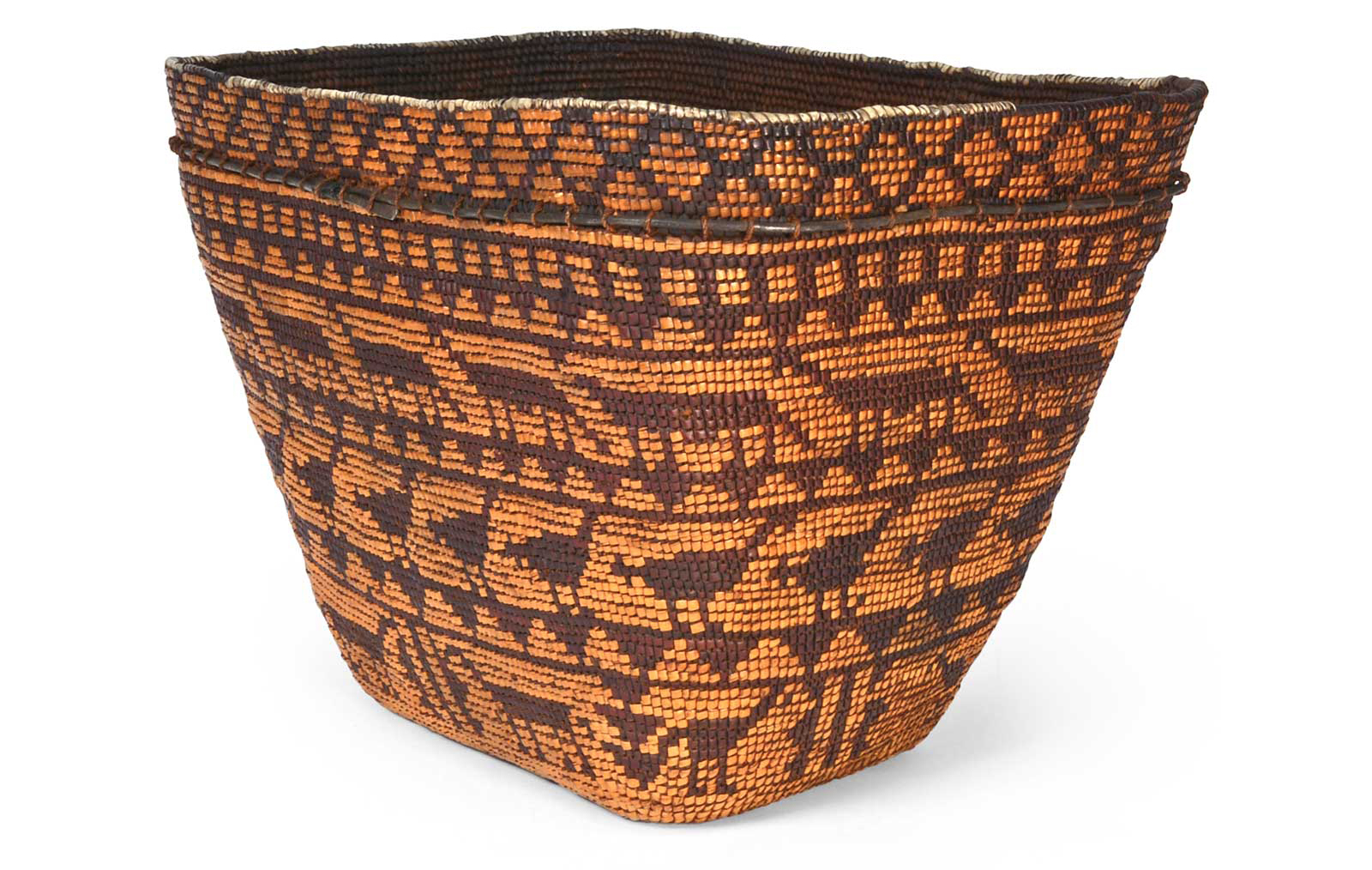 Chilcotin basket, imbricated pictorial, late-19th century, 11 x 17 x 11½". Courtesy Antique American Indian Art.
Another gallery that is showing artwork representative of the region is Antique American Indian Art in Oak Harbor, Washington. “Antique American Indian Art and the Whidbey Island Native Arts Museum is the newest major Northwest gallery and private museum to open in the Greater Seattle, Washington, region,” gallery owner Matt Wood notes, adding that he recently relocated from Bothell, Washington, to Oak Harbor in 2021. “We have been renovating the old Oak Harbor Furniture Store, a 12,000-square-foot building in the heart of Oak Harbor, into a premier gallery and museum set to open to the public in Spring of 2023. During renovation, the gallery is currently open by appointment and the expansive website is updated daily. The gallery and the museum will showcase Native arts from several regions: Northwest, Plains/Plateau, Great Lakes, Midwest and Southwest/California, allowing viewers to compare Native art and artifacts from all of North America. Prehistoric through modern works will be displayed, although the 1860 to 1940 period is emphasized.”
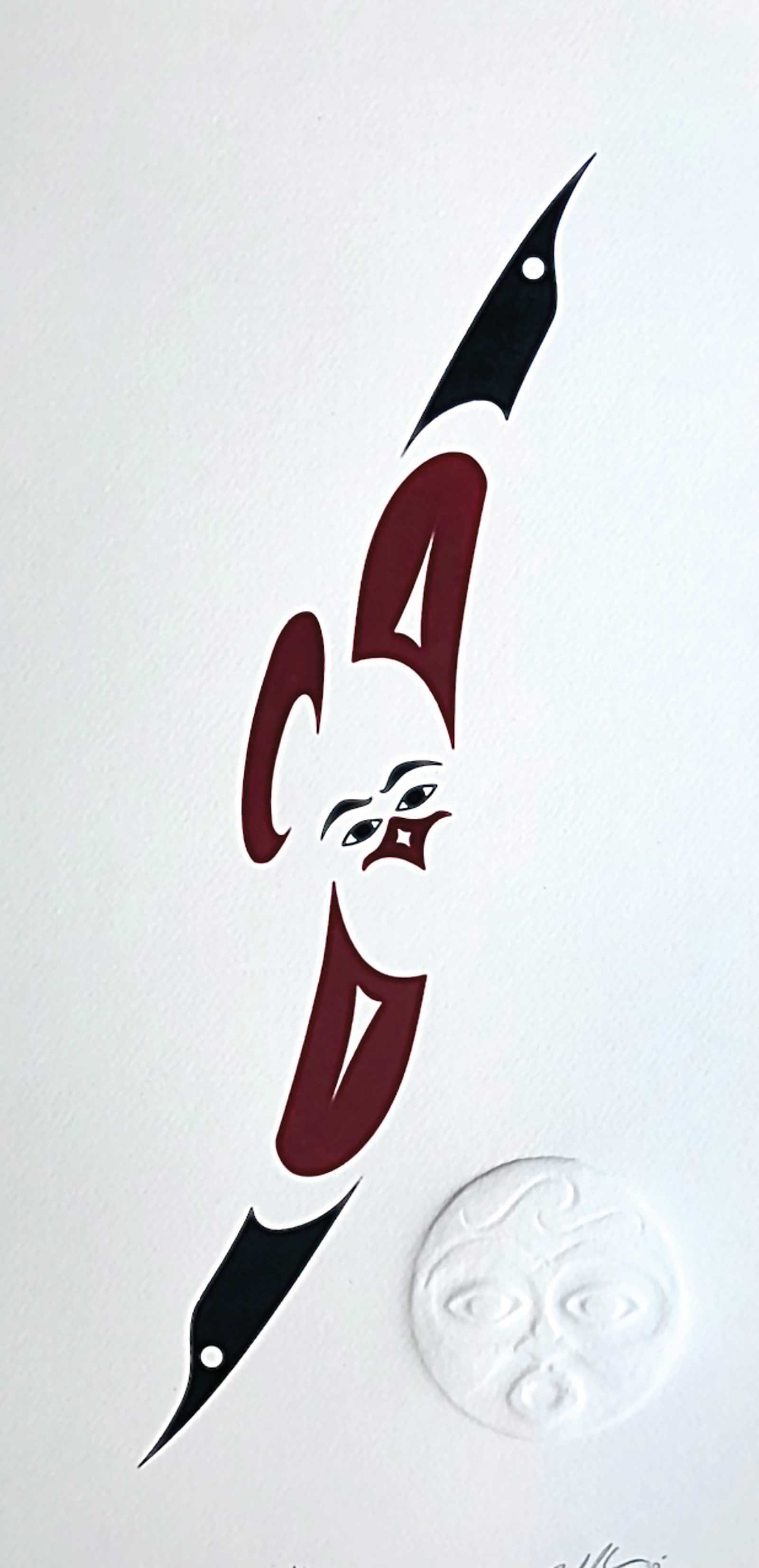 Peter Boome (Upper Skagit), Pivot, hand-pulled embossed serigraph, 10 x 22"
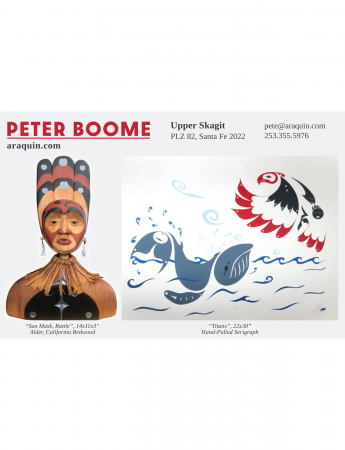
Upper Skagit artist Peter Boome is also offering exciting work from the region, including carvings and hand-pulled serigraphs showing his beautiful images of animals, nature and faces. “My work is built upon a foundation that was laid down by the many artists who came before. I am inspired by life itself and the world around me,” Boome says. “As a Coast Salish artist working in both traditional and contemporary design styles my work is firmly rooted in a historic design tradition while using contemporary tools at my disposal.
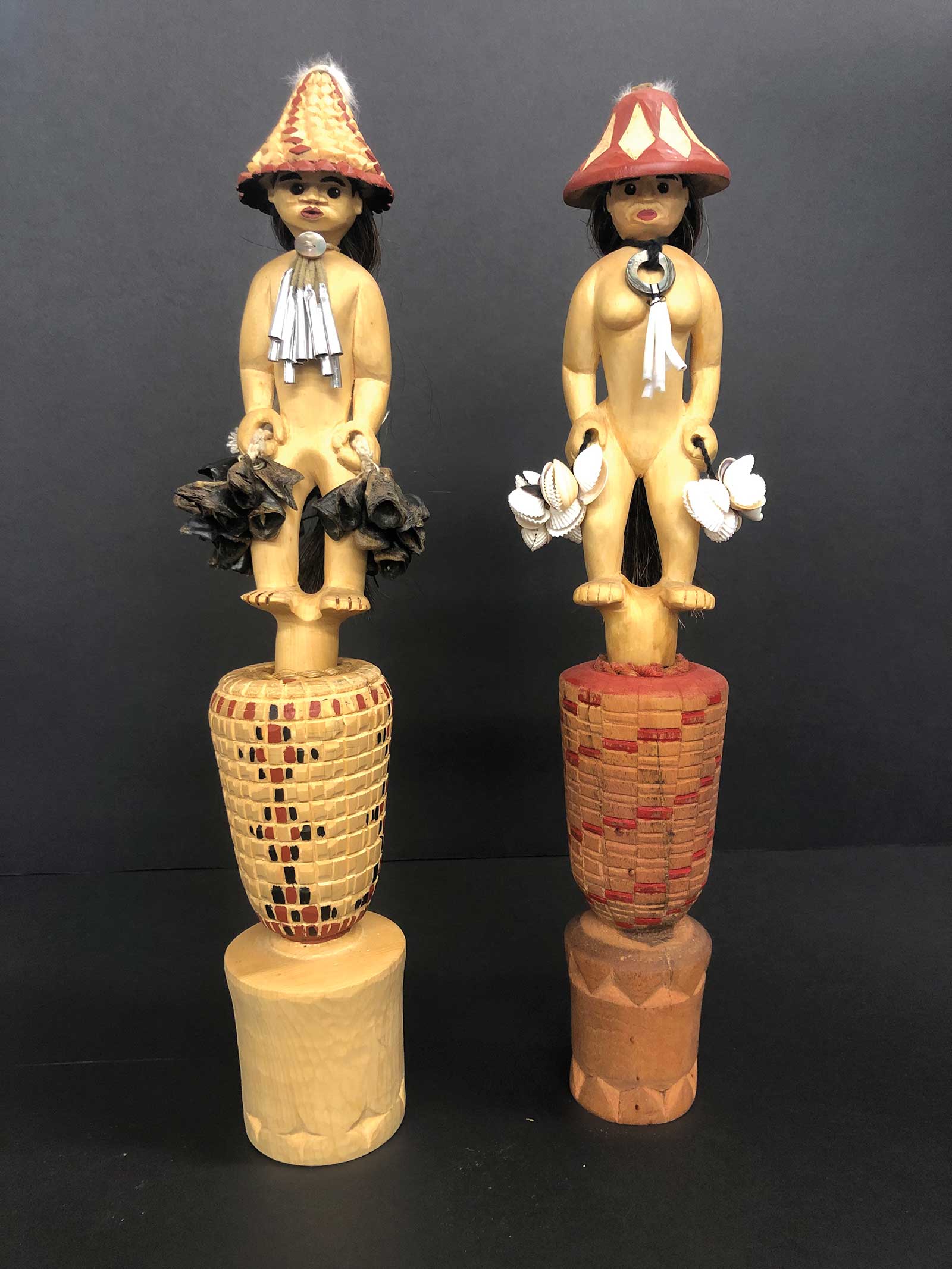 Peter Boome (Upper Skagit), hand-carved prayer rattle set each carved from reclaimed yellow cedar and cottonwood root, 16 x 3 x 3"
I try to carry this tradition by honoring the past, representing the present, and laying the foundations for the future. As an artist representing a distinct culture, I feel a moral obligation to carry this artistic tradition with the utmost care and respect while pushing the boundaries and leaving something for future generations to build upon.”
Powered by Froala Editor