Art often focuses on one or two of the five senses, including sight and touch. But when it comes to carvings, particularly carvings involving cedar, smell can also be a factor. That earthy and organic smell—if it doesn’t transport you outside into the cool air, then something is very wrong.
 Spiritual Messenger, Salish Owl. Historical review of colonization, carved from black walnut that was planted during first contact. Photo by Sean Sherstone.
For Qap’u’luq (John Marston), a Stz’uminus artist from Vancouver Island, British Columbia, his material is an extension of his art form. “I’m mostly using red cedar and yellow cedar. I’ve also worked with old growth for many years, ever since the beginning,” Qap’u’luq says. “As time has gone on, accessibility to certain material has changed, or I’ve branched out. Mostly I try not to restrict myself to the more traditional material. I’ve used black walnut or even metal to make something. I just let the design guide me.”
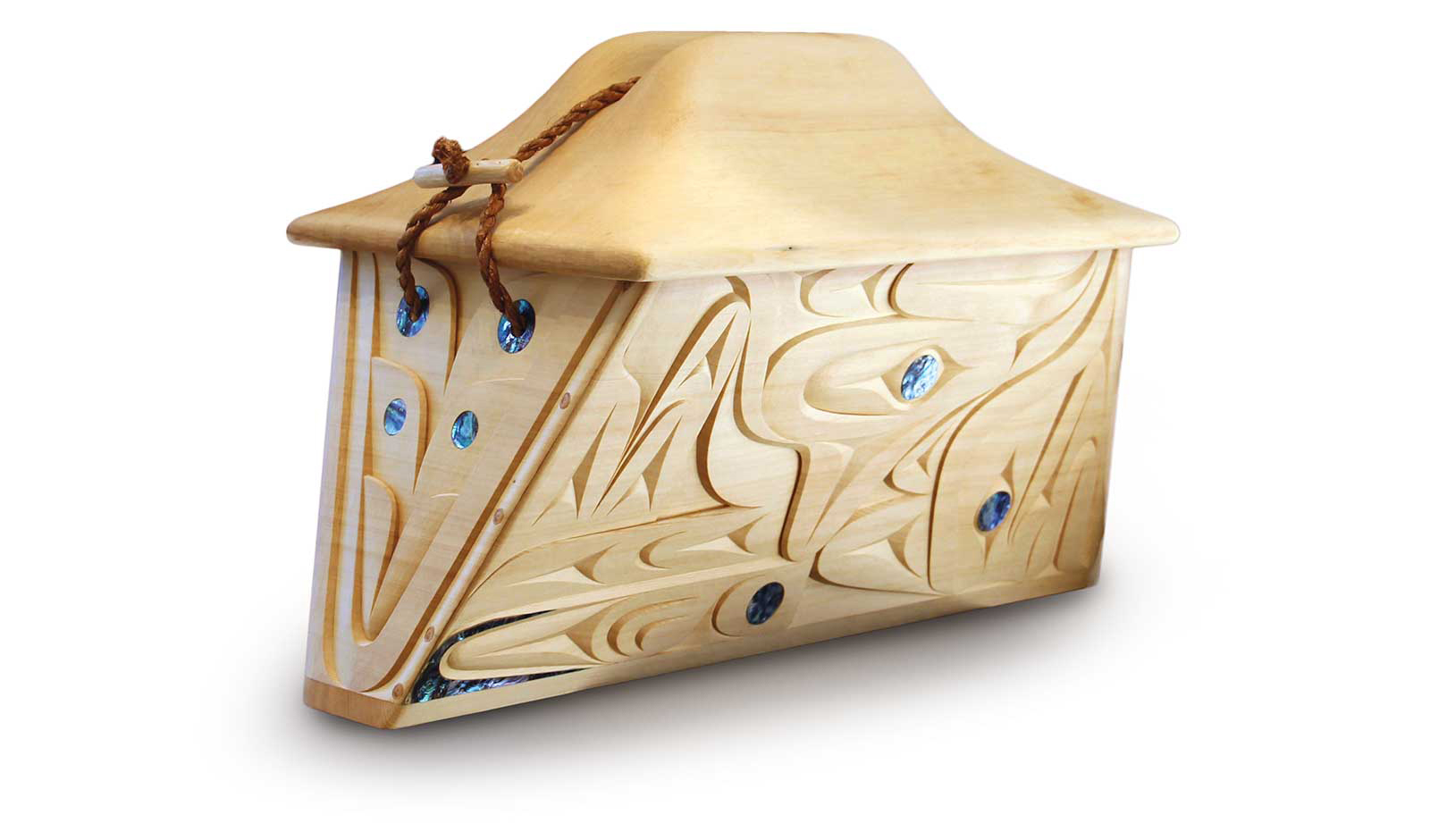 Advent of Human. Traditional canoe box depicting a history of our origins. Photo courtesy of Inuit Gallery.
Qap’u’luq, in just a few short years, has become one of the sought-after and collected artists working within Coast Salish, which surrounds much of Puget Sound near the U.S.-Canada border. The area is rich with artists, including many carvers, who are taking formline and other design elements and creating work that exemplifies the area, its history and its cultures.
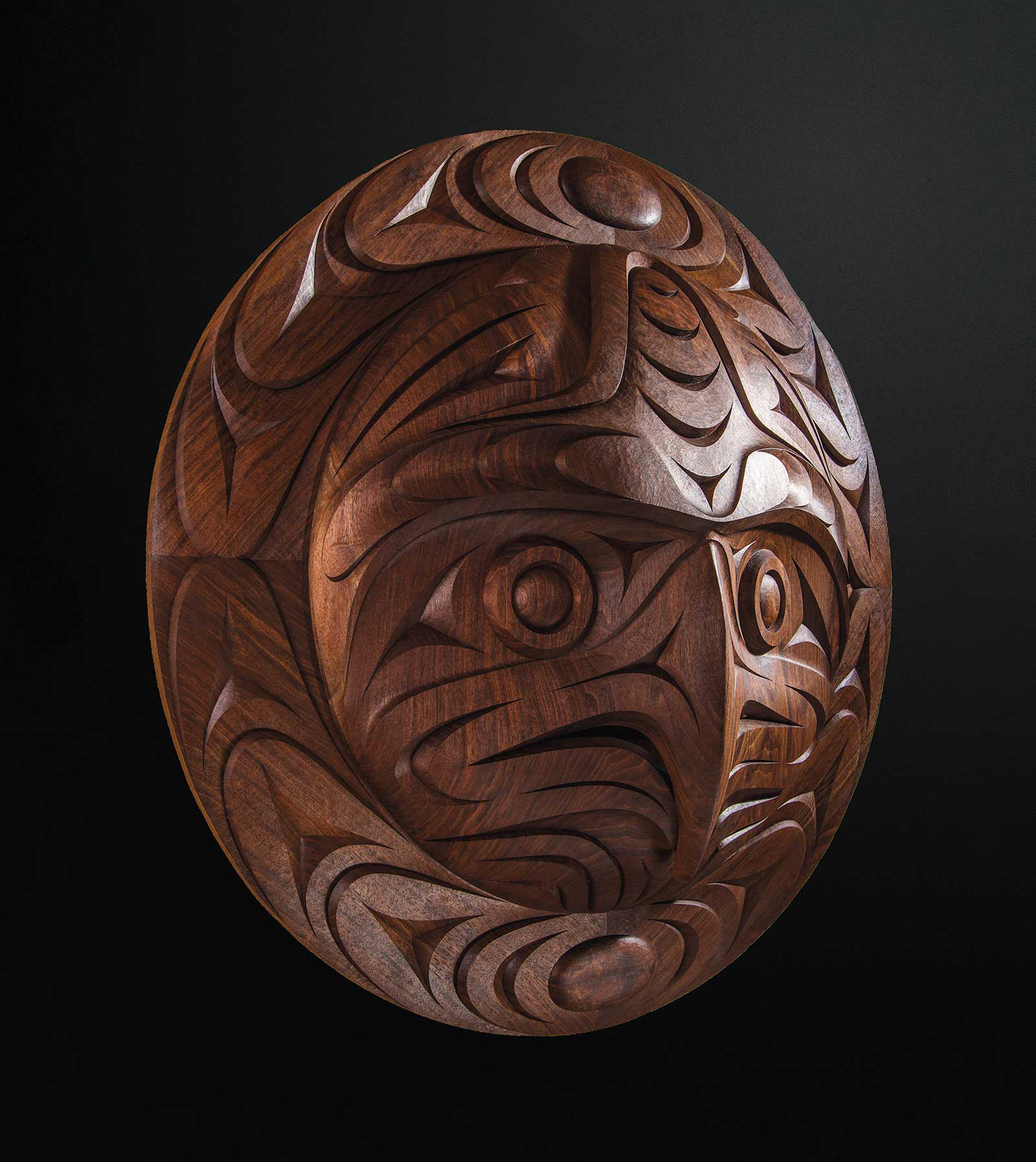
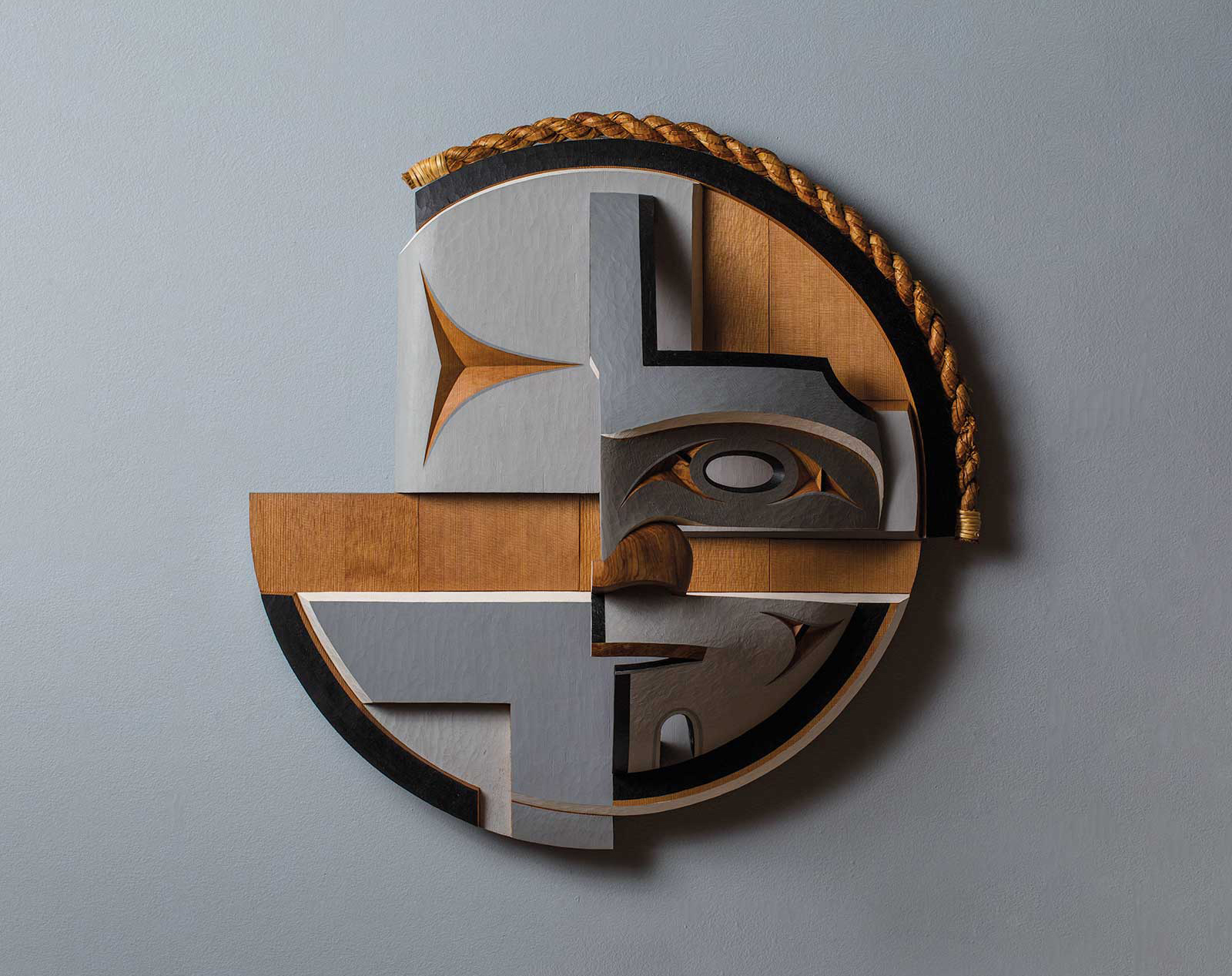 Abstract Moon. A continued evolution of abstract sculptural work. Photo by Sean Sherstone.
What sets Qap’u’luq’s work apart is not only his design work, but his technical mastery of his materials. His lines are razor sharp, his forms smooth and well defined—and his knack for working big and using every space perfectly has made his work some of the most collectible in the region. He gives a lot of credit to his brother, Luke, who is also an accomplished artist. “Both my parents were carvers, but I also learned from Simon Charlie, who taught me a lot. But Luke was really how I became a better artist. When we worked together we found the best versions of ourselves, which made our artwork better,” he says. “Luke, he’s three years older, and we joke about it all the time. But really we support each other rather than compete. He wants what I want, which is to express ourselves and make the best work we can.”
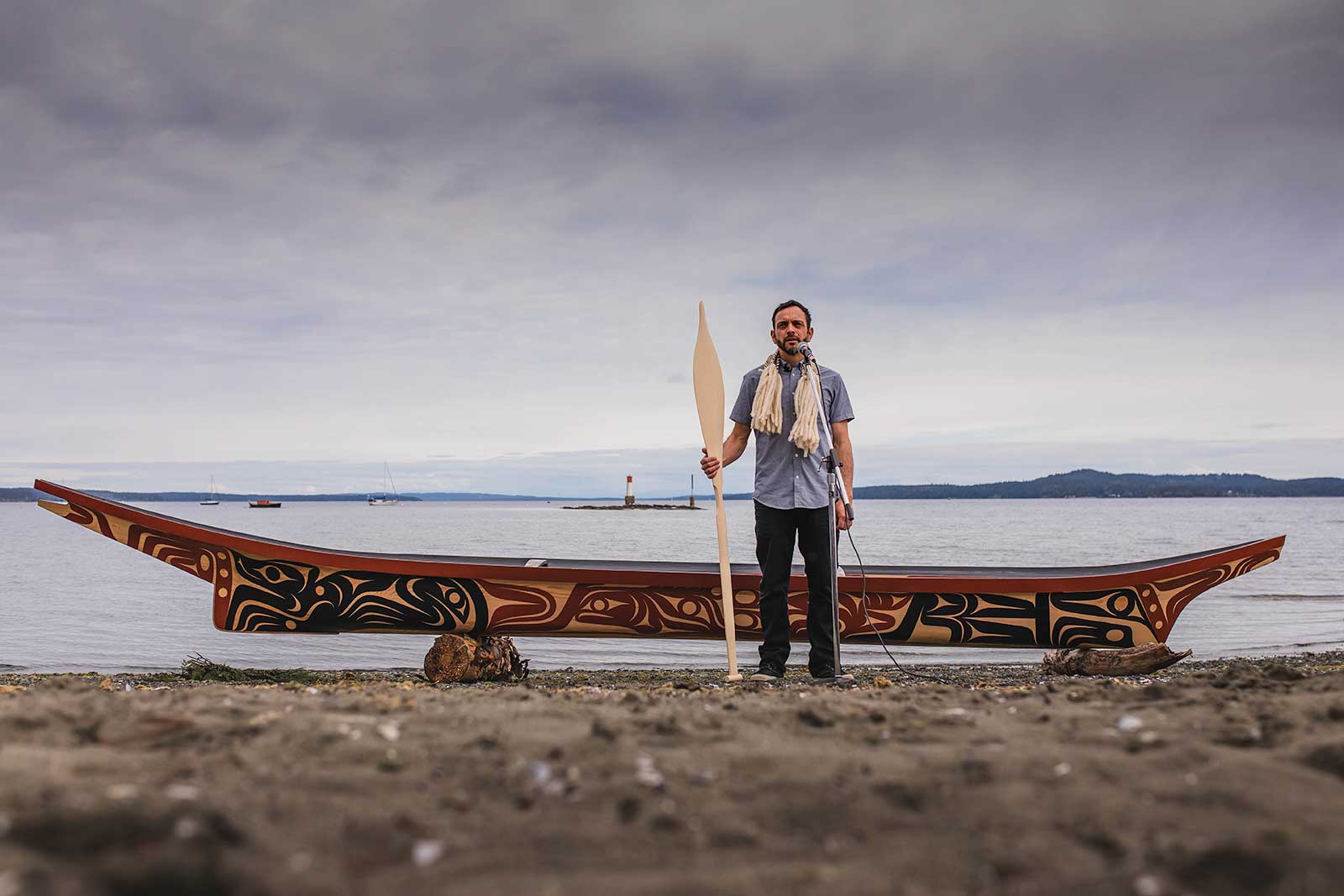 Laughing Bear Canoe. A community project celebrating Coast Salish culture in the local schools. Photo by Ashley Marston.
What’s in Qap’u’luq’s studio now is a variety of projects and materials. One of them is a 12-foot sculpture, and then others are a pair of wedding rings. Those sorts of size extremes are somewhat common, especially as he jumps from small carved boxes to canoes to masks and then back to large sculptural monuments.
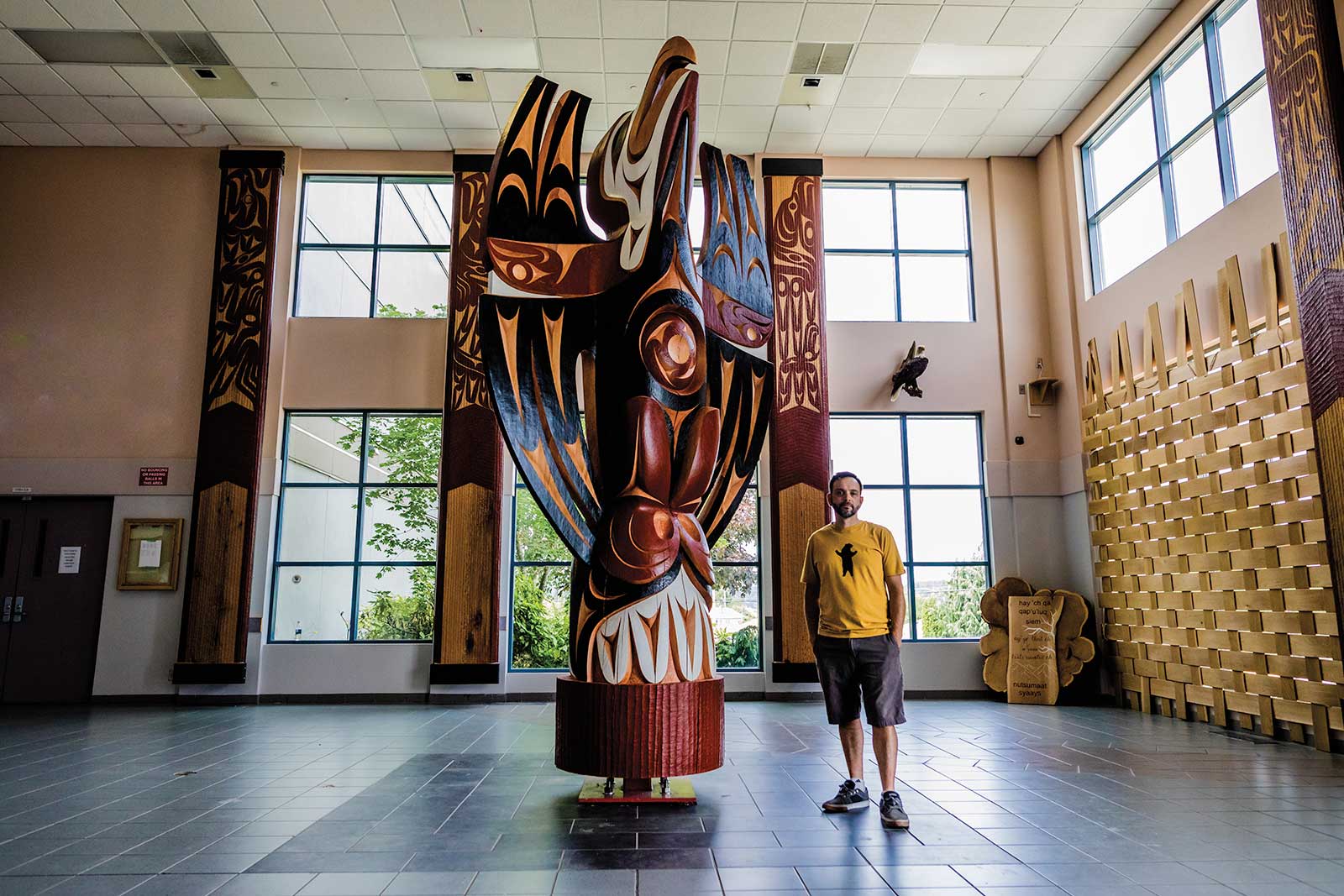 Welcoming Eagle. A welcoming figure for Ladysmith Secondary School celebrating our history, culture and community partnerships. Photo by Ashley Marston.
“Sometimes with more square feet comes more refinement, but then it can also be the same amount as a small work. If anything the larger pieces are sometimes more difficult, just because there are longer flowing lines, [so] you don’t have the room to make mistakes on bigger pieces,” he adds.
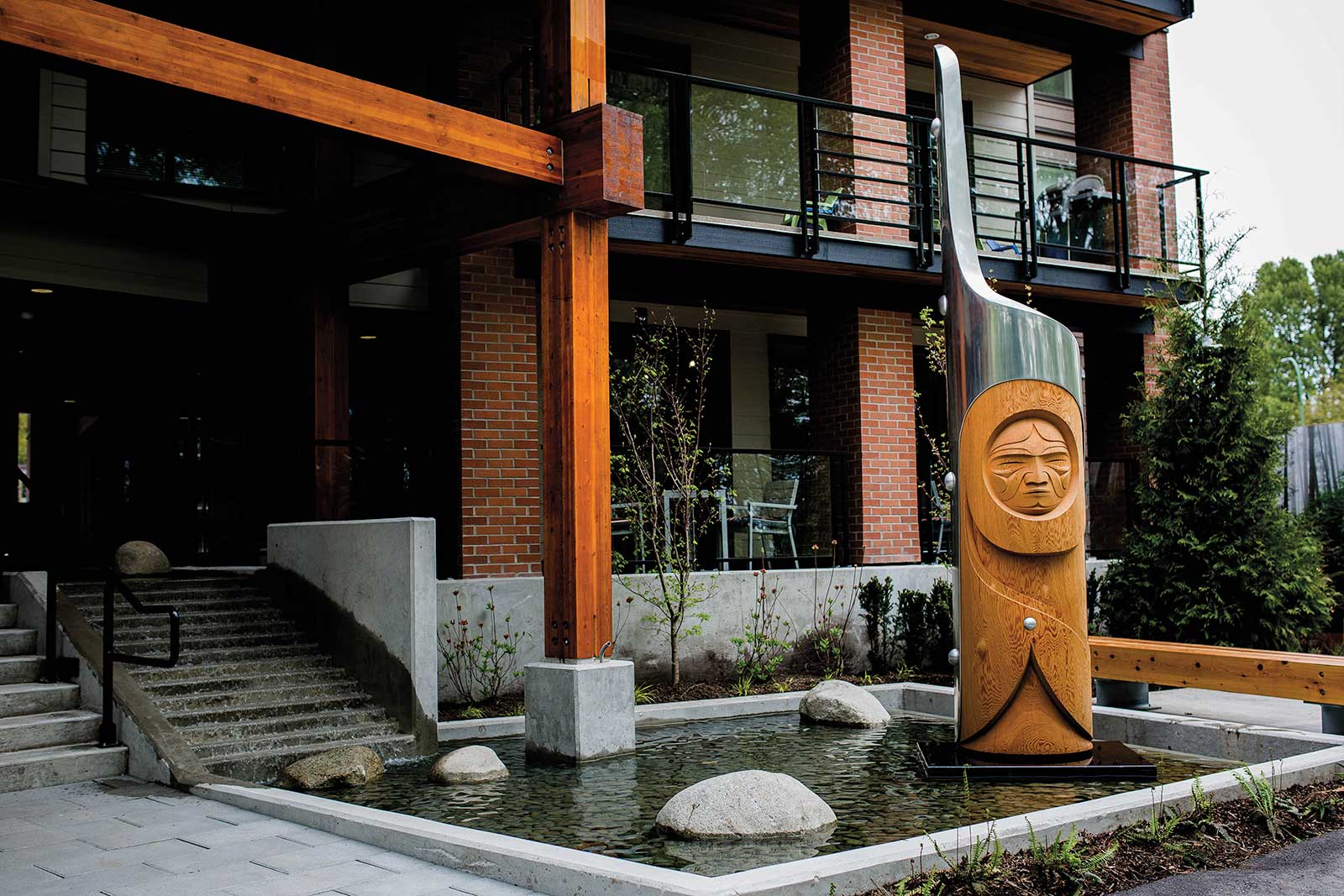 Honouring Our Cedar. Multimedia sculpture celebrating the history and connection to the sacred cedar tree. Photo by Ashley Marston.
One recent piece that marked a pivotal time for him as an artist was Abstract Moon, a work that has a classic mask-like feature within it but is executed in a highly modern way with several materials. “It was a turning point for me, especially from the work that I do,” he says. “Not long after, I became good friends with an abstract painter. Carving and painting are very different mediums, but I started playing with these ideas. I quickly learned I had to have everything very planned out, every new element. It took a lot of inner strength to go down that road, but I knew I had to trust myself that I wouldn’t veer too far away from my teachings. Using abstraction, I was risking my body of work, but it was worth it because I wanted to be inspired by my ancestors, to envision new ideas for myself.”
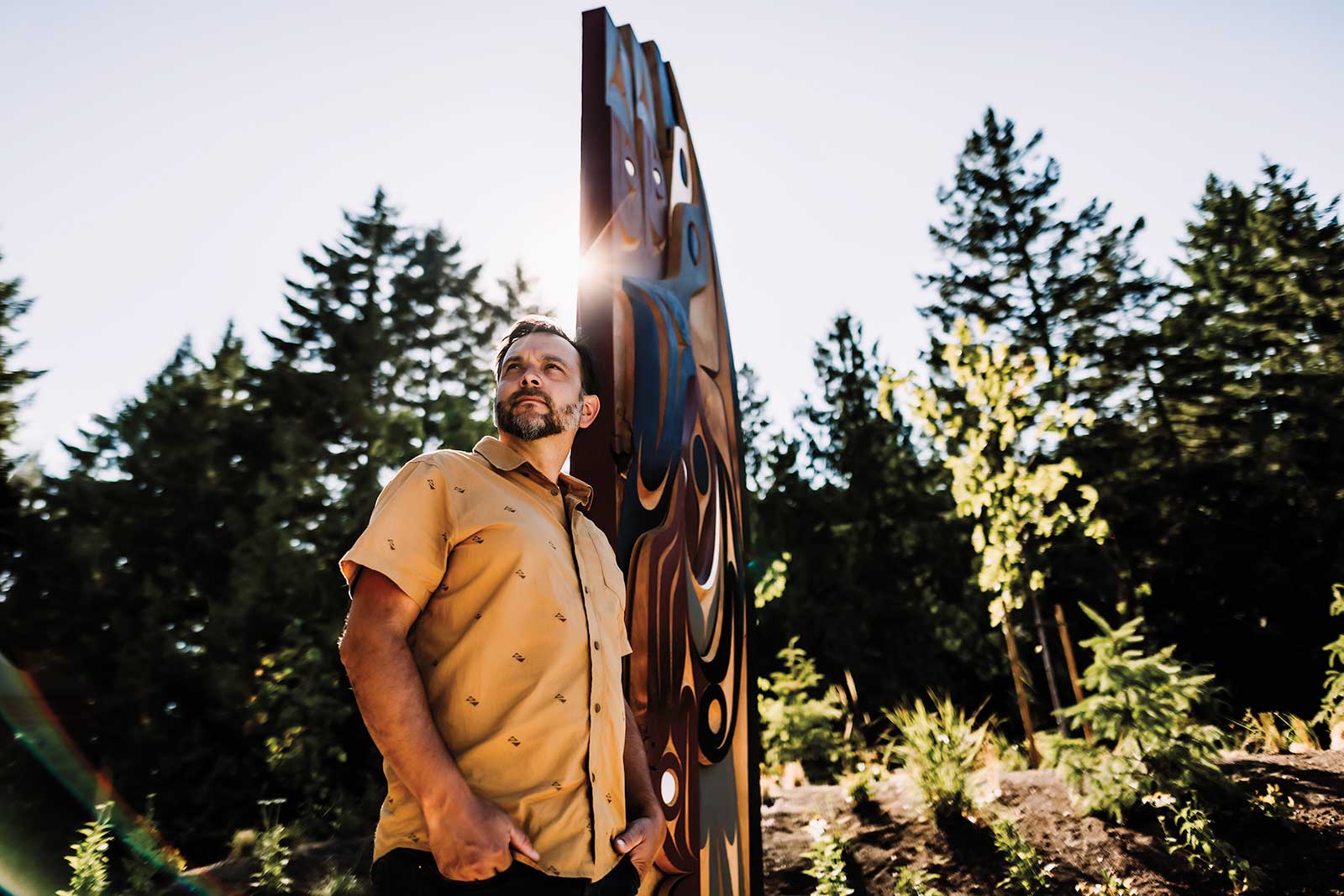 Thundering Prow. This sculpture is based on the forms of a canoe and is placed at the front entrance of the Malahat Skywalk in Victoria, British Columbia. Photo by Ashley Marston.
Not only was Abstract Moon a success, it has led to other works that will draw from that area of exploration. For Qap’u’luq, that’s the best place for an artist to be.
Powered by Froala Editor