Now on view is the thrilling exhibition Painted Reflections: Isomeric Design in Ancestral Pueblo Pottery that explores the optical illusions and perceptual reversals found in what are called isomeric designs. Three curators with the Museum of Indian Arts & Culture have brought their individual expertise to highlight and analyze the significance of these visual structures—Joseph Traugott, Ph.D., retired curator at the New Mexico Museum of Art; Antonio R. Chavarria (Santa Clara Pueblo), curator of ethnology at MIAC; and Scott G. Ortman, Ph.D., associate professor of anthropology at the University of Colorado, Boulder.
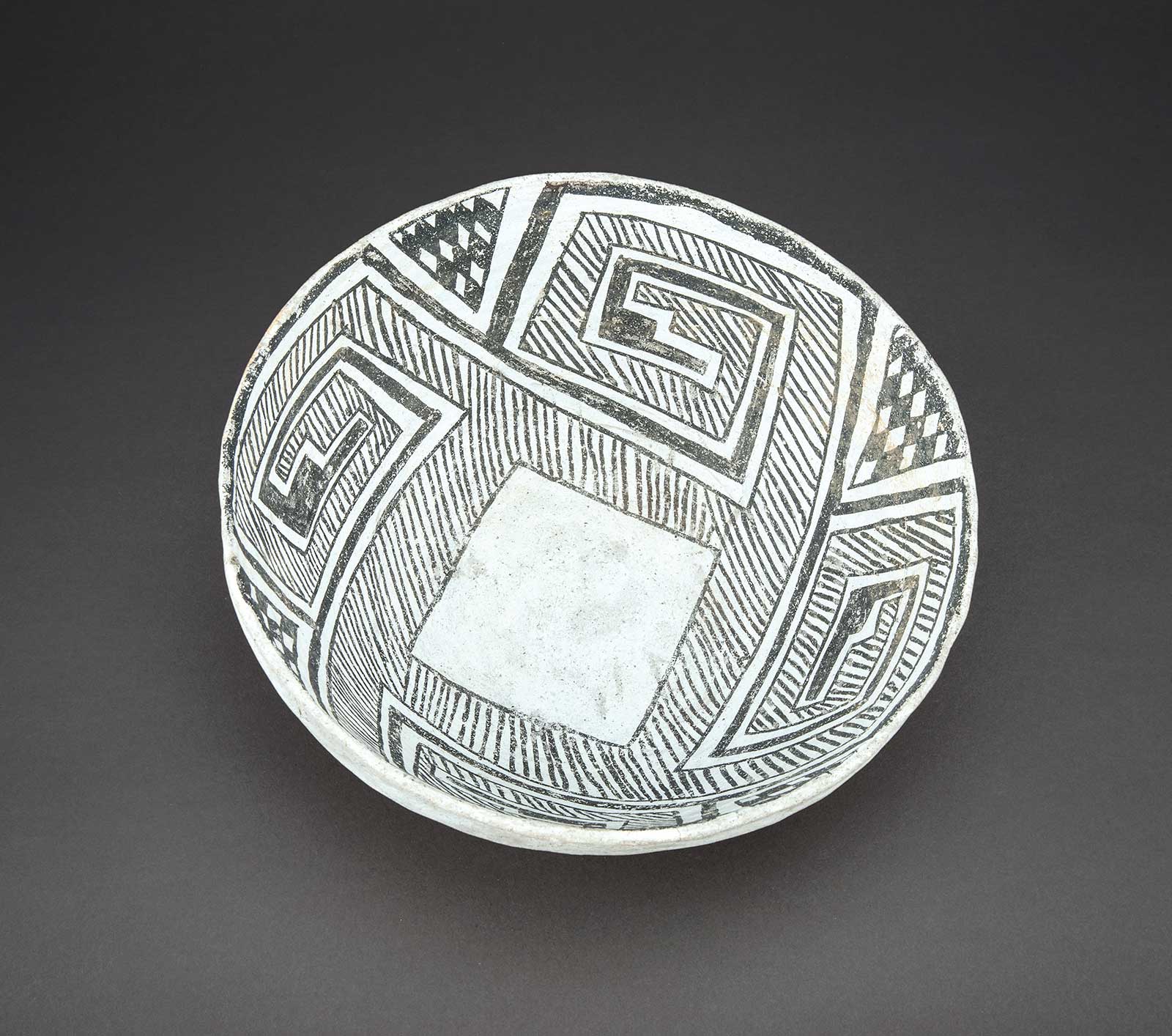
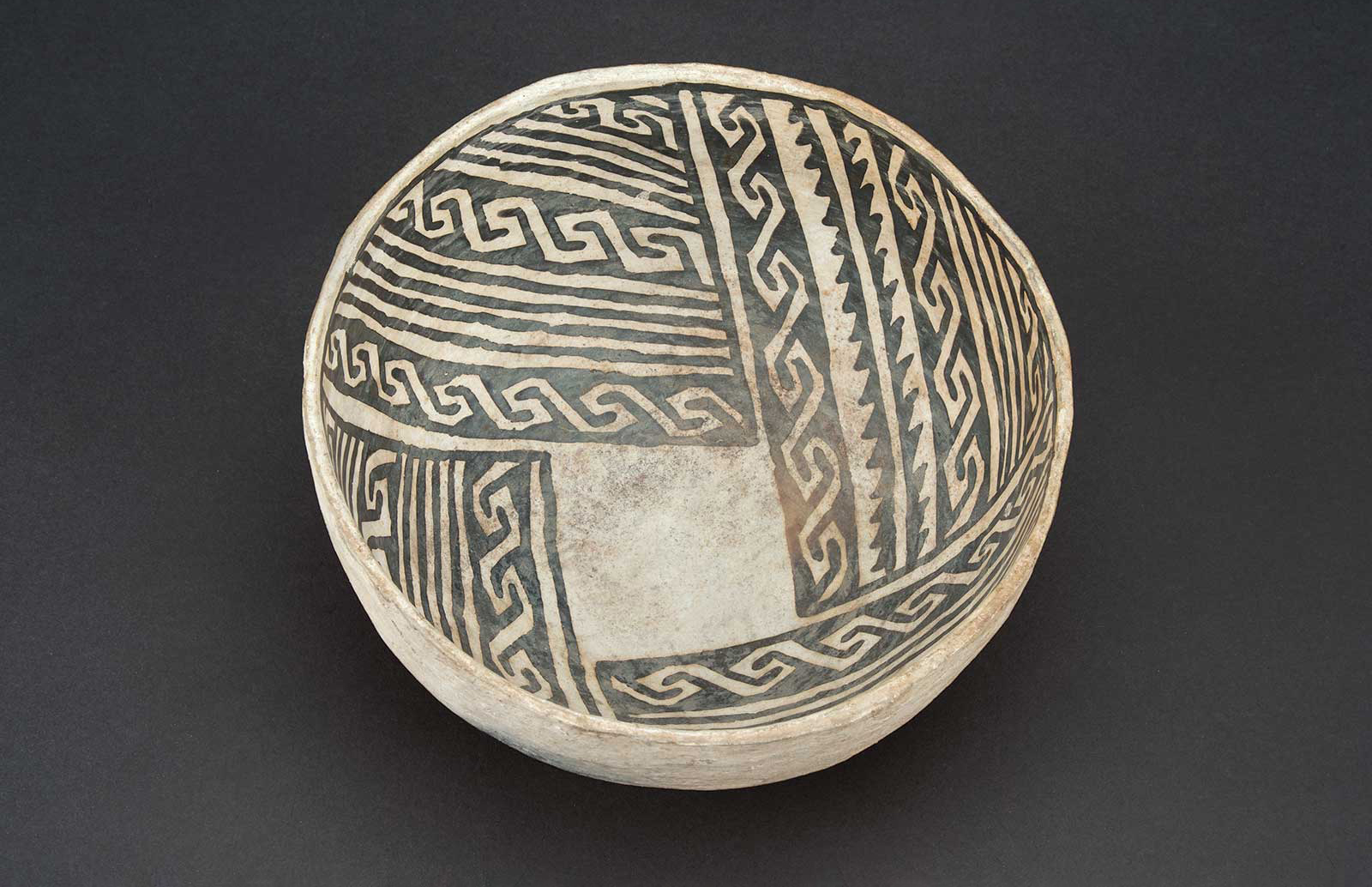 Unidentified Ancestral Pueblo Artist, Flagstaff black-on-white bowl (incomplete isomer strategy), 1125-1200. Photo by Blair Clark.
“The great thing about the three of us coming together for this, is that each of us brings a different point of view, and together, there’s a rather holistic presentation of pueblo pottery,” Traugott explains. “Each point of view is not the only way to think about these vessels. Chavarria provides a personal perspective, Ortman is analyzing pueblo pottery from an archeological point of view, and I’m presenting an art historical and perceptual angle.”
These esteemed curators have brought together 35 ancestral pueblo pieces made between the years 900 and 1300, and contemporary work as well. “The exhibition also demonstrates the ways in which contemporary Indigenous artists are using isomeric design in their work, placing ancestral ceramics in conversation with the innovations of contemporary artists,” notes the exhibition press release.
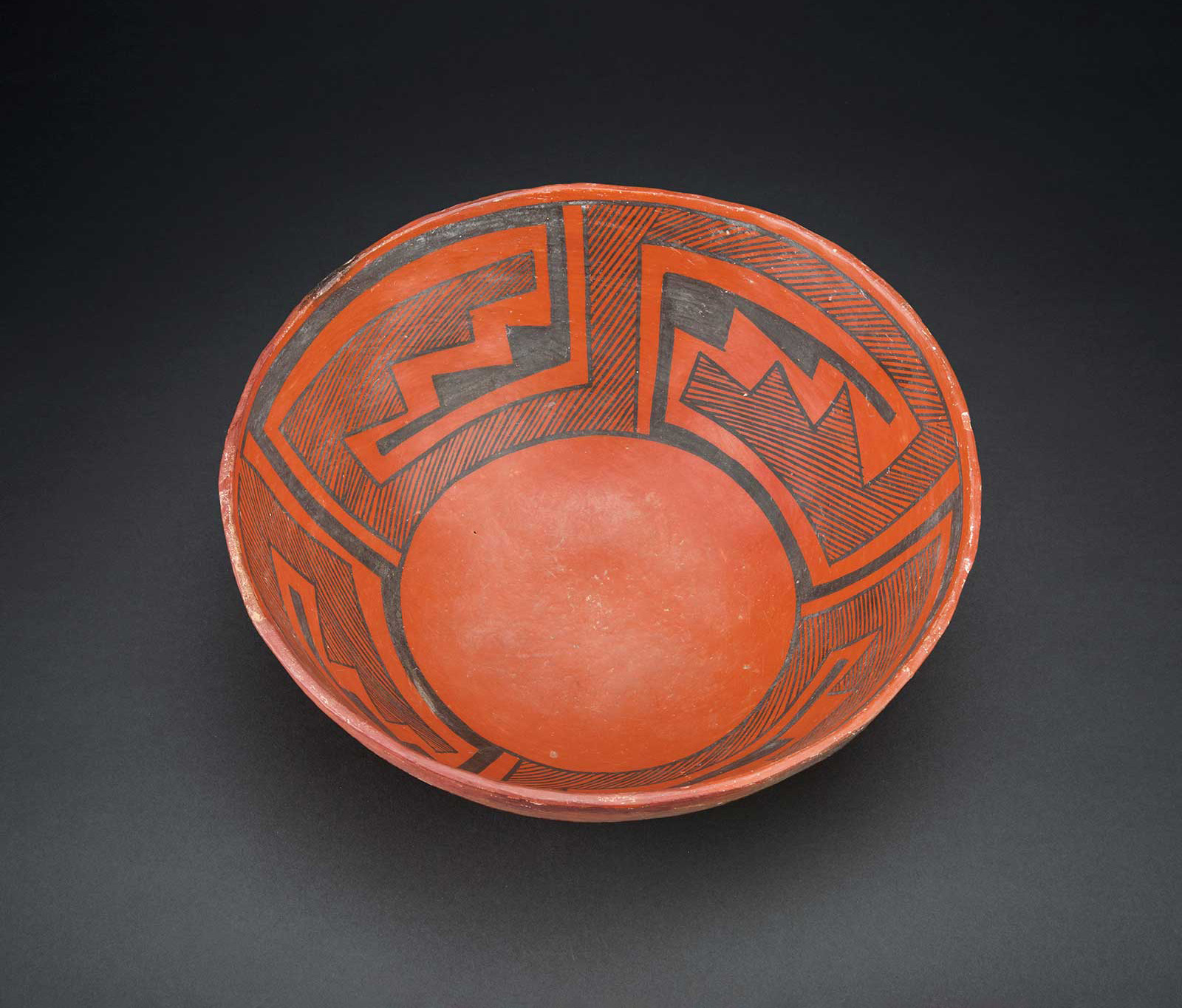 Unidentified Ancestral Pueblo Artist, Puerco black-on-red bowl (liminal-space isomer strategy), 1050-1175, mineral pigments and fired clay. Photo by Blair Clark.
One such contemporary work on display is made by traditional Ohkay Owingeh potter, Clarence Cruz. “I’m a traditional potter,” he explains, “but once in a while I’ll do a contemporary piece. For the show, I have a polychrome piece and a mug to represent my pueblo.” Cruz is known for creating pieces that have visual effects like black-on-black matte and burnished designs, and a red slip technique where, when sanded, the tan clay body is exposed. “This is basically a polychrome design,” he says, “but working with the tan body in the middle. This gives a three-dimensional effect.”
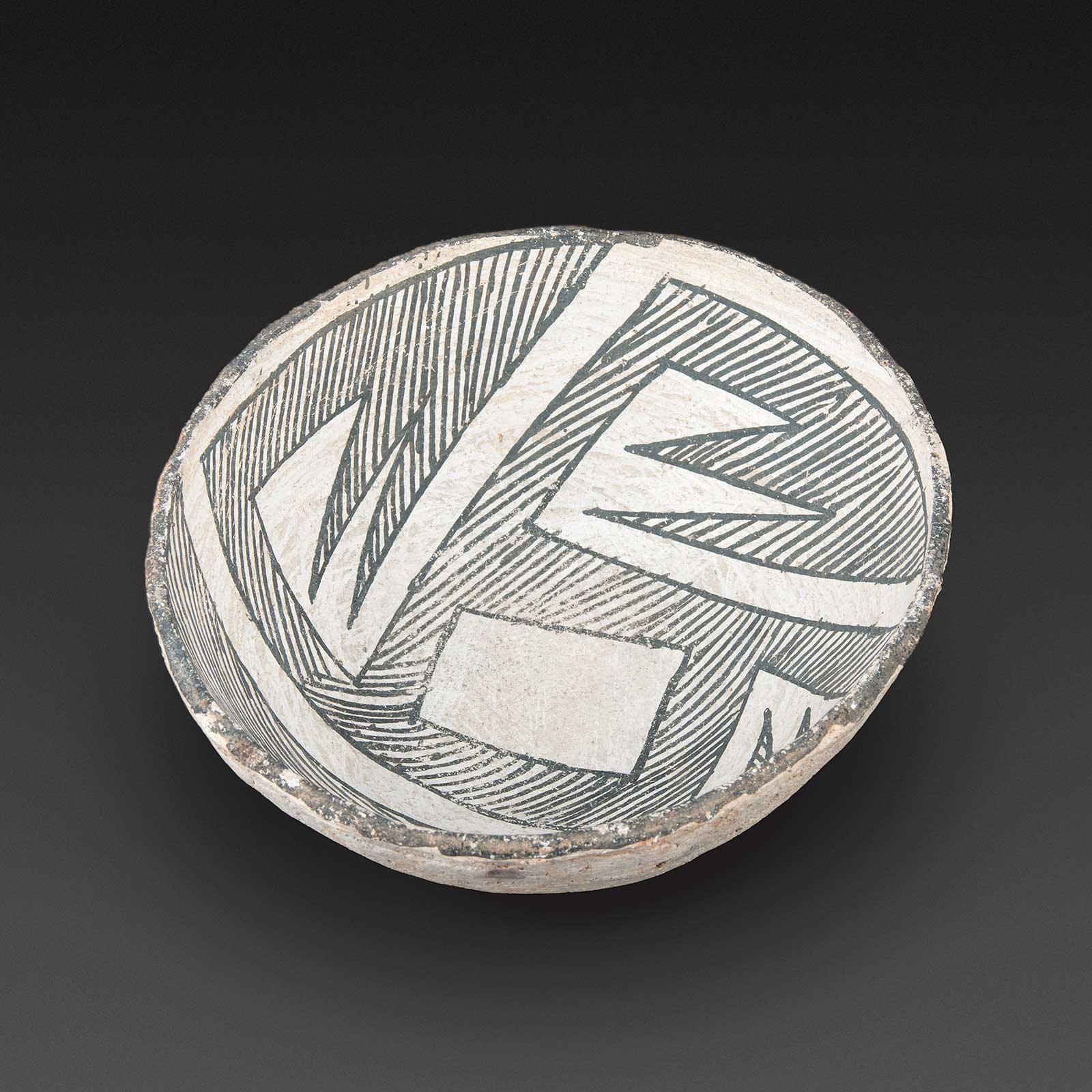 Unidentified Ancestral Pueblo Artist, Gallup black-on-white bowl (reciprocal isomer strategy), 950–1150, mineral pigments and fired clay. Photo by Blair Clark.
Traugott explains in depth the meaning of these illusionary designs: “We all think of these works as being painted designs, but they were made with isomeric designs—special illusions that produce optical reversals. What that means concretely, is that the painted image on these pieces can also be perceived as backgrounds and the image is in the unpainted areas of the pottery. This is the reverse of what we think about it. They allow for the viewer to perceive the pieces differently than we might look at them today.”
The exhibition includes four strategies for creating isomeric designs: tessellated, reciprocal, liminal-space and incomplete isomers. “Tessellated is a fancy word for a checkerboard design,” says Traugott, “and when you use this design, there are equal spaces of painted and unpainted squares. When the solids were filled in, they became optical backgrounds, but we normally see the painted image as the icon or the subject of the piece.
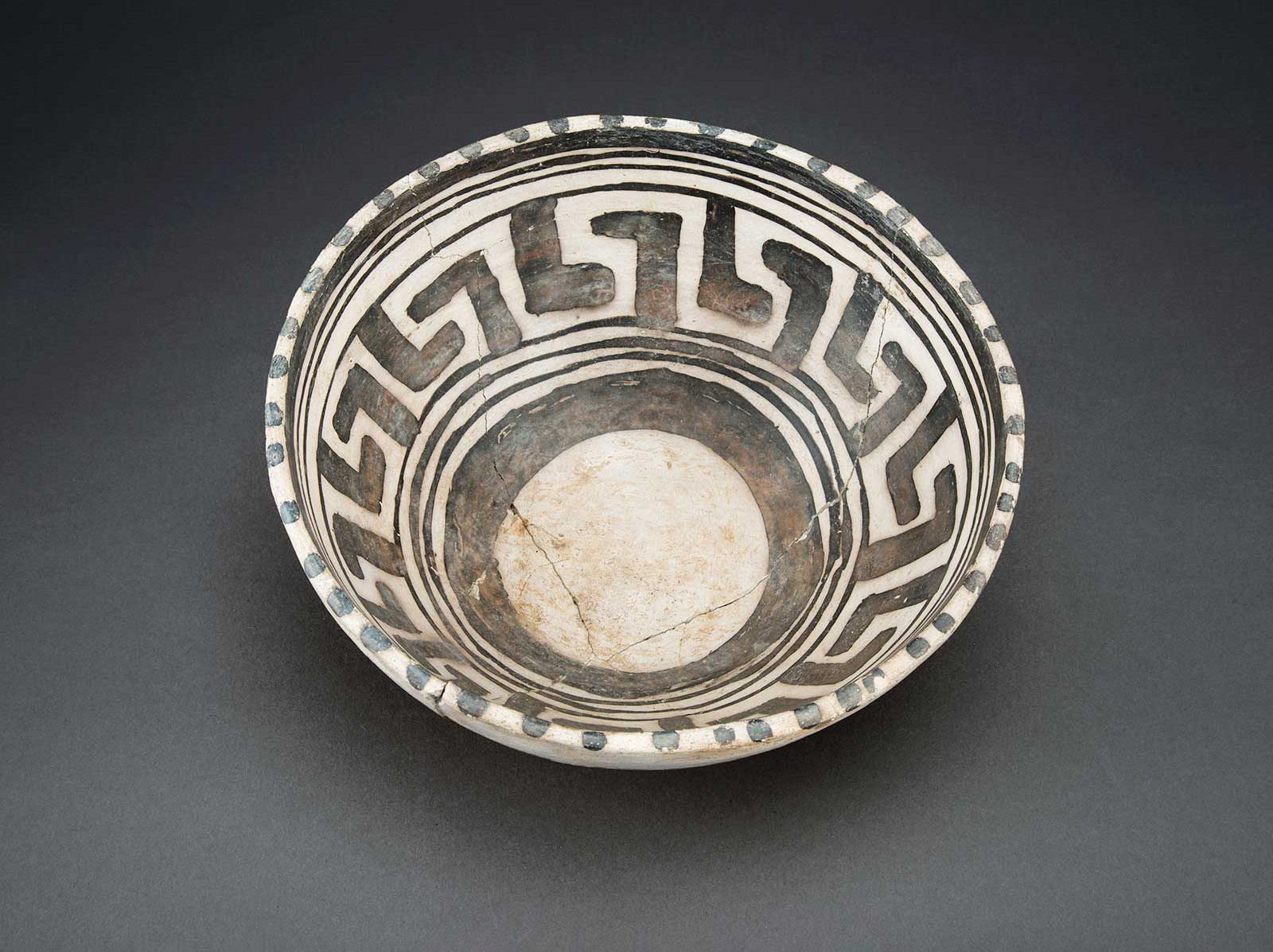 Unidentified Ancestral Pueblo Artist, Mesa Verde black-on-white bowl, 1150-1280, organic pigment and fired clay. Photo by Blair Clark.
“Reciprocal isomers mean the artist painted a design which left an unpainted area that mirrors the painted one. Since modern people are predominately readers, we have trained ourselves over many decades to look at little painted letters on a sheet of paper, so we normally look for those painted images as the subject when optically, with these designs, it’s in fact the unpainted space that appears to be popping forward in front of the painted motif.
 Unidentified Ancestral Pueblo Artist, Gallup black-on-white bow (tessellated isomer strategy), 950-1150, white fired clay. Photo by Blair Clark
“Liminal-space isomers are a pair of similar designs and motifs that have a space in between them. The unpainted space pops forward in front of the painted motifs and winds its way around the vessel in a kind of meandering unpainted way.
“Incomplete isomers are abstractions or simplifications of design motifs that would have been well known to ancestral pueblo people. These partial images would have been clearly understood at the time, and as we look at them now, because we know what the images sort of represent, it melds together, and we think of it as being a whole design rather than a partial design. Often times, incomplete isomers present interlocked spirals or simplifications of interlocked spirals.”
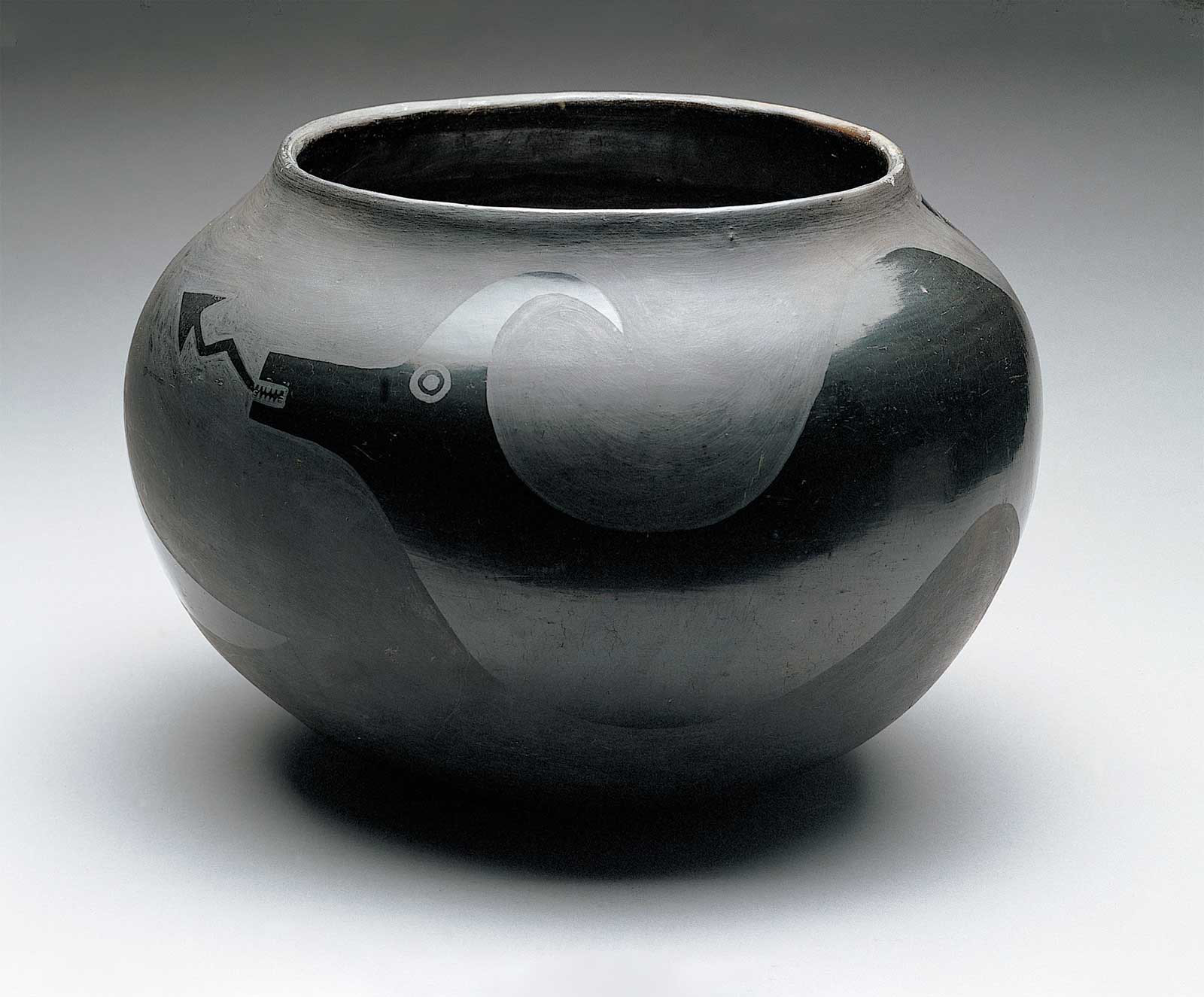 Maria Martinez (San Ildefonso Pueblo, 1887-1980) and Julian Martinez (San Ildefonso Pueblo, 1879-1943), Black-on-Black Jar with Avanyu Figure, 1919-20. Photo by Blair Clark.
Cruz notes that artists didn’t necessarily see the optical illusions in this way. “[Researchers] are seeing it differently. It’s decorating but anything we do on a pot has meaning. It’s a storybook like petroglyphs; a story of something the artist saw. For us, it’s a symbol.” Traugott adds, “[These designs] area a reflection of the ancestral pueblo people understanding the world around them; the environment and the resources of the Southwest, and the relationship with the seasons and astronomy. There’s much more going on with these designs than just a simple decoration.”
Powered by Froala Editor