The first Navajo (Diné) pottery was made for such utilitarian purposes as water gathering and food storage. Vessels were shaped into bowls and jars. The double-spout wedding vase came later. In one western regional area, including Black Mesa, Cow Springs and Shonto, rich clay deposits yielded sufficient materials for local potters to develop pieces which they coated with a piñon pitch glaze. These traditional pots acquired a rich brown color with variable hues and tones. The glaze was added after firing, enhancing the pot’s surface sheen.
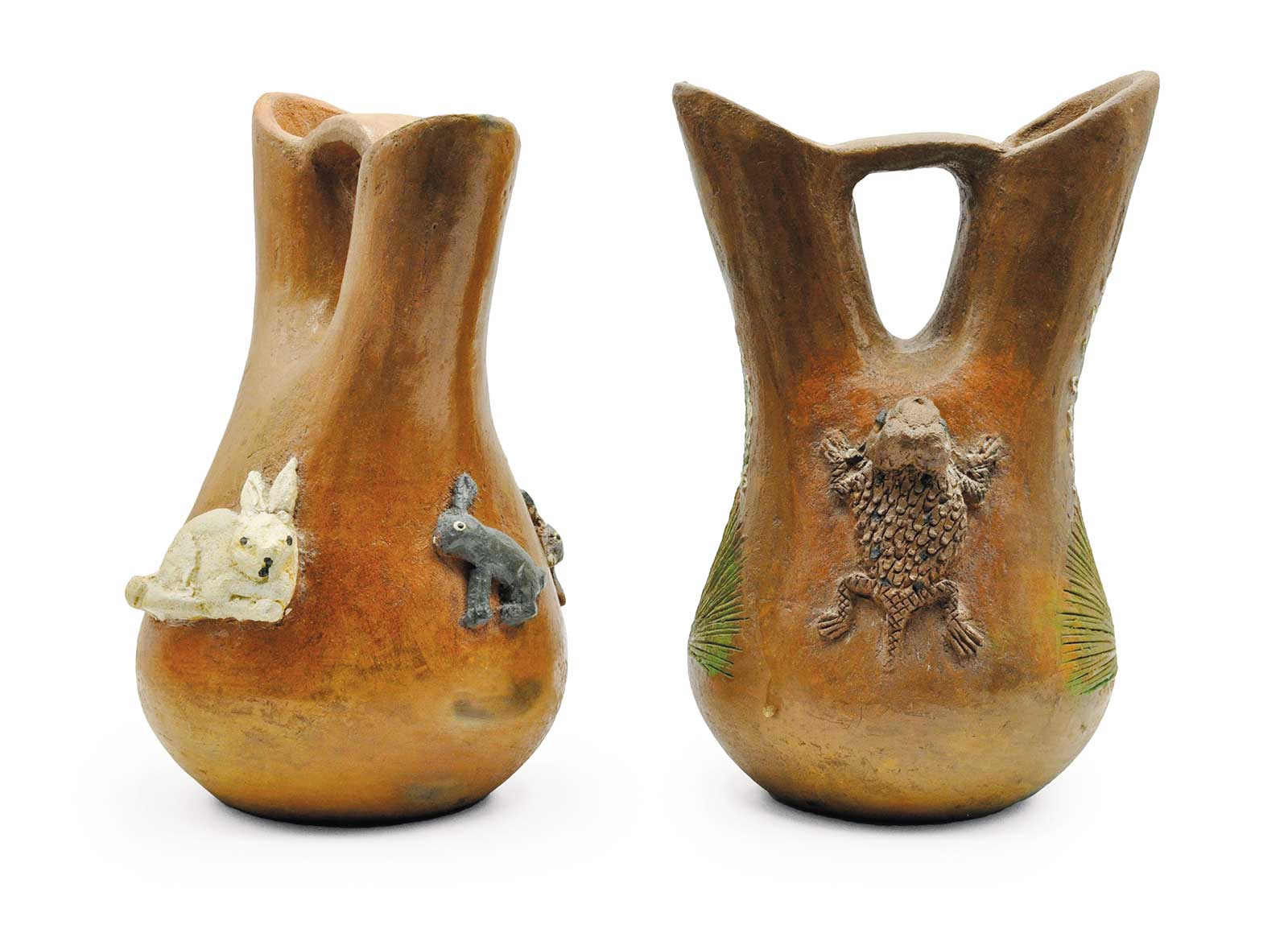 Silas and Bertha Claw: left, commissioned wedding vase with rabbits appliqué, ca. 1990; right, wedding vase with horned toads, 1980s.
Potters select clay from nearby sources and break it into smaller pieces. After being wet thoroughly, the dried clay is ground to a fine consistency and sifted to eliminate fragments. Tempering the clay means mixing it with a choice of materials, from sand and water to volcanic cinders or chips from pottery found at pre-contact sites. These ingredients serve to bind the clay together for shaping. The potters create rope-like coils to form the body of the vessel before placing it in an outdoor fire pit with juniper or cedar wood. The smoke and heat from firing produce variations in color on the pot’s surface.
Sometimes the exterior and inside surfaces are scraped for a smoother finish. After the pot is fired and before it cools, the maker applies melted piñon pitch to these surfaces with a wrapped stick. Traditionally, these original pots were undecorated. This would change in the 1950s, when Navajo individuals began looking for new directions in making craft work for the tourist market.
Their creative energies were encouraged by Indian traders living on the reservation. Foremost among them was Bill Beaver (1925–2009) who worked at posts in Chaco and Shonto before moving to manage Sacred Mountain Trading Post on Highway 89 between Flagstaff and Cameron. He actively displayed and took commissions for Navajo pitch pottery. Beaver managed to interest various dealers, including Tucson trader Tom Bahti, and helped to build an increasing interest in Navajo pitch pottery once it began appearing in new forms with decorative details.
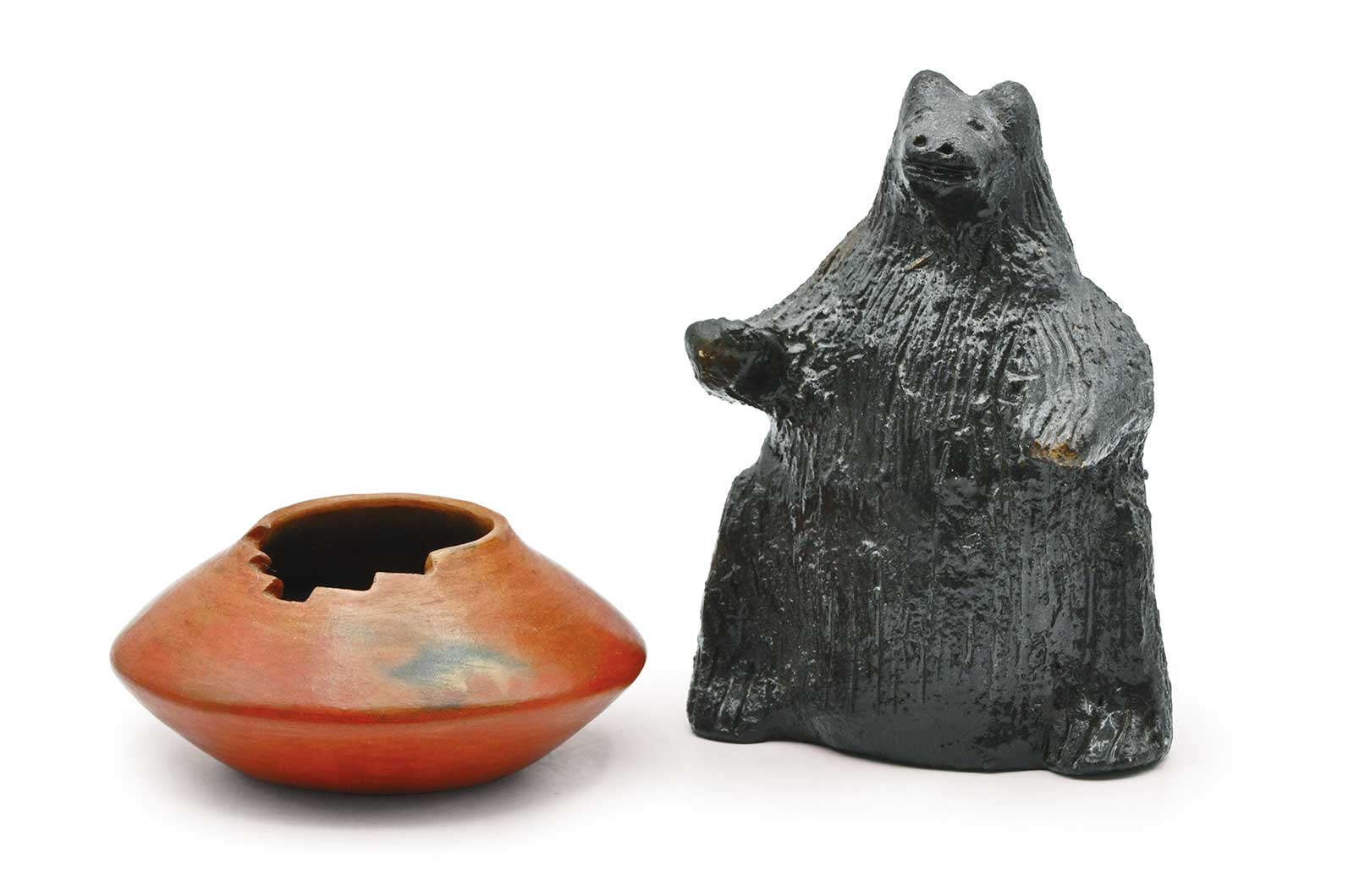 Left, Lorenzo Spencer carved pot, 1994; right, bear effigy by Louis Goodman, late 1980s.
This impetus began in the late 1960s, a period of social change that penetrated to even the more remote areas of the Navajo reservation. An earlier reluctance to portray figural designs transformed into a pride in tribal creativity. Soon, certain individuals, including families, began making pots that referred to rural life, favored animals, and Navajo spiritual aesthetics. As non-Native traders began selling their wares, these potters became subjects of interest to buyers and collectors.
Significant potters emerged in the late 1970s and early 1980s. At the same time, Navajo pitch pottery began to appear in galleries in Santa Fe and other locations. In some cases, multi-generational families of potters proved talented. The decorative impulse, once unleashed, provided imagery that many people felt aligned well with Navajo folk art. This assumption, however, couldn’t account for certain potters’ works formed with exquisite and highly artistic abstraction.
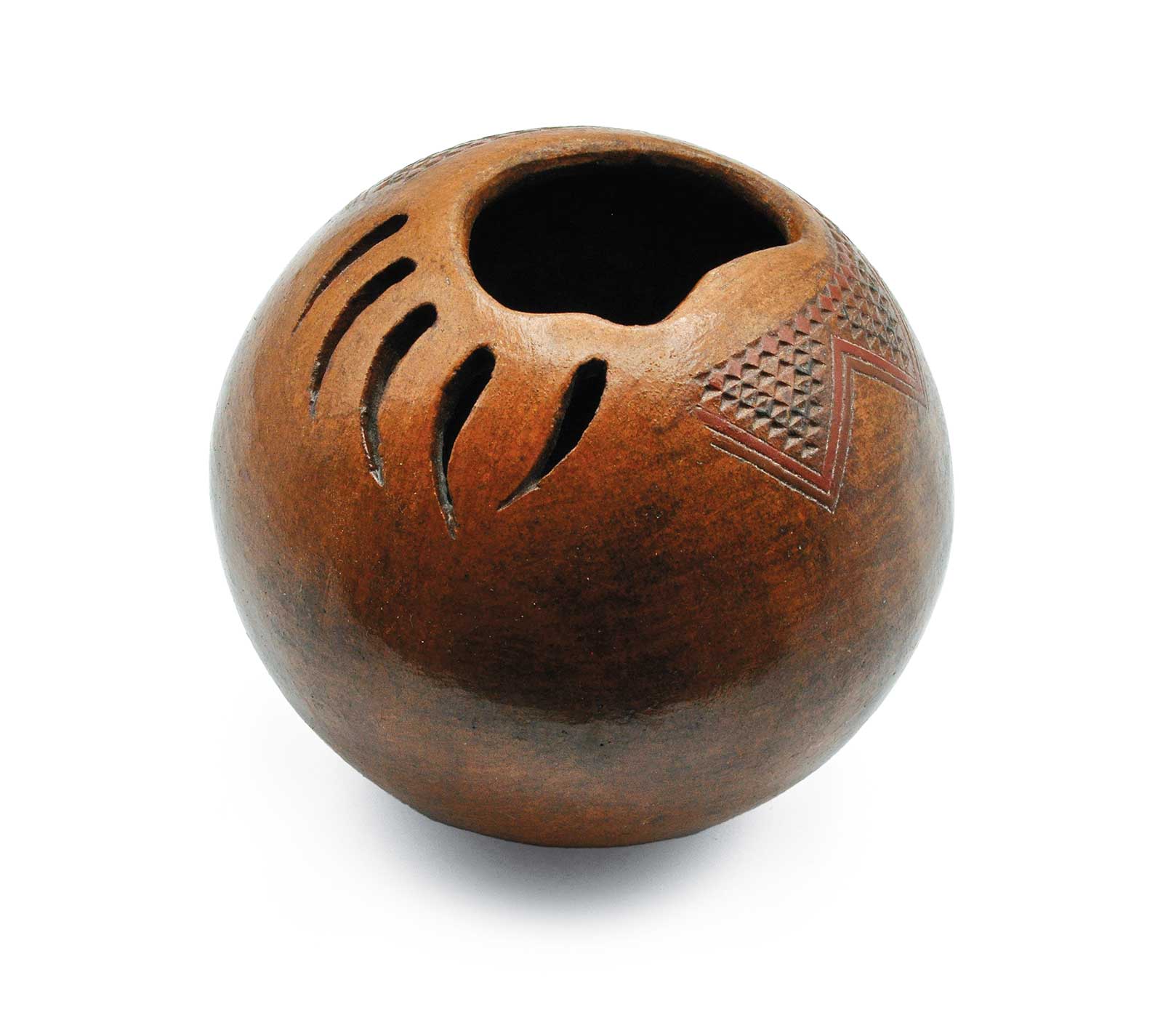 Lorraine Williams, bear claw pot, late 1980s.
Silas (1913–2002) and Bertha (b. 1926) Claw, residents of Cow Springs, started making pots around 1970, both individually and collaboratively. When working together, Bertha would create the vessel while Silas added clay appliqué figures such as a horned toad (one of their most popular designs). He innovatively applied paint to his decorative additions. The couple elected to use pitch for ceremonial vessels, while those pieces with appliqué would be varnished, since the pitch would make the paint they used run.
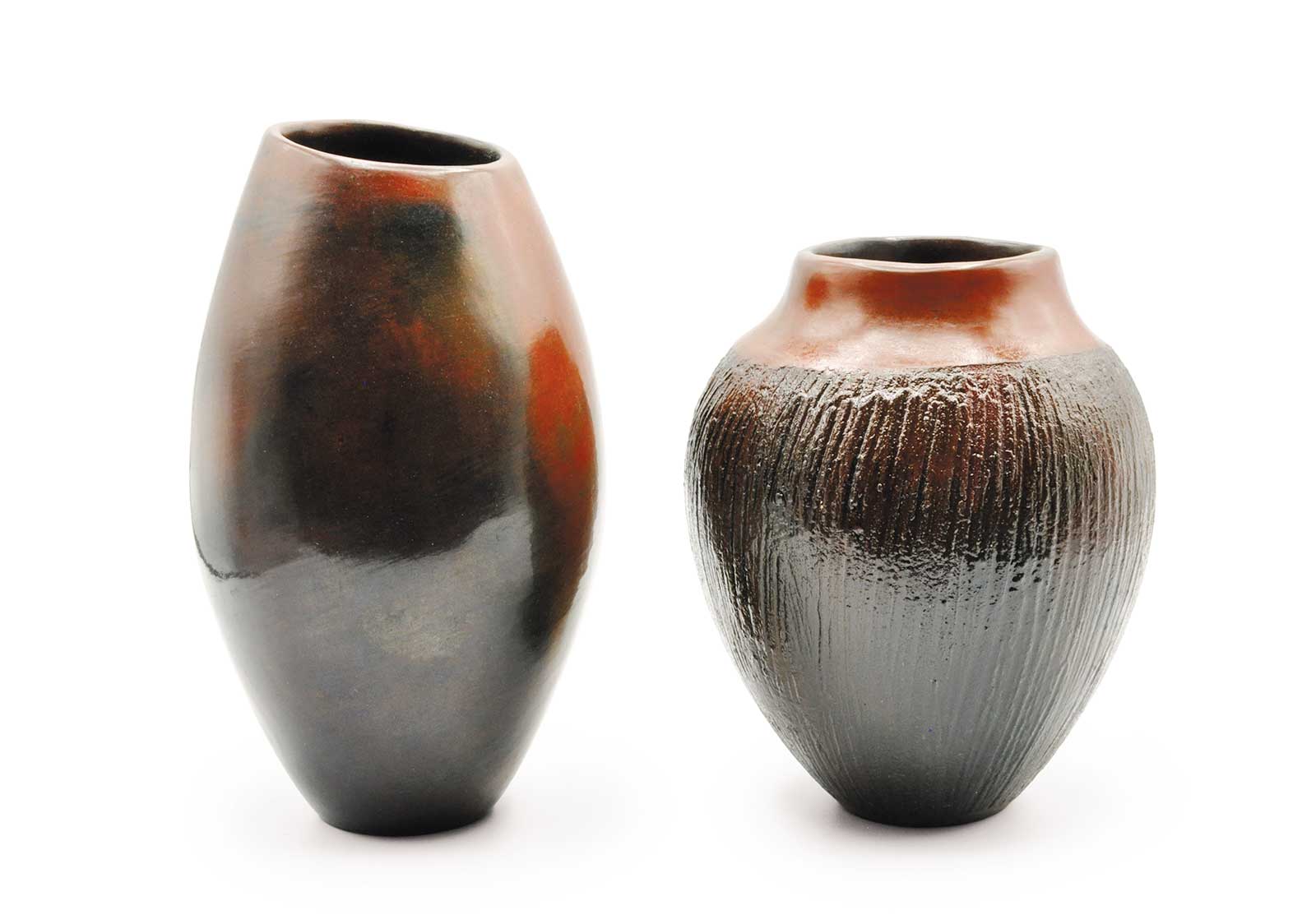 Alice Cling: left, tall pot with slanted rim, fire clouds, ca. 2000; right, cornhusk style pot, 2021.
Lorenzo Spencer married into the Williams family but he and his wife, Rose’s daughter Susie, don’t work together. He approaches pitch pottery with an eye to color and contrast. Spencer carves lightly into his pots, utilizes rug designs, dark slip, and adds sgraffito techniques to refresh his vessels’ surface texture. In contrast, potter Louise Goodman (1937–2015), also from Cow Springs, made traditional pitch pottery, often in a dark tone, and became known for her animal effigies, from barnyard to exotic. Her bear effigies are particularly remarkable; she won a number of awards from museums.
The Williams family, led by matriarch Rose Williams, are among the most prolific potters of the Cow Springs-Shonto area. Rose’s daughters Alice (Cling), Susie (Crank), and Sue Ann also make pitch pottery, as does Rose’s daughter-in-law Lorraine Williams (b. 1955). Lorraine came late to pottery making but was inspired by her mother-in-law’s work. Another award-winner, she brings an inventive eye to incising iconic designs on her pots, from landscapes with clouds to sacred Yeibichais. She also carves such decorative features as a bear claw onto her vessels.
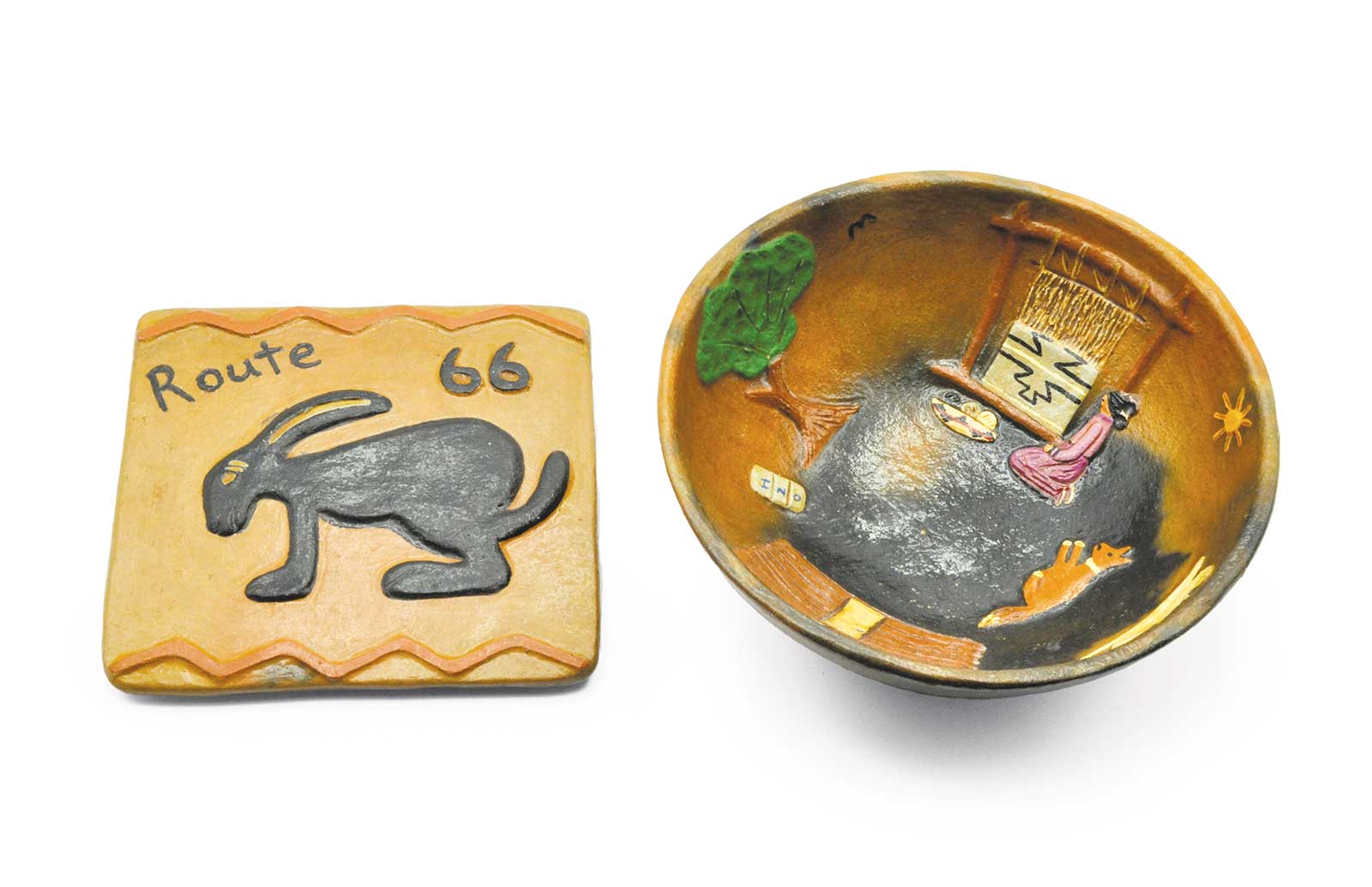 Elizabeth Manygoats: left, Route 66 plaque with iconic rabbit figure; right, everyday scene bowl, 2008.
Alice Cling (b. 1946) has become possibly the most notable Navajo pitch ceramist today. Her work differs from that of her family in the absence of decorative detail. Alice’s pots are unique evocations of the beauty of unadorned form. There’s a tremendous aesthetic purity to her highly polished pieces. In some of her works she developed what she calls a “cornhusk” finish to the texture of her pots. While she adheres to tradition in color and tone, Cling innovates through the clarity of her vessel shapes.
An artist with a folk-art flavor to her decorative pieces, Elizabeth Manygoats (b. 1973), daughter of famed potter Betty Manygoats, chooses to portray scenes from traditional everyday life. While she can make vessels in the established mode, she likes to create brightly colored “lifestyle pots,” using designs often found in weaving. She appliqués her brightly hued figures and glazes them. Manygoats also makes multicolored plaques.
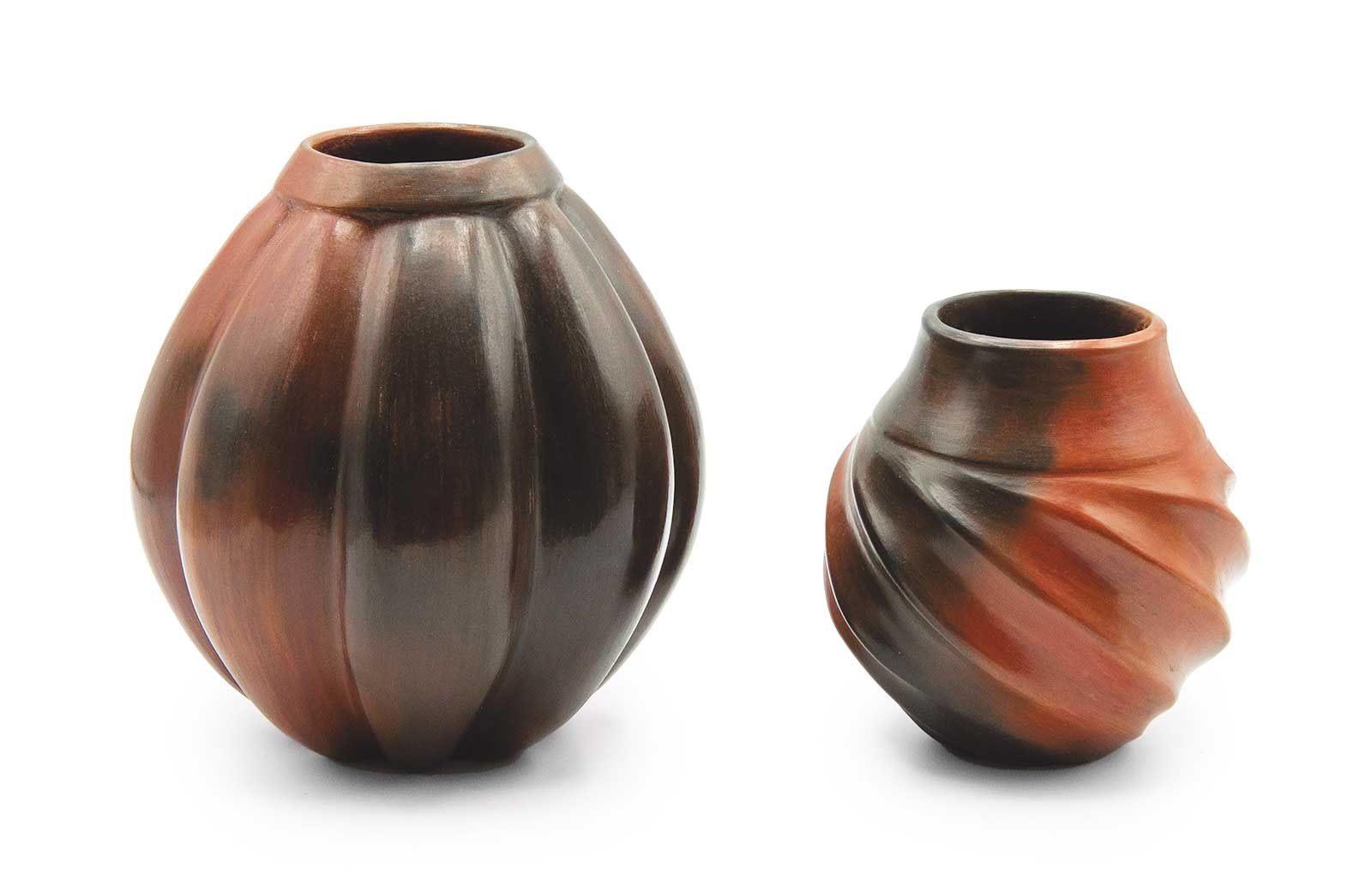
Samuel Manymules: left, melon jar, ca. 2012; right, sharp melon swirls pot, ca. 2017.
Samuel Manymules (b. 1963) takes a more sculptural approach to his pitch pots. Like Alice Cling, he strives for a fine aesthetic in form when it comes to fashioning bowls, large bean pots, and highly polished vessels. He also incises figures on the surfaces and, more recently, shapes melon swirls on his pieces. Manymules works on his own, and his originality has won him various awards.
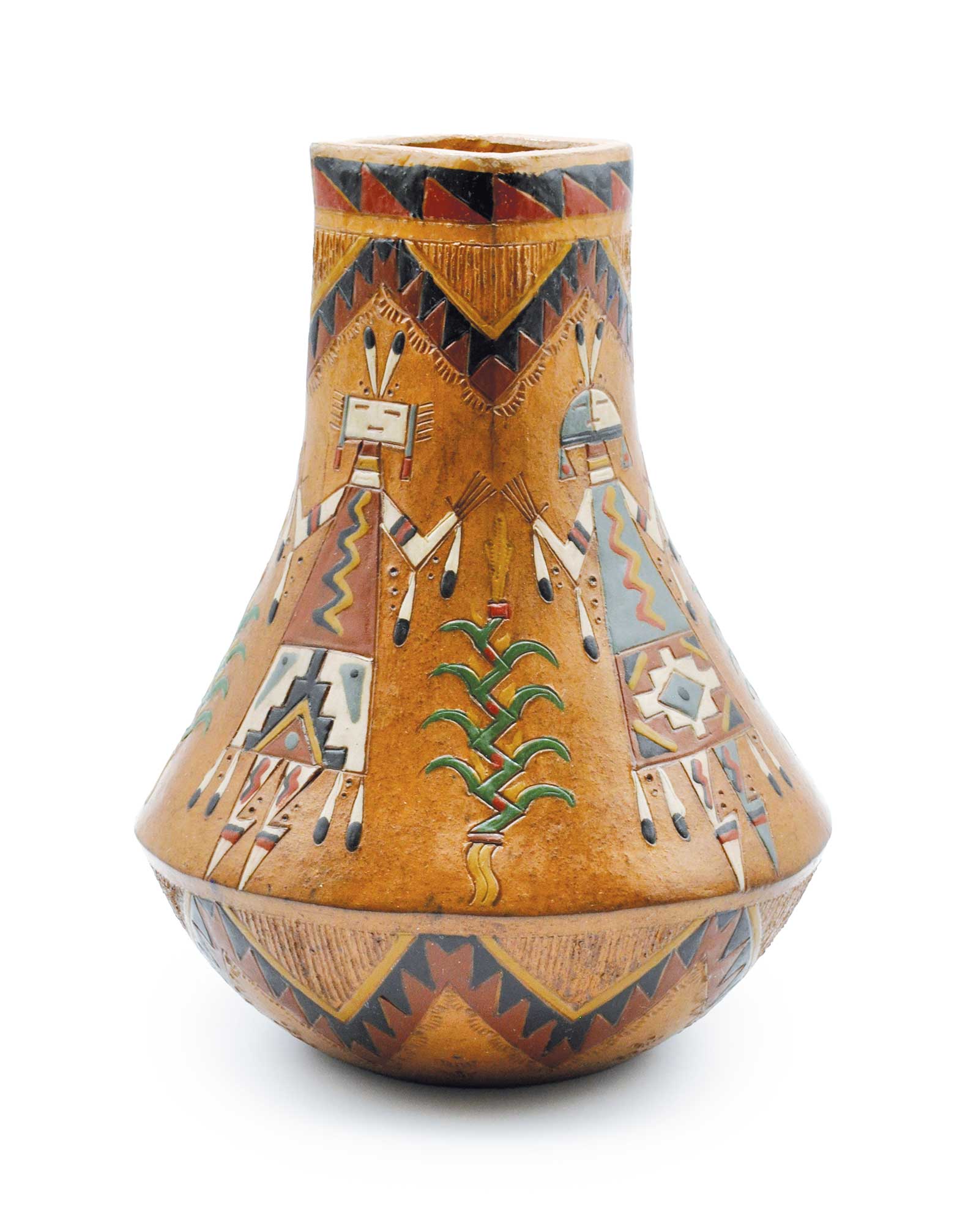 Nancy Chilly Yazzie, Yei and Corn, square neck vessel, 2020.
Representative of a younger generation of pitch potters is Nancy Chilly Yazzie (b. 1973), who works with her husband Jackson Yazzie. They live in the Black Mesa area where they use the local brown clay, borrowing designs from folk themes and weaving, among others. Nancy prefers making tall vessels, sometimes with square necks, and incorporating elongated geometric imagery, especially yei figures. Her paints tend to be more restrained than those of other potters.
Also restrained in their use of color are Kenneth and Irene White who live and work in the Four Corners area. They make good use of the braided-top wedding vase form, in addition to round and seed-pot–shaped vessels. The depiction of their various motif elements—bears and bear paws, corn, hogans, Yeibichai figures—lend a contemporary feel to their creations. This couple’s works express how time-honored designs can be revitalized and point to the future.
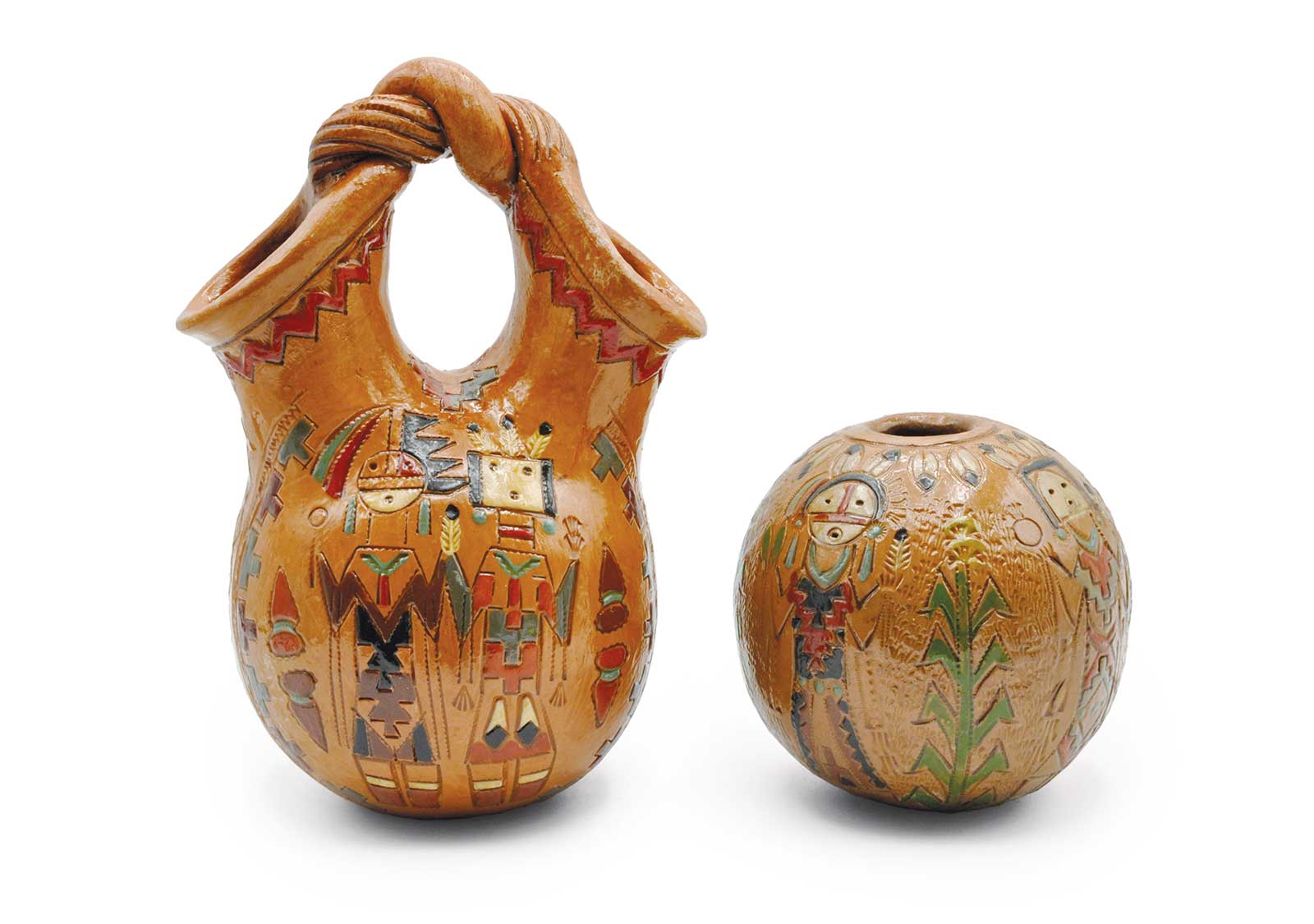 Ken and Irene White: left, braided top decorated wedding vase, 2021; right, seed pot, 2021.
The term “folk art” generally connotes a rustic or craft tradition body of imagery. Because many of the pitch potters lived and worked in rural areas, dealers and collectors accepted this designation. In recent years Navajo ceramics have developed in different modes, most notably etched and horsehair pottery. Yet Navajo pitch pottery thrives both within and separate from the folk art label. The quality of this work is proof enough.
Powered by Froala Editor