Fashion can be about big statements, but it can also be about carefully curated accessorizing from the head to the toes. There is even a Navajo phrase that speaks to this desire for fashion: Hózhóógo Hazhdít’é, to “go in beauty, how one is dressed.” So when that look is just right, it’s only fitting that it keeps on going, even down to a rider’s horse.
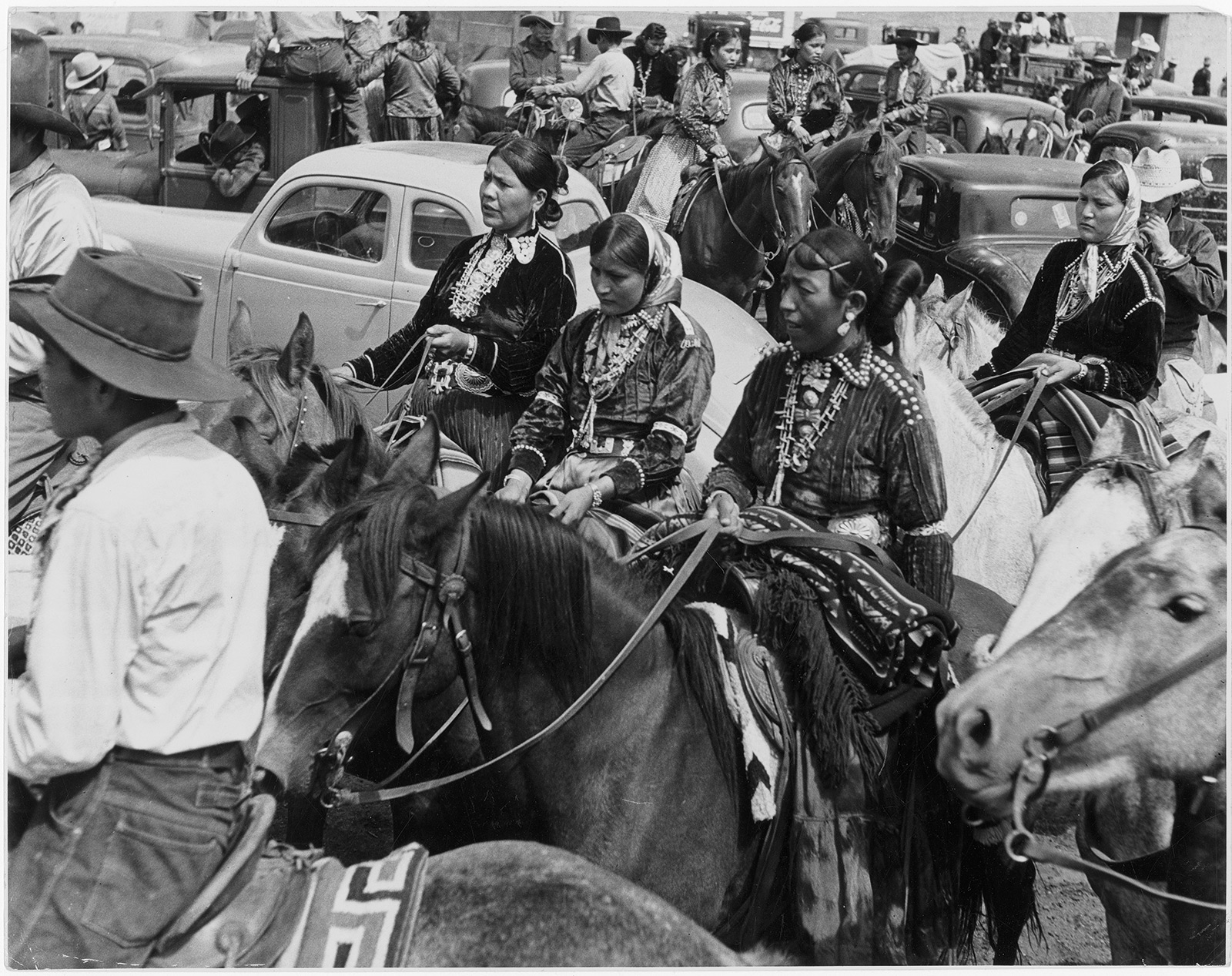 Photograph taken circa 1940 at the Gallup Ceremonial showing a parade of Diné riders. Courtesy National Museum of the American Indian.
Joe Tanner, owner of Tanner’s Indian Arts in Gallup, New Mexico, and the fourth generation of his family to work with Native American art and artists, grew up seeing the fashion statements in the land of the Navajo, the Diné. He recalls going to trading posts with his grandfather in the 1940s and witnessing marvelous sights: “I close my eyes and remember…the fully dressed Navajo male or female on their horses…They had those wonderful white calico pants and their moccasins and his medicine pouch.”
“The Navajo and their relationship with the horse is a really special and important one,” says Emerald Tanner. Working beside her parents, she has seen and handled these special, gleaming pieces of what is essentially equine jewelry. “They made the best pieces for their horses, because the horses were so important. [The horses] weren’t just tools…it was the relationship with the horse.”
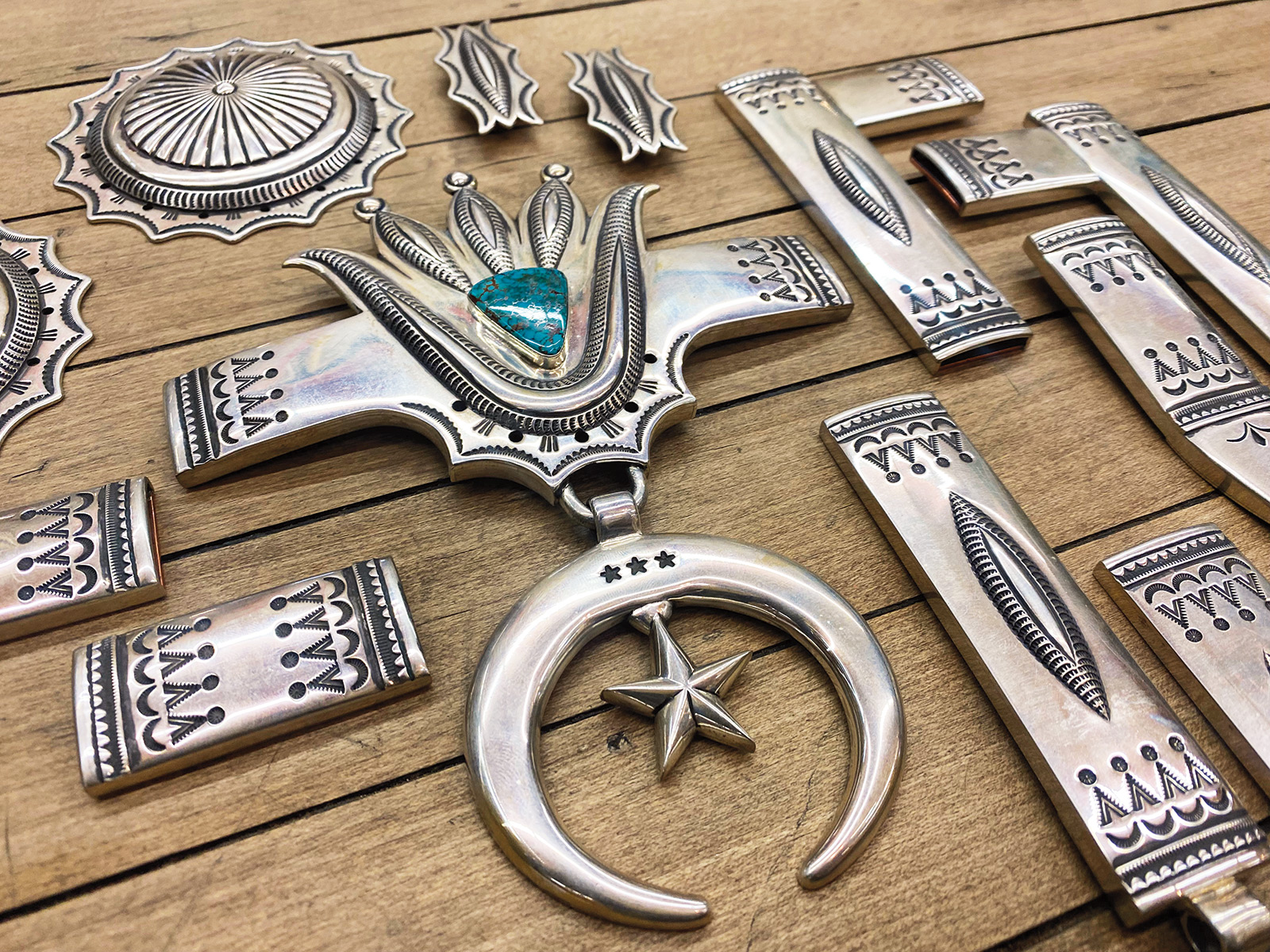 Edison S. Smith (Diné), Hand-fabricated sterling silver headstall with all-natural Nevada Spiderweb turquoise, ca. 1990s. Courtesy Tanner’s Indian Arts in Gallup, NM.
For centuries horses have been celebrated and honored for their strength, independence and high spirit. Indeed, the bond between horses and Native American people is almost spiritual. It’s no wonder owners would want to see their horses bedecked in finery.
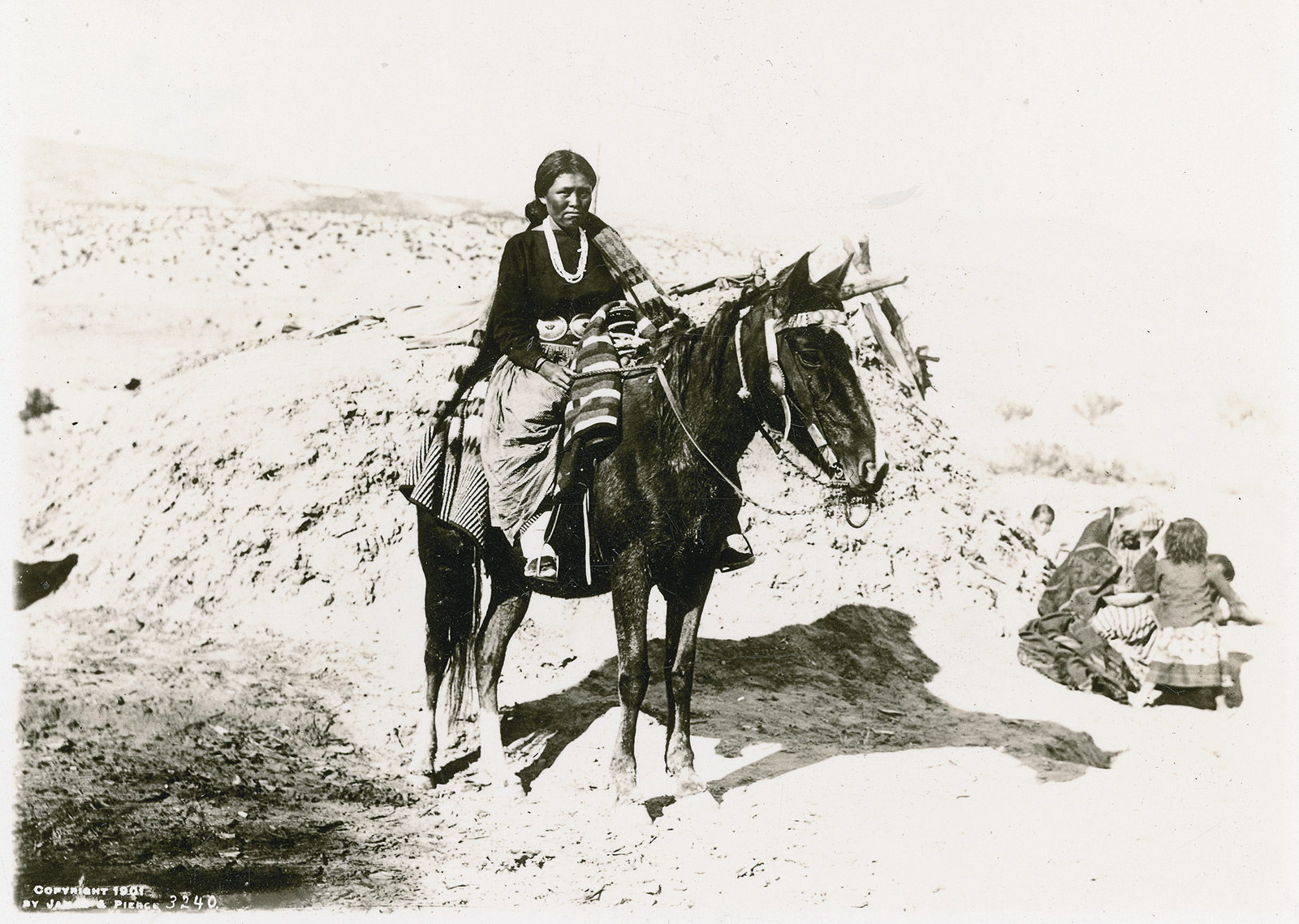 Navajo woman on her horse with a silver headstall and bridle. Photograph taken 1901. Notice that while she’s on a saddle, there are several blankets on top of the saddle. Courtesy National Museum of the American Indian.
While beads and quills were used to decorate bridles and sashes among eastern and Plains tribes, something shiny and new was now in the country: “German silver,” made of nickel, copper and sometimes zinc. After the Civil War it was sold and traded in sheets with Plains tribes. The Kiowa used it first for self-adornment before eventually using it to adorn their horses as well.
Down in Mexico and the Southwest, horses were taken as spoils of war from the Spanish. Horses with elaborate silver gear were also on this side of the border. Mexican silversmiths soon began working in coin silver, literally melting silver coins, pesos or American silver dollars.
Bridles of the Americas, Vol. 1: Indian Silver, written by Ned and Jody Martin and Robert Bauver dives deep into the story of how silver, Native Americans and their horses came together. One of the early Navajo ironsmiths was called “Herrero” for iron maker, or “Herrero Delgadito,” meaning “little or slim iron worker” by Mexican blacksmiths. Atsidi, which is Navajo for smith, soon became his name, first as Atsidi Chon, or Ugly Smith, and later as Atsidi Sani, Old Smith. Whatever the name, this true artisan was one of the first Navajo silversmiths, taking skills he learned from Mexican smiths and Spanish designs, but putting his own twist on them.
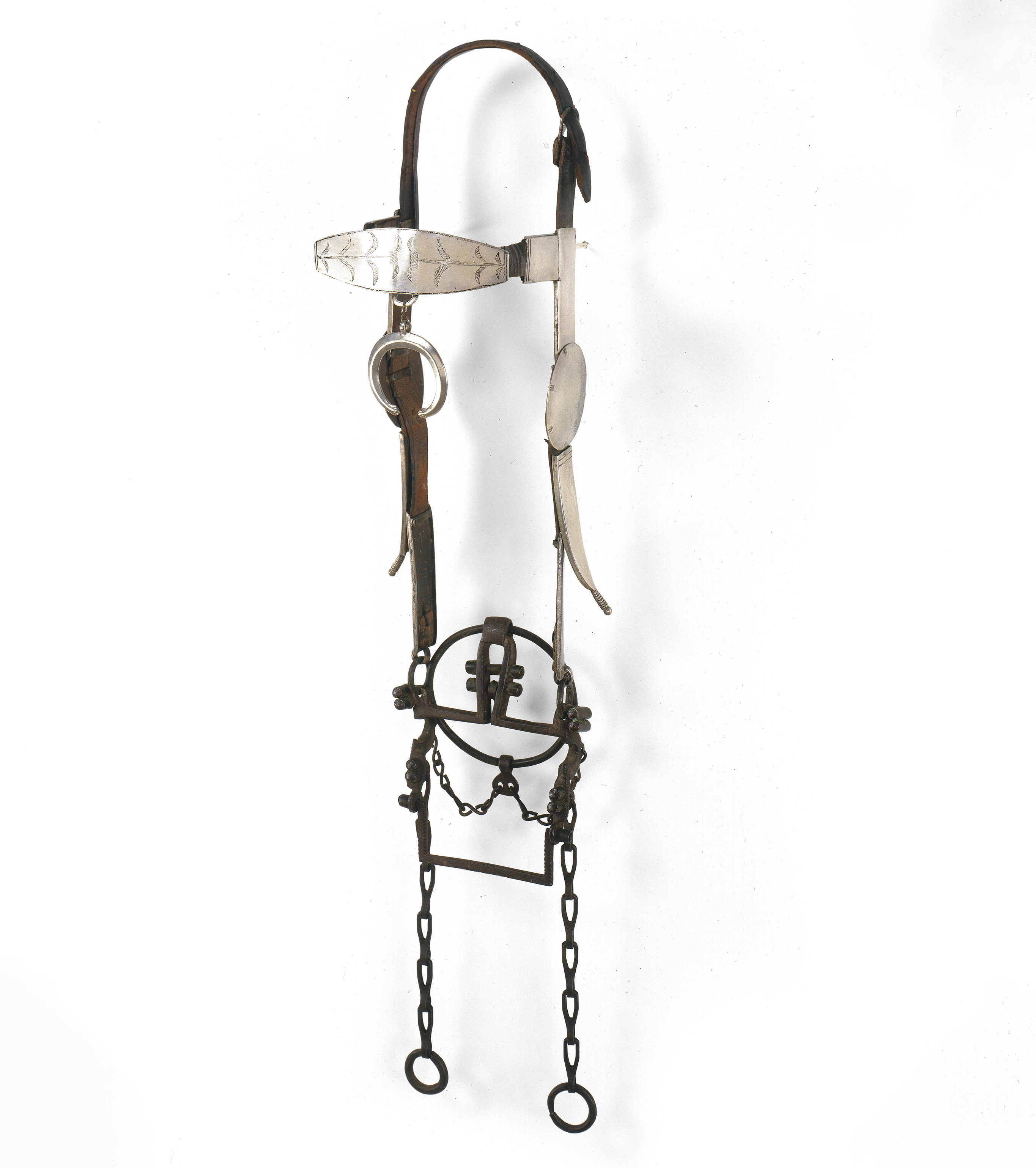 1880s combo silver headstall, bridle and bit. Courtesy National Museum of the American Indian.
“We think he was the first one,” says Ned Martin. “He’s the one who is attributed, who made the first Navajo bit. Another element that distinguishes Navajo bridles is they were always stamped. They were not engraved.”
“What’s interesting about the Navajo,” Martin continues, “is they were the only Indian tribe who would actually make their own bits, the part that goes into the horse’s mouth.” Not only were Navajo silversmiths the most prolific when it came to making bridles and headstalls out of silver, they made distinctly different bits for horses ridden by women. Those had small metal chain-like pieces hanging down, called coscojos. Another twist which set the Navajo-made pieces apart.
It was after Bosque Redondo, after the Diné were back home on their traditional lands, when Atsidi Sani began using his talents with metalwork and silver, passing that down to his sons who would teach their own sons later on.
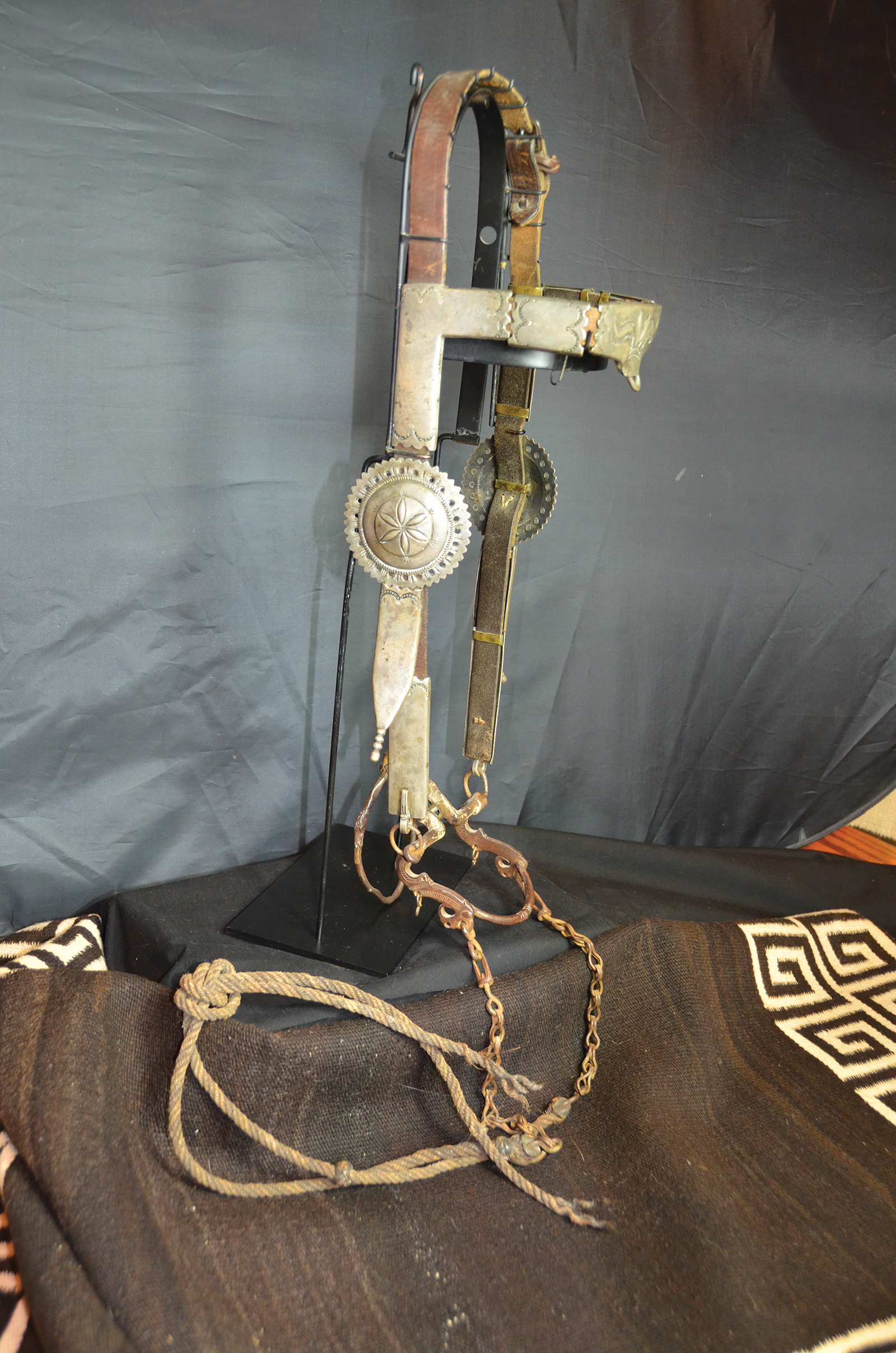 Circa 1880s silver headstall, bridle and bit. The reins are made of horsehair. Courtesy Steve and Gail Getzwiller, Nizhoni Ranch Gallery.
You can probably thank Atsidi Sani for inspiring future silversmiths who would create beautiful silver jewelry. He also took conchos and made them his own, adding touches like, as Bridles of the Americas describes, “a sunburst of chiseled lines radiating out from the previously plain center.”
Steve Getzwiller, who, with his wife Gail owns Nizhoni Ranch Gallery in Sonoita, Arizona, has several Navajo silver bridles and headstalls, mostly from the 1880s, when this artistry truly flourished. Two of his pieces are attributed to Atsidi Sani. “He had a hallmark that looks like a star that he used,” says Getzwiller.
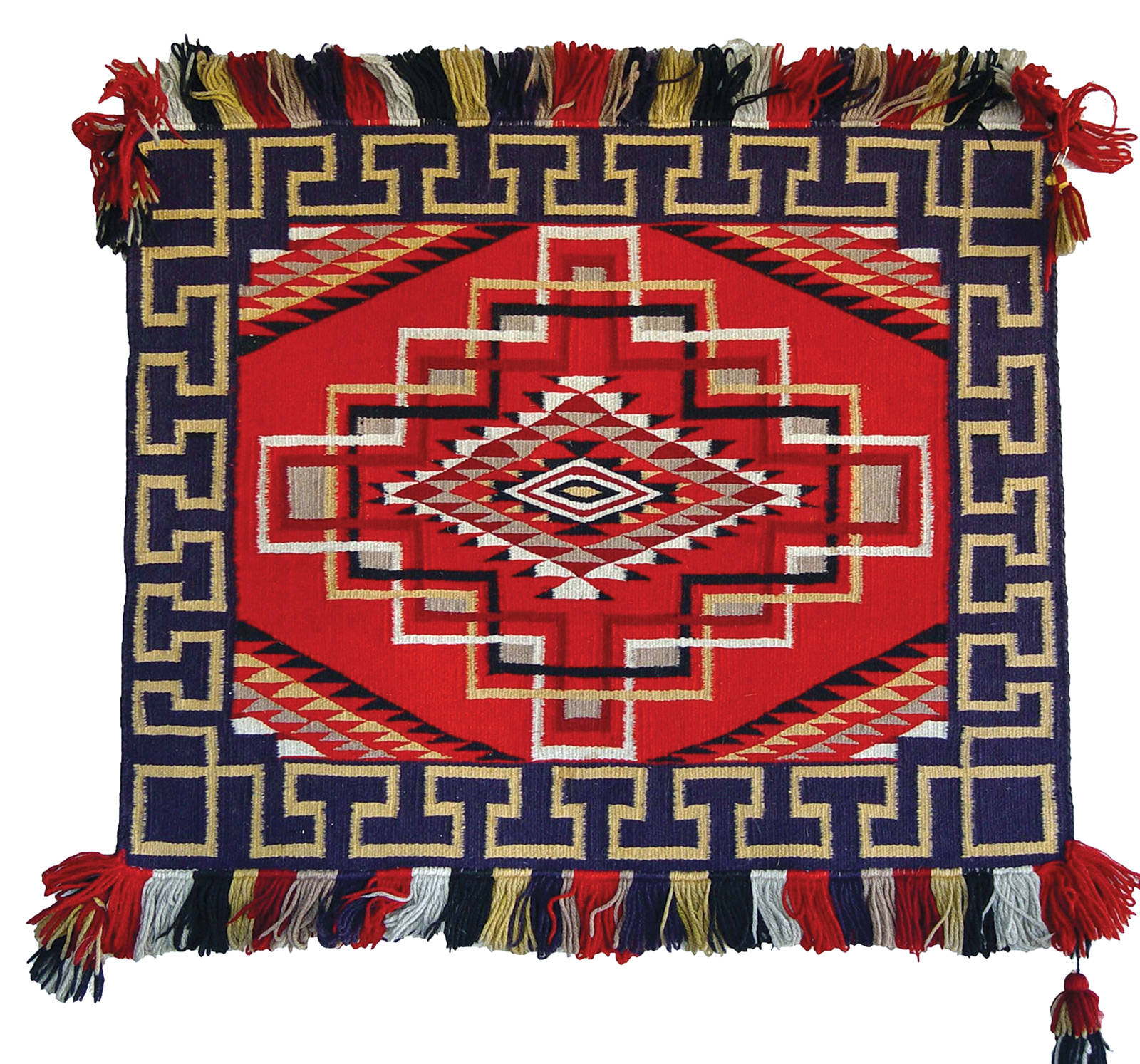 This 25-by-25-inch weaving has the traditional fringe and is made of Germantown wool. The maker is unknown, but it is circa 1890-1900s. Courtesy Steve and Gail Getzwiller, Nizhoni Ranch Gallery.
Often paired with a beautiful bridle would be an equally beautiful weaving—saddle blankets. Again, there’s everyday ones, and others considered “fancy Sunday blankets.”
Jeff Voracek, who owns Red Mesa Gallery in Rocklin, California, says the forerunners to saddle blankets were actually blankets worn by children. These small blankets were usually very worn and torn, which parents know kids can do to their clothes. But by the time the silver bridles were really hitting their stride in the late 1800s, weaving with Germantown wool was ramping up with great success.
“We see them get into the Teec Nos Pas, and the Red Mesa, and they really did these unbelievably fabulous saddle blankets. When the real saddle blankets come along with the headstalls, with the Germantown, they had these fancy saddles, parade saddles,” says Voracek. “When they would do a saddle blanket, or even a baby blanket, they would do two at the same time. So what they would do is they would finish them all the way, two of them together on one loom…and then they would cut it off the loom and tie the one end. And because they are fancy, they would add fringe to one or both sides.”
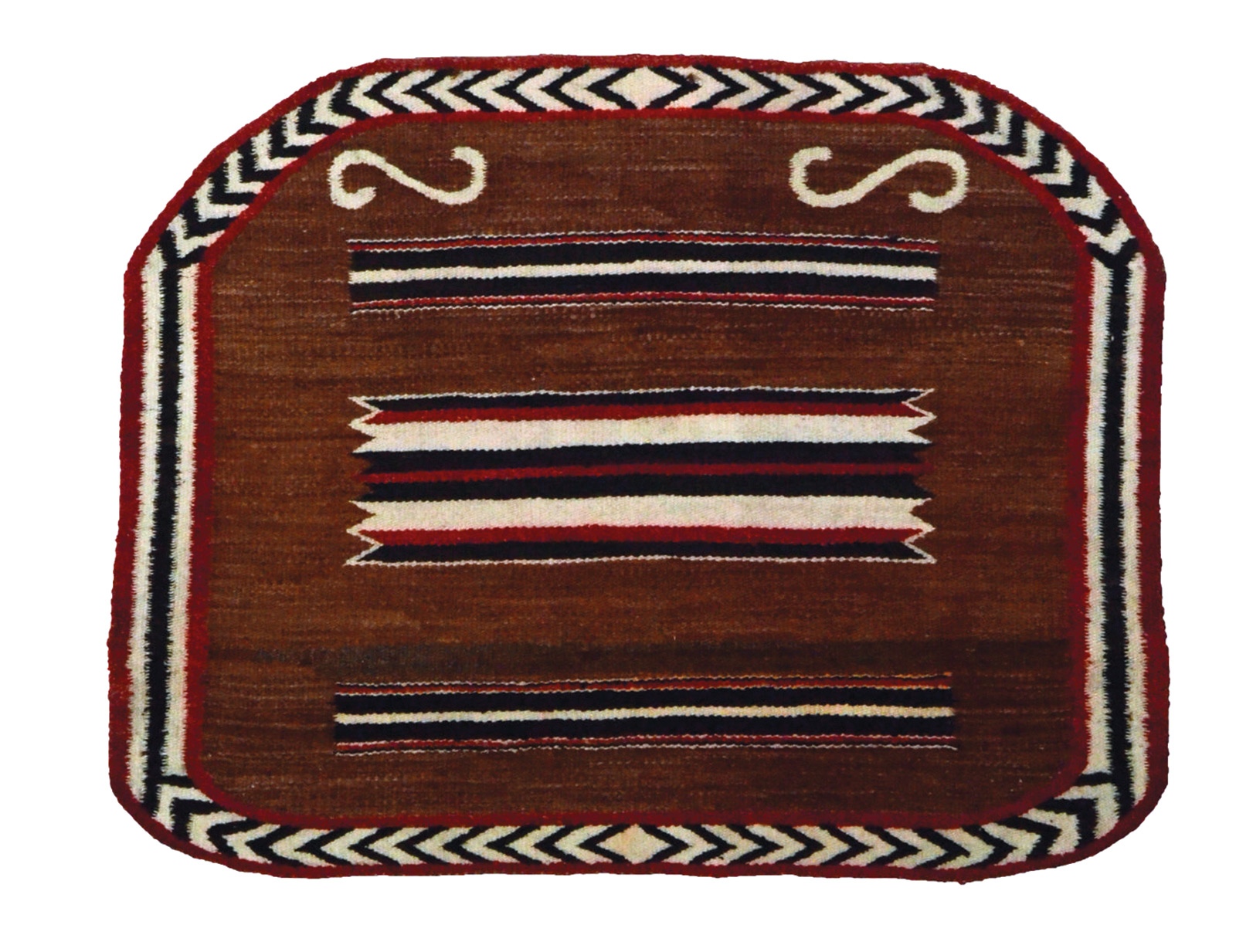 This fancy single saddle blanket does not have the fringe, but instead has the extremely unusual rounded corners, which would have gone in the rear. Those are very difficult to weave, as are the two “S” curves. This is out of native wool, circa 1920. Courtesy Steve and Gail Getzwiller, Nizhoni Ranch Gallery.
One other rather unusual quirk historically is how the saddle blankets were sometimes used. “They would drape over the saddle, not under it,” says Getzwiller. Some turn-of-the century photos back this up, with the rider definitely sitting on blankets over the saddle. Later photos show a blanket under the saddle but plenty more on top, some rolled up, with the fringe showing and the riders dressed in their best, as Joe Tanner remembers from his childhood.
While saddle blankets are certainly around today, what few silver headstalls and bridles can be found are usually from the 1880s up through the 1940s. Navajo artisan Perry Shorty has made two. “I think the first one was just kind of like an idea that inspired it,” he says. “I bought this book, Indian Jewelry Making, that I used a lot to help me through the process. One of its pages had dimensions of how a horse bridle is made…And it turned out pretty good!”
It also matched his style, as Shorty’s work is very traditional, using many of the techniques, such as stamping and repoussé like those from around the late-19th and early-20th century. “That’s when technique improved, and that was because of the traders’ involvement, providing tools and equipment for them.”
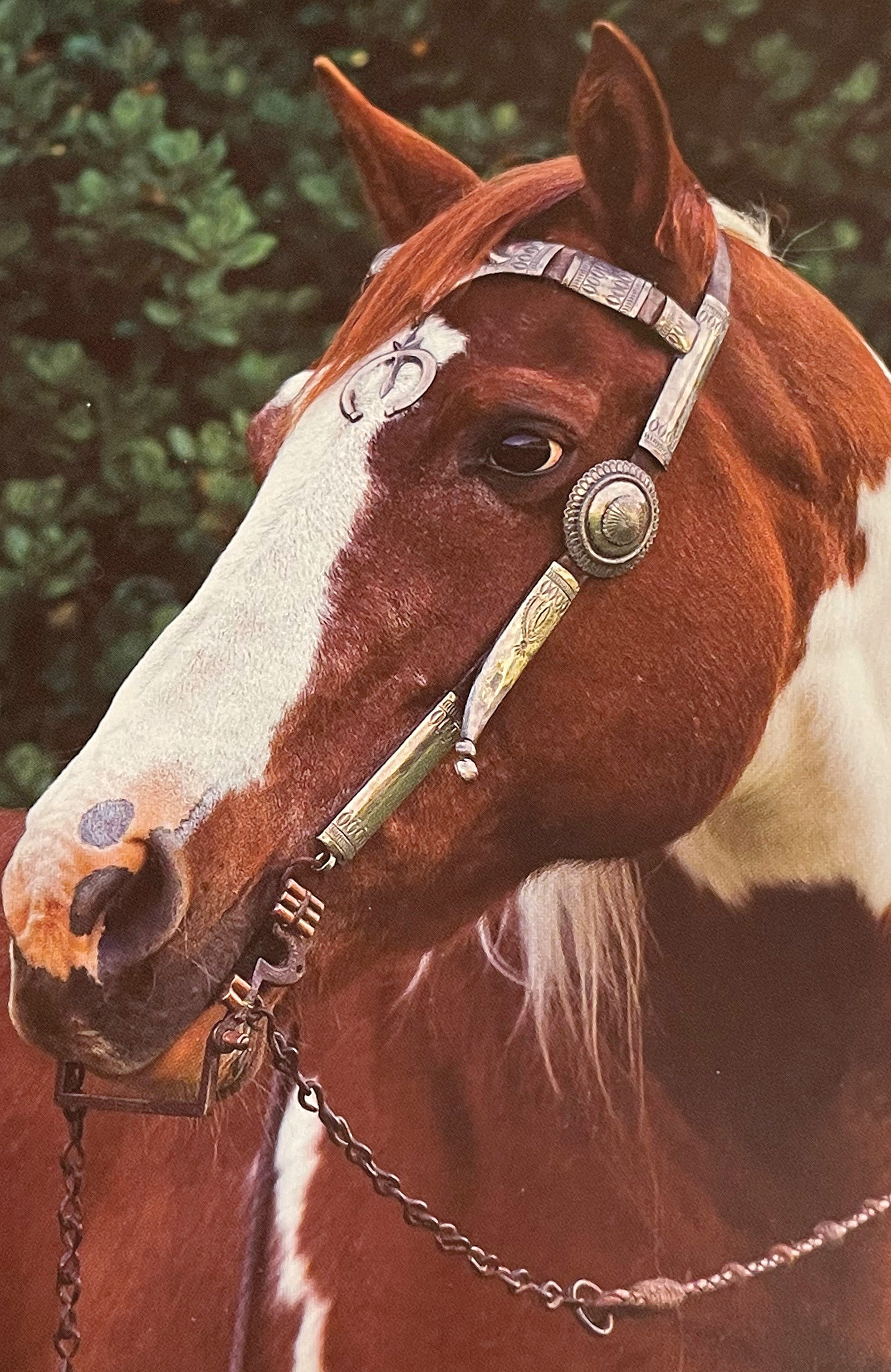 A beautiful silver bridle and headstall is worn proudly by author Ned Martin’s horse, Pomo. Courtesy Ned Martin.
Native American jeweler and silversmith Harrison Jim Sr. says these silver horse adornments can, to a certain degree, be difficult to make. “You need the actual headstall to begin with,” he says, “and then take all your measurements off of that.” He also points out the artisan would be working with leather which the silver is adhered to. “Because leather is different thicknesses for different parts, you need to accommodate for that, because of the different pieces,” he says.
The Heard Museum in Phoenix has approximately 10 silver bridles and headstalls included in a current exhibit, Southwest Silverwork 1850-1940, which runs through October 31. Curator Diana Pardue agrees the silver bridles and headstalls are definitely jewelry for horses. “So it was an opportunity to pull those out,” she says. “Being in Arizona, there are a lot of people who ride horses, so this is really fun for them to see, in addition to the people who are interested in early silver work.”
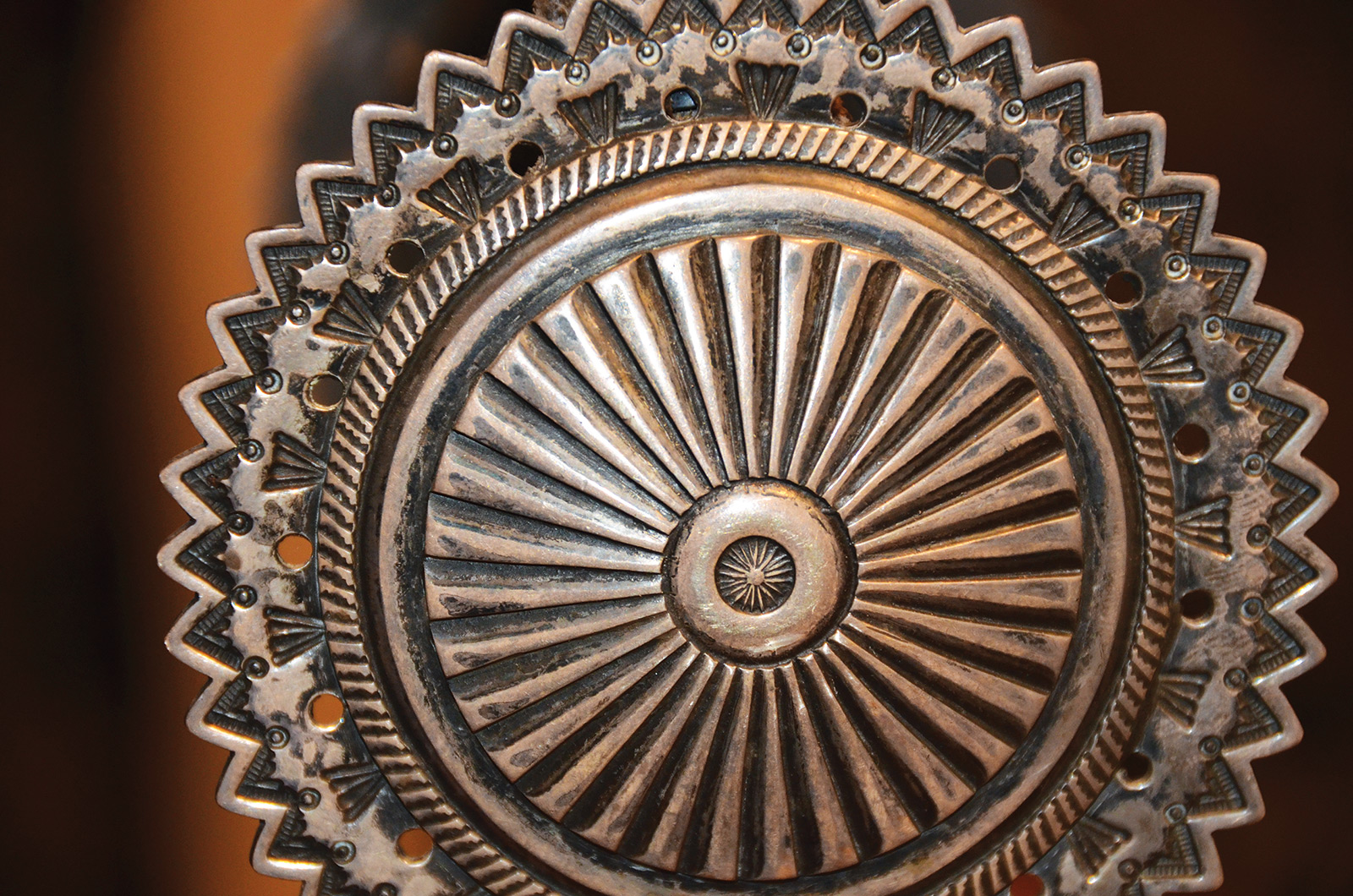 Atsidi Sani headstall, stamped with the scalloped edge and a star in the center. Courtesy Steve and Gail Getzwiller, Nizhoni Ranch Gallery.
While very few silversmiths are making these pieces anymore, it just makes them all the more valuable in the eyes of the beholders, the collectors, and those who simply appreciate the work and artistry that goes into creating these. And if those admirers are also horse people, then all the better. To see a magnificent horse and rider standing tall as one, in their Sunday best— Hózhóógo Hazhdít’é—speaks volumes silently.
“It’s the proudest of the proud,” says Joe Tanner. “And the bridle and the saddle blankets are one of the best ways that it’s understood by those of us who appreciate looking at it.”
Powered by Froala Editor