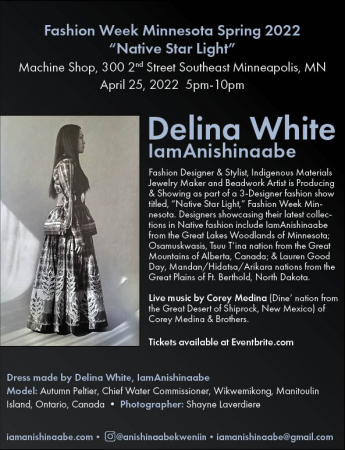
Delina White of the Minnesota Chippewa Tribe (Anishinaabe), Leech Lake Reservation, is a woman of many talents. She’s a jewelry and beadwork artist, Native fashion designer and activist, and is now putting efforts into the fashion production side of the industry; providing more opportunity for Native American artists. White is also gearing up for her newest fashion collection under her label ‘IamAnishinaabe’ for Fashion Week Minnesota, that will include their Native American fashion segment titled Native Star Light.
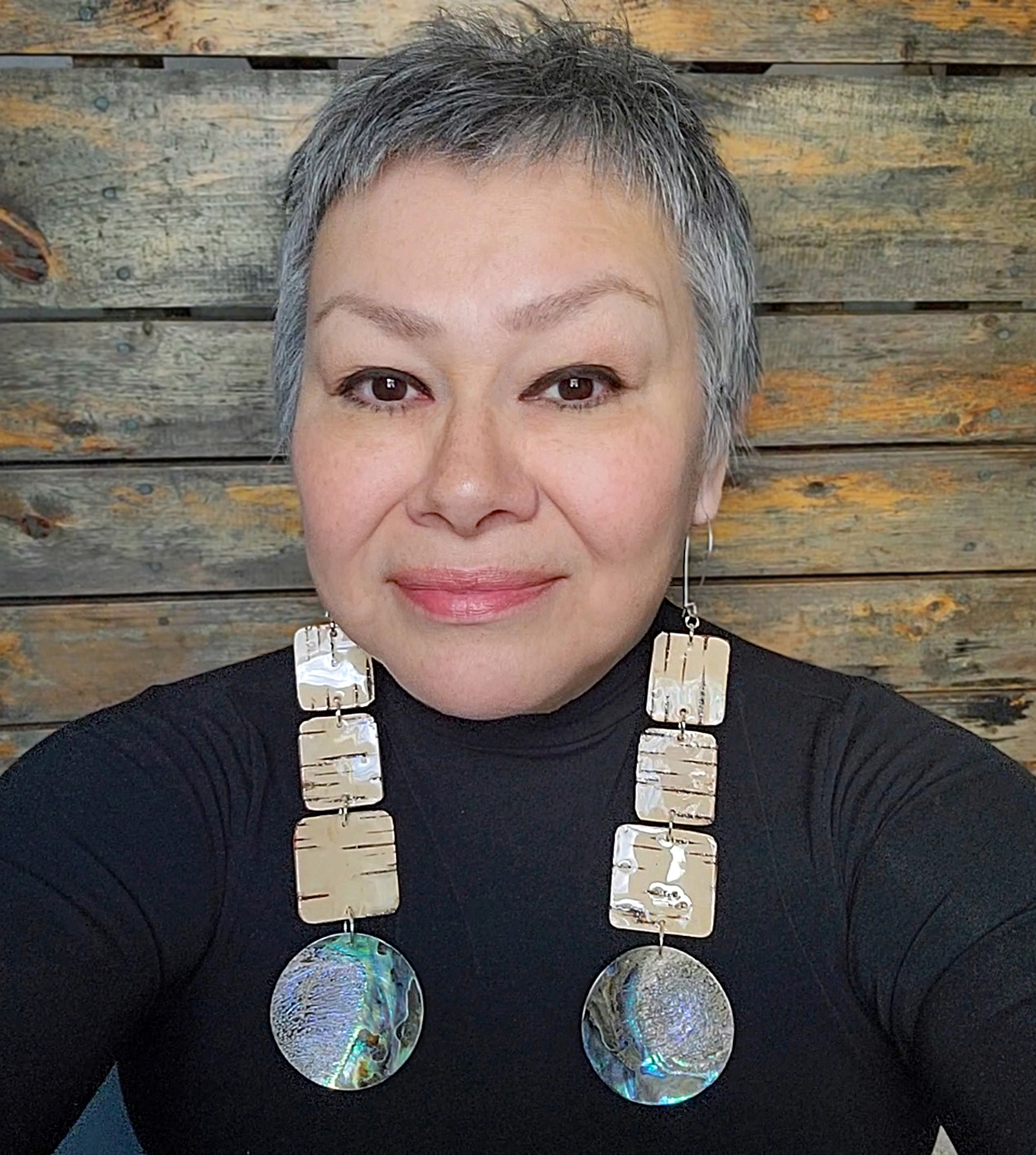
“The theme overall this year is ‘shine,’” White says, “We’re going to talk about the connection Native people have to the celestial universe and the stars as part of our culture.” White will also be helping with the production of the show including lighting, hair, makeup and modeling; and showing the models how best to represent the clothing and accessories while on the runway. In addition, many will hear the artist’s voice as she introduces each collection during the show and will also educate the audience on the Native community as it connects to the show theme.
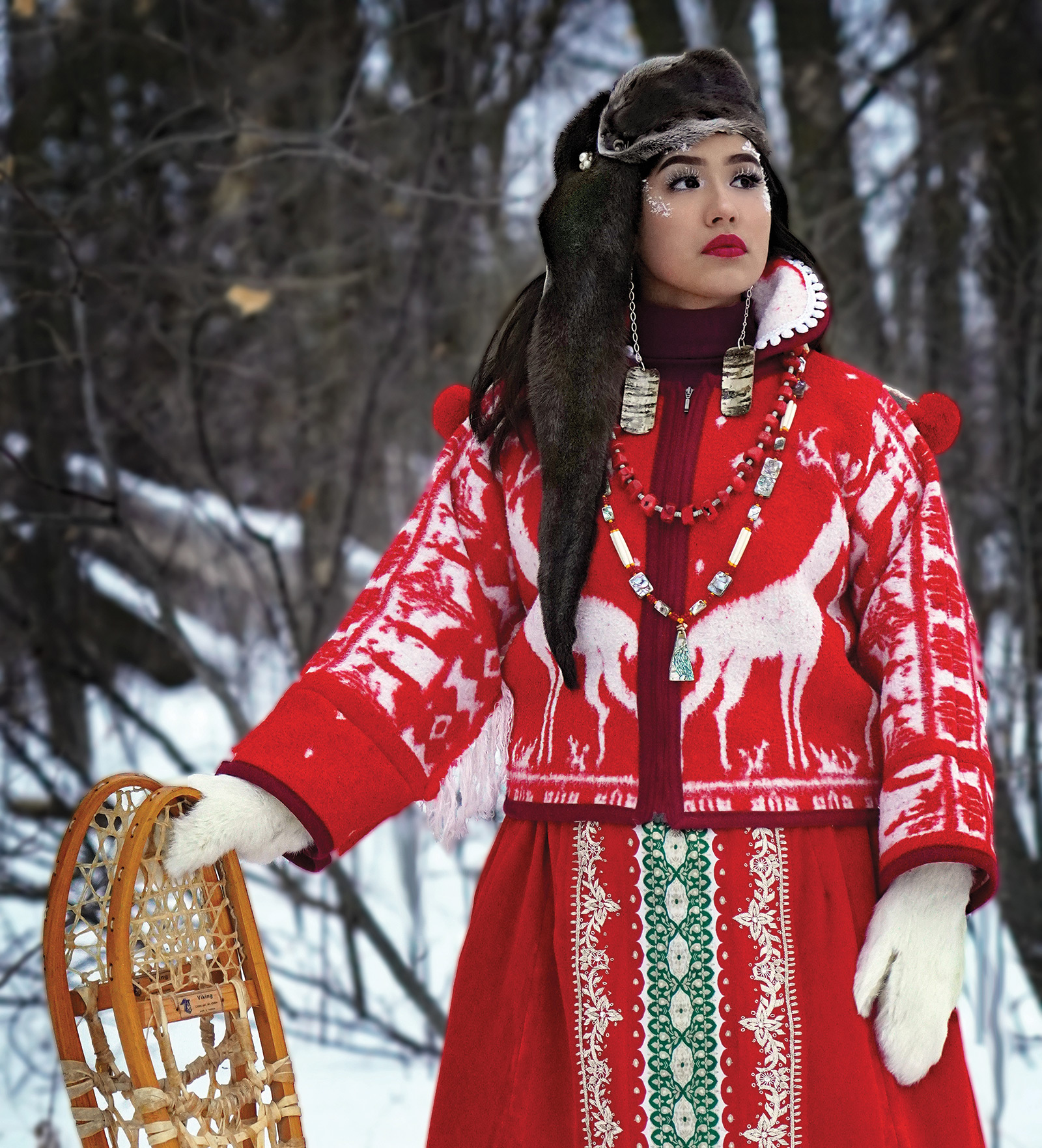 Red and white wool blanket jacket with white fringe depicting deer/elk/reindeer, large red tassel on each shoulder and white trim collar, white rabbit fur mittens, otter hat with vintage pearl button, birch bark and silver chain earrings.
“I live and work on the Leech Lake Reservation in northern Minnesota,” White explains. “I call my style of clothing a mix of traditional and contemporary or mixing traditional designs with contemporary style. It makes it relevant for today’s modern world. People want to wear items around, and it has a strong connection and foundation to our culture and heritage. I work specifically with the Great Lakes and Woodland designs. That’s my landscape and what I know. These designs go back to the ribbon skirts and some of the traditional styles that are determined by our weather and our landscape. It has a lot to do with our lakes, rivers, trees and the thunderbirds—they’re significant to our tribal nations in this area. Also important to the region are floral designs or materials from fur-bearing animals like otters, wolves and bears.”
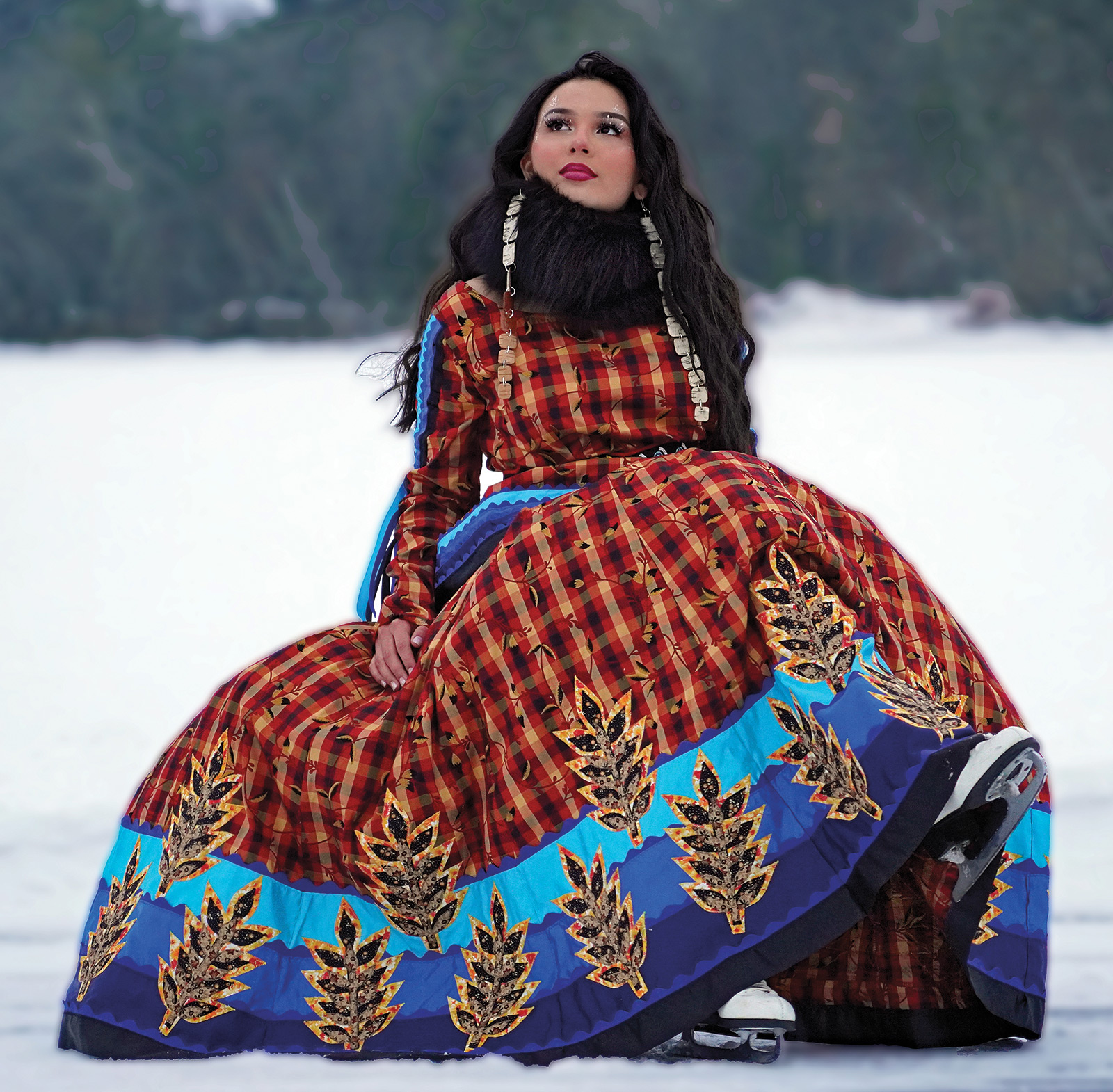 Wild Rice Growing on the Water, dress made of plaid taffeta with cotton calico appliqué. Made for Autumn Peltier, Chief Water Commissioner for the Wikwemikong First Nation on Manitoulin Island, Ontario, Canada. Model: Amari LaRocque. Photo by Gozy White.
Pictured in this article are examples from White’s past collections, giving many the chance to see into the artists mind and spirit, and the breadth of her skill. For her new collection, viewers can expect to see a lot of sparkle. “There will be lots of sequins,” she says. “That’s the contemporary part too. The materials that are accessible to us today are on a global scale now, so we can get fabrics from around the world. This collection will be haute couture or special occasion wear, and it will be extravagant, radiant and sparkly.”
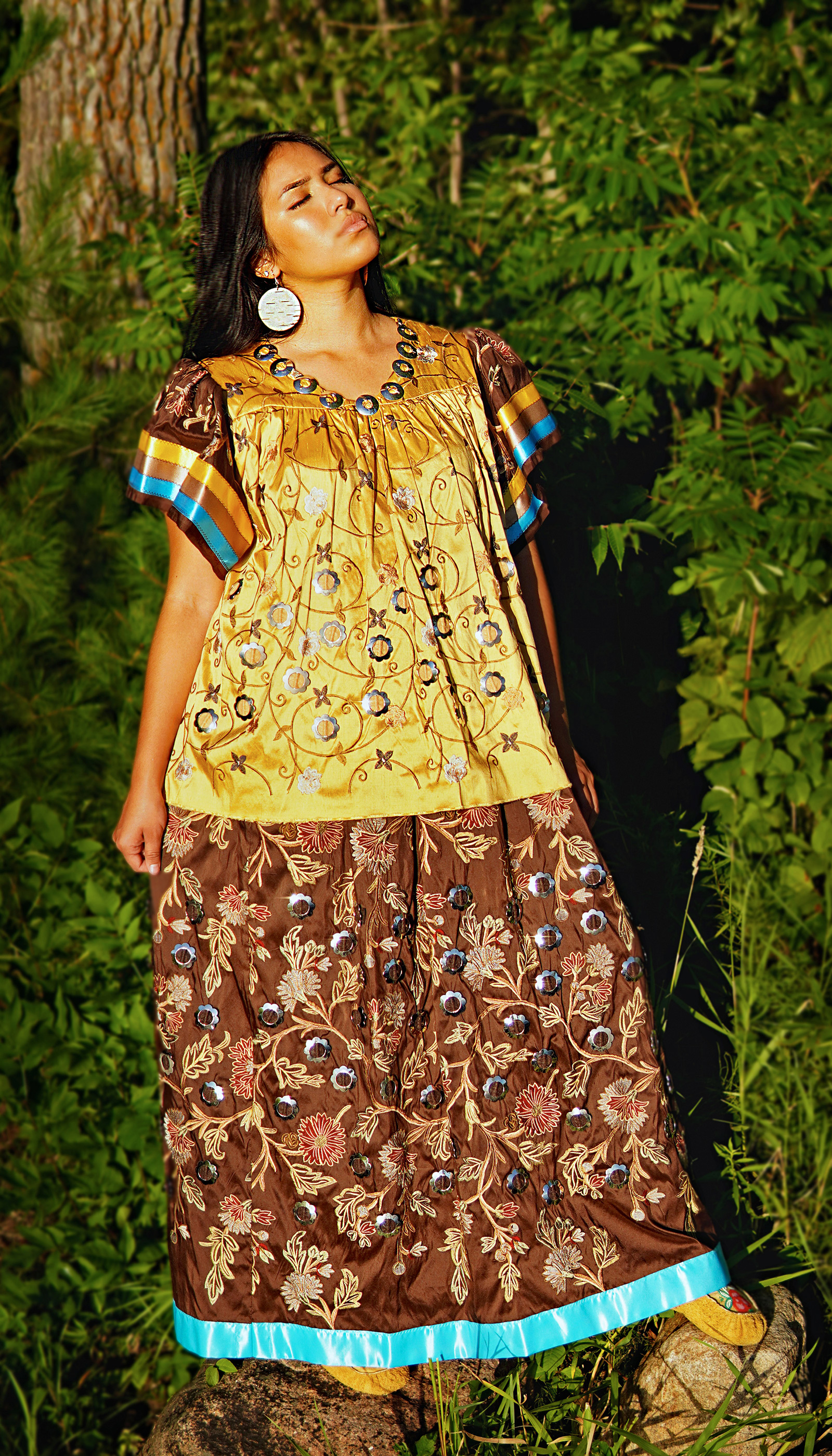 Traditional Great Lakes Woodland polished cotton embroidered dress (gold top and rich chocolate brown skirt) embellished with silver ring brooches and Indigenous birch bark circular earrings. Model: Snowy White. Photo by Gozy White.
As White mentions above, she often makes clothing in response to the weather and landscape of the region. “We’re not in the Arctic but we’re pretty far north where our winters can get really cold,” she says. “We have a large range of weather temperatures, so that has a lot to do with the types of clothing and material we wear and use.” An example for colder weather is a red and white wool blanket jacket with white fringe on the sleeves, depicting a deer or elk.
Her dress depicting wild rice growing on the water, also for colder weather, was made specifically for Autumn Peltier, Chief Water Commissioner for the Wikwemikong First Nation on Manitoulin Island, Ontario, Canada. “I was so honored to make this dress for her,” says White. “This is plaid taffeta with cotton calico appliqué, and depicts our sacred wild rice that grows on the water in this area. Because of this, we need to protect our water. Wild rice is very fragile because it doesn’t just grow back. If you pull the roots out, they’re gone.”
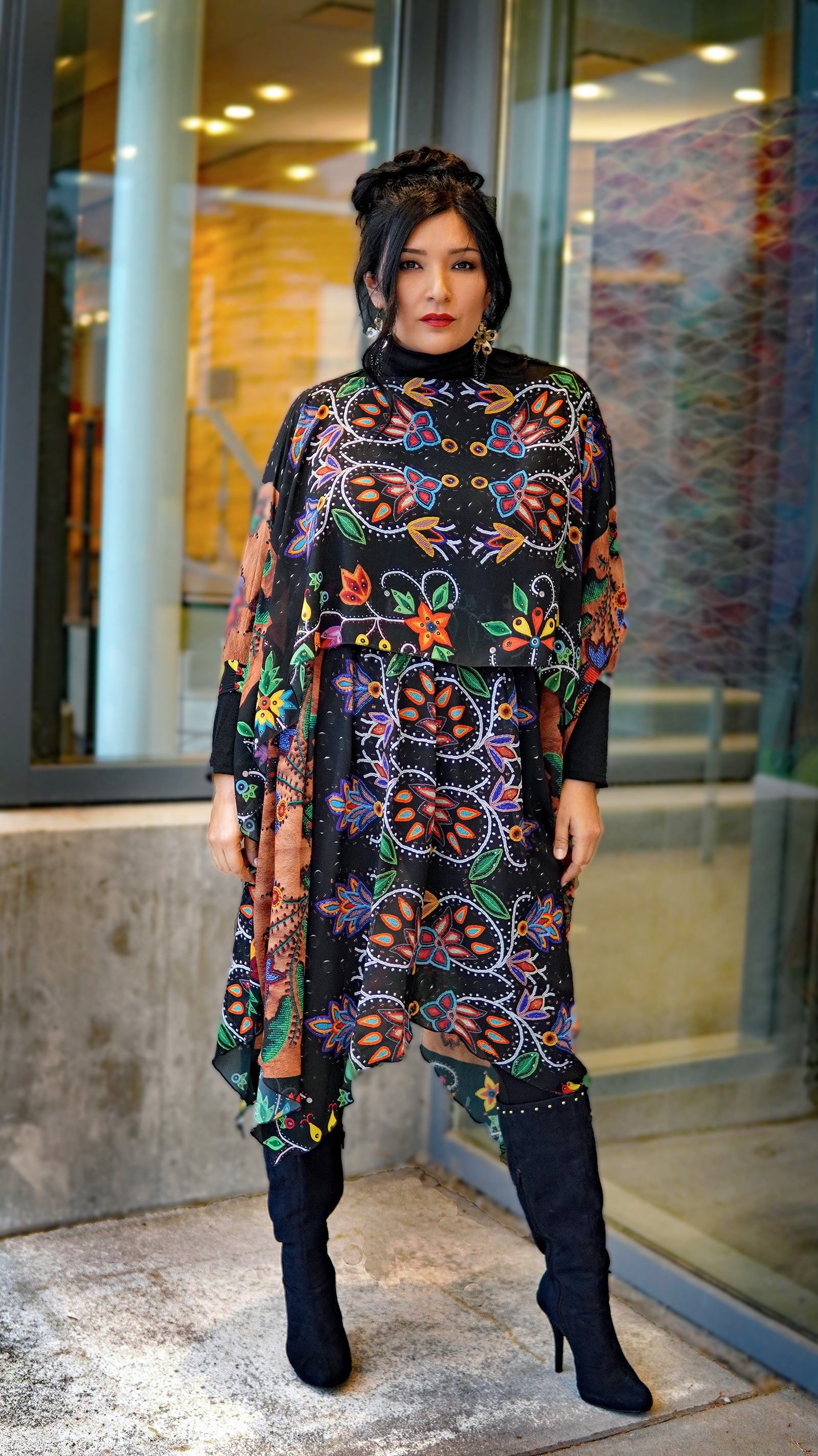 Black chiffon dress with original Delina White Anishinaabe floral design. Model: Luann Robinson. Photo by Gozy White.
White has more recently added to her repertoire of dresses and accessories to now include men’s wear. In a collaboration with artist Nicole Tomlin, White took her Bullhead Clan design, turned it into fabric, and created matching skirts and men’s shirts. “We have a lot of relationships with fish here in the Great Lakes!” White says jokingly about featuring the bullhead fish. “[This collection] was also my way of creating contemporary men’s ribbon shirts. What’s out there is the same ribbon shirt men have been wearing since the 70s, and I wanted to change that up. [My design] is made of a moisture wicking fabric, so it’s got a real ease and simplicity to it.”
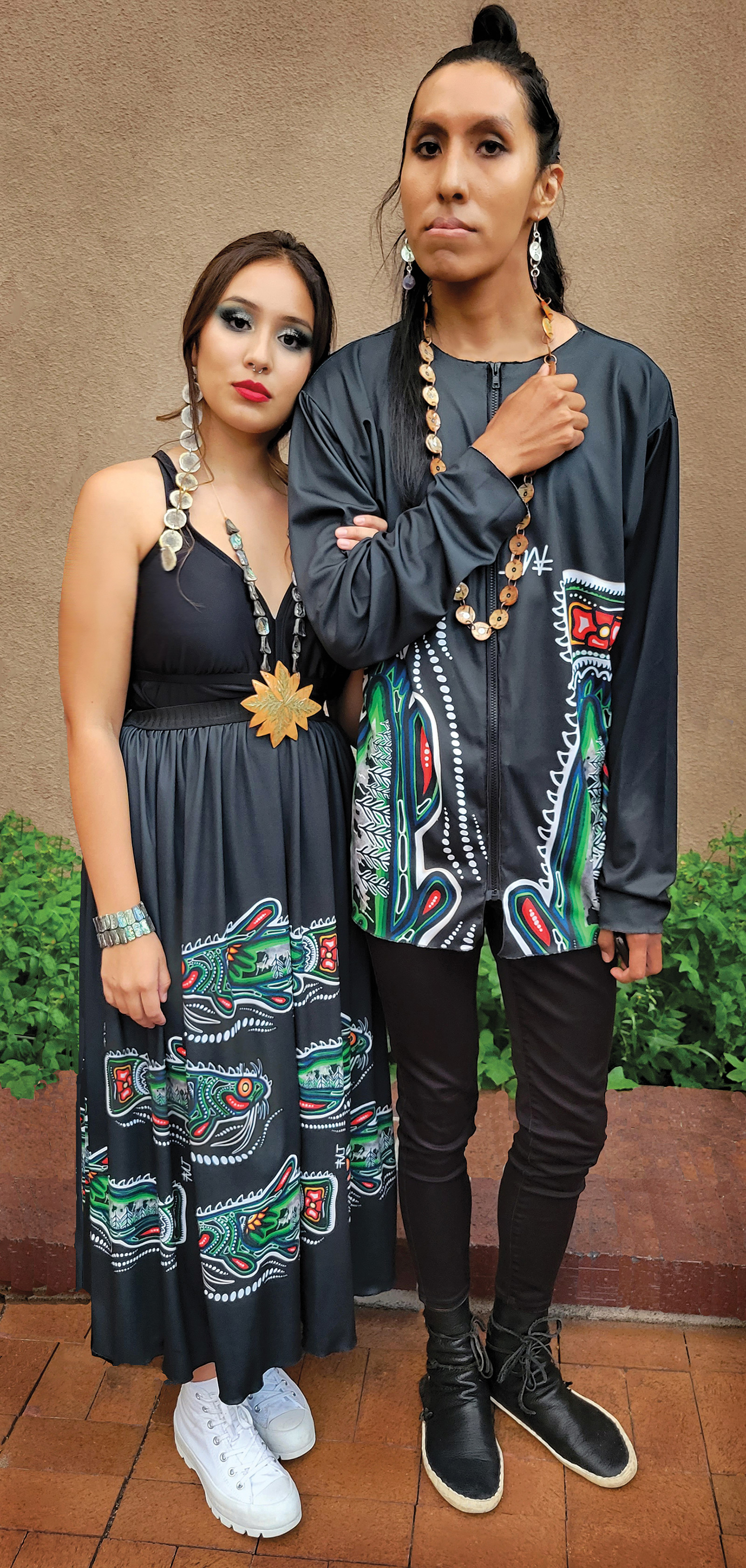 Bullhead Clan design collaboration: Bullhead design by Nicole Tomlin. Matching skirt and shirt designed and made by Delina White. Models: Snowy White and Ty Metteba. Photo by Delina White.
Important to White’s process is her skill in beadwork, past down by her grandmother, master artist Maggie King. White implements intricate and detailed beadwork designs that she then turns into fabric designs. In the black chiffon dress pictured here, one can see White’s original Anishinaabe floral design, made from her beadwork and turned into fabric by way of digital printing.
Also seen pictured with the clothing is White’s handmade jewelry, often made with birch bark, along with other accessories like scarves and handbags, one of the artist’s favorite things to make.
White now sees herself “moving into producing and styling by creating an equitable industry for growing the economy for Indigenous owned businesses that support the fashion industry,” she says. “[It’s about] inclusion and collaboration for artists where there is otherwise no opportunity, and I want to create opportunities.”
Powered by Froala Editor