Talk to enough jewelry artists and you start to hear similar stories about the hoarding of stones and materials. Some of the artists will admit to careful and deliberate stockpiling of turquoise and coral—“These are for future projects,” they might say. Others are less methodical and more compulsive, and they do it because they just like knowing they’ll have stones around if they need them. In many ways, for both groups, the raw and rough stones are collections unto themselves and would easily draw a crowd at a market booth as onlookers, and fellow artists, run their fingers over the rough surfaces filled with so much color and potential.
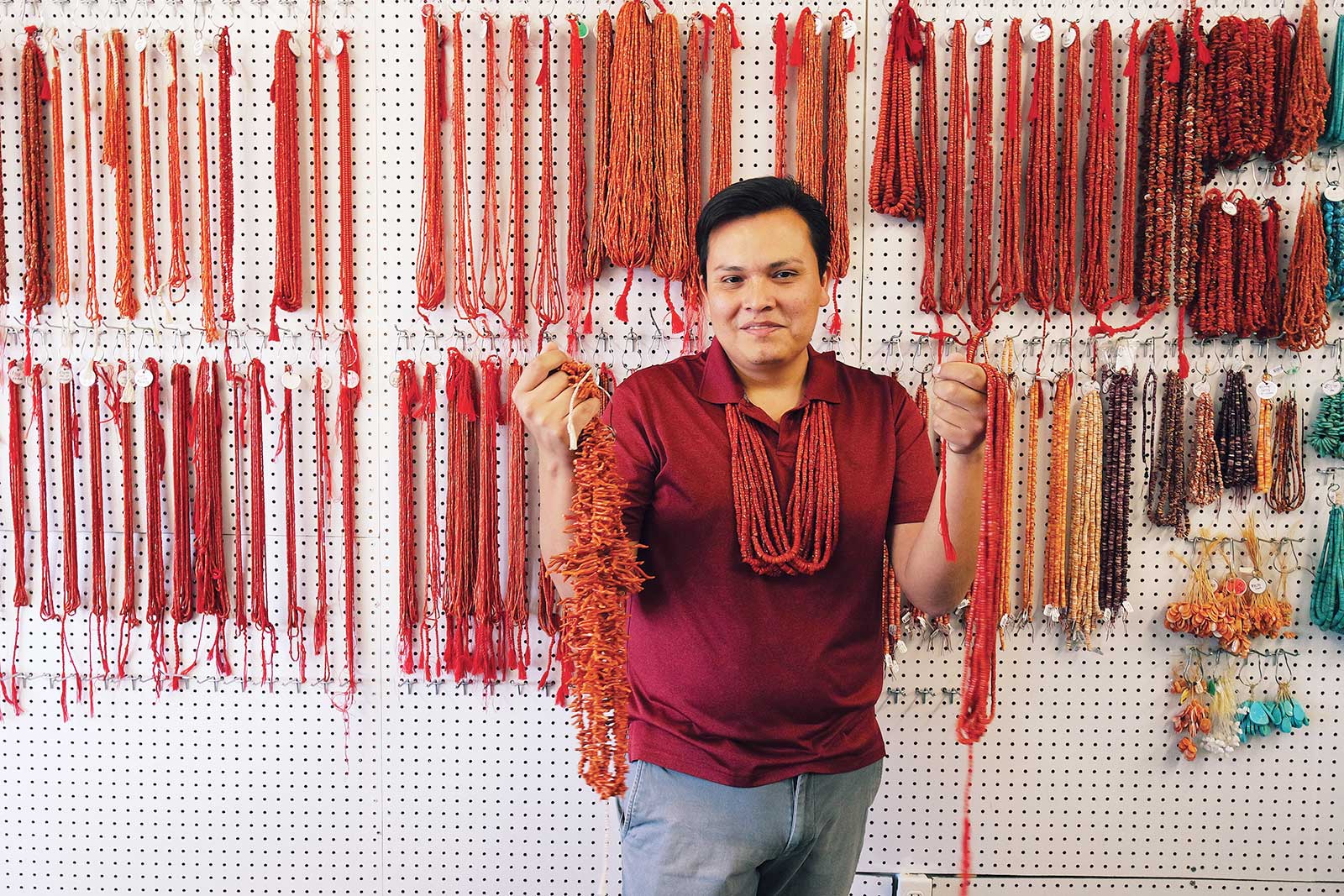 Xavier Bitsui in his shop, Turquoise Mountain.
Navajo jeweler Xavier Bitsui was one of those artists who had quietly, over the course of several years, amassed a huge collection of material: turquoise, coral, jet, spiny oyster shell, sugilite and many others. “It started in my garage,” he says. “Then it started piling up over time.”
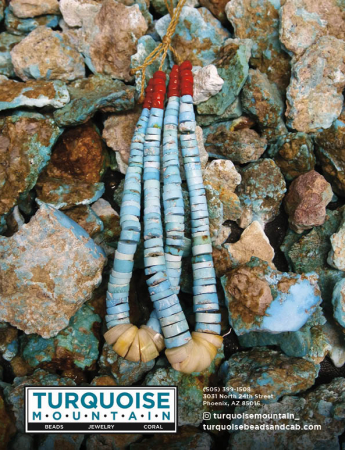
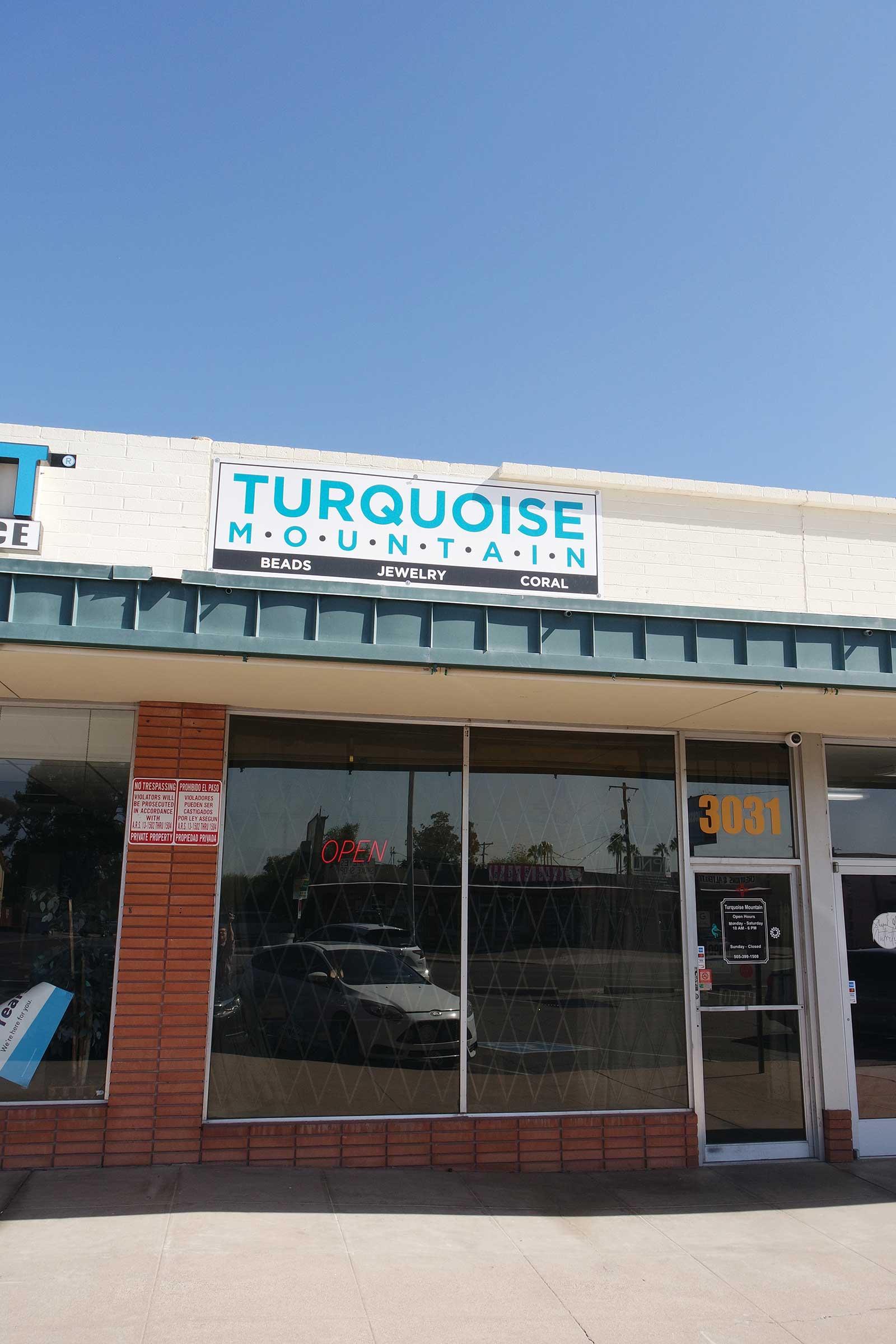
Bitsui could have easily been one of the artists with a stone collection. Instead, he thought, why not be a business owner with a stone collection? Today he owns and runs Turquoise Mountain, a jewelry supply store in Phoenix. Not only is it one of the few jewelry supply stores in the Phoenix area, one of the largest metropolitan areas and the fifth most populous city in the country, but Turquoise Mountain is also one of the rare jewelry shops that is owned by a Native American. And an artist at that.
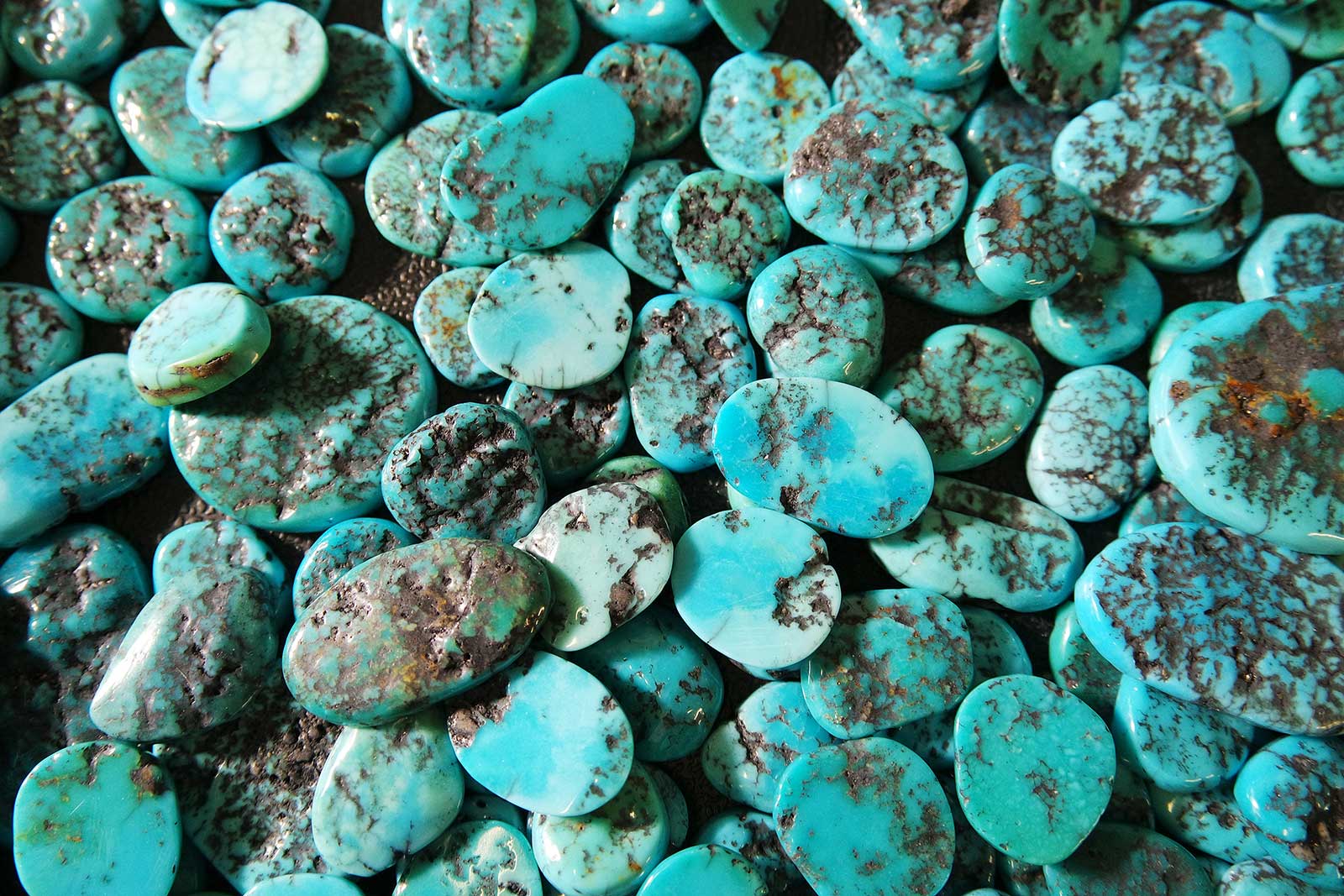 Kingman turquoise.
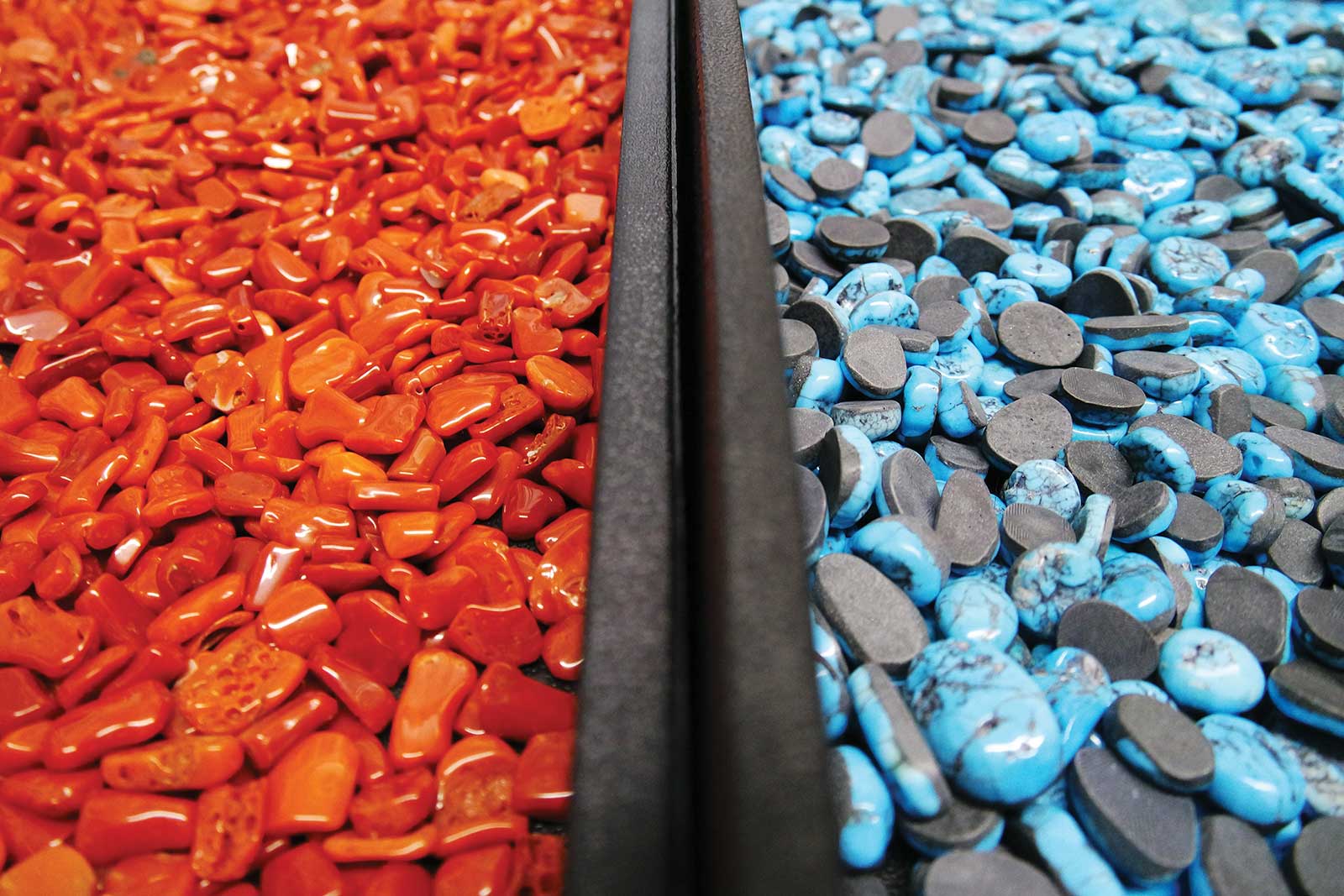 Turquoise and coral in Trays
“In Gallup, [New Mexico], there are lots of jewelry hangouts, but not one like that in Phoenix, and certainly not one that was Native owned,” Bitsui says. “It just felt like the right fit, and so far we’re growing and growing. It seems to keep going and taking off.”
Bitsui’s journey begins as a boy in Prewitt, New Mexico, within the Navajo Nation. It was there he would watch his grandfather and grandmother, Robert and Mae Lapahie, make jewelry. They were tremendous silversmiths, but none of their children had that same enthusiasm for silver or stones. “My dad and mom, neither of them went into jewelry. It sort of skipped a generation,” Bitsui says. “My grandfather was really great too. He did silversmithing and lapidary and he could cut these leaves out for his pieces. He didn’t usually sell his work, and instead mostly used them for ceremonies since he was a medicine man.”
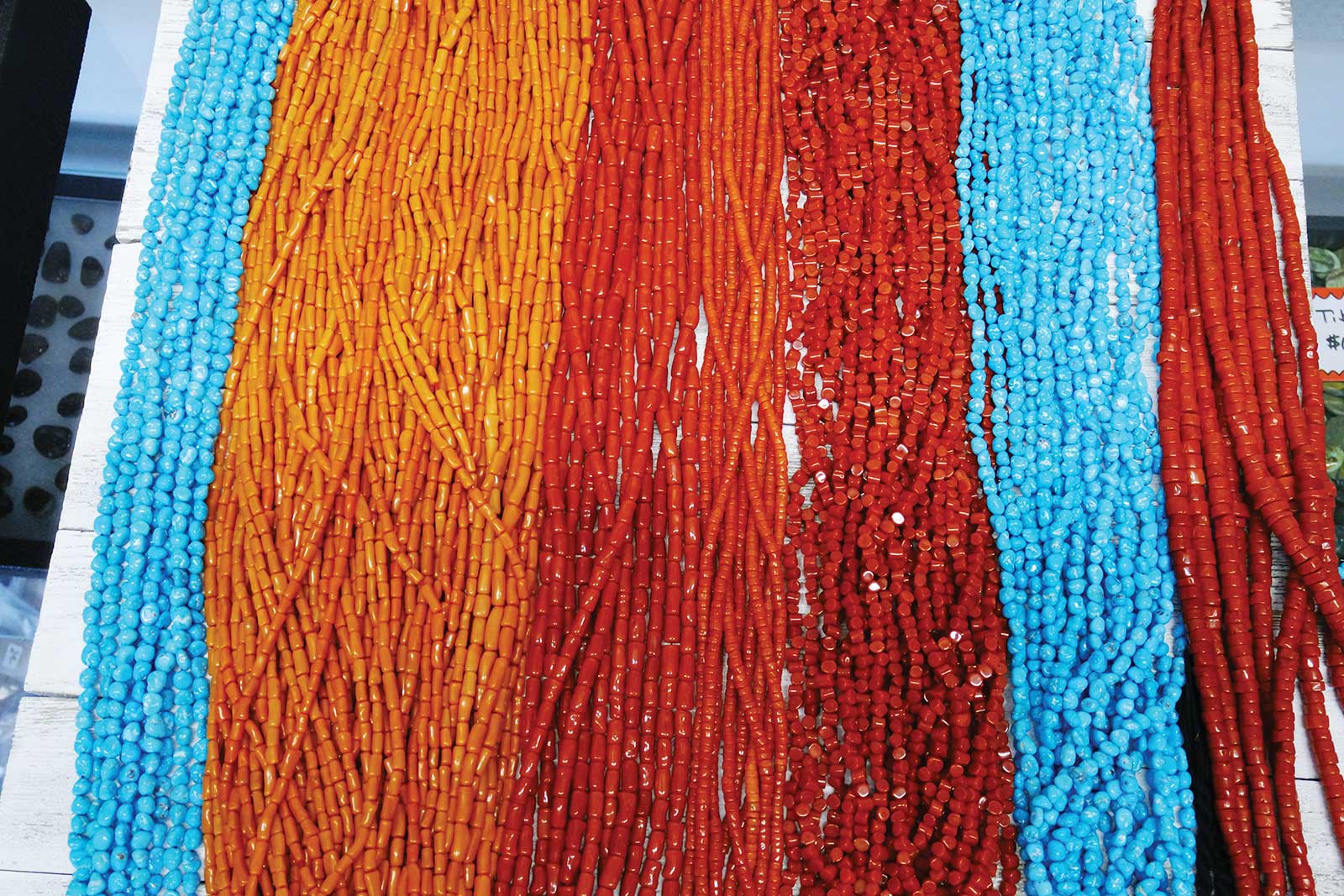 Turquoise and coral beads.
Robert Lapahie died in 2013, and his death spurred Bitsui into action to become a jeweler. Using his grandfather’s teaching—and some additional assistance from his aunt, artist Tonya June Rafael—the young jeweler quickly found success. But like all the other artists, hunting down materials became an overwhelming part of the process. He was spending more time chasing down stones than he was actually cutting into them. “It was a constant search,” he says. “But I became pretty good at hunting things down. People started asking me if I could get them stuff, and then I started going to gem shows and realizing that if I bought in bulk I could get the prices knocked down. Before long I was accumulating stone—beads, rough, cabochons—pretty quickly.”
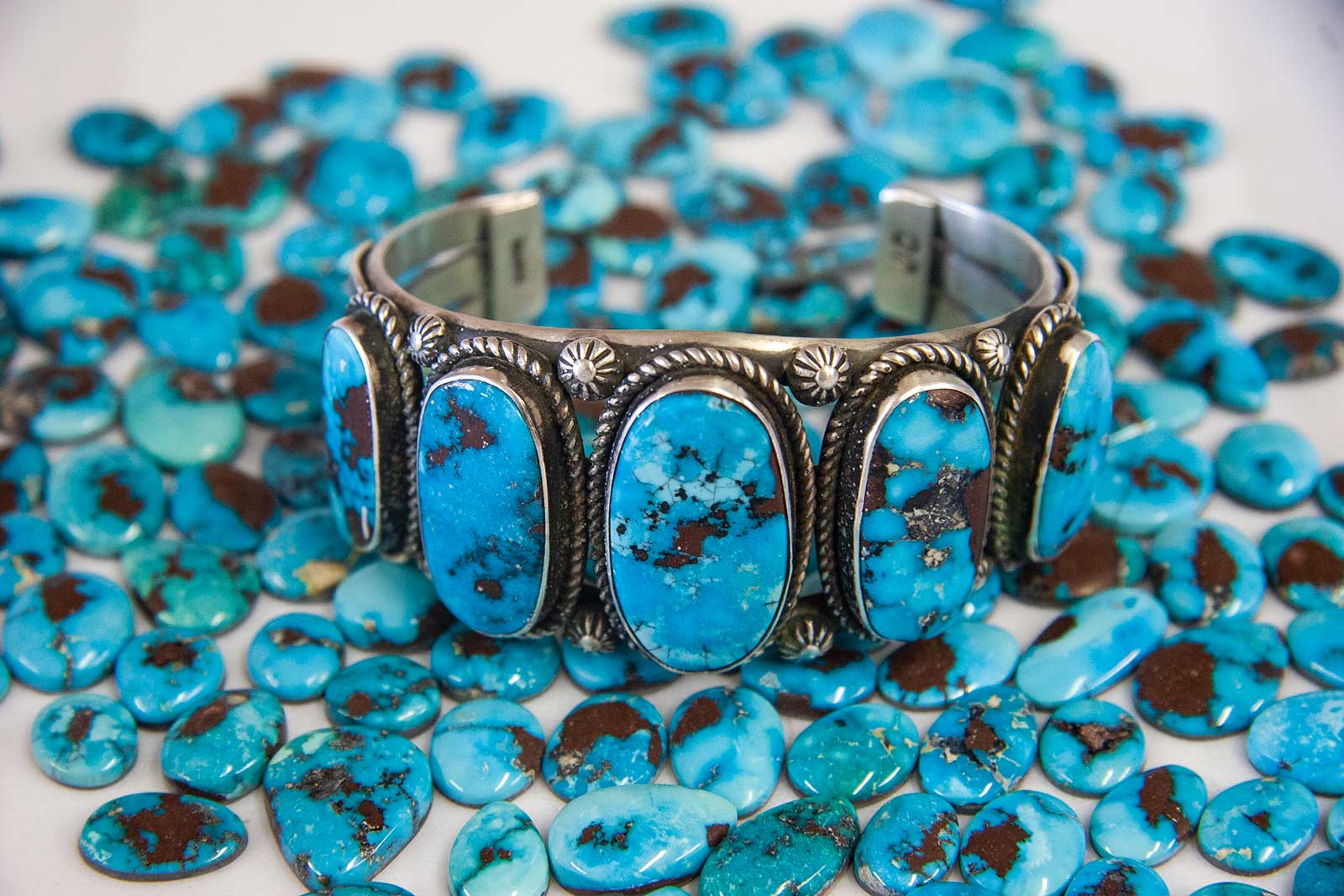 From cabochon to finished bracelet.
One early specialty of his was coral, which in recent years has seen a major spike in demand. Coral is largely harvested off the coast of Torre del Greco, an Italian town within Naples. Harvesters have certain allotments of coral they can harvest, and after they are brought up from the floor of the Mediterranean the coral is dried and then shipped all around the world for jewelry and other decorative objects. Bitsui was good at acquiring the material and quickly gained a reputation among artists, from both prominent Native American artists and hobbyist “soccer moms who like to make bracelets on the weekend.” And then, of course, there was turquoise in many varieties, from Kingman and Bisbee to Sleeping Beauty and Calico Lake. It didn’t take long before his own jewelry was on the backburner while his supply business was heating up.
Today Turquoise Mountain is packed full of stones of all varieties, and in every kind of cut imaginable. For a long time he was even doing all of the cutting and polishing in the store, but he was acquiring so many stones so fast that he was underwater in no time. These days he outsources his cutting overseas. And since he was a jeweler first, he knows what kinds of shapes to ask for. “When it comes to beads, other countries like these round rondelle beads, but Navajo jewelry makers don’t use that shape, so I know to ask for other cuts.” In addition to beads, Turquoise Mountain also sells stones in the rough, so jewelers can do the cutting themselves, as well as cabs in a variety of shapes and sizes. Bitsui also prides the variety of prices of his stone, from affordable examples meant for hobbyists or rising jewelers on a budget, to gem-quality stones for mid- to upper-tier artists.
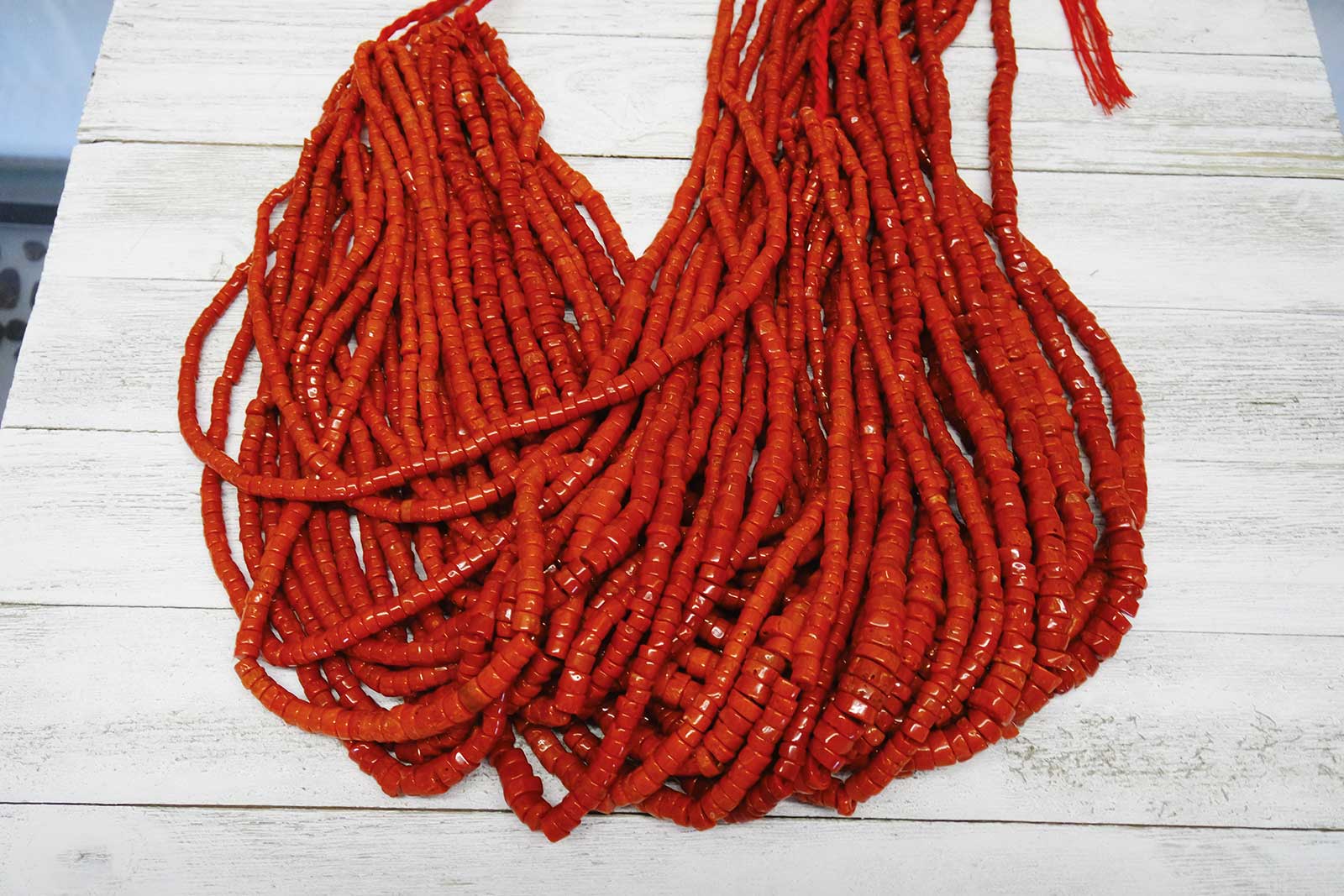 Coral beads.
One artist who has become a fast friend of the supplier is Navajo/Hopi jeweler Olin Tsingine, who lives just several miles away. “Last year I needed to make a coral necklace and I went to this bead shop looking for a certain kind of string. They didn’t have it, but they told me I should check out this place called Turquoise Mountain. They said he was the new guy in town,” Tsingine recalls. “I walk into his store and it was the most unique Native store I had ever been in. And it was unheard of to see that kind of stuff in Phoenix like that. Xavier and I just clicked.”
Tsingine draws special attention to Turquoise Mountain’s Heishe offerings, adding that it’s rare to see Heishe in so many options in one place. “Overall, his whole collection is really amazing,” he says.
Bitsui says that each day is an interesting challenge as he sources stones from all around the world. Next on this agenda is a trip to Indiana to look at some river shells that are growing in popularity among artists. “Anything to make customers happy,” he says. Another development he’s excited for is the Heard Museum Guild Indian Fair & Market, which takes place about 4 miles from the shop. “I think next year is going to be a lot of fun.”
Powered by Froala Editor