This section features available works from talented weavers that specialize in rugs, wall hangings, garments and blankets. Not only are these textile pieces glorious displays of art, but they incorporate stories that have been passed down from generation to generation. Technique and design are also handed down through families, with pieces featuring an array of shapes, colors, patterns and spiritual symbols that relate to region, tribe and even family. Continue reading through this section to get a taste of the extraordinary, and experience a bit of history steeped in the sacred and divine.

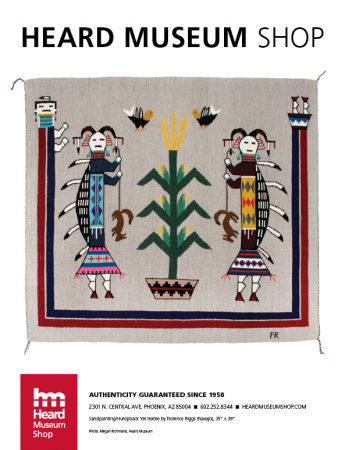
Heard Museum Shop
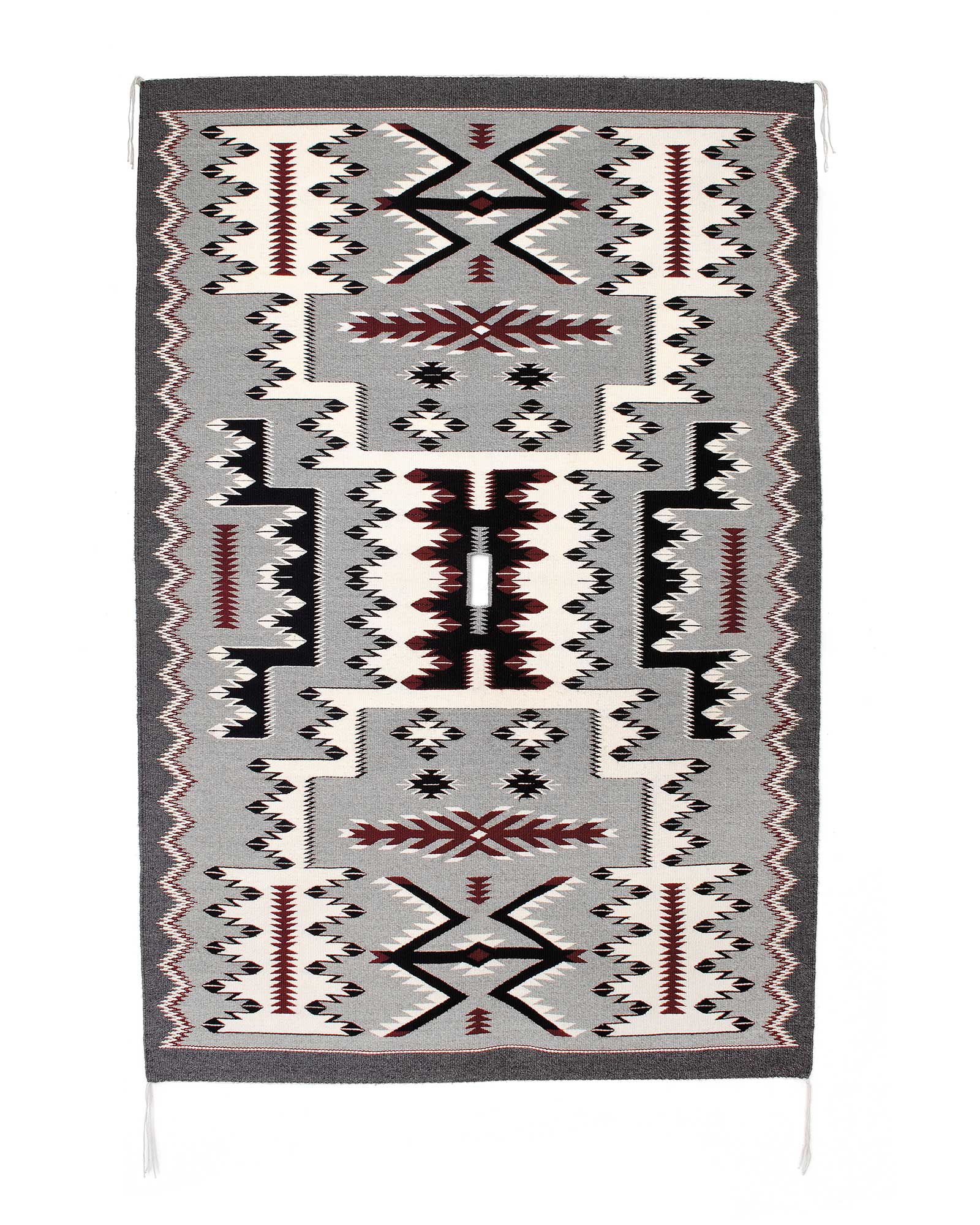
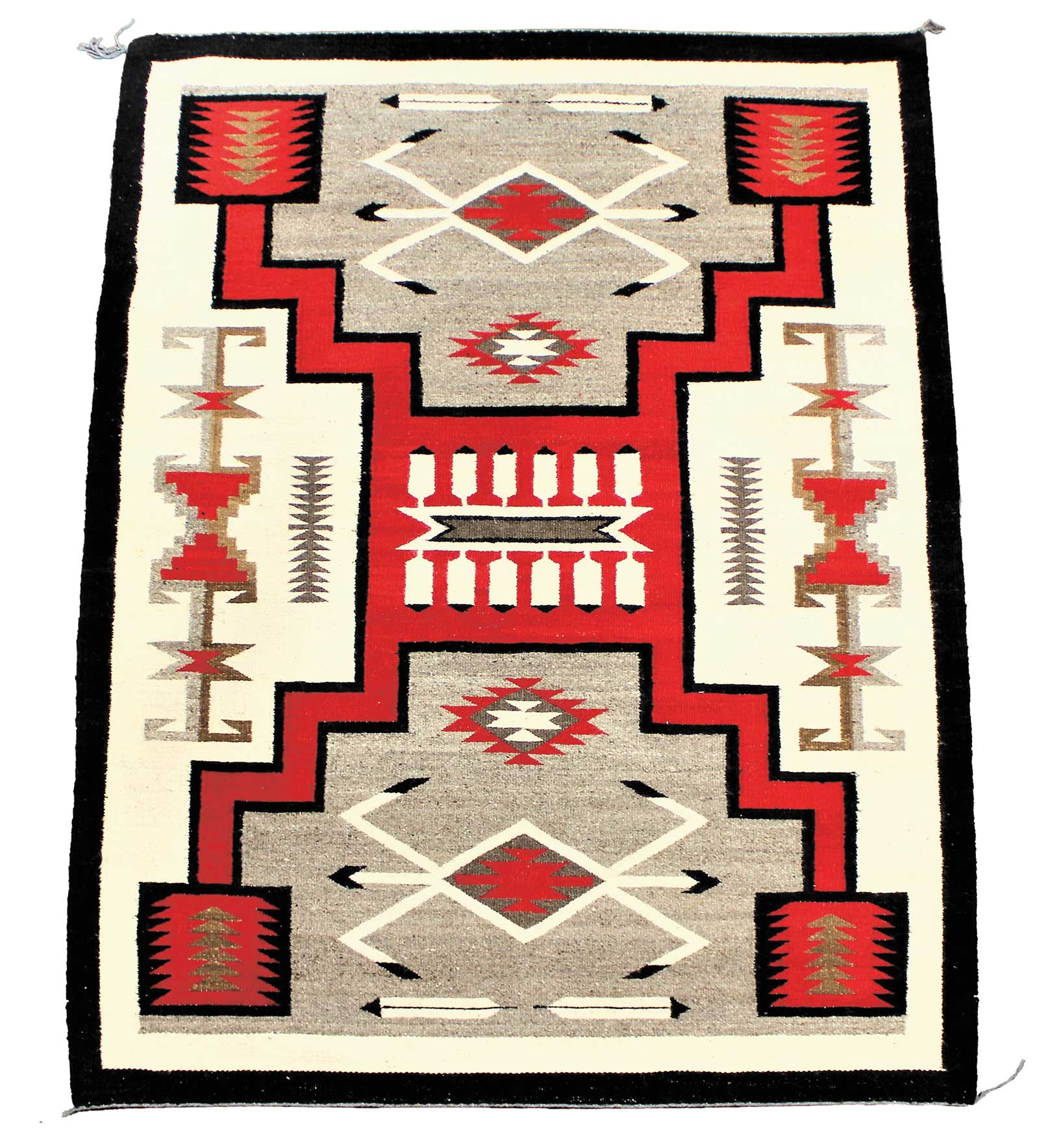
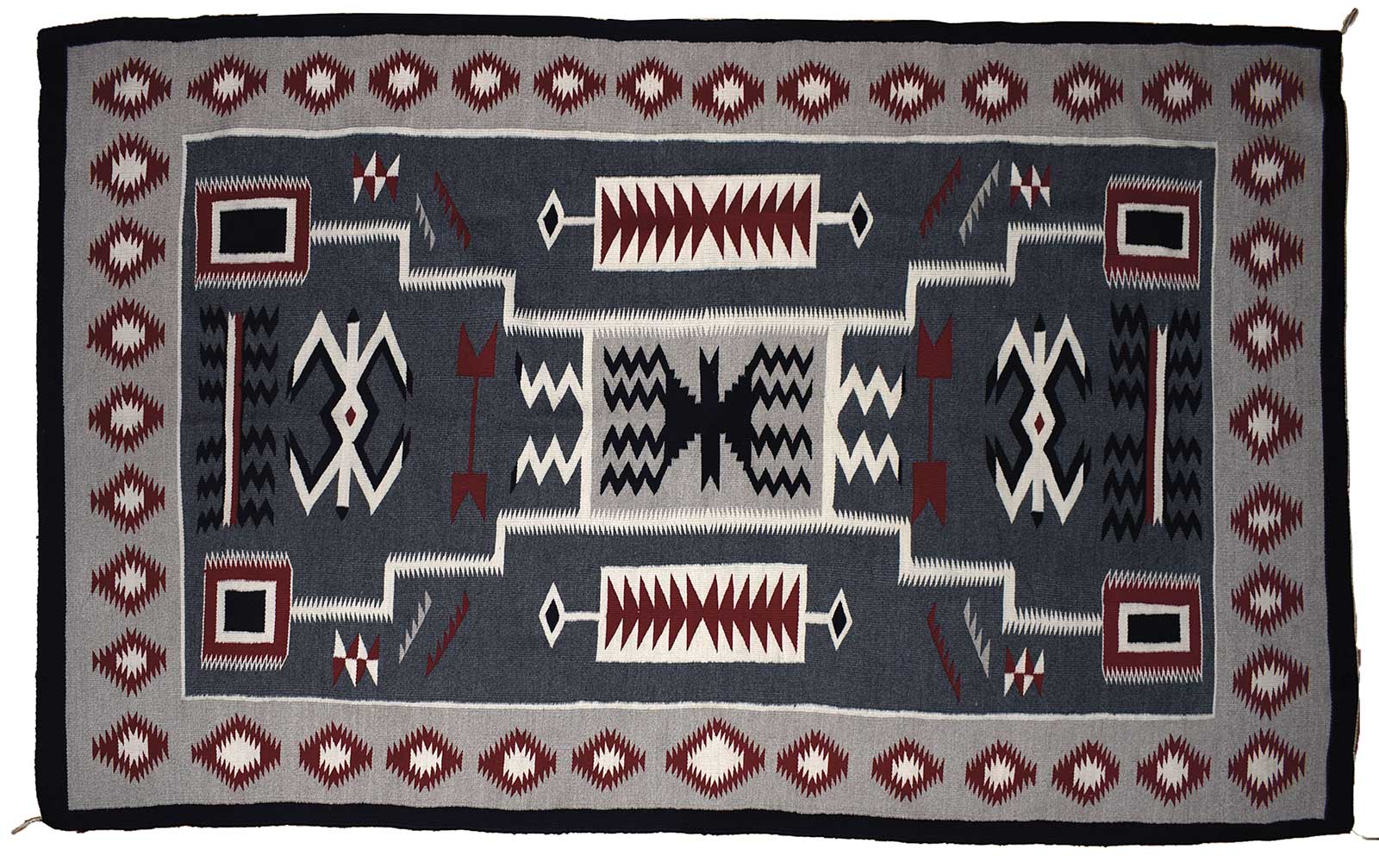
A typical Storm Pattern rug has a block in the center representing the center of the universe. Four blocks in the corners represent the four winds or the four sacred mountains of the Navajo, and are connected by zigzag elements which represent lightning. Other elements are frequently included between this main part and the border, and may consist of stylized designs such as cloud forms and arrows. This rug is unique in that it has a large spider hole at its center. When Navajo girls are born, tradition is that their hands and arms are rubbed with spider webs from a spider hole so that their hands and arms do not tire from the hard work and long hours required to weave a rug.
2301 N. Central Avenue » Phoenix, AZ 85004 » (602) 346-8190 » www.heardmuseumshop.com
==================================================
Sandbar Trading Gallery & Auction
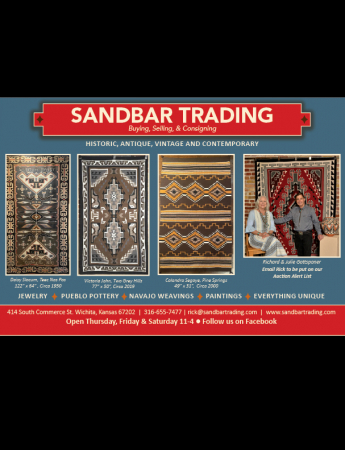
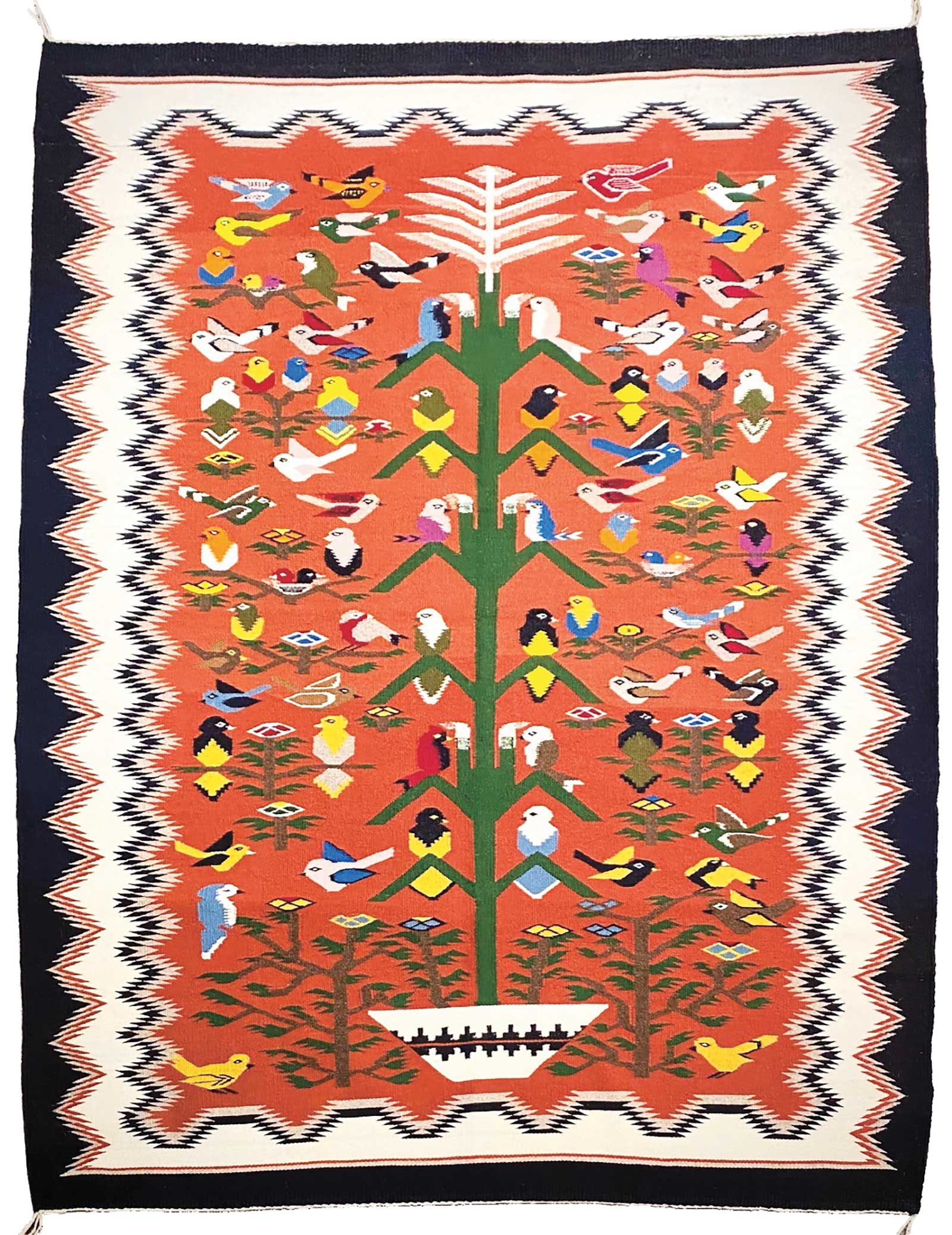
Pictured here is the amazing Tree of Life—Bird Rug woven by Mary Begay, and measures at an impressive 74 by 56 inches. This beautiful rug includes 76 birds in an explosion of color and movement, surrounding and sitting on a Sacred Corn Plant emerging from a Navajo basket. It was the first-place, blue-ribbon winner at The Original American Indian & Western Relic Show in Pasadena, California, in October of 1987.
The symbols woven into Navajo rugs typically have meaning to the weaver. In this weaving, you see the Corn Plant, a symbol of life itself. The Corn Plant ties to the Earth with its roots and grows into the sky.
Wichita, Kansas » (316) 655-7477 » rick@sandbartrading.com » www.sandbartrading.com
==================================================
The Dancing Rabbit Gallery
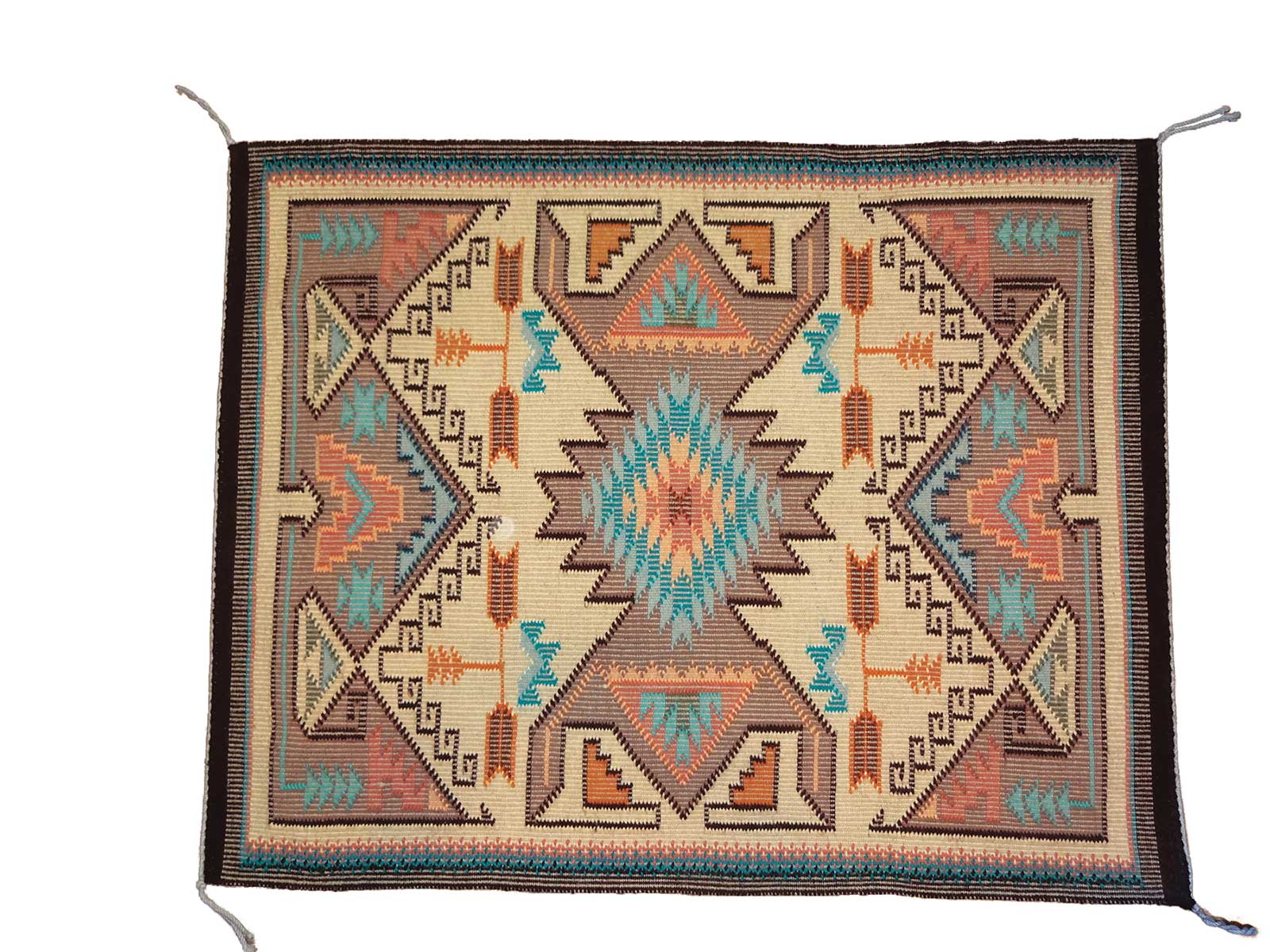
Raised-outline rugs originated from the Coal Mine Mesa area of the Navajo Nation in Arizona. The raised portion is visible only on one side of the rug. Instead of a more traditional weaving process, there are certain sections between colored areas that are thicker and appear to rise about the weaving surface. This happens when the weaver alternates single weft threads containing two contrasting colors. When weft threads are twisted upon each other during the process, this raised ridge offers a tangible feel and aesthetic unlike any other. The other side of the weaving is smooth which makes each rug feel and look especially unique. This piece by Nora Yazzie Wittingham, circa 1980s, has the original tag from Canyon Country Originals still attached, and measures at 28 by 36 inches.
(505) 850-2212 » www.thedancingrabbitgallery.com
==================================================
Heritage Auctions
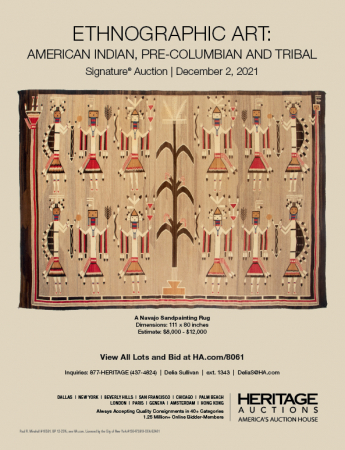
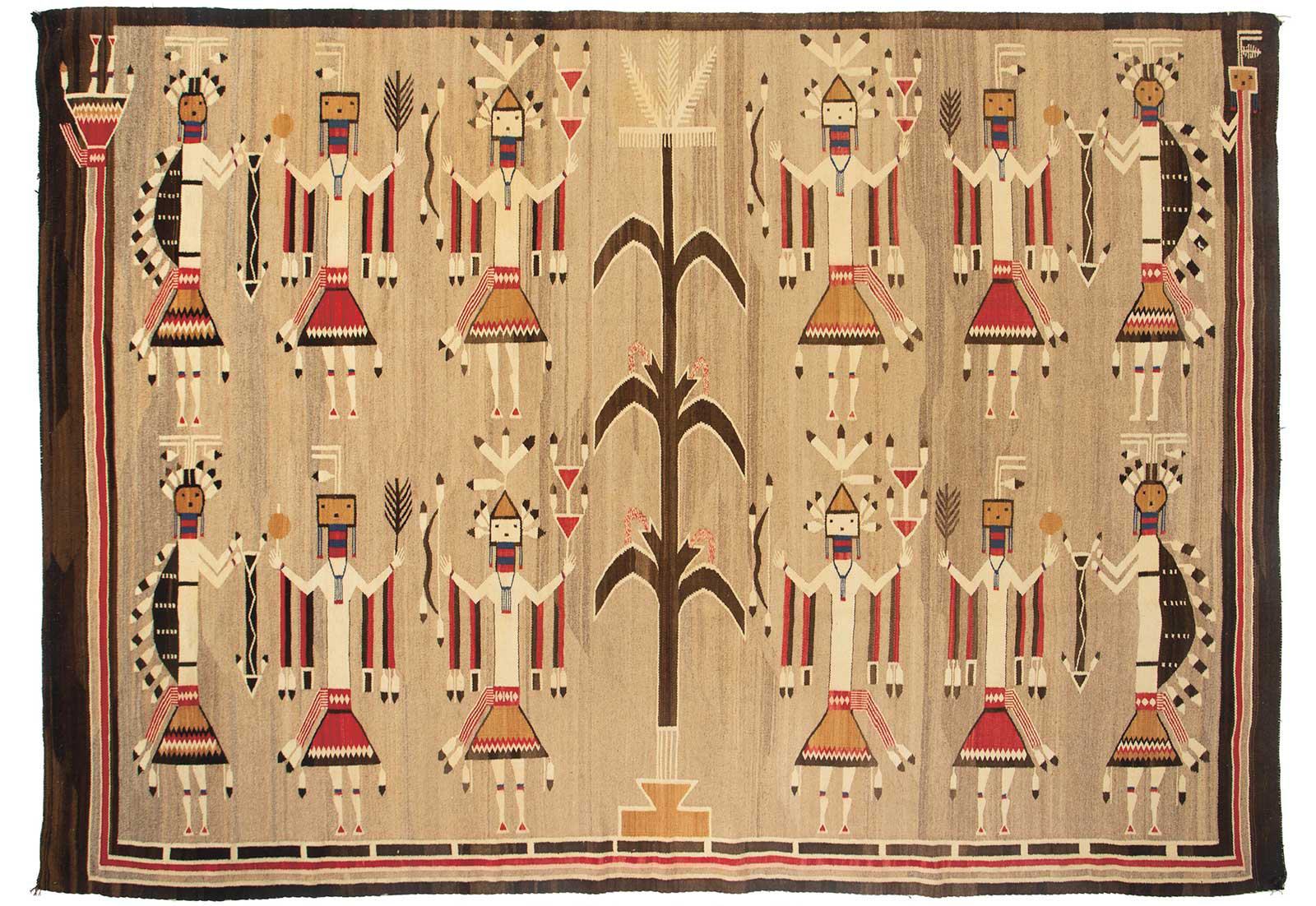
Among the top attractions in Heritage Auctions’ Ethnographic Art American Indian, Pre-Columbian and Tribal Art Signature Auction on December 2, is this Navajo Sandpainting Rug (est. $8/12,000). It features a central corn stalk, flanked by supernatural figures from the Nightway story in each of the four quadrants. Each is surrounded on three sides by a rainbow guardian. The nine-night ceremony known as Night Chant, or Nightway, is considered the most sacred of all Navajo ceremonies, and one of the most difficult to learn, as it involves the memorization of hundreds of songs and dozens of prayers and complicated sand paintings. The Nightway both cures the ill and restores the balance of human and non-human relationships within the Navajo universe.
Dallas, Texas » (877) 437-4824 » www.ha.com
==================================================
Jack’s Antique
Pictured here is a Western Reservation Navajo rug in the Storm Pattern from the 1950s, by an unknown weaver. It’s hand-woven on a Navajo vertical loom with hand-spun wool and aniline dye. It’s a tasteful design which is evidently executed with masterful skill. The main motif is striking in red, with sharp decorative details in soft golden brown, grey, black and overall cream background. It measures about 59½ by 43 inches, with a warp count of 7 per inch and weft count of 40 per inch. In excellent used condition, no stains, no missing stitches or restoration. Acquired from the estate of an avid Winslow collector.
4650 N. US Hwy 89 Suite G014 » Flagstaff, AZ 86004 » (928) 526-0696 » jack@jacksantique.com » www.jacksantique.com
==================================================
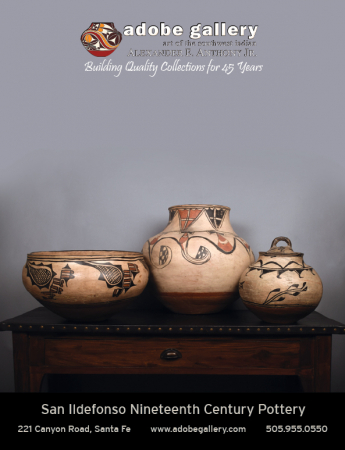
Adobe Gallery
This textile was created by Diné weaver Mary Kessie. The design seen in this piece is known as a “storm pattern,” a term popularized by Crystal Trading Post textile catalogs. This piece dates to the mid-20th century and was woven with commercial-dyed yarns. Its palette of gray, red, black and white tones is strong and beautiful.
221 Canyon Road » Santa Fe, NM 87501 » (505) 955-0550 » info@adobegallery.com » www.adobegallery.com
==================================================
James Compton Gallery
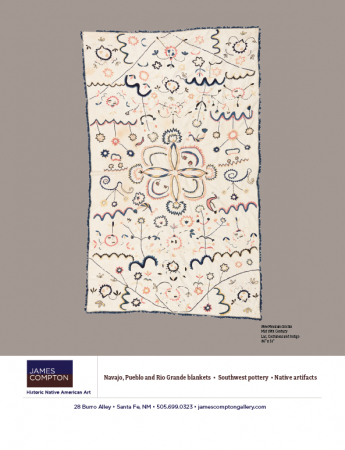
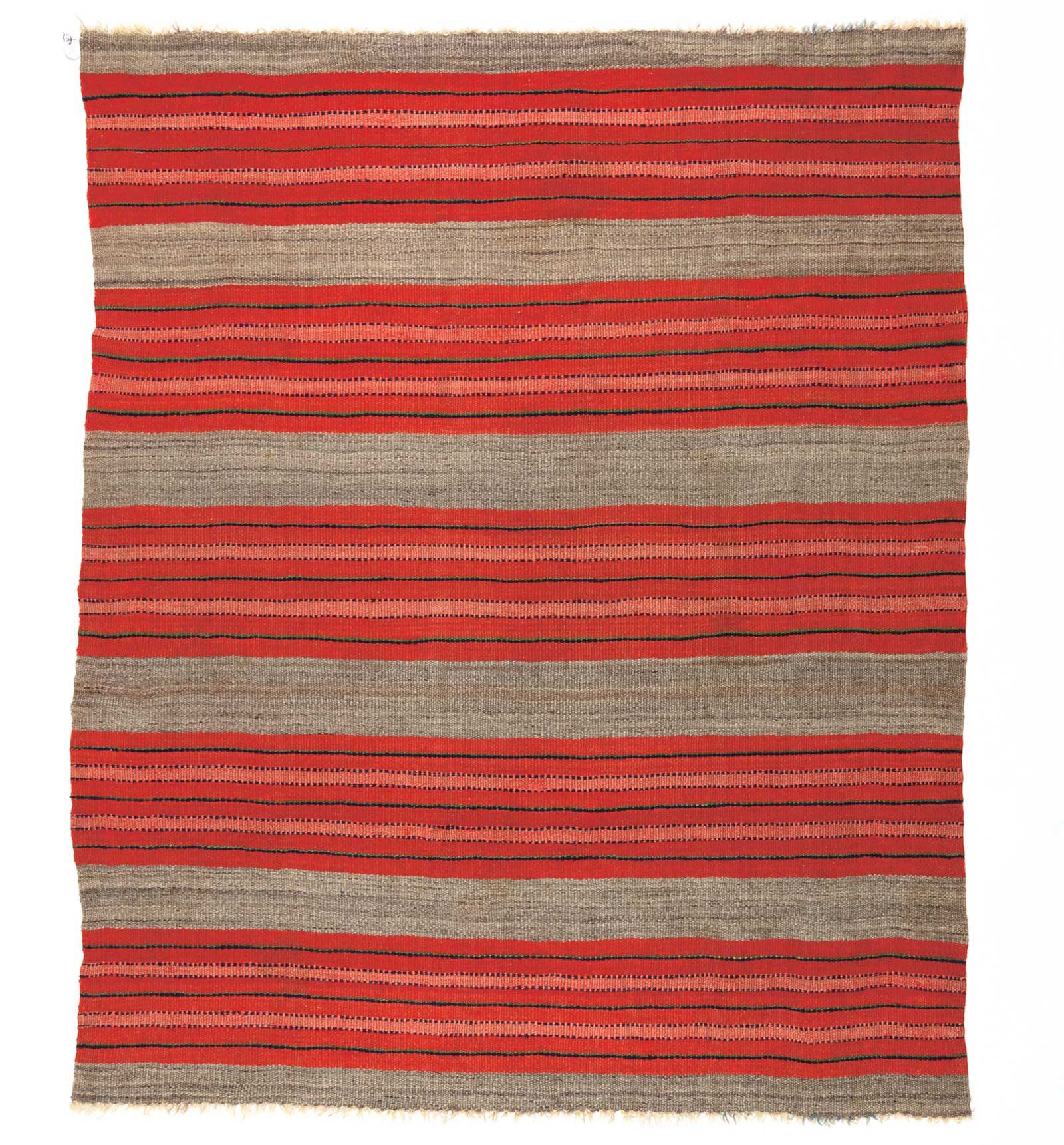
This Zuni blanket, from around 1875, has all the characteristics found on a Pueblo blanket. The primary points are minimal to no sectional lines (Lazy lines), grouped warps on the blanket edge with no selvage and knots remaining at both ends in contrast to end selvage. In addition, the background of carded gray yarns is common with Zuni blankets of the later-19th century. The dyes used include indigo blue, indigo green and synthetic red. The gray color is either the original color from the sheep, or white carded with a darker natural wool color. It measures at 69 by 57½ inches.
This blanket is in excellent condition, and while it would look great on a wall, it can be thrown over the back of a sofa or large soft chair for winter wrap-around use while reading your favorite book.
28 Burro Alley » Santa Fe, NM 87501 » (505) 699-0323 » jamie@jamescomptongallery.com » www.jamescomptongallery.com
==================================================
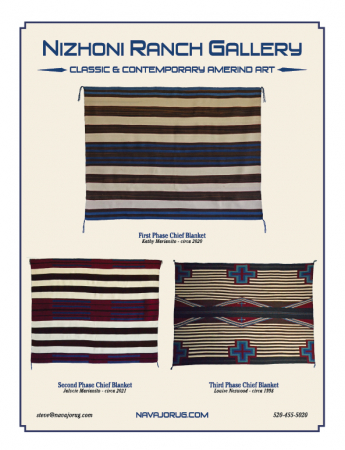
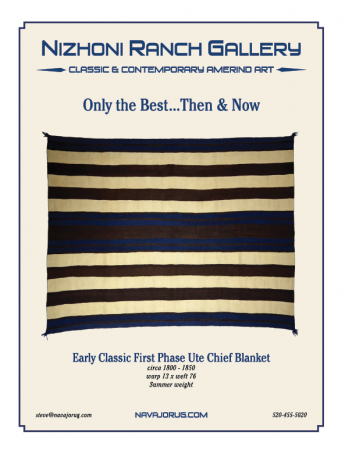
Nizhoni Ranch Gallery
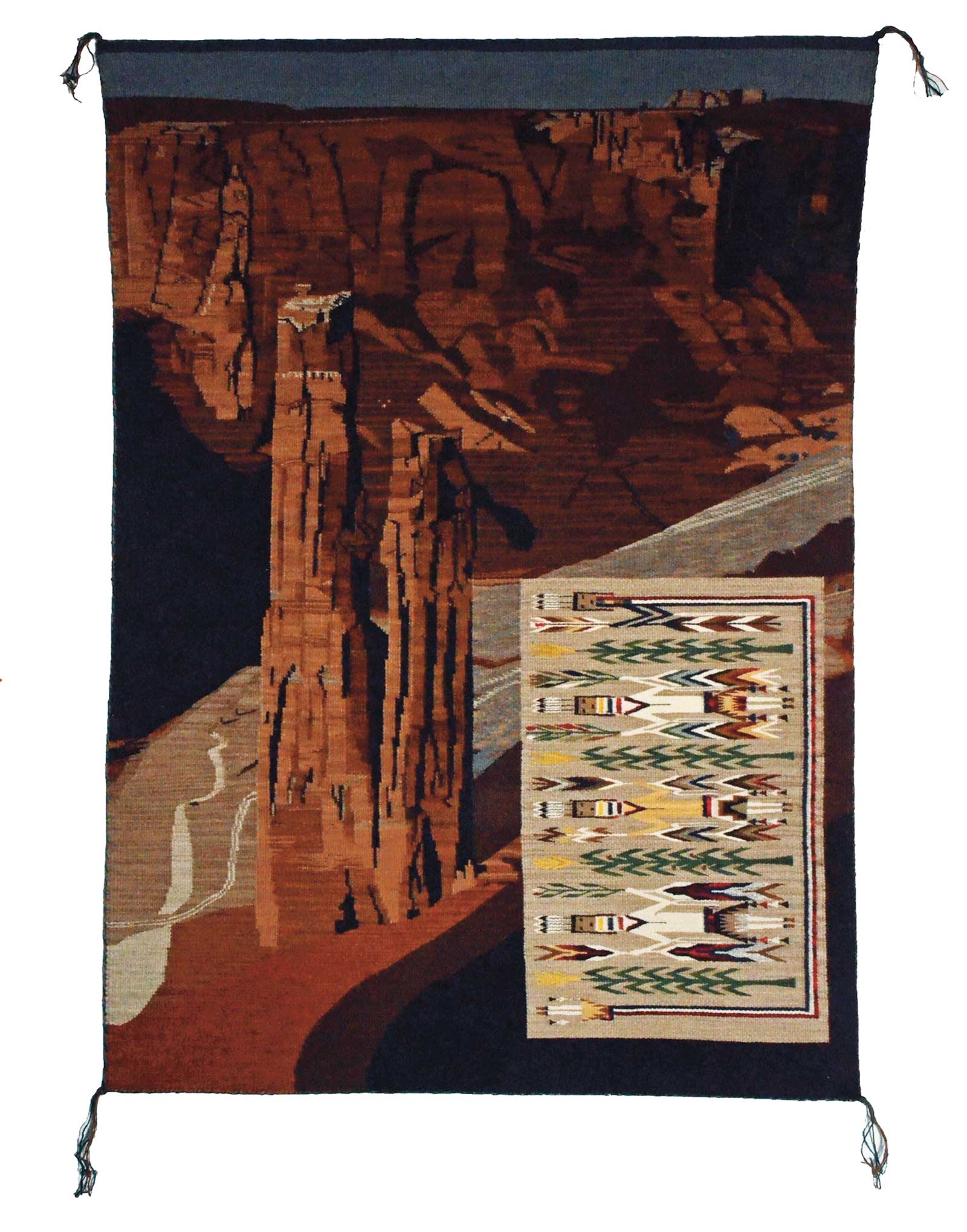
This Spider Rock Yei pictorial by Marian Nez, measures at 35 by 48 inches. Nez was taught to weave by her mother and grandmother, and is one of the best Navajo weaving artists alive and weaving today. As a master weaver, she has won many awards and several of her weavings have been exhibited at the Desert Caballeros Western Museum in Wickenburg, Arizona. Nez is a tribute to her mother and grandmother’s talent and teaching. She’s received Best of Class in Textiles and Best of Category at the Gallup Inter-Tribal Indian Ceremonial 2021.
P.O. Box 815 » Sonoita, AZ 85637 » (520) 455-5020 » nizhoniranch@gmail.com » www.navajorug.com
==================================================
Southwest Accents – The De Jong Collection
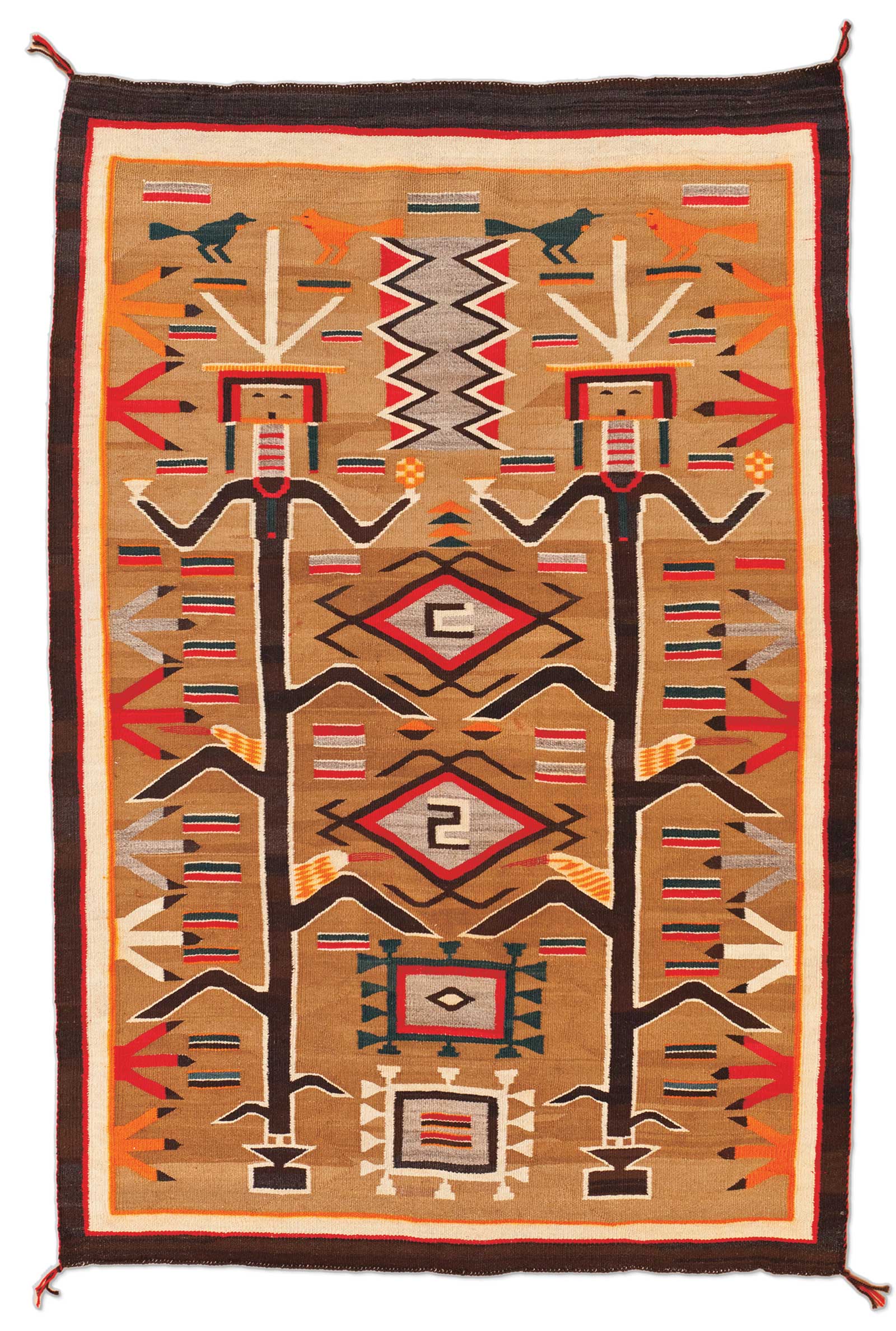
Pictured here is a rug titled Corn Yei with Birds Pictorial, is dated from around 1920 to 1930, and measures 46 by 67 inches. “The sacred Corn Plant is usually depicted with five broad leaves and two ears of corn. It’s is topped by a five-branched tassel on which a bird is sometimes perched. It’s three roots are usually planted in a keystone cloud symbolizing the moisture needed for the plant’s growth. The Corn Person, or Corn Yei, is the personified form of the Corn Plant and has its general appearance with the addition of arms, hands, neck and a horizontal eagle feather. The Corn Person hold an ear of corn in the right hand and a basket of corn pollen in the left.”
— Excerpt from Navajo Weavings with Ceremonial Themes, by Rebecca M. Valette and Jean-Paul Valette.
(505) 231-1128 » suedejong@aol.com » www.navajotextiles.net
==================================================
Venancio Aragon
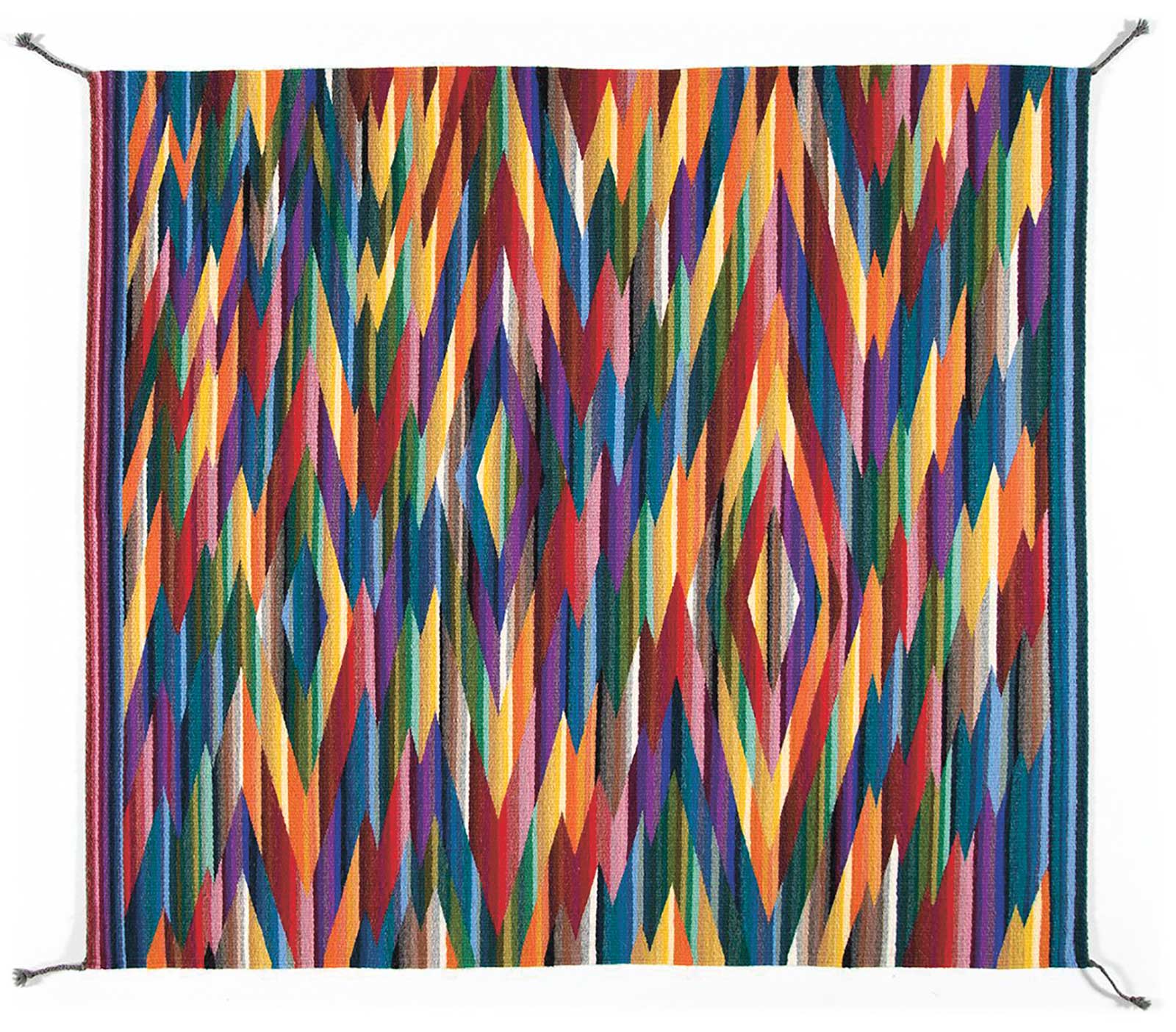
This piece titled The Movement of Water, is a result of several years of experimentation with both natural and synthetic dyeing. Over 80 colors of weft were used in conjunction with irregular geometry to create a textile that portrays the erratic and colorful movements of water in a river. This piece used strong color saturation in the design field and sharp geometry that lends itself to interpretation by the viewer.
www.venancioaragon.com
==================================================
Miles and Miles Trading Post
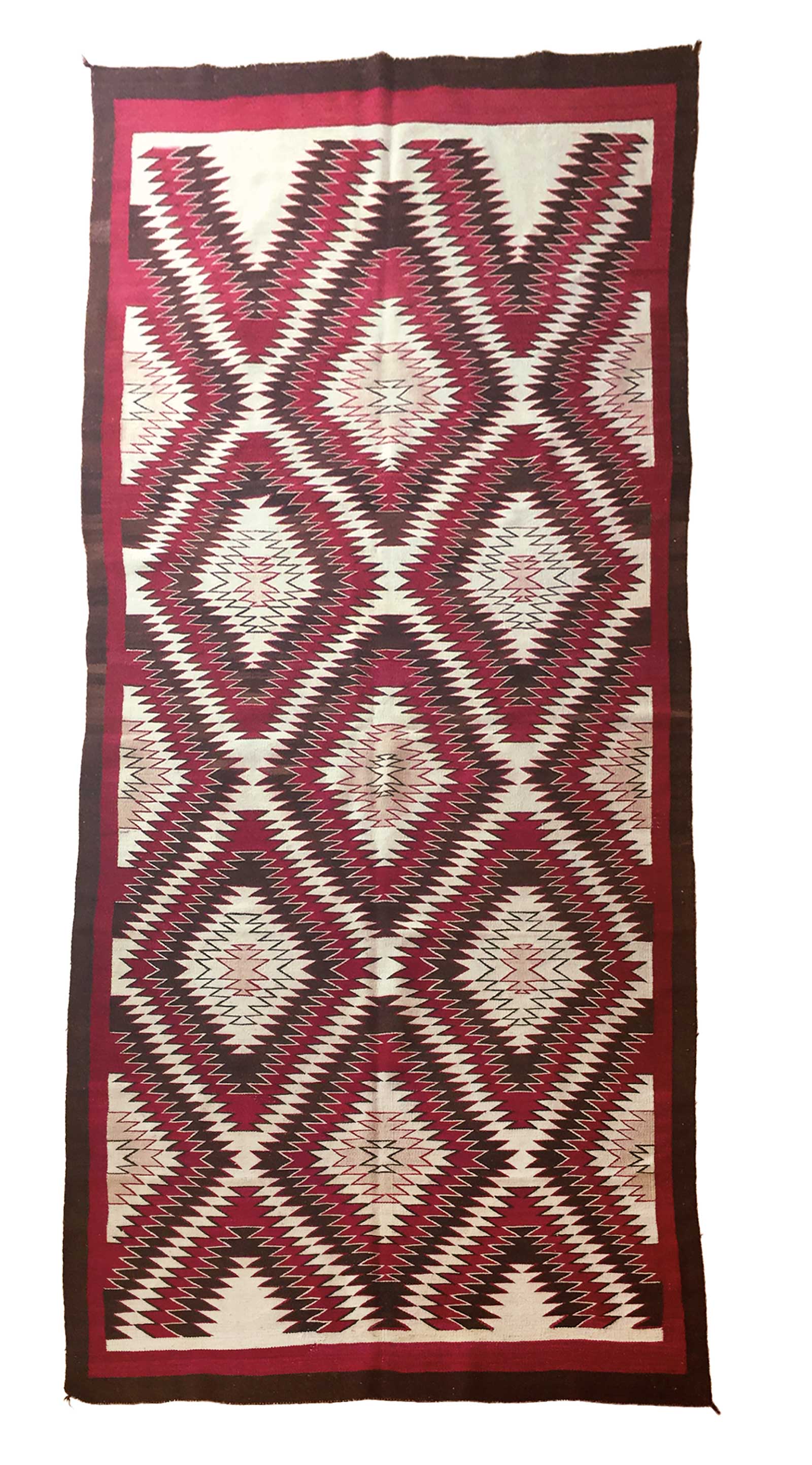
This beautiful Red Mesa weaving was the inspiration for Barbara Miles to develop and start her Native American business. “I fell in love with it one day on an impromptu vacation to Santa Fe with my husband, a snowy late March some years ago,” she explains. The eye dazzler style of the Red Mesa originally came from the Four Corners area probably in the late 1800s. This style was pushed forward to survive this era and continues to thrive to this day. Characteristics consist of contrasting light and dark colors using vertical and diamond designs. It takes an experienced talent to create this beautiful pattern known as the “Red Mesa.”
San Francisco, CA » (415) 519-7797 » miles@milesnativearts.com » www.milesnativearts.com
==================================================
Vivian Descheny
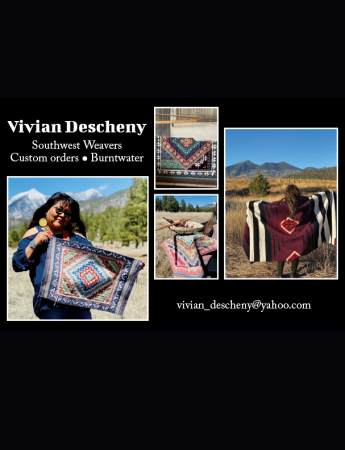
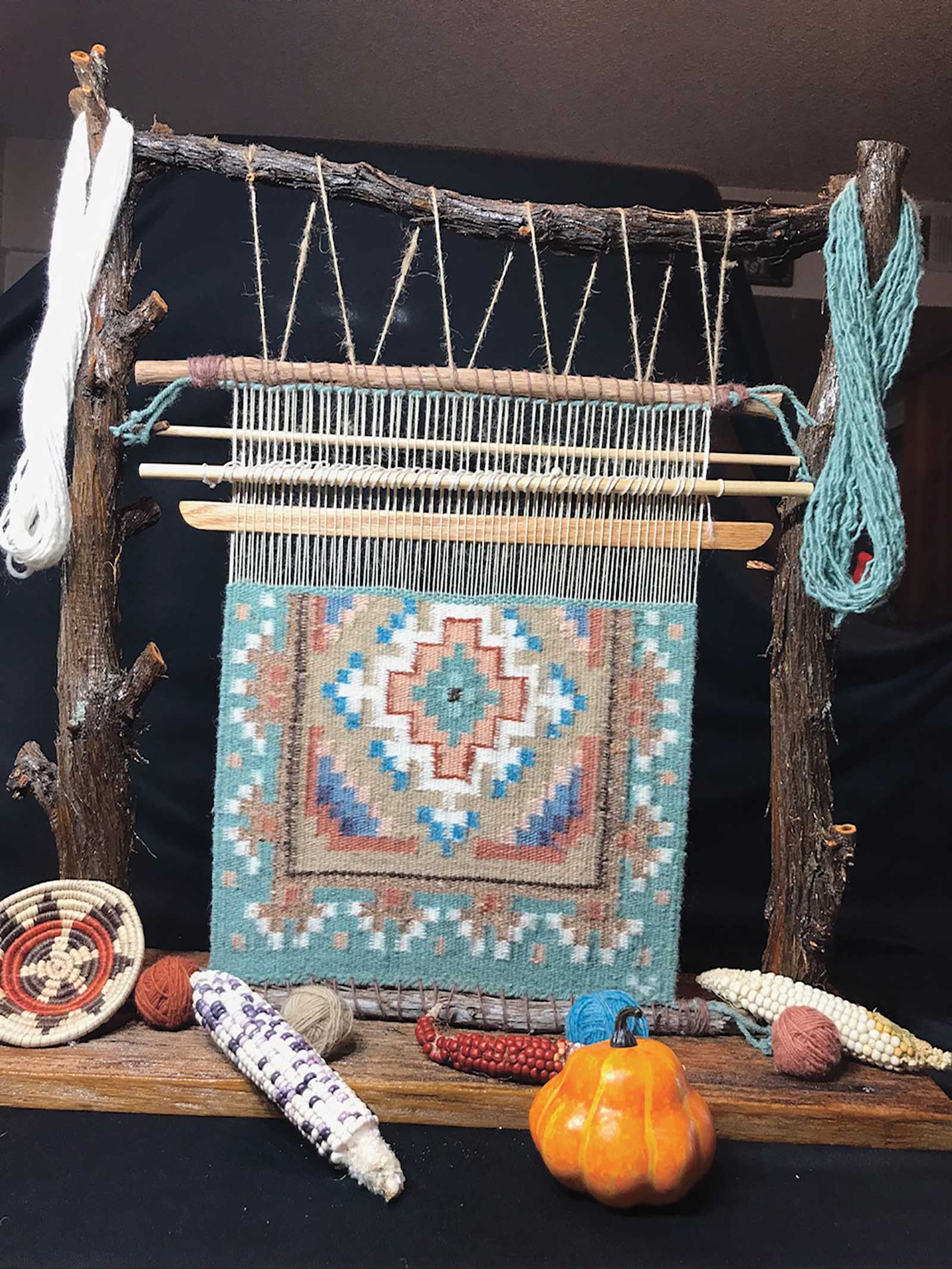
Descheny is from White Cone, Arizona, and is the child of Leroy and Rose Williams Sr. Her late paternal grandmother (shínáli asdáá) known as Annie B. Williams, was a master weaver. “For me, it’s all about having coffee before the morning sunrise, and thinking of a life of weaving and all the teaching and stories from my parents and grandparents,” says Descheny. “Stories of how they raise sheep and prepare to make rugs. My family business keeps my spirits high, along with my marriage to my husband, Delbert Descheny. We tag team with making looms and raising five children and 10 grandchildren. I am rich with family.”
Descheny’s work includes both intricate and complex designs. Burntwater is her style, that incorporates beautiful pastel colors derived from native vegetable dyes. “Every day is another idea for my designs,” she says, “from small to large rug looms in all my rooms. I like to say that they speak to the golden age. It’s like I have my beautiful Nalii Lady by me, she’s my angel, the beautiful morning star.”
Powered by Froala Editor